“A masterful weaver of songs whose deep, resonant voice rivals the best of his genre…”
Spirit of Change Magazine
“Beneath the friendly charisma is the heart of a purist gently leading us from the songs of our lives to the timeless traditional songs he knows so well…”
The American Folk Experience is dedicated to collecting and curating the most enduring songs from our musical heritage. Every performance and workshop is a celebration and exploration of the timeless songs and stories that have shaped and formed the musical history of America. John Fitzsimmons has been singing and performing these gems of the past for the past forty years, and he brings a folksy warmth, wry humor and massive repertoire of songs to any occasion.
It is fine and rare night in a pub when a napkin with a song request is passed up to the stage, and I read the scrawled words and see the like of “Barbara Allen,” “The House Carpenter” or “Mattie Groves.” For me it is like being given the go signal to move in a new direction, to take tar audience on a new journey down a road or river few of them have ever travelled—the road of the ancient ballads. The ancient ballads, as remembered and sung by the early colonists have their roots in the deepest—and often the darkest—recesses of in what is now Europe and Scandinavia. These ballads, while simple in structure and melody, are charged with an emotionally complex underlayment that has somehow managed to keep these songs alive in spite of the diaspora of moving to and settling in to a new world.
In my own recordings of The Ancient Ballads, I have tried to keep things simple—as simple as the ancient times dictated. Oftentimes, even the faint strum of a guitar seems more distractive than attractive; but, that is for you to decide.
This initial compilation of old ballads, is simply a scratching at the surface of the ballad tradition, but these are the ballads I know best; hence it seems like the best place to start.
Going to Canobie Lake is always the turning point of the year for me. It is like some primal signal that It is time to turn away from the school year and towards the future. Obviously, it is my hope that you learned some useful skills this year, but, more...
When I begin to think of myself. My girded shell squeezing Oysters in a jar; My oily viscera Jammed and joggled Into impossible places. My pancreas Is never where it should be; My esophagus cut cleanly Swirls in a diaspora. My tongue is a trapped In a tangle of...
*God casts the die, not the dice. ~Alfred Einstein I am cold down the neck, turtling my head to showers of ice that fall dancing and skidding on skins of crusted snow. I hold my breath when I step, inflating hopes of a weightlessness, and so be undetected to the play...
An early March snow brought down all these branches Cracking and crashing throughout a long night, Piling them impatiently in the yard Like jacksticks in a child’s messy room. The stepladder I used to rake the ridge Stands like an awkward sculpture draped in white...
Trying to only see what is in front of me my eyes are continually drawn away from this page and the work left to be done— my labored words etched and scratched away like fleeting mosaics in dry sand. I need a windowless cell to work the alchemy that shapes the...
I am always molting; leaving my hollowed skin in awkward places, scaring people and making them jump. They touch me and think I’m real; then laugh and say things like “What a riot.” I’m tired of this changing of skins. I’d rather stumble on myself and be fooled; and...
To cast far is to cast well. I’ve always believed that the biggest fish are just beyond my range and lie in dark water I could never swim to. But experience is the wisdom that has me now casting closer to shore, nearest the reeds and overgrowth — a subtleness geared...
Words matter. Words carefully crafted and artfully expressed matter infinitely more. There is something compelling in a turn of phrase well-timed, arresting image juxtaposed on arresting images; broad ideas distilled into clear, lucid singular thought. For the...
1. The Allure of Chicken RoadChicken Road has taken the online casino world by storm with its quirky premise—helping a plucky bird navigate a perilous street while chasing a golden egg prize. Players love the game’s bright, cartoonish visuals and the fact that every...
A literary reflection to my students... The lowering for whales, the appearance of Fedallah's crew, the vivid descriptions of the first chase in a sudden and unrelenting gale, the fatalistic joy of resigning oneself to fate, the awesome poetic intensity of Melville's...
It’s not just a couch; it’s a sofa, too ~Fitz I remember my first year teaching at Fenn—and it was really my first stint as a true worker with responsibilities outside of what I already had in my wheelhouse—and on this day, some twenty something years ago, I...
I am not sure what Christmas really is anymore. I am almost afraid to think of what Christians are going through in the lands of the original Christian faith. By dint of place and time, I grew up in the Catholic faith, and try as I might, I can’t ever escape the...
The coyotes and fisher cats seem intent on striking some new deal with each other to toy with our fears in this gentleman's wilderness— patches of dense woods dotted with overgrown fields, riven and intersected by highways, powerlines and quiet, suburban...
Like birds of a feather, we gather together, 'Cuz they're feeling exactly like you... ~John Prine I am not afraid of being a white minority. I had lunch today with a Jamaican drummer, a Ugandan farmer, and a Senagalese potter. I don’t say this out of...
“My teachers could have written with Jesse James for all time they stole from us...” ~Richard Brautigan, “Trout Fishing in America” My classroom is often a bit of a mess—a mass of sprawled bodies scattered around like casualties of battle, ensconced in various...
True to my words of earlier this week, I finished this song last night, and at the time, I liked it--but in the clear light of day, too much of it seems forced, especially the rhymes. But that is part of the process. I think I am almost there. Let me get my saw and...
The day sometimes slip away from me, a huge pine half-bucked in the backyard, the kids old tree fort cut into slabs, a ton of coal waiting to be moved in a train of buckets to the bin. Sipping cold water on the back deck, sharpening the dulled teeth of a worn...
These trees have driven so many friends batty, wedged in unstable crotches, embracing hollow, heart-rotted limbs, reaching tentatively, maddened with indecision. From a distance your gestures are very lobsterlike— waving a last embattled claw, as if dueling some...
I The dull staccato throb in light rain on a dark night. Unseen barges make their way up the QianTian River—concrete shores marked by the arch of the bridge, the spans of beam stretched on beam, the impeccable symmetry of the street-lights broken by a stream...
It’s been too long feeling sorry for myself.
It’s been too long with my life up on the shelf.
Sometimes wish that I was Shane—
shoot Jack Palance, and disappear again;
don’t have no one
don’t want no one
don’t miss no one:
living lonely with a saddle and a gun.
I, on my side, require of every writer, first or last, a simple and sincere account of his own life, and not merely what he has heard of other men's lives; some such account as he would send to his kindred from a distant land... ~Henry David Thoreau, Walden I’ve...
If we want to have the freedom to marry whom we want to marry, why is it so important that the state (government) recognise that marriage? Is it simply the expediency of dispensing the entitlements of a marriage certificate: tax benefits, employment benefits, or the...
How about we all take the bull by the horns and make this blog thing work! Your job this week is to do something with your blog that is powered by the passion that is in you. Passion is the one thing you have some control over. There are plenty of smarter, more...
And shivers its literal timbers. Cold, wet and pleading, Scarred by winter winds And pasty snows, My small field and patch of woods Is now a monument To aging neglect. Shorn limbs and branches Hang high and tangled in the Sugar maples (Widow makers we called them Back...
Last night the August supermoon reminded me of the fickleness of time and how substance becomes shadow and memories begin to etch themselves immutably into the hardness of what is already lost.
Writing a Metacognition Know Thyself… Explore, Assess, Reflect & Rethink If we don’t learn from what we do, we learn little of real value. If we don’t make the time to explore, reflect and rethink our ways of doing things we will never grow, evolve and reach our...
Just because no one understands you, it doesn’t mean you are an artist ~Bumper Sticker I sometimes wonder why when you give a group of teenagers a video camera, the first impulse is to shoot something stupid. It’s as if there is some jackass switch...
I woke up today with chores on my mind. My buddy Josh LoPresti lent me his woodsplitter, and I had dreams of a mindless day splitting wood and heaving it into a pile for my kids to stack along the fence. But the dryer was broken, and it needed to be fixed. Margret's...
Every Thursday, for some thirty years, I have been spending this same time each week wrapping up the loose ends of the day before heading down to the inn to play to whomever and whatever shows up. Tonight looks like a fun night: Maroghini will be with me for his last...
Good intentions are easily hobbled by inaction. There has always been a murky and muddied No Mans Land in every war where the evil and the righteous trade the moral high ground. This is not the case in Ukraine. Putin’s actions are evil--pure, unmitigated, unprovoked...
To succeed, jump as quickly at opportunities as you do at conclusions. ~Benjamin Franklin Maybe we are born more to ignore than to listen. I understand too well how easy it is to ignore the blatherings of teachers. I was a master of it once myself, so why...
I always had in my mind a song about a woman named Ginny who lives (or lived) on an island off the coast of Maine. I want her to somehow represent someone who is willing to wait for something to return to her. What that something is I am not really sure. I was hoping...
There are thousand hacking at the branches of evil to one striking at the root. ~Henry David Thoreau I just spent a long day deconstructing our backyard. EJ sold his alpacas, and so our fenced in pasture and barn can now return to its suburban origins as a shed...
Mark Twain once wrote that it is good to be a good person, but it is better to tell people how to be good--"and a damn sight easier!" So much of my life is lived in response to the moment and not in a practiced and cultivated wisdom. I sat here this morning looking...
As a teacher, I am tired of the word blog, probably because the word “blogging” is incredibly limiting and myopic, especially for someone whose teaching is centered around an online curriculum with blogs front and center on my academic table. I sat through a...
The house is quiet earlier than usual. I can hear Margaret playing her guitar and singing in her bedroom—door closed as she would have it, but still beautiful to hear. It reminds me of Kaleigh when she was younger singing her heart out, as if the world didn't really...
Игровые автоматы Вавада и их эмоции удивляющие игрока Игровые автоматы Вавада и их неожиданные эмоции Если вы ищете уникальный опыт в азартных играх, стоит обратить внимание на слоты, предлагаемые по адресу вавада. Здесь вас ждут не только увлекательные сюжеты, но и...
Sometimes, like right now, I long for a pile of papers on my lap that I could speed through, grade with a series of checks and circles, a few scribbled lines of praise or condemnation, and drop into a shoebox on my desk and say, "Here are your essays!" But I...
They are building a world and the plastic is fading: Margaret and Eddie's buckets are split, pouring out the warm Atlantic as they race along the tidal flat, filling pools connected by frantically dug canals. Tommy squats naked and screams in guttural joy at the...
by John Fitzsimmons | The American Folk Experience
~Traditional
Frankie and Johnnie were lovers, Oh, Lordie how they could love! They swore to be true to each other, Just as true as the stars above, He was her man, but he done her wrong.
Frankie and Johnnie went walking John in his brand new suit. Then, “oh good Lawd,” says Frankie “Don’t my Johnnie look real cute!” He was her man, but he done her wrong.
Frankie she was a good woman, And Johnnie was a good man, And every dollar that she made Went right into Johnnie’s hand, He was her man, but he done her wrong.
Frankie went down tn the corner, Just for a bucket of beer. She said to the fat bartender, “Has my lovinest man been here7″ He was her man, but he done her wrong.
“I don’t want to cause you no trouble, I don’t want to tell you no lie; But I saw your man an hour ago With a gal named Alice Bly, And if he’s your man, he’s a-doing you wrong.”
Frankie looked over the transom, And found, to her great surprise, That there on the bed sat Johnnie, A-lovin‘ up Alice Bly. He was her man, but he done her wrong.
Frankie drew back her kimono; She took out her little forty-four; Root-a-toot-toot, three times she shot Right through that hardwood floor, She shot her man, ’cause he done her wrong.
Roll me over easy, Roll me over slow, Roll me on de right side, ‘Cause de bullet hurt me so. I was her man, but I done her wrong.
The judge said to the jury “It’s as plain as plain can be This woman shot her lover It’s murder in the second degree He was her man, though he done her wrong.
This story has no moral This story has no end This story only goes to show That there ain’t no good in men They’ll do you wrong, just as sure as you’re born
If you have any more information to share about this song or helpful links, please post as a comment.Thanks for stopping by the site!~John Fitz
I am indebted to the many friends who share my love of traditional songs and to the many scholars whose works are too many to include here. I am also incredibly grateful to the collector’s curators and collators of Wikipedia, Mudcat.org, MainlyNorfolk.info, and TheContemplator.com for their wise, thorough and informative contributions to the study of folk music.
I share their research on my site with humility, thanks, and gratitude. Please cite their work accordingly with your own research. If you have any research or sites you would like to share on this site, please post in the comment box. Thanks!
"Frankie and Johnny" (sometimes spelled "Frankie and Johnnie"; also known as "Frankie and Albert", "Frankie's Man", "Johnny", or just "Frankie") is a murder ballad, a traditional American popular song. It tells the story of a woman, Frankie, who finds her man Johnny making love to another woman and shoots him dead. Frankie is then arrested; in some versions of the song she is also executed.
History
The song was inspired by one or more actual murders. One of these took place in an apartment building located at 212 Targee Street in St. Louis, Missouri, at 2:00 on the morning of October 15, 1899. Frankie Baker (1876–1952),[1] a 22-year-old woman, shot her 17-year-old lover Allen (also known as "Albert") Britt in the abdomen. Britt had just returned from a cakewalk at a local dance hall, where he and another woman, Nelly Bly (also known as "Alice Pryor" and no relation to the pioneering reporter who adopted the pseudonym Nellie Bly or the "Nelly Bly" who was the subject of an 1850 song by Stephen Foster), had won a prize in a slow-dancing contest. Britt died of his wounds four days later at the City Hospital.[2][3][4] On trial, Baker claimed that Britt had attacked her with a knife and that she acted in self-defense; she was acquitted and died in a Portland, Oregon mental institution in 1952.[citation needed]
In 1899, popular St Louis balladeer Bill Dooley composed "Frankie Killed Allen" shortly after the Baker murder case.[5] The first published version of the music to "Frankie and Johnny" appeared in 1904, credited to and copyrighted by Hughie Cannon, the composer of "Won't You Come Home Bill Bailey"; the piece, a variant version of whose melody is sung today, was titled "He Done Me Wrong" and subtitled "Death of Bill Bailey".[6]
The song has also been linked to Frances "Frankie" Stewart Silver, convicted in 1832 of murdering her husband Charles Silver in Burke County, North Carolina. Unlike Frankie Baker, Silver was executed.[3][7]
First page of the sheet music
Another variant of the melody, with words and music credited to Frank and Bert Leighton, appeared in 1908 under the title "Bill You Done Me Wrong"; this song was republished in 1912 as "Frankie and Johnny", this time with the words that appear in modern folk variations:
Frankie and Johnny were sweethearts
They had a quarrel one day
Johnny he vowed that he would leave her
Said he was going away
He's never coming home
Also:
Frankie took aim with her forty-four
Three times with a rooty-toot-toot
The 1912 "Frankie and Johnny" by the Leighton Brothers and Ren Shields also identifies "Nellie Bly" as the new girl to whom Johnny has given his heart. What has come to be the traditional version of the melody was also published in 1912, as the verse to the song "You're My Baby", with music is attributed to Nat. D. Ayer.[8]
The familiar "Frankie and Johnny were lovers" lyrics first appeared (as "Frankie and Albert") in On the Trail of Negro Folksongs by Dorothy Scarborough, published in 1925; a similar version with the "Frankie and Johnny" names appeared in 1927 in Carl Sandburg's The American Songbag.[9]
Several students of folk music have asserted that the song long predates the earliest published versions; according to Leonard Feather in his Biographical Encyclopedia of Jazz[10] it was sung at the Siege of Vicksburg (1863) during the American Civil War[11] and Sandburg said it was widespread before 1888, while John Jacob Niles reported that it emerged before 1830.[3] The fact, however, that the familiar version did not appear in print before 1925 is "strange indeed for such an allegedly old and well-known song", according to music historian James J. Fuld, who suggests that it "is not so ancient as some of the folk-song writers would have one believe."[12]
At least 256 recordings of "Frankie and Johnny" have been made since the early 20th century. The very first recording was made in London in 1912 by American singer Gene Greene.[13] Later singers include:
The earliest country recording of a Frankie song is Ernest Thompson's 1924 Columbia recording of "Frankie Baker", which is listed in Tony Russell's Country Music Records A Discography, 1921-1942, Oxford University Press, 2004, ISBN 978-0195366211. Thompson was a blind street singer from Winston-Salem, North Carolina.
In 1930, director and actor John Huston wrote and produced a puppet play titled Frankie and Johnnie based on the Frankie Baker case. One of Huston's main sources was his interview with Baker and Britt's neighbor Richard Clay.[16][17]
Comedian Harry Langdon performed the song in his 1930 short The Fighting Parson, in a variant on his vaudeville routine originally performed in blackface. Mae West inserted her ballad into her successful Broadway play Diamond Lil. West sang the ballad again in her 1933 Paramount film She Done Him Wrong, which takes its title from the refrain, substituting genders. She also sang it many years later (1978) on the CBS television special Back Lot U.S.A. The song was used in the 1932 film Red-Headed Woman, in a scene where actress Jean Harlow's character is drinking and lamenting having been jilted by her married lover. It is also sung by a river boat crew in Bed of Roses, a film released the following year. Yvonne De Carlo sings the song while masquerading as an opera singer in the 1949 film The Gal Who Took the West. Moira Kelly sings it in the 1996 film Entertaining Angels: The Dorothy Day Story.
The 1933 pre-Code film Arizona to Broadway features drag performer Gene Malin singing this song as he portrays Ray Best, a female impersonator and Mae West type.[18] Malin's performance is considered one of the earliest performances, if not the earliest, of a female impersonator on film.[18][19]
The tune is often used for comic effect in animated cartoon shorts, such as the 1932 Disney cartoon The Klondike Kid (starring Mickey Mouse) and various ones produced by Warner Bros. or MGM in the 1940s and 1950s, as a theme or leitmotif for a meretricious or zaftig woman. The song was the basis of a 1951 UPA cartoon Rooty Toot Toot, directed by John Hubley. It was nominated for an Academy Award for Best Short Subject. A comedic live action usage comes in the blaxploitation film Petey Wheatstraw where a woman auditions by singing the song off-key, prompting a crude reply from Petey.
The song's intro is featured in the 1929 film Weary River. It is sung by the main character Jerry Larrabee played by Richard Barthelmess. The character is a gangster reformed by music. Weary River costars Betty Compson, who played Alice Gray, the faithful sweetheart of Larrabee, who did not like him singing Frankie and Johnny. A remarkable feature of this film is part silent film and part talkie. The film which was directed by Frank Lloyd, who was nominated for an Academy Award for Best Directing.
Other media
"Frankie and Johnnie" is parodied in act two, scene five of E. E. Cummings' 1927 play Him.[20]
In Never Kick a Woman, a Popeye the Sailor cartoon short released by Fleischer Studios on August 30, 1936, the song plays in the background when a sexy female boxer, based on film star Mae West, appears and attempts to steal Popeye away from Olive Oyl.
In Robert A. Heinlein's 1954 science fiction novel The Star Beast, Mr Kiku sings lyrics from Frankie and Johnny in three instances, the final being in the penultimate paragraph, "This story has no moral, this story has no end. This story only goes to show that there ain't no good in men."
^Brown, Cecil (2011). "Frankie and Albert/Johnny". In Smith, Jessie Carney (ed.). Encyclopedia of African American popular culture (1st ed.). Santa Barbara, CA: ABC_CLIO, LLC. pp. 542–546. ISBN 978-0-313-35796-1.
^Leonard Feather and Ira Gitler, editors (2007). The Biographical Encyclopedia of Jazz. New York: Oxford University Press. ISBN 978-0-19-532000-8, ISBN 0-19-532000-X.
James J. Fuld, The Book of World-Famous Music: Classical, Popular and Folk, 3rd Edition (New York: Dover, 1985).
Morgan, Stacy I. 2017. Frankie and Johnny: Race, Gender, and the Work of African American Folklore in 1930s America. Austin: University of Texas Press. 261 pages. ISBN 9781477312087
Originally titled “Frankie and Albert,” this traditional murder ballad was inspired by the real-life crime of passion committed by Frankie Baker in 1899. Frankie discovered her lover, Albert Britt, had been with another woman and took revenge by shooting him at a boardinghouse in St. Louis, Missouri. She would be acquitted under plea of self-defense.
The origins of the song as we know it today are a bit murky. That same year, local singer Bill Dooley composed a song sensationalizing the case, and it became a popular mainstay in local saloons before its official publication as “Frankie and Johnny” in 1904. The song was not credited to Dooley, however, but to ragtime composer/lyricist Hughie Cannon.
Frank and Bert Leighton’s 1908 version, which was published as “Frankie and Johnny” in 1912, brought us the familiar opening:
Frankie and Johnny were sweethearts
They had a quarrel one day
Countless covers over the years have provided many variations of the song. Sometimes the duo are “lovers” instead of “sweethearts.” Johnny’s mistress can be Alice Pry or Nelly Bly. Sometimes, Frankie is cheered by onlookers as she shoots Johnny and is exonerated; other times, she’s executed.
Many artists have recorded this, including Louis Armstrong, Elvis Presley and Johnny Cash. Sam Cooke sang a cleaner version than most, which is the most popular contemporary cover. Here are the charting versions in America:
1959, #57 – Johnny Cash
1961, #20 – Brook Benton
1963, #14 – Sam Cooke
1964, #75 – The Greenwood County Singers
1966, #25 – Elvis Presley
Elvis Presley starred in a 1966 movie called Frankie And Johnny where he performed the song. In 1991, another movie of the same name was released starring Al Pacino and Michelle Pfeiffer, who in one scene banter over the song when they realize they are named Frankie and Johnny. The exchange:
Pfeiffer: Didn’t they kill each other?
Pacino: No. She killed him. You got the edge there.
In 1942, the real Frankie Baker filed a defamation suit against Republic Pictures for the 1936 film Frankie and Johnnie, starring Helen Morgan and Chester Morris. Frankie lost the lawsuit and was never able to escape her reputation as a murderer, though she had been acquitted. She said during the (defamation) court proceedings: “I was pointed out as the worst woman in the world and introduced as the Frankie of song, instead of Miss Baker.”
Brook Benton’s R&B version was included in the 2011 compilation Mad Men: A Musical Companion.
Anika Noni Rose performed this in the 2011 miniseries Bag of Bones, based on the Stephen King novel. Rose played Sara Tidwell in the movie.
The American Folk Experience is dedicated to collecting and curating the most enduring songs from our musical heritage. Every performance and workshop is a celebration and exploration of the timeless songs and stories that have shaped and formed the musical history of America. John Fitzsimmons has been singing and performing these gems of the past for the past forty years, and he brings a folksy warmth, humor and massive repertoire of songs to any occasion.
““Beneath the friendly charisma is the heart of a purist gently leading us from the songs of our lives to the timeless traditional songs he knows so well…”
Globe Magazine
Join Fitz at The Colonial Inn
“The Nobel Laureate of New England Pub Music…”
Scott Alaric
Adventures in the Modern Folk Underground
On the Green, in Concord, MAEvery Thursday Nightfor over thirty years…
“A Song Singing, Word Slinging, Story Swapping, Ballad Mongering, Folksinger, Teacher, & Poet…”
Theo Rogue
Songcatcher Rag
Fitz’s Recordings
& Writings
Songs, poems, essays, reflections and ramblings of a folksinger, traveler, teacher, poet and thinker…
I am surprised sometimes by the suddenness of November: beauty abruptly shed to a common nakedness— grasses deadened by hoarfrost, persistent memories of people I’ve lost. It is left to those of us dressed in the hard barky skin of experience to insist on a decorum...
How do I know what I know? The sharp angles of this simple cottage perfected in every board sawn, shingle split and beam hewn into place goes together placed, splined, slid together, bound more by intuition than knowing.
I loved the rain last night. Last week, in a bow to reality, I reclaimed my gardens and made them into yard. Four of my kids got poison ivy in the process and I (and more "they") got an extra ten feet of width to add to the soccer field--for really that is about the...
Black Pond is not as deepas it is dark, dammedsome century agobetween ledges of granite and an outcropping of leaning fir, huckleberry, and white pine. For years I have paddled and trolled;swam, fished, sailed and sometimessimply tread water in the night trying to...
It is a good night for meatballs. The same meal we have cooked every Wednesday night for thirteen years and counting. Tonight is a beautiful and warm night of vacation week, so more than likely we will have a big crowd joining us—but we never know who. The...
Thanksgiving I am surprised sometimes by the suddenness of November: beauty abruptly shed to a common nakedness— grasses deadened by hoarfrost, persistent memories of people I’ve lost. It is left to those of us dressed in the hard barky skin of experience to...
How about we all take the bull by the horns and make this blog thing work! Your job this week is to do something with your blog that is powered by the passion that is in you. Passion is the one thing you have some control over. There are plenty of smarter, more...
Every Thursday Night at The Colonial Inn On the Green, in Concord, Massachusetts This is my first attempt at trying to record a night at the inn, so please forgive my engineering errors as a producer. I simply used the Bose Tonematch into Garageband and called it good...
I The dull staccato throb in light rain on a dark night. Unseen barges make their way up the QianTian River—concrete shores marked by the arch of the bridge, the spans of beam stretched on beam, the impeccable symmetry of the street-lights broken by a stream...
I stutter for normality across the river from black men fishing for kibbers and horned pout. Barefoot children rounded bellies curled navels stalk the turtle sunning on a log. lonely in the field grass lonely on the curbstones I stutter for normality. Not a mother...
Maybe it is time to be less forgiving. I have rarely agreed with our president, but I held on to the shreds of truth that shore up his arguments: we can’t welcome every immigrant who makes it to our border; we cannot bow to the audacity of corrupt governments in...
has dropped a seamlessness before the plows and children can patch it back to a jagged and arbitrary quilting putting borders to design and impulse. I imagine myself falling everywhere softly, whispering, I am here, and I am here.
EJ wanted a banana tree for Christmas so that early morning brought a plastic bag, a few meager roots and no directions. I bought some potting soil and a square cedar box EJ placed deliberately by a westward window. He gently splayed the roots, pressed the soil, and...
I, on my side, require of every writer, first or last, a simple and sincere account of his own life, and not merely what he has heard of other men's lives; some such account as he would send to his kindred from a distant land... ~Henry David Thoreau, Walden I’ve...
Many men go fishing all of their lives without knowing that it is not fish they are after ~Henry David Thoreau When you need something done, find a busy person to help you get it done. My mother loved repeating that to me all the way to her dying day,...
When I begin to think of myself. My girded shell squeezing Oysters in a jar; My oily viscera Jammed and joggled Into impossible places. My pancreas Is never where it should be; My esophagus cut cleanly Swirls in a diaspora. My tongue is a trapped In a tangle of...
The day grew warm today, as did my mood. I did a couple of shows at my school’s diversity day. It was good to see girls there and the obvious racial differences. It was comforting to see a sea of color with a smattering of white instead of the other way around. My...
Here I am out on the road again
and it feels longer than it was back then;
when I was younger, man, it saw me through—
now it don’t do
what I want it to—
Too ra loo ra loo ra lady I—
I’m just out searching for an alibi
Too ra loo ra loo ra lady I
I’m just out searching for an alibi.
Mark Twain once wrote that it is good to be a good person, but it is better to tell people how to be good--"and a damn sight easier!" So much of my life is lived in response to the moment and not in a practiced and cultivated wisdom. I sat here this morning looking...
II The grass grows. The rain falls Nothing is done. Nothing is left undone ~Buddha A day can be perfect. I have to believe this. Today was. Is. Is was a day in china. The sun breaking through today after yesterday’s typhoon. Lazy walk to the coffee shop....
Goat house In reaching for the scythe I’m reminded of the whetstone and the few quick strokes by which it was tested-- the hardness of hot August; the burning of ticks off dog backs. It’s winter now in this garage made barn, and the animals seem only curious that I’d...
I wrote this poem, Thanksgiving, as a tribute to three older teachers from my school: Walter Birge, Read Albright, and Jim Carter--all men of tradition, celebration and commitment to community.
Kun olet liikkeellä—kokousten välillä tai odottaessasi junaa—Lunubet antaa sinun sukeltaa suoraan jännittävään kasinotoimintaan ilman vaivaa desktop-asetuksen kanssa.Aloita matkasi https://lunubetpelata.fi/fi-fi/, jossa mobiili‑keskeinen käyttöliittymä toivottaa sinut...
This shift from fall to winterIs the cruelest month:Long days and nightsIn a blather of responsibility’s I hoist from a murky holeAnd sort and siftOn a messy desk. I pity my students who trembleMy red pen of vengeance;Who wait with fetid thoughtsFreighted by what they...
I realized that in all my years of writing and journal keeping, I seldom, if ever, write about "The Inn," which is and has been, the biggest and most enduring constant in my life for the past thirty plus years. Every Thursday night I load up my car, truck, bus...
Stories are a communal currency of humanity. ― Tahir Shah, In Arabian Nights The most powerful and enduring connection we share as a human race is our desire and need to share stories. We engage in the art of storytelling more than most of us ever realize; whether we...
Leave the fog stillness
of a cold harbor town;
cup our hands
in the warm diesel sound—
leave while the children
are calmed in their dreams
by light buoys calling:
“Don’t play around me.”
I've been somewhat lax about posting in here of late, but I have been giving myself a bit of a break from writing. In fact, I spent the last month or so just living--and that has been just fine with me. I set a simple goal for myself this summer to get in shape. PJ...
Trying to pull a final day Back into the night, execute Some stay of time, Some way to wrap The fabric of Summer Around the balky, frame of Fall, sloughing My skin, unable to stop This reptilian ecdysis— This hideous morphing Into respectability. My students, tame As...
"Zou Ma Guan Hua" You can't ride a horse and smell the flowers ~Chinese Proverb Sometimes I love just browsing through old folders of pictures of my kids when they were just kids in every sense of the word. Just seeing the pictures is a visceral experience for me as I...
Wisdom starts in non-action… The doing and non-doing are the equal balance. Without the luxury of contemplation there would not be a prioritizing of need versus want. Wisdom balances physical reality… Wisdom does not shuffle tasks out of view but finds a way to...
It’s not like a poem to come curl by my feet on this morning too beautiful to describe, though I am looking and listening and waiting: A rooster crows above the low hum of morning traffic; the trash truck spills air from brakes and rattles empties into bins; my...
"But he hasn't got anything on!" the whole town cried out at last. The Emperor shivered, for he suspected they were right. But he thought, "This procession has got to go on." So he walked more proudly than ever, as his noblemen held high the train that wasn't there at...
I wonder what the years have really taught me about writing and music. I have gotten so used to preaching and teaching that I am a bit looped by the thought of writing—as in how I wrote before (or how I will claim I wrote) before settling into this somewhat...
At midnight I hear the cuckoo clock chiming from it’s perch in a cluttered kitchen locked in cadence with the tower bell gonging this old mill town at midnight to a deeper sleep, like a call to prayer reminding me that this new day, starting in the dark of a hallowed...
I woke today and had my tea
and at the window spent the morning:
the same scene I’ve seen so many times
is each day freshly born;
from the ground I turn each spring and fall
come the flowers sweetly blooming;
you disappear among the weeds—
you are the garden woman.
Every heart sings a song, incomplete, until another heart whispers back. Those who wish to sing always find a song. At the touch of a lover, everyone becomes a poet. ~Plato Writing a song is not just an exercise in seeking some kind of future fame. It is...
Sometimes I start writing without knowing where I stand—unsure of even where I stand. I have to trust some innate wisdom or audacity will cull through the bullshit we are all heir to in what Hamlet laments is “this earthly coil” we are forced to face when we wake...
Chicken Road, le tout nouveau titre de style crash d'InOut Games, a conquis le marché mobile avec ses rounds de petite taille qui offrent des résultats pleins d’adrénaline en quelques minutes seulement. Que vous soyez un joueur crash expérimenté ou un simple...
by John Fitzsimmons | The American Folk Experience
~Traditional
The sun was setting in the west The birds were singing on ev’ry tree All nature seemed inclined to rest But still there was no rest for me
Farewell to Nova Scotia, the sea-bound coast Let your mountains dark and dreary be And when I am far away on the briny oceans tossed Will you ever heave a sigh and a wish for me?
I grieve to leave my native land I grieve to leave my comrades all And my aged parents whom I always held so dear And the bonnie, bonnie lass that I do adore
The drums they do beat and the wars do alarm The captain calls, we must obey So farewell, farewell to Nova Scotia’s charms For it’s early in the morning I am far, far away
I have three brothers and they are at rest Their arms are folded on their breast But a poor simple sailor just like me Must be tossed and driven on the dark blue sea
If you have any more information to share about this song or helpful links, please post as a comment.Thanks for stopping by the site!~John Fitz
I am indebted to the many friends who share my love of traditional songs and to the many scholars whose works are too many to include here. I am also incredibly grateful to the collector’s curators and collators of Wikipedia, Mudcat.org, MainlyNorfolk.info, and TheContemplator.com for their wise, thorough and informative contributions to the study of folk music.
I share this scholarly research on my site with humility, thanks, and gratitude. Please cite sources accordingly with your own research. If you have any research or sites you would like to share on this site, please post in the comment box.
"Farewell to Nova Scotia" is a popular folk song from Nova Scotia, Canada. It was adapted from the Scottish lament "The Soldier's Adieu" written by Robert Tannahill. It was written sometime before or during World War I and popularized in 1964 when Catherine McKinnon used it as the theme song for the Halifax-based CBC TV program, Singalong Jubilee.[1]
The 1791 Scottish folk song "The Soldier's Adieu" was printed in 1803 in a Glasgow newspaper and attributed to Robert Tannahill.[2] Philip A. Ramsay's 1838 edition of The Works of Robert Tannahill. With Life of the Author printed the first stanza of the song.[3] Then Alexander Whitelaw published it in the 1843 edition of The Book of Scottish Song.[4] David Semple then published it in his 1874 edition of The Poems and Songs of Robert Tannahill.[2][5]
Chorus: Farewell[n 1] to Nova Scotia, the sea-bound coast,[n 2] let your mountains dark and dreary[n 3] be. for when I am far away on the briny ocean tossed, Will you ever heave a sigh or a wish for me?
1.
The sun was setting in the west,
The birds were singing on every tree.
All nature seemed inclined to rest
But still there was no rest for me. Chorus
2.
I grieve to leave my native land,
I grieve to leave my comrades all,
And my aging parents whom I've always loved so dear,
And the bonnie, bonnie lass[n 4] that I do adore. Chorus
3.
The drums they do beat and the wars do alarm,[n 5]
The captain calls, I must obey.
Farewell, farewell to Nova Scotia's charms,
For it's early in the morning and I'm far, far away. Chorus
4.
I have three brothers and they are at rest,
Their arms are folded on their chest.
But a poor simple sailor just like me,
Must be tossed and turned in the deep dark sea. Chorus
^'Farewell', in some renditions, is sung "fare-thee-well"
^"Sea-bound coast" has also been sung as "sea-bound shore(s)" and "may your mountains" has been sung as "let your mountains".
^'dreary' is often pronounced "/drɪəraɪ/" (drear-i)
^'lass' is sometimes sung "lassie" or (according to the singer's preference) "lad" or "laddie"
^"The drums they do beat and the wars do alarm" is sometimes sung "The drums they do beat the wars' alarm" or "The drums they do beat for the wars to alarm", meaning that the drums are beating a call to arms
^Whitelaw, Alexander (December 18, 2018). "The book of Scottish song". Glasgow; Edinburgh and London : Blackie and Son. Retrieved December 18, 2018 – via Internet Archive.
^Tannahill, Robert; Semple, David (December 18, 1874). "The poems and songs of Robert Tannahill". Paisley : A. Gardner. Retrieved December 18, 2018 – via Internet Archive.
Helen Creighton collected a number of versions of The Nova Scotia Song beginning in 1933, from Ann Greenough of Petpeswick. Creighton’s account (in August 1989) of finding the song is printed in Allister MacGillivray and John O’Donnell’s book, The Nova Scotia Song Collection (Sea-Cape Music Ltd. 1989, p. 176):
“I usually traveled alone but, when Miss Doreen Senior was with me, she could write the music down immediately. We often took picnics with us but this day in 1933 it was pouring rain and I believe we had our picnic in the car. Still we managed to get wet anyway, especially our feet, walking through the muddy road to the house. Of course the roads were not paved then; they were all mud. I hadn’t heard of Mrs. Dennis Greenough before, but she had heard of me because I had been down that way before [i.e., the Petpeswick-Chezzetcook district]. People are so hospitable, you know. Mrs. Greenough said, ‘Why didn’t you bring your picnic in the house and have it here?’ Now, I don’t remember whether Miss Senior did or not, but I put my feet in the oven to get them warm and dry. While I was sitting there, Mrs. Greenough sang ‘The Nova Scotia Song’ for us. We liked it right away but at that time we weren’t overly enthused; we didn’t know then that the song was as special as it has now become. The song was very popular in that area. I was told that a singing-master taught it in the schools around Chezzetcook and Petpeswick. They all knew it — all the old people knew it because they would have gone to school at the turn of the century. So, I made a compilation — something I’d never done with any other song. You see, I’d get a verse here and a verse there. I’d write these verses down and put them in order. They all had pretty much the same tune. I published it in Traditional Songs From Nova Scotia.”
By Creighton’s time, it had become standard for folklorists/ethnomusicologists to publish variants of songs and tunes that were written precisely the way they were sung by particular performers rather than edited versions of songs. Academic song/tune collections are different in this way from general song/tune books; the transcriptions are descriptive rather than prescriptive. In most cases, Creighton picked one to three variants of a song to publish. However, in the case of Farewell to Nova Scotia, she found that combining different versions of the lyrics produced a more coherent song. She noted this exception clearly in Traditional Songs of Nova Scotia (1950).
There is no sound recording of Creighton’s earliest find, because she did not have an audio recorder at that time; her colleague Doreen Senior transcribed the melody on paper:
The Nova Scotia Song sung by Walter Roast, Dartmouth, 1943.
In her autobiography, Helen Creighton wrote that Walter Roast sang as he plowed (1975, A Life in Folklore, pp. 97,104).
In the 1940s in Beauce county Quebec, folklorist Marius Barbeau found a related song, On the Banks of Jeddore. As notated in Come A Singing!, published by the National Museum of Canada in 1947, the melody seems related to that of The Nova Scotia Song, but phrased differently. Some of the lyrics are similar as well.
When Helen Creighton met Queen Elizabeth when the Queen visited Halifax in 1976, the Queen asked whether Farewell to Nova Scotia might have Scottish origins, but Creighton was not able to tell her until two years later that it did indeed.
A 1978 article by Linda Christine Craig traced the origins of the song lyrics back to The Soldier’s Adieu, by the Scottish poet Robert Tannahill (1774-1810), which was published in 1808 in a Glasgow newspaper. Craig also found an intermediate song in a chapbook. (Craig, Linda Christine. 1978. “The Scottish Origins of ‘Farewell to Nova Scotia.’” Dalhousie Review, Vol 58 No. 3.)
The Soldier’s Adieu
By Robert Tannahill (1774-1810), Paisley, Scotland.The weary sun’s gane doun the west,
The birds sit nodding on the tree,
All nature now inclines for rest,
But rest allow’d there’s none for me:
The trumpet calls to wars alarms,
The rattling drum forbids my stay;
Ah! Nancy, bless thy soldier’s arms,
For ere morn I will be far away.
I grieve to leave my comrades dear,
I mourn to leave my native shore,
To leave my aged parents here,
And the bonnie lass whom I adore.
But tender thoughts must now be hushed,
When duty calls, I must obey;<
Fate wills it so that part we must,
The morn I will be far away.
Adieu! dear Scotland’s sea-beat coast!
Ye misty vales and mountains blue!
When on the heaving ocean tost,
I’ll cast a wishful look to you.
And now, dear Nancy, fare-thee-weel!
May Providence thy guardian be!
And in the camp, or in the fiel’,
My constant thoughts shall turn to thee.
The Nova Scotia Song
Collected and arranged by Helen Creighton (published 1950).The sun was setting in the west,
The birds were singing on ev’ry tree,
All nature seemed inclined for rest
But still there was no rest for me.
chorus:
Farewell to Nova Scotia the sea-bound coast,
Let your mountains dark and dreary be
For when I am far away on the briny oceans tossed
Will you ever heave a sigh and a wish for me.
I grieve to leave my native land,
I grieve to leave my comrades all,
And my aged parents whom I always held so dear,
And the bonnie, bonnie lass that I do adore.
[chorus]
The drums they do beat and the wars do alarm,
The captain calls, we must obey,
So farewell, farewell to Nova Scotia’s charms,
For it’s early in the morning, I am far, far away.
[chorus]
I have three brothers and they are at rest,
Their arms are folded on their breast,
But a poor simple sailor, just like me
Must be tossed and driven on the dark blue sea.
[chorus]
Notice that Farewell to Nova Scotia has a chorus, whereas the original is without repetition.
Linda Craig observed that the song became more intense in Nova Scotia due to compression and the skillful editing of folk artists. It also had a completely new stanza added to it, one that made it the song of a sailor rather than a soldier. This new stanza, which Creighton placed last in her composite version of the song, adds a sense of fatalism to the mood.
Carrie Grover (ca.1878-1959) lived in Nova Scotia as a child and later privately published the songs of her own family in A Heritage of Songs. She gives a variant of The Nova Scotia Song under the title Adieu to Nova Scotia, which recalls the original wording by Tannahill.
Dalhousie University music professor, Elvira Gonella, has noted a resemblance between the melodies of Farewell to Nova Scotia and an old Scottish song, When the Kye Come Hame. Certainly the final phrases are similar. According to James Hogg in Songs by the Ettrick Shepherd (1831, p.51), When the Kye Come Hame was sung to the air of Shame Fa’ the Gear and the Blathrie O’t. Graham notes that the latter air as used by Hogg was “considerably altered.” Indeed, the last phrase of The Blathrie O’t is not as similar to that of Farewell to Nova Scotia as is that of When the Kye Come Hame.
When the Kye Comes Hame from The Popular Songs and Melodies of Scotland by G. Farquhar Graham (1900, pp.344-5).
Farewell to Nova Scotia, as performed by New Brunswick singer Catherine McKinnon, became a theme song in 1964 for the CBC television program “Singalong Jubilee” (CBC Halifax, 1961-74). This must have pleased Helen Creighton, who had hoped for more local, traditional music on the program.
Farewell to Nova Scotia has been recorded by many musicians in Atlantic Canada and beyond: Diane Oxner (1956), Ian and Sylvia (1964), the Sons of Erin, Ryan’s Fancy, the Irish Rovers, Ann Murray, Stompin’ Tom, John Allan Cameron, Harry Hibbs, Clary Croft, Barleycorn, McGinty, Rita McNeil, Oscar Brand, Touchstone, Tommy Makem, Gordon Bok, Paddy Reilly, Jimmy Sweeney, Dan McKinnon, Bruce Guthro, Dave Gunning, Dusty Keleher, Ardyth & Jennifer, Alex Beaton, Schooner Fare, Finnigan, the Pogues, the Battlefield Band, Oisin, Wild Mountain Thyme, the Wicked Tinkers, Highland Heights, the Real McKenzies etc.
Listen to Gordon Lightfoot perform “Farewell to Nova Scotia…
Performances, Workshops,Resources & Recordings
The American Folk Experience is dedicated to collecting and curating the most enduring songs from our musical heritage. Every performance and workshop is a celebration and exploration of the timeless songs and stories that have shaped and formed the musical history of America. John Fitzsimmons has been singing and performing these gems of the past for the past forty years, and he brings a folksy warmth, humor and massive repertoire of songs to any occasion.
Festivals & Celebrations
Coffeehouses
School Assemblies
Library Presentations
Songwriting Workshops
Artist in Residence
House Concerts
Pub Singing
Irish & Celtic Performances
Poetry Readings
Storytelling
Campfires
Music Lessons
Senior Centers
Voiceovers & Recording
““Beneath the friendly charisma is the heart of a purist gently leading us from the songs of our lives to the timeless traditional songs he knows so well…”
Globe Magazine
Join Fitz at The Colonial Inn
“The Nobel Laureate of New England Pub Music…”
Scott Alaric
Adventures in the Modern Folk Underground
On the Green, in Concord, MAEvery Thursday Nightfor over thirty years…
“A Song Singing, Word Slinging, Story Swapping, Ballad Mongering, Folksinger, Teacher, & Poet…”
Theo Rogue
Songcatcher Rag
Fitz’s Recordings
& Writings
Songs, poems, essays, reflections and ramblings of a folksinger, traveler, teacher, poet and thinker…
Leave the fog stillness
of a cold harbor town;
cup our hands
in the warm diesel sound—
leave while the children
are calmed in their dreams
by light buoys calling:
“Don’t play around me.”
I am surprised sometimesby the suddenness of November:beauty abruptly shedto a common nakedness--grasses deadenedby hoarfrost,persistent memoriesof people I’ve lost.It is left to those of us dressed in the hard barky skin of experienceto insist on a decorumthat rises...
How about we all take the bull by the horns and make this blog thing work! Your job this week is to do something with your blog that is powered by the passion that is in you. Passion is the one thing you have some control over. There are plenty of smarter, more...
I see it in your eyes
and in the ways you try to smile;
in the ways you whisper—I don’t know—
and put it all off for a while;
then you keep on keeping on
in the only way you know:
you’re scared of where you’re going
and who’ll catch you down below.
I woke today and had my tea
and at the window spent the morning:
the same scene I’ve seen so many times
is each day freshly born;
from the ground I turn each spring and fall
come the flowers sweetly blooming;
you disappear among the weeds—
you are the garden woman.
Black Pond is not as deepas it is dark, dammedsome century agobetween ledges of granite and an outcropping of leaning fir, huckleberry, and white pine. For years I have paddled and trolled;swam, fished, sailed and sometimessimply tread water in the night trying to...
Very jealous today of all the folks I see spending time with their respective moms--and sad for those who can't and for those whose wives were taken from their families too early in life... This is my remmebrance of my "mum" who died several years ago. I ran...
Quick Wins en Movimiento: Por qué las Sesiones Cortas Dominan el DíaEn la era de la gratificación instantánea, muchos jugadores desean una experiencia de juego que encaje en una pausa para el café o un viaje en tren. QuickWin Casino ha adaptado su plataforma para...
There are thousand hacking at the branches of evil to one striking at the root. ~Henry David Thoreau I just spent a long day deconstructing our backyard. EJ sold his alpacas, and so our fenced in pasture and barn can now return to its suburban origins as a shed...
It has been a long time since I wrote a simple old "this is what I am going to do today" post. So this is what I am going to do today: [and trust me, it will have nothing--absolutely nothing--to do with school work:)] Before the true winter settles in, I am going to...
by Fitz | December 25, 2013 | Journal | 0 Comments
This picture is from Christmas eleven years ago when Tommy was only two weeks old, and now all of them—and Gio and Pipo--are playing charades or some such game in the dining room, shouting and laughing at each other's miscues and fortifying another enduring memory...
III My teachers could have ridden with Jesse James For all the time they stole from me... ~Richard Brautigan, Trout Fishing in America Today it was a temple built into the mountainside west of West Lake. Mr. Toe drove us out there. In most ways I just follow Rob...
One Teacher’s Solution To Everything Years of teaching woodshop at my school has reinforced in me the utility of developing a workflow that works best for the project at hand using the tools and equipment already in the shop. The same can be said of my other life as...
I have an old lobster buoy Hanging dully from A wrought-iron basket hook— A rough cutaway Filled with suet, Clabbered in wire mesh. . I had imagined chickadees Squabbling with angry jays And occasional sparrows, finches— Maybe even cedar waxwings tired of scrounging...
I wrote this poem, Thanksgiving, as a tribute to three older teachers from my school: Walter Birge, Read Albright, and Jim Carter--all men of tradition, celebration and commitment to community.
I stutter for normality across the river from black men fishing for kibbers and horned pout. Barefoot children rounded bellies curled navels stalk the turtle sunning on a log. lonely in the field grass lonely on the curbstones I stutter for normality. Not a mother...
Last night the August supermoon reminded me of the fickleness of time and how substance becomes shadow and memories begin to etch themselves immutably into the hardness of what is already lost.
It is a good night for meatballs. The same meal we have cooked every Wednesday night for thirteen years and counting. Tonight is a beautiful and warm night of vacation week, so more than likely we will have a big crowd joining us—but we never know who. The...
True to my words of earlier this week, I finished this song last night, and at the time, I liked it--but in the clear light of day, too much of it seems forced, especially the rhymes. But that is part of the process. I think I am almost there. Let me get my saw and...
Stories are a communal currency of humanity. ― Tahir Shah, In Arabian Nights The most powerful and enduring connection we share as a human race is our desire and need to share stories. We engage in the art of storytelling more than most of us ever realize; whether we...
I see the clock ticking towards 7:00. The kids are deep in their weekday world of homework, juggling soccer balls around the house, watching TV, but I am in my “got to rally” and get to the inn mode that happens very Thursday. Tonight I am tired. I’ll admit it, but...
I loved the rain last night. Last week, in a bow to reality, I reclaimed my gardens and made them into yard. Four of my kids got poison ivy in the process and I (and more "they") got an extra ten feet of width to add to the soccer field--for really that is about the...
has dropped a seamlessness before the plows and children can patch it back to a jagged and arbitrary quilting putting borders to design and impulse. I imagine myself falling everywhere softly, whispering, I am here, and I am here.
There is something about coming hometo this empty house, yesterday'sheavy downpours scouringclean the alreadyweathered deckwhere I sitwishing for,wanting,you.
Somewhere north of Bangor
on the run from Tennessee.
Lost in back scrub paper land
in section TR-3.
It’s hit him he’s an outlaw
a Georgia cracker’s son,
who killed a man in Nashville
with his daddies favorite gun.
It’s hit him with the loneliness
of wondering where you are
on a long ago railway
stretched between two stars.
It’s not just a couch; it’s a sofa, too ~Fitz I remember my first year teaching at Fenn—and it was really my first stint as a true worker with responsibilities outside of what I already had in my wheelhouse—and on this day, some twenty something years ago, I...
by Fitz | February 21, 2017 | Journal | 0 Comments
Time for a change. Feeling it in a lot of ways. After months of steady workouts, I’ve been finding too many convenient ways to let the day slip by. Still feel better than I have in years, but the days seem to have got the best of me. Excuses, procrastination and...
It's hard to make chicken salad out of chicken manure Dirty hands are a good sign, so hopefully, you got some mental mud on your hands and created some content to work with today. To a starving man, any food is good food--unless it...
Writing a Metacognition Know Thyself… Explore, Assess, Reflect & Rethink If we don’t learn from what we do, we learn little of real value. If we don’t make the time to explore, reflect and rethink our ways of doing things we will never grow, evolve and reach our...
It’s not like a poem to come curl by my feet on this morning too beautiful to describe, though I am looking and listening and waiting: A rooster crows above the low hum of morning traffic; the trash truck spills air from brakes and rattles empties into bins; my...
Foreward Thanks for taking a look at this "work in progress. It originally started out as an experimental one-man play. Maybe it still will be. Later I thought of making it into a novel, but it's hard to see it happening as there is (intentionally) no real plot, and...
At midnight I hear the cuckoo clock chiming from it’s perch in a cluttered kitchen locked in cadence with the tower bell gonging this old mill town at midnight to a deeper sleep, like a call to prayer reminding me that this new day, starting in the dark of a hallowed...
Goat house In reaching for the scythe I’m reminded of the whetstone and the few quick strokes by which it was tested-- the hardness of hot August; the burning of ticks off dog backs. It’s winter now in this garage made barn, and the animals seem only curious that I’d...
Who forgets to rinse his hair? Me, I guess, for that was the start of my day. I smelled something like coconut oil on my way to school, and then I realized, dang, my hair is still pretty wet. Wet with hair conditioner. And then I get sot school all coconutty smelling...
1. The Allure of Chicken RoadChicken Road has taken the online casino world by storm with its quirky premise—helping a plucky bird navigate a perilous street while chasing a golden egg prize. Players love the game’s bright, cartoonish visuals and the fact that every...
A writer without an audience is like an egg without a yolk ~fitz If you'd like to download my book of collected works, simply click the download button and you have a free book of my ramblings, songs, poems, essays, and stories. Enjoy! (I hope) ...
I wonder why Trump is not flipping me out? I wonder if there is some bigoted, ignorant and right-wing element that lurks inside this folk-singing, poem writing, neo-socialist shell of mine. Maybe it is not that hard for me to make the empathetic reach to feel at least...
Some nights I feel like I am singing in a mall. Tonight--in a fun way--it felt a bit like I walked into the Natick mall at Christmas time and pulled out my guitar in front of the Apple store and started to play, but like every night down at the inn it evolved into a...
There’s a little blonde boy in a superman cape
Racing around the back yard;
Sayin’, “Daddy don’t you know I can fly to the moon;
I’m gonna bring you back some stars.
And after that I’m gonna save the world”
Cause I’m superman today.”
I scoop that boy right into my arms,
And this is what I say:
You don’t need a cape to be a hero
You’ve got all the special powers that you need
Your smile’s enough to save the world from evil
And you’ll always be superman to me
I have had a go0d read so far reading your haiku. I have a couple of thoughts... I never quite know how to teach how to use specific imagery. When I say "specific" maybe I "real." I--and every reader--wants to "see" what you are seeing. avoid anything generic that...
by John Fitzsimmons | The American Folk Experience
~Traditional
I thought I heard the old man say, Leave her, Johnny, leave her, It’s a long, hard pull to your next payday And it’s time for us to leave her.
Chorus Leave her, Johnny, leave her! Oh, leave her, Johnny, leave her, Oh the voyage is done and the winds don’t blow, And it’s time for us to leave her!
Oh, the skipper was bad, but the mate was worse. Leave her, Johnny, leave her, He’d blow you down with a spike and a curse, And it’s time for us to leave her.
Chorus Leave her, Johnny, leave her! Oh, leave her, Johnny, leave her, For the voyage is done and the winds don’t blow, And it’s time for us to leave her!
Oh pull you lubbers or you’ll get no pay. Oh, leave her, Johnny, leave her, Oh pull you lubbers and then belay, And it’s time for us to leave her!
Chorus Leave her, Johnny, leave her! Oh, leave her, Johnny, leave her, For the voyage is done and the winds don’t blow, And it’s time for us to leave her!
And now it’s time to say goodbye Oh, leave her, Johnny, leave her, Them pilings they is a-drawing nigh, And it’s time for us to leave her!
Chorus Leave her, Johnny, leave her! Oh, leave her, Johnny, leave her, For the voyage is done and the winds don’t blow, And it’s time for us to leave her!
Other verses:
Oh, I thought I heard the Ol’ Man say, Leave her, Johnny, Leave her! Tomorrow ye will get your pay, An it’s time for us to leave her!
The work wuz hard an’ the voyage wuz long, Leave her, Johnny, Leave her! The sea was high an’ the gales wuz strong. An it’s time for us to leave her!
The wind was foul an’ the sea ran high, Leave her, Johnny, Leave her! She shipped it green an’ none went by. An it’s time for us to leave her!
The grub was bad an’ the wages low, Leave her, Johnny, Leave her! But now once more ashore we’ll go. An it’s time for us to leave her!
Oh, our Old Man he don’t set no sail, Leave her, Johnny, Leave her! We’d be better off in a nice clean gaol. An it’s time for us to leave her!
We’d be better off in a nice clean gaol, Leave her, Johnny, Leave her! With all night in an’ plenty o’ ale. An it’s time for us to leave her!
She’s poverty stricken a’ parish-rigged, Leave her, Johnny, Leave her! The bloomin’ crowd is fever-stricked. An it’s time for us to leave her!
Oh, sing that we boys will never be Leave her, Johnny, Leave her! In a hungry bitch the likes o’ she. An it’s time for us to leave her!
The mate was a bucko an’ the Old Man a Turk, Leave her, Johnny, Leave her! The bosun wuz a beggar with the middle name o’ Work. An it’s time for us to leave her!
The Old Man swears an’ the mate swears too, Leave her, Johnny, Leave her! The crew all swears and so would you. An it’s time for us to leave her!
It’s growl yer may an’ go yer must, Leave her, Johnny, Leave her! It matters not whether yer last or fust. An it’s time for us to leave her!
The winds wuz foul, all work, no pay [play] Leave her, Johnny, Leave her! To Liverpool Docks from ‘Frisco Bay. An it’s time for us to leave her!
The ship won’t steer, nor stay, nor wear, Leave her, Johnny, Leave her! An’ so us shellbacks learnt to swear. An it’s time for us to leave her!
She will not wear, nor steer, nor stay, Leave her, Johnny, Leave her! Her sails an’ gear all carried away. An it’s time for us to leave her!
We wuz made to pump all night an’ day, Leave her, Johnny, Leave her! An’ we half-dead had beggar-all to say. An it’s time for us to leave her!
We’ll leave her tight an’ we’ll leave her trim, Leave her, Johnny, Leave her! We’ll heave the hungry barstard in. An it’s time for us to leave her!
Oh, leave her, Johnny, an’ we’ll work no more, Leave her, Johnny, Leave her! Of pump or drown we’ve had full store. An it’s time for us to leave her!
Leave her, Johnny, an’ we’ll leave her with a grin, Leave her, Johnny, Leave her! There’s many a worser we’ve sailed in. An it’s time for us to leave her!
The sails is furled an’ our work is done, Leave her, Johnny, Leave her! An now ashore we’ll have our bit o’ fun. An it’s time for us to leave her!
We’ll make her fast an’ stow our gear, Leave her, Johnny, Leave her! The gals are a-waitin’ on the pier. An it’s time for us to leave her!
Leave her, Johnny, ye can leave her like a man, Leave her, Johnny, Leave her! Oh, leave her, Johnny, oh, leave her while yer can. An it’s time for us to leave her!
Now I thought I heard the Old Man say, Leave her, Johnny, Leave her! One more good heave an’ then belay. An it’s time for us to leave her!
Other verses:
A rantin’ mate an’ a bully skipper too, Leave her, Johnny, Leave her! On a leakin’ ship an’ a rotten, harping crew. An it’s time for us to leave her!
We’re all of us old an’ we’re weak n’ sad, Leave her, Johnny, Leave her! Since we first joined this ruddy wooden-clad [iron-clad]. An it’s time for us to leave her!
Mahogany beef an’ weevils in our bread, Leave her, Johnny, Leave her! We wisht old Crackerhash Joe wuz dead. An it’s time for us to leave her!
Oh, Capen, now ye are gonna lose yer crew, Leave her, Johnny, Leave her! We’ve had enough of the ship, the grub an you. An it’s time for us to leave her!
If you have any more information to share about this song or helpful links, please post as a comment.Thanks for stopping by the site!~John Fitz
I am indebted to the many friends who share my love of traditional songs and to the many scholars whose works are too many to include here. I am also incredibly grateful to the collector’s curators and collators of Wikipedia, Mudcat.org, MainlyNorfolk.info, and TheContemplator.com for their wise, thorough and informative contributions to the study of folk music.
I share this scholarly research on my site with humility, thanks, and gratitude. Please cite sources accordingly with your own research. If you have any research or sites you would like to share on this site, please post in the comment box.
In his book Shanties from the Seven Seas, Stan Hugill printed verses of Leave Her, Johnny as a halyard and as a pump shanty. He wrote:
And now we come to the ‘Johnny’ song that usually ended the voyage—Leave Her, Johnny, Leave Her! Collectors give pumps and halyards alike as the job it was used for. Terry and Whall call it a hauling song; Miss Colcord and Doerflinger give it for pumps. I think they are all right. It was probably sung at halyards with two solos and refrains, and when a full chorus was added then it was used at the pumps and even capstan. I learnt it partly from my mother’s father, and he always sang the full chorus, and partly from an old Irish sailor, who also used the final chorus. It probably came to life about the time of the Irish potato famine, in the forties, and was originally sung in the Western Ocean Packets in this fashion: …
The later version Leave Her, Johnnies or as some sang it Leave Her, Bullies was sometimes sung during the voyage—at the pumps—but its better-known function was that of airing grievances just prior to the completion of the voyage either when warping the vessel in through the locks or at the final spell of the pumps (in wooden ships) after the vessel had docked. Many unprintable stanzas were sung, directed at the afterguard, the grub, and the owners. Bullen writes that: “to sing it before the last day or so was almost tantamount to mutiny.”
This YouTube video shows Stan Hugill singing Leave Her Johnny at the International Shanty Festival in Workum in 1990. The chorus includes Ron Barnett, Johnny Collins, Nanna Kalma, Jim Mageean, Danny MacLeod, Ryszard Muzaj, Shanty Jack, Janusz Sikorski, Marek Siurawski, Mike Wilson and Steve Wilson:
Bob Roberts sang this song as Time for Us to Leave Her in a recording at Cecil Sharp House made by Peter Kennedy on the HMV album A Pinch of Salt: British Sea Songs Old and New, and in 1978 as Leave Her, Johnny on his Topic LP Songs from the Sailing Barges. A.L. Lloyd laconically commented in the sleeve notes:
… As for the work-shanties Haul Away, Joe, Whiskey Johnny and Leave Her, Johnny, Bob converts them into lyrical social songs for the sake of their choruses.
Of course, worksongs or chanteys were also a definitive part of the sailor’s repertoire. The Black Ball Line (halyards), Goodbye, Fare Thee Well(capstan), and Leave Her, Johnny (pumps) need no description—their words of pride, longing, and hard work speak volumes.
Louis Killen also sang in the chorus of Dan Milner’s version of Leave Her, Johnny on the latter’s 1998 CD Irish Ballads & Songs of the Sea.
Jon Boden learnt Leave Her, Johnny from Daniel Jacks at a Forest School Camp when he was about 16 year old. He sang it as the Augst 23, 2010 entry of his A Folk Song a Day project. The words of his version can be found in the online FSC songbook.
Lyrics
Bob Roberts sings Leave Her, Johnny
Oh, times are bad and wages are low,
Leave her, Johnny, leave her!
I dare say it’s time for us to go,
It’s time for us to leave her!
For there’s Liverpool Pat in his tarpaulin hat
And Yankee John the packet rat.
Oh, mahogany beef and weevil bread,
We wish old Leatherface was dead.
Oh, I pray that I shall never see
A hungry ship the likes of she.
Oh, don’t you hear our old man say,
Tomorrow you will get your pay.
Oh, she would neither win nor wear,
She’s parted all her running gear.
Louis Killen sings Leave Her, Johnny
Oh the times was hard and the wages low,
Leave her, Johnny, leave her!
But now once more ashore we’ll go,
An’ it’s time for us to leave her!
Chorus (repeated after each verse):
Leave her, Johnny, leave her!
Oh, leave her, Johnny, leave her!
For the voyage is done and the winds don’t blow,
And it’s time for us to leave her!
Oh I thought I heard the old man say,
Tomorrow ye will get your pay!
Oh the work was hard and the voyage was long,
The sea was high and the gales were strong.
Oh the wind was foul and the sea ran high,
She shipped it green and none went by.
Oh the wind was foul, all work, no pay,
To Liverpool docks from Frisco Bay.
We was made to pump all night and day,
And we half-dead had bugger-all to say.
We’d be better off in a nice clean gaol,
Will all night in and plenty of ale.
She’s poverty-stricken and parish-rigged,
And the bloomin’ crowd is fever-stricked.
Jon Boden sings Leave Her, Johnny
I thought I heard the old man say,
Leave her, Johnny, leave her,
It’s a long hard pull to the next pay day
And it’s time for us to leave her.
Chorus:
Leave her, Johnny, leave her,
Oh, leave her, Johnny, leave her;
It’s a long hard pull to the next pay day
And it’s time for us to leave her.
And the captain was bad but the mate was worse,
Leave her, Johnny, leave her,
He could blow you down with a sigh and a curse
And it’s time for us to leave her.
Chorus:
Leave her, Johnny, leave her,
Oh, leave her, Johnny, leave her;
He could blow you down with a sigh and a curse
And it’s time for us to leave her.
And the rats are all gone and we the crew,
Well, it’s time, by Christ, that we went too.
And a dollar a day is a Jack Shite’s pay
When it’s pump all night and it’s work all day
It was pump or drown, the old man said,
Or else, by Christ, we’ll all be dead.
A sea shanty, shanty, chantey, or chanty (/ˈʃæntiː/) is a genre of traditional folk song that was once commonly sung as a work song to accompany rhythmical labor aboard large merchantsailing vessels. The term shanty most accurately refers to a specific style of work song belonging to this historical repertoire. However, in recent, popular usage, the scope of its definition is sometimes expanded to admit a wider range of repertoire and characteristics, or to refer to a "maritime work song" in general.
From Latin cantare via French chanter,[1] the word shanty emerged in the mid-19th century in reference to an appreciably distinct genre of work song, developed especially on merchant vessels, that had come to prominence in the decades prior to the American Civil War.[2] Shanty songs functioned to synchronize and thereby optimize labor, in what had then become larger vessels having smaller crews and operating on stricter schedules.[3] The practice of singing shanties eventually became ubiquitous internationally and throughout the era of wind-driven packet and clipper ships.
Shanties had antecedents in the working chants of British and other national maritime traditions, such as those sung while manually loading vessels with cotton in ports of the southern United States. Shanty repertoire borrowed from the contemporary popular music enjoyed by sailors, including minstrel music, popular marches, and land-based folk songs, which were then adapted to suit musical forms matching the various labor tasks required to operate a sailing ship. Such tasks, which usually required a coordinated group effort in either a pulling or pushing action, included weighing anchor and setting sail.
The shanty genre was typified by flexible lyrical forms, which in practice provided for much improvisation and the ability to lengthen or shorten a song to match the circumstances. Its hallmark was call and response, performed between a soloist and the rest of the workers in chorus. The leader, called the shantyman, was appreciated for his piquant language, lyrical wit, and strong voice. Shanties were sung without instrumental accompaniment and, historically speaking, they were only sung in work-based rather than entertainment-oriented contexts. Although most prominent in English, shanties have been created in or translated into other European languages.
The switch to steam-powered ships and the use of machines for shipboard tasks by the end of the 19th century meant that shanties gradually ceased to serve a practical function. Their use as work songs became negligible in the first half of the 20th century. Information about shanties was preserved by veteran sailors and folklorist song-collectors, and their written and audio-recorded work provided resources that would later support a revival in singing shanties as a land-based leisure activity. Commercial musical recordings, popular literature, and other media, especially since the 1920s, have inspired interest in shanties among non-sailors. Contemporary performances of these songs range from the "traditional" style of maritime music to various modern music genres.
Word
Etymology
The origin of the word "shanty" is unknown, though several inconclusive theories have been put forth.[4] One of the earliest and most consistently offered derivations is from the French chanter, "to sing".[5]
The phenomenon of using songs or chants, in some form, to accompany sea labor preceded the emergence of the term "shanty" in the historical record of the mid-19th century. One of the earliest published uses of this term for such a song came in G. E. Clark's Seven Years of a Sailor's Life, 1867.[6] Narrating a voyage in a clipper ship from Bombay to New York City in the early 1860s, Clark wrote, "The anchor came to the bow with the chanty of 'Oh, Riley, Oh,' and 'Carry me Long,' and the tug walked us toward the wharf at Brooklyn."[7] While telling of another voyage out of Provincetown, Mass. in 1865, he wrote:
Every man sprang to duty. The cheerful chanty was roared out, and heard above the howl of the gale. The cable held very hard, and when it surged over, the windlass sent the men flying about the deck, as if a galvanic battery had been applied to their hands. The vessel's head was often buried in the solid seas, and the men, soaked and sweating, yelled out hoarsely, "Paddy on the Railway", and "We're Homeward Bound", while they tugged at the brakes, and wound the long, hard cable in, inch by inch.[8]
Additionally, Clark referred to a lead singer as a "chanty man", and he referred to stevedores unloading cargo from the vessels as "chanty men" and a "chanty gang".[9]
This reference to singing stevedores as "chanty men" connects the genre to a still earlier reference to chanty-man as the foreman of a work gang and the lead singer of their songs. Around the late 1840s, Charles Nordhoff observed work gangs engaged in a type of labor called "cotton-screwing" in Mobile Bay. Characterized by Nordhoff as one of the heaviest sorts of labor, cotton-screwing involved the use of large jack-screws to compress and force cotton bales into the holds of outbound ships. Work gangs consisted of four men, who timed their exertions in turning the jack-screw to songs called chants.
Singing, or chanting as it is called, is an invariable accompaniment to working in cotton, and many of the screw-gangs have an endless collection of songs, rough and uncouth, both in words and melody, but answering well the purposes of making all pull together, and enlivening the heavy toil. The foreman is the chanty-man, who sings the song, the gang only joining in the chorus, which comes in at the end of every line, and at the end of which again comes the pull at the screw handles ...
The chants, as may be supposed, have more of rhyme than reason in them. The tunes are generally plaintive and monotonous, as are most of the capstan tunes of sailors, but resounding over the still waters of the Bay, they had a fine effect.[10]
According to research published in the journal American Speech, Schreffler argues that chanty may have been a back derivation from chanty-man, which, further, initially carried the connotation of a singing stevedore (as in Nordhoff's account, above). The historical record shows shanty (and its variant spellings) gaining currency only in the late nineteenth century; the same repertoire was earlier referred to as "song", "chant", or "chaunt".[11]
Spelling
The spelling of the term appeared quite inconsistently until after the 1920s. While the above noted, American sources used a "ch" spelling, the next published appearances of the term, coming in two very similar articles from British publications from 1868 and 1869, used "shanty".[12][13] Early writers who gave substantial due to the genre (i.e. those who were not mentioning shanties only in passing) often used the "ch" spelling, regardless of their nationality.[14]
Addressing the Royal Musical Association in 1915, English musicologist Richard Runciman Terry put forward his belief that the genre should be spelled with "sh" on the grounds that the spelling should correspond obviously to pronunciation.[15] In his subsequent shanty collections he used this spelling consistently.[16] American shanty-collector Joanna Colcord made great use of Terry's first book (corresponding with the author, and reprinting some of his material), and she, too, deemed it sensible to adopt the "sh" spelling for her 1924 collection.[17]
Terry's works were the source for those among the earliest of commercial recordings (see below) and popular performances of shanties—especially because, unlike many earlier works, they provided scores with piano accompaniment and sufficiently long, performance-ready sets of lyrics. Colcord's work was also very handy in this regard and was used as a source by prominent British folk revival performers like A. L. Lloyd and Ewan MacColl. Terry and Colcord's works were followed by numerous shanty collections and scores that also chose to use the "Sh" spelling,[18] whereas others remained insistent that "ch" be retained to preserve what they believed to be the etymological origins of the term.[19] By the late 20th century, the "Sh" spelling had become the more or less standard one in Commonwealth English,[20] whereas "ch" spellings remained in common use mostly in the United States.[21]
During the 1920s, the phrase came into regular use by lay commentators,[22] though it was not documented in use by sailors themselves, nor has it been used by knowledgeable authors on the subject such as Stan Hugill. The term "sea shanty/chantey" has become a staple of popular usage, where it helps to disambiguate the work song genre from other meanings of the word "shanty". For example, the "ice fishing shanty", despite its reference to marine activity, is not related.[23]
History and development
Emergence
Singing or chanting has been done to accompany labor on seagoing vessels among various cultural groups at various times and in various places. A reference to what seems to be a sailor's hauling chant in The Complaynt of Scotland (1549) is a popularly cited example. Liberal use of the word "shanty" by folklorists of the 20th century[24] expanded the term's conceptual scope to include "sea-related work songs" in general. However, the shanty genre is distinct among various global work song phenomena. Its formal characteristics, specific manner of use, and repertoire cohere to form a picture of a work song genre that emerged in the Atlantic merchant trade of the early 19th century. As original work songs, shanties flourished during a period of about fifty years.
Work chants and "sing-outs"
There is a notable lack of historical references to anything like shanties, as they would come to be known, in the entirety of the 18th century.[25][26] In the second half of the 18th century, English and French sailors were using simple chants to coordinate a few shipboard tasks that required unanimous effort. A dictionary of maritime terms, in describing the anchor-hauling mechanical device known as a windlass, noted the use of such a chant. This particular old-fashioned style of windlass was one that required workers to continually remove and re-insert "handspikes" (wooden leverage bars) into the device to turn its gears.
It requires, however, some dexterity and address to manage the handspec to the greatest advantage; and to perform this the sailors must all rise at once upon the windlass, and, fixing their bars therein, give a sudden jerk at the same instant, in which movement they are regulated by a sort of song or howl pronounced by one of their number.[27]
Rather than the well-developed songs that characterize shanties, this "howl" and others were evidently structured as simple chants in the manner of "1, 2, 3!" The same dictionary noted that French sailors said just that, and gave some indication what an English windlass chant may have been like:
UN, deux, troi, an exclamation, or song, used by seamen when hauling the bowlines, the greatest effort being made at the last word. English sailors, in the same manner, call out on this occasion,—haul-in—haul-two—haul-belay![28]
Such simple or brief chants survived into the 19th century. First-hand observers such as Frederick Pease Harlow, a sailor of the 1870s, attested to their ubiquity, saying that they were brought into use whenever a brief task required one.[29] In historical hindsight these items have come to be generically called "sing-outs"; yet even before the known advent of the term shanty, Richard Henry Dana referred to "singing out".
The wind was whistling through the rigging, loose ropes flying about; loud and, to me, unintelligible orders constantly given and rapidly executed, and the sailors "singing out" at the ropes in their hoarse and peculiar strains.[30]
Later writers distinguished such chants and "sing-outs" from shanties proper, but in the case of relatively "simple" shanties—such as those for hauling sheets and tacks (see below)—there is a grey area. This has led some to believe that the more sophisticated shanties of later years developed from the more primitive chants.[31]
Early British and Anglo-American sailor work songs
A step up in sophistication from the sing-outs was represented by the first widely established sailors' work song of the 19th century, "Cheer'ly Man". Although other work-chants were evidently too variable, non-descript, or incidental to receive titles, "Cheer'ly Man" appears referred to by name several times in the early part of the century, and it lived on alongside later-styled shanties to be remembered even by sailors recorded by James Madison Carpenter in the 1920s. "Cheer'ly Man" makes notable appearances in the work of both Dana (sea experience 1834–36) and Herman Melville (sea experience 1841–42).
When we came to mast-head the top-sail yards, with all hands at the halyards, we struck up "Cheerily, men," with a chorus which might have been heard half way to Staten Land.[32]
The decks were all life and commotion; the sailors on the forecastle singing, "Ho, cheerly men!" as they catted the anchor;[33]
Although "Cheer'ly Man" could be considered more "developed" than the average sing-out, in its form it is yet different from the majority of shanties that are known to us today, suggesting that it belonged to an earlier stage of sailors' songs that preceded the emergence of "modern" shanties.
Detailed reference to shipboard practices that correspond to shanty-singing was extremely rare before the 1830s. In the first place, singing while working was generally limited to merchant ships, not war ships. The Royal Navy banned singing during work—it was thought the noise would make it harder for the crew to hear commands—though capstan work was accompanied by the bosun's pipe,[34] or else by fife and drum or fiddle.[35] A writer from the 1830s made this clear:
A black fiddler accompanying heaving at the capstan, from The Quid (1832)
On board a well-disciplined man-of-war, no person except the officers is allowed to speak during the performance of the various evolutions. When a great many men are employed together, a fifer or a fiddler usually plays some of their favourite tunes; and it is quite delightful to see the glee with which Jack will "stamp and go", keeping exact time to "Jack's the lad", or the "College Hornpipe".[36]
Fife and fiddle were also used, in earlier times, for work aboard merchant vessels.[37]
One of the earliest references to shanty-like songs that has been discovered was made by an anonymous "steerage passenger" in a log of a voyage of an East India Company ship, entitled The Quid (1832). Crew and passengers alike were noted to join in at heaving the capstan around. They were said to sing "old ditties", along with which a few verses to one or more songs is given.[38] While this practice was analogous to the practice of what is later called singing "capstan shanties", the form of these verses is not particularly similar to later shanties. These songs do not appear to correspond to any shanty known from later eras. It is possible that the long, monotonous task of heaving the capstan had long inspired the singing of time-passing songs of various sorts, such as those in The Quid. For example, the composition of capstan-style "sailor songs" by Norwegian poet Henrik Wergeland as early as 1838[39] implies that Scandinavians also used such songs. However, these older songs can be distinguished from the later type of songs that were given the label shanty, suggesting there were other formative influences that gave birth to an appreciably new and distinctly recognized phenomenon.[40]
Influence of African-American and Caribbean work songs
Use of the term "shanty", once this paradigm for singing had become a comprehensive practice for most tasks, incorporated all manner of shipboard work songs under its definition, regardless of style and origin.[41] Yet, shanties were of several types, and not all had necessarily developed at the same time. "Capstan shanties", some of which may have developed out of the earlier capstan songs discussed above, are quite variable in their form and origins. On the other hand, the repertoire of the so-called "halyard shanties" coheres into a consistent form.[40] The distinctive "double-pull" format that typifies most of these songs—also at times used, with slight changes, for pumps, windlass, and capstan, too—was a later development that appears to owe much to African-American work songs.[42]
In the first few decades of the 19th century, European-American culture, especially the Anglophone—the sailors' "Cheer'ly Man" and some capstan songs notwithstanding—was not known for its work songs[citation needed]. By contrast, African workers, both in Africa and in the New World, were widely noted to sing while working. According to Gibb Schreffler, an associate professor of music at Pomona College, European observers found African work-singers remarkable (as Schreffler infers from tone of their descriptions). Schreffler further infers that work songs may have had far less currency among European culture, based on the scant evidence of work-singing aboard European ships in the century prior.[43] Such references begin to appear in the late 18th century, whence one can see the cliché develop that Black Africans "could not" work without singing. For example, an observer in Martinique in 1806 wrote, "The negroes have a different air and words for every kind of labour; sometimes they sing, and their motions, even while cultivating the ground, keep time to the music."[44] So while the depth of the African-American work song traditions is now recognized,[45] in the early 19th century they stood in stark contrast to the paucity of such traditions among European-Americans[citation needed]. Thus while European sailors had learned to put short chants to use for certain kinds of labor, the paradigm of a comprehensive system of developed work songs for most tasks may have been contributed by the direct involvement of or through the imitation of African-Americans.[43] The work contexts in which African-Americans sang songs comparable to shanties included:
Boat-rowing on rivers of the south-eastern U.S. and Caribbean;
Corn-shucking parties on plantations of the south-eastern U.S.;
The work of stokers or "firemen", who cast wood into the furnaces of steamboats plying great American rivers;
Stevedoring on the U.S. eastern seaboard, the Gulf Coast, and the Caribbean—including "cotton-screwing" (using a large jackscrew to compress and force cotton bales into the holds of outbound ships at ports of the American South).
During the first half of the 19th century, some of the songs African-Americans sang also began to appear in use for shipboard tasks, i.e. as shanties.[46]
Leader of Mississippi steamboat hands singing a song from atop a capstan
An example of a work song that was shared between several contexts, including, eventually, sailors working, is "Grog Time o' Day". This song, the tune of which is now lost, was sung by: Jamaican stevedores at a capstan in 1811;[47] Afro-Caribbeans rowing a boat in Antigua ca.1814;[48] Black stevedores loading a steamboat in New Orleans in 1841;[49] and a European-American crew hauling halyards on a clipper-brig out of New York ca.1840s.[50] Other such multi-job songs were: "Round the Corn(er), Sally", "Fire Down Below", "Johnny Come Down to Hilo", "Hilo, Boys, Hilo", "Tommy's Gone Away", "The Sailor Likes His Bottle-O", "Highland Laddie", "Mudder Dinah", "Bully in the Alley", "Hogeye Man", "Good Morning, Ladies, All", "Pay Me the Money Down", "Alabama, John Cherokee", "Yankee John, Stormalong", and "Heave Away (My Johnnies)".[40]
While the non-sailor occupations noted above were mainly within the purview of Black laborers, the last of them, cotton-screwing, was one in which non-Blacks also began to engage by the 1840s. These workers often came from the ranks of sailors of the trans-Atlantic cotton trade, including sailors from Britain and Ireland who, wanting to avoid the cold winter seasons on the Atlantic, went ashore to engage in the well-paid labor of cotton-screwing.[51] A European-American who did just that in 1845 in New Orleans wrote,
The day after our arrival the crew formed themselves into two gangs and obtained employment at screwing cotton by the day ... With the aid of a set of jack-screws and a ditty, we would stow away huge bales of cotton, singing all the while. The song enlivened the gang and seemed to make the work much easier.[52]
Shanty-writer Stan Hugill called Mobile Bay—one of the main cotton outports—a "shanty mart", at which sailors and laborers of different cultural backgrounds traded their songs.[53]
Perceptions of contemporary observers
Commenters on the ethnic or national origins of shanties, writing in the 19th century when shanties were still in wide use, generally supposed the genre to originate in the United States and recognized parallels to African-American singing—as opposed to earlier English traditions from Britain.[54] An early article to offer an opinion on the origin of shanties (though not calling them by that name), appearing in Oberlin College's student paper in 1858, drew a comparison between Africans' singing and sailor work songs.
Along the African coast you will hear that dirge-like strain in all their songs, as at work or paddling their canoes to and from shore, they keep time to the music. On the southern plantations you will hear it also, and in the negro melodies every where, plaintive and melodious, sad and earnest. It seems like the dirge of national degradation, the wail of a race, stricken and crushed, familiar with tyranny, submission and unrequited labor ... And here I cannot help noticing the similarity existing between the working chorus of the sailors and the dirge-like negro melody, to which my attention was specially directed by an incident I witnessed or rather heard.[55]
The author went on to relate an incident in which he once heard "a well known strain of music", finding to his surprise that it was being sung by Black men rowing canoes. He claimed they were singing, "Heigh Jim along, Jim along Josey, Heigh Jim along, Jim along Jo!"[56] The implication is that this song was similar to a sailor song, probably the well-known shanty, "Haul Away, Joe" or "Haul Away for Rosie", viz.: "Way, haul away; O, haul away, my Rosey; Way, haul away; O, haul away, Joe."[57] The writer did not make a further connection to the minstrel song "Jim Along Josey",[58] a relationship to which is obvious, although it is unknown whether this was the inspiration for the shanty or vice versa.
In much of the shanty repertoire known today one finds parallels to the minstrel songs that came to popularity from the 1840s.[59] The poetic meter of the couplets of many minstrel songs is identical to those in shanties, and the non sequitur-type "floating verses" of those songs were heavily borrowed. In an influential early article about shanties, New York journalist William L. Alden drew a comparison between shanties and both authentic African-American songs and the quasi-African-American minstrel songs:
The old sailor songs had a peculiar individuality. They were barbaric in their wild melody. The only songs that in any way resemble them in character are "Dixie", and two or three other so-called negro songs by the same writer. This man, known in the minstrel profession as "Old Emmett", caught the true spirit of the African melodies—the lawless, half-mournful, half-exulting songs of the Kroomen. These and the sailor songs could never have been the songs of civilized men ...
Undoubtedly many sailor songs have a negro origin. They are the reminiscences of melodies sung by negroes stowing cotton in the holds of ships in Southern ports. The "shanty-men", those hards of the forecastle, have preserved to some extent the meaningless words of negro choruses, and have modified the melodies so as to fit them for salt-water purposes. Certain other songs were unmistakably the work of English sailors of an uncertain but very remote period.[60]
Alden was not writing as a research historian, but rather as an observer of the then-current shanty-singing. His, then, was an impression of shanties based on their style and manner of performance, and he was writing at a time when shanties had yet to become framed by writers and media as belonging to any canon of national "folk music".
An English author of the period, William Clark Russell, expressed his belief in several works that shanties were American in origin.
I think it may be taken that we owe the sailors' working song as we now possess it to the Americans. How far do these songs date back? I doubt if the most ancient amongst them is much older than the century. It is noteworthy that the old voyagers do not hint at the sailors singing out or encouraging their efforts by choruses when at work. In the navy, of course, this sort of song was never permitted. Work proceeded to the strains of a fiddle, to the piping of the boatswain and his mates, or in earlier times yet, to the trumpet. The working song then is peculiar to the Merchant Service, but one may hunt through the old chronicles without encountering a suggestion of its existence prior to American independence and to the establishment of a Yankee marine.[61]
As time wore on and shanties were established as an indispensable tool aboard the ships of many nations carrying heterogeneous crew, inspiration from several national and cultural traditions fed into the repertoire and their style was subsequently shaped by countless individuals.[62] Whatever their fundamental origins, by the late 19th century shanties constituted the heritage of international seamen, with little or no necessary national associations.
Writers have characterized the origin of shanties (or perhaps a revival in shanties, as William Main Doerflinger theorized[3]) as belonging to an era immediately following the War of 1812 and up to the American Civil War.[63] This was a time when there was relative peace on the seas and shipping was flourishing. Packet ships carried cargo and passengers on fixed schedules across the globe. Packet ships were larger and yet sailed with fewer crew than vessels of earlier eras, in addition to the fact that they were expected on strict schedules. These requirements called for an efficient and disciplined use of human labor. American vessels, especially, gained reputations for cruelty as officers demanded high results from their crew. The shanties of the 19th century could be characterized as a sort of new "technology" adopted by sailors to adapt to this way of shipboard life.[64]
Recent research has considered a wider range of 19th century sources than had been possible by 20th-century writers.[40] The evidence from these sources suggests that even in the mid-1830s the genre was still developing, which shifts the period of the rise and flourishing of shanties to a bit later than was previously accepted. The general silence of the historical record on modern shanties until as late as the 1840s,[65] even as shipping shifted to the even faster clipper ships, suggests that they may not have come into widespread use until the middle of the century. They received a boost from the heavy emigrant movement of gold rushes in California and Australia. Popular shanties of the 1850s included "A Hundred Years Ago",[66] "One More Day",[67] "Santiana",[68] "Haul on the Bowline",[69] "Across the Western Ocean",[69] and especially "Stormalong".[69]
Heyday and decline
By the time of the American Civil War, the shanty form was fully developed, after which its repertoire grew and its implementation was widespread and rather standardized. The decade of the 1870s represents the zenith of the genre; those sailors who first went to sea after that decade are considered not to have seen shanties in their prime.[70] In 1882, due to the proliferation of steamships, Alden was already lamenting the passing of shanties.
The "shanty-man"—the chorister of the old packet ship—has left no successors. In the place of a rousing "pulling song", we now hear the rattle of the steam-winch; and the modern windlass worked by steam, or the modern steam-pump, gives us the clatter of cogwheels and the hiss of steam in place of the wild choruses of other days. Singing and steam are irreconcilable. The hoarse steam-whistle is the nearest approach to music that can exist in the hot, greasy atmosphere of the steam-engine.[71]
Other writers echoed Alden's lament through and after the 1880s; the first collections of shanties appeared in that decade,[72][73][74] in one sense as a response to what the authors believed was a vanishing art. Shanties continued to be used to some extent so long as windjammers were, yet these were comparatively few in the early 20th century.
20th century
Formative writing
Folklorists of the first decade of the 20th century, especially those from Britain, included shanties among their interests in collecting folk songs connected with the idea of national heritage. Cecil Sharp and his colleagues among the English Folk-Song Society were among the first to take down the lyrics and tunes of shanties directly from the lips of veteran sailors and to publish them more or less faithfully.[75] Their efforts were matched by a number of less-rigorous articles and published collections issued by former sailors themselves.[76] By the 1920s, the body of literature on shanties had grown quite large, yet it was of variable quality. Most editors presented "ideal" versions of songs—not reflecting any one way the shanty may have been sung, but rather a composite picture, edited for print. Bowdlerization and omission of lyrics were typical.[77] Moreover, few authors were trained folklorists and even fewer maintained a critical historical methodology. Editors customarily published fanciful, often nostalgic introductions to the material that included unsubstantiated statements. As a result, though much of the vanishing shanty repertoire was preserved in skeletal form, aspects of the genre were re-envisioned according to contemporary perceptions.[78]
These early 20th century collectors' choices of what to include, what to exclude, and how to frame the repertoire all had an effect on how following generations have viewed the genre. Because sailors who had sung shanties were by this time very old or dead, and the general public had little opportunity to experience performances of shanties, the representations by these authors were all the more influential in mediating information and creating the impression of "standard" versions of songs.[78]
The English poet John Masefield, following in the footsteps of peers like Rudyard Kipling,[79] seized upon shanties as a nostalgic literary device, and included them along with much older, non-shanty sea songs in his 1906 collection A Sailor's Garland.[80] Although Masefield had sea experience (1891–95), he was not an expert on shanties and the versions he gave of songs cannot be assumed entirely authentic. For example, he admits to never having heard a pumping shanty,[81] and yet he goes on to present one without citing its source. In one of his earlier articles,[82] his shanties are set to melodies taken verbatim from Davis and Tozer's earlier work, and he mentions having utilized that and the other widely available collection (L.A. Smith, 1888) as resources. Masefield desired to connect shanties with much older English traditions and literature, and his characterization of individual items as such would prove attractive to later enthusiasts. So for example, Masefield implied that the shanty "A-roving" (which he titled "The Maid of Amsterdam") was derived from Thomas Heywood's The Tragedy of the Rape of Lucrece (1608).[83] Lyrics and ideas from Masefield's collection became among the most quoted or plagiarized in later shanty collections,[84] and by their sheer ubiquity these contributed to 20th century audiences' perceptions of the genre.
The 1914 collection by Frank Thomas Bullen, Songs of Sea Labour,[85] differed from the work of writers such as Masefield in having a more practical, rather than romantic, tone. Bullen, an Englishman, was an experienced shantyman, who sailed during the heyday of shanties to ports in the Southern U.S. and the Caribbean.[86] He took a firm stance that only true work songs should be included in his collection, thus resisting the temptation to let shanties slide into the genres of ballads or other off-duty songs. (Pressure of his publisher forced him to include two sea songs, clearly demarcated, at the end of the book.[87]) And rather than shape the shanties to appear as narrative pieces, he noted that, since most shanties would usually be improvised, it would be disingenuous to present more than one or two sample verses. As for his framing of the genre's origins, Bullen stated his belief that, "[T]he great majority of these tunes undoubtably emanated from the negroes of the Antilles and the Southern states, a most tuneful race if ever there was one, men moreover who seemed unable to pick up a ropeyarn without a song ..."[88] And Bullen's musicologist editor, Arnold, claimed, "[T]he majority of the Chanties are Negroid in origin ..."[89] Bullen's insistence on including only true work songs in the collection meant that he likely omitted songs—generally those for heaving tasks, like capstan work—which had been easily borrowed from the land-based traditions of various nations. The effect of including only the most exclusively work-oriented songs meant that a higher percentage of African-American songs were represented.
Cecil Sharp's English Folk-Chanteys (1914) was one of the first large collections of shanties made by a non-sailor and according to the methods of folklore. Its title reflects the interests and biases of its author.
Somewhere between these perspectives was Cecil Sharp's, whose English Folk-Chanteys (1914) was published in the same year, and was based on shanties he collected from aged English sailors in Britain.[90] Sharp responds to Bullen's claims of African-American origins by ceding that many shanties were influenced through the singing of Black shantymen[91]—a position that assumes English folk song was the core of the tradition by default. The title of Sharp's work reflects his project of collecting and grouping shanties as part of what he conceived to be a rather continuous English folk song tradition. Sharp states in the introduction that he deliberately excluded shanties which were obviously (i.e. to him) born of popular songs.[92] This idea is problematic when one considers that the popular songs that were feeding shanties were largely American and based in real or imagined African-American musical traits. However, Sharp believed that by eliminating such shanties based on popular songs, he could concentrate those that were "folk" songs. Of his own admission, Sharp lacked any shantying or sea experience to intuitively judge shanties like someone such as Bullen, however he offers his objectivity, recording precisely what was sung to him, as consolation.[92] While Sharp's manner of documenting shanties was more or less objective, the field of his research and his biases in what to collect certainly influenced the outcome of this study.[93] And whereas Bullen's work was fairly inaccessible, Sharp was influential as the leader of a cohort of scholars who were actively creating the young field of folk song research.
By the 1920s, the proliferation of shanty collections had begun to facilitate a revival in shanty singing as entertainment for laypersons (see below), which in turn created a market for more shanty collections that were geared towards a general audience. Writers of the 1920s, 30s, and 40s, through their derivative, popular works, established in effect a new body of "common knowledge" about shanties that overwrote some of the knowledge of 19th century observers.[93]
In the 1920s, while the proliferation of soft-scholarly books was reifying the shanty repertoire, a few American scholars were audio-recording some of the last surviving sailors that had sung shanties as part of their daily work: in short, field recording. James Madison Carpenter, made hundreds of recordings of shanties from singers in Britain, Ireland, and the north-eastern U.S. in the late 1920s,[100] allowing him to make observation from an extensive set of field data.[101]Robert Winslow Gordon, founding head of the Archive of American Folk Song at the Library of Congress, recorded sailors singing shanties in the San Francisco Bay Area in the early 1920s, and later made recordings of African-American work songs in Georgia and elsewhere,[102] seeking to demonstrate correspondences between these and the shanty genre.[103] Neither of these scholars had the opportunity, however, to publish major works on shanties. Similarly, Alan Lomax's work starting in the 1930s, especially his field recordings of work songs in the Caribbean and Southern U.S., makes a significant contribution to the information on extant shanty-related traditions.
From the 1940s to the 1960s, Canadian folklorist Helen Creighton collected shanties from Nova Scotia seamen, such as 'Blow the Man Down', 'Whiskey Johnny', 'The Sailor's Alphabet', 'Shenandoah' and Rio Grande.[104] Lastly, William Main Doerflinger carefully recorded and collected shanties from singers in New York and Nova Scotia in the 1930s and 1940s, the result of which was his Songs of the Sailor and Lumberman.[105]
English folklorist Peter Kennedy recorded Stanley Slade of Bristol, England, thought to be 'The Last Shantyman',[106] singing several shanties including 'Haul Away, Joe', 'Leave Her, Johnny' and 'Shenandoah', and the recordings are available online via the British Library Sound Archive.[107]
Stan Hugill and Shanties from the Seven Seas
Stan Hugill, author of Shanties from the Seven Seas. Hugill's old-time sailor image helped bolster the perceived authoritative nature of his work, in contrast to the academic, landlubber appearance of many previous scholars.
One of the most celebrated volumes on shanties produced in the 20th century is Stan Hugill's Shanties from the Seven Seas (1961).[108] It is the largest of its kind, owing to Hugill's methodology and chronological position. With respect to methodology, Hugill aimed to be as inclusive as possible—to account for and to present, if sometimes only in fragments, any and all items of shanty repertoire that he was currently able to find. Any song that he had heard or read being attested as having been ever "used as shanty" was included—regardless of whether that song was not generally known as a shanty or if its use as a shanty was rare and incidental. The result is a varied portrait of the genre, highlighting its maximum diversity without, however, giving a focused sense of what songs were most common during the heyday of shanties or in latter eras. Hugill readily included more recently popular songs—those that evidently were not sung until after the shanty genre was experiencing decline, but which were extant when Hugill sailed (1920s–40s). He also culled from the major collections of non-English-language sailor work songs. Hugill's practice of liberally culling from all major prior works, in combination with original material from his own field experiences, makes it a handy sourcebook for performers, but a difficult work to assess in terms of historical accuracy.[109]
With respect to chronological position, while Hugill is affectionately known as "The Last Shantyman", he was also one of the last original shanty collectors.[109] A few original collections followed, notably Roger Abrahams'[110] and Horace Beck's[111] works on contemporary shantying in the Caribbean, yet most publications in the "song collection" genre are general anthologies based in Hugill and his predecessors' works. To a great extent, Shanties from the Seven Seas is considered the "last word" on shanties and the first stop as a reference.[109] The book's "authoritative" position is bolstered by the personal image of its author. In contrast to many of the academic folklorists who had collected shanties before him, Hugill possessed the look and pedigree of an old-time sailor, and he was actually able to perform the songs from his collection at sea music festivals.[109]Shanties from the Seven Seas and Stan Hugill's performances have had a tremendous bearing on how shanties have been understood and performed by enthusiasts since the second half of the 20th century up to today.
Revival
Even as shanty singing to accompany work aboard ships was "dying", interest was being taken in "reviving" it—as a type of leisure pastime. Most shanty singing since the mid-20th century or earlier is considered to be in such a "revival" vein.
A few of the editors of early shanty collections provided arrangements for pianoforte accompaniment with their shanties. While this may have simply been a customary way of presenting songs or attempting to frame their tonality, it may also suggest they hoped their examples could be performed, as well. One of the earliest shanty collections, Davis and Tozer's Sailor Songs or 'Chanties' (which circulated in the early 1890s), included such accompaniment, along with safe, "drawing room" style lyrics. It is unknown whether any actual performances were based on this otherwise influential work, however, the proceedings from a meeting of the Manchester Literary Club, 4 February 1895, record an instance of laypersons attempting to recreate shanty performance at that early date.[112] In general, shanty performance by laypersons, up through the first two decades of the 20th century, would have been hindered by the lack of suitable resources, if not lack of interest.
Independent of this literature, a revival of sorts was staged by the U.S. Shipping Board in 1918 when Stanton H. King of Boston, a merchant sailor of the 1880s, was appointed as "Official Chantey Man for the American Merchant Marine."[113] King taught shanties to the young Merchant Marine recruits, but it appears that they were used more for entertainment than work functions. A description of the daily training schedule included the following note:
Recreation includes singing, for each ship is supplied with a piano. The musical program includes old-time chanties, in which the young men are instructed by a veteran deep-water chantie man.[114]
An on-shore revival in shanty singing for leisure was facilitated by song collections of the 1920s, especially Terry's The Shanty Book (in two volumes, 1921 and 1926).[16] What set apart this and following collections was full musical score along with an adequate stock of lyrics. Collections prior to Terry's (except for Davis and Tozer's much earlier and contrived-sounding settings) had not provided enough verses to create "full" songs, and it is unlikely that performers would venture to improvise new verses in the manner of traditional shantymen. By 1926, it had become a custom at the Seven Seas Club in London to hold a shanty sing-along after the club's monthly dinners.[115] By 1928, commercial recordings of shanties, performed in the manner of classical concert singing, had been released on His Master's Voice, Vocalion, Parlophone, Edison, Aco, and Columbia labels;[116] many were realizations of scores from Terry's collection. Shanties like "Johnny Come Down to Hilo" were more or less standardized through popular dissemination.
The next revival in shanties occurred as part of the Anglophone folk music revival of the mid-20th century. The American folk revival group The Almanac Singers were recruited by Alan Lomax to record several shanties for the 1941 album Deep Sea Chanteys and Whaling Ballads.[117] In Britain, the incorporation of shanties into the folk revival repertoire was largely led by A.L. Lloyd starting in the 1950s. An amateur folklorist, Lloyd discarded the earlier classical style of presentations in favor of a more "authentic" performance style. He was generally mysterious about the sources of his shanty arrangements; he obviously referred to collections by editors like Sharp, Colcord, and Doerflinger, however it is often unclear when and whether his versions were based in field experience or his private invention. Lloyd's album The Singing Sailor (1955)[118] with Ewan MacColl was an early milestone, which made an impression on Stan Hugill when he was preparing his 1961 collection,[119] particularly as the performance style it embodied was considered more appropriate than that of earlier commercial recordings. Many other performers followed, creating influential versions and interpretations of shanties that persist today. For example, Lloyd's personal interpretation of "South Australia" was taken up by the Irish folk revival group The Clancy Brothers, from which this version spread to countless folk performers to become established as the "standard" form of what is usually presented as a "traditional" shanty. The Canadian, Alan Mills (1913–1977), recorded numerous songs for Folkways Records including "Songs of the Sea" (1959). Through the mass distribution of particular shanty forms through recordings and clubs, the folk revival has had the effect of creating an impression of rather consistent forms of texts and tunes—a sharp contrast to the highly variable and often improvised nature of work-based shanty singing. Another effect, due to the fact that most folk performers sang shanties along with other genres, is that shanty repertoire was ever more incorporated within the generic fold of "folk song", and their distinctive use, manner of performance, and identity were co-opted.
With one foot firmly planted in the world of traditional shanties, the veteran sailor and author Stan Hugill also became a leader (and follower) of trends in the folk music revival.[109] His presence as an exclusive performer of sailor songs did much to establish sea music as a revival genre apart from or within folk music.[120] By the late 1970s, the activities of enthusiasts and scholar-performers at places like the Mystic Seaport Museum (who initiated an annual Sea Music Festival in 1979) and the San Francisco Maritime Museum established sea music—inclusive of shanties, sea songs, and other maritime music—as a genre with its own circuit of festivals, record labels, performance protocol, and so on.
Nature of the songs
Function
In the days when human muscles were the only power source available aboard ship, shanties served practical functions. The rhythm of the song served to synchronize the movements of the sailors or to pace the labor as they toiled at repetitive tasks. Singing helped to alleviate boredom and to lighten, perhaps, the psychological burden of hard work. Shanties may also be said to have served a social purpose, as to build camaraderie.
Form
All shanties had a chorus of some sort, in order to allow the crew to sing all together. Many shanties had a "call and response" format, with one voice (the shantyman) singing the solo lines and the rest of the sailors bellowing short refrains in response (compare military cadence calls).
The shantyman was a regular sailor who led the others in singing. He was usually self-appointed.[121] A sailor would not generally sign on as a shantyman per se, but took on the role in addition to their other tasks on the ship. Nevertheless, sailors reputed to be good shantymen were valued and respected.[29]
The following example, a verse of the shanty "Boney" (in reference to Napoleon), shows the call and response form and the interplay between the voices of the shantyman and the crew.
Shantyman (solo): Boney was a warrior, All (refrain): Way-ay-ya, Shantyman (solo): A reg'lar bull and tarrier, All (refrain): John François![122]
When working this as a short-drag shanty (see below), hands on the line would synchronize their pulls with the last syllable of each response (in italics).
Lyrical content
The practical function of shanties as work songs was given priority over their lyrics or the musicality of a performance. Due to this, shanty texts might have been poor from an aesthetic standpoint—even at times random nonsense—so long as the singing fit the form of the work song. One writer about shanties warned his readers that their lyrics, to landsmen, would "probably appear as the veriest doggerel."[123] He went on to explain,
As a rule, the chantey in its entirety possesses neither rhyme nor reason; nevertheless, it is admirably fitted for sailors' work. Each of these sea-songs has a few stock verses or phrases to begin with, but after these are sung, the soloist must improvise, and it is principally his skill in this direction that marks the successful chantey-man.[124]
Improvisation and stock verses were the tools of the trade of shantymen. Similar to the blues, shanties often exhibited a string of such verses without much explicit or continuous theme. While on one hand this may simply reflect the aesthetic of the music-culture from which the form originated, this, too, was a feature suited to practical restrictions. Work tasks might be of any length and often unpredictable. Songs with a fixed set of verses, or ballads, which tell a story, were not so well suited to tasks that could end abruptly at any time or that might require extending.
Improvising of lyrics in such a context could be seen as an African-American musical characteristic, as Euro-American observers of Black work-singing consistently remarked on its extempore nature.[125] Stock verses helped the shantyman fill space when his creative faculties came up short. These might take the form of multipurpose clichés, like,
Up aloft this yard must go.
[refrain]
Up aloft from down below.[126]
[refrain]
Or, the shantyman may use formulas, like "Were you ever in [blank]?", for example,
Were you ever down in Mobile Bay?
[refrain]
A-screwing cotton by the day?[127]
[refrain]
(The refrain in these cases may be any; that is, the stock verses may be fitted to any of a number of shanties having a similar tune-chorus form.)
Many stock verses used phrases that "floated" between both minstrel and authentic African-American traditional songs. For example, the phrase "girl with the blue dress on" is documented in a Black muledriver's song[128] and in a popular minstrel song,[129] as well as in a few shanties, for example,
O wake her, O shake her,
O shake that girl with the blue dress on,
O Johnny come to Hilo;
Poor old man.[130]
As evident from the last lyric, above, shanty lyrics were not limited to seafaring or work topics. Drawing lyrics (and sometimes entire songs) from the popular and traditional repertoires of the time meant that a wide range of themes were represented.
Sources
Shanties reflect a variety of source material. As discussed above, there is a notable correspondence between shanties and African-American songs of both work and leisure. Popular music of the time was readily adapted, especially the minstrel music genre, songs of whose couplets were often of a suitable metrical length. It is common to find phrases from minstrel songs of the late 1830s and 1840s in many shanties, like "A Long Time Ago", "Jamboree", "Johnny Come Down to Hilo", or "Johnny Bowker". Music hall songs also had an influence, for example "Paddy on the Railway".[131] Popular marches were borrowed especially for capstan work, including "John Brown's Body"[132] and "Marching Through Georgia".[133] A few shanties have ballad forms, such as "The Dreadnaught", "The Banks of Newfoundland", and "The Golden Vanitee", but these were relatively uncommon and required the addition of a chorus section. However, shantymen more often adapted lyrics and themes from ballads and "spliced" them to existing shanty melodies and choruses. Other shanties were adapted from land-based traditional songs, for example "Billy Boy" and "The Derby Ram".
Types
Broadly speaking, the categories for shanties can be understood in terms of whether the task(s) for which they were used was/were related to hauling or heaving. "Hauling" (pulling) actions were intermittent in nature. They required a coordinated show of focused exertion, not sustained, but rather at specific moments. Shanties for hauling tasks thus coordinated the timing of those exertions, the "pulls". "Heaving" (pushing) actions were of a continuous nature. In these, coordination was of minor importance as compared to pacing. Rather than rhythmically timing the labor, shanties for heaving were more intended to set an appropriate, manageable pace and to occupy or inspire workers throughout the duration of what could often be long tasks.
Types related to hauling actions
Sailors hauling a line
Long-drag shanty
Also called a "halyard shanty".[29][85] Sung with the job of hauling on halyards to hoist, over an extended period, topsail or topgallantyards. Usually there are two pulls per chorus as in "Way, hey, Blow the man down!" Examples: "Hanging Johnny", "Whiskey Johnny", "A Long Time Ago", and "Blow the Man Down".
Also called a "[fore/main]sheet shanty".[29][134] Sung for short hauling jobs requiring a few bursts of great force, such as changing direction of sails via lines called braces, or hauling taut the corners of sails with sheets or tacks. These are characterized by one strong pull per chorus, typically on the last word, as in "Way, haul away, haul away "Joe"'!" Examples: "Boney", "Haul on the Bowline", and "Haul Away Joe".
Sample: "Haul Away Joe" (audio), sung by A. Wilkins, Eastern U.S., ca. 1930–32. From the U.S. Library of Congress, R. W. Gordon Collection.
Sweating-up chant
Also called a "swaying off chant.[135][136] Sung for very brief hauling tasks, as for a few sharp pulls or "swigs"[137] on a halyard to gain maximum tautness of a sail. These short chants are often classed as "sing-outs", but their form differs little from sheet shanties. Examples include mostly chants that have not gone under any well-known name,[138] along with the better known "Johnny Bowker"[139] and other short-drag shanties.
Sample: "Haul the Woodpile Down" (audio) sung by unnamed sailor in San Francisco Bay area, early 1920s. From the U.S. Library of Congress, R. W. Gordon Collection.
Used for lighter hauling tasks, such as setting staysails and jibs[140] or when simply hauling in the slack of a rope. The action is that of tugging alternately with each hand, on each beat.
Sample: A recreation of a hand over hand chant (video), from notation by Doerflinger (1951) of Capt. James P. Barker's singing.
Used for "bousing up" (i.e. hauling) a bunt—the tightly bunched bundle of a sail that would need to be gathered up and fastened to the yard when furling. "Paddy Doyle's Boots" is universally attested[142] as one of the few, exclusive bunt shanties. However, "Saint Helena Soldier"[143] and "Johnny Bowker"[141] have also been noted.
Stamp and go shanty
Also called a "runaway" or "walk away" shanty.[144][145][146] Although technically a hauling action, the work accompanied by this type of shanty was continuous in nature. Thus the songs had longer choruses, similar to heaving shanties. The work entailed many hands taking hold of a line with their backs to the "fall" (where the line reaches the deck from aloft) and marching away with it along the deck.
On vessels of war, the drum and fife or boatswain's whistle furnish the necessary movement regulator. There, where the strength of one or two hundred men can be applied to one and the same effort, the labor is not intermittent, but continuous. The men form on either side of the rope to be hauled, and walk away with it like firemen marching with their engine. When the headmost pair bring up at the stern or bow, they part, and the two streams flow back to the starting-point, outside the following files. Thus in this perpetual "follow-my-leader" way the work is done, with more precision and steadiness than in the merchant-service.[147]
As this maneuver could only be used on ships with large crews, such as vessels of war—in which few shanties were sung—shanties to accompany it were few in number and were not often noted in context. The most commonly cited example is "Drunken Sailor", which is thought to be one of the few shanties allowed in the Royal Navy.[148]
Raising the anchor on a ship involved winding its rope around a capstan, a sort of giant winch, turned by sailors heaving wooden bars while walking around it. Other heavy tasks might also be assisted by using a capstan. Being a continuous action, shanties sung to accompany these tasks might have longer solo verses and, frequently, a "grand chorus", in addition to the call-and-response form. Examples: "Santianna", "Paddy Lay Back", "Rio Grande", "Clear the Track, Let the Bulgine Run", "Shenandoah", and "John Brown's Body".
Sample: Roll the Old Chariot Along(audio) sung by unnamed sailor in San Francisco Bay area, early 1920s. From the U.S. Library of Congress, R. W. Gordon Collection.
Modern shanties were used to accompany work at the patent windlass, which was designed to raise anchor and was operated by the see-saw like action of pumping hand brakes. The up and down motion of the brake levers lent the action a binary form that was well-suited by many of the same songs used as halyard shanties. And yet, the continuous nature of the task also meant grand choruses were possible. So while halyard shanties and capstan shanties tended to be exclusive of one another, windlass shanties sometimes shared repertoire with each of those other types. Examples: "Sally Brown", "Heave Away, My Johnnies", and "Mister Stormalong".
Sample: "Sally Brown" (video), led by Gibb Schreffler on the barkentine Gazela, 2022.
Because of leakage of water into the holds of wooden ships, they had to be regularly pumped out. The frequency and monotony of this task inspired the singing of many shanties. One design of pump worked very similarly to the brake windlass, while another, the Downton pump, was turned by handles attached to large wheels. Examples: "Strike the Bell", "Fire Down Below", "South Australia", and "One More Day". An example of special note is "Leave Her, Johnny, Leave Her" (also known as "Time for Us to Leave Her"), which was generally sung during the last round of pumping the ship dry once it was tied up in port, prior to the crew leaving the ship at the end of the voyage.[150]
Other types
Miscellaneous deep-water shanties
Shanties might come into play for miscellaneous additional shipboard tasks. For example, songs used to accompany the work of holystoning the deck have been attested.[151] "Poor Old Man" (also known as "Poor Old Horse" or "The Dead Horse") was sung in a ritual fashion once the sailors had worked off their advance pay (the so-called "dead horse") a month into the voyage. The ceremony involved hauling a stuffed facsimile of a horse up to the yardarm, before letting it drop into the sea, all the while singing this customary shanty.[152]
Coastwise and longshore shanties
Shanties have also been well-documented in use for tasks other than those of the deep-water sailor. The working of cargo was performed by stevedores to the accompaniment of shanties, for example in the tradition of the Georgia Sea Island Singers of St. Simons Island, Georgia. They used such shanties as "Knock a Man Down" (a variation of "Blow the Man Down") to load heavy timber.[153] The category of menhaden chanties refers to work songs used on menhaden fishing boats, sung while pulling up the purse-seine nets.[154] The musical forms, and consequently the repertoire, of menhaden chanties differ significantly from the deep-water shanties, most noticeably in the fact that the workers "pull" in between rather than concurrently with certain words of the songs. Common examples are "The Johnson Girls" and "Won't You Help Me to Raise 'Em Boys". Off-shore whalermen in parts of the Caribbean sang shanties whilst rowing their whaleboats and when hauling their catch onto land.[155]
The above categories, with respect to the repertoire they contain, are not absolute. Sailors often took a song from one category and, with necessary alterations to the rhythm, tempo, or form, used it for a different task. This can be seen in the frequent lack of consensus, among different writers and informants, as to what job a given shanty was used for.
"Shanties" versus "sea songs"
Early 19th century Royal Navy sailors singing while off duty
Shanties are work songs and were originally sung only for work. However, sailors also sang for pleasure in the forecastle where they slept or, in fine weather, gathered near the fore bitts (large posts on the foredeck). While songs with maritime themes were sung, all manner of popular songs and ballads on any subject might be sung off watch. The leisure songs associated with sailors are labeled simply as "sea songs", but they have no consistent formal characteristics. They are also popularly known among enthusiasts, especially when distinguishing them from shanties, as fo'c's'le songs or forebitters. Although those terms were not in great evidence in the 19th century, some literary references to "fore-bitter" and, less so, "fo'c'sle song", attest to their use even prior to the appearance of "shanty".[156] Unlike shanties, during the singing of which one's hands were occupied, sea songs might be sung to the accompaniment of handy instruments like fiddle or concertina.
While the crews of merchant ships in which shanties were sung might have come from a wide variety of national and ethnic backgrounds and might have spoken various mother-tongues, the shanty genre was by and large an English-language phenomenon. However, non-English-language sailor work songs were also developed. They are generally of these types:
Preexisting non-English-language songs from the popular or folk song traditions of a linguistic group, which were adapted to the shanty paradigm;
Preexisting, original shipboard worksongs from non-English-speaking peoples, retrofitted to the definition of "shanty";
Newly created non-English-language songs, designed to fit the established shanty paradigm;
Translations of English shanties into other languages, often preserving their English choruses.
There are notable bodies of shanty repertoire in Swedish, Norwegian, Dutch, French, Breton, and Welsh, and shanties have been translated into Polish and German. The terms for shanties in these languages do not always precisely correlate with English usage. In French, chant de marin or "sailor's song" is a broad category that includes both work and leisure songs. Swedish uses sjömansvisa, "sailor song", as a broad category, but tends to use the borrowed "shanty" to denote a work song. Similarly, Norwegian uses sjømannsvise as the broad category and the borrowed term sjanti (also spelled "shanty") or the native oppsang for work songs. The equivalents in German are Seemannslied and, again, shanty. Polish uses a word derived from English: szanta.
The traditional Japanese fisherman's worksong Sōran Bushi, originally from Hokkaido, has been described as a shanty.
Substantial collections of non-English shanties include the following, which have been instrumental in forming the modern day sailor song repertoires of revival performers in their respective languages:
French
Hayet, Capt. Armand: Chansons de Bord. Paris: Editions Eos (1927).
German
Baltzer, R. and Klaus Prigge. "Knurrhahn": Sammlung deutscher und englischer Seemannslieder und Shanties wie sie auf deutschen Segelschiffen gesungen wurden. Vol. 1, 2. Kiel: A. C. Ehlers (1935–6).
Norwegian
Brochmann, H. Opsang fra Seilskibstiden. Christiania: Norske Förlags Kompani Ltd. (1916).
Swedish
Sternvall, Sigurd. Sång under Segel. Stockholm: Albert Bonniers Förlag (1935).
Performance today
Historically, shanties were usually not sung outside of work contexts, and singing sea songs was generally the purview of sailors. However, since their revival as leisure songs among laypersons they have been performed in a variety of contexts. Similarly to Euro-American folk music, shanties and sea songs are performed both informally by amateurs and as commercial entertainment by professionals, with many performers straddling both contexts. Some performers focus on shanties, sea songs, and related material, as part of the genre of maritime music, whereas in other cases performers of popular music (including the Folk genre) and classical music bring songs from the shanty repertoire into their own.
Regional trends
Devoted performances of shanties display certain customs and general trends in different areas. However, the genre is an international one; practices vary freely and are not limited to the following generalizations.
North America
In North America, as of 2011 enthusiasts can gather at regularly scheduled, open singing sessions. For example, "chantey sings" have been held monthly aboard the ship Balclutha in San Francisco[160] and weekly in Gloucester, Massachusetts.[161] At these sessions, any participant is free to start up and lead a shanty, which the rest of those present—sometimes over one hundred or more participants—join on the choruses. The gatherings aim for an inclusive atmosphere that welcomes people of all ages, genders, ethnicities, and singing abilities. North American professionals often perform solo or in very small groups, frequently using instruments. One of America's oldest inns, The Griswold Inn in Essex, Connecticut, has hosted Monday evening sea chantey sessions since 1972, originally led by Cliff Haslam and later joined by other musicians as The Jovial Crew.[162]
Annual maritime festivals in coastal towns provide a gathering point for both amateurs and professionals, and the site for the introduction of new interpretations.
United Kingdom
In the UK, shanties find a venue in pubs that host "folk clubs". Professional performers tend to be in larger groups with a more substantial chorus, allowing for a capella performances. They are frequently identified with a specific port town to which they belong. Many annual maritime festivals in Britain and across the Channel provide contexts for performance.
Continental Europe
A German shanty choir
Shanty choirs (German Shantychor, Dutch shantykoor) are choral groups – often with many members – that perform only sailor songs. They are especially popular in the Netherlands, Germany, and Norway. Polish performers of shanties favor medium-sized groups, often singing in harmony, accompanying themselves on instruments, and presenting themselves similarly to the way a rock band would.
Australia
Sea Shanty Groups are active across Australia including Perth, Fremantle, and Albany. A group called The Anchormen formed by Matthew Wearne and Colin Anker in 2018, perform regular gigs in Bunbury, Western Australia.[163] They performed at the City of Albany Maritime Festival in 2021. Anker said regarding Mental Health "We've had guys in the group say this is the only place where they feel comfortable in that no one judges them. We often face and perform to each other instead of the audience. It's a brotherhood. When you start singing sea shanties, it just grabs you and draws you in. You can't stop listening to and singing them."[164] A favourite song is Spanish Ladies.
Shanties borrowed by other genres
Items from the shanty and sea song repertoire have been brought into the repertoires of performers of folk music, rock, country, and Western classical music. Sources for these renditions include books by folklorists and commercial recordings by shanty revival performers. The forms these performers produce tend to be quite standardized and relate to their source material similar to the way a cover song does. This can be contrasted with the method of performers focusing on maritime music, who tend to think of themselves as operating within that genre or a tradition, and who develop their repertoire from multiple sources and through various experiences.
Folk
The folk revival movement is one in which shanties themselves were often revived, especially as they have been viewed as a branch of heritage traditional songs of Anglophone culture. Several of the early performers in the Folk genre performed and recorded a significant number of sailor songs. For example, Paul Clayton recorded the album Whaling and Sailing Songs from the Days of Moby Dick (Tradition Records) in 1956, and Burl Ives' Down to the Sea in Ships came out in the same year. Since at least the 1950s, certain shanties have become staples of the Folk genre. This is evidenced in the popular Folk music fake bookRise Up Singing, which includes such shanties as "Blow the Man Down", "What Shall We Do with a Drunken Sailor", and "Bound for South Australia".[165]
Rock
Borrowings into Rock music have often resulted from the fluid borders between Folk and Rock performers and audiences. For example, Bruce Springsteen's "Pay Me My Money Down" derives from the interpretation by the Folk group The Weavers, who in turn found it among the collected shanties once traditionally performed by residents of the Georgia Sea Islands. Some Rock performers, too, have been inspired to adopt shanties as part of what they perceive to be a connection to their regional or national heritage. For example, The Pogues recorded "Poor Paddy [Works on the Railway]" in the arrangement of Folk group The Dubliners, ostensibly because of the Irish connection. Others have been fascinated by "sea" themes, including "pirates" and the perceived freedom, wildness, or debauchery of sailor culture.[166]
Classical
Classical composers have used shanties and sea songs (or their melodies) in their works. The Australian composer Percy Grainger is a notable case.[167]Malcolm Arnold's "Three Shanties" for woodwind quintet (1943)[168] develops motifs from "Drunken Sailor", "Boney Was a Warrior", and "Johnny Come Down to Hilo".
Performance styles
Shanty performances today reflect a range of musical approaches and tastes. The purpose and parameters of shanty singing in the present era have had an influence on which shanties are sung and how.
Performers who favor a "traditional" style do not necessarily believe they are replicating the exact style of shanty singing of the 19th century. However, within the constraints of modern contexts, they tend to adhere to certain stylistic traits that are believed to have characterized the genre historically. These may include a loud or full voice, an emphatic, strident—even harsh—tone (as if to carry over the noise of wind and waves), and tempos and rhythms that are reasonably conducive to working. They often perform a capella or only with light instrumentation typical of sailors (e.g. concertina). In general, performances may be more "rough around the edges" and be of variable length to accommodate impromptu changes in verses.
A great many of the performers of shanties do so in what might be distinguished as a "folk music" style. They tend to be more interested in the songs themselves and less in the "shanty style" of performance, in favor of music that may be considered more pleasant, less rough, and with more variation and interest than traditional shanties offer. Stylistic characteristics include lighter vocals with a "folk" timbre, livelier tempos, and instrumental interludes between verses. Invariably these performers choose to accompany themselves on instruments such as guitar and banjo. Their rhythms may be syncopated and quite different from work song rhythms, relying on the instruments to keep time rather than the voice.
Still other performers come to shanties from backgrounds in pop, rock, or theatrical music, and perform in what may be called a "contemporary" style. Some of the preferred characteristics are smooth, pop-style vocal timbre, carefully worked out harmony, and engaging rhythms.
Less commonly—though it was the case with their earliest commercial recordings—shanties are performed in a "classical" choir style. Choirs like the Robert Shaw Chorale,[169] the Norman Luboff Choir,[170] and The Seafarers Chorus[171] have released entire albums of shanties and sea songs.
In popular media
Appearances of shanties, or songs and melodies labeled as "shanties", in popular media can be anachronistic and fanciful. In accord with popular perception of shanties as a genre many hundreds of years old, songs with documented existence to only the mid-19th century, at the earliest, have been freely used to portray scenes from the 18th century and earlier. By imagining modern shanties to have been in use during such eras as the Golden Age of Piracy and the Napoleonic Wars, anachronistic associations have been formed between shanties and "pirates". Evidence for all these uses and associations can be found in the examples that follow in this section. Shanties, and short videos of them being sung, saw a spike in popularity in late 2020 into early 2021 mainly due to a trend on TikTok.[172][173]
Popular literature
Much of the available historical information on shanties comes from travelogue literature, most of it of scarcely notable popularity, but some of it reaching a wide audience, such as Dana's Two Years Before the Mast (1840).[174] However, some fiction writers up through the mid-19th century, who had sailing experience, also included scenes involving sailors' work songs. Among these authors were Horace Elisha Scudder,[175]Elijah Kellogg,[176] and Herman Melville. In Redburn: His First Voyage, for example, Melville wrote:
I soon got used to this singing; for the sailors never touched a rope without it. Sometimes, when no one happened to strike up, and the pulling, whatever it might be, did not seem to be getting forward very well, the mate would always say, "Come, men, can't any of you sing? Sing now, and raise the dead." And then some one of them would begin, and if every man's arms were as much relieved as mine by the song, and he could pull as much better as I did, with such a cheering accompaniment, I am sure the song was well worth the breath expended on it. It is a great thing in a sailor to know how to sing well, for he gets a great name by it from the officers, and a good deal of popularity among his shipmates. Some sea-captains, before shipping a man, always ask him whether he can sing out at a rope.[177]
The shanty genre was unfamiliar to much of the lay public until it was publicized in the 1880s, however, so most of the popular references in fiction do not begin until that decade. A well-known early example, though not strictly speaking a reference to a shanty, is the song "Fifteen men on the dead man's chest", which was invented by Robert Louis Stevenson for his novel Treasure Island (1883).[178] Quotes of "Blow the Man Down" were particularly plentiful.[179] Rudyard Kipling romanticized the idea of the sailor's sea song within the poetic genre with his works "The First Chantey" and "The Last Chantey" (1893).[79]
Popular music
While shanties were historically understood as work songs, the word "shanty" has often been used in popular culture since the mid-20th century as a catch-all term that also includes songs supposed to have been sung during leisure time at sea, and even other songs about the sea or which vaguely inspire thoughts of the sea. Much of the historical shanty repertoire, being by definition designed to suit work, is less attractive as entertainment listening. The musical forms were highly repetitive, and the lyrics were quite often doggerel without any cohesive or preconceived composition. For these reasons, sea songs that were never or only exceptionally adapted as shanties—but which have engaging melodies and texts—have proved popular to 20th century audiences under the rubric of "shanties". Both these non-shanty sailor songs and the historical repertoire of shanties are typically performed with instrumental accompaniment—something that was rare or unheard of at sea in the case of authentic shanties.
Popular musical interpretations of traditional repertoire
Music performers with no strong links to maritime music have interpreted traditional shanty and sea song compositions, of which widely scattered instances abound. For example, the bawdy sea song "Frigging in the Rigging" was recorded by the punk band Sex Pistols. Perhaps under the influence of Irish folk revival groups like The Clancy Brothers and The Dubliners, who included some shanties in their repertoires, some association has also been formed between shanties and Irish music. And so, looking back to these performers, later Irish-oriented rock groups like The Pogues interpreted traditional shanties and sea songs like "South Australia" and "The Greenland Whale Fisheries". A notable instance where many non-maritime music performers tackled the traditional maritime repertoire stems from the actor Johnny Depp's reported interest in shanties that developed while filming Pirates of the Caribbean. As a result, in 2006 Depp helped facilitate Rogue's Gallery: Pirate Ballads, Sea Songs, and Chanteys.[180] A medley of sea songs performed by concert orchestra, Sir Henry Wood'sFantasia on British Sea Songs, is a popular component of the Last Night of the Proms in Britain. In 2021, sea shanties trended on TikTok after a viral rendition of the sea-themed song "Wellerman", performed by Scotland-based postman Nathan Evans and popularly mistaken to be a shanty, inspired users to seek and perform songs in the genre.[181][182][183]
New compositions in "shanty" style
The musical style of shanties has also inspired new musical compositions, ranging from those designed to imitate 19th century song-style to those merely intended to evoke seafaring culture through evocative phrases and token musical features. For example, the Stan Rogers song, "Barrett's Privateers", being sung in a traditional style and having lyrics that relate an anecdote of maritime history, makes a convincing sea ballad and has been adopted into the repertoire of maritime music performers.[citation needed] Another newly composed song by folk singer Steve Goodman, "Lincoln Park Pirates", uses the phrase, "Way, hey, tow 'em away", imitating shanty choruses while at the same time anachronistically evoking the "piracy" in its subject.[citation needed] The theme song for the television show SpongeBob SquarePants has a shanty-like call and response structure and begins with a melodic phrase that matches the traditional "Blow the Man Down", presumably because the character "lives in a pineapple under the sea."[citation needed] The theme to Gilligan's Island was also inspired by shanty structure and style.[citation needed] An example of a more tenuous link between a new composition labeled as "shanty" and the salient characteristics of the genre, The Pogues recorded a song called "Sea Shanty".[184] The only characteristic it appears to share with the shanty genre is a 6/8 meter (displayed by some well known shanties like "Blow the Man Down").[citation needed]
English composer Michael Maybrick (alias Stephen Adams) sold a hundred thousand copies of an 1876 song Nancy Lee in Seafaring style, with lyrics by Frederick Weatherly concerning an archetypal sailors wife. The song evoked an 1882 response Susie Bell from Australian composer Frederick Augustus Packer in the far flung British colony at Port Arthur, South Australia.[185]
In film and television
Songs from the shanty repertoire have appeared in motion pictures. These most often are not portrayed in an appropriate work context and sometimes not even a shipboard context, and many times they can be classed as anachronisms that serve to bring color and interest to the drama. The following is a sample list of notable films to have included traditional shanty repertoire.
The Phantom Ship (1935): "Whiskey Johnny", "New York Girls", "Johnny Come Down to Hilo", "Sally Brown"
Moby Dick (1956): "Come Down You Bunch of Roses" (as "Blood Red Roses"), "Heave Away, My Johnnies", "The Maid of Amsterdam (A-Roving)", "Paddy Doyle's Boots", "Sally Brown", "Reuben Ranzo"
The Buccaneers (1956–1957): "Blow ye winds of morning", "The Maid of Amsterdam", "Oh Shenandoah", "Spanish Ladies", "Blow the Man Down", "Johnny Come Down to Hilo", and others
In Assassin's Creed Rogue – set during the Seven Years' War – sea shanties are available when on the player character, Assassin turned Templar Shay Patrick Cormac's ship, the Morrigan. Some are immediately available, while others must be collected.[191][192][193][194]
In Red Dead Redemption 2 the character Simon Pearson, a former sailor, will sing the sea shanty "Homeward Bound" at the campsite while playing a concertina.[195]
In Pillars of Eternity II: Deadfire, if the player's ship crew have a high morale score, sea shanties will be played while the player travels around the game's overworld.[196] These sea shanties are all based on real-world sea shanties, with the lyrics altered to add references to characters, locations and events within the game's fictional universe (the game's developers, Obsidian Entertainment, did something similar with cowboy songs in Fallout: New Vegas):
"The Faithful Sailor", based on "The Faithful Sailor Boy"
"Heave Away my Lendry", based on "Heave Away My Johnny"
"Haul Away and Go", based on "Haul Away Joe"
"Deadfire Lines", based on "The Black Ball Line"
In Warframe, a sea shanty-style song, "Sleeping in the Cold Below", plays in the segment where player controls Sevagoth's Exalted Shadow in the mission "Call of the Tempestarii".
^Hugill, Stan, Shanties from the Seven Seas: Shipboard Work-songs and Songs Used as Work-songs from the Great Days of Sail, Routledge & Kegan Paul (1961) p. 6.
^ abDoerflinger, William Main, Songs of the Sailor and Lumberman, Mayerbooks (1990) pp. 96–7.
^For an overview of these theories, see: Hugill, Shanties from the Seven Seas, pp. 22–23.
^e.g.: Hotten, John Camden, The Slang Dictionary, New edition, Chatto and Windus (1874) p. 284.
^Dallas, E. S., ed., "On Shanties", Once a Week 31 (1 Aug. 1868) pp. 92–3.
^Payn, James, ed., "Sailors' Shanties and Sea Songs", Chambers's Journal 4(311) (11 December 1869) pp. 794–6.
^e.g.: Davis, J. and Ferris Tozer, Sailor Songs or 'Chanties', Boosey & Co. (1887); Smith, Laura Alexandrine, The Music of the Waters, Kegan, Paul, Trench & Co. (1888); Bullen, Frank. T. and W.F. Arnold, Songs of Sea Labour, Orpheus Music Publishing (1914); Sharp, Cecil, English Folk-Chanteys, Simpkin, Marshall, Hamilton, Kent & Co. (1914); Robinson, Captain John, "Songs of the Chanty-Man: I-IV", The Bellman, 23(574–7) (14 July – 4 Aug. 1917).
^Terry, Richard Runciman, "Sea Songs and Shanties", Journal of the Royal Music Association 11(41) (1915) pp. 135–140.
^ abTerry, Richard Runciman, The Shanty Book, Part I, J. Curwen & Sons (1921); The Shanty Book, Part II, J. Curwen & Sons (1926).
^e.g.: Harris, S. Taylor, Six Sea Shanties, Boosey (1925); Sampson, John, The Seven Seas Shanty Book, Boosey (1927); Fox Smith, Cicely, A Book of Shanties, Methuen (1927).
^Bone, David William, Capstan Bars, The Porpoise Press (1931).
^This is attested by its use by institutions such as maritime museums and the U.S. Library of Congress.
^e.g.: "Sea Chanteys Kept Alive. Sailors' Club in London is Collecting and Preserving the Old Songs of Sail", New York Times (7 Nov. 1926); Thomas, J.E., Lucy E. Broadwood, Frank Howes, and Frank Kidson, "Sea Shanties", Journal of the Folk-Song Society 8(32) (1928) pp. 96–100.
^"An Old Salt," "Quarter-deck yarns; or, Memorandums from My Log Book," in The Evergreen; or Gems of Literature for MDCCL, ed. by Rev. Edward A. Rice, J. C. Burdick (1850) p. 11.
^Walser, Robert Young, "'Here We Come Home in a Leaky Ship!': The Shanty Collection of James Madison Carpenter," Folk Music Journal 7(4) (1998) pp. 471–495.
^Carpenter, James M., "Chanteys that 'Blow the Man Down,'" New York Times (26 July 1931).
^Rosenberg, Neil V. and Deborah G. Kodish, ed., "Folk-songs of America": The Robert Winslow Gordon Collection, 1922–1932, LP liner notes, Library of Congress (1978).
^Gordon, Robert W., "Folk Songs of America: Work Chanteys," New York Times (16 Jan. 1927).
^Hugill, Stan, Shanties from the Seven Seas: Shipboard Work-songs and Songs Used as Work-songs from the Great Days of Sail, Routledge & Kegan Paul (1961).
^ abcdeSchreffler, Gibb, "Confronting the Legacy of 'The Last Shantyman': New Media in an Auto-ethnography of Sea Shanty Performance," paper delivered at British Forum for Ethnomusicology Annual Conference, Liverpool, U.K. (April 2009).
^Abrahams, Roger D., Deep The Water, Shallow the Shore, University of Texas Press (1974).
^Beck, Horace, Folklore and the Sea, Mystic Seaport Museum (1973).
^Manchester Literary Club, Papers of the Manchester Literary Club, Vol. 21, John Heywood (1895).
^"Official Chantey Singer," New York Times (27 Jan. 1918) p. 46.
^Howard, Henry, "Manning the New Merchant Marine," Pacific Marine Review 15 (August 1918).
^"Sea Chanteys Kept Alive. Sailors' Club in London is Collecting and Preserving the Old Songs of Sail," New York Times (7 Nov. 1926).
^Lloyd, Llewelyn, "Folk-songs of the Sea: Shanties on the Gramophone," Gramophone (March 1927); The Musical Times (1 April 1928).
^Carr, "New Sea Chantey Compilations On Compact Disc."
^Lloyd, A.L. and Ewan MacColl, The Singing Sailor Topic LP (1955).
^Frank, Stuart M., "Stan Hugill 1906–1992: A Remembrance," in Stan Hugill, Shanties From the Seven Seas, abridged edition, Mystic Seaport (1994) p. xx.
^For just a few examples, see: British Naval Officer, Service Afloat, p. 259; Brown, David, The Planter; or, Thirteen Years in the South, H. Hooker (1853) p. 85; Gosse, Philip Henry, Letters from Alabama, Morgan and Chase (1859) p. 305.
^This couplet is documented in many sources; here it is drawn from: Whitmarsh, "The Chantey-man," p. 321.
^Whidden, Ocean Life in the Old Sailing Ship Days, p. 99.
^Scarborough, Dorothy and Ola Lee Gulledge, On the Trail of Negro Folk-songs, Harvard University Press (1925) p. 231.
^Christy, Charles and George White, Christy's and White's Ethiopian Melodies, T. B. Peterson (1855) p. 65.
^Tangye, Richard, Reminiscences of Travel in Australia, America, and Egypt, second edition, Sampson Low (1884) p. 21.
^Parrish, Lydia, Slave Songs of the Georgia Sea Islands, Creative Age Press (1942).
^Anderson, Harold, "Menhaden Chanteys: An African American Maritime Legacy," Marine Notes 18(1) (Jan.–Feb. 2000) pp. 1–6.
^See: Abrahams, Deep the Water, Shallow the Shore.
^e.g.: McKillop, H.F., Reminiscences of Twelve Month's Service in New Zealand, Richard Bentley (1849) p. 130; Archer, Thomas, The Pauper, the Thief, and the Convict, Groombridge (1865) p. 87.
^Marryat, Capt. Frederick, Poor Jack, Longman, Orme, Brown, Green, and Longmans, (1840) p. 116.
^e.g.: Williams, "The Sailors' 'Chanties'."; Eckstorm, Fannie Hardy and Mary Winslow Smyth, Minstrelsy of Maine: Folk-songs and Ballads of the Woods and the Coast, Houghton Mifflin (1927).
^Blood, Peter; Patterson, Annie (1992). Rise Up Singing. Quaker Song. Amherst, Ma: Sing Out Publications. ISBN 978-1-881322-13-9. Archived from the original on 2006-07-21.
^Dana, Richard Henry Jr., Two Years Before the Mast, Harper & Brothers (1840).
^Scudder, Horace Elisha, The Bodleys on Wheels, Houghton, Osgood and Company (1879).
^Kellogg, Rev. Elijah, The Ark of Elm Island, Lee and Shepard (1869); A Strong Arm and a Mother's Blessing, Lee and Shepard, (1881).
^Melville, Herman, Redburn: His First Voyage, Harper & Bros. (1850) pp. 63–4.
^Stevenson, Robert Louis, Treasure Island, Roberts Brothers (1883).
^e.g.: Hains, T. Jenkins, The Wind-jammers, J.B. Lippincott (1899) p. 145; Rideout, Henry Milner, "Wild Justice," The Atlantic Monthly 92(552) (Oct. 1903) p. 500.
^Carr, James Revell, "New Sea Chantey Compilations On Compact Disc," Journal of American Folklore 122(484) (Spring 2009) pp. 197–210.
Jerzy "Shogun" Brzezinski YouTube Channel contains sea shanties and forebitters sing in an authentic way in English, Polish, Welsh, Norwegian, German, French, Swedish and other foreign languages.
Shanties and Sea Songs webpage has lyrics popular among and culled from North American shanty revival performers, and links to albums on which the songs may be heard.
Bilgemunky RadioArchived 2010-01-11 at the Wayback Machine online/podcast radio show devoted to pirate-themed music including both traditional-style shanty performers and "pirate rock" performers.
Bordel de Mer French Internet radio show devoted to sailor songs from all over the world.
Winchester, Clarence, ed. (1937), "Sea shanties", Shipping Wonders of the World, pp. 523–528 illustrated account of the sea shanty
The American Folk Experience is dedicated to collecting and curating the most enduring songs from our musical heritage. Every performance and workshop is a celebration and exploration of the timeless songs and stories that have shaped and formed the musical history of America. John Fitzsimmons has been singing and performing these gems of the past for the past forty years, and he brings a folksy warmth, humor and massive repertoire of songs to any occasion.
Festivals & Celebrations
Coffeehouses
School Assemblies
Library Presentations
Songwriting Workshops
Artist in Residence
House Concerts
Pub Singing
Irish & Celtic Performances
Poetry Readings
Campfires
Music Lessons
Senior Centers
Voiceovers & Recording
““Beneath the friendly charisma is the heart of a purist gently leading us from the songs of our lives to the timeless traditional songs he knows so well…”
Globe Magazine
Join Fitz at The Colonial Inn
“The Nobel Laureate of New England Pub Music…”
Scott Alaric
Adventures in the Modern Folk Underground
On the Green, in Concord, MAEvery Thursday Nightfor over thirty years…
“A Song Singing, Word Slinging, Story Swapping, Ballad Mongering, Folksinger, Teacher, & Poet…”
Theo Rogue
Songcatcher Rag
Fitz’s Recordings
& Writings
Songs, poems, essays, reflections and ramblings of a folksinger, traveler, teacher, poet and thinker…
Chicken Road, le tout nouveau titre de style crash d'InOut Games, a conquis le marché mobile avec ses rounds de petite taille qui offrent des résultats pleins d’adrénaline en quelques minutes seulement. Que vous soyez un joueur crash expérimenté ou un simple...
Many men go fishing all of their lives without knowing that it is not fish they are after ~Henry David Thoreau When you need something done, find a busy person to help you get it done. My mother loved repeating that to me all the way to her dying day,...
For the adrenaline‑hungry gambler who wants to hit the jackpot in a matter of minutes, Hugo Casino offers a playground built on speed and excitement. This review dives into the heart of high‑intensity gameplay, showing how you can maximize those brief bursts of...
I am always molting; leaving my hollowed skin in awkward places, scaring people and making them jump. They touch me and think I’m real; then laugh and say things like “What a riot.” I’m tired of this changing of skins. I’d rather stumble on myself and be fooled; and...
A literary reflection to my students... The lowering for whales, the appearance of Fedallah's crew, the vivid descriptions of the first chase in a sudden and unrelenting gale, the fatalistic joy of resigning oneself to fate, the awesome poetic intensity of Melville's...
It's hard to make chicken salad out of chicken manure Dirty hands are a good sign, so hopefully, you got some mental mud on your hands and created some content to work with today. To a starving man, any food is good food--unless it...
1. The Allure of Chicken RoadChicken Road has taken the online casino world by storm with its quirky premise—helping a plucky bird navigate a perilous street while chasing a golden egg prize. Players love the game’s bright, cartoonish visuals and the fact that every...
Good intentions are easily hobbled by inaction. There has always been a murky and muddied No Mans Land in every war where the evil and the righteous trade the moral high ground. This is not the case in Ukraine. Putin’s actions are evil--pure, unmitigated, unprovoked...
Nothing became something else; No thoughts filled my head With wonder or wisdom. Listless sky. Jumbled frames. Fleeting images: Chattering squirrels, Distant rumbling Of rush hour traffic. Today I am more determined, But all that is left Is the promise Of tomorrow.
II The grass grows. The rain falls Nothing is done. Nothing is left undone ~Buddha A day can be perfect. I have to believe this. Today was. Is. Is was a day in china. The sun breaking through today after yesterday’s typhoon. Lazy walk to the coffee shop....
Someday, someone might fire you for not doing what you should have done. There are some days when a teacher might wonder whether it is worth giving the extra effort if the students are not giving the extra effort. I am lucky--and cursed--that I get to live and...
Somewhere north of Bangor
on the run from Tennessee.
Lost in back scrub paper land
in section TR-3.
It’s hit him he’s an outlaw
a Georgia cracker’s son,
who killed a man in Nashville
with his daddies favorite gun.
It’s hit him with the loneliness
of wondering where you are
on a long ago railway
stretched between two stars.
Just closed the lid, so to speak, on what seems to be weeks of school-related paperwork. I am excited to go to my classes tomorrow with only those classes on my mind--not the letters home to parents, the secondary school recs, the grades and comments to homeroom...
There is seldom a red-carpet celebration when a book of poetry is released, so I will keep this a quiet and humble affair. My newest book of poetry, “Crows & Swallows” is now on iBooks, so fresh you can almost smell the ink. My business model is unchanged: It is a...
I am sitting here realizing how hard it is to ask you--a bunch of fifteen-year-old boys--to write iambic dimeter poetry, a form of poetry that is more or less ignored nowadays. I (literally) played around for a couple of hours penning these poems, which are at least...
"Zou Ma Guan Hua" You can't ride a horse and smell the flowers ~Chinese Proverb Sometimes I love just browsing through old folders of pictures of my kids when they were just kids in every sense of the word. Just seeing the pictures is a visceral experience for me as I...
To succeed, jump as quickly at opportunities as you do at conclusions. ~Benjamin Franklin Maybe we are born more to ignore than to listen. I understand too well how easy it is to ignore the blatherings of teachers. I was a master of it once myself, so why...
The only way out is through... Damn! Another long post... For better and worse--and through thick and thin--I keep piling on rubric after rubric to help guide the content, flow, and direction of my students' writing pieces. The greater irony is that I never set out...
How about we all take the bull by the horns and make this blog thing work! Your job this week is to do something with your blog that is powered by the passion that is in you. Passion is the one thing you have some control over. There are plenty of smarter, more...
Poetry without form is like tennis without a net. ~Robert Frost Free verse poetry is not, as many assume, poetry without rules. It is a measured and thoughtful crafting of an idea into lines, spaces, and breaks intentionally and willfully crafted to heighten and...
Foreward Thanks for taking a look at this "work in progress. It originally started out as an experimental one-man play. Maybe it still will be. Later I thought of making it into a novel, but it's hard to see it happening as there is (intentionally) no real plot, and...
My life is the poem I could have writ, But I could not both live and utter it ~Henry David Thoreau The common man goes to an orchard to taste the fruit. The rich man man learns how to plant his own orchard. The poet, however, grows an even better fruit and gives...
I've been spending a lot of time lately writing sketches of songs—some more complete than others. I have found that it takes time for a song to evolve into its final form, so what I have posted here is more the end of the beginning, not the end. Denise gave me the...
I am sitting here in class while my students write their "daily ramble." If I have learned anything from teaching it is that kids need the time in class to practice what is preached. As teachers we can't assign homework and remotely know what is happening at the...
These trees have driven so many friends batty, wedged in unstable crotches, embracing hollow, heart-rotted limbs, reaching tentatively, maddened with indecision. From a distance your gestures are very lobsterlike— waving a last embattled claw, as if dueling some...
While I have always been a storyteller of sorts, I am not much of a writer of stories--but I have always been intrigued by the relative simplicity at the core design level of most books and movies. A lot of it is tied to my love for Joseph Campbell's work on the...
Quick Wins en Movimiento: Por qué las Sesiones Cortas Dominan el DíaEn la era de la gratificación instantánea, muchos jugadores desean una experiencia de juego que encaje en una pausa para el café o un viaje en tren. QuickWin Casino ha adaptado su plataforma para...
Kun olet liikkeellä—kokousten välillä tai odottaessasi junaa—Lunubet antaa sinun sukeltaa suoraan jännittävään kasinotoimintaan ilman vaivaa desktop-asetuksen kanssa.Aloita matkasi https://lunubetpelata.fi/fi-fi/, jossa mobiili‑keskeinen käyttöliittymä toivottaa sinut...
1. The Pulse of a HighFly SessionHighFly bursts onto the scene like a burst of neon lights—fast, bright, and impossible to ignore. The feeling starts the moment you hit the login button, where the interface is slick and ready for instant play.For the typical...
I am surprised sometimesby the suddenness of November:beauty abruptly shedto a common nakedness--grasses deadenedby hoarfrost,persistent memoriesof people I’ve lost.It is left to those of us dressed in the hard barky skin of experienceto insist on a decorumthat rises...
I wrote this song back in the winter of 1989, in the dining car of a steam driven train, somewhere along the Trans-Siberian railway, after meeting a group of Russian soldiers fresh from battle in Afghanistan—that poor country that has been a battleground for way too long.
We stare together hours the snow whipped Russian plain—
rolling in the ghetto of your eye.
We share a quart of vodka
and some cold meat on the train—
you know too much to even wonder why;
I see it in the ghetto of your eye.
I am not done with God, nor God with me. I remain obsessed with the notion of the unmoved mover who set the pattern of creation into its initial motion. I stubbornly try to trace my existence back to some infinite beginning—so much so that I loathe the...
what I know? The sharp angles of this simple cottage perfected in every board sawn, shingle split and beam hewn into place goes together placed, splined, slid together, bound more by intuition than knowing.
You say, hey,
who are you to say that you’re the one
to go telling me just where I’m coming from.
You can have your cake
but don’t frost me ‘til I’m done.
I can’t be fixed and I can’t afford to stall;
because life ain’t hard it’s just a waterfall.
In the beginning was the word... ~Genesis We do not live in Grandma’s world of words, and neither did grandma live in her grandma’s world of words and on and on and so on in a downwards devolution through untold millennia. From primal grunts, whistles and...
If we want to have the freedom to marry whom we want to marry, why is it so important that the state (government) recognise that marriage? Is it simply the expediency of dispensing the entitlements of a marriage certificate: tax benefits, employment benefits, or the...
I doubt I’d ever have taken this road
had I known how fallen it really was
to disrepair: driving comically,
skirting ruts and high boulders, grimacing
at every bang on the oil pan.
I tell you it’s the old road to Wendell —
that they don’t make them like this anymore.
I have an old lobster buoy Hanging dully from A wrought-iron basket hook— A rough cutaway Filled with suet, Clabbered in wire mesh. . I had imagined chickadees Squabbling with angry jays And occasional sparrows, finches— Maybe even cedar waxwings tired of scrounging...
by Fitz | September 17, 2014 | Journal | 0 Comments
The start of the school year, and I have literally spent every free moment working on what is ostensibly pretty cool stuff, methinks...but it is work in every sense of the word, so I do miss those long summer mornings when could literally write to my heart and heads...
When you find yourself in the majority, it's time to join the minority ~Mark Twain I have to admit, Google is pretty impressive. The whole set of features that are offered to the public and to educators for free is pretty astounding: email, document creation and...
A sea shanty, shanty, chantey, or chanty (/ˈʃæntiː/) is a genre of traditional folk song that was once commonly sung as a work song to accompany rhythmical labor aboard large merchantsailing vessels. The term shanty most accurately refers to a specific style of work song belonging to this historical repertoire. However, in recent, popular usage, the scope of its definition is sometimes expanded to admit a wider range of repertoire and characteristics, or to refer to a "maritime work song" in general.
From Latin cantare via French chanter,[1] the word shanty emerged in the mid-19th century in reference to an appreciably distinct genre of work song, developed especially on merchant vessels, that had come to prominence in the decades prior to the American Civil War.[2] Shanty songs functioned to synchronize and thereby optimize labor, in what had then become larger vessels having smaller crews and operating on stricter schedules.[3] The practice of singing shanties eventually became ubiquitous internationally and throughout the era of wind-driven packet and clipper ships.
Shanties had antecedents in the working chants of British and other national maritime traditions, such as those sung while manually loading vessels with cotton in ports of the southern United States. Shanty repertoire borrowed from the contemporary popular music enjoyed by sailors, including minstrel music, popular marches, and land-based folk songs, which were then adapted to suit musical forms matching the various labor tasks required to operate a sailing ship. Such tasks, which usually required a coordinated group effort in either a pulling or pushing action, included weighing anchor and setting sail.
The shanty genre was typified by flexible lyrical forms, which in practice provided for much improvisation and the ability to lengthen or shorten a song to match the circumstances. Its hallmark was call and response, performed between a soloist and the rest of the workers in chorus. The leader, called the shantyman, was appreciated for his piquant language, lyrical wit, and strong voice. Shanties were sung without instrumental accompaniment and, historically speaking, they were only sung in work-based rather than entertainment-oriented contexts. Although most prominent in English, shanties have been created in or translated into other European languages.
The switch to steam-powered ships and the use of machines for shipboard tasks by the end of the 19th century meant that shanties gradually ceased to serve a practical function. Their use as work songs became negligible in the first half of the 20th century. Information about shanties was preserved by veteran sailors and folklorist song-collectors, and their written and audio-recorded work provided resources that would later support a revival in singing shanties as a land-based leisure activity. Commercial musical recordings, popular literature, and other media, especially since the 1920s, have inspired interest in shanties among non-sailors. Contemporary performances of these songs range from the "traditional" style of maritime music to various modern music genres.
Word
Etymology
The origin of the word "shanty" is unknown, though several inconclusive theories have been put forth.[4] One of the earliest and most consistently offered derivations is from the French chanter, "to sing".[5]
The phenomenon of using songs or chants, in some form, to accompany sea labor preceded the emergence of the term "shanty" in the historical record of the mid-19th century. One of the earliest published uses of this term for such a song came in G. E. Clark's Seven Years of a Sailor's Life, 1867.[6] Narrating a voyage in a clipper ship from Bombay to New York City in the early 1860s, Clark wrote, "The anchor came to the bow with the chanty of 'Oh, Riley, Oh,' and 'Carry me Long,' and the tug walked us toward the wharf at Brooklyn."[7] While telling of another voyage out of Provincetown, Mass. in 1865, he wrote:
Every man sprang to duty. The cheerful chanty was roared out, and heard above the howl of the gale. The cable held very hard, and when it surged over, the windlass sent the men flying about the deck, as if a galvanic battery had been applied to their hands. The vessel's head was often buried in the solid seas, and the men, soaked and sweating, yelled out hoarsely, "Paddy on the Railway", and "We're Homeward Bound", while they tugged at the brakes, and wound the long, hard cable in, inch by inch.[8]
Additionally, Clark referred to a lead singer as a "chanty man", and he referred to stevedores unloading cargo from the vessels as "chanty men" and a "chanty gang".[9]
This reference to singing stevedores as "chanty men" connects the genre to a still earlier reference to chanty-man as the foreman of a work gang and the lead singer of their songs. Around the late 1840s, Charles Nordhoff observed work gangs engaged in a type of labor called "cotton-screwing" in Mobile Bay. Characterized by Nordhoff as one of the heaviest sorts of labor, cotton-screwing involved the use of large jack-screws to compress and force cotton bales into the holds of outbound ships. Work gangs consisted of four men, who timed their exertions in turning the jack-screw to songs called chants.
Singing, or chanting as it is called, is an invariable accompaniment to working in cotton, and many of the screw-gangs have an endless collection of songs, rough and uncouth, both in words and melody, but answering well the purposes of making all pull together, and enlivening the heavy toil. The foreman is the chanty-man, who sings the song, the gang only joining in the chorus, which comes in at the end of every line, and at the end of which again comes the pull at the screw handles ...
The chants, as may be supposed, have more of rhyme than reason in them. The tunes are generally plaintive and monotonous, as are most of the capstan tunes of sailors, but resounding over the still waters of the Bay, they had a fine effect.[10]
According to research published in the journal American Speech, Schreffler argues that chanty may have been a back derivation from chanty-man, which, further, initially carried the connotation of a singing stevedore (as in Nordhoff's account, above). The historical record shows shanty (and its variant spellings) gaining currency only in the late nineteenth century; the same repertoire was earlier referred to as "song", "chant", or "chaunt".[11]
Spelling
The spelling of the term appeared quite inconsistently until after the 1920s. While the above noted, American sources used a "ch" spelling, the next published appearances of the term, coming in two very similar articles from British publications from 1868 and 1869, used "shanty".[12][13] Early writers who gave substantial due to the genre (i.e. those who were not mentioning shanties only in passing) often used the "ch" spelling, regardless of their nationality.[14]
Addressing the Royal Musical Association in 1915, English musicologist Richard Runciman Terry put forward his belief that the genre should be spelled with "sh" on the grounds that the spelling should correspond obviously to pronunciation.[15] In his subsequent shanty collections he used this spelling consistently.[16] American shanty-collector Joanna Colcord made great use of Terry's first book (corresponding with the author, and reprinting some of his material), and she, too, deemed it sensible to adopt the "sh" spelling for her 1924 collection.[17]
Terry's works were the source for those among the earliest of commercial recordings (see below) and popular performances of shanties—especially because, unlike many earlier works, they provided scores with piano accompaniment and sufficiently long, performance-ready sets of lyrics. Colcord's work was also very handy in this regard and was used as a source by prominent British folk revival performers like A. L. Lloyd and Ewan MacColl. Terry and Colcord's works were followed by numerous shanty collections and scores that also chose to use the "Sh" spelling,[18] whereas others remained insistent that "ch" be retained to preserve what they believed to be the etymological origins of the term.[19] By the late 20th century, the "Sh" spelling had become the more or less standard one in Commonwealth English,[20] whereas "ch" spellings remained in common use mostly in the United States.[21]
During the 1920s, the phrase came into regular use by lay commentators,[22] though it was not documented in use by sailors themselves, nor has it been used by knowledgeable authors on the subject such as Stan Hugill. The term "sea shanty/chantey" has become a staple of popular usage, where it helps to disambiguate the work song genre from other meanings of the word "shanty". For example, the "ice fishing shanty", despite its reference to marine activity, is not related.[23]
History and development
Emergence
Singing or chanting has been done to accompany labor on seagoing vessels among various cultural groups at various times and in various places. A reference to what seems to be a sailor's hauling chant in The Complaynt of Scotland (1549) is a popularly cited example. Liberal use of the word "shanty" by folklorists of the 20th century[24] expanded the term's conceptual scope to include "sea-related work songs" in general. However, the shanty genre is distinct among various global work song phenomena. Its formal characteristics, specific manner of use, and repertoire cohere to form a picture of a work song genre that emerged in the Atlantic merchant trade of the early 19th century. As original work songs, shanties flourished during a period of about fifty years.
Work chants and "sing-outs"
There is a notable lack of historical references to anything like shanties, as they would come to be known, in the entirety of the 18th century.[25][26] In the second half of the 18th century, English and French sailors were using simple chants to coordinate a few shipboard tasks that required unanimous effort. A dictionary of maritime terms, in describing the anchor-hauling mechanical device known as a windlass, noted the use of such a chant. This particular old-fashioned style of windlass was one that required workers to continually remove and re-insert "handspikes" (wooden leverage bars) into the device to turn its gears.
It requires, however, some dexterity and address to manage the handspec to the greatest advantage; and to perform this the sailors must all rise at once upon the windlass, and, fixing their bars therein, give a sudden jerk at the same instant, in which movement they are regulated by a sort of song or howl pronounced by one of their number.[27]
Rather than the well-developed songs that characterize shanties, this "howl" and others were evidently structured as simple chants in the manner of "1, 2, 3!" The same dictionary noted that French sailors said just that, and gave some indication what an English windlass chant may have been like:
UN, deux, troi, an exclamation, or song, used by seamen when hauling the bowlines, the greatest effort being made at the last word. English sailors, in the same manner, call out on this occasion,—haul-in—haul-two—haul-belay![28]
Such simple or brief chants survived into the 19th century. First-hand observers such as Frederick Pease Harlow, a sailor of the 1870s, attested to their ubiquity, saying that they were brought into use whenever a brief task required one.[29] In historical hindsight these items have come to be generically called "sing-outs"; yet even before the known advent of the term shanty, Richard Henry Dana referred to "singing out".
The wind was whistling through the rigging, loose ropes flying about; loud and, to me, unintelligible orders constantly given and rapidly executed, and the sailors "singing out" at the ropes in their hoarse and peculiar strains.[30]
Later writers distinguished such chants and "sing-outs" from shanties proper, but in the case of relatively "simple" shanties—such as those for hauling sheets and tacks (see below)—there is a grey area. This has led some to believe that the more sophisticated shanties of later years developed from the more primitive chants.[31]
Early British and Anglo-American sailor work songs
A step up in sophistication from the sing-outs was represented by the first widely established sailors' work song of the 19th century, "Cheer'ly Man". Although other work-chants were evidently too variable, non-descript, or incidental to receive titles, "Cheer'ly Man" appears referred to by name several times in the early part of the century, and it lived on alongside later-styled shanties to be remembered even by sailors recorded by James Madison Carpenter in the 1920s. "Cheer'ly Man" makes notable appearances in the work of both Dana (sea experience 1834–36) and Herman Melville (sea experience 1841–42).
When we came to mast-head the top-sail yards, with all hands at the halyards, we struck up "Cheerily, men," with a chorus which might have been heard half way to Staten Land.[32]
The decks were all life and commotion; the sailors on the forecastle singing, "Ho, cheerly men!" as they catted the anchor;[33]
Although "Cheer'ly Man" could be considered more "developed" than the average sing-out, in its form it is yet different from the majority of shanties that are known to us today, suggesting that it belonged to an earlier stage of sailors' songs that preceded the emergence of "modern" shanties.
Detailed reference to shipboard practices that correspond to shanty-singing was extremely rare before the 1830s. In the first place, singing while working was generally limited to merchant ships, not war ships. The Royal Navy banned singing during work—it was thought the noise would make it harder for the crew to hear commands—though capstan work was accompanied by the bosun's pipe,[34] or else by fife and drum or fiddle.[35] A writer from the 1830s made this clear:
A black fiddler accompanying heaving at the capstan, from The Quid (1832)
On board a well-disciplined man-of-war, no person except the officers is allowed to speak during the performance of the various evolutions. When a great many men are employed together, a fifer or a fiddler usually plays some of their favourite tunes; and it is quite delightful to see the glee with which Jack will "stamp and go", keeping exact time to "Jack's the lad", or the "College Hornpipe".[36]
Fife and fiddle were also used, in earlier times, for work aboard merchant vessels.[37]
One of the earliest references to shanty-like songs that has been discovered was made by an anonymous "steerage passenger" in a log of a voyage of an East India Company ship, entitled The Quid (1832). Crew and passengers alike were noted to join in at heaving the capstan around. They were said to sing "old ditties", along with which a few verses to one or more songs is given.[38] While this practice was analogous to the practice of what is later called singing "capstan shanties", the form of these verses is not particularly similar to later shanties. These songs do not appear to correspond to any shanty known from later eras. It is possible that the long, monotonous task of heaving the capstan had long inspired the singing of time-passing songs of various sorts, such as those in The Quid. For example, the composition of capstan-style "sailor songs" by Norwegian poet Henrik Wergeland as early as 1838[39] implies that Scandinavians also used such songs. However, these older songs can be distinguished from the later type of songs that were given the label shanty, suggesting there were other formative influences that gave birth to an appreciably new and distinctly recognized phenomenon.[40]
Influence of African-American and Caribbean work songs
Use of the term "shanty", once this paradigm for singing had become a comprehensive practice for most tasks, incorporated all manner of shipboard work songs under its definition, regardless of style and origin.[41] Yet, shanties were of several types, and not all had necessarily developed at the same time. "Capstan shanties", some of which may have developed out of the earlier capstan songs discussed above, are quite variable in their form and origins. On the other hand, the repertoire of the so-called "halyard shanties" coheres into a consistent form.[40] The distinctive "double-pull" format that typifies most of these songs—also at times used, with slight changes, for pumps, windlass, and capstan, too—was a later development that appears to owe much to African-American work songs.[42]
In the first few decades of the 19th century, European-American culture, especially the Anglophone—the sailors' "Cheer'ly Man" and some capstan songs notwithstanding—was not known for its work songs[citation needed]. By contrast, African workers, both in Africa and in the New World, were widely noted to sing while working. According to Gibb Schreffler, an associate professor of music at Pomona College, European observers found African work-singers remarkable (as Schreffler infers from tone of their descriptions). Schreffler further infers that work songs may have had far less currency among European culture, based on the scant evidence of work-singing aboard European ships in the century prior.[43] Such references begin to appear in the late 18th century, whence one can see the cliché develop that Black Africans "could not" work without singing. For example, an observer in Martinique in 1806 wrote, "The negroes have a different air and words for every kind of labour; sometimes they sing, and their motions, even while cultivating the ground, keep time to the music."[44] So while the depth of the African-American work song traditions is now recognized,[45] in the early 19th century they stood in stark contrast to the paucity of such traditions among European-Americans[citation needed]. Thus while European sailors had learned to put short chants to use for certain kinds of labor, the paradigm of a comprehensive system of developed work songs for most tasks may have been contributed by the direct involvement of or through the imitation of African-Americans.[43] The work contexts in which African-Americans sang songs comparable to shanties included:
Boat-rowing on rivers of the south-eastern U.S. and Caribbean;
Corn-shucking parties on plantations of the south-eastern U.S.;
The work of stokers or "firemen", who cast wood into the furnaces of steamboats plying great American rivers;
Stevedoring on the U.S. eastern seaboard, the Gulf Coast, and the Caribbean—including "cotton-screwing" (using a large jackscrew to compress and force cotton bales into the holds of outbound ships at ports of the American South).
During the first half of the 19th century, some of the songs African-Americans sang also began to appear in use for shipboard tasks, i.e. as shanties.[46]
Leader of Mississippi steamboat hands singing a song from atop a capstan
An example of a work song that was shared between several contexts, including, eventually, sailors working, is "Grog Time o' Day". This song, the tune of which is now lost, was sung by: Jamaican stevedores at a capstan in 1811;[47] Afro-Caribbeans rowing a boat in Antigua ca.1814;[48] Black stevedores loading a steamboat in New Orleans in 1841;[49] and a European-American crew hauling halyards on a clipper-brig out of New York ca.1840s.[50] Other such multi-job songs were: "Round the Corn(er), Sally", "Fire Down Below", "Johnny Come Down to Hilo", "Hilo, Boys, Hilo", "Tommy's Gone Away", "The Sailor Likes His Bottle-O", "Highland Laddie", "Mudder Dinah", "Bully in the Alley", "Hogeye Man", "Good Morning, Ladies, All", "Pay Me the Money Down", "Alabama, John Cherokee", "Yankee John, Stormalong", and "Heave Away (My Johnnies)".[40]
While the non-sailor occupations noted above were mainly within the purview of Black laborers, the last of them, cotton-screwing, was one in which non-Blacks also began to engage by the 1840s. These workers often came from the ranks of sailors of the trans-Atlantic cotton trade, including sailors from Britain and Ireland who, wanting to avoid the cold winter seasons on the Atlantic, went ashore to engage in the well-paid labor of cotton-screwing.[51] A European-American who did just that in 1845 in New Orleans wrote,
The day after our arrival the crew formed themselves into two gangs and obtained employment at screwing cotton by the day ... With the aid of a set of jack-screws and a ditty, we would stow away huge bales of cotton, singing all the while. The song enlivened the gang and seemed to make the work much easier.[52]
Shanty-writer Stan Hugill called Mobile Bay—one of the main cotton outports—a "shanty mart", at which sailors and laborers of different cultural backgrounds traded their songs.[53]
Perceptions of contemporary observers
Commenters on the ethnic or national origins of shanties, writing in the 19th century when shanties were still in wide use, generally supposed the genre to originate in the United States and recognized parallels to African-American singing—as opposed to earlier English traditions from Britain.[54] An early article to offer an opinion on the origin of shanties (though not calling them by that name), appearing in Oberlin College's student paper in 1858, drew a comparison between Africans' singing and sailor work songs.
Along the African coast you will hear that dirge-like strain in all their songs, as at work or paddling their canoes to and from shore, they keep time to the music. On the southern plantations you will hear it also, and in the negro melodies every where, plaintive and melodious, sad and earnest. It seems like the dirge of national degradation, the wail of a race, stricken and crushed, familiar with tyranny, submission and unrequited labor ... And here I cannot help noticing the similarity existing between the working chorus of the sailors and the dirge-like negro melody, to which my attention was specially directed by an incident I witnessed or rather heard.[55]
The author went on to relate an incident in which he once heard "a well known strain of music", finding to his surprise that it was being sung by Black men rowing canoes. He claimed they were singing, "Heigh Jim along, Jim along Josey, Heigh Jim along, Jim along Jo!"[56] The implication is that this song was similar to a sailor song, probably the well-known shanty, "Haul Away, Joe" or "Haul Away for Rosie", viz.: "Way, haul away; O, haul away, my Rosey; Way, haul away; O, haul away, Joe."[57] The writer did not make a further connection to the minstrel song "Jim Along Josey",[58] a relationship to which is obvious, although it is unknown whether this was the inspiration for the shanty or vice versa.
In much of the shanty repertoire known today one finds parallels to the minstrel songs that came to popularity from the 1840s.[59] The poetic meter of the couplets of many minstrel songs is identical to those in shanties, and the non sequitur-type "floating verses" of those songs were heavily borrowed. In an influential early article about shanties, New York journalist William L. Alden drew a comparison between shanties and both authentic African-American songs and the quasi-African-American minstrel songs:
The old sailor songs had a peculiar individuality. They were barbaric in their wild melody. The only songs that in any way resemble them in character are "Dixie", and two or three other so-called negro songs by the same writer. This man, known in the minstrel profession as "Old Emmett", caught the true spirit of the African melodies—the lawless, half-mournful, half-exulting songs of the Kroomen. These and the sailor songs could never have been the songs of civilized men ...
Undoubtedly many sailor songs have a negro origin. They are the reminiscences of melodies sung by negroes stowing cotton in the holds of ships in Southern ports. The "shanty-men", those hards of the forecastle, have preserved to some extent the meaningless words of negro choruses, and have modified the melodies so as to fit them for salt-water purposes. Certain other songs were unmistakably the work of English sailors of an uncertain but very remote period.[60]
Alden was not writing as a research historian, but rather as an observer of the then-current shanty-singing. His, then, was an impression of shanties based on their style and manner of performance, and he was writing at a time when shanties had yet to become framed by writers and media as belonging to any canon of national "folk music".
An English author of the period, William Clark Russell, expressed his belief in several works that shanties were American in origin.
I think it may be taken that we owe the sailors' working song as we now possess it to the Americans. How far do these songs date back? I doubt if the most ancient amongst them is much older than the century. It is noteworthy that the old voyagers do not hint at the sailors singing out or encouraging their efforts by choruses when at work. In the navy, of course, this sort of song was never permitted. Work proceeded to the strains of a fiddle, to the piping of the boatswain and his mates, or in earlier times yet, to the trumpet. The working song then is peculiar to the Merchant Service, but one may hunt through the old chronicles without encountering a suggestion of its existence prior to American independence and to the establishment of a Yankee marine.[61]
As time wore on and shanties were established as an indispensable tool aboard the ships of many nations carrying heterogeneous crew, inspiration from several national and cultural traditions fed into the repertoire and their style was subsequently shaped by countless individuals.[62] Whatever their fundamental origins, by the late 19th century shanties constituted the heritage of international seamen, with little or no necessary national associations.
Writers have characterized the origin of shanties (or perhaps a revival in shanties, as William Main Doerflinger theorized[3]) as belonging to an era immediately following the War of 1812 and up to the American Civil War.[63] This was a time when there was relative peace on the seas and shipping was flourishing. Packet ships carried cargo and passengers on fixed schedules across the globe. Packet ships were larger and yet sailed with fewer crew than vessels of earlier eras, in addition to the fact that they were expected on strict schedules. These requirements called for an efficient and disciplined use of human labor. American vessels, especially, gained reputations for cruelty as officers demanded high results from their crew. The shanties of the 19th century could be characterized as a sort of new "technology" adopted by sailors to adapt to this way of shipboard life.[64]
Recent research has considered a wider range of 19th century sources than had been possible by 20th-century writers.[40] The evidence from these sources suggests that even in the mid-1830s the genre was still developing, which shifts the period of the rise and flourishing of shanties to a bit later than was previously accepted. The general silence of the historical record on modern shanties until as late as the 1840s,[65] even as shipping shifted to the even faster clipper ships, suggests that they may not have come into widespread use until the middle of the century. They received a boost from the heavy emigrant movement of gold rushes in California and Australia. Popular shanties of the 1850s included "A Hundred Years Ago",[66] "One More Day",[67] "Santiana",[68] "Haul on the Bowline",[69] "Across the Western Ocean",[69] and especially "Stormalong".[69]
Heyday and decline
By the time of the American Civil War, the shanty form was fully developed, after which its repertoire grew and its implementation was widespread and rather standardized. The decade of the 1870s represents the zenith of the genre; those sailors who first went to sea after that decade are considered not to have seen shanties in their prime.[70] In 1882, due to the proliferation of steamships, Alden was already lamenting the passing of shanties.
The "shanty-man"—the chorister of the old packet ship—has left no successors. In the place of a rousing "pulling song", we now hear the rattle of the steam-winch; and the modern windlass worked by steam, or the modern steam-pump, gives us the clatter of cogwheels and the hiss of steam in place of the wild choruses of other days. Singing and steam are irreconcilable. The hoarse steam-whistle is the nearest approach to music that can exist in the hot, greasy atmosphere of the steam-engine.[71]
Other writers echoed Alden's lament through and after the 1880s; the first collections of shanties appeared in that decade,[72][73][74] in one sense as a response to what the authors believed was a vanishing art. Shanties continued to be used to some extent so long as windjammers were, yet these were comparatively few in the early 20th century.
20th century
Formative writing
Folklorists of the first decade of the 20th century, especially those from Britain, included shanties among their interests in collecting folk songs connected with the idea of national heritage. Cecil Sharp and his colleagues among the English Folk-Song Society were among the first to take down the lyrics and tunes of shanties directly from the lips of veteran sailors and to publish them more or less faithfully.[75] Their efforts were matched by a number of less-rigorous articles and published collections issued by former sailors themselves.[76] By the 1920s, the body of literature on shanties had grown quite large, yet it was of variable quality. Most editors presented "ideal" versions of songs—not reflecting any one way the shanty may have been sung, but rather a composite picture, edited for print. Bowdlerization and omission of lyrics were typical.[77] Moreover, few authors were trained folklorists and even fewer maintained a critical historical methodology. Editors customarily published fanciful, often nostalgic introductions to the material that included unsubstantiated statements. As a result, though much of the vanishing shanty repertoire was preserved in skeletal form, aspects of the genre were re-envisioned according to contemporary perceptions.[78]
These early 20th century collectors' choices of what to include, what to exclude, and how to frame the repertoire all had an effect on how following generations have viewed the genre. Because sailors who had sung shanties were by this time very old or dead, and the general public had little opportunity to experience performances of shanties, the representations by these authors were all the more influential in mediating information and creating the impression of "standard" versions of songs.[78]
The English poet John Masefield, following in the footsteps of peers like Rudyard Kipling,[79] seized upon shanties as a nostalgic literary device, and included them along with much older, non-shanty sea songs in his 1906 collection A Sailor's Garland.[80] Although Masefield had sea experience (1891–95), he was not an expert on shanties and the versions he gave of songs cannot be assumed entirely authentic. For example, he admits to never having heard a pumping shanty,[81] and yet he goes on to present one without citing its source. In one of his earlier articles,[82] his shanties are set to melodies taken verbatim from Davis and Tozer's earlier work, and he mentions having utilized that and the other widely available collection (L.A. Smith, 1888) as resources. Masefield desired to connect shanties with much older English traditions and literature, and his characterization of individual items as such would prove attractive to later enthusiasts. So for example, Masefield implied that the shanty "A-roving" (which he titled "The Maid of Amsterdam") was derived from Thomas Heywood's The Tragedy of the Rape of Lucrece (1608).[83] Lyrics and ideas from Masefield's collection became among the most quoted or plagiarized in later shanty collections,[84] and by their sheer ubiquity these contributed to 20th century audiences' perceptions of the genre.
The 1914 collection by Frank Thomas Bullen, Songs of Sea Labour,[85] differed from the work of writers such as Masefield in having a more practical, rather than romantic, tone. Bullen, an Englishman, was an experienced shantyman, who sailed during the heyday of shanties to ports in the Southern U.S. and the Caribbean.[86] He took a firm stance that only true work songs should be included in his collection, thus resisting the temptation to let shanties slide into the genres of ballads or other off-duty songs. (Pressure of his publisher forced him to include two sea songs, clearly demarcated, at the end of the book.[87]) And rather than shape the shanties to appear as narrative pieces, he noted that, since most shanties would usually be improvised, it would be disingenuous to present more than one or two sample verses. As for his framing of the genre's origins, Bullen stated his belief that, "[T]he great majority of these tunes undoubtably emanated from the negroes of the Antilles and the Southern states, a most tuneful race if ever there was one, men moreover who seemed unable to pick up a ropeyarn without a song ..."[88] And Bullen's musicologist editor, Arnold, claimed, "[T]he majority of the Chanties are Negroid in origin ..."[89] Bullen's insistence on including only true work songs in the collection meant that he likely omitted songs—generally those for heaving tasks, like capstan work—which had been easily borrowed from the land-based traditions of various nations. The effect of including only the most exclusively work-oriented songs meant that a higher percentage of African-American songs were represented.
Cecil Sharp's English Folk-Chanteys (1914) was one of the first large collections of shanties made by a non-sailor and according to the methods of folklore. Its title reflects the interests and biases of its author.
Somewhere between these perspectives was Cecil Sharp's, whose English Folk-Chanteys (1914) was published in the same year, and was based on shanties he collected from aged English sailors in Britain.[90] Sharp responds to Bullen's claims of African-American origins by ceding that many shanties were influenced through the singing of Black shantymen[91]—a position that assumes English folk song was the core of the tradition by default. The title of Sharp's work reflects his project of collecting and grouping shanties as part of what he conceived to be a rather continuous English folk song tradition. Sharp states in the introduction that he deliberately excluded shanties which were obviously (i.e. to him) born of popular songs.[92] This idea is problematic when one considers that the popular songs that were feeding shanties were largely American and based in real or imagined African-American musical traits. However, Sharp believed that by eliminating such shanties based on popular songs, he could concentrate those that were "folk" songs. Of his own admission, Sharp lacked any shantying or sea experience to intuitively judge shanties like someone such as Bullen, however he offers his objectivity, recording precisely what was sung to him, as consolation.[92] While Sharp's manner of documenting shanties was more or less objective, the field of his research and his biases in what to collect certainly influenced the outcome of this study.[93] And whereas Bullen's work was fairly inaccessible, Sharp was influential as the leader of a cohort of scholars who were actively creating the young field of folk song research.
By the 1920s, the proliferation of shanty collections had begun to facilitate a revival in shanty singing as entertainment for laypersons (see below), which in turn created a market for more shanty collections that were geared towards a general audience. Writers of the 1920s, 30s, and 40s, through their derivative, popular works, established in effect a new body of "common knowledge" about shanties that overwrote some of the knowledge of 19th century observers.[93]
In the 1920s, while the proliferation of soft-scholarly books was reifying the shanty repertoire, a few American scholars were audio-recording some of the last surviving sailors that had sung shanties as part of their daily work: in short, field recording. James Madison Carpenter, made hundreds of recordings of shanties from singers in Britain, Ireland, and the north-eastern U.S. in the late 1920s,[100] allowing him to make observation from an extensive set of field data.[101]Robert Winslow Gordon, founding head of the Archive of American Folk Song at the Library of Congress, recorded sailors singing shanties in the San Francisco Bay Area in the early 1920s, and later made recordings of African-American work songs in Georgia and elsewhere,[102] seeking to demonstrate correspondences between these and the shanty genre.[103] Neither of these scholars had the opportunity, however, to publish major works on shanties. Similarly, Alan Lomax's work starting in the 1930s, especially his field recordings of work songs in the Caribbean and Southern U.S., makes a significant contribution to the information on extant shanty-related traditions.
From the 1940s to the 1960s, Canadian folklorist Helen Creighton collected shanties from Nova Scotia seamen, such as 'Blow the Man Down', 'Whiskey Johnny', 'The Sailor's Alphabet', 'Shenandoah' and Rio Grande.[104] Lastly, William Main Doerflinger carefully recorded and collected shanties from singers in New York and Nova Scotia in the 1930s and 1940s, the result of which was his Songs of the Sailor and Lumberman.[105]
English folklorist Peter Kennedy recorded Stanley Slade of Bristol, England, thought to be 'The Last Shantyman',[106] singing several shanties including 'Haul Away, Joe', 'Leave Her, Johnny' and 'Shenandoah', and the recordings are available online via the British Library Sound Archive.[107]
Stan Hugill and Shanties from the Seven Seas
Stan Hugill, author of Shanties from the Seven Seas. Hugill's old-time sailor image helped bolster the perceived authoritative nature of his work, in contrast to the academic, landlubber appearance of many previous scholars.
One of the most celebrated volumes on shanties produced in the 20th century is Stan Hugill's Shanties from the Seven Seas (1961).[108] It is the largest of its kind, owing to Hugill's methodology and chronological position. With respect to methodology, Hugill aimed to be as inclusive as possible—to account for and to present, if sometimes only in fragments, any and all items of shanty repertoire that he was currently able to find. Any song that he had heard or read being attested as having been ever "used as shanty" was included—regardless of whether that song was not generally known as a shanty or if its use as a shanty was rare and incidental. The result is a varied portrait of the genre, highlighting its maximum diversity without, however, giving a focused sense of what songs were most common during the heyday of shanties or in latter eras. Hugill readily included more recently popular songs—those that evidently were not sung until after the shanty genre was experiencing decline, but which were extant when Hugill sailed (1920s–40s). He also culled from the major collections of non-English-language sailor work songs. Hugill's practice of liberally culling from all major prior works, in combination with original material from his own field experiences, makes it a handy sourcebook for performers, but a difficult work to assess in terms of historical accuracy.[109]
With respect to chronological position, while Hugill is affectionately known as "The Last Shantyman", he was also one of the last original shanty collectors.[109] A few original collections followed, notably Roger Abrahams'[110] and Horace Beck's[111] works on contemporary shantying in the Caribbean, yet most publications in the "song collection" genre are general anthologies based in Hugill and his predecessors' works. To a great extent, Shanties from the Seven Seas is considered the "last word" on shanties and the first stop as a reference.[109] The book's "authoritative" position is bolstered by the personal image of its author. In contrast to many of the academic folklorists who had collected shanties before him, Hugill possessed the look and pedigree of an old-time sailor, and he was actually able to perform the songs from his collection at sea music festivals.[109]Shanties from the Seven Seas and Stan Hugill's performances have had a tremendous bearing on how shanties have been understood and performed by enthusiasts since the second half of the 20th century up to today.
Revival
Even as shanty singing to accompany work aboard ships was "dying", interest was being taken in "reviving" it—as a type of leisure pastime. Most shanty singing since the mid-20th century or earlier is considered to be in such a "revival" vein.
A few of the editors of early shanty collections provided arrangements for pianoforte accompaniment with their shanties. While this may have simply been a customary way of presenting songs or attempting to frame their tonality, it may also suggest they hoped their examples could be performed, as well. One of the earliest shanty collections, Davis and Tozer's Sailor Songs or 'Chanties' (which circulated in the early 1890s), included such accompaniment, along with safe, "drawing room" style lyrics. It is unknown whether any actual performances were based on this otherwise influential work, however, the proceedings from a meeting of the Manchester Literary Club, 4 February 1895, record an instance of laypersons attempting to recreate shanty performance at that early date.[112] In general, shanty performance by laypersons, up through the first two decades of the 20th century, would have been hindered by the lack of suitable resources, if not lack of interest.
Independent of this literature, a revival of sorts was staged by the U.S. Shipping Board in 1918 when Stanton H. King of Boston, a merchant sailor of the 1880s, was appointed as "Official Chantey Man for the American Merchant Marine."[113] King taught shanties to the young Merchant Marine recruits, but it appears that they were used more for entertainment than work functions. A description of the daily training schedule included the following note:
Recreation includes singing, for each ship is supplied with a piano. The musical program includes old-time chanties, in which the young men are instructed by a veteran deep-water chantie man.[114]
An on-shore revival in shanty singing for leisure was facilitated by song collections of the 1920s, especially Terry's The Shanty Book (in two volumes, 1921 and 1926).[16] What set apart this and following collections was full musical score along with an adequate stock of lyrics. Collections prior to Terry's (except for Davis and Tozer's much earlier and contrived-sounding settings) had not provided enough verses to create "full" songs, and it is unlikely that performers would venture to improvise new verses in the manner of traditional shantymen. By 1926, it had become a custom at the Seven Seas Club in London to hold a shanty sing-along after the club's monthly dinners.[115] By 1928, commercial recordings of shanties, performed in the manner of classical concert singing, had been released on His Master's Voice, Vocalion, Parlophone, Edison, Aco, and Columbia labels;[116] many were realizations of scores from Terry's collection. Shanties like "Johnny Come Down to Hilo" were more or less standardized through popular dissemination.
The next revival in shanties occurred as part of the Anglophone folk music revival of the mid-20th century. The American folk revival group The Almanac Singers were recruited by Alan Lomax to record several shanties for the 1941 album Deep Sea Chanteys and Whaling Ballads.[117] In Britain, the incorporation of shanties into the folk revival repertoire was largely led by A.L. Lloyd starting in the 1950s. An amateur folklorist, Lloyd discarded the earlier classical style of presentations in favor of a more "authentic" performance style. He was generally mysterious about the sources of his shanty arrangements; he obviously referred to collections by editors like Sharp, Colcord, and Doerflinger, however it is often unclear when and whether his versions were based in field experience or his private invention. Lloyd's album The Singing Sailor (1955)[118] with Ewan MacColl was an early milestone, which made an impression on Stan Hugill when he was preparing his 1961 collection,[119] particularly as the performance style it embodied was considered more appropriate than that of earlier commercial recordings. Many other performers followed, creating influential versions and interpretations of shanties that persist today. For example, Lloyd's personal interpretation of "South Australia" was taken up by the Irish folk revival group The Clancy Brothers, from which this version spread to countless folk performers to become established as the "standard" form of what is usually presented as a "traditional" shanty. The Canadian, Alan Mills (1913–1977), recorded numerous songs for Folkways Records including "Songs of the Sea" (1959). Through the mass distribution of particular shanty forms through recordings and clubs, the folk revival has had the effect of creating an impression of rather consistent forms of texts and tunes—a sharp contrast to the highly variable and often improvised nature of work-based shanty singing. Another effect, due to the fact that most folk performers sang shanties along with other genres, is that shanty repertoire was ever more incorporated within the generic fold of "folk song", and their distinctive use, manner of performance, and identity were co-opted.
With one foot firmly planted in the world of traditional shanties, the veteran sailor and author Stan Hugill also became a leader (and follower) of trends in the folk music revival.[109] His presence as an exclusive performer of sailor songs did much to establish sea music as a revival genre apart from or within folk music.[120] By the late 1970s, the activities of enthusiasts and scholar-performers at places like the Mystic Seaport Museum (who initiated an annual Sea Music Festival in 1979) and the San Francisco Maritime Museum established sea music—inclusive of shanties, sea songs, and other maritime music—as a genre with its own circuit of festivals, record labels, performance protocol, and so on.
Nature of the songs
Function
In the days when human muscles were the only power source available aboard ship, shanties served practical functions. The rhythm of the song served to synchronize the movements of the sailors or to pace the labor as they toiled at repetitive tasks. Singing helped to alleviate boredom and to lighten, perhaps, the psychological burden of hard work. Shanties may also be said to have served a social purpose, as to build camaraderie.
Form
All shanties had a chorus of some sort, in order to allow the crew to sing all together. Many shanties had a "call and response" format, with one voice (the shantyman) singing the solo lines and the rest of the sailors bellowing short refrains in response (compare military cadence calls).
The shantyman was a regular sailor who led the others in singing. He was usually self-appointed.[121] A sailor would not generally sign on as a shantyman per se, but took on the role in addition to their other tasks on the ship. Nevertheless, sailors reputed to be good shantymen were valued and respected.[29]
The following example, a verse of the shanty "Boney" (in reference to Napoleon), shows the call and response form and the interplay between the voices of the shantyman and the crew.
Shantyman (solo): Boney was a warrior, All (refrain): Way-ay-ya, Shantyman (solo): A reg'lar bull and tarrier, All (refrain): John François![122]
When working this as a short-drag shanty (see below), hands on the line would synchronize their pulls with the last syllable of each response (in italics).
Lyrical content
The practical function of shanties as work songs was given priority over their lyrics or the musicality of a performance. Due to this, shanty texts might have been poor from an aesthetic standpoint—even at times random nonsense—so long as the singing fit the form of the work song. One writer about shanties warned his readers that their lyrics, to landsmen, would "probably appear as the veriest doggerel."[123] He went on to explain,
As a rule, the chantey in its entirety possesses neither rhyme nor reason; nevertheless, it is admirably fitted for sailors' work. Each of these sea-songs has a few stock verses or phrases to begin with, but after these are sung, the soloist must improvise, and it is principally his skill in this direction that marks the successful chantey-man.[124]
Improvisation and stock verses were the tools of the trade of shantymen. Similar to the blues, shanties often exhibited a string of such verses without much explicit or continuous theme. While on one hand this may simply reflect the aesthetic of the music-culture from which the form originated, this, too, was a feature suited to practical restrictions. Work tasks might be of any length and often unpredictable. Songs with a fixed set of verses, or ballads, which tell a story, were not so well suited to tasks that could end abruptly at any time or that might require extending.
Improvising of lyrics in such a context could be seen as an African-American musical characteristic, as Euro-American observers of Black work-singing consistently remarked on its extempore nature.[125] Stock verses helped the shantyman fill space when his creative faculties came up short. These might take the form of multipurpose clichés, like,
Up aloft this yard must go.
[refrain]
Up aloft from down below.[126]
[refrain]
Or, the shantyman may use formulas, like "Were you ever in [blank]?", for example,
Were you ever down in Mobile Bay?
[refrain]
A-screwing cotton by the day?[127]
[refrain]
(The refrain in these cases may be any; that is, the stock verses may be fitted to any of a number of shanties having a similar tune-chorus form.)
Many stock verses used phrases that "floated" between both minstrel and authentic African-American traditional songs. For example, the phrase "girl with the blue dress on" is documented in a Black muledriver's song[128] and in a popular minstrel song,[129] as well as in a few shanties, for example,
O wake her, O shake her,
O shake that girl with the blue dress on,
O Johnny come to Hilo;
Poor old man.[130]
As evident from the last lyric, above, shanty lyrics were not limited to seafaring or work topics. Drawing lyrics (and sometimes entire songs) from the popular and traditional repertoires of the time meant that a wide range of themes were represented.
Sources
Shanties reflect a variety of source material. As discussed above, there is a notable correspondence between shanties and African-American songs of both work and leisure. Popular music of the time was readily adapted, especially the minstrel music genre, songs of whose couplets were often of a suitable metrical length. It is common to find phrases from minstrel songs of the late 1830s and 1840s in many shanties, like "A Long Time Ago", "Jamboree", "Johnny Come Down to Hilo", or "Johnny Bowker". Music hall songs also had an influence, for example "Paddy on the Railway".[131] Popular marches were borrowed especially for capstan work, including "John Brown's Body"[132] and "Marching Through Georgia".[133] A few shanties have ballad forms, such as "The Dreadnaught", "The Banks of Newfoundland", and "The Golden Vanitee", but these were relatively uncommon and required the addition of a chorus section. However, shantymen more often adapted lyrics and themes from ballads and "spliced" them to existing shanty melodies and choruses. Other shanties were adapted from land-based traditional songs, for example "Billy Boy" and "The Derby Ram".
Types
Broadly speaking, the categories for shanties can be understood in terms of whether the task(s) for which they were used was/were related to hauling or heaving. "Hauling" (pulling) actions were intermittent in nature. They required a coordinated show of focused exertion, not sustained, but rather at specific moments. Shanties for hauling tasks thus coordinated the timing of those exertions, the "pulls". "Heaving" (pushing) actions were of a continuous nature. In these, coordination was of minor importance as compared to pacing. Rather than rhythmically timing the labor, shanties for heaving were more intended to set an appropriate, manageable pace and to occupy or inspire workers throughout the duration of what could often be long tasks.
Types related to hauling actions
Sailors hauling a line
Long-drag shanty
Also called a "halyard shanty".[29][85] Sung with the job of hauling on halyards to hoist, over an extended period, topsail or topgallantyards. Usually there are two pulls per chorus as in "Way, hey, Blow the man down!" Examples: "Hanging Johnny", "Whiskey Johnny", "A Long Time Ago", and "Blow the Man Down".
Also called a "[fore/main]sheet shanty".[29][134] Sung for short hauling jobs requiring a few bursts of great force, such as changing direction of sails via lines called braces, or hauling taut the corners of sails with sheets or tacks. These are characterized by one strong pull per chorus, typically on the last word, as in "Way, haul away, haul away "Joe"'!" Examples: "Boney", "Haul on the Bowline", and "Haul Away Joe".
Sample: "Haul Away Joe" (audio), sung by A. Wilkins, Eastern U.S., ca. 1930–32. From the U.S. Library of Congress, R. W. Gordon Collection.
Sweating-up chant
Also called a "swaying off chant.[135][136] Sung for very brief hauling tasks, as for a few sharp pulls or "swigs"[137] on a halyard to gain maximum tautness of a sail. These short chants are often classed as "sing-outs", but their form differs little from sheet shanties. Examples include mostly chants that have not gone under any well-known name,[138] along with the better known "Johnny Bowker"[139] and other short-drag shanties.
Sample: "Haul the Woodpile Down" (audio) sung by unnamed sailor in San Francisco Bay area, early 1920s. From the U.S. Library of Congress, R. W. Gordon Collection.
Used for lighter hauling tasks, such as setting staysails and jibs[140] or when simply hauling in the slack of a rope. The action is that of tugging alternately with each hand, on each beat.
Sample: A recreation of a hand over hand chant (video), from notation by Doerflinger (1951) of Capt. James P. Barker's singing.
Used for "bousing up" (i.e. hauling) a bunt—the tightly bunched bundle of a sail that would need to be gathered up and fastened to the yard when furling. "Paddy Doyle's Boots" is universally attested[142] as one of the few, exclusive bunt shanties. However, "Saint Helena Soldier"[143] and "Johnny Bowker"[141] have also been noted.
Stamp and go shanty
Also called a "runaway" or "walk away" shanty.[144][145][146] Although technically a hauling action, the work accompanied by this type of shanty was continuous in nature. Thus the songs had longer choruses, similar to heaving shanties. The work entailed many hands taking hold of a line with their backs to the "fall" (where the line reaches the deck from aloft) and marching away with it along the deck.
On vessels of war, the drum and fife or boatswain's whistle furnish the necessary movement regulator. There, where the strength of one or two hundred men can be applied to one and the same effort, the labor is not intermittent, but continuous. The men form on either side of the rope to be hauled, and walk away with it like firemen marching with their engine. When the headmost pair bring up at the stern or bow, they part, and the two streams flow back to the starting-point, outside the following files. Thus in this perpetual "follow-my-leader" way the work is done, with more precision and steadiness than in the merchant-service.[147]
As this maneuver could only be used on ships with large crews, such as vessels of war—in which few shanties were sung—shanties to accompany it were few in number and were not often noted in context. The most commonly cited example is "Drunken Sailor", which is thought to be one of the few shanties allowed in the Royal Navy.[148]
Raising the anchor on a ship involved winding its rope around a capstan, a sort of giant winch, turned by sailors heaving wooden bars while walking around it. Other heavy tasks might also be assisted by using a capstan. Being a continuous action, shanties sung to accompany these tasks might have longer solo verses and, frequently, a "grand chorus", in addition to the call-and-response form. Examples: "Santianna", "Paddy Lay Back", "Rio Grande", "Clear the Track, Let the Bulgine Run", "Shenandoah", and "John Brown's Body".
Sample: Roll the Old Chariot Along(audio) sung by unnamed sailor in San Francisco Bay area, early 1920s. From the U.S. Library of Congress, R. W. Gordon Collection.
Modern shanties were used to accompany work at the patent windlass, which was designed to raise anchor and was operated by the see-saw like action of pumping hand brakes. The up and down motion of the brake levers lent the action a binary form that was well-suited by many of the same songs used as halyard shanties. And yet, the continuous nature of the task also meant grand choruses were possible. So while halyard shanties and capstan shanties tended to be exclusive of one another, windlass shanties sometimes shared repertoire with each of those other types. Examples: "Sally Brown", "Heave Away, My Johnnies", and "Mister Stormalong".
Sample: "Sally Brown" (video), led by Gibb Schreffler on the barkentine Gazela, 2022.
Because of leakage of water into the holds of wooden ships, they had to be regularly pumped out. The frequency and monotony of this task inspired the singing of many shanties. One design of pump worked very similarly to the brake windlass, while another, the Downton pump, was turned by handles attached to large wheels. Examples: "Strike the Bell", "Fire Down Below", "South Australia", and "One More Day". An example of special note is "Leave Her, Johnny, Leave Her" (also known as "Time for Us to Leave Her"), which was generally sung during the last round of pumping the ship dry once it was tied up in port, prior to the crew leaving the ship at the end of the voyage.[150]
Other types
Miscellaneous deep-water shanties
Shanties might come into play for miscellaneous additional shipboard tasks. For example, songs used to accompany the work of holystoning the deck have been attested.[151] "Poor Old Man" (also known as "Poor Old Horse" or "The Dead Horse") was sung in a ritual fashion once the sailors had worked off their advance pay (the so-called "dead horse") a month into the voyage. The ceremony involved hauling a stuffed facsimile of a horse up to the yardarm, before letting it drop into the sea, all the while singing this customary shanty.[152]
Coastwise and longshore shanties
Shanties have also been well-documented in use for tasks other than those of the deep-water sailor. The working of cargo was performed by stevedores to the accompaniment of shanties, for example in the tradition of the Georgia Sea Island Singers of St. Simons Island, Georgia. They used such shanties as "Knock a Man Down" (a variation of "Blow the Man Down") to load heavy timber.[153] The category of menhaden chanties refers to work songs used on menhaden fishing boats, sung while pulling up the purse-seine nets.[154] The musical forms, and consequently the repertoire, of menhaden chanties differ significantly from the deep-water shanties, most noticeably in the fact that the workers "pull" in between rather than concurrently with certain words of the songs. Common examples are "The Johnson Girls" and "Won't You Help Me to Raise 'Em Boys". Off-shore whalermen in parts of the Caribbean sang shanties whilst rowing their whaleboats and when hauling their catch onto land.[155]
The above categories, with respect to the repertoire they contain, are not absolute. Sailors often took a song from one category and, with necessary alterations to the rhythm, tempo, or form, used it for a different task. This can be seen in the frequent lack of consensus, among different writers and informants, as to what job a given shanty was used for.
"Shanties" versus "sea songs"
Early 19th century Royal Navy sailors singing while off duty
Shanties are work songs and were originally sung only for work. However, sailors also sang for pleasure in the forecastle where they slept or, in fine weather, gathered near the fore bitts (large posts on the foredeck). While songs with maritime themes were sung, all manner of popular songs and ballads on any subject might be sung off watch. The leisure songs associated with sailors are labeled simply as "sea songs", but they have no consistent formal characteristics. They are also popularly known among enthusiasts, especially when distinguishing them from shanties, as fo'c's'le songs or forebitters. Although those terms were not in great evidence in the 19th century, some literary references to "fore-bitter" and, less so, "fo'c'sle song", attest to their use even prior to the appearance of "shanty".[156] Unlike shanties, during the singing of which one's hands were occupied, sea songs might be sung to the accompaniment of handy instruments like fiddle or concertina.
While the crews of merchant ships in which shanties were sung might have come from a wide variety of national and ethnic backgrounds and might have spoken various mother-tongues, the shanty genre was by and large an English-language phenomenon. However, non-English-language sailor work songs were also developed. They are generally of these types:
Preexisting non-English-language songs from the popular or folk song traditions of a linguistic group, which were adapted to the shanty paradigm;
Preexisting, original shipboard worksongs from non-English-speaking peoples, retrofitted to the definition of "shanty";
Newly created non-English-language songs, designed to fit the established shanty paradigm;
Translations of English shanties into other languages, often preserving their English choruses.
There are notable bodies of shanty repertoire in Swedish, Norwegian, Dutch, French, Breton, and Welsh, and shanties have been translated into Polish and German. The terms for shanties in these languages do not always precisely correlate with English usage. In French, chant de marin or "sailor's song" is a broad category that includes both work and leisure songs. Swedish uses sjömansvisa, "sailor song", as a broad category, but tends to use the borrowed "shanty" to denote a work song. Similarly, Norwegian uses sjømannsvise as the broad category and the borrowed term sjanti (also spelled "shanty") or the native oppsang for work songs. The equivalents in German are Seemannslied and, again, shanty. Polish uses a word derived from English: szanta.
The traditional Japanese fisherman's worksong Sōran Bushi, originally from Hokkaido, has been described as a shanty.
Substantial collections of non-English shanties include the following, which have been instrumental in forming the modern day sailor song repertoires of revival performers in their respective languages:
French
Hayet, Capt. Armand: Chansons de Bord. Paris: Editions Eos (1927).
German
Baltzer, R. and Klaus Prigge. "Knurrhahn": Sammlung deutscher und englischer Seemannslieder und Shanties wie sie auf deutschen Segelschiffen gesungen wurden. Vol. 1, 2. Kiel: A. C. Ehlers (1935–6).
Norwegian
Brochmann, H. Opsang fra Seilskibstiden. Christiania: Norske Förlags Kompani Ltd. (1916).
Swedish
Sternvall, Sigurd. Sång under Segel. Stockholm: Albert Bonniers Förlag (1935).
Performance today
Historically, shanties were usually not sung outside of work contexts, and singing sea songs was generally the purview of sailors. However, since their revival as leisure songs among laypersons they have been performed in a variety of contexts. Similarly to Euro-American folk music, shanties and sea songs are performed both informally by amateurs and as commercial entertainment by professionals, with many performers straddling both contexts. Some performers focus on shanties, sea songs, and related material, as part of the genre of maritime music, whereas in other cases performers of popular music (including the Folk genre) and classical music bring songs from the shanty repertoire into their own.
Regional trends
Devoted performances of shanties display certain customs and general trends in different areas. However, the genre is an international one; practices vary freely and are not limited to the following generalizations.
North America
In North America, as of 2011 enthusiasts can gather at regularly scheduled, open singing sessions. For example, "chantey sings" have been held monthly aboard the ship Balclutha in San Francisco[160] and weekly in Gloucester, Massachusetts.[161] At these sessions, any participant is free to start up and lead a shanty, which the rest of those present—sometimes over one hundred or more participants—join on the choruses. The gatherings aim for an inclusive atmosphere that welcomes people of all ages, genders, ethnicities, and singing abilities. North American professionals often perform solo or in very small groups, frequently using instruments. One of America's oldest inns, The Griswold Inn in Essex, Connecticut, has hosted Monday evening sea chantey sessions since 1972, originally led by Cliff Haslam and later joined by other musicians as The Jovial Crew.[162]
Annual maritime festivals in coastal towns provide a gathering point for both amateurs and professionals, and the site for the introduction of new interpretations.
United Kingdom
In the UK, shanties find a venue in pubs that host "folk clubs". Professional performers tend to be in larger groups with a more substantial chorus, allowing for a capella performances. They are frequently identified with a specific port town to which they belong. Many annual maritime festivals in Britain and across the Channel provide contexts for performance.
Continental Europe
A German shanty choir
Shanty choirs (German Shantychor, Dutch shantykoor) are choral groups – often with many members – that perform only sailor songs. They are especially popular in the Netherlands, Germany, and Norway. Polish performers of shanties favor medium-sized groups, often singing in harmony, accompanying themselves on instruments, and presenting themselves similarly to the way a rock band would.
Australia
Sea Shanty Groups are active across Australia including Perth, Fremantle, and Albany. A group called The Anchormen formed by Matthew Wearne and Colin Anker in 2018, perform regular gigs in Bunbury, Western Australia.[163] They performed at the City of Albany Maritime Festival in 2021. Anker said regarding Mental Health "We've had guys in the group say this is the only place where they feel comfortable in that no one judges them. We often face and perform to each other instead of the audience. It's a brotherhood. When you start singing sea shanties, it just grabs you and draws you in. You can't stop listening to and singing them."[164] A favourite song is Spanish Ladies.
Shanties borrowed by other genres
Items from the shanty and sea song repertoire have been brought into the repertoires of performers of folk music, rock, country, and Western classical music. Sources for these renditions include books by folklorists and commercial recordings by shanty revival performers. The forms these performers produce tend to be quite standardized and relate to their source material similar to the way a cover song does. This can be contrasted with the method of performers focusing on maritime music, who tend to think of themselves as operating within that genre or a tradition, and who develop their repertoire from multiple sources and through various experiences.
Folk
The folk revival movement is one in which shanties themselves were often revived, especially as they have been viewed as a branch of heritage traditional songs of Anglophone culture. Several of the early performers in the Folk genre performed and recorded a significant number of sailor songs. For example, Paul Clayton recorded the album Whaling and Sailing Songs from the Days of Moby Dick (Tradition Records) in 1956, and Burl Ives' Down to the Sea in Ships came out in the same year. Since at least the 1950s, certain shanties have become staples of the Folk genre. This is evidenced in the popular Folk music fake bookRise Up Singing, which includes such shanties as "Blow the Man Down", "What Shall We Do with a Drunken Sailor", and "Bound for South Australia".[165]
Rock
Borrowings into Rock music have often resulted from the fluid borders between Folk and Rock performers and audiences. For example, Bruce Springsteen's "Pay Me My Money Down" derives from the interpretation by the Folk group The Weavers, who in turn found it among the collected shanties once traditionally performed by residents of the Georgia Sea Islands. Some Rock performers, too, have been inspired to adopt shanties as part of what they perceive to be a connection to their regional or national heritage. For example, The Pogues recorded "Poor Paddy [Works on the Railway]" in the arrangement of Folk group The Dubliners, ostensibly because of the Irish connection. Others have been fascinated by "sea" themes, including "pirates" and the perceived freedom, wildness, or debauchery of sailor culture.[166]
Classical
Classical composers have used shanties and sea songs (or their melodies) in their works. The Australian composer Percy Grainger is a notable case.[167]Malcolm Arnold's "Three Shanties" for woodwind quintet (1943)[168] develops motifs from "Drunken Sailor", "Boney Was a Warrior", and "Johnny Come Down to Hilo".
Performance styles
Shanty performances today reflect a range of musical approaches and tastes. The purpose and parameters of shanty singing in the present era have had an influence on which shanties are sung and how.
Performers who favor a "traditional" style do not necessarily believe they are replicating the exact style of shanty singing of the 19th century. However, within the constraints of modern contexts, they tend to adhere to certain stylistic traits that are believed to have characterized the genre historically. These may include a loud or full voice, an emphatic, strident—even harsh—tone (as if to carry over the noise of wind and waves), and tempos and rhythms that are reasonably conducive to working. They often perform a capella or only with light instrumentation typical of sailors (e.g. concertina). In general, performances may be more "rough around the edges" and be of variable length to accommodate impromptu changes in verses.
A great many of the performers of shanties do so in what might be distinguished as a "folk music" style. They tend to be more interested in the songs themselves and less in the "shanty style" of performance, in favor of music that may be considered more pleasant, less rough, and with more variation and interest than traditional shanties offer. Stylistic characteristics include lighter vocals with a "folk" timbre, livelier tempos, and instrumental interludes between verses. Invariably these performers choose to accompany themselves on instruments such as guitar and banjo. Their rhythms may be syncopated and quite different from work song rhythms, relying on the instruments to keep time rather than the voice.
Still other performers come to shanties from backgrounds in pop, rock, or theatrical music, and perform in what may be called a "contemporary" style. Some of the preferred characteristics are smooth, pop-style vocal timbre, carefully worked out harmony, and engaging rhythms.
Less commonly—though it was the case with their earliest commercial recordings—shanties are performed in a "classical" choir style. Choirs like the Robert Shaw Chorale,[169] the Norman Luboff Choir,[170] and The Seafarers Chorus[171] have released entire albums of shanties and sea songs.
In popular media
Appearances of shanties, or songs and melodies labeled as "shanties", in popular media can be anachronistic and fanciful. In accord with popular perception of shanties as a genre many hundreds of years old, songs with documented existence to only the mid-19th century, at the earliest, have been freely used to portray scenes from the 18th century and earlier. By imagining modern shanties to have been in use during such eras as the Golden Age of Piracy and the Napoleonic Wars, anachronistic associations have been formed between shanties and "pirates". Evidence for all these uses and associations can be found in the examples that follow in this section. Shanties, and short videos of them being sung, saw a spike in popularity in late 2020 into early 2021 mainly due to a trend on TikTok.[172][173]
Popular literature
Much of the available historical information on shanties comes from travelogue literature, most of it of scarcely notable popularity, but some of it reaching a wide audience, such as Dana's Two Years Before the Mast (1840).[174] However, some fiction writers up through the mid-19th century, who had sailing experience, also included scenes involving sailors' work songs. Among these authors were Horace Elisha Scudder,[175]Elijah Kellogg,[176] and Herman Melville. In Redburn: His First Voyage, for example, Melville wrote:
I soon got used to this singing; for the sailors never touched a rope without it. Sometimes, when no one happened to strike up, and the pulling, whatever it might be, did not seem to be getting forward very well, the mate would always say, "Come, men, can't any of you sing? Sing now, and raise the dead." And then some one of them would begin, and if every man's arms were as much relieved as mine by the song, and he could pull as much better as I did, with such a cheering accompaniment, I am sure the song was well worth the breath expended on it. It is a great thing in a sailor to know how to sing well, for he gets a great name by it from the officers, and a good deal of popularity among his shipmates. Some sea-captains, before shipping a man, always ask him whether he can sing out at a rope.[177]
The shanty genre was unfamiliar to much of the lay public until it was publicized in the 1880s, however, so most of the popular references in fiction do not begin until that decade. A well-known early example, though not strictly speaking a reference to a shanty, is the song "Fifteen men on the dead man's chest", which was invented by Robert Louis Stevenson for his novel Treasure Island (1883).[178] Quotes of "Blow the Man Down" were particularly plentiful.[179] Rudyard Kipling romanticized the idea of the sailor's sea song within the poetic genre with his works "The First Chantey" and "The Last Chantey" (1893).[79]
Popular music
While shanties were historically understood as work songs, the word "shanty" has often been used in popular culture since the mid-20th century as a catch-all term that also includes songs supposed to have been sung during leisure time at sea, and even other songs about the sea or which vaguely inspire thoughts of the sea. Much of the historical shanty repertoire, being by definition designed to suit work, is less attractive as entertainment listening. The musical forms were highly repetitive, and the lyrics were quite often doggerel without any cohesive or preconceived composition. For these reasons, sea songs that were never or only exceptionally adapted as shanties—but which have engaging melodies and texts—have proved popular to 20th century audiences under the rubric of "shanties". Both these non-shanty sailor songs and the historical repertoire of shanties are typically performed with instrumental accompaniment—something that was rare or unheard of at sea in the case of authentic shanties.
Popular musical interpretations of traditional repertoire
Music performers with no strong links to maritime music have interpreted traditional shanty and sea song compositions, of which widely scattered instances abound. For example, the bawdy sea song "Frigging in the Rigging" was recorded by the punk band Sex Pistols. Perhaps under the influence of Irish folk revival groups like The Clancy Brothers and The Dubliners, who included some shanties in their repertoires, some association has also been formed between shanties and Irish music. And so, looking back to these performers, later Irish-oriented rock groups like The Pogues interpreted traditional shanties and sea songs like "South Australia" and "The Greenland Whale Fisheries". A notable instance where many non-maritime music performers tackled the traditional maritime repertoire stems from the actor Johnny Depp's reported interest in shanties that developed while filming Pirates of the Caribbean. As a result, in 2006 Depp helped facilitate Rogue's Gallery: Pirate Ballads, Sea Songs, and Chanteys.[180] A medley of sea songs performed by concert orchestra, Sir Henry Wood'sFantasia on British Sea Songs, is a popular component of the Last Night of the Proms in Britain. In 2021, sea shanties trended on TikTok after a viral rendition of the sea-themed song "Wellerman", performed by Scotland-based postman Nathan Evans and popularly mistaken to be a shanty, inspired users to seek and perform songs in the genre.[181][182][183]
New compositions in "shanty" style
The musical style of shanties has also inspired new musical compositions, ranging from those designed to imitate 19th century song-style to those merely intended to evoke seafaring culture through evocative phrases and token musical features. For example, the Stan Rogers song, "Barrett's Privateers", being sung in a traditional style and having lyrics that relate an anecdote of maritime history, makes a convincing sea ballad and has been adopted into the repertoire of maritime music performers.[citation needed] Another newly composed song by folk singer Steve Goodman, "Lincoln Park Pirates", uses the phrase, "Way, hey, tow 'em away", imitating shanty choruses while at the same time anachronistically evoking the "piracy" in its subject.[citation needed] The theme song for the television show SpongeBob SquarePants has a shanty-like call and response structure and begins with a melodic phrase that matches the traditional "Blow the Man Down", presumably because the character "lives in a pineapple under the sea."[citation needed] The theme to Gilligan's Island was also inspired by shanty structure and style.[citation needed] An example of a more tenuous link between a new composition labeled as "shanty" and the salient characteristics of the genre, The Pogues recorded a song called "Sea Shanty".[184] The only characteristic it appears to share with the shanty genre is a 6/8 meter (displayed by some well known shanties like "Blow the Man Down").[citation needed]
English composer Michael Maybrick (alias Stephen Adams) sold a hundred thousand copies of an 1876 song Nancy Lee in Seafaring style, with lyrics by Frederick Weatherly concerning an archetypal sailors wife. The song evoked an 1882 response Susie Bell from Australian composer Frederick Augustus Packer in the far flung British colony at Port Arthur, South Australia.[185]
In film and television
Songs from the shanty repertoire have appeared in motion pictures. These most often are not portrayed in an appropriate work context and sometimes not even a shipboard context, and many times they can be classed as anachronisms that serve to bring color and interest to the drama. The following is a sample list of notable films to have included traditional shanty repertoire.
The Phantom Ship (1935): "Whiskey Johnny", "New York Girls", "Johnny Come Down to Hilo", "Sally Brown"
Moby Dick (1956): "Come Down You Bunch of Roses" (as "Blood Red Roses"), "Heave Away, My Johnnies", "The Maid of Amsterdam (A-Roving)", "Paddy Doyle's Boots", "Sally Brown", "Reuben Ranzo"
The Buccaneers (1956–1957): "Blow ye winds of morning", "The Maid of Amsterdam", "Oh Shenandoah", "Spanish Ladies", "Blow the Man Down", "Johnny Come Down to Hilo", and others
In Assassin's Creed Rogue – set during the Seven Years' War – sea shanties are available when on the player character, Assassin turned Templar Shay Patrick Cormac's ship, the Morrigan. Some are immediately available, while others must be collected.[191][192][193][194]
In Red Dead Redemption 2 the character Simon Pearson, a former sailor, will sing the sea shanty "Homeward Bound" at the campsite while playing a concertina.[195]
In Pillars of Eternity II: Deadfire, if the player's ship crew have a high morale score, sea shanties will be played while the player travels around the game's overworld.[196] These sea shanties are all based on real-world sea shanties, with the lyrics altered to add references to characters, locations and events within the game's fictional universe (the game's developers, Obsidian Entertainment, did something similar with cowboy songs in Fallout: New Vegas):
"The Faithful Sailor", based on "The Faithful Sailor Boy"
"Heave Away my Lendry", based on "Heave Away My Johnny"
"Haul Away and Go", based on "Haul Away Joe"
"Deadfire Lines", based on "The Black Ball Line"
In Warframe, a sea shanty-style song, "Sleeping in the Cold Below", plays in the segment where player controls Sevagoth's Exalted Shadow in the mission "Call of the Tempestarii".
^Hugill, Stan, Shanties from the Seven Seas: Shipboard Work-songs and Songs Used as Work-songs from the Great Days of Sail, Routledge & Kegan Paul (1961) p. 6.
^ abDoerflinger, William Main, Songs of the Sailor and Lumberman, Mayerbooks (1990) pp. 96–7.
^For an overview of these theories, see: Hugill, Shanties from the Seven Seas, pp. 22–23.
^e.g.: Hotten, John Camden, The Slang Dictionary, New edition, Chatto and Windus (1874) p. 284.
^Dallas, E. S., ed., "On Shanties", Once a Week 31 (1 Aug. 1868) pp. 92–3.
^Payn, James, ed., "Sailors' Shanties and Sea Songs", Chambers's Journal 4(311) (11 December 1869) pp. 794–6.
^e.g.: Davis, J. and Ferris Tozer, Sailor Songs or 'Chanties', Boosey & Co. (1887); Smith, Laura Alexandrine, The Music of the Waters, Kegan, Paul, Trench & Co. (1888); Bullen, Frank. T. and W.F. Arnold, Songs of Sea Labour, Orpheus Music Publishing (1914); Sharp, Cecil, English Folk-Chanteys, Simpkin, Marshall, Hamilton, Kent & Co. (1914); Robinson, Captain John, "Songs of the Chanty-Man: I-IV", The Bellman, 23(574–7) (14 July – 4 Aug. 1917).
^Terry, Richard Runciman, "Sea Songs and Shanties", Journal of the Royal Music Association 11(41) (1915) pp. 135–140.
^ abTerry, Richard Runciman, The Shanty Book, Part I, J. Curwen & Sons (1921); The Shanty Book, Part II, J. Curwen & Sons (1926).
^e.g.: Harris, S. Taylor, Six Sea Shanties, Boosey (1925); Sampson, John, The Seven Seas Shanty Book, Boosey (1927); Fox Smith, Cicely, A Book of Shanties, Methuen (1927).
^Bone, David William, Capstan Bars, The Porpoise Press (1931).
^This is attested by its use by institutions such as maritime museums and the U.S. Library of Congress.
^e.g.: "Sea Chanteys Kept Alive. Sailors' Club in London is Collecting and Preserving the Old Songs of Sail", New York Times (7 Nov. 1926); Thomas, J.E., Lucy E. Broadwood, Frank Howes, and Frank Kidson, "Sea Shanties", Journal of the Folk-Song Society 8(32) (1928) pp. 96–100.
^"An Old Salt," "Quarter-deck yarns; or, Memorandums from My Log Book," in The Evergreen; or Gems of Literature for MDCCL, ed. by Rev. Edward A. Rice, J. C. Burdick (1850) p. 11.
^Walser, Robert Young, "'Here We Come Home in a Leaky Ship!': The Shanty Collection of James Madison Carpenter," Folk Music Journal 7(4) (1998) pp. 471–495.
^Carpenter, James M., "Chanteys that 'Blow the Man Down,'" New York Times (26 July 1931).
^Rosenberg, Neil V. and Deborah G. Kodish, ed., "Folk-songs of America": The Robert Winslow Gordon Collection, 1922–1932, LP liner notes, Library of Congress (1978).
^Gordon, Robert W., "Folk Songs of America: Work Chanteys," New York Times (16 Jan. 1927).
^Hugill, Stan, Shanties from the Seven Seas: Shipboard Work-songs and Songs Used as Work-songs from the Great Days of Sail, Routledge & Kegan Paul (1961).
^ abcdeSchreffler, Gibb, "Confronting the Legacy of 'The Last Shantyman': New Media in an Auto-ethnography of Sea Shanty Performance," paper delivered at British Forum for Ethnomusicology Annual Conference, Liverpool, U.K. (April 2009).
^Abrahams, Roger D., Deep The Water, Shallow the Shore, University of Texas Press (1974).
^Beck, Horace, Folklore and the Sea, Mystic Seaport Museum (1973).
^Manchester Literary Club, Papers of the Manchester Literary Club, Vol. 21, John Heywood (1895).
^"Official Chantey Singer," New York Times (27 Jan. 1918) p. 46.
^Howard, Henry, "Manning the New Merchant Marine," Pacific Marine Review 15 (August 1918).
^"Sea Chanteys Kept Alive. Sailors' Club in London is Collecting and Preserving the Old Songs of Sail," New York Times (7 Nov. 1926).
^Lloyd, Llewelyn, "Folk-songs of the Sea: Shanties on the Gramophone," Gramophone (March 1927); The Musical Times (1 April 1928).
^Carr, "New Sea Chantey Compilations On Compact Disc."
^Lloyd, A.L. and Ewan MacColl, The Singing Sailor Topic LP (1955).
^Frank, Stuart M., "Stan Hugill 1906–1992: A Remembrance," in Stan Hugill, Shanties From the Seven Seas, abridged edition, Mystic Seaport (1994) p. xx.
^For just a few examples, see: British Naval Officer, Service Afloat, p. 259; Brown, David, The Planter; or, Thirteen Years in the South, H. Hooker (1853) p. 85; Gosse, Philip Henry, Letters from Alabama, Morgan and Chase (1859) p. 305.
^This couplet is documented in many sources; here it is drawn from: Whitmarsh, "The Chantey-man," p. 321.
^Whidden, Ocean Life in the Old Sailing Ship Days, p. 99.
^Scarborough, Dorothy and Ola Lee Gulledge, On the Trail of Negro Folk-songs, Harvard University Press (1925) p. 231.
^Christy, Charles and George White, Christy's and White's Ethiopian Melodies, T. B. Peterson (1855) p. 65.
^Tangye, Richard, Reminiscences of Travel in Australia, America, and Egypt, second edition, Sampson Low (1884) p. 21.
^Parrish, Lydia, Slave Songs of the Georgia Sea Islands, Creative Age Press (1942).
^Anderson, Harold, "Menhaden Chanteys: An African American Maritime Legacy," Marine Notes 18(1) (Jan.–Feb. 2000) pp. 1–6.
^See: Abrahams, Deep the Water, Shallow the Shore.
^e.g.: McKillop, H.F., Reminiscences of Twelve Month's Service in New Zealand, Richard Bentley (1849) p. 130; Archer, Thomas, The Pauper, the Thief, and the Convict, Groombridge (1865) p. 87.
^Marryat, Capt. Frederick, Poor Jack, Longman, Orme, Brown, Green, and Longmans, (1840) p. 116.
^e.g.: Williams, "The Sailors' 'Chanties'."; Eckstorm, Fannie Hardy and Mary Winslow Smyth, Minstrelsy of Maine: Folk-songs and Ballads of the Woods and the Coast, Houghton Mifflin (1927).
^Blood, Peter; Patterson, Annie (1992). Rise Up Singing. Quaker Song. Amherst, Ma: Sing Out Publications. ISBN 978-1-881322-13-9. Archived from the original on 2006-07-21.
^Dana, Richard Henry Jr., Two Years Before the Mast, Harper & Brothers (1840).
^Scudder, Horace Elisha, The Bodleys on Wheels, Houghton, Osgood and Company (1879).
^Kellogg, Rev. Elijah, The Ark of Elm Island, Lee and Shepard (1869); A Strong Arm and a Mother's Blessing, Lee and Shepard, (1881).
^Melville, Herman, Redburn: His First Voyage, Harper & Bros. (1850) pp. 63–4.
^Stevenson, Robert Louis, Treasure Island, Roberts Brothers (1883).
^e.g.: Hains, T. Jenkins, The Wind-jammers, J.B. Lippincott (1899) p. 145; Rideout, Henry Milner, "Wild Justice," The Atlantic Monthly 92(552) (Oct. 1903) p. 500.
^Carr, James Revell, "New Sea Chantey Compilations On Compact Disc," Journal of American Folklore 122(484) (Spring 2009) pp. 197–210.
Jerzy "Shogun" Brzezinski YouTube Channel contains sea shanties and forebitters sing in an authentic way in English, Polish, Welsh, Norwegian, German, French, Swedish and other foreign languages.
Shanties and Sea Songs webpage has lyrics popular among and culled from North American shanty revival performers, and links to albums on which the songs may be heard.
Bilgemunky RadioArchived 2010-01-11 at the Wayback Machine online/podcast radio show devoted to pirate-themed music including both traditional-style shanty performers and "pirate rock" performers.
Bordel de Mer French Internet radio show devoted to sailor songs from all over the world.
Winchester, Clarence, ed. (1937), "Sea shanties", Shipping Wonders of the World, pp. 523–528 illustrated account of the sea shanty
The American Folk Experience is dedicated to collecting and curating the most enduring songs from our musical heritage. Every performance and workshop is a celebration and exploration of the timeless songs and stories that have shaped and formed the musical history of America. John Fitzsimmons has been singing and performing these gems of the past for the past forty years, and he brings a folksy warmth, humor and massive repertoire of songs to any occasion.
Festivals & Celebrations Coffeehouses School Assemblies Library Presentations Songwriting Workshops Artist in Residence House Concerts Pub Singing Irish & Celtic Performances Poetry Readings
Campfires Music Lessons Senior Centers Voiceovers & Recording
““Beneath the friendly charisma is the heart of a purist gently leading us from the songs of our lives to the timeless traditional songs he knows so well…”
Globe Magazine
Join Fitz
at The Colonial Inn
“The Nobel Laureate of New England Pub Music…”
Scott Alaric
Adventures in the Modern Folk Underground
On the Green, in Concord, MA Every Thursday Night for over thirty years…
“A Song Singing, Word Slinging, Story Swapping, Ballad Mongering, Folksinger, Teacher, & Poet…”
Theo Rogue
Songcatcher Rag
Contact Fitz!
Fitz’s Recordings
& Writings
Songs, poems, essays, reflections and ramblings of a folksinger, traveler, teacher, poet and thinker…
Quick Wins en Movimiento: Por qué las Sesiones Cortas Dominan el DíaEn la era de la gratificación instantánea, muchos jugadores desean una experiencia de juego que encaje en una pausa para el café o un viaje en tren. QuickWin Casino ha adaptado su plataforma para...
De nieuwste crash‑stijl sensatie, Chicken Road, laat je grote multipliers najagen in minuten—geen lange marathon nodig. De kern van het spel draait om een dappere kip die probeert over een drukke weg te steken terwijl jij beslist wanneer je uitbetaalt voordat hij...









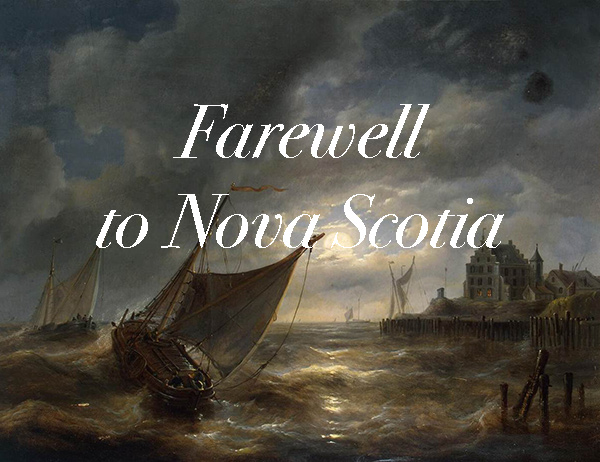
.svg)