The Great Silkie
Child Ballad #113
The silkie be a creature strange
He rises from the sea to change
Into a man, a weird one he,
When home it is in Skule Skerrie.
When he be man, he takes a wife,
When he be beast, he takes her life.
Ladies, beware of him who be
A silkie come from Skule Skerrie.
His love they willingly accept,
But after they have loved and slept,
Who is the monster that they see?
‘Tis “Silkie” come from Skule Skerrie.
A maiden from the Orkney Isles,
A target for his charm, his smiles,
Eager for love, no fool was she,
She knew the secret of Skule Skerrie.
And so, while Silkie kissed the lass,
She rubbed his neck with Orkney grass,
This had the magic power, you see
To slay the beast from Skule Skerrie.
If you have any more information to share about this song or helpful links, please post as a comment.
Thanks for stopping by the site!
~John Fitz

 I am indebted to the many friends who share my love of traditional songs and to the many scholars whose works are too many to include here. I am also incredibly grateful to the collector’s curators and collators of Wikipedia, Mudcat.org, MainlyNorfolk.info, and TheContemplator.com for their wise, thorough and informative contributions to the study of folk music.
I share their research on my site with humility, thanks, and gratitude. Please cite their work accordingly with your own research. If you have any research or sites you would like to share on this site, please post in the comment box. Thanks!


| "The Great Silkie of Sule Skerry" | |
|---|---|
 Vernon Hill's illustration of the tale. From Richard Chope's 1912 collection Ballads Weird and Wonderful.[1] | |
| Song | |
| Genre | Folk song |
| Songwriter | Unknown |
"The Great Silkie of Sule Skerry" or "The Grey Selkie of Sule Skerry" is a traditional folk song from Orkney and Shetland. A woman has her child taken away by its father, the great selkie of Sule Skerry which can transform from a seal into a human. The woman is fated to marry a gunner who will harpoon the selkie and their son.
"The Great Silkie of Sule Skerry" is a short version from Shetland published in the 1850s and later listed as Child ballad number 113. "The Grey Selkie of Sule Skerry" is the title of the Orcadian texts, about twice in length. There is also a greatly embellished and expanded version of the ballad called "The Lady Odivere".
Shetland version
"The Great Silkie of Sule Skerry" was collected from a lady from Snarra Voe, Shetland, and 7 verses from its transcription were published by Capt. F. W. L. Thomas in the 1850s. It was later included in Francis James Child's anthology, and catalogued as Child ballad number 113.[2]
Alan Bruford has noted that "silkie" is an anomalous spelling for "selkie", and in other ballad specimens, the mythical being instead of being a "great" selkie is rather a "grey" selkie.[3]
The ballad begins:
|
A synopsis is as follows: A woman, nursing a baby, laments that she does not know the child's father or where he lives. A man rises up to tell her that he is the father, and that he is a silkie — a shapeshifter that takes the form of a man on the land and a seal in the sea, and that he lives on a remote rocky island called Sule Skerry. He gives her a purse full of gold, takes his son, and predicts that she will marry a gunner who will shoot both him and their son.[4]
Orkney version
There are Orkney versions which place the heroine's setting in Scandinavia,[5] opening with the line: "In Norway land there lived a maid".
"The Grey Selchie of Shool Skerry" was published by R. Menzies Fergusson in Rambling Sketches in the Far North (1883), changing its title to "The Grey Selchie of Sule Skerrie" in the second edition, Rambles in the Far North (1884).[6]
The same 14-stanza version with some spelling differences, entitled "The Grey Selchie of Sule Skerry" was printed in the 11 January 1934 issue of The Orcadian newspaper. It was later reprinted by Finnish folklorist Otto Andersson, who also collected a traditional ballad tune for it.[7][8]
This version contains an exchange in which the seal-groom's marriage proposal is declined by the Norwegian nurse.[7] The selkie makes the same fateful prediction as in the Shetland version, that the woman will marry a gunner, who will shoot both the selkie and their son. It further supplies the grim conclusion that the gunner brings back a gold chain which she recognizes as the one that was given to her son to wear.[9]
Lady Odivere
A cognate to the "Grey Selkie of Suleskerry" includes "The Play of Lady Odivere" ("The Play of de Lathie Odivere").[5] This piece is a dramatic ballad in style, over 90 stanzas long.[10] And it may be in large part a piece of contrived fiction by Walter Traill Dennison, mish-mashed into a kernel of a traditional ballad, in the estimation of modern folklorist Alan Bruford.[11]
Here, the Lady Odivere is in peril of being burnt at the stake for adultery by her husband, when she is rescued by San Imravoe, a selchie who is a jarl of high degree in his realm.[5][11] [12]
Ballad tunes
The original tune was preserved by Andersson, who heard it sung by John Sinclair on the island of Flotta, Orkney.[7][8] Andersson said, "I had no idea at the time that I was the first person to write down the tune. The pure pentatonic form of it and the beautiful melodic line showed me that it was a very ancient melody that I had set on paper".[13]
The best known tune today is non-traditional, having been written by Jim Waters in 1954. Child was interested only in the texts of the ballads he collected, and Jim explains that the tune was "just the best I could do as a way to get a fine ballad sung".[citation needed] Over the next two years, he introduced the ballad to the Boston area at a time when "hootenannies" filled the Great Court of MIT on a weekly basis (before recorded folk songs were widely available). Jim Butler added the song to his repertoire, according to his notes, in October 1954, on a page labelled "MITOC Supp.", being the MIT Outing Club addition to his typewritten Child Ballads. Butler taught the song to several people, including Bonnie Dobson. This is the tune that Joan Baez popularized as "Silkie" in the early 1960s. Waters' own daughter recorded a version of the song in 2024.
Although Jean Redpath disparaged Water's tune as "phony", preferring a longer version of Child 113 to another tune, by 1965, Jim Butler had heard Waters' tune sung by a Scottish student at the University of British Columbia, unaccompanied in the traditional style, and under the impression that he had learned it from his grandfather. "This has to be one of the most flattering things that has ever happened to me",[citation needed] added Waters, who eventually copyrighted his version and assigned it to Folk Legacy Records. Folk Legacy reassigned all copyright interest to James Waters in August, 2012.
American folksinger Pete Seeger set the poem I Come and Stand at Every Door by Turkish poet Nâzım Hikmet to Waters's tune for "The Great Silkie" in the early 1950s. In this version, the song takes the point of view of a child victim of atomic warfare.
Recordings
- The English rock-folk band Pressgang opened their album Mappa Mundi with an atmospheric and dramatic version of The Sylkie
- Joan Baez recorded it as "Silkie" on her 1961 album Joan Baez, Vol. 2.
- Pete Seeger included his version of Hikmet's "I Come and Stand at Every Door" on a 1964 concert album, I Can See a New Day.
- The American rock band The Byrds included the Hikmet/Seeger version on their third album, Fifth Dimension (1966).
- The Seeger song was later covered by This Mortal Coil.
- Roger McGuinn of the Byrds later recorded the song with its original lyrics as part of his Folk Den project.
- The English folk rock band Trees included one variant, as "The Great Silkie", on The Garden of Jane Delawney, their debut album.
- Glasgow-born folk singer Ray Fisher (1940–2011) included the song on her album The Bonny Birdy (1972). Her brother Archie Fisher has a version on his Orfeo (1970).
- Judy Collins included her version, "Great Selchie of Shule Skerry", on her 1962 album Golden Apples of the Sun.[14]
- Oli Steadman included it on his song collection "365 Days Of Folk".[15]
- The Breton folk band Tri Yann also penned an adaptation in French called "Le Dauphin" (the dolphin) on their 1972 album Tri Yann an Naoned.
- Scottish folk band The Corries released a version called "The Great Silkie" on their 1976 album Live At The Royal Lyceum Theatre, Edinburgh.
- The Highwaymen recorded this song twice, with two different versions. The first version was on their 1962 album Standing Room Only, and the second version was on their 2005 album The Water of Life.
- In 1981 Angelo Branduardi recorded this tune on his album Branduardi '81, with lyrics by Esenin. The song is titled "La cagna". In 2013 re-recorded this tune (titled: "Silkie") with original lyrics adapted in Italian language, on his album Il Rovo E La Rosa.
- The Irish band Solas included one variant, "Grey Selchie", on their 1998 album The Words That Remain.
- A version appears on Maddy Prior's 1999 album Ravenchild.
- An EDM adaptation was released on the 1999 Dancemania X5 album, performed by Hype of the Highlands feat. Aya, titled "The Silky"
- Alasdair Roberts included his version of "The Grey Silkie of Sule Skerry" on his CD You Need Not Braid Your Hair for Me: I Have Not Come A-Wooing, released in 2005.
- Dave Bainbridge and Troy Donockley perform a version of the song on their 2005 album When Worlds Collide.[16]
- The Breton singer Cécile Corbel recorded it on her album Songbook Vol.2 (2008).
- Steeleye Span recorded it as a hidden track on their 2009 album Cogs, Wheels and Lovers.
- Singer/songwriter and cellist Liz Davis Maxfield recorded a version titled “The Great Selkie” on her 2009 album Big Fiddle.[17]
- In 2011 June Tabor recorded it on her album Ashore.
- English folk band The Unthanks perform a version of the song on their 2022 album 'Sorrows Away'.
- Jim Waters' daughter Susan sang this song for the Derek Piotr Fieldwork Archive in 2024.[18]
References
- Citations
- ↑ Chope, Richard (1912). Ballads Weird and Wonderful. New York: John Lane Company. pp. 8.
- ↑ Thomas, Capt. F. W. L. (1855), "The Great Silkie of Sule Skerry" Proceedings of the Society of Antiquaries of Scotland 1, pp. 86–89. Reprinted in Child (1886), II, p. 494 and Black (1901), County Folk-lore III, pp. 183–184.
- ↑ Bruford (1974), p. 63.
- ↑ Douglas, Sheila (2004). "Ballads and the Supernatural: Spells, Channs, Curses and Enchantments". Studies in Scottish Literature. 33 (1): 363.
- 1 2 3 Freeman, A. Martin; Gilchrist, A. G. (January 1921). "Extra Note on Song No. 48, verse 7". Journal of the Folk-Song Society. 6 (2): 266 (263–266). JSTOR 4434091
- ↑ Fergusson (1883), pp. 140–141; Fergusson (1884), pp. 242–244; latter cited in Freeman & Gilchrist (1921), p. 266
- 1 2 3 McEntire (2007), p. 124.
- 1 2 Bronson, Bertrand Harris (1962). "The Great Silkie of Sule Skerry". The Traditional Tunes of the Child Ballads. Vol. 2. Princeton University Press. pp. 564–565. ISBN 9781400874828.
{{cite book}}: ISBN / Date incompatibility (help) - ↑ Bold, Alan (2017) [1979], The Ballad, Routledge, pp. 44–45, ISBN 978-1-3153-8974-5
- ↑ McEntire (2007), p. 128.
- 1 2 Bruford, Alan (1997), "Trolls, Hillfolks, Finns and Picts", in Narvez, Peter (ed.), The Good People: New Fairylore Essays, University Press of Kentucky, pp. 121–123, ISBN 978-0-8131-0939-8
- ↑ Dennison (1894), "The Play of de Lathie Odivere", pp. 54–58. Reprinted in Black (1901), County Folk-lore III, pp. 183–184.
- ↑ Thomson, David (2010) [1954]. The People of the Sea, Edinburgh: Canongate Books., p. 212. ISBN 1847674593
- ↑ Elektra Records Catalogue No EKS 7222
- ↑ "365 Days Of Folk: Song List". Retrieved 24 January 2026.
- ↑ "When Worlds Collide, by Dave Bainbridge and Troy Donockley".
- ↑ https://www.youtube.com/watch? v=br_4KJnxMkY&list=OLAK5uy_kETeGFo0rFg9TZD5hOZRwGPsdlq_AZps0&index=9
- ↑ "Silkie of Sule Skerry - Derek Piotr Fieldwork Archive".
- Lexicographical citations
- ↑ "nuris". Dictionary of Scots Language. Scottish Language Dictionaries. Retrieved 20 February 2017.
- ↑ "ba". Scottish National Dictionary (1700–). Scottish Language Dictionaries. Retrieved 20 February 2017.
- ↑ "lillie". Scottish National Dictionary (1700–). Scottish Language Dictionaries. Retrieved 20 February 2017.
- ↑ "wean". Scottish National Dictionary (1700–). Scottish Language Dictionaries. Retrieved 20 February 2017.
- ↑ "ken". A Dictionary of the Older Scottish Tongue (up to 1700). Scottish Language Dictionaries. Retrieved 20 February 2017.
- ↑ "stap". A Dictionary of the Older Scottish Tongue (up to 1700). Scottish Language Dictionaries. p. Definition 16. Retrieved 20 February 2017.
- ↑ "ane". The free dictionary. Retrieved 20 February 2017.
- ↑ "fit". Dictionary of Scots Language. Scottish Language Dictionaries. Retrieved 20 February 2017.
- ↑ "grumly". Merriam-Webster. Merriam-Webster, Incorporated. Retrieved 20 February 2017.
- Bibliography
- Black, G. F. (1901), Thomas, Northcote W. (ed.), County Folk-lore, Publications of the Folk-Lore Society 49, vol. III, pp. 183–184, 235–248
- Bruford, Alan (1974). "The Grey Selkie". Scottish Studies. 18: 63–81.
- Child, Francis James, ed. (1886). "113 The Great Silkie of Sule Skerry". The English and Scottish Popular Ballads. Vol. II. Boston and New York: Houghton, Mifflin. p. 494.
- Dennison, W. Traill (1894). "The Play of de Lathie Odivere". The Scottish Antiquary, or, Northern Notes and Queries. 8: 54–58.
- Fergusson, Robert Menzies (1883). "The Grey Selchie of Shool Skerry". Rambles in the Far North. London: Simpkin, Marshall & Co. pp. 140–141.
- Fergusson, Robert Menzies (1884). "The Grey Selchie of Sule Skerrie". Rambles in the Far North (2nd ed.). London: Alex. Gardner. pp. 242–244.
- McEntire, Nancy Cassell (2007). "Supernatural Beings in the Far North: Folklore, Folk Belief, and the Selkie". Scottish Studies. 35: 120–143. doi:10.2218/ss.v35.2692.
External links
- History, and two variants at orkneyjar.com
- Child version
- Full original poem

Source: Mainly Norfolk
The Great Silkie of Sules Skerry
[ Roud 197 ; Child 113 ; Ballad Index C113 ; trad.]The Great Silkie of Sule Skerry is a shape-shifting song from Orkney. A silkie is a seal. Sule Skerry (Sula Sgeir) is a rocky islet 25 miles west of Hoy Head in Orkney.
Most modern recordings use the tune set by Dr. James Waters of Columbia University in the 1950s. The original tune for this song was nearly lost, but was noted down in 1938 by Dr. Otto Andersson, who heard it sung by John Sinclair on the island of Flotta, Orkney. He said, “I had no idea at the time that I was the first person to write down the tune. The pure pentatonic form of it and the beautiful melodic line showed me that it was a very ancient melody that I had set on paper.”
John Sinclair of Flotta, Orkney Islands, sang The Grey Silkie in a BBC recording made by Sean Davies on the anthology Sailormen and Servingmaids (The Folk Songs of Britain Volume 6; Caedmon 1961; Topic 1970). The album’s booklet lists the date of recording erroneously as June 1964, three years after the album was released. The booklet also commented:
In the west of Scotland, where seals abound, there are many tales of their response to human contact. I’ve been told again and again of seals that raised their heads out of grey, curling waves, to listen as long as anyone would sing to them. That this is not superstition is confirmed by a contemporary account of an American woman, who made a pet of a seal and swam with it all one summer. The seal would wait in the surf for her every day and call out to her as she came down the cliff to the beach.
In Scotland, they speak of “seal-people” who are said to belong to a clan whose forbears were seals. In the Shetlands, the folk believed in magical beings who lived in land beneath the deeps of the ocean and put on seal-skin for their ascent through the water. Once on shore, they put off their disguise and appeared as human-beings. Such a one was the Grey Silkie of Suleskerry who wooed and won a Shetland woman.
Here our ballad begins. A brief version of it appears as no. 113 in Child without a tune, but this is no match for the variant which old John Sinclair of Flotta in the Orkney Isles turned up with in January 1934. He has since been visited by Swedish folklorists [i.e. Otto Andersson] and recorded for the BBC. Bronson remarks that his tune is a variant of the air often associated with Hind Horn, another ballad of traffic between spirits and mortals. Sinclair (who learned the song from his mother), worked all his life as a seaman, and a farmer-fisherman until his retirement. He now lives in a cottage by the sea where Silkies perhaps may still appear.
Trees sang The Great Silkie in 1970 on their CBS album The Garden of Jane Delawney.
Ray Fisher sang The Silkie of Sul Skerry in 1972 on her album The Bonny Birdy.
Dave Burland sang The Great Silkie on his 1975 album Songs and Buttered Haycocks.
Alison McMorland sang Great Selkie of Sule Skerry on her 1977 Tangent album Belt wi’ Colours Three. She also sang The Silkie of Sule Skerry in 2001 on her and Geordie McIntyre’s Tradition Bearers CD Rowan in the Rock. They commented in their liner notes:
We owe this version to the Finnish scholar Otto Andersson who collected the tune from John Sinclair of Flotta, Orkney in 1938 and the text from Annie G. Gilchrist.
Hamish Henderson observes, “… the legend of the seal folk who inhabit a kind of half world between their native element and the littoral inhabited by their human kind is a powerful obsessive folklore motif in all areas where the Norsemen held sway…” For valuable insights into the enduring fascination with the stories and the lore of the ‘silkie’ (Atlantic grey seal) we commend People of the Sea by David Thomson, recently reprinted by Canongate, Edinburgh.
Sheena Wellington sang The Great Silkie o’ Sule Skerrie in a concert at Nitten (Newtongrange) Folk Club, Scotland, that was published in 1995 on her Greentrax CD Strong Women. She commented in her liner notes:
Stories and sangs of the silkies or seal-people and their dealings with humankind are found widely in both Norse and Celtic tradition but Francis James Child’s English and Scottish Popular Ballads has only one short version of this ballad and, of course, no melody. This stark tune and the fuller story were recorded in the thirties from John Sinclair of Flotta in the Orkney Islands. In some versions it is the Silkie who offers marriage the second time but while collating my text from various sources I decided that it was likely that the woman would see marriage as the only way to keep her child.
The Clutha sang The Silkie o’ Sule Skerry in 1996 on their CD On the Braes.
Nancy Kerr sang The Great Silkie to John Sinclair’s tune in 1996 on her and her mother Sandra Kerr’s Fellside CD Neat and Complete. Sandra Kerr commented in the liner notes:
As a small child Nancy was sung this at night in the hope that its undulating melody and imagery of mothers singing lullabies to seal babies might send her to sleep. Recently she confessed that the ballad terrified her and that for years she was puzzled as to why the visiting seal/man should have been “grumbly”.
Maddy Prior sang Great Silkie of Sules Skerry in 1999 on her album Ravenchild; this track was later included on the Park Records anthology Women in Folk and on the Maddy Prior anthology Collections: A Very Best of 1995 to 2005. Maddy Prior commented in the original album’s notes:
This eerie ballad from the Shetland isles harks back to the land’s Scandinavian roots. It is a shape-shifting story of a seal / man whose fate is told with great simplicity and grace.
Elspeth Cowie sang The Great Silkie of Sule Skerry on her 2000 CD Naked Voice.
Barbara Dickson sang Sule Skerry in 2001 on her anthology For the Record.
Hector Gilchrist and Liz Thompson sang The Selkie as the title track of their 2003 WildGoose album Selkie. This track was also included in 2007 on the WildGoose anthology Songs of Witchcraft and Magic.
Hannah James learned The Great Silkie of Sule Skerry from Mary Macmaster at the Folkworks Summer School 1999 and recorded it with Kerfuffle in 2004 for their second album, K2. She returned to it with Lady Maisery when they recorded The Grey Selkie for their 2013 album Mayday. They commented:
Many of the songs on this album deal with issues of gender and power. The Grey Selkie is an example of how folklore might have been used to justify situations which were perceived as socially unacceptable. Selkies are creatures that only make contact with one human for a brief period before they must return to the sea for seven years, which may have provided an explanation for an absent father or a child born out of wedlock. In this tragic song, the woman is largely at the mercy of others throughout, whether it is society, the selkie, the gunner or ultimately, fate. Hazel [Askew] wrote the new Lydian tune and collated the text from various versions of the ballad.
This video shows Lady Maisery at Folk East 2012:
June Tabor sang The Great Selkie of Sule Skerry in 2011 on her Topic album Ashore. She commented
Seals were once far more common in the seas around these islands than they are today. There was a strong belief in the Northern Isles in the existence of a third race, the Selkies, who lived in a realm below the waves, passing through the ocean as seals but assuming human shape on land. Like the Swan Children of Lir with their cloaks of feathers, for Selkies the sealskin was essential to the act of transformation; its loss or withholding imprisoned them in human form. That fine storyteller the late Duncan Williamson had many tales of the frequently uneasy relationship between Selkies and the men (and women) of the Highlands and Islands. The theme continues to fascinate modern film-makers, artists and writers; for me, of particular relevance are the work of Maria Hayes, and Robin Robertson’s poem At Roane Head.
This version of The Great Selkie was first collected in 1938 from John Sinclair of Flotta in the Orkneys.
Marc Block sang Sule Skerry in 2014 on his CD The Hawthorn Spring. He commented in his liner notes:
My parents used to sing a French version of this song, which is in fact from Orkney, and as a child I was fascinated by the notion of the man diving into the sea and turning into a seal. It seems most versions of The Great Silkie are merely a fragment of a much longer ballad. I found the 93 verses of Lady Odivere on Mudcat, and condensed it down to this version.
Maz O’Connor sang The Grey Selkie on her 2014 CD This Willowed Light. She performed it at Cecil Sharp House in this 2014 video:
Lyrics
| Alison McMorland sings The Silkie of Sule Skerry | |
|---|---|
| In Norway land there lived a maid, “Hush, baloo lilllie,” this maid began, “I know not whaur ma bairn’s faither is By land or sea does he travel in.” |
|
| It happened on a certain day When this fair maid lay fast asleep That in cam a grey silkie And sat him doon at her bed feet. |
|
| Saying, “Awak’ awak’ ma fair pretty maid For oh how sound as thou dost sleep, I’ll tell thee whaur yer bain’s faither is He’s lyin’ close at your bed feet.” |
|
| “I pray come tell tae me yer name And tell me whaur yer dwelling is?” “My name it is guid Hein Mailer I earn ma livin’ oot o the sea. |
|
| “I am a man upon the land, I am a silkie in the sea. An when I’m far fae every strand Ma dwelling t’is in Sule Skerry.” |
|
| “Alas, alas this woeful fate This weary fate that’s been laid on me, That a man should come frae the West o’ Hoy Tae the Noraway lands tae hae a bairn by me.” |
|
| He said, “Ye’ll nurse ma little wee son For seiven lang years upon yer knee, An at the end o’ seiven lang years I’ll come back again an pay the nouris fee.” |
|
| And she has nursed her little wee son For seiven lang years upon her knee, An at the end of seiven lang years He’s cam back again wi’ white monie. |
|
| He said, “I’ll pit a chain roon his neck An a gey gowd chain o it will be, An if ever he comes tae the Noraway lands Ye’ll hae a guid guess on who is he.” |
|
| And he said, “Ye’ll wed a gunner guid, And a gay guid gunner it will be, And he’ll gae oot on a May mornin He’ll shoot your son and the grey silkie.” |
|
| Oh she has wed a gunner guid And a gay guid gunner it was he, And he gaed oot on a May mornin He shot the son and the grey silkie. |
|
| “Alas, alas this woeful fate This weary fate that’s been laid on me,” She sobbed and sighed and bitter cried Her tender heart did brak in three. |
|
| Sandra and Nancy Kerr sing The Great Silkie | Maddy Prior sings Great Silkie of Sules Skerry |
| In Noroway there lived a maid, “Bye-loo my baby,” she begins, “Oh know not I my babe’s father Or if land or sea he’s living in.” |
An earthly nourris sits and sings And aye she sings, “Ba lily wain And little ken I my bairn’s father Far less the land that he dwells in.” |
| Then there arose at her bedfeet, And a grummlie guest I’m sure was he, Saying, “Here am I thy babe’s father Although I be not comely. |
Then one arose at her bedfoot, And a grumbly guest I’m sure was he, Saying, “ Here am I, thy bairn’s father Although I be not comely. |
| “I am a man upon the land, I am a silkie in the sea, But when I’m in my own coutrie My dwelling is in Sule Skerry.” |
“I am a man upon the land, I am a silkie on the sea, And when I’m far and far frae land My home it is in Sules Skerry.” |
| Then he has taken a purse of gold And he has put it upon her knee, Saying, “Give to me my little wee son And take thee up thy nurse’s fee. |
And he has ta’en a purse of gold And he has placed it upon her knee, Saying, “Give to me my little young son And take thee up thy nurse’s fee. |
| “And it shall pass on a summer’s day When the sun shines hot on every stone, That I shall take my little wee son And teach him for to swim in the foam. |
“And it shall come tae pass on a summer’s day When the sun shines bright on every stone, I’ll come and fetch my little young son And teach him how to swim the foam. |
| “And you shall marry a gunner good, And a proud good gunner I’m sure he’ll be, And he’ll go out on a May morning And kill both my young son and me.” |
“And you, you shall marry a pround gunner, And a proud gunner I’m sure he’ll be, But the very first shot that e’er he shoots He’ll kill both my young son and me.” |
| And she did marry a gunner good, And a proud good gunner I’m sure ’twas he, And the very first shot he ever did shoot He killed the son and the great silkie. |
|
| In Noroway there lived a maid, “Bye-loo my baby,” she begins, “Oh know not I my babe’s father Or if land or sea he’s living in.” |
|
| “I am a man upon the land, I am a silkie in the sea, And when I’m in my own coutrie My dwelling is in Sule Skerry.” |
Links
See also the Mudcat Café thread Origins: The Great Silkie.
Performances, Workshops,
Resources & Recordings
The American Folk Experience is dedicated to collecting and curating the most enduring songs from our musical heritage. Every performance and workshop is a celebration and exploration of the timeless songs and stories that have shaped and formed the musical history of America. John Fitzsimmons has been singing and performing these gems of the past for the past forty years, and he brings a folksy warmth, humor and massive repertoire of songs to any occasion.
Festivals & Celebrations
Coffeehouses
School Assemblies
Library Presentations
Songwriting Workshops
Artist in Residence
House Concerts
Pub Singing
Irish & Celtic Performances
Poetry Readings
Campfires
Music Lessons
Senior Centers
Voiceovers & Recording
““Beneath the friendly charisma is the heart of a purist gently leading us from the songs of our lives to the timeless traditional songs he knows so well…”
Join Fitz
at The Colonial Inn
“The Nobel Laureate of New England Pub Music…”
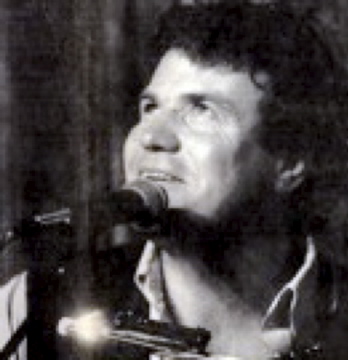
On the Green, in Concord, MA
Every Thursday Night
for over thirty years…
“A Song Singing, Word Slinging, Story Swapping,
Ballad Mongering, Folksinger, Teacher, & Poet…”
Fitz’s Recordings
& Writings
Songs, poems, essays, reflections and ramblings of a folksinger, traveler, teacher, poet and thinker…
Download for free from the iTunes Bookstore
“A Master of Folk…”

Fitz’s now classic recording of original songs and poetry…
Download from the iTunes Music Store
“A Masterful weaver of song whose deep, resonant voice rivals the best of his genre…”

“2003: Best Children’s Music Recording of the Year…”
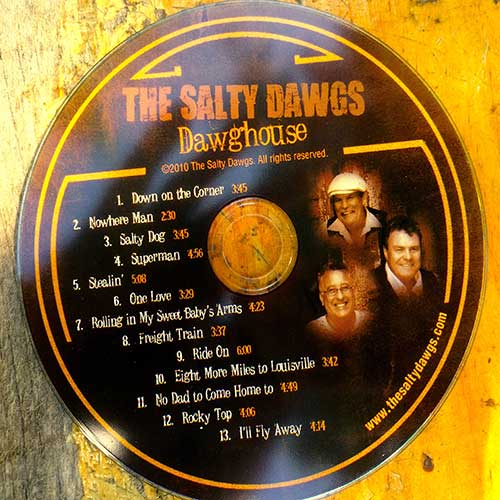
Fitz & The Salty Dawgs
Amazing music, good times and good friends…
TheCraftedWord.org

Writing help
when you need it…
“When the eyes rest on the soul…that’s Fitzy…”

0 Comments