
The House Carpenter
Child Ballad #243
Well met, well met, my own true love
Well met, well met, cried he
I’ve just returned from the salt, salt sea
And it’s all for the love of thee
O I could have married the king’s daughter dear
And she would have married me
But I have refused the crown of gold
And it’s all for the sake of thee
If you could have married the king’s daughter dear
I’m sure you are to blame
For I am married to the house carpenter
And he is a fine young man
If you’ll forsake your house carpenter
And come away with me
I’ll take you to where the grass grows green
On the banks of the sweet Willie
If I forsake my house carpenter
And come away with thee
What have you got to maintain me upon
And keep me from slavery
I’ve six ships sailing on the salt, salt sea
A-sailing from dry land
And a hundred and twenty jolly young men
Shall be at thy command
She picked up her poor wee babe
And kisses gave him three
Saying stay right here with the house carpenter
And keep him good company
They had not been at sea two weeks
I’m sure it was not three
When this poor maid began to weep
And she wept most bitterly
O do you weep for your gold, he said
Your houses, your land, or your store?
Or do you weep for your house carpenter
m That you never shall see anymore
I do not weep for my gold, she said
My houses, my land or my store
But I do weep for my poor wee babe
That I never shall see anymore
They had not been at sea three weeks
I’m sure it was not four
When in their ship there sprang a leak
And she sank to rise no more
What hills, what hills are those, my love
That are so bright and free
Those are the hill of Heaven, my love
But not for you and me
What hills, what hills, are those, my love
That are so dark and low
Those are the hills of Hell, my love
Where you and I must go

 I am indebted to the many friends who share my love of traditional songs and to the many scholars whose works are too many to include here. I am also incredibly grateful to the collector’s curators and collators of Wikipedia, Mudcat.org, MainlyNorfolk.info, and TheContemplator.com for their wise, thorough and informative contributions to the study of folk music.
I share their research on my site with humility, thanks, and gratitude. Please cite their work accordingly with your own research. If you have any research or sites you would like to share on this site, please post in the comment box. Thanks!


"The Daemon Lover" (Roud 14, Child 243) – also known as "James Harris", "A Warning for Married Women", "The Distressed Ship Carpenter", "James Herries", "The Carpenter’s Wife", "The Banks of Italy", or "The House-Carpenter" – is a popular ballad dating from England of the mid-seventeenth century,[1] when the earliest known broadside version of the ballad was entered in the Stationers' Register on 21 February 1657.[2][3] There are different version of the tale, which typically describe a married woman who is lured from her home and family by a demon who masquerades as a former lover.
History and different versions
There are a number of different versions of the ballad. In addition to the eight collected by Francis James Child in volume IV of his anthology The English and Scottish Popular Ballads (versions A to H), others can be found in Britain and in the United States, where it remained especially widespread,[4] with hundreds of versions being collected throughout the years,[5] around 250 of them in print.[6] In comparison, only four new variants were recorded in the UK in the time between Child's death in 1896 and the second half of the 1960s, all of them before 1910.[7]
"A Warning for Married Women" (Child A)
The oldest version of the ballad – labeled 243 A in Child's anthology and originally signed with the initials L.P. – is generally attributed to Laurence Price,[8][9][10] a prominent ballad writer of that time.[11] The original, full title of the broadside was "A Warning for Married Women, by the example of Mrs. Jane Renalds, a West-Country woman born neer unto Plymouth, who having plighted her troth to a seaman, was afterwards married to a carpenter, and at last carried away by a spirit, the manner how shall be presently recited".[12] The broadside does not seem to be a recasting of a pre-existing folk ballad in circulation, although it bears some similarities to other ballads, most notably a similarly named "A Warning for Maidens", also known by the title "Bateman's Tragedy" (Roud 22132).[13][14][15]
"A Warning for Married Women"[16] tells the story of Jane Reynolds and her lover James Harris, with whom she exchanged a promise of marriage. He is pressed as a sailor before the wedding takes place and Jane faithfully awaits his return for three years, but when she learns of his death at sea, she agrees to marry a local carpenter. Jane gives birth to three children and for four years the couple lives a happy life.[17] One night, when the carpenter is away, the spirit of James Harris appears. He tries to convince Jane to keep her oath and run away with him. At first she is reluctant to do so, because of her husband and their children, but ultimately she succumbs to the ghost's pleas, letting herself be persuaded by his tales of rejecting the royal daughter's hand and assurance that he has the means to support her – namely, a fleet of seven ships. The pair then leaves England, never to be seen again, and the carpenter commits suicide upon learning that his wife is gone. The broadside ends with a mention that although the children were orphaned, the heavenly powers will provide for them.[18]
"The Distressed Ship Carpenter" (Child B)
Another known version of the ballad, labeled 243 B in Child's anthology and titled ‘The Distressed Ship Carpenter’, comes from the mid-eighteenth century and appears in A Collection of Diverting Songs, Epigrams, & c. and in a chapbook titled The Rambler’s Garland.[19] It is notable for its opening, ‘Well met, well met, my own true love’, which is characteristic of many versions of the ballad, in particular those recorded in America. This variation differs from "A Warning for Married Women". The opening part of the ballad is lost, and so are the names of Jane and James; the text does not mention their former vows either. The former lover appears to be a mortal man, rather than a revenant.[20][21] "The Distressed Ship Carpenter" ends with the eponymous craftsman lamenting and cursing seamen for ruining his life. With the disappearance of the supernatural elements, the story of the ballad became rationalized.[22] These changes may have originated in an oral tradition or, as suggested by John Burrison, there was an intermediary broadside version of the ballad that served as a bridge between "A Warning’" and "The Distressed Ship Carpenter";[23][24] David Atkinson considers a possibility that the changes were made either to avoid any legal troubles with the intellectual property owners of "A Warning"[25] or as a result of a change in broadside format to smaller sheets.[26]
"The Distressed Ship Carpenter" is characterized by a number of common folk touches, possibly indicating that there was an intermediary folk version developed as a result of an oral tradition between this version of the ballad and the original broadside.[27] The story begins in the third act, contains recurring words and phrases and is leaping and lingering, i.e. alternating between rapid and slow unfoldment of the events, at two crucial points: when relating the return of the former lover and the lovers’ confrontation after they board the ship.[28] In doing so, the ballad preserves and focuses on its "emotional core".[29][30]
Scottish and American traditions
"A Warning for Married Women" and "The Distressed Ship Carpenter" seem to have inspired the Scottish and American traditions of the ballad, respectively.[31][32][33] The Scottish versions collected by Child (designated as versions C-G) share a number of elements with Child 243 A not present in Child 243 B – among them a direct reference to former vows and the name of the sailor – but what distinguishes them most is the character of a lover, who regains his supernatural nature. What is especially characteristic of these versions is the introduction of a daemonic presence; in "The Daemon Lover" (Child 243 E, F, G) James Harris is no longer a ghost or a mortal man, but instead is revealed to be a cloven-footed devil.[34][35]
It is generally agreed that copies collected in America (usually titled "The House Carpenter") were derived from "The Distressed Ship Carpenter".[36] There are a number of similarities between these versions – such as the absence of former vows and supernatural elements characteristic of "A Warning" and Scottish versions – and the story presented in them remains essentially the same.[37][38] Some elements taken from the Scottish tradition are present in American variants, for example "hills of heaven, hills of hell" line from Child 243 E, but the influence of "The Distressed Ship Carpenter" is prevalent.[39] The most notable differences when compared to the English and Scottish traditions are their setting (i.e. "the banks of Italy" become "the banks of old Tennessee") and more emphasis being put on the relationship between the mother and the child and their subsequent parting.[40] The American history of the ballad in printed form dates back to the 1850s.[41] Two verses that were printed in Philadelphia (1858; Child included them in his anthology), along with a broadside printed by Andrews of New York (ca. 1857; reissued by De Marsan in 1860) are the earliest known examples of the ballad in the United States, although the oral tradition had already existed there before they were published and it played a predominant role in the spread of the ballad in America.[42][43]
Tune and metre
Referring to broadsides that were already in circulation for the tune was a common habit and so the original broadsides of "A Warning for Married Women" name the tune to which the ballad was to be sung as "The Fair Maid of Bristol", "Bateman", or "John True".[44][45] These three tunes are also identified as "The Lady’s Fall", which was notably the tune for "Bateman’s Tragedy" (Roud 22132) and numerous other early seventeenth-century broadsides, most of which contained themes of "crimes, monstrous births, or warnings of God’s judgement."[46] Later, eighteenth-century copies of "The Distressed Ship Carpenter" carried no tune designation whatsoever.[47] "A Warning for Married Women" and "The Distressed Ship Carpenter" were printed respectively in 32 four-line stanzas (in ballad metre) and 13 to 14 four-line stanzas (in long measure, described by Atkinson as “slightly awkward” at times).[48]
Themes
"A Warning for Married Women" addresses the themes of marriage, unfaithfulness and bigamy.[49] David Atkinson writes that it can be seen as "a reinforcement of prevailing patriarchal family relationships."[50] Barbara Fass Leavy describes Jane Reynolds as a "cautionary example" of what happens "when women abandon their responsibilities in order to pursue their own pleasures."[51] The theme of materialism is prevalent throughout the different versions,[52][53] as the wife usually remains concerned whether her lover will be able to maintain her.[54] Likewise, he uses promises of prosperity as a way to seduce her.[55] Leavy also suggests a different reading of the ballad, in which it is her marriage with a carpenter, rather than her decision to flee with the former lover, that can be considered an act of infidelity.[56] Atkinson describes the original broadside as "the preservation of outmoded ways of thinking within the canon of popular literature."[57] In accordance with the ecclesiastical law of early seventeenth-century England, a mutual promise of marriage was enough to make the couple husband and wife and was considered binding in the eyes of God. As a result, breaking such a promise would make any subsequent marriage invalid and invite divine punishment.[58] The ballad therefore employs "popular theology to reinforce [its] emphasis on fidelity in marriage."[59] The broadside may be read as encouraging faithfulness to the person with whom the original pre-marriage vows were exchanged and warning against divine punishment for breaking the oath.[60]
The changes resulting from the recasting of "A Warning for Married Women" as "The Distressed Ship Carpenter" can be seen as the reflection of "a genuine, if quite gradual, change in social and judicial attitudes in early modern England." The revenant becomes a former lover and crime and punishment take the place of sin and retribution.[61] The theme of sin becomes notable once again in the Scottish "Demon Lover" tradition (notably Child D-G), which establishes that the former lover is the devil who "came to carry off the unfaithful girl to the hills of hell."[62] The imagery of the "hills of heaven and hell" is present in some of the variants collected in America.[63] Alan Lomax describes the ballad as a reinforcement of the Calvinist sexual morality.[64]
The ballad also touches on the issues of class relations. According to Dave Harker, "A Warning for Married Women" questions the responsibilities of young women "of worthy birth and fame".[65] In her reading of the ballad, Leavy mentions the binary opposition between the husband and the lover and two modes of existence they represent; the mundane life and domestic ties of the artisan and the life of adventure and freedom of the seaman.[66]
Many supernatural ballads mention fictional or remote places as locations.[67] In multiple variants of the ballad, James Harris promises to take his lover to "the banks of Italie",[68] which is a real, but sufficiently far-off place to serve as the final destination for an unfaithful wife and her supernatural lover.[69] In other versions, the banks of Italy turn into, for example, the banks of Tennessee (in this version the destination becomes a familiar place to return to),[70] various generalizations ("deep blue sea", "salt water sea") or abstractions ("isle of sweet liberty", "banks of sweet relief").[71]
Traditional recordings
The ballad was collected and recorded many times in the Appalachian Mountains; Clarence Ashley recorded a version with a banjo accompaniment in 1930,[72] Texas Gladden had two versions recorded in 1932 and 1946,[73][74] whilst Sarah Ogan Gunning sang a version in 1974.[75] Jean Ritchie sang her family's version of the ballad twice, one of those times recorded by Alan Lomax,[76][77] now available online courtesy of the Alan Lomax archive.[78] The song was also popular elsewhere in the United States; Ozark singer Almeda Riddle sang another traditional version in 1964,[79] and folklorist Max Hunter recorded several Ozark versions which are available on the online Max Hunter Folk Collection.[80][81][82][83]
Canadian folklorists Edith Fowke, Kenneth Peacock and Helen Creighton each recorded a different "House Carpenter" variant in Canada in the 1950s and 60s.[84][85][86]
The song appears to have been largely forgotten in Britain and Ireland, but a fragmentary version, sung by Andrew Stewart of Blairgowrie, Perthshire, Scotland, and learned from his mother, was recorded by Hamish Henderson in 1955,[87] and can be heard on the Tobar an Dualchais website.[88] A variant performed by Frank Browne in Bellanagare, Co. Roscommon, Ireland, was also recorded in 1975 by Hugh Shields.
Popular recordings
Versions of the song, under its several titles, have been recorded by:
- Alasdair Roberts
- Andy Irvine[89]
- Augie March - re-written as "Men Who Follow Spring The Planet 'Round"
- Battlefield Band - "The Devil's Courtship"
- Bob Dylan recorded the version "House Carpenter" in 1961.[90]
- Buffy Sainte-Marie
- Clarence Ashley
- Custer Larue
- Daithi Sproule
- Damien Jurado
- Dave Van Ronk
- David Grisman
- Dervish - "Sweet Viledee"
- Doc Watson
- Ewan MacColl
- Eleanor Tomlinson
- Faun Fables
- The Handsome Family
- Hurt
- Jean Ritchie
- Jeff Lang
- Joan Baez
- Kelly Joe Phelps
- Kim Larsen - re-written as "Byens Hotel" in 1973
- Kornog
- Lisa Moscatiello
- Martin Simpson
- Mr. Fox
- Myrkur - "House Carpenter"
- Natalie Merchant
- Mick McAuley
- Nephew - cover of Kim Larsen's song
- Nic Jones
- Nickel Creek - “House Carpenter”
- Oakley Hall
- Paul Simon
- Pentangle
- Peter Bellamy
- Peggy Seeger
- Pete Seeger
- Punch Brothers - "House Carpenter / Jerusalem Ridge"
- Richard Dyer-Bennet
- Steeleye Span
- SubRosa - "House Carpenter"
- Superwolf
- Sweeney's Men
- Texas Gladden
- The Baltimore Consort
- The Carolina Tar Heels
- The Ex
- The Mammals
- Tim O'Brien
- Tony Rice
- Cornelis Vreeswijk - "Somliga går med trasiga skor"
In literature
Elizabeth Bowen's 1945 short story "The Demon Lover" uses the ballad's central conceit for a narrative of ghostly return in wartime London.
Shirley Jackson's collection The Lottery and Other Stories includes "The Daemon Lover", a story about a woman searching for her mysterious fiancé named James Harris.
In Grady Hendrix’s 2020 novel The Southern Book Club's Guide to Slaying Vampires, the main antagonist is a vampire named James Harris as a way to pay ode to the ballad.[citation needed]
In classical music
Hamish MacCunn's 1887 concert overture The Ship o' the Fiend is based on the ballad.[91]
Footnotes
- ↑ Atkinson and Roud 2014, p. 206.
- ↑ Atkinson 1989, p. 592.
- ↑ Atkinson and Roud 2014, p. 206.
- ↑ Leavy 1994, p. 65.
- ↑ Gardner-Medwin 1971, p. 415.
- ↑ Burrison 1967, p. 273.
- ↑ Burrison 1967, pp. 274-75.
- ↑ Harker 1992, p. 300.
- ↑ Atkinson 1989, p. 592.
- ↑ Atkinson and Roud 2014, p. 206.
- ↑ Atkinson 1989, p. 592.
- ↑ Atkinson 1989, p. 592.
- ↑ Atkinson and Roud 2014, p. 207.
- ↑ Atkinson 1989, pp. 598-602.
- ↑ Burrison 1967, p. 272.
- ↑ Child 1904, pp. 543-46.
- ↑ Child 1904, pp. 543-44, stanzas 1-14.
- ↑ Child 1904, pp. 543-44, stanzas 15-32.
- ↑ Atkinson and Roud 2014, p. 207.
- ↑ Atkinson and Roud 2014, p. 208.
- ↑ Atkinson 1989, p. 605.
- ↑ Atkinson and Roud 2014, p. 208.
- ↑ Burrison 1967, pp. 272-73.
- ↑ Leavy 1994, p. 65.
- ↑ Atkinson and Roud 2014, p. 209.
- ↑ Atkinson and Roud 2014, pp. 208-9.
- ↑ Burrison 1967, pp. 272-73.
- ↑ Burrison 1967, p. 273.
- ↑ Burrison 1967, p. 273.
- ↑ Coffin 1963, p. 300.
- ↑ Atkinson and Roud 2014, pp. 209-10.
- ↑ Atkinson 1989, p. 596.
- ↑ Atkinson 2004, p. 483, fn. 92.
- ↑ Atkinson and Roud 2014, pp. 209-10.
- ↑ Atkinson 1989, p. 596.
- ↑ Atkinson and Roud 2014, pp. 210-11.
- ↑ Atkinson and Roud 2014, pp. 209-10.
- ↑ Hyman 1957, p. 236.
- ↑ Atkinson and Roud 2014, p. 211.
- ↑ Atkinson and Roud 2014, pp. 210-11.
- ↑ Atkinson and Roud 2014, p. 210.
- ↑ Burrison 1967, pp. 273-74.
- ↑ Gardner-Medwin 1971, p. 415.
- ↑ Atkinson and Roud 2014, p. 209.
- ↑ Atkinson 1989, p. 606.
- ↑ Simpson 1966, p. 369.
- ↑ Atkinson and Roud 2014, p. 209.
- ↑ Atkinson and Roud 2014, pp. 207-8.
- ↑ Harker 1992, p. 332.
- ↑ Atkinson 1989, p. 599.
- ↑ Leavy 1994, p. 66.
- ↑ Atkinson 1989, p. 599.
- ↑ Leavy 1994, p. 69.
- ↑ Leavy 1994, p. 69.
- ↑ Leavy 1994, p. 69.
- ↑ Leavy 1994, p. 66.
- ↑ Atkinson and Roud 2014, p. 207.
- ↑ Atkinson 1989, p. 602.
- ↑ Atkinson 1989, p. 6024.
- ↑ Atkinson 1989, p. 600.
- ↑ Atkinson and Roud 2014, p. 208.
- ↑ Burrison 1967, p. 273.
- ↑ Atkinson and Roud 2014, p. 2011.
- ↑ Leavy 1994, p. 65.
- ↑ Harker 1992, p. 333.
- ↑ Leavy 1994, p. 67.
- ↑ Richmond 1946, p. 263.
- ↑ Richmond 1946, p. 263.
- ↑ Atkinson 2009, p. 256.
- ↑ Leavy 1994, p. 71.
- ↑ Richmond 1946, p. 267.
- ↑ "The House Carpenter (Roud Folksong Index S400766)". The Vaughan Williams Memorial Library. Retrieved 2021-01-18.
- ↑ "The House Carpenter (Roud Folksong Index S445415)". The Vaughan Williams Memorial Library. Retrieved 2020-11-09.
- ↑ "The House Carpenter (Roud Folksong Index S238200)". The Vaughan Williams Memorial Library. Retrieved 2020-11-09.
- ↑ "The House Carpenter (Roud Folksong Index S148217)". The Vaughan Williams Memorial Library. Retrieved 2020-11-10.
- ↑ "The House Carpenter (Roud Folksong Index S208656)". The Vaughan Williams Memorial Library. Retrieved 2020-11-09.
- ↑ "My Little Carpenter (Roud Folksong Index S341765)". The Vaughan Williams Memorial Library. Retrieved 2020-11-09.
- ↑ "Alan Lomax Archive". research.culturalequity.org. Retrieved 2020-11-09.
- ↑ "The House Carpenter (Roud Folksong Index S301879)". The Vaughan Williams Memorial Library. Retrieved 2020-11-09.
- ↑ "Song Information". maxhunter.missouristate.edu. Retrieved 2020-11-10.
- ↑ "Song Information". maxhunter.missouristate.edu. Retrieved 2020-11-10.
- ↑ "Song Information". maxhunter.missouristate.edu. Retrieved 2020-11-10.
- ↑ "Song Information". maxhunter.missouristate.edu. Retrieved 2020-11-10.
- ↑ "The House Carpenter (Roud Folksong Index S148209)". The Vaughan Williams Memorial Library. Retrieved 2020-11-10.
- ↑ "The House Carpenter (Roud Folksong Index S272948)". The Vaughan Williams Memorial Library. Retrieved 2020-11-10.
- ↑ "The Young Ship's Carpenter (Roud Folksong Index S383645)". The Vaughan Williams Memorial Library. Retrieved 2020-11-10.
- ↑ "The Demon Lover (Roud Folksong Index S430491)". The Vaughan Williams Memorial Library. Retrieved 2020-11-10.
- ↑ "Tobar an Dualchais Kist O Riches". www.tobarandualchais.co.uk. Retrieved 2020-11-10.
- ↑ Solo album: Abocurragh, Andy Irvine AK-3, 2010.
- ↑ "House Carpenter".
- ↑ Purser, John (1995). "The Ship o' the Fiend". Hyperion Records. Retrieved 2021-02-23.
References
- Atkinson, David (1989). "Marriage and Retribution in 'James Harris (The Dæmon Lover)'". Folk Music Journal. 5 (5): 592–607. JSTOR 4522306.
- Atkinson, David (2004). "Folk Songs in Print: Text and Tradition". Folk Music Journal. 8 (4): 456–483. JSTOR 4522719.
- Atkinson, David; Roud, Steve (2014). Street Ballads in Nineteenth-Century Britain, Ireland, and North America: The Interface between Print and Oral Traditions. London: Routledge. ISBN 9781138269477.
- Burrison, John (1967). ""James Harris" in Britain Since Child". The Journal of American Folklore. 80 (317): 271–284. doi:10.2307/537874. JSTOR 537874.
- Child, Francis James (1904). Sargent, Helen Child; Kittredge, George Lyman (eds.). English and Scottish Popular Ballads. Boston: Houghton Mifflin Co. Retrieved 2 June 2021.
- Coffin, Tristram P. (1963). The British Traditional Ballad in North America. Austin and London: American Folklore Society.
- Gardner-Medwin, Alisoun (1971). "The Ancestry of "The House-Carpenter": A Study of the Family History of the American Forms of Child 243". The Journal of American Folklore. 84 (334): 414–427. doi:10.2307/539635. JSTOR 539635.
- Harker, Dave (1992). "A Warning". Folk Music Journal. 6 (3): 299–338. JSTOR 4522410.
- Hyman, Stanley Edgar (1957). "The Child Ballad in America: Some Aesthetic Criteria". The Journal of American Folklore. 70 (277): 235–239. doi:10.2307/538322. JSTOR 538322.
- Leavy, Barbara Fass (1994). In Search of the Swan Maiden. New York and London: NYU Press. ISBN 9780814750681.
- Simpson, Claude M. (1966). The British Broadside Ballad and its Music. New Brunswick: Rutgers University Press.

Source: Mainly Norfolk
The Demon Lover / The House Carpenter
[ Roud 14 ; Child 243 ; G/D 2:332 ; Ballad Index C243 ; trad.]
A.L. Lloyd sang The Demon Lover in 1956 on his and Ewan MacColl’s Riverside anthology The English and Scottish Popular Ballads, Volume IV. Like all of his recordings from this series it was reissued in 2011 on his Fellside CD Bramble Briars and Beams of the Sun. He recorded this ballad again in 1964 on his and Ewan MacColl’s Topic album English and Scottish Folk Ballads. This track is also on the expanded CD reissue of 1996 and on the compilation Classic A.L. Lloyd. Lloyd commented in the album notes:
In the 17th century a very popular ballad was printed by several broadside publishers, entitled: A Warning for Married Women, being an example of Mrs Jane Reynolds (a West-country woman), born near Plymouth, who, having plighted her troth to a Seaman, was afterwards married to a Carpenter, and at last carried away by a Spirit, the manner how shall be presently recited. To a West-country tune called The Fair Maid of Bristol, Bateman, or John True. Samuel Pepys had this one in his collection also. It was a longish ballad (32 verses) but a very poor composition made by some hack poet. Perhaps the doggerel writer made his version on the basis of a fine ballad already current among folk singers. Or perhaps the folk singers took the printed song and in the course of passing it from mouth to mouth over the years and across the shires they re-shaped it into something of pride, dignity and terror. Whatever the case, the ballad has come down to us in far more handsome form than Pepys had it. Though very rarely met with nowadays, it was formerly well-known in Scotland as well as in England. For instance, Walter Scott included a good version in his Minstrelsy of the Scottish Border (1812 edn.). Generally the Scottish texts are better than the English ones, none of which tell the full story (we have filled out our version by borrowing some stanzas from Scottish sets of the ballad), but none of the Scottish tunes for it are as good those found in the South and West of England. Our present tune was noted by H. E. D. Hammond from Mrs Russell of Upway, near Dorchester, Dorset, in 1907. Cecil Sharp considered it “one of the finest Dorian airs” he had seen. Dr Vaughan Williams made a splendid choral setting of the opening verses of this ballad, which he called The Lover’s Ghost.
The Watson Family sang this song as The House Carpenter in 1963 on their Folkways album The Doc Watson Family and Hedy West sang it on her 1966 Topic album of Appalachian Ballads, Pretty Saro. She commented in the sleeve notes:
This is the commonest collected version of The Demon Lover (James Harris) in the United States. The oldest known printed version is entitled A Warning for Married Women in which the “heroine” is identified as Mrs. Jane Reynolds, born near Plymouth. The date of the broadside is 1685. A.L. Lloyd says it was almost surely in oral tradition long before that. In the original British forms the returning lover was a ghost who wreaks a terrible revenge on the girl who wouldn’t be faithful to his memory. This is on of the first songs Grandma and [grand uncle] Gus remember hearing their mother sing.
Sweeney’s Men sang The House Carpenter in 1968 on their eponymous first Transatlantic album, Sweeney’s Men.
LaRena Clark sang The House Carpenter in 1969 on her Topic album A Canadian Garland: Folksongs from the Province of Ontario.
Pentangle sang The House Carpenter in 1969 on their third Transatlantic album, Basket of Light.
Cyril Tawney sang The Carpenter’s Wife in 1969 on his Polydor album The Outlandish Knight: Traditional Ballads from Devon and Cornwall.
Steeleye Span recorded Demon Lover in 1975 with quite different but related verses for their seventh album, Commoners Crown.
The Wassailers sang The Demon Lover in 1978 on their Fellside album Wassailers.
Peter Bellamy sang this song as The Housecarpenter on his 1979 album Both Sides Then. He commented on his sources:
This version learned from a recording of the Watson family of Deep Gap, North Carolina, with additional verses from a forgotten source.
Nic Jones sang Demon Lover in a live performance from the late 1960s that was included in 2006 on his Topic CD Game Set Match.
Brian Peters sang The Demon Lover in 1985 on his Fellside album Persistence of Memory and in 2008 on his album of Child ballads, Songs of Trial and Triumph.
Ed Rennie sang Little House Carpenter in 2004 on his Fellside CD Narrative.
Martin Simpson sang The House Carpenter in 2005 on his Topic album Kind Letters.
Emily Portman sang The Demon Lover in ca. 2005 as the title track of The Devil’s Interval’s EP At Our Next Meeting, and in 2014 on The Furrow Collective’s album At Our Next Meeting. She commented in the latter’s sleeve notes:
A.L. Lloyd gives me goose bumps in his version of this 17th century ballad. I’ve since heard many beguiling variants but I always return to this one for its poetic turns of phrase and eerie tune (collected from Mrs Russell of Upway, Dorset). It may have started out as a moral tale but I like the ambiguity of this retelling.
This video shows The Furrow Collective at The Glad Cafe in Glasgow on February 22, 2014:
Cara recorded The House Carpenter for their 2007 album In Between Times and on their 2008 DVD In Full Swing—Live. They comment in their sleeve notes:
This is a haunting version of an old ballad which has been done by many singers including Bob Dylan. It is also called James Harris or The Demon Lover (Child coll. #243) and dates back to a song by London-based ballad writer Laurence Price in 1657. The original title was A Warning for Married Women and is based on the story of Mrs. Jane Reynolds, “a West-Country Woman, born near Plymouth; who having plighted her troth to a Sea-man, was afterwards Married to a Carpenter, and last carried away by a Spirit…” It has everything a good ballad needs: a lovely lady, a husband, a lover, ships, heartbreak, death and the devil—what more can you ask for? Sandra found this version on an album by Mick McAuley.
Frankie Armstrong sang Demon Lover on her 2008 Fellside CD Encouragement.
Alasdair Roberts sang The Daemon Lover in 2010 on his CD Too Long in This Condition.
Jon Boden sang The House Carpenter as the May 22, 2011 entry of his project A Folk Song a Day. He noted in his blog:
Learnt this recently—I’m a bit torn whether to use the ‘sinking’ verse or not as I quite like the ‘what hills’ verses being more abstract—more like he’s an actual demon taking her directly to Hell. I’ve left it in for now though.
Lyrics
| A.L. Lloyd sings The Demon Lover | Steeleye Span’s Demon Lover | |
|---|---|---|
| “Well met, well met, my own true love, Long time I have been absent from thee. I am lately come from the salt sea And it’s all for the sake, my love, of thee.”“I have three ships all on the sea And by one of them has brought me to land. I’ve four and twenty seamen on board And you shall have music at your command.” She says, “I am now wed to a ship’s carpenter, “Well I might have a king’s daughter, “So I pray you leave your husband, dear, “And this ship wherein my love shall sail So she dressed herself in her gay clothing They hadn’t sailed a day and a day “Oh hold your tongue, my dearest dear, And as she turned herself roundabout, And he struck the topmast with his hand, |
“Where have you been, my long lost love, This seven long years and more?” “Seeking gold for thee, my love, And riches of great store.”“I might have married a king’s daughter Far, far beyond the sea. But I refused the golden crown All for the love of thee.” “What have you to keep me with Chorus: “Seven ships all on the sea, She set her foot upon the ship, Chorus “What are yon high, high hills Chorus “What is that mountain yonder there He took her up to the top mast high Chorus |
|
| Peter Bellamy sings The Housecarpenter | Jon Boden sings The House Carpenter | |
| “Well met, well met, my own true love, Well met, well met,” says he, “I’ve just returned from the salt, salt sea And it’s all for the love of thee.” |
“Well met, well met, my own true love, Well met, well met,” cried he, “I’ve just returned from the salt, salt sea And it’s all for the love of thee. |
|
| “So come in, come in, oh my own true love, And have a seat with me. It’s been three-fourths of a long long year Since together we have been.” |
||
| “Oh I can’t come in nor I won’t sit down, For I have but a moment’s time. For they say you are married to a house carpenter So your heart would never be mine. |
||
| “And yet I could have married some king’s daughter fair, And she would have married me, But I forsaked her crowns of gold And it’s all for the love of thee. |
“Oh I could have married the king’s daughter dear And she would have married me, But I have refused the crown of gold And it’s all for the love of thee.” |
|
| “If you could have married the king’s daughter dear I’m sure you are to blame, For I am married to the house carpenter And he is a fine young man.” |
||
| “So it’s won’t you forsake on your house carpenter And come along with me? I’ll take you where the grass grows green On the banks of Italy.” |
“Oh, if you’ll forsake your house carpenter And come along with me, I’ll take you to where the grass grows green On the banks of Italy.” |
|
| “If I forsake my house carpenter And come along with thee, Oh, what have you got to maintain me upon And to keep me from slavery?” |
||
| “Oh, I’ve six ships sailing on the salt sea, A-sailing from dry land, And a hundred and twenty jolly young men Shall be at your command.” |
||
| So she’s lifted up her little young son And kisses she’s gave it three, saying, “Stay right here my darling little babe And keep your papa company.” |
She picked up her poor wee babe And kisses she gave him three, Saying, “Stay right here with the house carpenter And keep him company.” |
|
| Oh, she picked up her poor wee babe And kisses she gave him three, Saying, “Stay right here with the house carpenter And keep him company.” |
||
| Now they’d not been on board above two weeks, I’m sure it was not three, When his true love began to weep and moan And she wept most bitterly. |
They had not been two weeks at sea, I’m sure it was not three, When this poor maid began to weep And she wept most bitterly. |
|
| “Are you weeping for your silver and your gold? Are you weeping for your store? Or are you weeping for your house carpenter Whose face you’ll never see no more?” |
“Oh do you weep for your gold,” he said, “Your houses, your land, or your store? Or do you weep for your house carpenter That you never shall see no more?” |
|
| Oh, a curse, a curse on the sailor she cried, Yes a curse, a curse she swore, “You’ve robbed me of my little young son So I never shall see him no more!” |
“I do not weep for my gold,” she said, “My houses, my land, or my store. But I do weep for my poor wee babe That I shall never see more.” |
|
| They had not been three weeks at sea, I’m sure it was not four, When in their ship there sprang a leak And she sank to the ocean floor. |
||
| “Oh what hills, what hills art those, my love, Those hills that shine like gold?” “Those are the hill of Heaven, my love, Where you and I can’t go.” |
“What hills, what hills are those, my love, That are so bright and free?” “Oh, those are the hill of Heaven, my love, But they’re not for you and me.” |
|
| “And what hills, what hills art those, my love, Those hills so dark and cold?” “Those are the hill of Hell, my love, Where you and I must go.” |
“What hills, what hills, are those, my love, That are so dark and low?” “Oh, those are the hills of Hell, my love, Where you and I must go.” |
|
| Now they’d not been on board above three weeks, I’m sure it was not four, Before there came a leak in the ship And she sunk and the never rose more. |
Performances, Workshops, Resources & Recordings
The American Folk Experience is dedicated to collecting and curating the most enduring songs from our musical heritage. Every performance and workshop is a celebration and exploration of the timeless songs and stories that have shaped and formed the musical history of America. John Fitzsimmons has been singing and performing these gems of the past for the past forty years, and he brings a folksy warmth, humor and massive repertoire of songs to any occasion.
Festivals & Celebrations Coffeehouses School Assemblies Library Presentations Songwriting Workshops Artist in Residence House Concerts Pub Singing Irish & Celtic Performances Poetry Readings Campfires Music Lessons Senior Centers Voiceovers & Recording
““Beneath the friendly charisma is the heart of a purist gently leading us from the songs of our lives to the timeless traditional songs he knows so well…”
Join Fitz at The Colonial Inn
“The Nobel Laureate of New England Pub Music…”

On the Green, in Concord, MA Every Thursday Night for over thirty years…
“A Song Singing, Word Slinging, Story Swapping, Ballad Mongering, Folksinger, Teacher, & Poet…”
Fitz’s Recordings
& Writings

Songs, poems, essays, reflections and ramblings of a folksinger, traveler, teacher, poet and thinker…
Download for free from the iTunes Bookstore
“A Master of Folk…”
Fitz’s now classic recording of original songs and poetry…
Download from the iTunes Music Store
“A Masterful weaver of song whose deep, resonant voice rivals the best of his genre…”

“2003: Best Children’s Music Recording of the Year…”
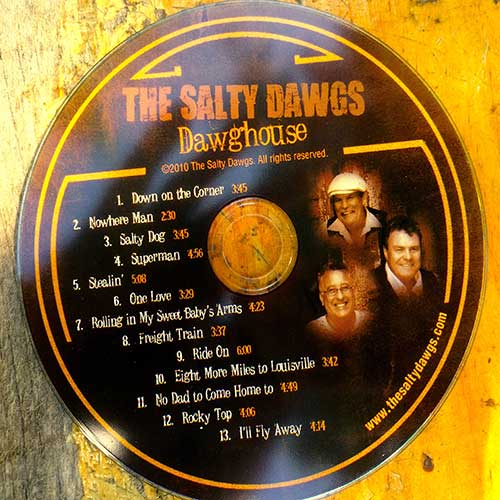
Fitz & The Salty Dawgs Amazing music, good times and good friends…
TheCraftedWord.org
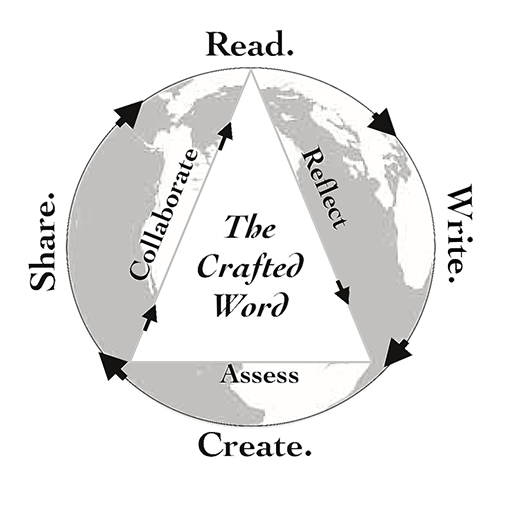
Writing help
when you need it…
“When the eyes rest on the soul…that’s Fitzy…”

0 Comments