The Unquiet Grave

The Unquiet Grave

The Ancient Ballads

The Unquiet Grave

The Unquiet Grave

by John Fitzsimmons | The American Folk Experience

Child Ballad #78

Cold blows the wind to my true love,
And gently falls the rain.
I’ve never had but one true love,
And in green-wood he lies slain.

I’ll do as much for my true love,
As any young girl may,
I’ll sit and mourn all on his grave,
For twelve months and a day.

And when twelve months and a day was passed,
The ghost did rise and speak,
“why sittest thou all on my grave
And will no let me sleep?”

“Go fetch me water from the desert,
And blood from out the stone,
Go fetch me milk from a fair maid’s breast
That young man never has known.”

“My breast is cold as the clay,
My breath is earthly strong,
And if you kiss my cold clay lips,
Your days they won’t be long.”

“How oft on yonder grave, sweetheart,
Where we were want to walk,
The fairest flower that e’er I saw
Has withered to a stalk.”

“when will we meet again, sweetheart,
When will we meet again?”
“when the autumn leaves that fall from the trees
Are green and spring up again.”

If you have any more information to share about this song or helpful links, please post as a comment.

Thanks for stopping by the site!

~John Fitz

I am indebted to the many friends who share my love of traditional songs and to the many scholars whose works are too many to include here. I am also incredibly grateful to the collector’s curators and collators of Wikipedia, Mudcat.org, MainlyNorfolk.info, and TheContemplator.com for their wise, thorough and informative contributions to the study of folk music. 

I share their research on my site with humility, thanks, and gratitude. Please cite their work accordingly with your own research. If you have any research or sites you would like to share on this site, please post in the comment box.  Thanks!

Edit links

"The Unquiet Grave" is an Irish / English folk song in which a young man's grief over the death of his true love is so deep that it disturbs her eternal sleep. It was collected in 1868 by Francis James Child as Child Ballad number 78.[1] One of the more common tunes used for the ballad is the same as that used for the English ballad "Dives and Lazarus" and the Irish pub favorite "Star of the County Down".

Synopsis

A man mourns his true love for "a twelve month and a day". At the end of that time, the dead woman complains that his weeping is keeping her from peaceful rest. He begs a kiss. She tells him it would kill him. When he persists, wanting to join her in death, she explains that once they are both dead their hearts will simply decay, so he should enjoy life while he has it.

Variants

The version noted by Cecil Sharp[2] ends with "When will we meet again? / When the autumn leaves that fall from the trees / Are green and spring up again."

Many verses in this ballad have parallels in other ballads: Bonny Bee Hom, Sweet William's Ghost and some variants of The Twa Brothers.[3]

Return of the dead

The motif that excessive grief can disturb the dead is found also in German and Scandinavian ballads, as well as Greek and Roman traditions.[4]

In 1941 the "Journal of the English Folk Dance and Song Society" Vol 4 no 2 included a long essay by Ruth Harvey. She compares motifs from "The Unquiet Grave" with other European ballads, including "Es ging ein Knab spazieren (Der tote Freier)" from Germany, and "Faestemanden I Graven" from Denmark.[5] She writes: "It is only inevitable that a song which certainly goes back to pre-Christian traditions should have suffered modification during the centuries."[6]

The Danish ballad "Faestemanden I Graven" was made into a short film, "Aage og Else" (1983).[7] Though not recorded till the nineteenth century, “The Unquiet Grave,” as a folk work, may date to the same period as those two seventeenth-century ballads. On the Fresno State University website, Robert B Waltz compares "The Unquiet Grave" with an older carol, "There blows a cold wind today," in the Bodleian Library MS 7683 (dated ca. 1500), but adds: "I must say that I find this a stretch; the similarities are slight indeed."[8]

Recordings

  • The composer Ralph Vaughan Williams wrote several arrangements for "How Cold the Wind doth Blow (or The Unquiet Grave)". The best known, from 1912, is for piano, violin and voice. It was recorded in 1976 by Sir Philip Ledger, Hugh Bean and Robert Tear. Catalogue It also appears on the 1989 recording Songs of Britten and Vaughan Williams by Canadian baritone Kevin McMillan.
  • Kate Rusby, Rebsie Fairholm, Carol Noonan, Joan Baez, the Dubliners, Solas, Barbara Dickson, Shirley Collins, Circulus, David Pajo, Fire + Ice and Sarah Calderwood have recorded versions of this song.
  • A single-movement viola concerto by Australian composer Andrew Ford used the melody of the ballad as its foundation. Written in 1997, the concerto is pieced together from melodic fragments of the ballad and it is only in the final few minutes that the full theme emerges.
  • Being a well-documented song and publicised by English Folk Dance and Song Society,[9] The Broadside Ballads Project,[10] and Mainly Norfolk,[11] the song was recorded by Jon Boden and Oli Steadman for inclusion in their respective lists of daily folk songs "A Folk Song A Day"[12] and "365 Days Of Folk".[13]
  • The Pennsylvania-based alternative rock band Ween recorded a version of the song (retitled "Cold Blows the Wind") on their 1997 album, The Mollusk. The liner notes jokingly describe the song as a traditional Chinese spiritual.
  • The gothic/darkwave band Faith and the Muse recorded a version on their debut Elyria in 1994.
  • It was recorded and released as a duet between Ian Read and Ysanne Spevack in 2000, distributed by Tesco in Germany, and pressed up on blue vinyl with a letterpress gatefold cover under the band name Fire + Ice.[14]
  • Papa M recorded a version for his 2001 album "Whatever, Mortal"
  • The folk-rock group Steeleye Span recorded a version on their 2009 album Cogs, Wheels and Lovers.
  • Electro noir artist Alien Skin, formerly with Real Life (of '80s "Send Me An Angel" fame), recorded a version on his 2010 album The Unquiet Grave.
  • Orcadian singer Kris Drever recorded a version of this song to music of his own on Lau's album Lightweights and Gentlemen in 2009.
  • The eleven-piece folk band Bellowhead recorded a cover of Ween's version ("Cold Blows the Wind") for their 2010 album Hedonism.
  • An electronic arrangement by Vladislav Korolev was sung by Lori Joachim Fredrics and premiered on April 13, 2013.
  • The German electronica/darkwave band Helium Vola included a rendition on their 2013 album, Wohin?.
  • British folk singer/songwriter Elliott Morris included an arrangement of "Unquiet Grave" on his 2013 EP, Shadows and Whispers.
  • British medieval folk-rock band Gryphon recorded their interpretation of the ballad using the Dives and Lazarus melody on their 1973 debut album, Gryphon.
  • English progressive rock musician Steven Wilson recorded an arrangement of the song. It was the B-Side to "Cover version IV", one of a series of six singles, each consisting of a cover of a song written by another artist as the A-side, with the B-sides consisting of original songs (with the exception of "The Unquiet Grave"). The six cover versions and corresponding B-sides were released together on a compilation album, Cover Version, in 2014.
  • Part of the song was performed by Helen McCrory in the Penny Dreadful episode "Fresh Hell", and again by Sarah Greene in "And They Were Enemies".
  • The Ghosts of Johnson City recorded a version of the song for their 2015 album Am I Born To Die?
  • Daoirí Farrell recorded a version of the song on his 2016 album "True Born Irishman"
  • Joan Baez sings it on three albums:
  • House and Land interpret the song as their final track on their self-titled 2017 album.
  • The English folk duo The Askew Sisters recorded the ballad on their 2014 album In the Air or the Earth.
  • The Spanish dark pagan folk band Trobar de Morte recorded a version of the song on their eighth studio album The Book of Shadows in 2020.
  • Irish singers Pauline Scanlon and Damien Dempsey performed a six and a half minute duet on Scanlon's 2022 album, The Unquiet.
  • American Pine Barrens folk band Jackson Pines recorded their interpretation for their album Pine Barrens Vol. 1 in 2023. The ballad was connected to a lost town called Colliers Mills in their hometown of Jackson, NJ by song-catcher Herbert Halpert in 1936. Allen Clevenger of Wrightstown sang it to him and said his mother-in-law Mrs. Grover nee Cotter sang it in Colliers Mills as a girl.
  • Canadian Celtic/Polka Punk Band The Dreadnoughts released a version of the song on March 14, 2023.

References

  1. ^ Francis James Child, Scottish and English Popular Ballads, "The Unquiet Grave"
  2. ^ Cecil J. Sharp (Ed) (1975) One Hundred English Folksongs (For Medium Voice), Dover, ISBN 0-486-23192-5
  3. ^ Francis James Child, The English and Scottish Popular Ballads, v 2, p 234, Dover Publications, New York 1965
  4. ^ Francis James Child, The English and Scottish Popular Ballads, v 2, p 234-6, Dover Publications, New York 1965
  5. ^ Zachcial, Michael (13 February 1856). "Herr". Deutsche Volkslieder. Müller-Lüdenscheidt-Verlag. Retrieved 31 October 2022.
  6. ^ Matteson, Richard. "Mr". Bluegrassmessengers. Blugreass Messengers. Retrieved 31 October 2022.
  7. ^ Thomsen, Knud Leif. "Aage og Else". IMDB. ImdbPro. Retrieved 31 October 2022.
  8. ^ Waltz, Robert. "Unquiet Grave, The [Child 78]". Traditional Ballad Index. Fresno State University. Retrieved 31 October 2022.
  9. ^ "Captain Ward, a Pirate Song". 3 September 2014. Retrieved 9 January 2024.
  10. ^ "Captain Ward". Retrieved 9 January 2024.
  11. ^ "Captain Ward and the Rainbow". Retrieved 9 January 2024.
  12. ^ "Captain Ward". 6 January 2015. Retrieved 9 January 2024.
  13. ^ "Captain Ward And The Royal Rainbow". Retrieved 9 January 2024.
  14. ^ "Death in June / Fire + Ice - We Said Destroy". Discogs. 2000.

Source: Mainly Norfolk

The Unquiet Grave / Cold Blows the Wind

Roud 51 ; Child 78 ; Ballad Index C078 ; Bodleian Roud 51 ; Wiltshire Roud 51 ; trad.]A.L. Lloyd sang The Unquiet Grave in 1956 on his and Ewan MacColl’s Riverside album of Child ballads, The English and Scottish Popular Ballads Volume I. Editor Kenneth G. Goldstein wrote in the album’s booklet:

Aside from its exquisite poety and music, this ballad is notable for its exhibition of the universal popular belief that excessive grief on the part of mourners disturbes the peace of the dead.

It is possible that this is only a fragment of a once popular longer ballad. In the form we have it today, no text has been reported earlier than the 19thcentury. The ballad is little known in Scotland and is quite rare in America. It is still current in England, however.

The text and tune sung by A.L. Lloyd were collected by Cecil Sharp from William Spearing of Ile Bruers, Somerset, excepting the last two stanzas, which were from Mrs. William Ree of Hambridge, Somerset.

See Child (78), Volume II, p. 78ff; Coffin, p.82; Dean-Smith, p.113.

Shirley Collins recorded this ballad in 1959 for her second LP, False True Lovers, a second time for her Collector EP English Songs Vol. 1, and a third time in 1967 for her album The Power of the True Love Knot. She commented in the first album’s notes:

From Cecil Sharp’s English Folk Songs. This is one of the classic pieces of English folk song literature. From one point of view it is a feminine fantasy or a wish, perhaps for the death of a lover, perhaps for a way of arranging a night visit by the lover, perhaps for a way of showing how strong her love is, perhaps of a feeling of guilt. Certainly, it is a ghost story designed to delight the imagination of young women. Finally, it shows the survival of ancient and widely distributed primitive beliefs about the treatment of the dead.

The rowdy Irish wake is the only one example of the common folk custom of a gathering in which ceremonial banqueting and games were indulged in to show honour to the dead person. The shade was given a great send-off to the other world. Sometimes guns were fired to send him skittering away in fear. Sometimes a special door was cut in the side of the wall so that the coffin could be taken out by that route; and then this hole was walled up so that the ghost could not find his way back into the house again.

In Scotland and Ireland it was believed that excessive grief prevented the dead from resting; that the tears shed by the mourners pierced holes in the corpse. In Persia they held that the tears shed by humanity for their dead flowed into a river in which the souls floated and drowned. Similar beliefs were held by the Greeks and Romans, and from mediaeval times throughout Germany and Scandinavia.

Sharp says that in England a belief was current that if a girl was betrothed to a man, she was pledged to him if he died, and was bound to follow him to the spirit world unless she solved certain riddles, or performed certain tasks, such as fetching water from a desert, blood from a stone, milk from the breast of a virgin…

and in the The Power of the True Love Knot album notes:

This song is a tender and magical expression of an ancient community belief: a very proper belief that when the mourning of a lover’s death started to drain life from the living, love was being misused. Tears flowed into the Styx, and the river swelled and became impassable, so the dead come back and warn the quick. On this track and elsewhere I play an instrument made for me by John Bailey, which is a dulcimer with a five-string banjo neck.

The Ian Campbell Folk Group with Dave Swarbrick sang The Unquiet Grave in 1963 on their album This Is the Ian Campbell Folk Group. This track was included in 2005 on their anthology The Times They Are A-Changin’.

Alex Campbell sang The Unquiet Grave in 1966 on his album Yours Aye, Alex; this track was included in 1966 on his compilation CD Been on the Road So Long.

Hedy West sang an American version The Unquiet Grave in 1967 on her Topic album Ballads. Her (or A.L. Lloyd’s) sleeve notes commented:

There’s widespread and ancient belief that excessive grieving over the dead disturbs their rest. The Greeks and Romans thought so, and the idea is as common in the Far East as in Western Europe. In Ireland as in Rumania it was thought that inordinate tears would burn a hole in the corpse, and in several ballads the dead complain that they cannot sleep because the tears of the living have wet their winding sheet. This ballad, of a restless ghost who confronts and reproaches the mourner, is probably a fragment broken off some longer, more complicated narrative. Though it’s been relatively common in England till recent times, it seems very rare in America, and has turned up only in a scattered handful of versions from Newfoundland, Virginia and North Carolina (which is where the present version comes from, collected by the indefatigable Frank C. Brown).

Jon Raven sang The Unquiet Grave in 1968 on the Broadside album The Halliard : Jon Raven.

Dave & Toni Arthur sang this ballad as Cold Blows the Winter’s Wind in 1969 on their Topic album The Lark in the Morning. The sleeve notes commented:

The ballad, usually called The Unquiet Grave, concerns a person who feels bound to sit and mourn by his (sometimes, her) lover’s grave for a period of time. In nearly all versions, the corpse complains of being disturbed, illustrating the ancient belief that excessive grief interferes with the peace of the dead. In archaic folklore, a constant concern, when faced with a death, is to try to ensure that the corpse makes a pleasant and reassured transit from the land of the living to the world of the dead. Otherwise the dead may return, uneasy and vengeful, to plague the living. Hence for instance the jollification at Irish wakes, intended to cheer and embolden the dead. Singers have ended our ballad in various ways, sometimes heartbroken and disconsolate, sometimes more or less lightheartedly as: “But since I have lost my own true love, I must get another in time.” Our tune is from Fred Hamer’s collection Garners Gay. The words are from Alfred Williams’s Folk-Songs of the Upper Thames.

Frankie Armstrong sang The Unquiet Grave in 1971 on her Topic album Lovely on the Water. A.L. Lloyd commented in the sleeve notes:

A woman laments long over the grave of her sweetheart, till he speaks from the grave and reproaches her for disturbing his rest. Usually in the ballads the setting and the characters are named, but here we know neither the who nor the where, and the supernatural climate is further charged with mystery on that account. The tale is old, like the belief that too much grief disturbs the dead, though to this day, in Eastern Europe, some peasants believe that mourner’s tears make an unhealing burn if they chance to light on a corpse. In some versions the dead person threatens to tear the living one to pieces (the favourite revenge of ghosts!) unless absolute fidelity can be sworn to. But Frankie’s version is milder, more consolatory, as fits her gentle character. By and large, the tune she uses is one recorded by Vaughan Williams at Dilwyn, Herefordshire.

John Kirkpatrick and Sue Harris sang this ballad as Cold Blows the Wind in 1976 on their Topic LP Among the Many Attractions at the Show Will Be a Really High Class Band and John Kirkpatrick did it again in 2007 on his Fledg’ling CD Make No Bones. He commented in the latter album’s sleeve notes:

When I moved to Shropshire in 1973 and started looking at the local folk music, the singing of May Bradley was a glorious revelation. I never saw her in the flesh, but Fred Hamer’s recordings of her in Ludlow during the 1960s proved to be a real treasure chest of wonderful songs wonderfully sung. She was the daughter of Ester Smith, a gypsy singer that Vaughan Williams had collected from in Herefordshire at the beginning of the century, and had some of her mother’s songs as well as plenty of others. This is her tune for what is sometimes known as The Unquiet Grave—Child Ballad no. 78. I’ve sung this before in a past life, but in revisiting the song I have added a few lines from other versions to fill out the sense of the words.

Two books of the songs Fred Hamer collected were published by EFDS Publications Ltd., and you can see this in the first one from 1967, Garners Gay. Or a much better option is to hear [May Bradley] singing it herself on the EFDSS LP Garners Gay issued in 1971, EFDSS LP 1006.

May Bradley’s version can also be found on her Musical Traditions anthology Sweet Swansea (2010).

Jo Freya sang The Unquiet Grave in 1992 on her CD Traditional Songs of England.

Sandra Kerr sang The Unquiet Grave in 1970 on the Argo Voices anthology series, Second Book, Record One (Argo DA96). Her daughter Nancy sang it in 1993 on the CD Eliza Carthy & Nancy Kerr. She referred in her sleeve notes to Evelin Wells’ The Ballad Tree, and to her mother singing this version onVoices.

Louis Killen learnt The Unquiet Grave from Brian Ballinger and sang in on his 1993 CD A Bonny Bunch.

Steeleye Span sang One True Love in 1998 on their CD Horkstow Grange, and they recorded The Unquiet Grave in 2009 for their CD Cogs Wheels and Lovers. Tim Harries commented in the former album’s notes:

The sources for [One True Love] are The Unquiet Grave, (spooky old English song), Lovely Joan, and a small fragment of Lowlands of Holland. The inspiration came largely from Borrowed Time by Paul Monette, a book you may be familiar with.

Kate Rusby couldn’t let the dead sleep on her 1999 CD Sleepless.

Like John Kirkpatrick, Jon Boden learned Cold Blows the Wind from the singing of May Bradley. He sang it with Bellowhead in 2010 on their CD Hedonism, and he sang it unaccompanied as the December 29, 2010 entry of his project A Folk Song a Day.

Rachel Newton sang The Unquiet Grave on The Furrow Collective’s 2015 EP Blow Out the Moon. She commented in the album’s notes:

I took the words for the well known ballad The Unquiet Grave from Child no. 78a; and the melody I use is based on a version I learned from the singing of Shirley Collins.

Siobhan Miller sang The Unquiet Grave on her 2017 album Strata.

Lyrics

A.L. Lloyd sings The Unquiet Grave
“Cold blows the wind to my true love,
And gentle drops the rain,
I never had but one true love
And in Greenwood she is lain.
“I’ll do as much for my true love
As any young man may,
I’ll sit and weep all on her grave
For a twelve month and a day.”
When the twelve month and one day was o’er,
Her ghost begun for to speak,
“Why sit you here all on my grave
And will not let me sleep?”
“There’s one thing more I want, sweetheart,
And one thing more I crave,
And that’s a kiss from your lily-white lips
And then I’ll go from your grave.”
“My lips are cold as clay, sweetheart,
My breath smells heavy and strong,
And if you kiss my lily-white lips,
Your time would not be long.”
Shirley Collins sings The Unquiet Grave Nancy Kerr sings The Unquiet Grave
“Cold blows the wind tonight, true love,
Cold are the drops of rain,
I only had but one true love
And in Greenwood he lies slain.
“The wind doth blow today, my love,
And a few small drops of rain;
I never had but one true love
And in Greenwood he is lain.
“I’ll do as much for my true love
As any young girl may,
I’ll sit and mourn all by his grave
For a twelve-month and a day.”
“I’ll do as much for my true love
As any young girl may,
I’ll sit and mourn all on his grave
For twelve months and a day.”
Now the twelve-month and a day being gone,
The ghost began to greet:
“Your salten tears they trickle down
They wet my winding sheet.”
The twelve months and a day being done,
The dead began to speak:
“Oh, who sits weeping on my grave
And will not let me sleep?”
“It’s I, my love, sits by your grave
And will not let you sleep.
For I crave one kiss from your clay-cold lips
And that is all I seek.”
“’Tis I, your love sits on your grave
And will not let you sleep.
For I crave one kiss of your clay-cold lips
And that is all I seek.”
“But lily, lily are my lips,
My breath comes earthy strong.
If you have one kiss from my clay-cold lips,
Your time will not be long.”
“Your breath is as the roses sweet,
Mine as the sulphur strong.
And if you get one kiss from my lips,
Your time will not be long.“
“’Twas down in yonder garden green,
Love, where we used to walk.
And the fairest flower that e’er was seen
Has withered to the stalk.”
“’Tis down in yonder garden green,
Love, where we used to walk.
The finest flower that e’er was seen
Is withered to a stalk.”
“The stalk is withered dry, true love,
So must our hearts decay.
Then rest yourself content, my dear,
Till God calls you away,
Till God calls you away.”
“The stalk is withered and dry, sweetheart,
And the flower will never return.
And since I lost my own true love
What can I do but mourn?”“Mourn not for me, my own true love,
Mourn not for me I pray.
For I must leave you and all the world
And go into my grave.”
Bellowhead sings Cold Blows the Wind Steeleye Span sing One True Love
“Cold blows the wind over my true love,
Cold blows the drops of rain,
I never had but one true love
And in Greenwood he lies slain.“I’ll do as much for my true love
As any young girl may,
I’ll sit and weep down by his grave
For twelve months and a day.”But when twelve months they were up and gone
This young man he arose:
“What makes you sit by my grave and weep?
I can’t take my repose!”“One kiss, one kiss from you lily-white lips,
One kiss is all I crave.
One kiss, one kiss from you lily-white lips,
Then return back to your grave.”“These lips they are as cold as clay,
My breath is heavy and strong.
if you were to kiss these lily-white lips
Your life would not be long.“Oh, don’t you remember the garden grove,
Where once we used to walk?
Go pick the finest flower of them all,
It will wither to a stalk.“Go fetch me a flower from the dungeon deep,
Bring water from a stone.
Bring white milk from a virgin’s breast
That baby never bore none.”“Go dig me a grave both wide and deep,
Dig it as quick as you may.
That I may lay down and take a long sleep
For twelve months and a day.”
Cold blows the wind o’er my true love,
Cold blows the drops of rain,
I never had but one true love
And never will again.I’ll do as much for my true love
As any lover may,
I’ll sit and weep down by his grave
A twelve-month in one day.One kiss, one kiss from your sweet lips,
One kiss is all I grave.
One kiss, one kiss from your sweet lips,
And sink down in your grave.And your lips, they are not sweet my love
Your kiss is cold as clay,
My time be long, my time be short,
Tomorrow or today.And down beyond the garden wall,
Where we both used to walk,
Are finest flowers that ever grew
All withered to a stalk.(repeat first verse)

Acknowledgements

Transcribed from the singing of Nancy Kerr by Kira White.

Source: Traditional Songfacts

  • “The Unquiet Grave” is both a poem and a song. Intensely sad, and written in the first person singular, the mourner laments the love of his life sitting weeping at her graveside for a year and a day, at which point her ghost rises up and asks who will not allow her to sleep. He identifies himself and asks for “one kiss of your clay-cold lips”. She disavows him of that notion, and tells him to put his grief behind him and enjoy the rest of his life “Till God calls you away”.

  • Like most traditional songs there are many variations, of the title as well as the lyrics in this case. Extensive research on its origin and development can be found in Volume II of The Traditional Tunes Of The Child Ballads With Their Texts, according to the Extant Records of Great Britain and America, by Bertrand Harris Bronson, which was published by Princeton University Press in 1962.
    According to this book, none of the extant texts of the ballad is older than the early 19th Century but it probably dates from about the end of the 15th. A version was recorded by [ie sung to] musicologist Cecil Sharp on January 23, 1907 by Mrs Ware of Eley Over Stowey. The same day, Sharp recorded “Cold Blows The Wind” by James Chedgey of Bincombe Over Stowey.
    Sabine Baring-Gould (who is best known for writing the lyrics to “Onward Christian Soldiers”) collected a version, from J. Woodrich, a blacksmith of Wollacot Moor, Thrushleton, in 1889.
    Probably the earliest recorded version is “Cold Blows The Wind” which was sung by Elizabeth Doidge, a nurse of Brentnor, and collected by Mrs Gibbons, the daughter of W.L.Trelawney, Bart, c1830. This version had the tune usually associated with “Childe The Hunter”.There is also “How Cold The Winds Do Blow”, sung by Mrs Rugman of Dunsfold, Surrey, 1896; “Cold Blows The Wind To-night, Sweetheart”, sung by Mrs Bowker, of Sunderland Point, Lancashire, in September 1909, and further afield, “The Auld Song From Cow Head” sung by the Reverend Mr Gibbs Bull of Newfoundland in 1929.
  • Another musicologist who researched “The Unquiet Grave” in some depth was the aforementioned Cecil Sharp. Volume I of the 1994 Oxford University Press edition of his …Collection Of English Folk Songs, Edited by Maud Karpeles records no less than seventeen different versions, the oldest of which was sung to him by Mrs Ree at Hambridge, Somerset, on April 4, 1904.

  • “The Unquiet Grave” has been recorded by many artists, including Joan Baez and Karen Mall (suitably amended for gender) and by Luke Kelly. >>

Performances, Workshops,
Resources & Recordings

The American Folk Experience is dedicated to collecting and curating the most enduring songs from our musical heritage.  Every performance and workshop is a celebration and exploration of the timeless songs and stories that have shaped and formed the musical history of America. John Fitzsimmons has been singing and performing these gems of the past for the past forty years, and he brings a folksy warmth, humor and massive repertoire of songs to any occasion. 

Festivals & Celebrations
Coffeehouses
School Assemblies
Library Presentations
Songwriting Workshops
Artist in Residence
House Concerts
Pub Singing
Irish & Celtic Performances
Poetry Readings
Campfires

Music Lessons
Senior Centers
Voiceovers & Recording

“Beneath the friendly charisma is the heart of a purist gently leading us from the songs of our lives to the timeless traditional songs he knows so well…”


Globe Magazine

Join Fitz
at The Colonial Inn

“The Nobel Laureate of New England Pub Music…”

Scott Alaric

Adventures in the Modern Folk Underground

On the Green, in Concord, MA
Every Thursday Night
for over thirty years…

“A Song Singing, Word Slinging, Story Swapping,
Ballad Mongering, Folksinger, Teacher, & Poet…”

Theo Rogue

Songcatcher Rag

Fitz’s Recordings

& Writings

Songs, poems, essays, reflections and ramblings of a folksinger, traveler, teacher, poet and thinker…

Download for free from the iTunes Bookstore

“A Master of Folk…”

The Boston Globe

Fitz’s now classic recording of original songs and poetry…

Download from the iTunes Music Store

“A Masterful weaver of song whose deep, resonant voice rivals the best of his genre…”

Spirit of Change Magazine

“2003: Best Children’s Music Recording of the Year…”

Boston Parent's Paper

Fitz & The Salty Dawgs
Amazing music, good times and good friends…

Listen here

TheCraftedWord.org

Writing help

when you need it…

“When the eyes rest on the soul…that’s Fitzy…”

Lenny Megliola

WEEI Radio

The Farmer, The Weaver & the Space Traveler

     Words matter. Words carefully crafted and artfully expressed  matter infinitely more. There is something compelling in a turn of phrase well-timed, arresting image juxtaposed on arresting images; broad ideas distilled into clear, lucid singular thought. For the...

Essex Bay

This house makes funny noises
When the wind begins to blow.
I should have held on and never let you go.
The wind blew loose the drainpipe.
You can hear the melting snow.
I’ll fix it in the morning when I go.

You Are All a Bunch of Punks

Poetry without form is like tennis without a net. ~Robert Frost       Free verse poetry is not, as many assume, poetry without rules. It is a measured and thoughtful crafting of an idea into lines, spaces, and breaks intentionally and willfully crafted to heighten and...

A Hard Sell

     As a teacher, I am tired of the word blog, probably because the word “blogging” is incredibly limiting and myopic, especially for someone whose teaching is centered around an online curriculum with blogs front and center on my academic table. I sat through a...

Ghetto of Your Eye

A Veteran's Day Remembrance I wrote this song back in the winter of 1989 in the dining car of a steam driven train, somewhere along the Trans-Siberian railway, after meeting a group of Russian soldiers fresh from battle in Afghanistan—that poor country that has been a...

Goathouse

Goat house In reaching for the scythe I’m reminded of the whetstone and the few quick strokes by which it was tested-- the hardness of hot August; the burning of ticks off dog backs. It’s winter now in this garage made barn, and the animals seem only curious that I’d...

Goathouse

In reaching for the scythe I’m reminded of the whetstone and the few quick strokes by which it was tested— the hardness of hot August; the burning of ticks off dog backs. It’s winter now in this garage made barn, and the animals seem only curious that I’d be here so...

The Litter in Concord

I have been following a Facebook thread about the movement in my beloved hometown of Concord to ban plastic water bottles, plastic bags and styrofoam cups. I am trying to discern whether or not my initial responses are pure and true and not simply reactionary and...

Nurture Passion

How about we all take the bull by the horns and make this blog thing work! Your job this week is to do something with your blog that is powered by the passion that is in you. Passion is the one thing you have some control over. There are plenty of smarter, more...

Superman

There’s a little blonde boy in a superman cape
Racing around the back yard;
Sayin’, “Daddy don’t you know I can fly to the moon;
I’m gonna bring you back some stars.
And after that I’m gonna save the world”
Cause I’m superman today.”
I scoop that boy right into my arms,
And this is what I say:

You don’t need a cape to be a hero
You’ve got all the special powers that you need
Your smile’s enough to save the world from evil
And you’ll always be superman to me

In the unfolding chores

The day sometimes slip away from me, a huge pine half-bucked in the backyard, the kids old tree fort cut into slabs, a ton of coal waiting to be moved in a train of buckets to the bin. Sipping cold water on the back deck I hear Emma rustling for soccer cleats and...

Out of the Forge: April 6, 2017

Some nights I feel like I am singing in a mall. Tonight--in a fun way--it felt a bit like I walked into the Natick mall at Christmas time and pulled out my guitar in front of the Apple store and started to play, but like every night down at the inn it evolved into a...

Ginny

I always had in my mind a song about a woman named Ginny who lives (or lived) on an island off the coast of Maine. I want her to somehow represent someone who is willing to wait for something to return to her. What that something is I am not really sure. I was hoping...

Get Back in the Game

Out on the back porch, not as cold as earlier today, waiting for the storm to arrive in a few hours--curious if I will get that call at 2:00 AM to head out and plow the Concord streets. Most of me hopes for the call; another side of me wants a day stuck at home,...

Ghetto of Your Eye

I wrote this song back in the winter of 1989, in the dining car of a steam driven train, somewhere along the Trans-Siberian railway, after meeting a group of Russian soldiers fresh from battle in Afghanistan—that poor country that has been a battleground for way too long.

We stare together hours the snow whipped Russian plain—
rolling in the ghetto of your eye.
We share a quart of vodka
and some cold meat on the train—
you know too much to even wonder why;
I see it in the ghetto of your eye.

Ready. Set. Go.

Who forgets to rinse his hair? Me, I guess, for that was the start of my day. I smelled something like coconut oil on my way to school, and then I realized, dang, my hair is still pretty wet. Wet with hair conditioner. And then I get sot school all coconutty smelling...

Chores

The day sometimes slip away from me, a huge pine half-bucked in the backyard, the kids old tree fort cut into slabs, a ton of coal waiting to be moved in a train of buckets to the bin. Sipping cold water on the back deck, sharpening the dulled teeth of a worn...

A New Hearth

It has been a long time since I wrote a simple old "this is what I am going to do today" post. So this is what I am going to do today: [and trust me, it will have nothing--absolutely nothing--to do with school work:)] Before the true winter settles in, I am going to...

No Dad To Come Home To

Rain’s falling outside of Boston—
Thank God I’m not working tonight.
I’ve got six of my own,
And a stepdaughter at home,
And a momma keeping things right.
I wonder if they’re at the table
With their puzzles, their papers and pens?
When I get off the highway
And pull in that driveway,
Will they run to the window again?

Me & God

        I am not done with God, nor God with me. I remain obsessed with the notion of the unmoved mover who set the pattern of creation into its initial motion. I stubbornly try to trace my existence back to some infinite beginning—so much so that I loathe the...

Why Trump Is Not Flipping Me Out

I wonder why Trump is not flipping me out? I wonder if there is some bigoted, ignorant and right-wing element that lurks inside this folk-singing, poem writing, neo-socialist shell of mine. Maybe it is not that hard for me to make the empathetic reach to feel at least...

Out of the Forge: April 13, 2017

In my forty years or so of actively singing and playing folk music and writing songs, I have played together with a remarkably narrow list of musical partners: Rogue, Wally and Barry with camp songs and Hatrack and Seth with literally everything. These last few years...

The Right Side of the Inevitable

  Like birds of a feather, we gather together, 'Cuz they're feeling exactly like you... ~John Prine   I am not afraid of being a white minority. I had lunch today with a Jamaican drummer, a Ugandan farmer, and a Senagalese potter. I don’t say this out of...

New Ways

Time for a change. Feeling it in a lot of ways. After months of steady workouts, I’ve been finding too many convenient ways to let the day slip by. Still feel better than I have in years, but the days seem to have got the best of me. Excuses, procrastination and...

The Mystery Within

EJ wanted a banana tree for Christmas so that early morning brought a plastic bag, a few meager roots and no directions. I bought some potting soil and a square cedar box EJ placed deliberately by a westward window. He gently splayed the roots, pressed the soil, and...

Reflecting on Literature

I am constantly asking my students (and myself) to reflect on the literature they, and I, read. As I have grown older—and not necessarily wiser—I find myself only reading literature that I am sure will prod me out of my intellectual and emotional torpor, like a lizard...

Supermoon

Last night the August supermoon reminded me of the fickleness of time and how substance becomes shadow and memories begin to etch themselves immutably into the hardness of what is already lost.

Rainmaker

I loved the rain last night. Last week, in a bow to reality, I reclaimed my gardens and made them into yard. Four of my kids got poison ivy in the process and I (and more "they") got an extra ten feet of width to add to the soccer field--for really that is about the...

Frumzi Casino – Quick‑Hit Slots and Live Games for Fast‑Paced Players

When you’re looking for a bite‑size gaming experience that still packs a punch, Frumzi is the go‑to destination. The site offers more than 6,500 titles from top providers such as Pragmatic Play, Evolution Gaming, and Quickspin, and it’s optimized for both desktop and...

Opinie o kasynie online Vavada w roku 2026

Opinie na temat kasyna online Vavada w roku 2026 Opinie o kasynie online Vavada w roku 2026 Decydując się na rozrywkę w wirtualnym świecie gier, warto zwrócić uwagę na Vavada. Ta platforma przyciąga entuzjastów hazardu z wielu powodów. Wysoka jakość gier oraz...

The Old Tote Road

I clabber down the old tote road towards the red pine forest, leaning on my staff, skirting boulder-strewn ruts and small gullies carved out by two days of heavy rain. It is only a mile or so from our cabin, still, my wife makes me wear a pouch with an iPhone and an...

What’s in a Song

Every heart sings a song, incomplete, until another heart whispers back. Those who wish to sing always find a song. At the touch of a lover, everyone becomes a poet. ~Plato         Writing a song is not just an exercise in seeking some kind of future fame. It is...

I have been here before

Trying to pull a final day Back into the night, execute Some stay of time, Some way to wrap The fabric of Summer Around the balky, frame of Fall, sloughing My skin, unable to stop This reptilian ecdysis— This hideous morphing Into respectability. My students, tame As...

China Journal: Part One

I           The dull staccato throb in light rain on a dark night. Unseen barges make their way up the QianTian River—concrete shores marked by the arch of the bridge, the spans of beam stretched on beam, the impeccable symmetry of the street-lights broken by a stream...

Don’t Let Go of Your Soul

Sometimes yeah.
Sometimes no.
Sometimes it’s somehow somewhere in between.
Sometimes it’s somewhere that no one has been–
no, nobody, nowhere, no nothing can end.
So don’t you let go and hope you’ll find it again.
Don’t you ever let go–

Another Wednesday

        It is a good night for meatballs. The same meal we have cooked every Wednesday night for thirteen years and counting. Tonight is a beautiful and warm night of vacation week, so more than likely we will have a big crowd joining us—but we never know who. The...

Metamorphoses

Grandma’s Words

In the beginning was the word... ~Genesis       We do not live in Grandma’s world of words, and neither did grandma live in her grandma’s world of words and on and on and so on in a downwards devolution through untold millennia. From primal grunts, whistles and...

Practicing What I Preach

It is not where you go. It is how you go. ~Fitz Is there any value in coming to the page this late at night after three hours of singing in a pub, just because I said I would? I expect you to go to the empty page and pry tired and stubborn thoughts and lay them on the...

Capospin: Thrilling Quick‑Play Slots and Games for Fast‑Track Wins

1. Quick‑Game Fever at CapospinCapospin has carved a niche for players who crave the rush of a spin or a hand, all within a few minutes. The platform’s interface is streamlined so that a newcomer can navigate from the welcome screen to their first bet without a...

Contact Fitz!

John Barleycorn

John Barleycorn

The Ancient Ballads

John Barleycorn

John Barleycorn

by John Fitzsimmons | The American Folk Experience

~Traditional Ballad

There were three men,
Came from the west,
Their fortunes for to tell,
And the life of John Barleycorn as well.

They laid him in three furrows deep,
Laid clods upon his head,
Then these three men made a solemn vow
John Barleycorn was dead.


They let him die for a very long time

Till the rain from heaven did fall,

Then little Sir John sprang up his head

And he did amaze them all.  


They let him stand till the midsummer day,

Till he looked both pale and wan.

The little Sir John he grew a long beard

And so became a man.  


They have hired men with the scythes so sharp,
To cut him off at the knee,

They rolled him and they tied him around the waist,

They served him barbarously.  


They have hired men with the crab-tree sticks,

To cut him skin from bone,

And the miller has served him worse than that,

For he’s ground him between two stones.  


They’ve wheeled him here, they’ve wheeled him there,

They’ve wheeled him to a barn,

And thy have served him worse than that,

They’ve bunged him in a vat.  


They have worked their will on John Barleycorn

But he lived to tell the tale,

For they pour him out of an old brown jug

And they call him home brewed ale. 

If you have any more information to share about this song or helpful links, please post as a comment. Thanks for stopping by the site! ~John Fitz

I am indebted to the many friends who share my love of traditional songs and to the many scholars whose works are too many to include here. I am also incredibly grateful to the collector’s curators and collators of Wikipedia, Mudcat.org, MainlyNorfolk.info, and TheContemplator.com for their wise, thorough and informative contributions to the study of folk music.  I share their research on my site with humility, thanks, and gratitude. Please cite their work accordingly with your own research. If you have any research or sites you would like to share on this site, please post in the comment box.  Thanks!

Broadside ballad entitled "A Huy and Cry After Sir John Barlycorn" by Alexander Pennecuik, 1725

"John Barleycorn" is an English and Scottish folk song.[1] The song's protagonist is John Barleycorn, a personification of barley and of the beer made from it. In the song, he suffers indignities, attacks, and death that correspond to the various stages of barley cultivation, such as reaping and malting.

The song may have its origins in ancient English or Scottish folklore, with written evidence of the song dating it at least as far back as the Elizabethan era.[2] It is listed as number 164 in the Roud Folk Song Index. The oldest versions are Scottish and include the Scots poem "Quhy Sowld Nocht Allane Honorit Be". In 1782, the Scottish poet Robert Burns published his own version of the song, which influenced subsequent versions.

The song survived into the twentieth century in the oral folk tradition, primarily in England, and many popular folk revival artists have recorded versions of the song. In most traditional versions, including the sixteenth century Scottish version entitled Alan-a-Maut, the plant's ill-treatment by humans and its re-emergence as beer to take its revenge are key themes.[3]

History

Possible ancient origins

The Penguin Book of English Folk Songs (London, 1959), edited by the folk singer A. L. Lloyd and the composer Ralph Vaughan Williams, ponders whether the ballad is "an unusually coherent folklore survival" or "the creation of an antiquarian revivalist, which has passed into popular currency and become 'folklorised'". It has been theorised that the figure could have some relation to the semi-mythical wicker man ritual, which involves burning a man in effigy.[2]

A link between the mythical figure Beowa (a figure from Anglo-Saxon paganism, appearing in early Anglo-Saxon royal genealogies; his name means "barley") and John Barleycorn is suggested by the author Kathleen Herbert. In her 1994 book Looking for the Lost Gods of England, she suggests that Beowa and Barleycorn are one and the same, noting that the folksong details the suffering, death, and resurrection of Barleycorn, yet celebrates the "reviving effects of drinking his blood".[4]

Written versions

Porcelain image of John Barleycorn, c .1761

The first song to personify Barley was called Allan-a-Maut ('Alan of the malt'), a Scottish song written prior to 1568.[3]

Allan is also the subject of "Quhy Sowld Nocht Allane Honorit Be", a fifteenth or sixteenth century Scots poem included in the Bannatyne Manuscript of 1568 and 17th century English broadsides.

"A Pleasant New Ballad" (1624)

The first mention of "John Barleycorn" as the character was in a 1624 London broadside entitled introduced as "A Pleasant New Ballad to sing Evening and morn, / Of the Bloody murder of Sir John Barley-corn".[3] The following two verses are from this 1624 version:

Yestreen, I heard a pleasant greeting
A pleasant toy and full of joy, two noblemen were meeting
And as they walked for to sport, upon a summer's day,
Then with another nobleman, they went to make affray

Whose names was Sir John Barleycorn, he dwelt down in a dale,
Who had a kinsman lived nearby, they called him Thomas Good Ale,
Another named Richard Beer, was ready at that time,
Another worthy knight was there, called Sir William White Wine.[3]

The final two verses of this 1624 version show Barleycorn's vengeance through intoxicating his killers:

When Sir John Goodale he came with mickle might
Then he took their tongues away, their legs or else their sight
And thus Sir John in each respect, so paid them all their hire
That some lay sleeping by the way, some tumbling in the mire

Some lay groaning by the walls, some in the streets downright,
The best of them did scarcely know, what they had done oernight
All you good wives that brew good ale, God turn from you all teen
But if you put too much liquor in, the Devil put out your een.

Robert Burns (1782)

Robert Burns published his own version in 1782, which adds a more mysterious undertone and became the model for most subsequent versions of the ballad. Burns's version begins:

There was three kings unto the east,
Three kings both great and high,
And they hae sworn a solemn oath
John Barleycorn should die.

They took a plough and plough'd him down,
Put clods upon his head,
And they hae sworn a solemn oath
John Barleycorn was dead.

Unlike other versions, Robert Burns makes John Barleycorn into a saviour:

And they hae taen his very heart's blood,
And drank it round and round;
And still the more and more they drank,
Their joy did more abound.

John Barleycorn was a hero bold,
Of noble enterprise;
For if you do but taste his blood,
'Twill make your courage rise.

'Twill make a man forget his woe;
'Twill heighten all his joy;
'Twill make the widow's heart to sing,
Tho' the tear were in her eye.

Then let us toast John Barleycorn,
Each man a glass in hand;
And may his great posterity
Ne'er fail in old Scotland!

Field recordings

Many field recordings of the song were made of traditional singers performing the song, mostly in England. In 1908, Percy Grainger used phonograph technology to record a Lincolnshire man named William Short singing the song; the recording can be heard on the British Library Sound Archive website.[5] James Madison Carpenter recorded a fragment sung by a Harry Wiltshire of Wheald, Oxfordshire in the 1930s, which is available on the Vaughan Williams Memorial Library website[6] as well as another version probably performed by a Charles Phelps of Avening, Gloucestershire.[7] The Shropshire singer Fred Jordan was recorded singing a traditional version in the 1960s.[8]

A version recorded in Doolin, Co. Clare, Ireland from a Michael Flanagan in the 1970s is available courtesy of the County Clare Library.[9]

The Scottish singer Duncan Williamson also had a traditional version which was recorded.[10]

Helen Hartness Flanders recorded a version sung by a man named Thomas Armstrong of Mooers Forks, New York, USA in 1935.[11]

Musical adaptations

Ralph Vaughan Williams used a version of the song in his English Folk Song Suite (1923).[12] Many versions of the song have been recorded, including popular versions by the rock groups Traffic (appearing on their 1970 album John Barleycorn Must Die) and Jethro Tull (appearing first on their 1992 album A Little Light Music and then on various other albums). The song is a central part of Simon Emmerson's The Imagined Village project. Martin and Eliza Carthy perform the song alongside Paul Weller on the Imagined Village album. Billy Bragg sang in Weller's place on live performances. Rock guitarist Joe Walsh performed the song live in 2007 as a tribute to Jim Capaldi. English folk musician Sam Lee recorded a version on his album "Old Wow," accompanied by a video filmed at Stonehenge.[13]

"John Barleycorn" has been used as a symbol or a slang term for alcohol,[14] and its association with alcohol has been used in various areas of life. Several pubs in the South of England are called "John Barleycorn", in places including Duxford,[15] Harlow,[16] Goring,[17] and Southampton.[18] Jack London's 1913 autobiographical novel John Barleycorn takes its name from the song and discusses his enjoyment of drinking and struggles with alcoholism.[19] The use of the term to symbolise alcohol misuse was so widespread that it was used as a headline on court reports about drunkenness in late Victorian times.[20]

In the climax of the Inside No. 9 episode "Mr King" (2022), the song is performed by a class of schoolchildren as they prepare to ritualistically sacrifice their teacher for their harvest festival.[21]

See also

References

  1. ^ Winkler, Elizabeth Hale (1990). The Function of Song in Contemporary British Drama. University of Delaware Press. pp. 75–76. ISBN 978-0-87413-358-5.
  2. ^ a b Wigington, Patti (9 July 2019). "The Legend of John Barleycorn". Learn Religions. Retrieved 25 May 2022.
  3. ^ a b c d "John Barleycorn revisited". Musical Traditions. Retrieved 25 May 2022.
  4. ^ Herbert, Kathleen (2007). Looking for the Lost Gods of England. Anglo-Saxon Books. p. 16. ISBN 978-1-898281-04-7.
  5. ^ "Percy Grainger ethnographic wax cylinders | John Barleycorn". British Library Sounds. Retrieved 25 May 2022.
  6. ^ "Sir John Barleycorn (VWML Song Index SN19068)". Vaughan Williams Memorial Library. Retrieved 25 May 2022.
  7. ^ "John Barleycorn (VWML Song Index SN18608)". aVaughan Williams Memorial Library. Retrieved 25 May 2022.
  8. ^ "John Barleycorn (Roud Folksong Index S240733)". Vaughan Williams Memorial Library. Retrieved 25 May 2022.
  9. ^ "The Barley Grain (Roud 164)". County Clare Library. Retrieved 25 May 2022.
  10. ^ "John Barleycorn (Roud Folksong Index (S240727)". Vaughan Williams Memorial Library. Retrieved 25 May 2022.
  11. ^ "John Barleycorn (Roud Folksong Index S240727)". The Vaughan Williams Memorial Library. Retrieved 25 May 2022.
  12. ^ Kennedy, Michael (1 December 1992). "Vaughan Williams, Ralph (opera)". Oxford Music Online. Oxford University Press. doi:10.1093/gmo/9781561592630.article.o007350. ISBN 978-1-56159-263-0. Retrieved 25 May 2022.
  13. ^ "Watch: Sam Lee – John Barleycorn". Folk Radio. 24 September 2021. Retrieved 25 May 2022.
  14. ^ "Thesaurus results for JOHN BARLEYCORN". Merriam-Webster. Retrieved 25 May 2022.
  15. ^ "The John Barleycorn". John Barleycorn Pub (Duxford). Retrieved 8 July 2025.
  16. ^ "Threshers Bush, Harlow, Essex: Delicious British Dining". The John Barleycorn. Retrieved 8 July 2025.
  17. ^ "The John Barleycorn". The John Barleycorn (Goring). Retrieved 8 July 2025.
  18. ^ "Sir John Barleycorn". Sir John Barleycorn (Southampton). Retrieved 8 July 2025.
  19. ^ London, Jack (2 June 2018). John Barleycorn (1913): is an autobiographical novel. CreateSpace Independent Publishing Platform. ISBN 978-1-7206-6047-7.
  20. ^ a b "Llyfrgell Genedlaethol Cymru". Papurau Newydd Cymru. 17 November 1893.
  21. ^ Craig, David (27 April 2022). "Inside No. 9 episode 2 ending explained: Who is Mr King?". Radio Times. Retrieved 25 May 2022.

Sources

Source: Mainly Norfolk

John Barleycorn

Roud 164 ; G/D 3:559 ; Ballad Index ShH84 ; Full English CJS2/9/2124 ; trad.]This old ballad of the death and resurrection of the Corn God was recorded in many versions by lots of musicians:

A.L. Lloyd sang John Barleycorn in 1956, accompanied by Alf Edwards on English concertina, on English Drinking Songs. This recording was also included in 1994 on his Fellside anthology CD Classic A.L. Lloyd. Lloyd commented in the latter’s sleeve notes:

The song is related to the ancient idea of the Corn King. Perhaps too neatly so, hence the suspicion that it may not be a genuine piece of primitive folklore. It is old (it was already in print c.1635) and has been passed on by generations of country singers. The tune is a variant of Dives and Lazarus.

A group of Boggans from Haxey, Lincolnshire, sang John Barleycorn in the 1950s in a recording made by Peter Kennedy and Seamus Ennis. It was included on the anthology Songs of Ceremony (The Folk Songs of Britain Volume 9; Caedmon 1961; Topic 1970).

Mike Waterson sang John Barleycorn on the Watersons’ 1965 LP Frost and Fire. His first three verses are quite similar to Lloyd’s, the first half of the fourth differs more and his fifth verse is completely different from Lloyd’s fifth and sixth verse. Mike Waterson’s recording was also published on the Topic Sampler No. 6, A Collection of Ballads & Broadsides and in 2004 on the Watersons’ 4CD anthology Mighty River of Song. A.L. Lloyd commented in Mike’s original recording’s sleeve notes:

Sometimes called The Passion of the Corn. It’s such an unusually coherent figuration of the old myth of the Corn-king cut down and rising again, that the sceptical incline to think it may be an invention or refurbishing carried out by some educated antiquarian. If so, he did his work long ago and successfully, for the ballad was already in print in the early years of the seventeenth century, and it has been widespread among folk singers in many parts of the English and Scottish countryside. Cecil Sharp obtained this version from Shepherd Haden of Bampton, Oxfordshire [on August 31, 1909].

Fred Jordan sang John Barleycorn in a recording made by Bill Leader and Mike Yates in a private room in The Bay Malton Hotel, Oldfield Brow, Altringham, Cheshire, in 1966. It was included in the same year on his Topic album Songs of a Shropshire Farm Worker and in 1998 on the Topic anthology They Ordered Their Pints of Beer and Bottles of Sherry (The Voice of the People Series Volume 13). Another recording made by Mike Yates in 1965 was included in 2003 on his Veteran anthology A Shropshire Lad.

Martin Carthy sang John Barleycorn in 1966 on Songs from ABC Television’s “Hallelujah” and, accompanied by Dave Swarbrick, on their 1967 LPByker Hill. This version is quite similar to Mike Waterson’s, see the lyrics below. It was reissued on the compilation album This Is… Martin Carthy. Another version is on his 1974 album Sweet Wivelsfield. A live recording from Memphis Folk Club, Leeds dating from 1973 can be found on The Carthy Chronicles. He also sang it live in studio in July 2006 for the DVD Guitar Maestros. Martin Carthy commented in his original album’s sleeve notes:

A.L. Lloyd in The Penguin Book of English Folk Songs points out that if John Barleycorn is a folklore survival of the ancient myth of the death and resurrection of the Corn God, it is remarkable if only for its coherence, but, he says, it could be the work of some more recent writer which was somehow absorbed into the tradition. It is certainly powerful enough to be the former but also quaint enough (not to use the word in its pejorative sense) to be the latter. It might be interesting to speculate further of the three men coming from the West (sunset—the place of death?) bringing with them the promise of live (for no matter what they do they succeed only in giving John Barleycorn new life) and the Three Wise Men coming from the East (sunrise—the place of life?) to see Jesus, bringing as gifts the promise of death. It is found all over the British Isles; this version was taken down in Bampton, Oxfordshire, by Cecil Sharp.

and in the Carthy Chronicles:

Forget the academic stuff about death and rebirth, fertility symbols and corn gods! The reason that this is one of the best known and most popular of all ballads—and one which has crossed a great many musical thresholds—is that it’s actually about that other activity which most commonly accompanies the singing of traditional songs—drinking!

Dave and Tony Arthur sang The Barley Grain for Me in 1967 on their Transatlantic album Morning Stands on Tiptoe.

The Young Tradition sang John Barleycorn in 1968 on their last LP, Galleries. This track was included in 1994 on the Ronco anthology The British Folk Collection as the first Young Tradition track reissued on CD. They also sang it on November 17, 1968 at their concert at Oberlin College, Ohio, that was published in 2013 on their Fledg’ling CD Oberlin 1968. Heather Wood commented in the original album’s sleeve notes:

From the Cecil Sharp collection. One of the many songs which we picked up by a process of osmosis.

Traffic recorded John Barleycorn as title track of their 1970 album John Barleycorn Must Die with verses nearly identical to Mike Waterson’s. In fact, Steve Winwood learnt the song from the Watersons. This track was also included in 1975 on the famous anthology Electric Muse: The Story of Folk into Rock.

Derek and Dorothy Elliott sang John Barleycorn in 1972 on their eponymous Leader album, Derek & Dorothy Elliott.

Steeleye Span’s version on their 1972 album Below the Salt is again similar in the beginning to the previous versions but differs in the last verse. They recorded John Barleycorn a second time in 2002 for their CD Present. A live recording from The Forum, London on September 2, 1995 was released on their double CD The Journey. Their singer Maddy Prior recorded John Barleycorn in 2003 for her solo album Lionhearts; this track can also be found on her anthology Collections: A Very Best of 1995 to 2005. Their first recording’s sleeve notes commented:

Adam, Cain and Abel staggered manfully across the field carrying a plough, a harrow and a grain of wheat … John Barleycorn—mysterious intimations from above told them to dig three deep furrows and bury him—this done they returned home and started to draw up plans for the first ale house.

Bob Hart sang John Barleycorn at home in Snape, Suffolk in July 1972 in a recording made by Tony Engle. It was published in 1973 on his Topic album Songs from Suffolk. Another recording made by Rod and Danny Stradling in July 1969 was included in 2007 on his Musical Traditions anthology A Broadside.

Ernest Austin sang John Barleycorn in a recording made by Tony Engle at Bentley, Essex, in November 1973 that was published in 1974 on the Topic albumFlash Company.

Bob Blake sang John Barleycorn in a recording made by Mike Yates at Broadbridge Heath, Sussex in 1974 that was included in 1987 on the Veteran Tapes cassette of traditional singing in Sussex, Ripest Apples (VT107), and in 2001 on the Veteran CD anthology of “traditional folk music from rural England”,Down in the Fields.

Tom Smith of Thorpe Morieux (b. 1918) learned John Barleycorn from his father Bert Smith and sang it in a John Howson recording on the Veteran Tapes cassette Songs Sung in Suffolk Vol 2 (VT102, published in 1987-89), on the 2000 Veteran CD Songs Sung in Suffolk, and on the CD accompanying The Folk Handbook (2007).

Austin Flanagan sang The Barley Grain at home in Luogh, Doolin, Co. Clare, in August 1974. This recording made by Jim Carroll and Pat Mackenzie was included in 1998 on the Topic anthology Troubles They Are But Few (The Voice of the People Series Volume 14).

Barry Skinner sang John Barleycorn in 1974 on the Argo album The World of the Countryside.

Roy Bailey learned John Barleycorn from The Constant Lovers, edited by Frank Purslow, and sang it in 1976 on his album New Bell Wake.

The Songwainers sang John Barleycorn in June 1976 at the festival Eurofolk ’76 in Ingelheim, Germany.

The John Renbourn Group sang John Barleycorn in 1977 on their Transatlantic album A Maid in Bedlam.

Louis Killen sang John Barleycorn in Winter 1977 at the Eldron Fennig Museum of American Ephemera; this recording was published in the following year on his album Old Songs, Old Friends.

There are several Fairport Convention live recordings of John Barleycorn, e.g. on Forever Young (Cropredy 1982), The Boot (Cropredy 1983), and The Cropredy Box (Cropredy 1997).

Andy Turner first learned John Barleycorn from Steeleye Span’s album. He and Ian Giles sang the classic Shepherd Haden version collected by Cecil Sharp, though, in 1983 on Magpie Lane’s first album, The Oxford Ramble, and he sang it as the June 10, 2016 entry of his project A Folk Song a Week. This video shows And and Ian at the very first Magpie Lane gig at Holywell Music Room in May 1993:

Andy Turner also sang a version of John Barleycorn that was collected in the 1970s by Gwilym Davies on Magpie Lane’s 2000 CD A Taste of Ale. Andy Turner and Chris Wood recorded another version on a demo tape in ca. 1985 which he used as the October 22, 2012 entry of his project A Folk Song a Week. This version was collected from Bert Edwards of Little Stretton, Shropshire, by Peter Kennedy and printed in the latter’s Folksongs of Britain and Ireland, and is similar to Fred Jordan’s version.

Pete Morton sang John Barleycorn in 1990 at the Folk Festival Sidmouth.

Barry Dransfield sang John Barleycorn in 1994 on his Rhiannon CD Be Your Own Man. This track was also included in 2007 on the anthology Old Wine New Skins.

Coope, Boyes & Simpson sang John Barleycorn on their 1998 CD Hindsight.

Chris Foster sang Jack Barleycorn in 2003 on his Tradition Bearers CD Traces.

Jim Causley sang John Barleycorn in 2005 on his WildGoose CD Fruits of the Earth.

Chris Wood sang John Barleycorn in 2005 on his CD The Lark Descending.

Duncan Williamson sang John Barleycorn at the Fife Traditional Singing Festival, Collessie, Fife in May 2006. This recording was included a year later on Festival anthology Some Rants o’ Fun (Old Songs & Bothy Ballads Volume 3). His version was also included in the EFDSS book of songs of English and Scottish Travellers and Gypsies, Traveller’s Joy.

Tim van Eyken sang Barleycorn “after Fred Jordan” in 2006 on his Topic CD Stiffs Lovers Holymen Thieves. This track was also included in 2009 on Topic’s 70th Anniversary anthology, Three Score and Ten.

Paul Weller and Martin and Eliza Carthy sang John Barleycorn in 2007 on The Imagined Village’s eponymous first CD, The Imagined Village.

The Lark Rise Band recorded John Barleycorn in 2008 for their album Lark Rise Revisited.

Jon Boden sang John Barleycorn as the April 13, 2011 entry of his project A Folk Song a Day. He noted in his blog:

Another ‘big song’ that I’ve only just got around to learning. There are so many good versions around, to choose from, but this is basically Carthy’s version I think.

Mark T sang John Barleycorn in 2011 on his CD Folk Songs & Ballads.

The Dovetail Trio sang John Barleycorn in 2014 on their eponymous EP, The Dovetail Trio. This video shows them at the Wheelhouse on January 4, 2014:

Lyrics

A.L. Lloyd sings John Barleycorn Mike Waterson sings John Barleycorn
There was three men come out of the west
Their fortunes for to try,
And these three men made a solemn vow:
John Barleycorn should die.
They ploughed, they sowed, they harrowed him in,
Throwed clods upon his head.
And these three men made a solemn vow:
John Barleycorn was dead.
There were three men come out of the west
Their fortunes for to try,
And these three men made a solemn vow:
John Barleycorn should die.
They’ve ploughed, they’ve sown, they’ve harrowed him in,
Throwed clods on his head.
And these three men made a solemn vow:
John Barleycorn was dead.
They let him lie for a very long time
Till the rain from heaven did fall,
And little Sir John sprung up his head
And that amazed them all.
They let him stand till midsummer
And he growed both pale and wan.
Then little Sir John, he growed a long beard
And so become a man.
They’ve let him lie for a very long time
Till the rain from hea’en did fall,
And little Sir John sprung up his head
And soon amazed them all.
They’ve let him stand till midsummer day
Till he looked both pale and wan.
And little Sir John’s grown a long, long beard
And so become a man.
They hired men with the scythes so sharp
To cut him off at the knee.
And poor little Johnny Barleycorn
They served most barbarously.
They hired men with the sharp pitchforks
To pierce him to the heart.
And the loader, he served him worse than that
For he bound him to the cart.
They’ve hired men with the scythes so sharp
To cut him off at the knee.
They’ve rolled him and tied him by the waist,
Serving him most barbarously.
They’ve hired men with the sharp pitchforks
Who pricked him to the heart.
And the loader, he served him worse than that
For he’s bound him to the cart.
They wheeled him all around the field
A prisoner to endure,
And in the barn poor Barleycorn
They laid him upon the floor.
They hired men with the crab tree sticks
To cut him skin from bone,
And the miller, he served him worse than that
For he ground him between two stones.
They’ve wheeled him round and around the field
Till they came into the barn
And there they’ve made a solemn mow
Of poor John Barleycorn.
They’ve hired men with the crab tree sticks
To cut him skin from bone,
And the miller, he has served him worse than that
For he’s ground him between two stones.
I’ll make a boy into a man,
A man into an ass.
I’ll change your gold to silver, lass,
And your silver into brass.
I’ll make the huntsman hunt the fox
With never a hound or horn.
I’ll bring the tinker into gaol
Says old John Barleycorn.
Here’s little Sir John in the nut-brown bowl
And here’s brandy in the glass
And little Sir John in the nut-brown bowl
Proved the strongest man at last.
For the huntsman, he can’t hunt the fox
Nor so loudly to blow his horn,
And the tinker, he can’t mend kettles nor pots
Without a little barley corn.
Oh barley wine is the choicest drink
That was ever drunk on land.
It will make a man do miracles
By the turning of his hand.
You can tip your brandy in a glass,
Your whiskey in a can,
But barley corn and his nut-brown ale
Will prove the stronger man.
Martin Carthy sings John Barleycorn Steeleye Span sing John Barleycorn
Oh there were three men came out of the west
Their fortunes for to try,
And these three men made a solemn vow:
John Barleycorn should die.
They ploughed, they sowed, they harrowed him in,
Throwed clods upon his head.
Then these three men made a solemn vow:
John Barleycorn was dead.
[spoken] There were three men
Came from the west
Their fortunes for to tell,
And the life of John Barleycorn as well.They have laid him in three furrows deep,
Laid clods upon his head,
Then these three man made a solemn vow
𝄆 John Barleycorn was dead. 𝄇
They let him lie for a very long time
Till the rain from heaven did fall.
Then little Sir John he raised up his head
And he soon amazed them all.
They let him lie till the long midsummer
Till he looked both pale and wan.
Then little Sir John growed a long, long beard
And so became a man.
They let him lie for a very long time
Till the rain from heaven did fall,
Then little Sir John he sprang up his head
And 𝄆 he did amaze them all. 𝄇And they let him stand till the midsummer day,
Till he looked both pale and wan.
The little Sir John he grew a long beard
And 𝄆 he so became a man. 𝄇
Chorus (from here on after every verse):
Fa la la la it’s a lovely day
Sing fa la la leia
Fa la la la it’s a lovely day
Singing fa la la leia

They hired men with the scythes so sharp
To cut him off down by the knee.
They rolled him and tied him around by the waist,
Served him most barbarously.
They hired men with the sharp pitchforks
Who pierced him to the heart.
But the loader, he served him far worse than that
For he bound him to the cart.So they have hired men with the scythes so sharp,
To cut him off at the knee,
And they rolled him, they tied him around the waist,
𝄆 They’ve served him barbarously. 𝄇They rode him around and around the field
Till they came into a barn,
And there they made a solemn mow
Of poor John Barleycorn.
They hired men with the crab-tree sticks
Who cut him skin from bone
But the miller, he served him far worse than that
For he ground him between two stones.And they have hired men with the crab tree sticks,
To cut him skin from bone,
And the miller, he has served him worse than that,
𝄆 He ground him between two stones. 𝄇Here’s little Sir John in the nut-brown bowl
And brandy in a glass.
And little Sir John in the nut-brown bowl
Proved the stronger man at last.
For the hunter, he can’t hunt the fox
Nor so loudly blow his horn,
And the tinker, he can’t mend his kettles or his pots
Without a little bit of John Barleycorn.And they have wheeled him here and they’ve wheeled him there,
They’ve wheeled him to a barn,
And they have served him worse than that,
𝄆 They’ve bunged him in a vat. 𝄇Well, they have worked their will on John Barleycorn
But he lived to tell the tale,
For they pour him out of an old brown jug
And 𝄆 they call him home brewed ale. 𝄇

Acknowledgements and Links

Lyrics transcribed by Garry Gillard and Reinhard Zierke

See also Pete Wood’s article John Barleycorn revisited: Evolution and Folk Song at Musical Traditions.

Performances, Workshops, Resources & Recordings

The American Folk Experience is dedicated to collecting and curating the most enduring songs from our musical heritage.  Every performance and workshop is a celebration and exploration of the timeless songs and stories that have shaped and formed the musical history of America. John Fitzsimmons has been singing and performing these gems of the past for the past forty years, and he brings a folksy warmth, humor and massive repertoire of songs to any occasion. 

Festivals & Celebrations Coffeehouses School Assemblies Library Presentations Songwriting Workshops Artist in Residence House Concerts Pub Singing Irish & Celtic Performances Poetry Readings Campfires Music Lessons Senior Centers Voiceovers & Recording

“Beneath the friendly charisma is the heart of a purist gently leading us from the songs of our lives to the timeless traditional songs he knows so well…”


Globe Magazine

Join Fitz at The Colonial Inn

“The Nobel Laureate of New England Pub Music…”

Scott Alaric

Adventures in the Modern Folk Underground

On the Green, in Concord, MA Every Thursday Night for over thirty years…

“A Song Singing, Word Slinging, Story Swapping, Ballad Mongering, Folksinger, Teacher, & Poet…”

Theo Rogue

Songcatcher Rag

Fitz’s Recordings

& Writings

Songs, poems, essays, reflections and ramblings of a folksinger, traveler, teacher, poet and thinker…

Download for free from the iTunes Bookstore

“A Master of Folk…”

The Boston Globe

Fitz’s now classic recording of original songs and poetry…

Download from the iTunes Music Store

“A Masterful weaver of song whose deep, resonant voice rivals the best of his genre…”

Spirit of Change Magazine

“2003: Best Children’s Music Recording of the Year…”

Boston Parent's Paper

Fitz & The Salty Dawgs Amazing music, good times and good friends…

Listen here

TheCraftedWord.org

Writing help

when you need it…

“When the eyes rest on the soul…that’s Fitzy…”

Lenny Megliola

WEEI Radio

Evolution

The coyotes and fisher cats seem intent on striking some new deal with each other to toy with our fears in this gentleman's wilderness— patches of dense woods dotted with overgrown fields, riven and intersected by highways, powerlines and quiet, suburban...

The Blathering of Teachers

To succeed, jump as quickly at opportunities  as you do at conclusions. ~Benjamin Franklin             Maybe we are born more to ignore than to listen. I understand too well how easy it is to ignore the blatherings of teachers. I was a master of it once myself, so why...

What a Picture Tells

"Zou Ma Guan Hua" You can't ride a horse and smell the flowers ~Chinese Proverb Sometimes I love just browsing through old folders of pictures of my kids when they were just kids in every sense of the word. Just seeing the pictures is a visceral experience for me as I...

A Late Night Metacognition

Many men go fishing all of their lives without knowing that it is not fish they are after ~Henry David Thoreau           When you need something done, find a busy person to help you get it done. My mother loved repeating that to me all the way to her dying day,...

No Dad To Come Home To

Rain’s falling outside of Boston—
Thank God I’m not working tonight.
I’ve got six of my own,
And a stepdaughter at home,
And a momma keeping things right.
I wonder if they’re at the table
With their puzzles, their papers and pens?
When I get off the highway
And pull in that driveway,
Will they run to the window again?

The Fisher

To cast far is to cast well. I’ve always believed that the biggest fish are just beyond my range and lie in dark water I could never swim to. But experience is the wisdom that has me now casting closer to shore, nearest the reeds and overgrowth — a subtleness geared...

Ready. Set. Go.

Who forgets to rinse his hair? Me, I guess, for that was the start of my day. I smelled something like coconut oil on my way to school, and then I realized, dang, my hair is still pretty wet. Wet with hair conditioner. And then I get sot school all coconutty smelling...

Out of the Forge: April 6, 2017

Some nights I feel like I am singing in a mall. Tonight--in a fun way--it felt a bit like I walked into the Natick mall at Christmas time and pulled out my guitar in front of the Apple store and started to play, but like every night down at the inn it evolved into a...

Out of the Forge: April 13, 2017

In my forty years or so of actively singing and playing folk music and writing songs, I have played together with a remarkably narrow list of musical partners: Rogue, Wally and Barry with camp songs and Hatrack and Seth with literally everything. These last few years...

Creating a Digital Workflow in the Classroom

One Teacher’s Solution To Everything  Years of teaching woodshop at my school has reinforced in me the utility of developing a workflow that works best for the project at hand using the tools and equipment already in the shop. The same can be said of my other life as...

In Reply To Einstein

*God casts the die, not the dice. ~Alfred Einstein I am cold down the neck, turtling my head to showers of ice that fall dancing and skidding on skins of crusted snow. I hold my breath when I step, inflating hopes of a weightlessness, and so be undetected
to the play...

Paris: 11/13/15

It is a sad day for humanity. Another sad day on top of many others happening every day--many in places we hear about only obliquley and sometimes not at all. Paris is that much closer to home for most of us here and in Europe, but freedom and tolerance has to...

Wrenching Day

It has certainly been a long time since wisdom ruled the day. I did get up and run in the rain, and now I am preparing to do some “wrenching” on my motorcycle. I am trying to temper my eagerness to ride with my desire to get everything “right” on the bike--without...

Joshua Sawyer Podcast

Pruning

These trees have driven so many friends batty, wedged in unstable crotches, embracing hollow, heart-rotted limbs, reaching tentatively, maddened with indecision. From a distance your gestures are very lobsterlike— waving a last embattled claw, as if dueling some...

The Shapes of Stories

While I have always been a storyteller of sorts, I am not much of a writer of stories--but I have always been intrigued by the relative simplicity at the core design level of most books and movies. A lot of it is tied to my love for Joseph Campbell's work on the...

Opinie o kasynie online Vavada w roku 2026

Opinie na temat kasyna online Vavada w roku 2026 Opinie o kasynie online Vavada w roku 2026 Decydując się na rozrywkę w wirtualnym świecie gier, warto zwrócić uwagę na Vavada. Ta platforma przyciąga entuzjastów hazardu z wielu powodów. Wysoka jakość gier oraz...

I have been here before

Trying to pull a final day Back into the night, execute Some stay of time, Some way to wrap The fabric of Summer Around the balky, frame of Fall, sloughing My skin, unable to stop This reptilian ecdysis— This hideous morphing Into respectability. My students, tame As...

No Dad To Come Home To

Rain’s falling outside of Boston—
Thank God I’m not working tonight.
I’ve got six of my own,
And a stepdaughter at home,
And a momma keeping things right.
I wonder if they’re at the table
With their puzzles, their papers and pens?
When I get off the highway
And pull in that driveway,
Will they run to the window again?

Mum…

Very jealous today of all the folks I see spending time with their respective moms--and sad for those who can't and for those whose wives were taken from their families too early in life... This is my remmebrance of my "mum" who died several years ago.       I ran...

The Mystery Within

EJ wanted a banana tree for Christmas so that early morning brought a plastic bag, a few meager roots and no directions. I bought some potting soil and a square cedar box EJ placed deliberately by a westward window. He gently splayed the roots, pressed the soil, and...

Crows & Swallows Release

There is seldom a red-carpet celebration when a book of poetry is released, so I will keep this a quiet and humble affair. My newest book of poetry, “Crows & Swallows” is now on iBooks, so fresh you can almost smell the ink. My business model is unchanged: It is a...

Trawler

Leave the fog stillness
of a cold harbor town;
cup our hands
in the warm diesel sound—
leave while the children
are calmed in their dreams
by light buoys calling:
“Don’t play around me.”

The Silver Apples of the Moon.

Stories are a communal currency of humanity. ― Tahir Shah, In Arabian Nights The most powerful and enduring connection we share as a human race is our desire and need to share stories. We engage in the art of storytelling more than most of us ever realize; whether we...

Zenmo Yang Ni

I lost the time I hardly knew you,
half-assed calling:
“How you doing?
Laughing at my hanging hay field;
I never knew the time
that tomorrow’d bring,
until it brung to me.

Yuan lai jui shuo: “Zenmoyang ni?”
Xianzai chang shu: “Dou hai keyi”;
Xiexie nimen, dou hen shang ni.
Xiwang wo men dou hen leyi
Dou hen leyi

The Night Music

The house is quiet earlier than usual. I can hear Margaret playing her guitar and singing in her bedroom—door closed as she would have it, but still beautiful to hear. It reminds me of Kaleigh when she was younger singing her heart out, as if the world didn't really...

The Inn

Every Thursday, for some thirty years, I have been spending this same time each week wrapping up the loose ends of the day before heading down to the inn to play to whomever and whatever shows up. Tonight looks like a fun night: Maroghini will be with me for his last...

The Right Side of the Inevitable

  Like birds of a feather, we gather together, 'Cuz they're feeling exactly like you... ~John Prine   I am not afraid of being a white minority. I had lunch today with a Jamaican drummer, a Ugandan farmer, and a Senagalese potter. I don’t say this out of...

Practicing What I Preach

It is not where you go. It is how you go. ~Fitz Is there any value in coming to the page this late at night after three hours of singing in a pub, just because I said I would? I expect you to go to the empty page and pry tired and stubborn thoughts and lay them on the...

Nurture Passion

How about we all take the bull by the horns and make this blog thing work! Your job this week is to do something with your blog that is powered by the passion that is in you. Passion is the one thing you have some control over. There are plenty of smarter, more...

Once Burned. Twice Shy.

Just because no one understands you,  it doesn’t mean you are an artist ~Bumper Sticker        I sometimes wonder why when you give a group of teenagers a video camera, the first impulse is to shoot something stupid. It’s as if there is some jackass switch...

To a teacher

This shift from fall to winterIs the cruelest month:Long days and nightsIn a blather of responsibility’s I hoist from a murky holeAnd sort and siftOn a messy desk. I pity my students who trembleMy red pen of vengeance;Who wait with fetid thoughtsFreighted by what they...

How To Be Human

Mark Twain once wrote that it is good to be a good person, but it is better to tell people how to be good--"and a damn sight easier!" So much of my life is lived in response to the moment and not in a practiced and cultivated wisdom. I sat here this morning looking...

Reflecting on Literature

I am constantly asking my students (and myself) to reflect on the literature they, and I, read. As I have grown older—and not necessarily wiser—I find myself only reading literature that I am sure will prod me out of my intellectual and emotional torpor, like a lizard...

New Ways

Time for a change. Feeling it in a lot of ways. After months of steady workouts, I’ve been finding too many convenient ways to let the day slip by. Still feel better than I have in years, but the days seem to have got the best of me. Excuses, procrastination and...

Guns, Me, and Rural America

     Sometimes I start writing without knowing where I stand—unsure of even where I stand. I have to trust some innate wisdom or audacity will cull through the bullshit we are all heir to in what Hamlet laments is “this earthly coil” we are forced to face when we wake...

Another Wednesday

        It is a good night for meatballs. The same meal we have cooked every Wednesday night for thirteen years and counting. Tonight is a beautiful and warm night of vacation week, so more than likely we will have a big crowd joining us—but we never know who. The...

The Snow

has dropped a seamlessness before the plows and children can patch it back to a jagged and arbitrary quilting putting borders to design and impulse. I imagine myself falling everywhere softly, whispering, I am here, and I am here.

There is in an easiness

When I begin to think of myself. My girded shell squeezing Oysters in a jar; My oily viscera Jammed and joggled Into impossible places. My pancreas Is never where it should be; My esophagus cut cleanly Swirls in a diaspora. My tongue is a trapped In a tangle of...

Fenn Speaks…

I am You, and You are me... Give a damn & figure it out        I feel like one of my students: it’s the night before my big presentation at All-school-meeting, and I still don’t know what I am going to talk about. I just know I am supposed to talk about me......

Contact John Fitzsimmons...and thanks!

The Great Silkie

The Great Silkie


The Ancient Ballads

The Great Silkie of Sules Skerry

The Great Silkie

by John Fitzsimmons | The American Folk Experience

Child Ballad #113

The silkie be a creature strange
He rises from the sea to change
Into a man, a weird one he,
When home it is in Skule Skerrie.

When he be man, he takes a wife,
When he be beast, he takes her life.
Ladies, beware of him who be
A silkie come from Skule Skerrie.

His love they willingly accept,
But after they have loved and slept,
Who is the monster that they see?
‘Tis “Silkie” come from Skule Skerrie.

A maiden from the Orkney Isles,
A target for his charm, his smiles,
Eager for love, no fool was she,
She knew the secret of Skule Skerrie.

And so, while Silkie kissed the lass,
She rubbed his neck with Orkney grass,
This had the magic power, you see
To slay the beast from Skule Skerrie.

If you have any more information to share about this song or helpful links, please post as a comment.

Thanks for stopping by the site!

~John Fitz

I am indebted to the many friends who share my love of traditional songs and to the many scholars whose works are too many to include here. I am also incredibly grateful to the collector’s curators and collators of Wikipedia, Mudcat.org, MainlyNorfolk.info, and TheContemplator.com for their wise, thorough and informative contributions to the study of folk music. 

I share their research on my site with humility, thanks, and gratitude. Please cite their work accordingly with your own research. If you have any research or sites you would like to share on this site, please post in the comment box.  Thanks!

"The Great Silkie of Sule Skerry"
Vernon Hill's illustration of the tale. From Richard Chope's 1912 collection Ballads Weird and Wonderful.[1]
Song
GenreFolk song
SongwriterUnknown

"The Great Silkie of Sule Skerry" or "The Grey Selkie of Sule Skerry" is a traditional folk song from Orkney and Shetland. A woman has her child taken away by its father, the great selkie of Sule Skerry which can transform from a seal into a human. The woman is fated to marry a gunner who will harpoon the selkie and their son.

"The Great Silkie of Sule Skerry" is a short version from Shetland published in the 1850s and later listed as Child ballad number 113. "The Grey Selkie of Sule Skerry" is the title of the Orcadian texts, about twice in length. There is also a greatly embellished and expanded version of the ballad called "The Lady Odivere".

Shetland version

"The Great Silkie of Sule Skerry" was collected from a lady from Snarra Voe, Shetland, and 7 verses from its transcription were published by Capt. F. W. L. Thomas in the 1850s. It was later included in Francis James Child's anthology, and catalogued as Child ballad number 113.[2]

Alan Bruford has noted that "silkie" is an anomalous spelling for "selkie", and in other ballad specimens, the mythical being instead of being a "great" selkie is rather a "grey" selkie.[3]

The ballad begins:

1. An earthly nourris sits and sings,
And aye she sings, "Ba lilly wean,
Little ken I my bairn's father,
Far less the land that he staps in."

2. Then ane arose at her bed fit,
And a grumly guest I'm sure was he,
Saying "Here am I, thy bairn's father,
Although I am not comely."


A synopsis is as follows: A woman, nursing a baby, laments that she does not know the child's father or where he lives. A man rises up to tell her that he is the father, and that he is a silkie — a shapeshifter that takes the form of a man on the land and a seal in the sea, and that he lives on a remote rocky island called Sule Skerry. He gives her a purse full of gold, takes his son, and predicts that she will marry a gunner who will shoot both him and their son.[4]

Orkney version

There are Orkney versions which place the heroine's setting in Scandinavia,[5] opening with the line: "In Norway land there lived a maid".

"The Grey Selchie of Shool Skerry" was published by R. Menzies Fergusson in Rambling Sketches in the Far North (1883), changing its title to "The Grey Selchie of Sule Skerrie" in the second edition, Rambles in the Far North (1884).[6]

The same 14-stanza version with some spelling differences, entitled "The Grey Selchie of Sule Skerry" was printed in the 11 January 1934 issue of The Orcadian newspaper. It was later reprinted by Finnish folklorist Otto Andersson, who also collected a traditional ballad tune for it.[7][8]

This version contains an exchange in which the seal-groom's marriage proposal is declined by the Norwegian nurse.[7] The selkie makes the same fateful prediction as in the Shetland version, that the woman will marry a gunner, who will shoot both the selkie and their son. It further supplies the grim conclusion that the gunner brings back a gold chain which she recognizes as the one that was given to her son to wear.[9]

Lady Odivere

A cognate to the "Grey Selkie of Suleskerry" includes "The Play of Lady Odivere" ("The Play of de Lathie Odivere").[5] This piece is a dramatic ballad in style, over 90 stanzas long.[10] And it may be in large part a piece of contrived fiction by Walter Traill Dennison, mish-mashed into a kernel of a traditional ballad, in the estimation of modern folklorist Alan Bruford.[11]

Here, the Lady Odivere is in peril of being burnt at the stake for adultery by her husband, when she is rescued by San Imravoe, a selchie who is a jarl of high degree in his realm.[5][11] [12]

Ballad tunes

The original tune was preserved by Andersson, who heard it sung by John Sinclair on the island of Flotta, Orkney.[7][8] Andersson said, "I had no idea at the time that I was the first person to write down the tune. The pure pentatonic form of it and the beautiful melodic line showed me that it was a very ancient melody that I had set on paper".[13]

The best known tune today is non-traditional, having been written by Jim Waters in 1954. Child was interested only in the texts of the ballads he collected, and Jim explains that the tune was "just the best I could do as a way to get a fine ballad sung".[citation needed] Over the next two years, he introduced the ballad to the Boston area at a time when "hootenannies" filled the Great Court of MIT on a weekly basis (before recorded folk songs were widely available). Jim Butler added the song to his repertoire, according to his notes, in October 1954, on a page labelled "MITOC Supp.", being the MIT Outing Club addition to his typewritten Child Ballads. Butler taught the song to several people, including Bonnie Dobson. This is the tune that Joan Baez popularized as "Silkie" in the early 1960s. Waters' own daughter recorded a version of the song in 2024.

Although Jean Redpath disparaged Water's tune as "phony", preferring a longer version of Child 113 to another tune, by 1965, Jim Butler had heard Waters' tune sung by a Scottish student at the University of British Columbia, unaccompanied in the traditional style, and under the impression that he had learned it from his grandfather. "This has to be one of the most flattering things that has ever happened to me",[citation needed] added Waters, who eventually copyrighted his version and assigned it to Folk Legacy Records. Folk Legacy reassigned all copyright interest to James Waters in August, 2012.

American folksinger Pete Seeger set the poem I Come and Stand at Every Door by Turkish poet Nâzım Hikmet to Waters's tune for "The Great Silkie" in the early 1950s. In this version, the song takes the point of view of a child victim of atomic warfare.

Recordings

References

Citations
  1. ^ Chope, Richard (1912). Ballads Weird and Wonderful. New York: John Lane Company. pp. 8.
  2. ^ Thomas, Capt. F. W. L. (1855), "The Great Silkie of Sule Skerry" Proceedings of the Society of Antiquaries of Scotland 1, pp. 86–89. Reprinted in Child (1886), II, p. 494 and Black (1901), County Folk-lore III, pp. 183–184.
  3. ^ Bruford (1974), p. 63.
  4. ^ Douglas, Sheila (2004). "Ballads and the Supernatural: Spells, Channs, Curses and Enchantments". Studies in Scottish Literature. 33 (1): 363.
  5. ^ a b c Freeman, A. Martin; Gilchrist, A. G. (January 1921). "Extra Note on Song No. 48, verse 7". Journal of the Folk-Song Society. 6 (2): 266 (263–266). JSTOR 4434091
  6. ^ Fergusson (1883), pp. 140–141; Fergusson (1884), pp. 242–244; latter cited in Freeman & Gilchrist (1921), p. 266
  7. ^ a b c McEntire (2007), p. 124.
  8. ^ a b Bronson, Bertrand Harris (1962). "The Great Silkie of Sule Skerry". The Traditional Tunes of the Child Ballads. Vol. 2. Princeton University Press. pp. 564–565. ISBN 9781400874828. {{cite book}}: ISBN / Date incompatibility (help)
  9. ^ Bold, Alan (2017) [1979], The Ballad, Routledge, pp. 44–45, ISBN 978-1-3153-8974-5
  10. ^ McEntire (2007), p. 128.
  11. ^ a b Bruford, Alan (1997), Narvez, Peter (ed.), "Trolls, Hillfolks, Finns and Picts", The Good People: New Fairylore Essays, University Press of Kentucky, pp. 121–123, ISBN 978-0-8131-0939-8{{citation}}: CS1 maint: work parameter with ISBN (link)
  12. ^ Dennison (1894), "The Play of de Lathie Odivere", pp. 54–58. Reprinted in Black (1901), County Folk-lore III, pp. 183–184.
  13. ^ Thomson, David (2010) [1954]. The People of the Sea, Edinburgh: Canongate Books., p. 212. ISBN 1847674593
  14. ^ Elektra Records Catalogue No EKS 7222
  15. ^ "365 Days Of Folk: Song List". Retrieved 24 January 2026.
  16. ^ "When Worlds Collide, by Dave Bainbridge and Troy Donockley".
  17. ^ https://www.youtube.com/watch? v=br_4KJnxMkY&list=OLAK5uy_kETeGFo0rFg9TZD5hOZRwGPsdlq_AZps0&index=9
  18. ^ "Silkie of Sule Skerry - Derek Piotr Fieldwork Archive".
Lexicographical citations
  1. ^ "nuris". Dictionary of Scots Language. Scottish Language Dictionaries. Retrieved 20 February 2017.
  2. ^ "ba". Scottish National Dictionary (1700–). Scottish Language Dictionaries. Retrieved 20 February 2017.
  3. ^ "lillie". Scottish National Dictionary (1700–). Scottish Language Dictionaries. Retrieved 20 February 2017.
  4. ^ "wean". Scottish National Dictionary (1700–). Scottish Language Dictionaries. Retrieved 20 February 2017.
  5. ^ "ken". A Dictionary of the Older Scottish Tongue (up to 1700). Scottish Language Dictionaries. Retrieved 20 February 2017.
  6. ^ "stap". A Dictionary of the Older Scottish Tongue (up to 1700). Scottish Language Dictionaries. p. Definition 16. Retrieved 20 February 2017.
  7. ^ "ane". The free dictionary. Retrieved 20 February 2017.
  8. ^ "fit". Dictionary of Scots Language. Scottish Language Dictionaries. Retrieved 20 February 2017.
  9. ^ "grumly". Merriam-Webster. Merriam-Webster, Incorporated. Retrieved 20 February 2017.
Bibliography

Source: Mainly Norfolk

The Great Silkie of Sules Skerry

Roud 197 ; Child 113 ; Ballad Index C113 ; trad.]The Great Silkie of Sule Skerry is a shape-shifting song from Orkney. A silkie is a seal. Sule Skerry (Sula Sgeir) is a rocky islet 25 miles west of Hoy Head in Orkney.

Most modern recordings use the tune set by Dr. James Waters of Columbia University in the 1950s. The original tune for this song was nearly lost, but was noted down in 1938 by Dr. Otto Andersson, who heard it sung by John Sinclair on the island of Flotta, Orkney. He said, “I had no idea at the time that I was the first person to write down the tune. The pure pentatonic form of it and the beautiful melodic line showed me that it was a very ancient melody that I had set on paper.”

John Sinclair of Flotta, Orkney Islands, sang The Grey Silkie in a BBC recording made by Sean Davies on the anthology Sailormen and Servingmaids (The Folk Songs of Britain Volume 6; Caedmon 1961; Topic 1970). The album’s booklet lists the date of recording erroneously as June 1964, three years after the album was released. The booklet also commented:

In the west of Scotland, where seals abound, there are many tales of their response to human contact. I’ve been told again and again of seals that raised their heads out of grey, curling waves, to listen as long as anyone would sing to them. That this is not superstition is confirmed by a contemporary account of an American woman, who made a pet of a seal and swam with it all one summer. The seal would wait in the surf for her every day and call out to her as she came down the cliff to the beach.

In Scotland, they speak of “seal-people” who are said to belong to a clan whose forbears were seals. In the Shetlands, the folk believed in magical beings who lived in land beneath the deeps of the ocean and put on seal-skin for their ascent through the water. Once on shore, they put off their disguise and appeared as human-beings. Such a one was the Grey Silkie of Suleskerry who wooed and won a Shetland woman.

Here our ballad begins. A brief version of it appears as no. 113 in Child without a tune, but this is no match for the variant which old John Sinclair of Flotta in the Orkney Isles turned up with in January 1934. He has since been visited by Swedish folklorists [i.e. Otto Andersson] and recorded for the BBC. Bronson remarks that his tune is a variant of the air often associated with Hind Horn, another ballad of traffic between spirits and mortals. Sinclair (who learned the song from his mother), worked all his life as a seaman, and a farmer-fisherman until his retirement. He now lives in a cottage by the sea where Silkies perhaps may still appear.

Trees sang The Great Silkie in 1970 on their CBS album The Garden of Jane Delawney.

Ray Fisher sang The Silkie of Sul Skerry in 1972 on her album The Bonny Birdy.

Dave Burland sang The Great Silkie on his 1975 album Songs and Buttered Haycocks.

Alison McMorland sang Great Selkie of Sule Skerry on her 1977 Tangent album Belt wi’ Colours Three. She also sang The Silkie of Sule Skerry in 2001 on her and Geordie McIntyre’s Tradition Bearers CD Rowan in the Rock. They commented in their liner notes:

We owe this version to the Finnish scholar Otto Andersson who collected the tune from John Sinclair of Flotta, Orkney in 1938 and the text from Annie G. Gilchrist.

Hamish Henderson observes, “… the legend of the seal folk who inhabit a kind of half world between their native element and the littoral inhabited by their human kind is a powerful obsessive folklore motif in all areas where the Norsemen held sway…” For valuable insights into the enduring fascination with the stories and the lore of the ‘silkie’ (Atlantic grey seal) we commend People of the Sea by David Thomson, recently reprinted by Canongate, Edinburgh.

Sheena Wellington sang The Great Silkie o’ Sule Skerrie in a concert at Nitten (Newtongrange) Folk Club, Scotland, that was published in 1995 on her Greentrax CD Strong Women. She commented in her liner notes:

Stories and sangs of the silkies or seal-people and their dealings with humankind are found widely in both Norse and Celtic tradition but Francis James Child’s English and Scottish Popular Ballads has only one short version of this ballad and, of course, no melody. This stark tune and the fuller story were recorded in the thirties from John Sinclair of Flotta in the Orkney Islands. In some versions it is the Silkie who offers marriage the second time but while collating my text from various sources I decided that it was likely that the woman would see marriage as the only way to keep her child.

The Clutha sang The Silkie o’ Sule Skerry in 1996 on their CD On the Braes.

Nancy Kerr sang The Great Silkie to John Sinclair’s tune in 1996 on her and her mother Sandra Kerr’s Fellside CD Neat and Complete. Sandra Kerr commented in the liner notes:

As a small child Nancy was sung this at night in the hope that its undulating melody and imagery of mothers singing lullabies to seal babies might send her to sleep. Recently she confessed that the ballad terrified her and that for years she was puzzled as to why the visiting seal/man should have been “grumbly”.

Maddy Prior sang Great Silkie of Sules Skerry in 1999 on her album Ravenchild; this track was later included on the Park Records anthology Women in Folk and on the Maddy Prior anthology Collections: A Very Best of 1995 to 2005. Maddy Prior commented in the original album’s notes:

This eerie ballad from the Shetland isles harks back to the land’s Scandinavian roots. It is a shape-shifting story of a seal / man whose fate is told with great simplicity and grace.

Elspeth Cowie sang The Great Silkie of Sule Skerry on her 2000 CD Naked Voice.

Barbara Dickson sang Sule Skerry in 2001 on her anthology For the Record.

Hector Gilchrist and Liz Thompson sang The Selkie as the title track of their 2003 WildGoose album Selkie. This track was also included in 2007 on the WildGoose anthology Songs of Witchcraft and Magic.

Hannah James learned The Great Silkie of Sule Skerry from Mary Macmaster at the Folkworks Summer School 1999 and recorded it with Kerfuffle in 2004 for their second album, K2. She returned to it with Lady Maisery when they recorded The Grey Selkie for their 2013 album Mayday. They commented:

Many of the songs on this album deal with issues of gender and power. The Grey Selkie is an example of how folklore might have been used to justify situations which were perceived as socially unacceptable. Selkies are creatures that only make contact with one human for a brief period before they must return to the sea for seven years, which may have provided an explanation for an absent father or a child born out of wedlock. In this tragic song, the woman is largely at the mercy of others throughout, whether it is society, the selkie, the gunner or ultimately, fate. Hazel [Askew] wrote the new Lydian tune and collated the text from various versions of the ballad.

This video shows Lady Maisery at Folk East 2012:

June Tabor sang The Great Selkie of Sule Skerry in 2011 on her Topic album Ashore. She commented

Seals were once far more common in the seas around these islands than they are today. There was a strong belief in the Northern Isles in the existence of a third race, the Selkies, who lived in a realm below the waves, passing through the ocean as seals but assuming human shape on land. Like the Swan Children of Lir with their cloaks of feathers, for Selkies the sealskin was essential to the act of transformation; its loss or withholding imprisoned them in human form. That fine storyteller the late Duncan Williamson had many tales of the frequently uneasy relationship between Selkies and the men (and women) of the Highlands and Islands. The theme continues to fascinate modern film-makers, artists and writers; for me, of particular relevance are the work of Maria Hayes, and Robin Robertson’s poem At Roane Head.
This version of The Great Selkie was first collected in 1938 from John Sinclair of Flotta in the Orkneys.

Marc Block sang Sule Skerry in 2014 on his CD The Hawthorn Spring. He commented in his liner notes:

My parents used to sing a French version of this song, which is in fact from Orkney, and as a child I was fascinated by the notion of the man diving into the sea and turning into a seal. It seems most versions of The Great Silkie are merely a fragment of a much longer ballad. I found the 93 verses of Lady Odivere on Mudcat, and condensed it down to this version.

Maz O’Connor sang The Grey Selkie on her 2014 CD This Willowed Light. She performed it at Cecil Sharp House in this 2014 video:

Lyrics

Alison McMorland sings The Silkie of Sule Skerry
In Norway land there lived a maid,
“Hush, baloo lilllie,” this maid began,
“I know not whaur ma bairn’s faither is
By land or sea does he travel in.”
It happened on a certain day
When this fair maid lay fast asleep
That in cam a grey silkie
And sat him doon at her bed feet.
Saying, “Awak’ awak’ ma fair pretty maid
For oh how sound as thou dost sleep,
I’ll tell thee whaur yer bain’s faither is
He’s lyin’ close at your bed feet.”
“I pray come tell tae me yer name
And tell me whaur yer dwelling is?”
“My name it is guid Hein Mailer
I earn ma livin’ oot o the sea.
“I am a man upon the land,
I am a silkie in the sea.
An when I’m far fae every strand
Ma dwelling t’is in Sule Skerry.”
“Alas, alas this woeful fate
This weary fate that’s been laid on me,
That a man should come frae the West o’ Hoy
Tae the Noraway lands tae hae a bairn by me.”
He said, “Ye’ll nurse ma little wee son
For seiven lang years upon yer knee,
An at the end o’ seiven lang years
I’ll come back again an pay the nouris fee.”
And she has nursed her little wee son
For seiven lang years upon her knee,
An at the end of seiven lang years
He’s cam back again wi’ white monie.
He said, “I’ll pit a chain roon his neck
An a gey gowd chain o it will be,
An if ever he comes tae the Noraway lands
Ye’ll hae a guid guess on who is he.”
And he said, “Ye’ll wed a gunner guid,
And a gay guid gunner it will be,
And he’ll gae oot on a May mornin
He’ll shoot your son and the grey silkie.”
Oh she has wed a gunner guid
And a gay guid gunner it was he,
And he gaed oot on a May mornin
He shot the son and the grey silkie.
“Alas, alas this woeful fate
This weary fate that’s been laid on me,”
She sobbed and sighed and bitter cried
Her tender heart did brak in three.
Sandra and Nancy Kerr sing The Great Silkie Maddy Prior sings Great Silkie of Sules Skerry
In Noroway there lived a maid,
“Bye-loo my baby,” she begins,
“Oh know not I my babe’s father
Or if land or sea he’s living in.”
An earthly nourris sits and sings
And aye she sings, “Ba lily wain
And little ken I my bairn’s father
Far less the land that he dwells in.”
Then there arose at her bedfeet,
And a grummlie guest I’m sure was he,
Saying, “Here am I thy babe’s father
Although I be not comely.
Then one arose at her bedfoot,
And a grumbly guest I’m sure was he,
Saying, “ Here am I, thy bairn’s father
Although I be not comely.
“I am a man upon the land,
I am a silkie in the sea,
But when I’m in my own coutrie
My dwelling is in Sule Skerry.”
“I am a man upon the land,
I am a silkie on the sea,
And when I’m far and far frae land
My home it is in Sules Skerry.”
Then he has taken a purse of gold
And he has put it upon her knee,
Saying, “Give to me my little wee son
And take thee up thy nurse’s fee.
And he has ta’en a purse of gold
And he has placed it upon her knee,
Saying, “Give to me my little young son
And take thee up thy nurse’s fee.
“And it shall pass on a summer’s day
When the sun shines hot on every stone,
That I shall take my little wee son
And teach him for to swim in the foam.
“And it shall come tae pass on a summer’s day
When the sun shines bright on every stone,
I’ll come and fetch my little young son
And teach him how to swim the foam.
“And you shall marry a gunner good,
And a proud good gunner I’m sure he’ll be,
And he’ll go out on a May morning
And kill both my young son and me.”
“And you, you shall marry a pround gunner,
And a proud gunner I’m sure he’ll be,
But the very first shot that e’er he shoots
He’ll kill both my young son and me.”
And she did marry a gunner good,
And a proud good gunner I’m sure ’twas he,
And the very first shot he ever did shoot
He killed the son and the great silkie.
In Noroway there lived a maid,
“Bye-loo my baby,” she begins,
“Oh know not I my babe’s father
Or if land or sea he’s living in.”
“I am a man upon the land,
I am a silkie in the sea,
And when I’m in my own coutrie
My dwelling is in Sule Skerry.”

Links

See also the Mudcat Café thread Origins: The Great Silkie.

Performances, Workshops,
Resources & Recordings

The American Folk Experience is dedicated to collecting and curating the most enduring songs from our musical heritage.  Every performance and workshop is a celebration and exploration of the timeless songs and stories that have shaped and formed the musical history of America. John Fitzsimmons has been singing and performing these gems of the past for the past forty years, and he brings a folksy warmth, humor and massive repertoire of songs to any occasion. 

Festivals & Celebrations
Coffeehouses
School Assemblies
Library Presentations
Songwriting Workshops
Artist in Residence
House Concerts
Pub Singing
Irish & Celtic Performances
Poetry Readings
Campfires

Music Lessons
Senior Centers
Voiceovers & Recording

“Beneath the friendly charisma is the heart of a purist gently leading us from the songs of our lives to the timeless traditional songs he knows so well…”


Globe Magazine

Join Fitz
at The Colonial Inn

“The Nobel Laureate of New England Pub Music…”

Scott Alaric

Adventures in the Modern Folk Underground

On the Green, in Concord, MA
Every Thursday Night
for over thirty years…

“A Song Singing, Word Slinging, Story Swapping,
Ballad Mongering, Folksinger, Teacher, & Poet…”

Theo Rogue

Songcatcher Rag

Fitz’s Recordings

& Writings

Songs, poems, essays, reflections and ramblings of a folksinger, traveler, teacher, poet and thinker…

Download for free from the iTunes Bookstore

“A Master of Folk…”

The Boston Globe

Fitz’s now classic recording of original songs and poetry…

Download from the iTunes Music Store

“A Masterful weaver of song whose deep, resonant voice rivals the best of his genre…”

Spirit of Change Magazine

<a href="https://geo.itunes.apple.com/us/album/campfire-the-greatest-camp-songs-of-all-time/id1032645681?mt=1&app=music" style="display:inline-block;overflow:hidden;background:url(//linkmaker.itunes.apple.com/assets/shared/badges/en-us/music-lrg.svg) no-repeat;width:110px;height:40px;background-size:contain;"></a>

“2003: Best Children’s Music Recording of the Year…”

Boston Parent's Paper

Fitz & The Salty Dawgs
Amazing music, good times and good friends…

Listen here

TheCraftedWord.org

Writing help

when you need it…

“When the eyes rest on the soul…that’s Fitzy…”

Lenny Megliola

WEEI Radio

Eighteen Years

At midnight I hear the cuckoo clock chiming from it’s perch in a cluttered kitchen locked in cadence with the tower bell gonging this old mill town at midnight to a deeper sleep, like a call to prayer reminding me that this new day, starting in the dark of a hallowed...

Somewhere North of Bangor

Somewhere north of Bangor
on the run from Tennessee.
Lost in back scrub paper land
in section TR-3.
It’s hit him he’s an outlaw
a Georgia cracker’s son,
who killed a man in Nashville
with his daddies favorite gun.
It’s hit him with the loneliness
of wondering where you are
on a long ago railway
stretched between two stars.

Creating a Digital Workflow in the Classroom

One Teacher’s Solution To Everything  Years of teaching woodshop at my school has reinforced in me the utility of developing a workflow that works best for the project at hand using the tools and equipment already in the shop. The same can be said of my other life as...

InOut Games Chicken Road : Jeu de Crash Rapide pour des Frissons Instantanés

Chicken Road, le tout nouveau titre de style crash d'InOut Games, a conquis le marché mobile avec ses rounds de petite taille qui offrent des résultats pleins d’adrénaline en quelques minutes seulement. Que vous soyez un joueur crash expérimenté ou un simple...

Supermoon

Last night the August supermoon reminded me of the fickleness of time and how substance becomes shadow and memories begin to etch themselves immutably into the hardness of what is already lost.

Essex Bay

This house makes funny noises
When the wind begins to blow.
I should have held on and never let you go.
The wind blew loose the drainpipe.
You can hear the melting snow.
I’ll fix it in the morning when I go.

What a Picture Tells

"Zou Ma Guan Hua" You can't ride a horse and smell the flowers ~Chinese Proverb Sometimes I love just browsing through old folders of pictures of my kids when they were just kids in every sense of the word. Just seeing the pictures is a visceral experience for me as I...

Hugo Casino Review: Quick Play Slots & Instant Wins

For the adrenaline‑hungry gambler who wants to hit the jackpot in a matter of minutes, Hugo Casino offers a playground built on speed and excitement. This review dives into the heart of high‑intensity gameplay, showing how you can maximize those brief bursts of...

Calvary

It seems like it ain’t been a long time,
But I’m damn pleased your coming by again.
It’s been a while since we sat down and rambled
About this and that and why and who and then
You said that you had to get a move on,
Move on and leave a space behind.
So I spent a while hitting all those old roads:
Old friends and kicking down the wine.

Pruning

These trees have driven so many friends batty, wedged in unstable crotches, embracing hollow, heart-rotted limbs, reaching tentatively, maddened with indecision. From a distance your gestures are very lobsterlike— waving a last embattled claw, as if dueling some...

Canobie lake

Going to Canobie Lake is always the turning point of the year for me. It is like some primal signal that It is time to turn away from the school year and towards the future.  Obviously, it is my hope that you learned some useful skills this year, but, more...

Wrenching Day

It has certainly been a long time since wisdom ruled the day. I did get up and run in the rain, and now I am preparing to do some “wrenching” on my motorcycle. I am trying to temper my eagerness to ride with my desire to get everything “right” on the bike--without...

I have been here before

Trying to pull a final day Back into the night, execute Some stay of time, Some way to wrap The fabric of Summer Around the balky, frame of Fall, sloughing My skin, unable to stop This reptilian ecdysis— This hideous morphing Into respectability. My students, tame As...

The Blathering of Teachers

To succeed, jump as quickly at opportunities  as you do at conclusions. ~Benjamin Franklin             Maybe we are born more to ignore than to listen. I understand too well how easy it is to ignore the blatherings of teachers. I was a master of it once myself, so why...

The Storm of Fallibility

       One good cigar is better than two bad cigars, or so it seems right now. It is a beautiful and stormy night--pouring rain and howling wind, and I thought a good smoke would be a fitting end to a busy and over-booked week. As it goes, I bought a couple of cheap...

When the same thing happens again

I wonder if God is testing me, giving Me some affable warning Or, perhaps, a more Stern rebuke, replaying A foolish mistake, Rehashing and reminding me Of a harsher possibility. It is only a small 10 mm wrench tightening A loose bolt on the throttle body, slipping...

Finally…

Just closed the lid, so to speak, on what seems to be weeks of school-related paperwork. I am excited to go to my classes tomorrow with only those classes on my mind--not the letters home to parents, the secondary school recs, the grades and comments to homeroom...

The Fallacy of Philanthropy

There are thousand hacking at the branches of evil to one striking at the root. ~Henry David Thoreau     I just spent a long day deconstructing our backyard. EJ sold his alpacas, and so our fenced in pasture and barn can now return to its suburban origins as a shed...

To a teacher

This shift from fall to winterIs the cruelest month:Long days and nightsIn a blather of responsibility’s I hoist from a murky holeAnd sort and siftOn a messy desk. I pity my students who trembleMy red pen of vengeance;Who wait with fetid thoughtsFreighted by what they...

The Small Potato

Maybe there is a God. I just came home and sat down in the kitchen to grade some papers and input some grades, but the internet is buggy and slow, and I thought, "maybe this is the message" that I am trading my soul for work. I even remember myself  pontificating in...

Fenn Speaks…

I am You, and You are me... Give a damn & figure it out        I feel like one of my students: it’s the night before my big presentation at All-school-meeting, and I still don’t know what I am going to talk about. I just know I am supposed to talk about me......

Out of the Forge: March 30, 2017

Every Thursday Night at The Colonial Inn On the Green, in Concord, Massachusetts This is my first attempt at trying to record a night at the inn, so please forgive my engineering errors as a producer. I simply used the Bose Tonematch into Garageband and called it good...

What Christmas Is

  I am not sure what Christmas really is anymore. I am almost afraid to think of what Christians are going through in the lands of the original Christian faith. By dint of place and time, I grew up in the Catholic faith, and try as I might, I can’t ever escape the...

Chores

The day sometimes slip away from me, a huge pine half-bucked in the backyard, the kids old tree fort cut into slabs, a ton of coal waiting to be moved in a train of buckets to the bin. Sipping cold water on the back deck, sharpening the dulled teeth of a worn...

Joshua Sawyer

I doubt I’d ever have taken this road
had I known how fallen it really was
to disrepair: driving comically,
skirting ruts and high boulders, grimacing
at every bang on the oil pan.
I tell you it’s the old road to Wendell —
that they don’t make them like this anymore.

The English Soldier

There is a soldier dressed in ancient English wool guarding the entrance to the inn. He is lucky for this cool night awaiting the pomp of the out of town wedding party. He is paid to be unmoved by the bride's stunning beauty or her train of lesser escorts. He will not...

Capospin: Thrilling Quick‑Play Slots and Games for Fast‑Track Wins

1. Quick‑Game Fever at CapospinCapospin has carved a niche for players who crave the rush of a spin or a hand, all within a few minutes. The platform’s interface is streamlined so that a newcomer can navigate from the welcome screen to their first bet without a...

A New Paradigm

     Sometimes, like right now, I long for a pile of papers on my lap that I could speed through, grade with a series of checks and circles, a few scribbled lines of praise or condemnation, and drop into a shoebox on my desk and say, "Here are your essays!" But I...

Reflecting on Literature

I am constantly asking my students (and myself) to reflect on the literature they, and I, read. As I have grown older—and not necessarily wiser—I find myself only reading literature that I am sure will prod me out of my intellectual and emotional torpor, like a lizard...

If you don’t stand, you cower…

     Maybe it is time to be less forgiving. I have rarely agreed with our president, but I held on to the shreds of truth that shore up his arguments: we can’t welcome every immigrant who makes it to our border; we cannot bow to the audacity of corrupt governments in...

There is in an easiness

When I begin to think of myself. My girded shell squeezing Oysters in a jar; My oily viscera Jammed and joggled Into impossible places. My pancreas Is never where it should be; My esophagus cut cleanly Swirls in a diaspora. My tongue is a trapped In a tangle of...

Frumzi Casino – Quick‑Hit Slots and Live Games for Fast‑Paced Players

When you’re looking for a bite‑size gaming experience that still packs a punch, Frumzi is the go‑to destination. The site offers more than 6,500 titles from top providers such as Pragmatic Play, Evolution Gaming, and Quickspin, and it’s optimized for both desktop and...

Redefining Literacy

 My life is the poem I could have writ, But I could not both live and utter it ~Henry David Thoreau    The common man goes to an orchard to taste the fruit. The rich man man learns how to plant his own orchard. The poet, however,  grows an even better fruit and gives...

A Redemptive Moment

I see the clock ticking towards 7:00. The kids are deep in their weekday world of homework, juggling soccer balls around the house, watching TV, but I am in my “got to rally” and get to the inn mode that happens very Thursday. Tonight I am tired. I’ll admit it, but...

Thanksgiving

I am surprised sometimesby the suddenness of November:beauty abruptly shedto a common nakedness--grasses deadenedby hoarfrost,persistent memoriesof people I’ve lost.It is left to those of us dressed in the hard barky skin of experienceto insist on a decorumthat rises...

QuickWin Casino: Fast‑Fire Play para el Ganador Consciente del Móvil

Quick Wins en Movimiento: Por qué las Sesiones Cortas Dominan el DíaEn la era de la gratificación instantánea, muchos jugadores desean una experiencia de juego que encaje en una pausa para el café o un viaje en tren. QuickWin Casino ha adaptado su plataforma para...

Close Your Eyes and See

      A lot of things in life fall short of the mark, but thoughtfulness has never let me down. For some forty years I have faithfully kept journals of the wanderings of my mind—most of which is lost in some way or another, but the effect hangs on like a sailor...

The Philanthropy of Maynard

 I woke up today with chores on my mind. My buddy Josh LoPresti lent me his woodsplitter, and I had dreams of a mindless day splitting wood and heaving it into a pile for my kids to stack along the fence. But the dryer was broken, and it needed to be fixed. Margret's...

Writing Iambic Dimeter Poetry

I am sitting here realizing how hard it is to ask you--a bunch of fifteen-year-old boys--to write iambic dimeter poetry, a form of poetry that is more or less ignored nowadays. I (literally) played around for a couple of hours penning these poems, which are at least...

What Are We Afraid Of?

Good intentions are easily hobbled by inaction. There has always been a murky and muddied No Mans Land in every war where the evil and the righteous trade the moral high ground. This is not the case in Ukraine. Putin’s actions are evil--pure, unmitigated, unprovoked...

Contact John Fitzsimmons...and thanks!

Tam Lin

Tam Lin

The Ancient Ballads

Tam Lin

Tam Lin

by John Fitzsimmons | The American Folk Experience

Child Ballad #39
Marg’ret sat in her empty bower
Sewing her silken seam
And longed for the woods of Carterhough
Among the roses green (1)

Marg’ret watched from her lonely bower
Sewing her silken thread
And longed for the woods of Carterhough
Among the roses red (2)

She let the seam fall to the floor,
The needle to her toe
And off she’s gone to Carterhough
As fast as she could go (3)

She rolled her Kirtle to her knee;
She brode her yellow hair;
She ran on towards Carterhough,
Foe young Tam Lin was there. (4)

When she got to the woods of Carterhough
Tam Lin was at the well.
She found his good steed standing there,
Though away he was himself (5)

She hadn’t pulled a rose, a rose,
A rose but sure not two

When then appeared Tam Lin, and said,
“Fair girl what do you do?” (6)

“What makes you pull the rose, the rose?
What makes you climb the tree?
What makes you come to Carterhough
Without the ask of me? (7)

I’ll pull the flowers as I please;
I’ll climb on any tree.
There are roses, roses, roses here
And I need not ask of thee. (8)

He took by her milk-white hand
And by her grass green sleeve
He laid her down among the flowers,
Among the roses green (9)

He took by her milk-white hand—
And laid her down to bed;
He laid her down among the flowers
Among the roses red. (10)

Marg’ret back from Carterhough
Hid her secret shame
From four and twenty ladies fair
Who bade her avoid Tam Lin, (11)

There’s four and twenty ladies fair
Weaving threads of silk
And Marg’ret goes among them all,
Her face as pale as milk (12)

There’s four and twenty gentlemen
A playing on the grass
And Marg’ret goes among them all
As green as any glass. (13)

Now sternly spoke an auld grey knight:
“You bring the castle shame,”
And says, “Alas fair Marg’ret,
For this babe, we’ll all be blamed.” (14)

Hold your tongue you old-faced knight,
Some ill death may ye’ die.
I’ll father my boy with whom I will
But never you and I.” (15)

Then up and spoke her father clear;
Well-spoken meek and mild:
“Alas this day, my Marg’ret dear,
I fear you go with
child.” (16)

“And is it to a man of might
Or to a man of means
Or who among my gentlemen

Shall give the babe his name?” (17)

“Oh, father, if I go with child
This much to you I’ll tell
There’s none among your gentlemen

That I would treat so well. (18)

And, father, if I go with child
Then I must bear the blame;
There’s none among your gentlemen

Shall give the babe his name. (19)

The steed my lover rides upon
Is lighter than the wind,
With silver he is shod before,
With gold he’s shod behind. (20)

If he were to an earthly knight
As he’s an elfin grey,
I’d never give my own true love
For any lord you have. (21)

If he were to a gentleman
And not a wild shade,
I’d rock him all the winter’s night

And all the summer’s day” (22)

She let the seam fall to the floor,
The needle to her toe,
And off she’s gone to Carterhough
As fast as she could go (23)

She rolled her Kirtle to her knee
And brode her yellow hair,
And on she ran towards Carterhough
For she knew Tam Lin was there. (24)

She hadn’t pulled a rose, a rose,
A rose but sure not two,
When then appeared young Tam Lin
“Fair girl what do you do? (25)

What makes you pull the poison rose?
What makes you climb the tree?
To kill the bonny babe, the babe,
That we have got between?” (26)

“Oh I’ll pull the poison rose, Tamlin,
Oh, I will break the tree,
But I’ll not bear the little babe

That you have got with me. (27)

If our babe were to a gentleman
And not a wild shade,
I’d rock him all the winter’s night

And all the summer’s day” (28)

Marg’ret’s skin blushed rowan red
And she did feel great shame
And said, “If you are a gentleman
You will tell me now your name.” (29)

“First they called me Jack,” he said,
“Then called me John, the same,
But since I’ve lived in the Faerie’s Court
Tam Lin has been my name. (30)

So do not pluck the poison rose,
That has these pimples gray;
They would destroy our bonny babe,
That we’ve got in our play.” (31)

“Then tell me, Tamlin,” Marg’ret said,
“Pray tell as soon you can.
Were you ever at the good church door?
Are you a Christian man?” (32)

“Oh, I have been at the good church door,
And I am a Christian man.
I was born Roxbrough’s eldest son,
And heir of all this land. (33)

But it fell upon me once a day,
As a’ hunting I did ride,
As I rode east and west yon hill
There woe did me betide. (34)

O drowsy, drowsy I did ride!
She poured sleep upon me bones;
Then the Queen of Faeries pulled me down,
And took me as her own. (35)

Now pleasant is the fairy land,
Where I’m condemned to dwell;
I am fairy, lythe and limb,
Dear Marg’ret view me well. (36)

The Elfins is a pretty place,
In which I love to dwell,
But when seven years comes to end
The last here goes to hell. (37)

And as I am made of flesh and blood,
I’ll be the tithe they’ll pay to hell.
As I am made of flesh and blood
They’ll sacrifice myself. (38)

Now tonight, Marg’ret is Hallow’s Eve
The morn is Hallow’s day,
Then win me, win me, if you will,
or in this Elfin world I’ll stay. (39)

Tonight at the dark and midnight hour
the faerie folk will ride;
And if any maiden wins her man,
Then true she’ll be his bride.” (40)

“But how, Tam Lin, shall I see you clear,
How shall your true-love know,
Among so many Elfin knights,
With whom you’ll riding go?” (41)

“First let by the sleek black mare,
And then let by the brown;
Then grab me from the milk-white steed,
And pull me to the ground. (42)

My right hand will be gloved, lady,
My left hand will be bare,
and cocked up shall my bonnet be,
And combed down shall be my hair. (43)

But the Faerie Queen will not be pleased,
her rage will dark and swell;
She’ll try her magic to win me back
and now these to ye’ I tell: (44)

“She’ll turn me in your arms, Marg’ret
into a monstrous snake,
But hold me fast me fast; don’t let me go,
or me from you she’ll take. (45)

She’ll turn me in your arms, Marg’ret
into a bear so bold,
But hold me fast; don’t let me go,
As soon the babe we’ll know. (46)

She’ll turn me in your arms, Marg’ret
Into a lion fierce and wild,
But hold me fast; don’t let me go,
I’m the father of your child. (47)

She ‘ll turn me in your arms, Marg’ret,
Into red-hot rod of iron;
But hold me fast; don’t let me go,
I’ll ne’er do you harm. (48)

And last they’ll turn me in your arms
Into a burning gleed of coal,
Then sprinkle me with well water,
To save my dying soul. (49)

Then I’ll be your own true-love,
And I’ll turn a naked knight,
Then cover me with your green mantle,
And hide me out of sight.” (50)

Gloomy, gloomy, was the night,
And eerie was the path,
As Marg’ret, in her green mantle,
To Miles Cross came at last. (51)

At the midnight hour of Halloween
She heard the bridles ring.
And Marg’ret was as g1ad of that
As any earthly thing. (52)

And first went by the sleek black mare,
And then went by the brown;
But fast she leapt on the milk-white steed,
And pulled young Tam Lin down. (53)

Marg’ret held fast to Tamlin
As they laid there on the ground;
The Faerie Queen raised a cry,
“Who pulled young Tam Lin down?” (54)

She turned him to a monstrous snake
that coiled Marg’ret round,
But she held him fast and did not let go
As they rolled upon the ground (55)

She turned him to a bear so bold
Then to a lion wild,
But she held him fast and did not let go
The father of his child. (56)

She turned him into a red hot iron
Then to a glowing gleed of coal
Then dipped him in the well water,
The husband she would know. (57)

The Faerie Queen gave in at last
and once more Tam Lin changed:
She turned him to a naked man,
And in dear Marg’ret’s arms he lay. (58)

“Now I am your true-love,
A true and naked knight,
But cover me with your green mantle,
And hide me out of sight.” (59)

Upspake the Queen of Faeries,
Out of a bush of broom:
“She that’s borrowed young Tam Lin
Has now a stately groom.” (60)

Upspake the Queen of Faeries,
Out of a bush of rye:
“She’s taken away the bonniest knight
I’ve had in all my life.” (61)

“Had I known, Tam Lin,” she says,
“A lady would borrow thee,
I’d have pulled out your two blue eyes,
And put them in a tree.” (62)

“Had I known, Tam Lin,” she says,
“Before ye came from home,
I would have pulled out your heart of flesh,
And put in a heart of stone. (63)

Had I known on Hallow’s Eve
What I now know today,
I’d have sent you on your way to hell
Before you’d been won away.” (64)

There’s four and twenty maidens fair
and one of them did cry,
A Knight and Marg’ret on a milk-white steed
Together they do ride. (65)

There’s four and twenty gentlemen
playing on the grass:
One loudly cried that Roxbrough’s son
Is a’ coming home at last. (66)

Then up spoke Marg’ret’s father,
Spoken meek and mild,
“No happier man than me today
for my daughter with her child.” (67)

Come all you who long for Carterhough,
Who wear gold in your hair,
Heed my song of young Tam Lin
Before ye think of going there. (68)

Aye, I would wager many times
Five hundred merk or more:
A maiden goes to Carterhough,
A maiden is no more. (69)

If you have any more information to share about this song or helpful links, please post as a comment.

Thanks for stopping by the site!

~John Fitz

I am indebted to the many friends who share my love of traditional songs and to the many scholars whose works are too many to include here. I am also incredibly grateful to the collector’s curators and collators of Wikipedia, Mudcat.org, MainlyNorfolk.info, and TheContemplator.com for their wise, thorough and informative contributions to the study of folk music. 

I share their research on my site with humility, thanks, and gratitude. Please cite their work accordingly with your own research. If you have any research or sites you would like to share on this site, please post in the comment box.  Thanks!

Tam Lin
Illustration by John D. Batten for Tamlane in More English Fairy Tales.[1]
AuthorAnonymous
TranslatorRobert Burns
IllustratorJohn D. Batten
Cover artistPamela Dean
LanguageClassical Scottish
Series1
GenreBallad
PublisherScots Musical Museum
Publication date
1796
Publication place Scotland
Published in English
1796
Pages1

Tam Lin, also known as Tamas-Lin, Tamlane, Tamlene, Tamlin, Tambling, Tomlin, Tam-Lien, Tam-a-Line, Tam-Lyn or Tam-Lane, is a character in the legendary ballad originating from the Scottish Borders.

History

The story of Tam Lin revolves around the rescue of Tam Lin by his true love from the Queen of the Fairies. The motif of winning a person (or subduing an enemy) by holding him through all forms of transformation is found throughout Europe in folktales.[2][3]

The story has been adapted into numerous stories, songs, and films. It is also associated with a reel of the same name, which is also known as the Glasgow Reel.

Tam Lin is listed as the 39th Child Ballad and number 35 in the Roud Folk Song Index.

Synopsis

Carterhaugh, near the confluence of the Yarrow Water and the Ettrick Water[4]

Most variants begin with the warning that Tam Lin collects either a possession or the virginity of any maiden who passes through the forest of Carterhaugh. When a young woman, usually called Janet or Margaret, goes to Carterhaugh and plucks a double rose, Tam appears and asks her why she has come without his leave and taken what is his. She states that she owns Carterhaugh because her father has given it to her.[5]

In most variants, Janet then goes home and discovers that she is pregnant; some variants pick up the story at this point. When asked about her condition, she declares that her baby's father is an elf whom she will not forsake. In some versions, she is informed of a herb that will induce abortion; in all the variants, when she returns to Carterhaugh and picks a plant, either the same roses as on her earlier visit or the herb, Tam reappears and challenges her action.[2]

She asks him whether he was ever human, either after that reappearance or, in some versions, immediately after their first meeting resulted in her pregnancy. Tam Lin reveals that, though he was once a mortal man, he was imprisoned in Carterhaugh by the Queen of Faeries after she kidnapped him by catching him when he fell from his horse.[6] He goes on to tell Janet that the fairies give one of their people as a teind (tithe) to Hell at midnight on every seventh Hallowe'en. He asks Janet for her help in freeing him, and receives her agreement; he then instructs her to come to the forest at the time of the tithe, during which he'll be in the company of numerous faerie knights -- he tells her that she'll recognize him by his white horse. Janet must pull him down from his horse, thus making her the one to "catch" him this time, and hold him tightly: he warns her that the fairies will attempt to make her drop him by turning him into all manner of beasts (see Proteus), but states that none of these forms will actually cause her harm. Tam Lin will eventually take the shape of burning coal; when this occurs, Janet is to throw him into a well, whereupon he will reappear as a naked mortal man whom Janet must hide. She does as she is asked and wins her knight; though her success angers the Queen of Faeries, the latter accepts her defeat.[2][5]

In different variations, Tam Lin is reportedly the grandson of the Laird of Roxburgh, the Laird of Foulis, the Earl of Forbes, or the Earl of Murray. His name also varies between versions (Tam Lin being the most common) as Tom Line, Tomlin, Young Tambling, Tam-a-line and Tamlane.[7][1]

Robert Burns' Tam Lin, printed in James Johnson's Scots Musical Museum (1796).

Early versions

The ballad dates to at least as early as 1549 (the publication date of The Complaynt of Scotland that mentions "The Tayl of the Ȝong Tamlene" ('The Tale of the Young Tamelene') among a long list of medieval romances).[2][8] Michael Drayton's narrative poem Nimphidia (1627) includes a character called Tomalin who is a vassal and kinsman of Oberon, King of the Fairies. Robert Burns wrote a version of Tam Lin based on older versions of the ballad, which was printed in James Johnson's Scots Musical Museum (1796).[9]

The story featured in several nineteenth century books of fairy tales under different titles :

Francis James Child collected fourteen traditional variants in The English and Scottish Popular Ballads in the nineteenth century.[2] (Another Child ballad, Burd Ellen and Young Tamlane, has no connection with this ballad except for the similarity of the heroes' names.)

Motifs

Child took the threat to take out Tam Lin's eyes as a common folklore precaution against mortals who could see fairies, in the tales of fairy ointment. Joseph Jacobs interpreted it as rather a reversal of the usual practice; the Queen of Faeries would have kept him from seeing the human woman who rescued him.[1]

In some variants, "Hind Etin" has verses identical to this for the first meeting between the hero and the heroine.[2]: 340 

Influences

Field recordings

The ballad has been recorded several times from Scottish and Northern Irish people who learned it in the oral tradition. Eddie Butcher of Magilligan, County Londonderry knew a fragment of the ballad which can be heard via the Irish Traditional Music Archive,[10] and Paddy Tunney of Mollybreen, County Fermanagh sang a version to Hugh Shields in 1968.[11] In Scotland, Duncan Williamson of Auchtermuchty, Fifeshire,[12] William Whyte of Aberdeen[13] and Betsy Johnston of Glasgow[14] all had traditional versions recorded, the latter two by Hamish Henderson.

Following are some of the notable recordings of the ballad, including their artists, titles, albums, and years:

Artist Title Album Year
Frankie Armstrong "Tam Lin" I Heard a Woman Singing 1984
Anne Briggs "Young Tambling" Anne Briggs 1971
Blood Ceremony "The Devil's Widow" Lord of Misrule 2016
Current 93 "Tamlin" Tamlin 1994
Daniel Dutton "Tam Lin" Twelve Ballads 2006
Fairport Convention "Tam Lin" Liege & Lief 1969
Archie Fisher "Tam Lin" Big Bend Killing: The Appalachian Ballad Tradition 2017
Bob Hay "Tam Lin" Tam Lin and More Songs by Robert Burns 2006
The Imagined Village (Benjamin Zephaniah, Eliza Carthy, et al.) "Tam Lyn Retold" The Imagined Village 2007
Bill Jones "Tale of Tam Lin" Panchpuran 2001
Alastair McDonald "Tam Lin" Heroes & Legends of Scotland 2007
Mediæval Bæbes "Tam Lin" Mirabilis 2005
Anaïs Mitchell & Jefferson Hamer Tam Lin (Child 39)[15] Child Ballads 2013
Pete Morton "Tamlyn" Frivolous Love 1984
Mrs. Ackroyd Band "Tam Lin" Gnus & Roses 1995
Ian Page "Tam Lin" Folk Music of Scotland 2008
Pentangle "Tam Lin" The Time Has Come 2007
Steeleye Span "Tam Lin" Tonight's the Night, Live! 1992
Tempest "Tam Lin" Serrated Edge 1992
Tricky Pixie (Betsy Tinney, S. J. Tucker, Alexander James Adams) "Tam Lin" Mythcreants 2009
Mike Waterson "Tam Lyn" For Pence and Spicy Ale (reissue) 1993
Kathleen Yearwood "Tam Lin" Book of Hate 1994
Faun "Tamlin" Pagan 2022

Benjamin Zephaniah was awarded Best Original Song in the Hancocks 2008, Talkawhile Awards for Folk Music (as voted by members of Talkawhile.co.uk[16]) for Tam Lyn Retold. He collected the award at The Cambridge Folk Festival on 2 August 2008.[17]

Following are some of the notable instrumental recordings, including their artists, titles, albums, and years:

Artist Title Album Year
Davey Arthur (with Three Fingered Jack) "Tam Lin" (with 2 other reels) Bigger Than You Think 2010
Séamus Egan "Tamlin" (with 2 other reels) In Your Ear 1998
Elephant Revival "Tam Lin Set" It's Alive 2012
Tania Elizabeth "Tam Lynn's" This Side Up 2000
Fiddler's Green "Tam Lin" Wall of Folk 2011
Joe Jewell "Tam Lin" Bluebells of Scotland 1997
King Chiaullee "Tam Lin" (with 3 other reels) Reel: Ode 2003
Jeremy Kittel "Tamlin" Celtic Fiddle 2003
Catriona MacDonald & Ian Lowthian "Tam Lin" (with 2 other reels) Opus Blue 1993
Trent Wagler & The Steel Wheels "Tam Lin" Blue Heaven 2006

Adaptations

Thomas Canty's cover art for Tam Lin by Pamela Dean

Prose

Theatre

  • The Thyme of the Season by Duncan Pflaster (incorporates elements and allusions to the story)
  • Tamlane by Edwin Stiven[18]

Film

Novels

Comic books

  • Tam-Lin, a closet drama written by Elaine Lee and illustrated by Charles Vess, appears in The Book of Ballads and Sagas, Vess's collection of adaptations of traditional songs, mostly into comics form.[20]
  • In the Vertigo comic book, Fables, Tam Lin died in the defence of the last stronghold of the Fables against the forces of the Adversary. He is claimed to be the knight loved by the queen of the faeries, who had a reputation of a scoundrel, but gave up his chance of freedom to his page.
  • In the Vertigo comic book series, The Sandman by Neil Gaiman, the notion that Faerie pays a sacrificial tithe to Hell is mentioned in the storyline "Season of Mists".
  • In the Vertigo comic book series The Books of Magic, The Names of Magic, and The Books of Faerie, Tamlin is the father of the protagonist Timothy Hunter, potentially the greatest sorcerer in the world. In The Books of Faerie: The Widow's Tale, the story of Tamlin's romance with Queen Titania of Faerie is revealed.[21]

Other

  • In the mobile game Fate/Grand Order, Tam Lin are used to refer to Fairy Knights in the English Translation of the game.
  • In the Shin Megami Tensei series of video games, Tam Lin is a recurring demon that can often be recruited relatively early and is one of the very few demons whose design share an exact model with another demon – its brother model being another northern European mythological hero, Cu Chulainn.
  • This ballad was one of 25 traditional works included in Ballads Weird and Wonderful (1912) and illustrated by Vernon Hill.
  • The Rose,[22] The Knight,[23] and The Faery Host[24] are paintings by Stephanie Pui-Mun Law depicting various parts of the Tam Lin legend.
  • The Choose Your Own Adventure book Enchanted Kingdom has an ending in which the reader/player's character is rescued from the fairies by a girl whom the character has befriended, who has to hold onto the character through three transformations.
  • In Seanan McGuire's October Daye series, the poem is both spoken and referenced over the course of the series, and Janet is a character in some of the later books. The events of the poem occurred in universe.
  • Alastair White's fashion-opera WOAD adapts the ballad to explore the implications of multiverse theory.[25]
  • An animated adaptation was originally meant to be one of Sony Pictures Animation's starter line-up of films in the works, but for unknown reasons, the film never saw the light of day.

See also

Notes and references

Notes

  1. ^ Wikisource logo The full text of Elphin Irving, the Fairies' Cupbearer at Wikisource
  2. ^ Wikisource logo The full text of Wild Robin at Wikisource

References

  1. ^ a b c Jacobs, Joseph; Batten, John D. (1894). "Tamlane". More English Fairy Tales (2nd ed.). London: David Nutt. pp. 159–62 & notes: 238. Reprint: ISBN 0-370-01023-X.
  2. ^ a b c d e f Child, Francis James, ed. (1890). "Tam Lin". English and Scottish Popular Ballads. Vol. I Part 2. Boston: Houghton Mifflin and Company. pp. 335–358. Retrieved 19 November 2017.
  3. ^ "Tam Lin". The English and Scottish Popular Ballads. Internet Sacred Text Archive. 2011. Retrieved 19 November 2017.
  4. ^ Ayto, J.; Crofton, I; Cavill, P., eds. (2005). "Carterhaugh". Brewer's Britain and Ireland. Chambers Harrap.
  5. ^ a b Waltz, Robert B.; Engle, David G. (2012). "Tam Lin". Folklore The Traditional Ballad Index: An Annotated Bibliography of the Folk Songs of the English-Speaking World. California State University, Fresno. Archived from the original on 1 December 2017. Retrieved 19 November 2017.
  6. ^ Achland, A. (1997). "What is Tam Lin?". Tam Lin Baladry. Retrieved 20 November 2023.
  7. ^ Chope, R.P. (1911). "Tamlane". Ballads Weird and Wonderful. Ballantyne, Hanson & Co. pp. 53–60. Retrieved 19 November 2017.
  8. ^ The Complaynt of Scotland, c. vi., ed. J. A. H. Murray, E.E.T.S., p.68 (excerpted in: Ker, W. P. (1922). Epic and romance: essays on medieval literature. Macmillan. p. 389.)
  9. ^ "BBC - Robert Burns - Tam Lin". BBC. Retrieved 9 March 2021.
  10. ^ Archive, Irish Traditional Music (9 March 2021). "Saturday night is Halloween night, song / Eddie Butcher". ITMA. Archived from the original on 1 July 2021. Retrieved 9 March 2021.
  11. ^ "Saturday Night is Hallowe'en Night (Roud Folksong Index S251048)". The Vaughan Williams Memorial Library. Retrieved 9 March 2021.
  12. ^ "Tam Lin (Roud Folksong Index S336896)". The Vaughan Williams Memorial Library. Retrieved 9 March 2021.
  13. ^ "Tam Lin (Roud Folksong Index S332203)". The Vaughan Williams Memorial Library. Retrieved 9 March 2021.
  14. ^ "Tam Lin (Roud Folksong Index S162763)". The Vaughan Williams Memorial Library. Retrieved 9 March 2021.
  15. ^ Anaïs Mitchell & Jefferson Hamer (2013). "Tam Lin (Child 39)". Folk Alley Sessions. FreshGrass Foundation. Video on YouTube
  16. ^ "TalkAwhile UK Acoustic music forum". Talkawhile.co.uk. Retrieved 10 May 2011.
  17. ^ "Best Original Song". Talkawhile.co.uk. 3 August 2008. Retrieved 10 May 2011.
  18. ^ "Obituary: Charles Nowosielski, visionary director behind Theatre Alba". The Scotsman. 3 June 2020.
  19. ^ An Old Ballad (1988 animated film) on YouTube
  20. ^ Gaiman, Neil; Yolan, Jane; McCrumb, Sharyn; Snyder, Midori; De Lint, Charles (2018). The Book of Ballads and Sagas. Illustrated by Charles Vess. Titan Comics. ISBN 978-1782763321.
  21. ^ Irvine, Alex (2008). "The Books of Faerie". In Dougall, Alastair (ed.). The Vertigo Encyclopedia. New York: Dorling Kindersley. pp. 36–37. ISBN 978-0-7566-4122-1. OCLC 213309015.
  22. ^ "The Rose". Shadowscapes.com. Archived from the original on 28 November 2010. Retrieved 11 May 2014.
  23. ^ "Stephanie Pui-Mun Law". Shadowscapes. Archived from the original on 16 July 2011. Retrieved 11 May 2014.
  24. ^ "The Faery Host". Shadowscapes.com. Archived from the original on 28 November 2010. Retrieved 11 May 2014.
  25. ^ "Alastair White: WOAD". Classical Music. Retrieved 29 April 2022.

Further reading

  • Wikisource logo Works related to Tam Lin at Wikisource

Source: Mainly Norfolk


Tam Lin

Roud 35 ; Child 39 ; G/D 2:330 ; Ballad Index C039 ; trad.]

For much more information about this ballad than can be shown here, see Abigail Acland’s comprehensive Tam Lin web pages.

This is a truly magical ballad. It was first mentioned in The Complaynt of Scotland in 1549 but no words were published until Herd put a fragment into hisAncient and Modern Scots Songs in 1769. It never seems to have been collected outside Scotland, though a possible relative of Tam’s, Brian O’Lynn (who may be a burlesqued son of the Irish god-mother Danu) crops up in comic songs in Ireland, Scotland and America, and the first printed version of Brian’s song in 1568, called him Tom a Lin.

Janet is a puzzle; on the one hand she is clearly a virgin, by virtue of the gold she wears in her hair, and the threat in the first verse is like the warning to the maiden in the analogous Broomfield Wager. But like that maiden, she may have had magical powers herself to deal with the Fairy Queen, for more than half the convicted witches in Scotland in 1590 and 1697 were called Janet.

Carterhaugh is near Selkirk in Scotland, and it is said the three rings where grass will not grow mark the spot where three containers of magic milk or water stood, into which, in one old version of the ballad, Janet dipped her protean lover to change him back to human shape.

Betsy Johnson of Glasgow and Willie Whyte of Aberdeen sang Tam Lin in field recordings made by Hamish Henderson in 1956 on the anthology The Muckle Sangs (Scottish Tradition 5; Tangent 1975; Greentrax 1992).

Eddie Butcher of Magilligan, Co. Londonderry, sang The Bride Stolen by Fairies (Tam Lin) on July 6, 1968 to Hugh Shields. This recording was included in 1975 on the Leader album of Folk Ballads from Donegal and Derry collected by Shields.

Fairport Convention recorded Tam Lin with Sandy Denny singing on October 29, 1968. The band play rhythm games on this song, which is mainly in 3/4 time, with the odd bar of 4/4 appearing now and then. The recording originally appeared on Liege and Lief, and made later appearances on the double CD compilation Meet on the Ledge: The Classic Years 1967-1975, on the famous anthology The Electric Muse, and on the Sandy Denny compilationsWho Knows Where the Time Goes?The Best of Sandy Denny, and A Boxful of Treasures.

An early version, taken at a quicker pace, was recorded by Fairport live on September 23, 1969 in in Studio 4, Maida Vale, for the Top Gear / John Peel radio show and broadcast on September 27, 1969 with a repeat on December 13, 1969. This version is much closer to the way the band would have performed the song live. For ten years, this recording was available on the 1992 semi-bootleg From Past Archives only, but then in 2002, it was suddenly reissued three (!) times: on Ashley Hutchings’ CD 5 from the Guv’nor series, on the Island CD re-release of Heyday and on the Fairport unConventioNal 4CD set.

More live versions: Dave Swarbrick sang Tam Lin on Fairport’s Stockholm gig in 1971; this was included in the Dave Swarbrick anthology Swarb! in 2003. Tam Lin also appears on Fairport’s cassette The Boot: 1983 Fairport Reunion and, with the near-original lineup (Vikki Clayton replaces Sandy Denny), on their CD 25th Anniversary Concert. This video shows them at Cropredy 2007 in their original 1969 line-up with Chris While filling in for Sandy Denny:

Dave and Tony Arthur sang Tam Lin in 1970 on their Trailer album Hearken to the Witches Rune.

In 1971, Anne Briggs sang this ballad as Young Tambling unaccompanied on her first solo album Anne Briggs. This recording was reissued on her Fellside and Topic compilation CDs, Classic Anne Briggs and A Collection. A.L. Lloyd wrote in the original album’s sleeve notes:

Better known through Child’s English and Scottish Popular Ballads as Tam Lin. It was thought to have disappeared from tradition but of recent years a number of versions, mostly fragmentary, have turned up among country singers, particularly Scottish travelling people. I cobbled this set together, in part from Child, in part from recent collection; the tune is derived from one used for this ballad by travellers. Many consider it the best of all English-language ballad stories.

A.L. Lloyd sang Tamlyn (Young Tambling) live at the Top Lock Folk Club, Runcorn, on November 5, 1972. This recording is on his anthology Classic A.L. Lloyd and on the 2010 CD An Evening with A.L. Lloyd.

Mike Waterson sang Tamlyn unaccompanied on his 1977 album Mike Waterson. It was added to the Watersons’ 1993 CD reissue of For Pence and Spicy Ale and in 2004 to the Watersons’ 4CD anthology Mighty River of Song. A.L. Lloyd commented in the original recording’s sleeve notes:

We haven’t all that many fairy ballads, and this is by far the finest. It’s fairly venerable, it was already printed on a broadside in 1558, and it wasn’t new then. It seems to be uniquely Scottish, though there are international folk tales that come near its story; a Greek tale considerably more than two thousand years old tells how Peleus, wanting to marry the sea-nymph Thetis, lay in wait for her in a cave and seized here as she came riding in naked on a harnessed dolphin. She turned herself successively into fire, water, a lion, a snake, even to an ink-squirting cuttlefish, but Peleus “held her tight and feared not”, and in the end she gave in and the Olympian gods all came to the wedding. Tamlyn is a long ballad but the story moves swiftly. Mike says that he got his version “from A. L. Lloyd and Child”. So be it.

Steeleye Span recorded Tam Lin live during their 1991 tour. This recording was released on their CD Tonight’s the Night… Live. Another live recording from St. David’s Hall, Cardiff on December 6, 1994 was included on the video 25 Live: The Classic Twenty Fifth Anniversary Tour Concert.

A reel of this name, Tam Lin, which was written by Davey Arthur, can be found on Steeleye Span’s album Time.

Frankie Armstrong’s several version of Tam Lin can be found on the 1976 LP Here’s a Health to the Man and the Maid, on her 1984 albums I Heard a Woman Singing and Tam Lin, and in 1997 on the Fellside anthology Ballads. Paul Adams commented in the latter album’s notes:

Tam Lin has been Frankie’s tour-de-force for several years now. Her stunning performance here, full of passion and drama, clearly illustrates why she is a ballad singer par excellence. This is the classic “Elfland” ballad and contains a considerable amount of ancient folklore: Tam Lin is a human abducted by the elves and when he returns to the human world at the end the Elf Queen’s wish that she had “put out his eyes” is not borne out of vindictiveness, but because he has seen the secrets of Elfland and will take them to the human world.

Frankie notes: “Given that I’ve sung this more than any other ballad, that it is the most requested and consistently touches me to the core, it’s strange that I find it difficult to know what to say about it. There are scholarly things that can be said—they are interesting but do not illuminate the story or its effect. At its heart there is a mystery and I have no desire to analyse this away—even were it possible—I simply know that its power lies somewhere in the glorious weaving of words, images, story and tune an in something magical about tales of transformation. This song has lived with me for thirty years now and inspired the song-cycle based on the themes and characters that I devised and recorded with Brian Person in the early eighties. Singing it still thrills me.”

Kirsten Easdale sang Oh I Forbid You in 2002 on the anthology The Complete Songs of Robert Burns Volume 11.

Geordie McIntyre sang Tam Lin in 2003 on Alison McMorland’s and his Tradition Bearers CD Ballad Tree.

Benjamin Zephaniah and Eliza Carthy sang Tam Lyn Retold in 2007 on The Imagined Village.

Jon Boden sang Tam Lin quite close to Anne Briggs’ version in October 2010 as the Halloween entry of his project A Folk Song a Day.

James Findlay sang Tam Lin in 2011 on his Fellside CD Sport and Play.

Anaïs Mitchell and Jefferson Hamer sang Tam Lin in 2013 oh their CD Child Ballads. This video shows them at Folk Alliance International in Toronto, Ontario, in February 2013:

Lyrics

Fairport Convention sing Tam Lin

[The words are different from the original (Child) version but this is a very close approximation of the song as performed by Sandy Denny.]

  1. “I forbid you maidens all that wear gold in your hair
    To travel to Carterhaugh, for young Tam Lin is there
  2. None that go by Carterhaugh but they leave him a pledge
    Either their mantles of green or else their maidenhead”
  3. Janet tied her kirtle green a bit above her knee
    And she’s gone to Carterhaugh as fast as go can she
  4. She’d not pulled a double rose, a rose but only two
    When up then came young Tam Lin, says,“Lady, pull no more”
  5. “And why come you to Carterhaugh without command from me?”
    “I’ll come and go,” young Janet said, “and ask no leave of thee”
  6. Janet tied her kirtle green a bit above her knee
    And she’s gone to her father as fast as go can she
  7. Well, up then spoke her father dear and he spoke meek and mild
    “Oh, and alas, Janet,” he said, “I think you go with child”
  8. “Well, if that be so,” Janet said, “myself shall bear the blame
    There’s not a knight in all your hall shall get the baby’s name
  9. For if my love were an earthly knight, as he is an elfin grey
    I’d not change my own true love for any knight you have”
  10. So Janet tied her kirtle green a bit above her knee
    And she’s gone to Carterhaugh as fast as go can she
  11. “Oh, tell to me, Tam Lin,” she said, “why came you here to dwell?”
    “The Queen of Fairies caught me when from my horse I fell
  12. And at the end of seven years she pays a tithe to hell
    I so fair and full of flesh and fear it be myself
  13. But tonight is Halloween and the fairy folk ride
    Those that would let true love win at Mile’s Cross they must bide
  14. So first let pass the horses black and then let pass the brown
    Quickly run to the white steed and pull the rider down
  15. For I’ll ride on the white steed, the nearest to the town
    For I was an earthly knight, they give me that renown
  16. Oh, they will turn me in your arms to a newt or a snake
    But hold me tight and fear not, I am your baby’s father
  17. And they will turn me in your arms into a lion bold
    But hold me tight and fear not and you will love your child
  18. And they will turn me in your arms into a naked knight
    But cloak me in your mantle and keep me out of sight”
  19. In the middle of the night she heard the bridle ring
    She heeded what he did say and young Tam Lin did win
  20. Then up spoke the Fairy Queen, an angry queen was she
    Woe betide her ill-far’d face, an ill death may she die
  21. “Oh, had I known, Tam Lin,” she said, “what this night I did see
    I’d have looked him in the eyes and turned him to a tree”

Dave & Toni Arthur sing Tam Lin

  1. Fair Margaret ran in the merry green wood
    And pulled a flower but one
    When at her side stood young Tam-a-Lin,
    Saying, “Margaret, leave it alone.
  2. “How dare you pull my flowers, madam?
    How dare you break my tree?
    How dare you run in these green woods
    Without the leave of me?”
  3. “Oh this green wood it is my own,
    My father gave it me.
    And I can pluck myself a flower
    Without the leave of thee.”
  4. He took her by the milk-white hand
    And by the grass-green sleeve
    And laid her low down on the flowers
    And asked of her no leave.
  5. And when he’d had his will of her
    Young Margaret she felt shame,
    Says, “If you are a gentleman
    Pray tell to me your name.”
  6. “Oh Tam-a-Lin is the name,” he said,
    “The Elf Queen gave to me.
    And long I’ve haunted these green woods
    All for your fair body.
  7. “So do not pluck that herb, Margaret,
    That herb that grows so grey,
    For that would kill the little babe
    That we’ve got in our play.
  8. ”When I was a boy just turned of nine
    My uncle sent for me
    To hunt and hawk and ride with him
    And keep him company.
  9. “Oh drowsy, drowsy as I was,
    Dead sleep upon me fell,
    And the Queen of Elfin she rode by
    And took me for herself.
  10. “Tonight it is good Hallowe’en,
    The Elfin court will ride.
    And they that would their true love win
    At the crossroads they must hide.
  11. “The second court that comes along
    Is clad in robes of green.
    It is the head court of them all
    For in it rides the Queen
  12. “And I upon a milk-white steed
    With a gold star in my crown,
    And I do ride beside the Queen
    And you must pull me down.
  13. “Then I will grow in your two arms
    Like a savage creature wild.
    But hold me fast, let me not go,
    I’m the father of your child.”
  14. She took her petticoats in her hand,
    Her mantle on her arm,
    Unto the crossroads she’s away
    As fast as she could run.
  15. The first court it came riding by,
    She heard the bridles ring.
    And the second court all dressed in green
    And Tam Lin like a king.
  16. She pulled him from his milk-white steed,
    He on the ground did lay.
    And the Elf Queen gave a shrieking cry,
    ”Young Tam-a-Lin’s away, my boys!
    Young Tam-a-Lin’s away!”
  17. And then they turned him in her arms
    To a wolf and to an adder.
    She held him fast in every shape
    To be her baby’s father.
  18. They shaped him in her arms at last
    A mother-naked man.
    She wrapped him in her mantle green
    And saw her true love won.
  19. Out then cried the Elfin Queen
    And an angry woman was she,
    Said, “You’ve stolen away the very best knight
    In all my company.
  20. “Oh had I known, Tam-a-Lin,” she says,
    “What now this night I see,
    I would have burned out your two grey eyes
    And put in two from a tree, Tam-a-Lin,
    And put in two from a tree.”

Anne Briggs sings Young Tambling

  1. Lady Margaret, Lady Margaret, was sewing at her seam
    And she’s all dressed in black.
    And the thought come in her head to run in the wood
    to pull flowers to flower her hat, me boys,
    to pull flowers to flower her hat.
  2. So she hoisted up her petticoats a bit above the knee
    And so nimbly she’d run o’er the ground.
    And when she come in the merry greenwood,
    Well, she pulled them branches down, me boys,
    Well, she pulled them branches down.
  3. Suddenly she spied a fine young man,
    He’s standing by a tree.
    He says, “How dare you pull them branches down
    Without the leave of me, my dear,
    Without the leave of me?”
  4. Well, she says, “This little wood, oh, it is me very own,
    Me father gave it to me.
    I can pull these branches down
    Without the leave of thee, young man,
    Oh, without the leave of thee.”
  5. And he took her by the milk-white hand
    And by the grass-green sleeve,
    He pulled her down at the foot of a bush,
    And he never once asked her leave, me boys,
    No, he never once asked her leave.
  6. And when it was done she twist about
    To ask her true-love’s name.
    But she nothing heard and she nothing saw
    And all the woods grew dim, grew dim,
    And all the woods grew dim.
  7. There’s four and twenty ladies all in the land
    and they’re all playing at chess.
    Except it was the Lady Margaret
    And she’s green as any glass, me boys,
    Oh, she’s green as any glass.
  8. And there’s four and twenty ladies all in the land
    Grow as red as any rose.
    Except it was the Lady Margaret,
    She’s pale and wan, me boys,
    Oh, pale and wan she goes.
  9. Up then spoke the little servant girl,
    She lift her hand and smiled,
    Says, “I think my lady has loved too long
    And now she goes with child, me dears,
    Oh, and now she goes with child.”
  10. Up then spoke the second serving girl
    “Oh, ever and alas,” said she,
    “But I think I know a herb in the merry greenwood,
    It’ll twine thy baby from thee, madam,
    It’ll twine thy baby from thee.”
  11. So Lady Margaret she got her silver comb,
    Made haste to comb her hair,
    And then she’s away to the merry greenwood
    As fast as she can tear, me boys,
    Oh, as fast as she can tear.
  12. And she hadn’t pulled in the merry greenwood
    A herb but barely one
    When by her stood the young Tambling,
    He says, “Margaret, leave it alone,
    Oh Margaret, leave it alone.”
  13. “Why d’you pull that bitter little herb,
    The herb that grows so grey,
    For to destroy that fine young babe
    That we got in our play, my dear,
    That we got in our play?”
  14. “Well, come tell me now, young Tambling,” she says,
    “If an earthly man you be.”
    “I’ll tell you no lies,” says young Tambling,
    “I was christened as good as thee, me dear,
    I was christened as good as thee.”
  15. “But as I rode a-hunting on a bitter, bitter night,
    It was from my horse I fell,
    And the Queen of Elfland she caught me
    In yonder green hill to dwell, to dwell,
    Oh, in yonder green hill to dwell.”
  16. “But tonight is Halloween, lady,
    The Elven Court will ride.
    And if you would your true love win,
    By the mill bridge you must hide, me dear,
    By the mill bridge you must hide.”
  17. “And first will run the black horse and then will run the brown,
    And then race by the white.
    You hold him fast and you fear him not,
    For he’s the father of your child, my love,
    Oh, he’s the father of your child.”
  18. “They’ll turn me all in your arms, lady,
    Into many’s the beasts so wild.
    But you’ll hold on fast and you fear no ill,
    For it’s the father of your child, my love,
    It’s the father of your child.”
  19. So Lady Margaret she got her silver comb,
    She made haste to comb her hair.
    Then she’s away to the old mill-bridge
    As fast as she could tear, me boys,
    Oh, as fast as she could tear.
  20. And about the dead hour of the night
    She heard the bridles ring.
    And oh, me boys, it chilled her heart
    More than any earthly thing it did,
    More than any earthly thing.
  21. And first run the black horse and then run the brown
    And then race by the white.
    Well, she hold it fast and feared it not,
    For it’s the father of her child,
    Oh, it’s the father of her child.
  22. The thunder rolled across the sky,
    The stars blazed bright as day.
    The Queen of Elven gave a thrilling cry,
    “Young Tambling’s away, brave boys,
    Young Tambling’s away.”
  23. And the very first thing they turned him into
    Was a lion that runs so wild.
    But she held him fast, she feared him not,
    For he’s the father of her child, me boys,
    Oh, he’s father of her child.
  24. And the very next thing they turned him into,
    It was a loathsome snake.
    He says, “Hold me fast and fear me not,
    For I’m one of God’s own make, my love,
    Oh, I’m one one of God’s own make.”
  25. And again they changed him all in her arms
    To a red hot bar of iron.
    But she held it fast, she feared it not,
    And it did to her no harm, no harm,
    And it did to her no harm.
  26. And the very last thing they changed him into
    Was like any naked man.
    She flung her mantle over him,
    She cried, “Me love I’ve won, I’ve won,”
    Oh, she cried, “Me love I’ve won.”
  27. And the Queen of Elven she called from a bush,
    She’s red as any blood.
    “I should have tore out your eyes, Tambling,
    And put in two eyes of wood, of wood,
    And put in two eyes of wood.”

Mike Waterson sings Tamlyn

  1. Come all you maids, and you very pretty maids
    And a warning take by me
    Don’t go down to the Chaser’s wood
    If a maid you want to return and return
    If a maid you want to return.
  2. Lady Margaret, Lady Margaret, she was sitting in her bower
    She was red as any rose
    But she longed to go the Chaser’s woods
    To pull them flowers that grows and grows
    Oh, to pull the flowers that grows
  3. And she taken out her silver comb
    Made in haste to comb her hair
    Then she away to the Chaser’s wood
    As fast as she could tear and could tear
    Aye, as fast as she could tear
  4. And she hadn’t pulled but the one red rose
    The rose that grows there in the green
    When a voice said, “Lady, how dare you pull a rose
    Without no leave of me, and of me,
    Aye, without no leave of me?”
  5. “This little wood,” she says “it is me very own
    Me father he given it to me.
    I will pull, pluck, break, I’ll bend the branch
    And I won’t ask leave of thee, and of thee,
    No I won’t ask leave of thee.”
  6. Oh, he’s taken her by the middle so small
    Down to where the grass it grows so green
    And what they’ve done, well I just couldn’t say
    Oh, the green grass grew between and between
    Aye, the green grass grew between
  7. Aye, he’s taken her by the lily-white hand
    Down to where the grass it grows so green
    And it’s what they done, well I just couldn’t say
    But he never once asked her leave, her leave
    No he never once asked her leave.
  8. It’s four and twenty ladies, they’re all sitting in the hall
    Playing at the chess
    All except for young Margaret
    She’s green as any grass, any grass,
    And she’s green as any grass.
  9. Aye, there’s four and twenty ladies, they’re all sitting in the hall
    All as red as the rose
    All except for young Margaret
    And pale and wan she goes, and she goes
    Aye, pale and wan she goes.
  10. Up there spake one of them little girls
    And on her face there was a smile
    She says, “I think my lady’s loved a little long
    And now she goes with child, and with child
    Aye, and now she goes with child.”
  11. Up there spake another of them girls
    A pretty little girl was she
    She says, “I know a herb growing in the Chaser’s woods
    As’ll twine the babe from thee, and from thee
    As’ll twine the babe from thee.”
  12. Lady Margaret, she picked up her silver comb
    Made in haste to comb her hair
    Then she away to the Chaser’s wood
    As fast as she could tear, and could tear
    Aye, as fast as she could tear.
  13. And she hadn’t pulled but the one bit of herb
    The herb that grows there in the loam
    When up there spake young Tam o’ the Lyn
    Saying, “Margaret, leave it alone
    Oh, sweetheart, Margaret, leave it alone.”
  14. “Why do you want that bitter, bitter herb
    The herb that grows so grey
    Except for to twine away the pretty little baby
    We got in our play, our play,
    Mark, we got in our play.”
  15. “Oh tell me this, young Tam-‘o-Lyn,” she says
    “If a mortal man you be.”
    “Well, I’ll tell you truth without a word of a lie
    I got christened as good as thee, as thee
    I got christened as good as thee.”
  16. “But as I rode out on a bitter, bitter day
    ‘Twas from me horse I fell
    And the Queen of the Elvens did take me
    In yonder greenwood for to dwell, and to dwell
    Aye, in yonder greenwood for to dwell.”
  17. “And it’s every seventh seventh year
    We pay a toll to hell
    And the last one here is the first to go.
    And I fear the toll, it’s meself, it’s meself
    Aye, I fear the toll’s meself.”
  18. “Oh, tonight it is the Halloween
    When the Elven Court shall ride
    If you would your true lover save
    By the old mill-bridge you must hide, you must hide
    By the old mill bridge you must hide.”
  19. “And it’s first there’ll come this black horse
    And it’s then there’ll come the brown
    And they’re both raced by the white
    You must throw your arms up around my neck
    And I will not you afright, and afright
    No, I will not you afright.”
  20. “And they’ll change me then, and it’s all in your arms
    Into many’s the beast so wild
    You must hold me tight, you must fear me not
    I’m the father of your child,
    Oh you know that I’m the father of your child.”
  21. And the woods grew dark, and the woods grew dim
    Tam o’ the Lyn was gone.
    She picked up her lily-white feet
    And to the mill-bridge run, now she run
    Aye, and to the mill-bridge run.
  22. She looked high, and she looked low
    She encompassed all around
    But she nothing saw, she nothing heard
    She heard no mortal sound, no sound
    No, she heard no mortal sound.
  23. Till about the dead hour of the night
    She heard them bridles ring
    It chilled her heart, it’s given her a start
    More than any mortal thing, any thing
    More than any mortal thing.
  24. Then it’s first there come this black horse,
    and it’s then there come the brown
    They both raced by the white
    And she’s thrown her arms up ’round his neck
    And he didn’t her afright, and afright
    No, he didn’t her afright.
  25. And the thunder roared across the sky
    And the stars they burned as bright as day
    And the Queen of the Elvens give a stunning ? cry,
    Saying, “Young Tam-a-Lyn is away, is away
    Aye, Young Tam-a-Lyn is away.”
  26. And they changed him then—it were all in her arms
    To a lion roaring so wild
    But she held him tight and she feared him not
    He was the father of her child, oh she knew he was
    The father of her child.
  27. Soon they changed him again—it were all in her arms
    To a big black hissing snake
    But she held him tight and she feared him not
    He was one of God’s own make, oh she knew that he
    Was one of God’s own make.
  28. And they changed him again—it were all in her arms
    To a big black dog to bite
    But she held him tight and she feared him not
    He didn’t her afright, and afright
    No, he didn’t her afright.
  29. So they changed him again—it were all in her arms
    To a white-hot bar of iron
    But she held him tight and she feared him not
    He’d done to her no harm, no harm
    No, he’d done to her no harm.
  30. Then they changed him again—it were all in her arms
    To a mother-naked man
    And she throwed her cloak up around his shoulders,
    Saying, “Tam o’ the Lyn, we’ve won, oh, we’ve won,”
    Saying, “Tam o’ the Lyn, we’ve won.”
  31. Then the Queen of the Elvens, how she cursed young Tambalyn
    Oh, well she cursed him good
    She said, “I should have torn out your eyes young Tam-a-Lyn
    I should have put in two eyes of wood, of wood
    I should have put in two eyes of wood.”
  32. “And it’s curses on you, Tam-a-Lyn,” she says
    “You once was my very own.
    And when you was, I should have torn out your heart
    And put in a heart of stone, cold stone
    I should have put in a heart of stone.”

Steeleye Span’s Tam Lin

  1. Oh, I forbid you maidens all
    That wear gold in your hair
    To come or go by Carterhaugh
    For young Tam Lin is there.
  2. If you go by Carterhaugh
    You must leave him a ward:
    Either your rings or green mantle
    Or else your maidenhead.
  3. She’s away o’er gravel green
    And o’er the gravel brown;
    She’s away to Carterhaugh
    To flower herself a gown.
  4. She had not pulled a rosy rose,
    A rose but barely one,
    When by came this brisk young man,
    Says, “Lady, let alone.
  5. How dare you pull my rose, Madam?
    How dare you break my tree?
    How dare you come to Carterhaugh
    Without the leave of me?”
  6. “Well may I pull the rose,” she said,
    “Well may I break the tree.
    For Carterhaugh it my father’s,
    I’ll ask no leave of thee.”Oh, in Carterhaugh, in Carterhaugh
    Oh, in Carterhaugh, in Carterhaugh
  7. He’s taken her by the milk-white hand
    And there he’s laid her down,
    And there he asked no leave of her
    As she lay on the ground.
  8. “Oh tell me, tell me,” then she said,
    “Oh tell me who art thee?”
    “My name it is Tam Lin,” he said,
    “And this is my story:
  9. As it fell out upon a day,
    A-hunting I did ride;
    There came a wind out of the north
    And woe it did betide.
  10. And drowsy, drowsy as I was,
    The sleep upon me fell;
    The Queen of Fairies she was there,
    And took me to herself.Oh, in Carterhaugh, in Carterhaugh
    Oh, in Carterhaugh, in Carterhaugh
  11. At the end of every seven years
    They pay a tithe to Hell;
    And I’m so fain and full of flesh,
    I fear ‘t will be myself.
  12. Tonight it is good Halloween,
    The fairy court will ride;
    And if you would your true love win,
    At Mile’s Cross, you must bide.”Oh, in Carterhaugh, in Carterhaugh
    Oh, in Carterhaugh, in Carterhaugh
  13. Gloomy was the night
    And eerie was the way;
    This lady in her green mantle
    To Mile’s Cross she did go.
  14. With the holy water in her hand
    She cast the compass round;
    At twelve o’clock the fairy court
    Came riding o’er the bound.
  15. First came by the black steed
    And then came by the brown,
    Then Tam Lin on a milk-white steed
    With a gold star in his crown.
  16. She’s pulled him down into her arms
    And let the bridle fall;
    The Queen of Fairies she cried out,
    “Young Tam Lin is awa.”
  17. They’ve shaped him in her arms,
    An adder or a snake;
    She’s held him fast and feared him not
    To be her earthly mate.
  18. They’ve shaped him in her arms again
    To fire burning bold;
    She’s held him fast and feared him not
    Till he was iron cold.
  19. They’ve shaped him in her arms
    To a wood black dog so wild;
    She’s held him fast and feared him not,
    The father of her child.
  20. They’ve shaped him in her arms at last
    Into a naked man;
    She’s wrapped him in the green mantle
    And knew that she had him won.
  21. The Queen of Fairies she cried out,
    “Young Tam Lin is awa.
  22. Had I known, had I known, Tam Lin,
    Long before, long before you came from home,
    Had I known, I would have taken out your heart
    And put in a heart of stone.
  23. Had I known, had I known, Tam Lin,
    That a lady, a lady would steal thee,
    Had I known, I would have taken out your eyes
    And put in two from a tree.
  24. Had I known, had I known, Tam Lin,
    That I would lose, that I would lose the day,
    Had I known, I would have paid my tithe to hell
    Before you’d been won away.”

Jon Boden sings Tam Lin

  1. Lady Margaret, Lady Margaret, was sewing of her seam
    And she’s all dressed in black.
    When a thought came to her head to go into the wood
    To pull flowers to flower her hat, my boys,
    To pull flowers to flower her hat.
  2. And she hoisted up her petticoat a bit above her knee
    And so nimbly she’s tripped o’er the plain.
    Until when she came in the merry greenwood,
    And she pulled those branches down,
    She has pulled those branches down.
  3. And suddenly she spied a fine young man,
    Stood underneath a tree.
    Saying, “How dare you pull those branches down
    Without the leave of me, lady,
    Without the leave of me?”
  4. Well, she says, “This little wood, it is my very own,
    My father gave it me.
    And I can pull those branches down
    Without the leave of thee, young man,
    Without the leave of thee.”
  5. Well, he’s taken her by the lily-white hand
    And by the grass-green sleeve,
    And he has laid her down at the foot of an oak,
    And he’s never once asked her leave, my boys,
    He has never once asked her leave.
  6. And when it was done she has turned herself about
    For to ask her true-love’s name.
    But she nothing saw and nothing heard
    And all the woods grew dim, my boys,
    And all the woods grew dim.
  7. Well there’s four and twenty ladies all playing at the ball
    Grown red as any rose.
    Excepting for Lady Margaret,
    As green as glass she goes, she goes,
    As green as glass she goes.
  8. Oh up and then spoke the first serving maid,
    She lifted her head and smiled,
    She said, “I think our lady has loved too long
    And now she goes with child, with child,
    And now she goes with child.”
  9. Oh up and then spoke the second serving maid,
    “Oh, ever and alas,” cried she,
    “But I think I know a herb in the merry greenwood,
    That’ll twine thy babe from thee, lady,
    That will twine thy babe from thee.”
  10. Lady Margaret’s taken out her silver comb,
    She’s made haste to comb her hair,
    And then she’s away to the merry greenwood
    As fast as she could tear, my boys,
    As fast as she could tear.
  11. But she hadn’t pulled a herb in the merry greenwood
    A herb but barely one
    When up and spoke Young Tambling,
    He says, “Margaret, leave it alone, alone,”
    He says, “Margaret, leave it alone.”
  12. “Oh how can you pull that bitter little herb,
    That herb that grows so grey,
    For to take away that young baby
    That we got in our play, lady,
    That we got in our play?”
  13. “Oh, tell me true, young Tambling,” she said,
    “If a mortal man you be.”
    “Well, I’ll tell you no lies, Lady Margaret,
    I was christened as same as thee, lady,
    I was christened as same as thee.”
  14. “But as I rode out on a cold and bitter night,
    From off my horse I fell,
    And the Queen of Elfland she took me
    Into yonder hill to dwell, to dwell,
    Into yonder hill to dwell.”
  15. “And this night it is the Hallowe’en
    And the Elven Court shall ride.
    And if you would your true love gain,
    By the old mill bridge you must bide, my love,
    By the old mill bridge you must bide.”
  16. “And first will run the black horse and then will run the brown,
    And then chase by the white.
    You must hold them fast and fear them not,
    And they will not you afright, my love,
    They will not you afright.”
  17. “And they will change me all in your arms
    Into many a beast so wild.
    You must hold me fast and fear me not,
    I’m the father of your child, you know,
    I am the father of your child.”
  18. Lady Margaret’s taken out her silver comb,
    She’s made haste to comb her hair.
    And then she’s away to the old mill bridge
    As fast as she could tear, my boys,
    As fast as she could tear.
  19. And in the dead hour of the night
    She’s heard the harness ring.
    And oh, my boys, it chilled her heart
    More than any a mortal thing it did,
    More than any a mortal thing.
  20. And first rode by the black horse and then rode by the brown,
    And then chased by the white.
    And she hold them fast and she feared them not,
    They did not her afright, my boys,
    They did not her afright.
  21. And the thunder rolled across the sky
    And the stars shone bright as day.
    And the Queen of Elfland she gave a thrilling cry,
    “Young Tam Lin is away, away!
    Young Tam Lin is away!”
  22. And then they have changed him all in her arms
    Into a lion that roars so wild.
    And she held him fast and she feared him not,
    He was the father of her child, she knew,
    He was the father of her child.
  23. And next they’ve changed him all in her arms
    Into a poisonous snake.
    But she held him fast and she feared him not,
    He was one of God’s own make, she knew,
    He was one of God’s own make.
  24. And next they have changed him all in her arms
    To a red hot bar of iron.
    But she held him fast and she feared him not,
    And he did to her no harm, my boys,
    He did to her no harm.
  25. And last they have changed him all in her arms
    ‘Twas into a naked man.
    And she threw her mantle over him,
    Crying, “Oh, my love I’ve won, I’ve won,”
    Crying, “Oh, my love I’ve won.”
  26. And up and then spoke the Queen of Elfin Land
    From the bush wherein she stood,
    Saying, “I should have taken out your eyes, Tam Lin,
    And put in two eyes of wood, of wood,
    And put in two eyes of wood.”

Music Transcription

Fairport Convention: Tam Lin

Transcription by Dino Agate.

This song is based on two parts: a little instrumental bridge (in 3/4 time, usually two measures long) and a verse (whose eight measures are 3/4 3/4 4/4 3/4 and again the same time progression); this “pattern” (bridge+verse) is repeated throughout the song (except for three instrumental solos).

Bridges’ chords are Em and D, while guitar’s lines, although very alike, are almost all different, so I wrote the tablature for each. All these “bridges” could be useful to some bands; a single guitar player would probably repeat the first or second bridge or play the following to join chords and melody:

E --0--------!-------------
B --0--3--0--!-----0--2----
G --0--------!--2----------
D --2--------!--0----------
A --2--------!-------------
E --0--------!-------------

The verse’s chord progression is very simple, but the guitar strummings are very peculiar. There are three kinds of guitar strummings and the main one is the following (related to the movement’s measures of the verse):

1   2   3     1   2   3     1   2   3   4     1   2   3
Em            D             G   Em            D

The second strumming has the same accents as the first, but each chord is doubled (each strum is a quaver of the same movement) and it is played in verses 5 and 14:

1   2   3     1   2   3     1   2   3   4     1   2   3
Em/           D/            G/  Em/           D/

Last strumming is played only in verse 18:

1   2   3     1   2   3     1   2   3   4     1   2   3
Em            D       D     G   Em      Em    D       D

1   2   3     1   2   3     1   2   3   4     1   2   3
Em      Em    D       D     G/  Em/           D/

If the song is played with a guitar only, it will of course sound better if some more strumming is added to these main accents. In verses 12 and 13, a guitar plays a melody instead of playing chords (tablatures are under those verses).

Three guitars are played on this song (as far as I can hear): a clean electric guitar on the left channel (the violin is on the left channel too, starting from the 6thverse), a distorted and an acoustic guitar on the right.

The clean guitar (left) plays the following bridge (except where otherwise indicated):

E ------------!-------------
B ------------!-------------
G ------------!-------------
D ---2--0-----!-------------
A ---------2--!--0----------
E ------------!-----3--2----

All right channel guitar’s bridges are shown after each verse.

Besides this, the guitars play “sharp” or “loose” (I mean the strings are stopped soon after they’ve been strum or they vibrate until the other chord is played) or “stopped” (only the lower strings are strum, almost muted). As each guitar plays differently, I indicated the “mood” that mainly stands out in each verse.

No panic, please. All you need to know to play this song is written above; the other details I wrote about are in the following lines.

It is interesting to notice how arrangements turns delicate or hard according to the meaning of the verse’s words. H and P in the tablature are for hammer on and pull off.

Intro (repeat twice)

E--------------!-------------
B--------------!-------------
G--------------!-------------
D---2--2P0-----!----------0--
A-----------2--!--0--0H2-----
E--------------!-------------

1. “I forbid you maidens all that wear gold in your hair
To travel to Carterhaugh for young Tam Lin is there.

RHYTHM GUITAR SHARP

Bridge as Intro

2. None that go by Carterhaugh but they leave him a pledge
Either their mantles of green or else their maidenhead.”

SHARP

E------------!-------------
B---5--3-----!----------3--
G---------4--!--2--2P4-----
D------------!-------------
A------------!-------------
E------------!-------------

3. Janet tied her kirtle green a bit above her knee
And she’s gone to Carterhaugh as fast as go can she.

LOOSE

E------------!-------------
B------------!-------------
G---------0--!--2--2P0-----
D---2--4-----!----------4--
A------------!-------------
E------------!-------------

4. She’d not pulled a double rose, a rose but only two
When up then came young Tam Lin says “Lady pull no more”

STOPPED

(muted notes):                        Left guitar bridge:

E-----------------!----------------   E-----------!-----------
B-----------------!----------------   B-----------!--------3--
G-----------------!----------------   G-----------!--2--4-----
D-----------------!----------------   D--2--4--5--!-----------
A-----------------!----------------   A-----------!-----------
E--0-0--0-0--0-0--!--0-0--0-0--0-0-   E-----------!-----------

5. “And why come you to Carterhaugh without command from me?”
“I’ll come and go,” young Janet said “And ask no leave of thee”.

SHARP (double chords)

Guitar solo – 16 measures in 3/4 time (rhythm guitar Em7 – EM6):

E-------------!---------------!--------!---------------!---------------!
B-------------!---------------!--------!---------------!---------------!
G-------------!---------------!--------!--4--4P2--0H2--!--2P0----------!
D--2--2P0-----!----------0H2--!--2--2--!---------------!-------4--0H2--!
A----------2--!--0--0H2-------!--------!---------------!---------------!
E-------------!---------------!--------!---------------!---------------!


E---------!----0------------2P0--!--------------------!--------------------!
B------3-3P2------3P2P0--2-------!--3--2H3P2P0--2-----!--------------------!
G---------!----------------------!-----------------2--!--2--0--------------!
D--2------!----------------------!--------------------!--------4--0--2--4--!
A---------!----------------------!--------------------!--------------------!
E---------!----------------------!--------------------!--------------------!


E-----------!-----------------!--------------------!-----------!
B-----------!-----------------!--------------------!-----------!
G-----------!-----------------!--------------------!-----------!
D-----------!-----------------!--------------------!-----------!
A--2--2--0--!-----------------!-----0--2--0-----0--!--2--2--0--!
E-----------!--3--0--0--0--2--!--3-----------3-----!-----------!


E--------------------!-------------!-----------------!-------------!
B--------------------!-------------!-----------------!-------------!
G--------------------!-------------!-----------------!-------------!
D-----------------0--!-------------!--0H2--2H4--2H4--!--2--0--0H2--!
A--2--4--0--2--4-----!--2--0--0H2--!-----------------!-------------!
E--------------------!-------------!-----------------!-------------!


E-----------------!-------------!-------------!-------------!-------------!
B-----------------!-------------!-------------!-------------!-------------!
G-------2P0-------!-------------!-------------!-------------!-------------!
D--2H4-------2H4--!--2--2P0-----!----------0--!--0H2--0-----!----------0--!
A-----------------!----------2--!--0--0H2-----!----------2--!--0--0H2-----!
E-----------------!-------------!-------------!-------------!-------------!

6. Janet tied her kirtle green a bit above her knee
And she’s gone to her father as fast as go can she.

SHARP

Bridge as Intro

7. Well up then spoke her father dear and he spoke meek and mild
“Oh and alas Janet” he said “I think you go with child.”

SHARP

E------------!-------------
B---5--3-----!-------------
G---------4--!--4P2--0-----
D------------!----------4--
A------------!-------------
E------------!-------------

8. “Well if that be so” Janet said “Myself shall bear the blame
There’s not a knight in all your hall shall get the baby’s name.

SHARP

Bridge as Intro

9. For if my love were an earthly knight as he is an elfin grey
I’d not change my own true love for any knight you have.”

LOOSE

E--------------!-------------
B--------------!-------------
G------4--4P2--!--2P0--------
D---2----------!-------4--0--
A--------------!-------------
E--------------!-------------

(Violin solo – 12 measures in 3/4 time)

E--------------!---------------!-------------!----------
B--------------!---------------!-------------!----------
G--------------!---------------!-------------!----------
D---2--2P0-----!------------0--!--2--2P0-----!----------
A-----------2--!--2H0--0H2-----!----------2--!--0-------
E--------------!---------------!-------------!-----3--2-

Left guitar bridge:

E------------!-----------!-----------!------------
B------------!-----------!-----------!--------3---
G------------!-----------!-----------!--2--4------
D---2--0-----!--------0--!--2--4--5--!------------
A---------2--!--0--2-----!-----------!------------
E------------!-----------!-----------!------------

10. So Janet tied her kirtle green a bit above her knee
And she’s gone to Carterhaugh as fast as go can she.

LOOSE

Bridge as 4-5. (Left guitar bridge: standard)

11. “Oh tell to me Tam Lin” she said “Why came you here to dwell?”
“The Queen of Fairies caught me when from my horse I fell

STOPPED

E-------------!---------------!
B-------------!---------------!
G-------------!---------------!
D--2--2P0-----!----------0H2--!
A----------2--!--0--0H2-------!
E-------------!---------------!

12. And at the end of seven years she pays a tithe to hell
I so fair and full of flesh and feared it be myself

SHARP

Right guitar plays the following twice:

E-----!-------------!-----------------!---------------!
B-----!-------------!-----------------!---------------!
G-----!-------------!-----------------!---------------!
D-----!-------------!-----------------!-------0--2H4--!
A--2--!--4H5--4--0--!--0H2--0H2--0H2--!--0H2----------!
E-----!-------------!-----------------!---------------!

Bridge as the last one

13. But tonight is Halloween and the fairy folk ride,
Those that would their true love win at Mile’s Cross they must bide.

LOOSE

Right guitar plays the same melody as last verse.

Bridge as Intro

14. First let pass the horses black and then let pass the brown
Quickly run to the white steed and pull the rider down,

SHARP (double chords)

E------------------!-----------------
B------------------!-----------------
G------------------!-----------------
D---2-2--2-2--2-2--!--2-2--2-2--2-2--
A------------------!-----------------
E------------------!-----------------

15. For I’ll ride on the white steed, the nearest to the town
For I was an earthly knight, they give me that renown.

SHARP

E--------------!-----------------
B--------------!-----------------
G---4--4P2--0--!-----2P0---------
D--------------!--4-------4P2P0--
A--------------!-----------------
E--------------!-----------------

16. Oh they will turn me in your arms to a newt or a snake
But hold me tight and fear not, I am your baby’s father.

LOOSE

Right guitar doesn’t play this bridge

17. And they will turn me in your arms into a lion bold
But hold me tight and fear not and you will love your child,

SHARP

E---------------!----------------------
B------3--------!--3--3P0--------------
G---4-----4--4--!----------2P0---------
D---------------!---------------4P2P0--
A---------------!----------------------
E---------------!----------------------

18. And they will turn me in your arms into a naked knight
But cloak me in your mantle and keep me out of sight”.

STOPPED (other strumming)

Bridge as 2-3

(Guitar-violin solo – 16 measures in 3/4 time)

Bridge as before verse 10

Left guitar bridge:

E------------!-----------!-----------!----------
B------------!-----------!-----------!----------
G------------!-----------!-----------!----------
D---2--0-----!--------0--!--2--0-----!----------
A---------2--!--0--2-----!--------2--!--0-------
E------------!-----------!-----------!-----3--2-

19. In the middle of the night she heard the bridle ring
She heeded what he did say and young Tam Lin did win.

SHARP

Bridge: guitar strums on Em.

Left guitar bridge:

E------------!-----------
B------------!-----------
G------------!-----0--2--
D---2--0-----!--4--------
A---------2--!-----------
E------------!-----------

20. Then up spoke the Fairy Queen, an angry Queen was she
“Woe betide her ill-fared face, an ill death may she die

SHARP

Bridge as Intro

21. Oh had I known, Tam Lin” she said “What this night I did see
I’d have looked him in the eyes and turned him to a tree.”

LOOSE

Ending

E--------------!-------------!-----------!-------------!
B--------------!-------------!-----------!-------------!
G--------------!-------------!--------0--!--2--2P0-----!
D---2--2P0-----!----------0--!--2--4-----!----------4--!
A-----------2--!--0--0H2-----!-----------!-------------!
E--------------!-------------!-----------!-------------!


E----------------------!----------------------!
B---3--3P0-------------!----------------------!
G-----------2--0--2P0--!-----0-----------2P0--!
D----------------------!--4-----0--2--4-------!
A----------------------!----------------------!
E----------------------!----------------------!


E------------!----------------------!-----------!-----------!--0-
B------------!----------------------!-----------!-----------!--0-
G------------!----------------0--2--!-----------!-----------!--0-
D---2--0-----!-------0--2--4--------!--2--0-----!--------0--!--2-
A---------2--!--0P2-----------------!--------2--!--0--2-----!--2-
E------------!----------------------!-----------!-----------!--0-

Acknowledgements and Links

Garry Gillard thanks Jesse Kirchner for the Mike Waterson transcription. Tamlyn’s name is spelt differently on this page in an attempt to represent the different ways Mike Waterson sings it on his recording, not out of carelessness (I hope).

See also the Mudcat Café thread Tam Lyn: any ‘source singer’ recordings?.

Performances, Workshops,
Resources & Recordings

The American Folk Experience is dedicated to collecting and curating the most enduring songs from our musical heritage.  Every performance and workshop is a celebration and exploration of the timeless songs and stories that have shaped and formed the musical history of America. John Fitzsimmons has been singing and performing these gems of the past for the past forty years, and he brings a folksy warmth, humor and massive repertoire of songs to any occasion. 

Festivals & Celebrations
Coffeehouses
School Assemblies
Library Presentations
Songwriting Workshops
Artist in Residence
House Concerts
Pub Singing
Irish & Celtic Performances
Poetry Readings
Campfires

Music Lessons
Senior Centers
Voiceovers & Recording

“Beneath the friendly charisma is the heart of a purist gently leading us from the songs of our lives to the timeless traditional songs he knows so well…”


Globe Magazine

Join Fitz
at The Colonial Inn

“The Nobel Laureate of New England Pub Music…”
Scott Alaric

Adventures in the Modern Folk Underground

On the Green, in Concord, MA
Every Thursday Night
for over thirty years…

“A Song Singing, Word Slinging, Story Swapping,
Ballad Mongering, Folksinger, Teacher, & Poet…”

Theo Rogue

Songcatcher Rag

Fitz’s Recordings

& Writings

Songs, poems, essays, reflections and ramblings of a folksinger, traveler, teacher, poet and thinker…

Download for free from the iTunes Bookstore

“A Master of Folk…”
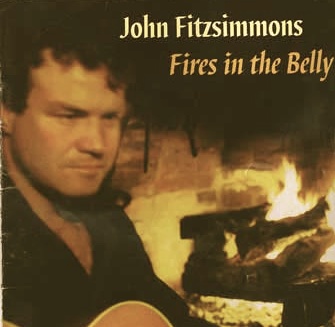
The Boston Globe

Fitz’s now classic recording of original songs and poetry…

Download from the iTunes Music Store

“A Masterful weaver of song whose deep, resonant voice rivals the best of his genre…”
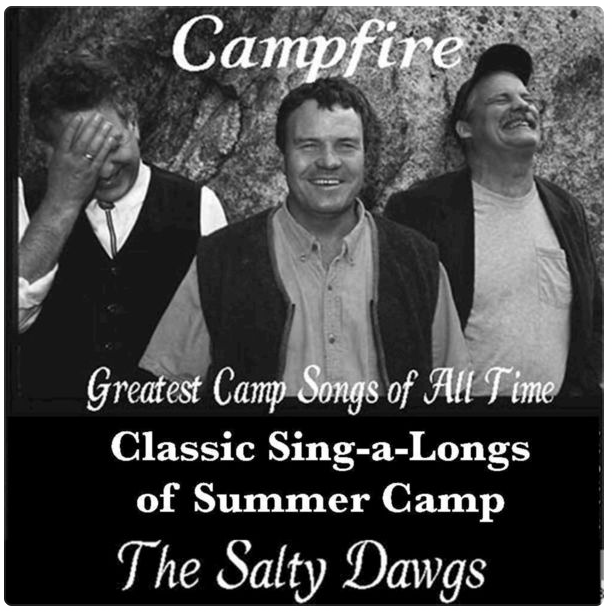
Spirit of Change Magazine


“2003: Best Children’s Music Recording of the Year…”
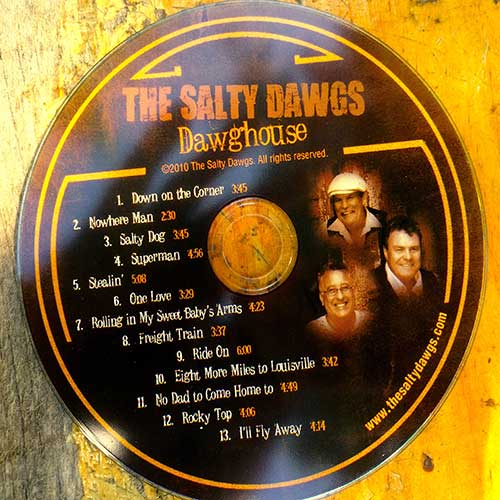
Boston Parent's Paper

Fitz & The Salty Dawgs
Amazing music, good times and good friends…

Listen here

TheCraftedWord.org

Writing help

when you need it…

“When the eyes rest on the soul…that’s Fitzy…”

Lenny Megliola

WEEI Radio

Me & God

        I am not done with God, nor God with me. I remain obsessed with the notion of the unmoved mover who set the pattern of creation into its initial motion. I stubbornly try to trace my existence back to some infinite beginning—so much so that I loathe the...

The Next Time Around

        I wonder what the years have really taught me about writing and music. I have gotten so used to preaching and teaching that I am a bit looped by the thought of writing—as in how I wrote before (or how I will claim I wrote) before settling into this somewhat...

Auto Draft

The Blathering of Teachers

To succeed, jump as quickly at opportunities  as you do at conclusions. ~Benjamin Franklin             Maybe we are born more to ignore than to listen. I understand too well how easy it is to ignore the blatherings of teachers. I was a master of it once myself, so why...

The Shapes of Stories

While I have always been a storyteller of sorts, I am not much of a writer of stories--but I have always been intrigued by the relative simplicity at the core design level of most books and movies. A lot of it is tied to my love for Joseph Campbell's work on the...

The Farmer, The Weaver & the Space Traveler

     Words matter. Words carefully crafted and artfully expressed  matter infinitely more. There is something compelling in a turn of phrase well-timed, arresting image juxtaposed on arresting images; broad ideas distilled into clear, lucid singular thought. For the...

What Are We Afraid Of?

Good intentions are easily hobbled by inaction. There has always been a murky and muddied No Mans Land in every war where the evil and the righteous trade the moral high ground. This is not the case in Ukraine. Putin’s actions are evil--pure, unmitigated, unprovoked...

Chicken Road

A Priori

How do I know what I know? The sharp angles of this simple cottage perfected  in every board sawn, shingle split and beam hewn into place goes together placed, splined, slid together, bound more by intuition than knowing.

You Are All a Bunch of Punks

Poetry without form is like tennis without a net. ~Robert Frost       Free verse poetry is not, as many assume, poetry without rules. It is a measured and thoughtful crafting of an idea into lines, spaces, and breaks intentionally and willfully crafted to heighten and...

InOut Games Chicken Road : Jeu de Crash Rapide pour des Frissons Instantanés

Chicken Road, le tout nouveau titre de style crash d'InOut Games, a conquis le marché mobile avec ses rounds de petite taille qui offrent des résultats pleins d’adrénaline en quelques minutes seulement. Que vous soyez un joueur crash expérimenté ou un simple...

Capospin: Thrilling Quick‑Play Slots and Games for Fast‑Track Wins

1. Quick‑Game Fever at CapospinCapospin has carved a niche for players who crave the rush of a spin or a hand, all within a few minutes. The platform’s interface is streamlined so that a newcomer can navigate from the welcome screen to their first bet without a...

How do I know

what I know? The sharp angles of this simple cottage perfected in every board sawn, shingle split and beam hewn into place goes together placed, splined, slid together, bound more by intuition than knowing.

No Dad To Come Home To

Rain’s falling outside of Boston—
Thank God I’m not working tonight.
I’ve got six of my own,
And a stepdaughter at home,
And a momma keeping things right.
I wonder if they’re at the table
With their puzzles, their papers and pens?
When I get off the highway
And pull in that driveway,
Will they run to the window again?

Redemption

Finally, the tall green pines standing sentinel around this cold and black New Hampshire pond are framed in a sky of blue. After a month of steady rains, foggy nights, and misty days, I am reborn into a newly created world—a world that finally answered my prayers: no...

A Late Night Metacognition

Many men go fishing all of their lives without knowing that it is not fish they are after ~Henry David Thoreau           When you need something done, find a busy person to help you get it done. My mother loved repeating that to me all the way to her dying day,...

The English Soldier

There is a soldier dressed in ancient English wool guarding the entrance to the inn. He is lucky for this cool night awaiting the pomp of the out of town wedding party. He is paid to be unmoved by the bride's stunning beauty or her train of lesser escorts. He will not...

The Small Potato

Maybe there is a God. I just came home and sat down in the kitchen to grade some papers and input some grades, but the internet is buggy and slow, and I thought, "maybe this is the message" that I am trading my soul for work. I even remember myself  pontificating in...

Pruning

These trees have driven so many friends batty, wedged in unstable crotches, embracing hollow, heart-rotted limbs, reaching tentatively, maddened with indecision. From a distance your gestures are very lobsterlike— waving a last embattled claw, as if dueling some...

Welcome

I, on my side, require of every writer, first or last, a simple and sincere account of his own life, and not merely what he has heard of other men's lives; some such account as he would send to his kindred from a distant land... ~Henry David Thoreau, Walden I’ve...

Searching for an Alibi

Here I am out on the road again
and it feels longer than it was back then;
when I was younger, man, it saw me through—
now it don’t do
what I want it to—

Too ra loo ra loo ra lady I—
I’m just out searching for an alibi
Too ra loo ra loo ra lady I
I’m just out searching for an alibi.

Denise

There is something about coming hometo this empty house, yesterday'sheavy downpours scouringclean the alreadyweathered deckwhere I sitwishing for,wanting,you.

The Gift Unclaimed

I have an old lobster buoy Hanging dully from A wrought-iron basket hook— A rough cutaway Filled with suet, Clabbered in wire mesh. . I had imagined chickadees Squabbling with angry jays And occasional sparrows, finches— Maybe even cedar waxwings tired of scrounging...

Once Burned. Twice Shy.

Just because no one understands you,  it doesn’t mean you are an artist ~Bumper Sticker        I sometimes wonder why when you give a group of teenagers a video camera, the first impulse is to shoot something stupid. It’s as if there is some jackass switch...

Metamorphoses

It’s something I‘ve hardly ever thought of:
this simple and rattling old diesel
has always gotten me there and then some;
and so at first I think this sputtering
is just some clog, and easily explained:
some bad fuel maybe, from the new Exxon,
or just shortsightedness on maintenance.
I’ve always driven in the red before,
and these have all been straight highway miles —

Ginny

I always had in my mind a song about a woman named Ginny who lives (or lived) on an island off the coast of Maine. I want her to somehow represent someone who is willing to wait for something to return to her. What that something is I am not really sure. I was hoping...

Let It Snow, Let It Snow…

You can't kill time without wounding eternity. ~Henry David Thoreau       Let it snow, let it snow, let it snow...but don't let it totally define your day. Most of us see a snow day as an unexpected vacation day, though really what it is could be called "a day of...

Garden Woman

I woke today and had my tea
and at the window spent the morning:
the same scene I’ve seen so many times
is each day freshly born;
from the ground I turn each spring and fall
come the flowers sweetly blooming;
you disappear among the weeds—
you are the garden woman.

I have been here before

Trying to pull a final day Back into the night, execute Some stay of time, Some way to wrap The fabric of Summer Around the balky, frame of Fall, sloughing My skin, unable to stop This reptilian ecdysis— This hideous morphing Into respectability. My students, tame As...

A Redemptive Moment

I see the clock ticking towards 7:00. The kids are deep in their weekday world of homework, juggling soccer balls around the house, watching TV, but I am in my “got to rally” and get to the inn mode that happens very Thursday. Tonight I am tired. I’ll admit it, but...

Practice Doing

Someday, someone might fire you for not doing what you should have done.    There are some days when a teacher might wonder whether it is worth giving the extra effort if the students are not giving the extra effort. I am lucky--and cursed--that I get to live and...

Rambling

I am sitting here in class while my students write their "daily ramble."  If I have learned anything from teaching it is that kids need the time in class to practice what is preached.  As teachers we can't assign homework and remotely know what is happening at the...

Игровые автоматы Вавада и их неожиданные эмоции

Игровые автоматы Вавада и их эмоции удивляющие игрока Игровые автоматы Вавада и их неожиданные эмоции Если вы ищете уникальный опыт в азартных играх, стоит обратить внимание на слоты, предлагаемые по адресу вавада. Здесь вас ждут не только увлекательные сюжеты, но и...

The Inn

        I realized that in all my years of writing and journal keeping, I seldom, if ever, write about "The Inn," which is and has been, the biggest and most enduring constant in my life for the past thirty plus years. Every Thursday night I load up my car, truck, bus...

Diesel Lullaby

I've been spending a lot of time lately writing sketches of songs—some more complete than others. I have found that it takes time for a song to evolve into its final form, so what I have posted here is more the end of the beginning, not the end. Denise gave me the...

New Ways

Time for a change. Feeling it in a lot of ways. After months of steady workouts, I’ve been finding too many convenient ways to let the day slip by. Still feel better than I have in years, but the days seem to have got the best of me. Excuses, procrastination and...

Last of the Boys

Come on over here
and I’ll buy the next round:
cold beer and some shooters
for the boys on the town;
Darby ain’t drinkin’
so let’s live it up
‘cause he’ll drive us all home
in his company truck

Jesus Christ, Jimmy,
man you say that you’re well;
I say we drive into Boston
and stir up some hell;
put a cap on the weekend,
a stitch in the night,
watch the Pats play on Sunday
and the welterweight fight.

That’s all she wrote boys,
there ain’t any more;
that’s why we’re standing here;
that’s what it’s for.
That’s why we all go on working all day
busting our ass for short pay:
~Hey…

The March Snow

An early March snow brought down all these branches Cracking and crashing throughout a long night, Piling them impatiently in the yard Like jacksticks in a child’s messy room. The stepladder I used to rake the ridge Stands like an awkward sculpture draped in white...

Molting

I am always molting; leaving my hollowed skin in awkward places, scaring people and making them jump. They touch me and think I’m real; then laugh and say things like “What a riot.” I’m tired of this changing of skins. I’d rather stumble on myself and be fooled; and...

Ring of Fire: The Power of Simplicity

In fifth grade my mother finally let me go to the Concord Music store and buy a "45" single.  I bought Johnny Cash’s version of “Ring of Fire” written by his future wife June Carter and Merle Kilgore, a noted country songwriter of his day. There was no doubt in my...

Contact John Fitzsimmons...and thanks!

The Elfin Knight

The Elfin Knight

The Ancient Ballads

The Elfin Knight

The Elfin Knight

by John Fitzsimmons | The American Folk Experience

Child Ballad #2
(Also known as “Scarborough Fair)

Are you going to Scarborough fair?
Parsley, sage, rosemary and thyme
Remember me to one that lives there
For once she was a true love of mine

Tell her to make me a cambric shirt
Parsley, sage, rosemary and thyme
Without any seam or fine needlework
And then she’ll be a true love of mine

Tell her to wash it in yonder dry well
Parsley, sage, rosemary and thyme
When water ne’er sprung nor drop of rain fell
And then she’ll be a true love of mine

Tell her to dry it on yonder thorn
Parsley, sage, rosemary and thyme
Which never bore blossom since Adam was born
And then she’ll be a true love of mine

O will you find me an acre of land
Parsley, sage, rosemary and thyme
Between the sea foam and the salt sea sand
Or never be a true love of mine

O will you plough it with a ram’s horn
Parsley, sage, rosemary and thyme
And sow it all over with one peppercorn?
And then she’ll be a true love of mine

O will you reap it with a sickle of leather
Parsley, sage, rosemary and thyme
And tie it all up with a peacock’s feather?
And then she’ll be a true love of mine

And when you are done and finished your work
Parsley, sage, rosemary and thyme
Then come to me for your cambric shirt
And you shall be a true love of mine

If you have any more information to share about this song or helpful links, please post as a comment. Thanks for stopping by the site! ~John Fitz
I am indebted to the many friends who share my love of traditional songs and to the many scholars whose works are too many to include here. I am also incredibly grateful to the collector’s curators and collators of Wikipedia, Mudcat.org, MainlyNorfolk.info, and TheContemplator.com for their wise, thorough and informative contributions to the study of folk music.  I share their research on my site with humility, thanks, and gratitude. Please cite their work accordingly with your own research. If you have any research or sites you would like to share on this site, please post in the comment box.  Thanks!

"Scarborough Fair" (Roud 12, Child 2) is a traditional Northern English ballad.[1] The song lists a number of impossible tasks given to a former lover who lives in Scarborough, North Yorkshire. The "Scarborough/Whittingham Fair" variant was most common in Yorkshire and Northumbria, where it was sung to various melodies, often using Dorian mode, with refrains resembling "parsley, sage, rosemary and thyme" and "Then she'll be a true love of mine."[2] It appears in Traditional Tunes (1891) by Frank Kidson, who claims to have collected it from Whitby.[3]

The melody was collected from Mark Anderson (1874–1953), a retired lead miner from Middleton-in-Teesdale, County Durham, England, by Ewan MacColl in 1947. This version was recorded by a number of musicians in the 20th century, including the 1966 arrangement in counterpoint by the American folk rock duo Simon & Garfunkel, who learned the ballad from Martin Carthy. A slightly different rendition of the ballad (referred to as "The Cambric Shirt", or "Parsley, Sage, Rosemary and Thyme") had been recorded by John Lomax in 1939 in the United States. Sarah Brightman also performed it as part of her album La Luna from the year 2000.

History

The lyrics of "Scarborough Fair" appear to have something in common with a Scottish ballad titled "The Elfin Knight",[3] collected by Francis James Child as Child Ballad #2,[4] which has been traced as far back as 1670. In this ballad, an elf threatens to abduct a young woman to be his lover unless she can perform an impossible task ("For thou must shape a sark to me / Without any cut or heme, quoth he"); she responds with a list of tasks that he must first perform ("I have an aiker of good ley-land / Which lyeth low by yon sea-strand").

Dozens of versions existed by the end of the 18th century. A number of older versions refer to locations other than Scarborough Fair, including Wittingham Fair, Cape Ann, "twixt Berwik and Lyne", etc. Many versions do not mention a place name and are often generically titled ("The Lovers' Tasks", "My Father Gave Me an Acre of Land", etc.).[citation needed]

The references to the traditional English gathering "Scarborough Fair", and the refrain "parsley, sage, rosemary, and thyme", date to 19th-century versions, and may have been borrowed from the ballad Riddles Wisely Expounded (Child Ballad #1), which has a similar plot.[citation needed]

Lyrics and melodies


\header { tagline = ##f
  arranger = \markup { "One Hundred English Folk Songs" }
  opus =  "Cecil J. Sharp (1916, no. 74, p. 167–169)"
}
global = { \key g \minor \time 6/8 }

sopranoVoice = \relative c'' { \global \autoBeamOff \set Staff.midiInstrument = "clarinet"
  R2. | R | g8\ff a g f g a | bes8. c16 bes8 a4 r8 |
  g4 a8 bes ([a]) g | g bes c d4
  g,8 | d'4 d8 e d c | d g, g f ([g])
  a | bes ([c]) bes a a g | \time 3/8 d e fis | g4. \bar "|."
}

verse = \lyricmode {
  Where are you go -- ing? To Scar -- bo -- rough Fair?
  Pars -- ley, sage, rose -- ma -- ry and thyme,
  re -- mem -- ber me to a bon -- ny lass there,
  for once she was a true lov -- er of mine.
}

rightOne = \relative c' { \global \mergeDifferentlyDottedOn
  d8 (g a bes c d) | d, (c d~) d (e fis) | bes,\pp (d g) a, (d f) | d (f bes) f (a d) |
  bes (d e) r g (e) | r d (bes) r <a d,> (<g bes,>) |
  r f (a) e (c' e) | d, (g4) f
  c'8( | bes4. c) | \time 3/8 d,8 (g a bes4.) \bar "|."
}

rightTwo = \relative c' { \global
  d4.~ d | g, g4 c8 | bes4.\pp a | d f |
  bes r8 bes4 | r8 g4 r8 s4 |
  r8 a,4 e'4. | d4 c8 f8 (c4) |
  bes'8 f g a f e | \time 3/8 d4. | bes' \bar "|."
}

leftOne = \relative c { \global \mergeDifferentlyDottedOn
  d8 e fis g a bes | g, a bes <c c,>4 <a d,>8 | g\pp (bes g') d, (a' d) | bes4. d8 ( f a) |
  g (bes d \stemDown e4 d8 | bes4 g8 f4 e8) |
  \stemUp d4 f8 c (g' c) | r bes e, r c f |
  s4. f4 g8 | \time 3/8 d e fis | g4. \bar "|."
}

leftTwo = \relative c { \global
  d4.~ d | g,4. s4. | g4.\pp d |
  bes'8 (d bes') d,4. |
  g4. s4. | s2. | d4. c | bes a | d8 d' bes f a, c | \time 3/8 d4. | g \bar "|."
}

\score {
  <<
    \new Staff \sopranoVoice \addlyrics \verse
    \new PianoStaff \with { midiInstrument = "acoustic grand" }
      <<
        \new Staff = "right" \with { \consists "Merge_rests_engraver" }
        << \rightOne \\ \rightTwo >>
        \new Staff = "left"
        { \clef bass << \leftOne \\ \leftTwo >> }
      >>
  >>
  \layout { indent = 0
  \context { \Score \remove "Bar_number_engraver" }
  \context { \Voice \remove "Dynamic_engraver" }
}
  \midi { \tempo 4. = 45 }
}


\header { tagline = ##f arranger = \markup { "Kidson (1891) p. 43" } }

global = { \key g \major \time 3/4 \partial 4 }

sopranoVoice = \relative c' { \global \set Staff.midiInstrument = "clarinet"
  d4 | g g g | a b c | d2 d4 | a2.
  b4 b b | c (b) a | g g e | d2
  d4 | g2 g4 | a b c | d d d | a2
  b4 | c2 c4 | c (b) a | d, g g | g2 \bar "|."
 \bar "|."
}

verse = \lyricmode {
  Oh! where are you go -- ing? To Scar -- bro' fair,
  sa -- vour -- y sage, rose -- ma -- ry and thyme:
  Re -- mem -- ber me to a lass that lives there, for once she was a true love of mine.
}

\score {
  << \new Staff \sopranoVoice \addlyrics \verse >>
  \layout { indent = 0 \context { \Score \remove "Bar_number_engraver" } }
  \midi { \tempo 4. = 90 }
}


% as used in File:Scarborough Fair.ogg at Commons
\header { tagline = ##f arranger = "Version commonly used today" }

global = { \key d \dorian \time 3/4 }

chordNames = \chordmode { \global \set chordChanges = ##t
  \set Staff.midiInstrument = "acoustic guitar (nylon)"
  \transpose c c, {
  d2.:min\ppp | q | a:min | d:min |
  a:m | d:min | d4:min g2 | d2.:min |
  d:min | a:min | d:min | a:min |
  d:min | a:min7 | a:min7 | d:min \bar "|." }
}

sopranoVoice = \relative c' { \global \set Staff.midiInstrument = "clarinet"
  d2 4 | a'8 a4. a4 | e4. f8 e4 | d2. |
  r4 a' c4 | d2 c4 | a b g | a2 d4 |
  2 4 | c2 a4 | a g f | e2. |
  d2 a'4 | g2 f4 | e d c | d2. \bar "|."
}

verse = \lyricmode {
  Are you go -- ing to Scar -- bor -- ough Fair?
  Pars -- ley, sage, rose -- ma -- ry, and thyme.
  Re -- mem -- ber me to one who lives there,
  she once was a true love of mine.
}

\score {
  <<
    \new ChordNames \chordNames
    \new Staff \sopranoVoice \addlyrics \verse
  >>
  \layout { indent = 0 \context { \Score \remove "Bar_number_engraver" } }
  \midi { \tempo 4. = 90 }
}

The lyrics published by Frank Kidson in 1891[3] represent the most widely recognized version of the song. However, subsequent performers have frequently selected and rearranged verses. Martin Carthy, for example, replaced the final verse with a repetition of the opening stanza, while Simon and Garfunkel recorded a sequence consisting of verses 1, 2, 5, and 7, concluding with a reprise of the first verse. This latter arrangement has been widely adopted by later artists. The following are the lyrics as published by Kidson:

The male:
O, where are you going? To Scarborough Fair?
Savoury, sage, rosemary and thyme,
Remember me to a lass that lives there,
For she was once a true love of mine.

And tell her to make me a cambric shirt,
Savoury, sage, rosemary and thyme,
Without any seam or needlework,
And then she shall be a true love of mine.

And tell her to wash it in yonder dry well,
Savoury, sage, rosemary and thyme,
Where no water sprung nor a drop of rain fell,
And then she shall be a true love of mine.

And tell her to dry it on yonder thorn,
Savoury, sage, rosemary and thyme,
Which never bore blossom since Adam was born,
And then she shall be a true love of mine.

The female:
O, will you find me an acre of land,
Savoury, sage, rosemary and thyme,
Between the sea foam and the sea sand,
Or never you'll be a true love of mine.

O, will you plough it with a ram's horn,
Savoury, sage, rosemary and thyme,
And sow it all over with one peppercorn,
Or else you'll be a true love of mine.

Or will you reap it with a sickle of leather,
Savoury, sage, rosemary and thyme,
And tie it all up with a peacock's feather,
Or never you'll be a true love of mine.

And when you have done and have finished your work,
Savoury, sage, rosemary and thyme,
You can come to me for your cambric shirt,
And then you shall be a true love of mine.

Alternative refrains

The oldest versions of "The Elfin Knight" (circa 1650) contain the refrain "my plaid away, my plaid away, the wind shall not blow my plaid away." Slightly more recent versions often contain one of a group of related refrains:

  • "Sober and grave grows merry in time"
  • "Every rose grows merry with time"
  • "There's never a rose grows fairer with time"
  • "Whilst every grove rings with a merry antine"[a][5]

These are usually paired with "Once (s)he was a true love of mine" or some variant. "Parsley, sage, rosemary and thyme" may simply be an alternate rhyming refrain to the original based on a corruption of "grows merry in time" into "rosemary and thyme".[citation needed]

Recordings

Solo soprano voice

Field recordings

Early audio field recordings of the ballad include the following examples:

Commercial recordings

1950s

The earliest commercial recording of the ballad was made by actors and singers Gordon Heath and Lee Payant, Americans who ran a café and nightclub, L'Abbaye, on the Rive Gauche in Paris. The recording appeared on the 1955 Elektra album Encores from the Abbaye.[10] The song was also included on the 1956 album The English and Scottish Popular Ballads vol IV by A. L. Lloyd and Ewan MacColl, using Kidson's melody.[11]

The first recorded version using the best-known melody was performed by Audrey Coppard on the 1956 album English Folk Songs.[12] A decade after collecting the song, MacColl released his own version, accompanied by Peggy Seeger on guitar, on the 1957 LP Matching Songs of the British Isles and America[13] and an a capella rendition another decade later on the 10-CD collection The Long Harvest (1967).[14]

1960s

The version using the melody later used by Simon & Garfunkel in "Scarborough Fair/Canticle" was sung to Ewan MacColl in 1947 by Mark Anderson (1874–1953), a retired lead miner from Middleton-in-Teesdale, County Durham, England.[15][16][17] No audio recording of Anderson's version was ever made, although Alan Lomax recorded Anderson singing other songs in 1951.[18] MacColl printed the lyrics and melody in a book of Teesdale folk songs, and later included it on his and Peggy Seeger's The Singing Island in 1960.[16]

Milt Okun and Ellen Stekert recorded the song as "The Cambric Shirt" on their 1957 album Traditional American Love Songs.[19] David Dicaire, in his 2011 book The Folk Music Revival. Biographies Of Fifty Performers And Other Influential People, called Stekert and Okun's version a "folk classic".[20]

In 1965, Martin Carthy sang "Scarborough Fair" on his eponymous debut album after having picked up the tune from the songbook by MacColl and Seeger.[21]

Marianne Faithfull recorded the song for her second American studio album Go Away from My World, released in December 1965.

"Scarborough Fair/Canticle" appeared as the lead track on the 1966 Simon & Garfunkel album Parsley, Sage, Rosemary and Thyme in counterpoint with "Canticle", a reworking of the lyrics from Simon's 1963 anti-war song "The Side of a Hill".[22] The duo learned their arrangement of the song from Martin Carthy, but did not credit him as the arranger. They later made a "pretty substantial" monetary settlement with Carthy's publisher when asked, but unbeknownst to them, Carthy himself did not receive anything from it.[23]

Sérgio Mendes and Brasil '66 scored a U.S. No. 16 hit (#2 AC) with their light jazz/samba/pop version in 1968, which was used in the 1973 animated film Heavy Traffic.[citation needed]

In 1969, Vicky Leandros recorded the song in several versions for release throughout Europe, Canada and Japan, singing in English, German, French ("Chèvrefeuille que tu es loin") and Greek ("Νά Θυμάσαι Πώς Μ' αγαπάς").[citation needed]

Dutch progressive rock band Brainbox recorded a version of the song on their 1969 album Brainbox.

The song is the last track featured in Bobbie Gentry's and Glen Campbell's 1968 collaborative album Bobbie Gentry and Glen Campbell.

1980s

American folk punk band Cordelia's Dad recorded a version for their 1989 self-titled debut album.[24]

The Stone Roses set their own words to the melody for "Elizabeth My Dear", a track on their eponymous debut album (1989).[citation needed]

Philadelphia punk band Tons of Nuns recorded the song on their second demo and performed the song live on WXPN.[25]

1990s

Queensrÿche included a version as the B-side of their single "Anybody Listening?" in 1992.[26] It was later included as a bonus track on the 2003 reissue of their album Empire.

2000s

Celtic Woman recorded a version of the song for their third album A New Journey, released in January 2007.[27]

English early music ensemble Mediæval Bæbes recorded a version entitled "Scarborough Fayre" for their 2005 album Mirabilis.

The English death-doom metal band My Dying Bride recorded a version with two additional stanzas by its lead singer Aaron Stainthorpe, which appears on its 2009 EP Bring Me Victory.[28]

German/Norwegian symphonic metal band Leaves' Eyes recorded a version of this song on their 2009 album Njord.[29]

2010s

Nox Arcana recorded a ghost-story version with all original lyrics by Joseph Vargo for the 2012 album Winter's Majesty.[30]

In 2017, Aurora recorded the song for the Brazilian telenovela Deus Salve o Rei along with an opening sequence for it.[31]

2020s

In 2025, Oli Steadman included it on his song collection "365 Days Of Folk".[32]

In 2026, Dorian Electra included it on their self-titled EP of covers.[33]

Simon & Garfunkel version

"Scarborough Fair/Canticle"
Side-A label of the 1968 US vinyl single
Single by Simon & Garfunkel
from the album Parsley, Sage, Rosemary and Thyme
B-side"April Come She Will"
ReleasedFebruary 1968 (1968-02)
Recorded26 July 1966
Genre
Length
LabelColumbia
Songwriters
ProducerBob Johnston
Simon & Garfunkel singles chronology
"Fakin' It"
(1967)
"Scarborough Fair/Canticle"
(1968)
"Mrs. Robinson"
(1968)
Music video
"Scarborough Fair/Canticle" (audio) on YouTube

In London in 1965, Paul Simon learned the song from Martin Carthy,[34][35] who had picked up the song from the songbook by MacColl and Seeger[21] and included it on his eponymous 1965 album. Simon & Garfunkel set it in counterpoint with "Canticle", a reworking of the lyrics from Simon's 1963 anti-war song "The Side of a Hill";[36] they used the same tune as Carthy had for the traditional lyrics, while Simon's anti-war lyrics were set to a new melody composed mainly by Art Garfunkel.[21][37] "Scarborough Fair/Canticle" appeared as the lead track on the 1966 album Parsley, Sage, Rosemary and Thyme, and was released as a single after it had been featured on the soundtrack to The Graduate in 1968.[21] The copyright credited only Simon and Garfunkel as the authors, which upset Carthy, who felt that the "traditional" source should have been credited.[21] The rift persisted until Simon invited Carthy to perform the song with him as a duet in a concert at London's Hammersmith Apollo in October 2000.[21][38] Simon performed the song with the Muppets when he guest-starred on season 5, episode 11 of The Muppet Show (October 18, 1980).

Before Simon learned the song, Bob Dylan had borrowed the melody and several lines of lyrics from Carthy's arrangement to create his song "Girl from the North Country",[39] which is featured on The Freewheelin' Bob Dylan (1963), Nashville Skyline (1969) (with Johnny Cash), Real Live (1984) and The 30th Anniversary Concert Celebration (1993).

Charts

Chart performance for "Scarborough Fair/Canticle"
Chart (1968) Peak
position
Australia (Kent Music Report) 49
Canada Top Singles (RPM)[40] 5
US Billboard Hot 100[41] 11

Certifications

Region Certification Certified units/sales
United Kingdom (BPI)[42] Silver 200,000

Sales+streaming figures based on certification alone.

Soundtrack recordings

The Simon and Garfunkel version of the song was featured on the soundtrack to The Graduate in 1968.[21]

Instrumental versions of "Scarborough Fair" were arranged by Geoff Knorr for use in the video game Civilization VI as the main theme of the English civilization.[43][44] As the themes of each civilization are played as different variations of the same song as the game progresses, four different variations of the song are included in the game's soundtrack, with Phill Boucher assisting Knorr in the arrangement of the Atomic Era version of the song.[45][46]

Notes

  1. ^ For "antine", see the French word antienne ('chant' or 'refrain').

References

  1. ^ "The Elfin Knight / Scarborough Fair / Whittingham Fair". mainlynorfolk.info. Retrieved 7 May 2020.
  2. ^ "Search: Scarborough Fair RN12". Vaughan Williams Memorial Library.
  3. ^ a b c Kidson, Frank (1891). "Scarborough Fair". Traditional Tunes. Oxford: Chas. Taphouse & Son. pp. 42–44. hdl:2027/umn.31951001728562y. OCLC 47625906. Republished in 1999: ISBN 9781861430816
  4. ^ Child, Francis James (1894). The English and Scottish Popular Ballads, Part 9. Vol. 9. Boston / Cambridge: Houghton Mifflin Harcourt. p. 206.
  5. ^ Baring-Gould, Sabine (1892). "Riddles". Strange Survivals. London: Methuen & Co. p. 226.
  6. ^ "The Cambric Shirt (Roud Folksong Index S230643)". Vaughan Williams Memorial Library. Retrieved 29 August 2020.
  7. ^ "Rosemary and Thyme (child No. 2) (Roud Folksong Index S407682)". Vaughan Williams Memorial Library. Retrieved 29 August 2020.
  8. ^ "Every Rose Grows Merry in Time (Roud Folksong Index S204527)". Vaughan Williams Memorial Library. Retrieved 29 August 2020.
  9. ^ "Rosemary Lane (Roud Folksong Index S189118)". Vaughan Williams Memorial Library. Retrieved 29 August 2020.
  10. ^ Heath, Gordon. Encores from the Abbaye at AllMusic
  11. ^ LLoyd, A.L. "Ewan MacColl's Discography". ewan-maccoll.Info. Retrieved 9 October 2022.
  12. ^ "Scarborough Fair". Smithsonian Folkways Recordings. Retrieved 29 August 2020.
  13. ^ "Matching Songs of the British Isles and America : Ewan MacColl at theBalladeers". www.theballadeers.com. Archived from the original on 16 November 2020. Retrieved 31 October 2020.
  14. ^ "The Long Harvest traditional English and Scottish ballads sung by Peggy Seeger and Ewan MacColl". peggyseeger.com (track listing). Retrieved 4 December 2025.
  15. ^ "Famous song has roots in Dale folk". The Northern Echo. 3 December 2011. Retrieved 29 August 2020.
  16. ^ a b "Scarborough Fair (Roud Folksong Index S160453)". Vaughan Williams Memorial Library. Retrieved 29 August 2020.
  17. ^ Harvey, Todd (2001). The Formative Dylan: Transmission and Stylistic Influences, 1961–1963. Scarecrow Press. p. 33. ISBN 978-0-8108-4115-4.
  18. ^ "Mark Anderson". The Lomax Digital Archive. Retrieved 12 July 2022.
  19. ^ Eder, Bruce. Traditional American Love Songs – Milton Okun at AllMusic
  20. ^ Dicaire, David (2011). The Folk Music Revival. Biographies Of Fifty Performers And Other Influential People. Jefferson, North Carolina: McFarland & Co. p. 17. ISBN 9780786463527. Retrieved 25 June 2025.
  21. ^ a b c d e f g Humphries, Patrick (2003). "Scarborough Fair, Martin Carthy". Sold on Song. BBC. Retrieved 4 December 2025.
  22. ^ "Song and Lyrics, Scarborough Fair/Canticle". PaulSimon.com. Sony Music. Retrieved 10 July 2016.
  23. ^ "The story behind Simon & Garfunkel's song 'Scarborough Fair'". faroutmagazine.co.uk. 1 March 2022. Retrieved 11 November 2024.
  24. ^ "Cordelia's Dad, by Cordelia's Dad". CordeliasDad.bandcamp.com. Retrieved 14 July 2024.
  25. ^ "Tons of Nuns – Freedom Has No Bounds". Retrieved 5 October 2025.
  26. ^ Honigmann, David (9 August 2020). "Scarborough Fair — the ancient ballad that sparked a modern-day grudge". FT.com. Retrieved 23 November 2023.
  27. ^ Digital, Granite. "Celtic Woman Story". www.celticwoman.com.
  28. ^ "My Dying Bride Completes Recording New EP, "Bring Me Victory"". Metal Underground. Retrieved 5 January 2025.
  29. ^ Moffitt, Greg (2009). "Leaves' Eyes Njord review". BBC Music. Retrieved 5 January 2025.
  30. ^ 'Scarborough Fair' by Nox Arcana with original lyrics on YouTube
  31. ^ "Aurora, cantora norueguesa, grava clipe da música de abertura de 'Deus Salve o Rei' nos Estúdios Globo". Gshow (in Brazilian Portuguese). 23 October 2017. Archived from the original on 24 October 2017. Retrieved 22 November 2017.
  32. ^ "365 Days Of Folk: Song List". Retrieved 24 January 2026.
  33. ^ "Dorian Electra's Instagram". www.instagram.com. Retrieved 19 April 2026.
  34. ^ "Sold on Song – Song Library – Scarborough Fair". bbc.co.uk/radio2. BBC. Retrieved 23 November 2017.
  35. ^ "Simon & Garfunkel – Scarborough Fair (Chords)" – via tabs.ultimate-guitar.com.
  36. ^ "Song and Lyrics, Scarborough Fair/Canticle". PaulSimon.com. Sony Music. Retrieved 10 July 2016.
  37. ^ Bennighof, James (2007). The Words and Music of Paul Simon. Greenwood Publishing Group. pp. 21–24. ISBN 9780275991630. Retrieved 19 June 2015.
  38. ^ "Paul Simon Setlist at Hammersmith Apollo, London". setlist.fm.
  39. ^ Jürgen Kloss. ""...She Once Was A True Love of Mine" – Some Notes About Bob Dylan's "Girl From The North Country"". justanothertune.com. Retrieved 23 November 2017.
  40. ^ "RPM Top 100 – April 27, 1968" (PDF).
  41. ^ Whitburn, Joel (2013). Joel Whitburn's Top Pop Singles, 14th Edition: 1955–2012. Record Research. p. 767.
  42. ^ "British single certifications – Simon & Garfunkel – Scarborough Fair Canticle". British Phonographic Industry. Retrieved 7 July 2023. Select singles in the Formats field. Type Scarborough Fair Canticle Simon & Garfunkel in the "Search:" field.
  43. ^ England Theme – Industrial (Civilization 6 OST) | Scarborough Fair on YouTube
  44. ^ "Civilization VI to feature an orchestral soundtrack led by Knorr and Tin". VGMO – Video Game Music Online. 22 July 2016. Retrieved 4 August 2022.
  45. ^ Tom Marks (30 September 2016). "Civ 6's music evolves alongside your cities, and it's one of its best features". PC Gamer. Retrieved 4 August 2022.
  46. ^ Civilization VI Official Game Soundtrack on YouTube

Further reading

Source: Mainly Norfolk

The Elfin Knight / Scarborough Fair / Whittingham Fair / Rosemary Lane

Roud 12 ; Child 2 ; G/D 2:329 ; Ballad Index C002 ; trad.]

Martha Reid of Blairgowrie, Perthshire, sang The Elfin Knight in 1955 to Maurice Fleming. This field recording was included in 2011 on the Greentrax CDSongs and Ballads from Perthshire (Scottish Tradition 24). Further versions of her can be found on Peter Shepheard’s Springthyme Records page of The Elfin Knight.

A.L. Lloyd sang Scarborough Fair in 1956 on his and Ewan MacColl’s Riverside anthology The English and Scottish Popular Ballads (The Child Ballads) Volume IV. All of his ballads from this series were reissued in 2011 on his Fellside CDs Bramble Briars and Beams of the Sun.

Ewan MacColl and Peggy Seeger sang The Elfin Knight in 1956 on their Tradition album Classic Scots Ballads. He commented in the sleeve notes:

A universal theme of both folk tale and ballad is that of impossible tasks. In this ballad, the form it takes is that of the courtship, with on flirtatious lover setting a series of tasks and his companion meeting the challenge by setting an equally difficult series. In early forms of the ballad, an elfin knight posed the tasks, to be answered by a maiden who remains free by devising tasks of no less difficulty which must be answered first. Modern folk have made both characters mortal enough. Child had nineteen versions of this ballad, which he traced in his affinities through many languages of Europe and Asia. It is well known in England and America. This version was learned from Greig’s Last Leaves of Traditional Ballads and Ballad Airs.

He also sang The Elfin Knight on his 1964 Folkways album The English and Scottish Popular Ballads: Vol. 3—Child Ballads.

Both Bob and Ron Copper of Rottingdean and Thomas Moran of Mohill, Co. Leitram, sang The Elfin Knight in a medley on the anthology The Child Ballads 1 (The Folk Songs of Britain Volume 4; Caedmon 1961; Topic 1970).

Shirley Collins sang Scarborough Fair unaccompanied in 1960 on her second album, False True Lovers. She commented in the album’s sleeve notes:

Derived by MacColl from Cecil Sharp’s English Folk Songs, [this] is a fragment of an extremely ancient ballad (Child No. 2, The Elfin Knight), common in all areas of Britain and North America. In the original song a girl hears the far-off blast of the elfin knight’s horn and wishes he were in her bedroom. He straightaway appears, but will not consent to be her lover until she answers a series of riddles. This trait of test-by-riddle is a heritage from remote antiquity. The survival of this ancient piece of folklore is assured by the fact that all the couplets in this song contain gentle, but evocative erotic symbols.

Martin Carthy sang Scarborough Fair in 1965 on his first album Martin Carthy, and it was included on the compilations The Big FolkShades of Folk, and Electric Muse: The Story of Folk into Rock, and in 1999 on Martin Carthy: A Collection. He sang a slightly different version on Wood Wilson Carthy, and yet another together with Bert Jansch on Acoustic Routes under the title The Elfin Knight. These two versions were both included as starting and closing track of the 4 CD anthology The Carthy Chronicles. Carthy commented in his first album’s sleeve notes:

Folklorists and students of plant mythology are well aware that certain herbs were held to have magical significance—that they were used by sorcerers in their spells and conversely as counter-spells by those that wished to outwit them. The herbs mentioned in the refrain of Scarborough Fair (parsley, sage, rosemary and thyme) are all known to have been closely associated with death and also as charms against the evil eye. The characters in the Elfin Knight (of which Scarborough Fair is a version) are a demon and a maid. The demon sets impossible tasks and on the maid’s replies depends whether she will fall into his clutches or not. Child believed that elf to be an interloper from another ballad (Lady Isobel and the Elf Knight) and that he should rightly be mortal, but as Ann Gilchrist points out “why the use of the herb refrain except as an indication of something more than mortal combat?” Sir Walter Scott in his notes to Minstrelsy of the Scottish Border recalled hearing a ballad of “a fiend …paying his addresses to a maid but being disconcerted by the holy herbs she wore in her bosom” and Lucy Broadwood goes as far as to suggest that the refrain might be the survival of an incantation against such a suitor.

This video shows Martin Carthy with members of the Aurora Orchestra on BBC Radio 3 In Tune on February 24, 2012:

In 1966, Paul Simon had a big hit with this song in Martin Carthy’s arrangement as title track of his album Parsley Sage Rosemary and Thyme. He also sang Scarborough Fair in episode 5/11 of The Muppet Show:

Cyril Tawney sang this ballad with the tile The Tasks in 1969 on his Polydor album The Outlandish Knight: Traditional Ballads from Devon and Cornwall. He commented in his sleeve notes:

A composite version of The Elfin Knight taken from the Baring-Gould manuscripts. With the exception of two verses from John Hext of Postbridge, Devon (October 1890), all the ‘ingredients’ come from West of the Tamar. An unknown source from the Camelford district supplied Baring-Gould with all the other verses and I have used the refrain sung to him by Joseph Dyer of Mawgan-in-Pyder, together with Dyer’s tune. Baring-Gould was told that in Cornwall this used to be sung as a sort of game in farm-houses, between a young man who went outside the room, a girl who sat on a chair and a chorus of farm lads and lasses. The man re-entered and addressed the girl with the first half of the ballad and she replied with the second half. Known as Whittingham Fair in Northumberland and Scarborough Fair in Yorkshire, a chocolate-boxy version of the latter being very popular with modern folk-singers.

Robin and Barry Dransfield sang Scarborough Fair in 1970 on their Trailer album The Rout of the Blues. A live recording of Robin Dransfield at the Medway Folk Centre in November 1972 was included in 2008 on his CD A Lighter Touch.

Liz Jefferies sang this song, with the unusual title Rosemary Lane, to Barry and Chris Morgan in their own home in Bristol in September 1976. This recording can be found on the anthology As Me and My Love Sat Courting (The Voice of the People Series Volume 15; Topic 1998).

Nancy Kerr sang Whittingham Fair in 1993 on her and Eliza Carthy’s eponymous album Eliza Carthy & Nancy Kerr and on their compilation CD On Reflection. Nancy commented in the original album’s sleeve notes:

Whittingham Fair is from Folk Songs of the North Countrie by Frank Kidson and Alfred Moat, under the title Scarborough Fair. The “Northumbrianised” version is from my mother and the tune can be found in Kidson’s Traditional Tunes.

and Eliza added:

[The tune] For Whittingham Fair was a flash of inspiration while I was learning the song in my bedroom. Original title, isn’t it?

Brian Peters sang Scarborough Fair in 1994 on his CD Squeezing Out Sparks.

Sue Brown and Lorraine Irwing sang Scarborough Fair in 1997 on their WildGoose CD Call & Cry.

Lucky Bags sang Whittingham Fair in 1998 on their Fellside CD Delight in Disorder. They commented in their liner notes:

The text of this version is from Songs of Northern England (Stokoe) and has the same pedigree as its better known cousin, Scarborough Fair, both originating from Child Ballad no. 2 The Elfin Knight. The setting of impossible tasks seems to have been a very popular way of whiling away the time in many different parts of Britain. (Producer’s note: c.f. recording Lucky Bags!)

Tim van Eyken sang The Cambric Shirt in 2003 on Dr Faustus’ Fellside CD The First Cut.

Chris Wood sang Scarborough Fair in 2010 on The Imagined Village’s album Empire and Love.

Jon Boden sang Scarborough Fair as the March 14, 2011 entry of his project A Folk Song a Day.

Emily Smith sang this ballad as Sweet Lover of Mine in 2011 on her CD Traiveller’s Joy. This track was also included on the CD BBC Radio 2 Folk Awards 2012. She also sang it in a bonus session of the DVD Cambridge Folk Festival 2011.

Mike and Ali Vass sang The Elfin Knight in 2011 on their CD Waiting to Fly.

Compare to this the related title An Acre of Land sung by John Kirkpatrick on Brass Monkey’s album Sound and Rumour. And Jim Copper recorded An Acre of Land for the BBC in 1952.

Bellowhead recorded Rosemary Lane in 2014 for their Island record Revival. They commented in their booklet notes:

Taken from a singer called Liz Jefferies (the original being available on the Voice of the People CD series issued by Topic Records), almost everyone will be aware of the underlying story in that it’s a version of Scarborough Fair, known the world over via Simon & Garfunkel. It’s a song where a suitor is set a number of impossible tasks in order to satisfy the demands of their prospective lover. The narrative is so strong that it’s survived down the generations, like many a fable of fairy tale, albeit in subtly changed versions. But in true trad style, all these versions are actually themselves a much abridged version of an even older folk song called The Elfin Knight. Incidentally, Paul Simon’s version was borrowed from a legendary figure in English folk, Martin Carthy.

Kim Edgar learned The Elfin Knight from Gavin Grieg’s Last Leaves of Traditional Ballads and Ballad Airs (Aberdeen, 1925) and sang it on Cara’s 2016 CD Yet We Sing. The album’s liner notes commented:

[…] Kim was immediately drawn to this song’s themes: enchantment, desire, the supernatural, and relationships that aren’t destined to be. It’s been previously recorded by Ewan MacColl and Peggy Seeger on their [1956] album, Classic Scots Ballads, amongst others—but for this version we’ve made a new arrangement.

Lyrics

Martha Reid sings The Elfin Knight
O fetch to me aye a Holland shirt,
Aye thout either needle or needle work.
For you’ll wash it in to yon draw well
Where there never was water nor one drop o dew fell.For you’ll hing it oer yon Thornhaugh bush,
Where there never was thorns since Adam was born.
And it’s ho, ho the wind’ll blow.For you’ll fetch to me two acres of land
Between thon salt sea and thon salt sea strand.
For you’ll ploo it up with a devil tup’s horn,
You will sew it ower with one grain of corn,
And it’s ho, ho the wind’ll blow.

For you will ripen it up with one blink o sand,
You’ll cut it down with a pea-hen’s feather.
You’ll stook it up by the stung of a nettle,
And it’s ho, ho the wind’ll blow.

For you’ll yoke two sparrows in a matchbox,
An cart it home to your own farm yard,
And it’s ho, ho the wind’ll blow.

For surely when you put such task on me,
I’ll surely put aye as hard on you.
You’ll, how many ships sails in thy forest?
How many strawberries grows on the salt sea?
And it’s ho, ho the wind’ll blow.

Ewan MacColl and Peggy Seeger sing The Elfin Knight Kim Edgar sings The Elfin Knight
There stands three trumpeters on yon hill
Blaw, blaw, blaw winds, blaw,
And they blaw their trumpets sae loud and shrill
And the wind it blaws aye my plaid awa’.
The Elfin Knight stands on yon hill
ba, ba, ba lily ba,
And he blows his horn baith loud and shrill,
And the wind has blown my plaid awa’.
Gin I’d his trumpet in my kist
And was in the lad’s airms that I like best
If I had yon horn in my kist,
ba, ba, ba lily ba,
And were in the lad’s arms that I love best
And the wind would blow my plaid awa’.
Gin ye would be wed wi’ me
There’s ae thing ye maun dae for me
Gin ye would be wed tae me,
ba, ba, ba lily ba,
There’s ae thing ye maun to me dee,
And the wind shall blow my plaid awa’.
Ye maun mak’ me a linen sark
Withoot a stitch o’ needlewark
I maun hae a fine linen sark,
ba, ba, ba lily ba,
Withoot a stitch o’ needlework,
And the wind shall blow my plaid awa’.
Ye maun wash it in yon dry well
Where water never sprang nor fell
Ye maun wash it in yonder well
Where water never sprang nor fell
Ye maun dry’t on yon hawthorn
That hasna seen blossom since man was born
Ye maun dry it upon a thorn
That hasna bloomed since man was born
And gin I mak a sark for thee
There’s something you maun dae for me
Gin I mak a sark for thee
There’s something you maun dee for me
My faither has an acre o’ land
Ye maun ploo it wi’ your ae hand
My father has an acre o’ land
And ye maun ploo it wi’ your hand
Ye maun sow it wantin’ corn
And roll it wi’ a sheep’s shank bone
Ye maun sow it wantin’ corn
And roll it all wi’ a sheep’s shank bone
Ye maun shear it wi’ a scythe o’ leather
And bind it wi’ a peacock’s feather
Ye maun stook it in the sea
And bring the wheat sheaf dry tae me
Ye maun stook it in the sea
And bring the wheat sheaf dry to me
And gin you wark noo all this wark
Come to me and you’ll get your sark
When you’ve done and finished your work
You’ll come to me, love, and get your sark
Blow winds, blow …
Martin Carthy sings Scarborough Fair Shirley Collins sings Scarborough Fair
Are you going to Scarborough Fair?
Parsley, sage, rosemary and thyme,
Remember me to one who lives there,
For once she was a true love of mine.
Are you going to Scarborough Fair?
Parsley, sage, rosemary and thyme,
Remember me to one who lives there,
For once he was a true love of mine.
Tell her to make me a cambric shirt,
Parsley, sage, rosemary and thyme,
Without no seam nor needlework,
And then she’ll be a true love of mine.
Tell him to make me a cambric shirt,
Parsley, sage, rosemary and thyme,
Without a seam or needlework,
And he shall be a true love of mine.Tell him to wash it in yonder dry well,
Parsley, sage, rosemary and thyme,
Where water ne’er sprang nor drop of rain fell,
And he shall be a true love of mine.Tell him to hang it on yonder thorn,
Parsley, sage, rosemary and thyme,
Which never bore blossom since Adam was born,
And he shall be a true love of mine.
Tell her to find me an acre of land,
Parsley, sage, rosemary and thyme,
Between the salt water and the sea strand,
And then she’ll be a true love of mine.
Oh can you find me an acre of land,
Parsley, sage, rosemary and thyme,
Between the sea foam and the sea sand,
And you shall be a true love of mine.
Tell her to plough it with a lamb’s horn,
Parsley, sage, rosemary and thyme,
And to sow it all o’er with one peppercorn,
And then she’ll be a true love of mine.Tell her to reap it with a sickle of leather,
Parsley, sage, rosemary and thyme,
And to thrash it all out with a bunch of heather,
And then she’ll be a true love of mine.Are you going to Scarborough Fair?
Parsley, sage, rosemary and thyme,
Remember me to one who lives there,
For once she was a true love of mine.
Nancy Kerr sings Whittingham Fair Martin Carthy sings Scarborough Fair
Are you going to Whittingham* Fair?
Savoury, sage, rosemary and thyme,
Remember me to one who lives there,
She once was a true lover of mine.
Are you going to Scarborough Fair?
Parsley, sage, rosemary and thyme,
Remember me to one who lives there,
For once she was a true love of mine.
Tell her to make me a cambric shirt,
Savoury, sage, rosemary and thyme,
Without any stitches or needlework,
Then she’ll be a true lover of mine.
Tell her to make me a cambric shirt,
Parsley, sage, rosemary and thyme,
Without no seam nor needlework,
And then she’ll be a true love of mine.
Tell her to wash it in yonder dry well,
Savoury, sage, rosemary and thyme,
Where water ne’er sprung nor a drop of rain fell,
Then she’ll be a true lover of mine.
Tell her to hang it on yonder thorn,
Savoury, sage, rosemary and thyme,
That never bore blossom since Adam was born,
Then she’ll be a true lover of mine.
Now he has asked me questions three,
Savoury, sage, rosemary and thyme,
I hope that he’ll answer as many for me,
Then he’ll be a true lover of mine.
Tell him to find me an acre of land,
Savoury, sage, rosemary and thyme,
Betwixt the salt water and the sea sand,
Then he’ll be a true lover of mine.
Tell her to find me an acre of land,
Parsley, sage, rosemary and thyme,
Between the salt water and the sea strand,
And then she’ll be a true love of mine.
Tell him to plough it with a ram’s horn,
Savoury, sage, rosemary and thyme,
And sow it all over with one peppercorn,
Then he’ll be a true lover of mine.
Tell her to plough it with a lamb’s horn,
Parsley, sage, rosemary and thyme,
And to sow it all o’er with one peppercorn,
And then she’ll be a true love of mine.
Tell him to reap it with a sickle of leather,
Savoury, sage, rosemary and thyme,
And tie it all up with a peacock’s feather,
Then he’ll be a true lover of mine.
Tell her to reap it with a sickle of leather,
Parsley, sage, rosemary and thyme,
And to thrash it all out with a bunch of heather,
And then she’ll be a true love of mine.
When he has done and finished his work,
Savoury, sage, rosemary and thyme,
Well, tell him to come and tear up his shirt,
And he’ll be a true lover of mine.
Note: Nancy Kerr quite clearly sings “Whittingt-ham” — however spelled — with a “T” sound, not “Whittingham”. Are you going to Scarborough Fair?
Parsley, sage, rosemary and thyme,
Remember me to one who lives there,
For once she was a true love of mine.
Liz Jefferies sings Rosemary Lane Bellowhead sing Rosemary Lane
As you will go down Rosemary Lane,
Where every rose grows merry and fine,
Oh, you’ll pick me out the finest girl there,
And I will make her a true lover of mine.
If you will go down to Rosemary Lane,
Where every rose grows merry and fine,
Oh, you’ll pick me out the finest girl there,
And I will make her a true love of mine.
Oh, tell her to get me a camberic shirt,
Every rose grows merry and fine,
To be done without needle or needle’s work,
And then she will be a true lover of mine.
Tell her to make me a cambric shirt,
Where every rose grows merry and fine,
To be done without needle or needlework,
Then she will be a true lover of mine.
And tell her to wash it in yonder well,
Every rose grows merry and fine,
Where water ne’er sprung nor rain never fall,
Then she will be a true lover of mine.
And tell her to wash it in yonder well,
Where every rose grows merry and fine,
Where water ne’er sprung and rain never fell,
Then she will be a true lover of mine.
And tell her to dry it on yonder sharp thorn,
Every rose grows merry and fine,
For one of her rose since Adam was born,
Then she will be a true lover of mine.
Tell her to dry it on yonder green thorn,
Where every rose grows merry and fine,
Where bloom never grew since Adam was born,
Then she will be a true lover of mine.
When she is finished all of her work,
Every rose grows merry and fine,
Oh, tell her I’ll got her camberic shirt,
Then she will be a true lover of mine.
And when she has finished all of her work,
Where every rose grows merry and fine,
Oh, tell her I’ll call for my cambric shirt,
Then she will be a true lover of mine.
And as you will go down Rosemary Lane,
Where every rose grows merry and fine,
Oh, you’ll pick me out the finest boy there,
And I will make him a true lover of mine.
If you will go down to Rosemary Lane,
Where every rose grows merry and fine,
Oh, you’ll pick me out the finest boy there,
And I will make him a true love of mine.
Tell him to get me an acre of land,
Every rose grows merry and fine,
Between the salt sea and the salt-sea sand,
And then he will be a true lover of mine.
Tell him to get me an acre of land,
Where very rose grows merry and fine,
Between the salt sea and the salt-sea strand,
Then he will be a true lover of mine.
Tell him to plough it with a ram’s horn,
Every rose grows merry and fine,
And sow it all over with one ben of corn,
Then he will be a true lover of mine.
Tell him to plough it with a ram’s horn,
Where very rose grows merry and fine,
And sow it all over with one grain of corn,
And then he will be a true lover of mine.
Tell him to reap it with a cock’s feather,
Every rose grows merry and fine,
And bind it all over with strappings of leather,
Then he will be a true lover of mine.
Tell him to reap it with a cock’s feather,
Where every rose grows merry and fine,
And bind it all over with strappings of leather,
Then he will be a true lover of mine.
And tell him to drive home on a snail,
Every rose grows merry and fine,
And thrash it all over with a mouse’s tail,
And then he will be a true lover of mine.
And tell him to draw it home on a snail,
Where every rose grows merry and fine,
Thrash it all over with an ox’s tail,
Then he will be a true lover of mine.
And when he has finished all of his work,
Every rose grows merry and fine,
Oh, tell him to call for his camberic shirt,
And then he will be a true lover of mine.
Every rose grows merry and fine

Acknowledgements and Links

See also Just Another Tune’s study …Tell Her to Make Me a Cambric Shirt — From the Elfin Knight to Scarborough Fair and the Mudcat Café thread Lyr Req: The Elfin Knight (from Mary O’Hara, #2).

Martin Carthy’s version transcribed by Garry Gillard with corrections from Kira White. Thanks to both of you!

Performances, Workshops, Resources & Recordings

The American Folk Experience is dedicated to collecting and curating the most enduring songs from our musical heritage.  Every performance and workshop is a celebration and exploration of the timeless songs and stories that have shaped and formed the musical history of America. John Fitzsimmons has been singing and performing these gems of the past for the past forty years, and he brings a folksy warmth, humor and massive repertoire of songs to any occasion. 

Festivals & Celebrations Coffeehouses School Assemblies Library Presentations Songwriting Workshops Artist in Residence House Concerts Pub Singing Irish & Celtic Performances Poetry Readings Campfires Music Lessons Senior Centers Voiceovers & Recording

“Beneath the friendly charisma is the heart of a purist gently leading us from the songs of our lives to the timeless traditional songs he knows so well…”


Globe Magazine

Join Fitz at The Colonial Inn

“The Nobel Laureate of New England Pub Music…”

Scott Alaric

Adventures in the Modern Folk Underground

On the Green, in Concord, MA Every Thursday Night for over thirty years…

“A Song Singing, Word Slinging, Story Swapping, Ballad Mongering, Folksinger, Teacher, & Poet…”

Theo Rogue

Songcatcher Rag

Fitz’s Recordings

& Writings

Songs, poems, essays, reflections and ramblings of a folksinger, traveler, teacher, poet and thinker…

Download for free from the iTunes Bookstore

“A Master of Folk…”

The Boston Globe

Fitz’s now classic recording of original songs and poetry…

Download from the iTunes Music Store

“A Masterful weaver of song whose deep, resonant voice rivals the best of his genre…”

Spirit of Change Magazine

“2003: Best Children’s Music Recording of the Year…”

Boston Parent's Paper

Fitz & The Salty Dawgs Amazing music, good times and good friends…

Listen here

TheCraftedWord.org

Writing help

when you need it…

“When the eyes rest on the soul…that’s Fitzy…”
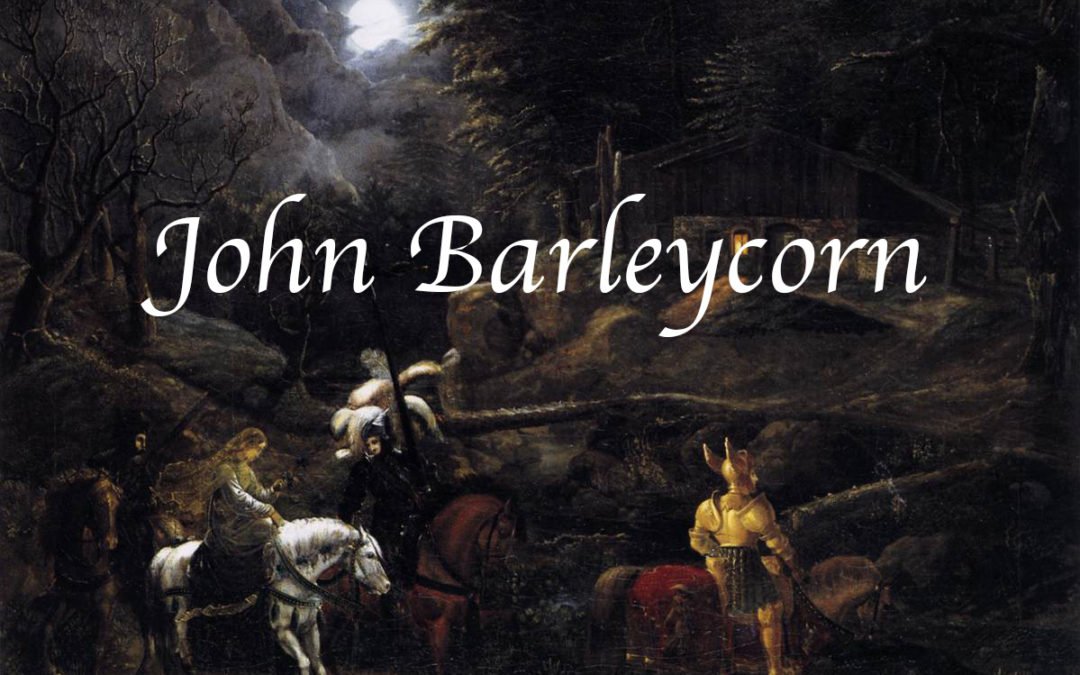
Lenny Megliola

WEEI Radio

Ghetto of Your Eye

I wrote this song back in the winter of 1989, in the dining car of a steam driven train, somewhere along the Trans-Siberian railway, after meeting a group of Russian soldiers fresh from battle in Afghanistan—that poor country that has been a battleground for way too long.

We stare together hours the snow whipped Russian plain—
rolling in the ghetto of your eye.
We share a quart of vodka
and some cold meat on the train—
you know too much to even wonder why;
I see it in the ghetto of your eye.

Crows & Swallows Release

There is seldom a red-carpet celebration when a book of poetry is released, so I will keep this a quiet and humble affair. My newest book of poetry, “Crows & Swallows” is now on iBooks, so fresh you can almost smell the ink. My business model is unchanged: It is a...

Guns, Me, and Rural America

     Sometimes I start writing without knowing where I stand—unsure of even where I stand. I have to trust some innate wisdom or audacity will cull through the bullshit we are all heir to in what Hamlet laments is “this earthly coil” we are forced to face when we wake...

Ready. Set. Go.

Who forgets to rinse his hair? Me, I guess, for that was the start of my day. I smelled something like coconut oil on my way to school, and then I realized, dang, my hair is still pretty wet. Wet with hair conditioner. And then I get sot school all coconutty smelling...

Thanksgiving

I wrote this poem, Thanksgiving, as a tribute to three older teachers from my school: Walter Birge, Read Albright, and Jim Carter--all men of tradition, celebration and commitment to community.  

A New Beginning

 I guess if there is any constant in my life, it is new beginnings.  This blog--and this website--is another new beginning starting here late on a cold night on my back porch. I've been keeping a blog (in fact several blogs) since the first blogs made their way on to...

This new spring begs attention

And shivers its literal timbers. Cold, wet and pleading, Scarred by winter winds And pasty snows, My small field and patch of woods Is now a monument To aging neglect. Shorn limbs and branches Hang high and tangled in the Sugar maples (Widow makers we called them Back...

A New Hearth

It has been a long time since I wrote a simple old "this is what I am going to do today" post. So this is what I am going to do today: [and trust me, it will have nothing--absolutely nothing--to do with school work:)] Before the true winter settles in, I am going to...

Practice Doing

Someday, someone might fire you for not doing what you should have done.    There are some days when a teacher might wonder whether it is worth giving the extra effort if the students are not giving the extra effort. I am lucky--and cursed--that I get to live and...

Going Google?

When you find yourself in the majority, it's time to join the minority ~Mark Twain I have to admit, Google is pretty impressive. The whole set of features that are offered to the public and to educators for free is pretty astounding: email, document creation and...

A New Paradigm

     Sometimes, like right now, I long for a pile of papers on my lap that I could speed through, grade with a series of checks and circles, a few scribbled lines of praise or condemnation, and drop into a shoebox on my desk and say, "Here are your essays!" But I...

Paris: 11/13/15

It is a sad day for humanity. Another sad day on top of many others happening every day--many in places we hear about only obliquley and sometimes not at all. Paris is that much closer to home for most of us here and in Europe, but freedom and tolerance has to...

The Tide

They are building a world and the plastic is fading: Margaret and Eddie's buckets are split, pouring out the warm Atlantic as they race along the tidal flat, filling pools connected by frantically dug canals. Tommy squats naked and screams in guttural joy at the...

Out of the Forge: April 13, 2017

In my forty years or so of actively singing and playing folk music and writing songs, I have played together with a remarkably narrow list of musical partners: Rogue, Wally and Barry with camp songs and Hatrack and Seth with literally everything. These last few years...

The Threshing

I trace her charging through the cornfield shaking the timbers of the ready crop startling up the blackbirds, and surprisingly, a jay. It’s the jay who startles me—
who with two quick pulls wrests itself from the transient green, screaming back from its familiar scrub...

Close Your Eyes and See

      A lot of things in life fall short of the mark, but thoughtfulness has never let me down. For some forty years I have faithfully kept journals of the wanderings of my mind—most of which is lost in some way or another, but the effect hangs on like a sailor...

Winter in Caribou

I know your name. It’s written there.
I wonder if you care.
A six-pack of Narragansett beer,
Some Camels and the brownie over there.
Every day I stop by like I
Got some place I’ve got to go;
I’m buying things I don’t really need:
I don’t read the Boston Globe.

But I, I think that I
Caught the corner of your eye.
But why, why can’t I try
To say the things I’ve got inside
To you ….

Molting

I am always molting; leaving my hollowed skin in awkward places, scaring people and making them jump. They touch me and think I’m real; then laugh and say things like “What a riot.” I’m tired of this changing of skins. I’d rather stumble on myself and be fooled; and...

The Emperor’s New Clothes

"But he hasn't got anything on!" the whole town cried out at last. The Emperor shivered, for he suspected they were right. But he thought, "This procession has got to go on." So he walked more proudly than ever, as his noblemen held high the train that wasn't there at...

The Silver Apples of the Moon.

Stories are a communal currency of humanity. ― Tahir Shah, In Arabian Nights The most powerful and enduring connection we share as a human race is our desire and need to share stories. We engage in the art of storytelling more than most of us ever realize; whether we...

Concord

The people, the music filledness of rush hour traffic skirting puddles work crews packing in laughswearingmudyellowed slickers lighting candle bombs. My sadness the euphoric detachment. I love this town. It breathes me.

Gambloria Casino: Your Mobile Slot Playground for Quick Wins

Gambloria casino has carved a niche for players who crave instant thrills without the commitment of a marathon session. Whether you’re on a coffee break or waiting for a bus, the platform delivers a punchy gaming experience that satisfies the itch for quick...

In Reply To Einstein

*God casts the die, not the dice. ~Alfred Einstein I am cold down the neck, turtling my head to showers of ice that fall dancing and skidding on skins of crusted snow. I hold my breath when I step, inflating hopes of a weightlessness, and so be undetected
to the play...

Chores

The day sometimes slip away from me, a huge pine half-bucked in the backyard, the kids old tree fort cut into slabs, a ton of coal waiting to be moved in a train of buckets to the bin. Sipping cold water on the back deck, sharpening the dulled teeth of a worn...

Diesel Lullaby

I've been spending a lot of time lately writing sketches of songs—some more complete than others. I have found that it takes time for a song to evolve into its final form, so what I have posted here is more the end of the beginning, not the end. Denise gave me the...

Goathouse

Goat house In reaching for the scythe I’m reminded of the whetstone and the few quick strokes by which it was tested-- the hardness of hot August; the burning of ticks off dog backs. It’s winter now in this garage made barn, and the animals seem only curious that I’d...

Supermoon

Last night the August supermoon reminded me of the fickleness of time and how substance becomes shadow and memories begin to etch themselves immutably into the hardness of what is already lost.

Garden Woman

I woke today and had my tea
and at the window spent the morning:
the same scene I’ve seen so many times
is each day freshly born;
from the ground I turn each spring and fall
come the flowers sweetly blooming;
you disappear among the weeds—
you are the garden woman.

Quit Your Whining

Anything worth succeeding in is worth failing in~Ben Franklin     "Quit your whining and complaining" is probably a clause that can easily be translated into every language in every culture on earth, for, from what I know and have seen in the world, bitching about...

InOut Games Chicken Road : Jeu de Crash Rapide pour des Frissons Instantanés

Chicken Road, le tout nouveau titre de style crash d'InOut Games, a conquis le marché mobile avec ses rounds de petite taille qui offrent des résultats pleins d’adrénaline en quelques minutes seulement. Que vous soyez un joueur crash expérimenté ou un simple...

China Journal: Part One

I           The dull staccato throb in light rain on a dark night. Unseen barges make their way up the QianTian River—concrete shores marked by the arch of the bridge, the spans of beam stretched on beam, the impeccable symmetry of the street-lights broken by a stream...

Yesterday did not become a poem

Nothing became something else; No thoughts filled my head With wonder or wisdom. Listless sky. Jumbled frames. Fleeting images: Chattering squirrels, Distant rumbling Of rush hour traffic. Today I am more determined, But all that is left Is the promise Of tomorrow.

Trawler

Leave the fog stillness
of a cold harbor town;
cup our hands
in the warm diesel sound—
leave while the children
are calmed in their dreams
by light buoys calling:
“Don’t play around me.”

China Journal: Part Three

III My teachers could have ridden with Jesse James For all the time they stole from me... ~Richard Brautigan, Trout Fishing in America      Today it was a temple built into the mountainside west of West Lake. Mr. Toe drove us out there. In most ways I just follow Rob...

Essex Bay

This house makes funny noises
When the wind begins to blow.
I should have held on and never let you go.
The wind blew loose the drainpipe.
You can hear the melting snow.
I’ll fix it in the morning when I go.

The Small Potato

Maybe there is a God. I just came home and sat down in the kitchen to grade some papers and input some grades, but the internet is buggy and slow, and I thought, "maybe this is the message" that I am trading my soul for work. I even remember myself  pontificating in...

Get Back in the Game

Out on the back porch, not as cold as earlier today, waiting for the storm to arrive in a few hours--curious if I will get that call at 2:00 AM to head out and plow the Concord streets. Most of me hopes for the call; another side of me wants a day stuck at home,...

In the unfolding chores

The day sometimes slip away from me, a huge pine half-bucked in the backyard, the kids old tree fort cut into slabs, a ton of coal waiting to be moved in a train of buckets to the bin. Sipping cold water on the back deck I hear Emma rustling for soccer cleats and...

Thinking of My Sister

When Cool Was Really Cool  Life is not counted by the amount of breaths we take,  but of the moments that leave us breathless. ~Unknown             We were coming home from church one morning and Jimmy Glennon pulled up beside us as we approached the Sudbury road...

Redefining Literacy

 My life is the poem I could have writ, But I could not both live and utter it ~Henry David Thoreau    The common man goes to an orchard to taste the fruit. The rich man man learns how to plant his own orchard. The poet, however,  grows an even better fruit and gives...

Contact John Fitzsimmons...and thanks!