The Golden Vanity

The Golden Vanity

The Ancient Ballads

The Golden Vanity

The Golden Vanity

by John Fitzsimmons | The American Folk Experience

Child Ballad #286

There was a ship that sailed 
all on the Lowland Sea, 
and the name of our ship 
it was the Golden Vanity,
and we feared she would be taken
by the Spanish enemy 
as she sailed in the Lowland, 
the Lowland, low 
as she sailed in the Lowland sea.
 
Then up stepped our cabin boy
and boldly outspoke he
and he said to our captain
“what would you give to me
If I would swim along side
of the Spanish enemy
and sink her in the Lowland,
Lowland, low
and sink her in the Lowland, sea
 
“Oh, I would give you silver
and gold I’ll give to thee
And my own fair daughter
your bonny bride shall be,
If you will swim along side
of the Spanish enemy
and sink her in the Lowland,
Lowland low
And sink her in the Lowland sea.
 
The boy he made him promise
And overboard sprang he
and he swam alongside
of the Spanish enemy
And with his brace and auger
in her side he bored holes three,
And he sunk her in the Lowland,
Lowland Low,
And he sunk her in the Lowland Sea.
 
Then quickly he swam back
to the cheering of the crew
But the captain would not heed him
for his promise he did rue,
who scorned his poor entreatings
when the cabin boy did sue,
And he left him in the Lowland,
Lowland, Low
And he left him in the Lowland Sea.
 
Then quickly he swam round
’til he made the larboard side,
And up to his messmates
full bitterly he cried,
“Oh, messmates, draw me up,
for I’m drifting with the tide,
And I’m sinking in the Lowland,
Lowland, Low
I’m sinking in the lowland sea.”
 
Then his messmates drew him up,
But on the deck he died,
And they stitched him in his hammock
Which was so fair and wide,
And they lowered him overboard
And he drifted with the tide,
And he sank in the Lowland,
Lowland, low
And he sank in the Lowland sea.

If you have any more information to share about this song or helpful links, please post as a comment. Thanks for stopping by the site!

~John Fitz

I am indebted to the many friends who share my love of traditional songs and to the many scholars whose works are too many to include here. I am also incredibly grateful to the collector’s curators and collators of Wikipedia, Mudcat.org, MainlyNorfolk.info, and TheContemplator.com for their wise, thorough and informative contributions to the study of folk music.  I share their research on my site with humility, thanks, and gratitude. Please cite their work accordingly with your own research. If you have any research or sites you would like to share on this site, please post in the comment box.  Thanks!
Edit links

"The Sweet Trinity" (Roud 122, Child 286), also known as "The Golden Vanity", "The Golden Willow Tree" or "The Turkish Revelry" is an English folk song or sea shanty. The first surviving version, dated to 1635, was "Sir Walter Raleigh Sailing In The Lowlands (Shewing how the famous Ship called the Sweet Trinity was taken by a false Gally & how it was again restored by the craft of a little Sea-boy, who sunk the Gally)".

Synopsis

A captain of a ship (the Sweet Trinity or Golden Vanity or Golden Willow Tree of the title) laments the danger it is in; Sir Walter Raleigh complains that it was captured by a galley, but the more common complaint is that it is in danger from another ship, which may be French, Turkish, Spanish, or (especially in American variants) British. A cabin boy offers to solve the problem. The captain promises him rich rewards, which vary between versions, but often contain land, and the promise that the boy may marry the captain's daughter. The boy swims to the enemy ship, bores holes in its hull with an auger, and sinks it.

He swims back to his ship. Usually, the captain declares that he will not rescue the boy out of the water, let alone reward him. In some variants, the boy extorts the rescue and reward by sinking (or threatening to sink) his ship as well, but usually the boy drowns (sometimes after saying he would sink the ship if it weren't for the crew). In other versions, the crew rescues him, but he dies on the deck. In the variant with Raleigh, Raleigh is willing to keep some of his promises, but not to marry him to his daughter, and the cabin boy scorns him. In the New England version recorded by John Roberts (see below), he sinks both ships but is rescued by another one, thus explaining how the story could have been passed on.

Printings

Recordings

  • The Carter Family recorded it in 1935 under the title "Sinking in the Lonesome Sea".
  • Alan Lomax recorded Justus Begley performing "The Golden Willow Tree" in 1937.[1]
  • The Almanac Singers (Pete Seeger on lead vocal) recorded it on Deep Sea Chanteys and Whaling Ballads (1941).
  • A.L. Lloyd on The English and Scottish Popular Ballads, Volume III (1956).
  • Paul Clayton recorded a version entitled "The Turkish Revelee", on Whaling and Sailing Songs from the Days of Moby Dick (1956).
  • Burl Ives released a recording as "The Golden Vanity" on his 1956 Down to the Sea in Ships.
  • Richard Dyer-Bennet recorded a version entitled "The Golden Vanity" for his "Richard Dyer-Bennet 5" LP which was released in 1958.
  • The Brothers Four recorded the song in 1960 as "The Gallant Argosy".
  • Scottish Skifle artist Lonnie Donegan recorded the song as 'The Golden Vanity' for the B-side of his UK number 1 single My Old Man's a Dustman in 1960.
  • Barbara Dane recorded a version as "Turkey Reveille" in 1962.
  • The New Lost City Ramblers recorded it (as "Sinking in the Lonesome Sea", after the Carter Family version) on Gone to the Country (1963, Folkways FA2491).
  • Odetta recorded it as "The Golden Vanity" and it appeared on her second recording for RCA, Odetta Sings Folk Songs (1963, RCA LSP2643)
  • The Chad Mitchell Trio recorded it (as "The Golden Vanity") on At the Bitter End (1964).
  • Pete Seeger performed the song (as "Golden Vanity") on his television show Rainbow Quest in 1966 and in concert which would appear on the 1975 live album with Arlo Guthrie, "Together in Concert".
  • Martin Simpson on the album Golden Vanity (1976).
  • Gordon Bok, Ann Mayo Muir, and Ed Trickett recorded it in 1978 on their second album, The Ways of Man.
  • Rory Block on the album Rhinestones & Steel Strings (1984).
  • The baritone Bruce Hubbard, recorded it as "The Golden Willow Tree" in 1989 for his album For You, For Me, with Dennis Russell Davies and the Orchestra of St. Luke's. It is on Angel/EMI Records.
  • Tom Paxton recorded it (as "The Golden Vanity") for a tape called A Folksong Festival in 1986.
  • Peter, Paul and Mary recorded the tune as "The Golden Vanity" for their 1990 album Flowers and Stones.
  • In 1992 Bob Dylan performed it at a concert. This later appeared as a bootleg album called Golden Vanity (recordings made 1988–1992).[2]
  • Steeleye Span recorded it in 1995 for the album Time, but it appeared instead on an anthology The Best of British Folk Rock.
  • The Friends of Fiddler's Green on This Side of the Ocean (1997).
  • Mike Seeger recorded a banjo version called "The Golden Willow Tree" on his 2003 album True Vine.
  • John Roberts recorded a New England version, entitled "The Weeping Willow Tree", on his 2003 album Sea Fever.
  • Bruce Molsky recorded a version in the clawhammer style on his album Soon Be Time (2006).
  • Loudon Wainwright III recorded a version under the name "Turkish Revelry" on Rogue's Gallery: Pirate Ballads, Sea Songs, and Chanteys (2006).
  • Brian Peters recorded it as "The Golden Vanity" on his album Songs of Trial & Triumph (2008).
  • Crooked Still recorded the song as "The Golden Vanity" on their Live album (2009) and on Some Strange Country (2011).
  • Accordionist Doug Lacy recorded a version for the 2014 soundtrack to the television series Black Sails.
  • Alasdair Roberts recorded a version called "The Golden Vanity" on his album Too Long in This Condition
  • Lankum recorded a version called "The Turkish Reveille" on the album "Between the Earth and Sky" (2017)
  • Jake Xerxes Fussell recorded a version called "The Golden Willow Tree" on the album "Good and Green Again" (2022)
  • Fisherman's Friends recorded a version called "The Golden Vanity" on the album "All Aboard"(2024)

Variants

  • Aaron Copland used it as one of the songs in his Old American Songs sets.
  • Dutch singer Boudewijn de Groot included a Dutch retelling of the song, called "Noordzee" ("North Sea"), on his self-titled 1965 debut album. The translation was written by his close companion Lennaert Nijgh. Dutch singer Geke van der Sloot reworked the lyrics in 2019 and turned "Noordzee" into a protest song against plans to build large wind farms in the North Sea.
  • In 1966, Benjamin Britten set an arrangement of the song for boys' voices and piano, as The Golden Vanity (his Op. 78)
  • June Carter Cash includes a corrupted version entitled "Sinking in the Lonesome Sea" in her 2003 album Wildwood Flower.

See also

References

  1. ^ "The Golden Willow Tree (part 1)". The Lomax Kentucky Recordings. Retrieved 2018-05-03.
  2. ^ See Dylan bootlegs

Source: Mainly Norfolk

The Golden Vanity / The Old Virginia Lowlands

Roud 122 ; Child 286 ; G/D 1:37 ; Ballad Index C286 ; Bodleian Roud 122 ; Wiltshire Roud 122 ; trad.]
From W. Bolton, Southport, Lancashire; noted in 1906 by Ann Gilchrist. In some versions of this widespread and well-known ballad with many versions, the enemy is Turkish, Spanish or French. Fundamentally, it is a story of betrayal and rarely does it have a happy ending. Sometimes the boy drowns and his ghost returns to sink his own ship. Mr Bolton explained that the “black bear skin” was the cabin boy’s covering at night; he wished to wear it as a disguise in the water. Version have been reported from Wiltshire and Cornwall, some cite the hero as being Sir Walter Raleigh.

The ballad was also collected by F.J. Child and sung by A.L. Lloyd in 1956 on Volume III of his and Ewan MacColl’s anthology of Child ballads, The English and Scottish Popular Ballads. Lloyd also later included it in his Penguin Book of English Folk Songs. Ewan MacColl sang the ballad as The Sweet Kumadie in 1964 on his and A.L. Lloyd’s Topic album English and Scottish Folk Ballads. This track was included in 2003 on his anthology The Definitive Collection.

Dodie Chalmers of Turriff, Aberdeenshire, sang The Golden Victory to Seamus Ennis on July 16, 1952. This BBC recording was included in 2012 on the anthology Good People, Take Warning (The Voice of the People Volume 23).

Bill Cameron of St. Mary’s, Isles of Scilly, sang The Golden Vanity to Peter Kennedy on November 21, 1956. This BBC recording was included on the anthologyThe Child Ballads 2 (The Folk Songs of Britain Volume 5; Caedmon 1961; Topic 1968).

Paddy Bell sang The Golden Vanity, accompanied by Martin Carthy on guitar, in 1965 on her album Paddie Herself. The album’s liner notes commented:

The cabin boy of The Golden Vanity ranks alongside John Henry as one of the indestructible folk heroes. This is a very early ballad, known originally as Sir Walter Raleigh Sailing in the Lowlands, and, as such it was collected by Samuel Pepys. Paddie ignores the Scottish version of the song which gives the boy a happy ending.

The Halliard sang Sailing for the Lowlands Low in 1967 on their Saga album It’s the Irish in Me.

Tony Rose recorded The Golden Vanitee in 1970 for his first album, Young Hunting. He sang a slightly shorter version live at Eagle Tavern, New York, in 1981, leaving out the last but one verse. This recording was included in 2008 on his posthumous CD Exe. Tony Rose commented in the original album’s sleeve notes:

This version of the Golden Vanitee, as taken from Stan Hugill’s Shanties from the Seven Seas, is a particularly detailed one, with perhaps an unexpected element of humour here and there.

Martin Simpson sang Golden Vanity in 1976 as the title track of his Trailer album, Golden Vanity.

Johnny Doughty sang The Golden Vanity at home in Brighton, Sussex, in Summer 1976 to Mike Yates. This recording was published a year later on his 1977 Topic album of traditional songs from the Sussex Coast, Round Rye Bay for More, and in 1996 on the Topic anthology Hidden English: A Celebration of English Traditional Music. Mike Yates commented in the original album’s notes:

Sir Walter Rawleigh has built a ship in the Netherlands,
And it is called the Sweet Trinity,
And was taken by the false gallaly,
Sailing in the Lowlands.

So begins a blackletter broadside, “shewing how the famous ship called the Sweet Trinity was taken by a false Gally, and how it was again restored by the craft of a little sea-boy, who sunk the Gally,” that was printed during the period 1682-85 by Joshua Conyers, “at the Black-Raven, the 1st shop in Fetter-lane, next Holborn.”

The history books appear to have missed this particular episode in Raleigh’s life—no doubt because it was a flight of Conyers’, or some other unknown printer’s, imagination; a simple attempt to increase sales by the addition of a romantic and well-known name to an otherwise commonplace tale. Whatever the origin, the ballad certainly caught the popular imagination with the result that more than a hundred sets have been collected throughout England, Scotland, America and Australia. Johnny’s final couplet is, to my knowledge, unique to his version.

Ian Manuel sang The Sweet Kumadie on his 1977 Topic album of Scots traditional songs, The Dales of Caledonia.

The Packmen sang Golden Vanity on their 1978 Fellside album The Packmen’s Blue Record.

Lizzie Higgins sang The Golden Victory on a bonus track of the digital download reissue of her 1985 Lismor album What a Voice.

Cyril Tawney sang The Merry Golden Tree in 1992 on his Neptune Tapes cassette Little Boy Billee. This track was also included in 2007 on his anthologyThe Song Goes On.

Jez Lowe (vocals, guitar) and Linda Adams (concertina) recorded The Golden Vanity in 1993 or 1994 for the Fellside CD A Selection from The Penguin Book of English Folk Songs.

Steeleye Span recorded The Golden Vanity in 1995 during the Time recording sessions. However, it did not appear on this album but was later released on the two Park Records samplers The Best of British Folk Rock and A Stroll Through the Park, and in 2015 on Catch Up—The Essential Steeleye Span.

Martin Carthy and John Kirkpatrick sang this song as The Old Virginia Lowlands in 1998 on Brass Monkey’s third album Sound and Rumour. Martin Carthy commented in the record’s sleeve notes:

The Old Virginia Lowlands is from one of Stan Hugill’s books. It’s a version of The Golden Vanity from Stan’s family, and must be one of the few versions which is not just a historical curiosity, but a real live, feet-on-the-ground story of real betrayal of real people.

Sandra Kerr, Nancy Kerr and James Fagan sang Sir Walter Raleigh (The Golden Vanity) in 1999 oh their Fellside album Scalene.

Brian Peters & Gordon Tyrrall sang The Green Willow Tree in 2000 on their CD The Moving Moon. In 2008, Brian Peters sang The Golden Vanity on his CDSongs of Trial and Triumph. In 2013 he and Jeff Davis sang The Green Willow Tree, a version collected by Cecil Sharp from Polly Patrick of Manchester, Clay Co., KY, on August 24, 1917, on their CD Sharp’s Appalachian Harvest. Brian Peters commented in his second album’s notes:

There are dozens of versions of The Golden Vanity, with predictable variations in the names of the two ships (in the North American set I recorded with Gordon Tyrrall, for instance, the Turkish Revelry is attacker and Green Willow Tree the victim of unprovoked aggression). This one was collected in1928 by James Madison Carpenter, whose search for ballads, shanties, mummers plays and what-have-you took him the length of Britain in his jalopy. In Cardiff docks he met a seaman, Richard Warner, who sang him this version of the ballad—I’ve not tampered with it, and particularly liked the line “Oh no you foolish youngster”, which may be unique to this version. I’m not sure what “dazzled out her lights” means, come to that.

Bill Whaley and Dave Fletcher sang an English version of The Golden Vanity and Martyn Wyndham-Read an Australian version on the Fellside album of English traditional songs and their Australian variants, Song Links.

John Roberts sang The Golden Vanity in 2004 at the 25th Annual Sea Music Festival at Mystic Seaport.

Emma Williamson sang The Golden Vanity in 2004 at “Folk on the Pier” which celebrated 200 years of Cromer’s lifeboats. It was issued on their CD Someone Was Calling.

Bob Fox sang Golden Vanity in 2006 on his Topic CD The Blast.

Loudon Wainwright III sang Turkish Revelry in 2006 on Hal Willner’s album of pirate ballads, sea songs and chanteys, Rogue’s Gallery.

The Askew Sisters sang The Old Virginia Lowlands in 2007 on their WildGoose CD All in a Garden Green. They commented in their liner notes:

This version of The Golden Vanity is originally from Stan Hugill’s great book Shanties from the Seven Seas where it’s called the Five Gallon Jar. We first heard it from the singing of Brass Monkey. It is rumoured to have been based on a ballad from the seventeenth century about the conduct of Sir Walter Raleigh, who was less popular in his time than modern legend portrays.

Faustus sang The Green Willow Tree in 2008 on their eponymous Navigator CD, Faustus.

Lori Watson and Rule of Three sang Golden Vanity in 2009 on her CD Pleasure’s Coin.

The Outside Track sang The Turkish Revery in 2010 on their CD Curious Things Given Wings. They commented in their liner notes:

We added this pirate song to “arrrh” repertoire after Norah [Rendell] learned it from guitarist and singer, Dáithí Sproule, who found it in his mother’s Burl Ives LP.

Alasdair Roberts sang The Golden Vanity in 2010 on his CD Too Long in This Condition.

Sara Grey sang The Merry Willow Tree in 2013 on her CD Down in Old Dolores. She commented in her liner notes:

Also known as The Sweet TrinityThe Lowlands Low and The Golden Vanity. Recorded by John Quincy Wolf, Jr. and is in the John Quincy Wolf Folklore Collection, Lyon College, Batesville, Arkansas. This is one of my favourite versions from the singing of Almeda Riddle of Timbo, AR.

A broadside of 1682-85, in which Sir Walter Raleigh plays the ungrateful captain, seems to have been the ultimate ancestor of the abundant traditional copies of this ballad found in the British Isles and America. Sir Walter has dropped out entirely; the ship’s name now appears variously as Golden TreeGolden China TreeGolden Willow TreeGolden Erilee. Most traditional versions persist with the melancholy ending in which the cabin boy is cheated of his earned reward, but many American singers sentimentalise the conclusion, bestowing the captain’s daughter, wealth and other honours on the hero.

Andy Turner learned The Golden Vanity from Everyman’s Book of British Ballads, edited by Roy Palmer. He sang Johnny Doughty’s version of this song as the July 25, 2015 entry of his project A Folk Song a Week.

Matt Quinn learned The Golden Vanity from the singing of Johnny Doughty and recorded it for his 2017 CD The Brighton Line. He commented:

Mike Yates recorded this song in 1976 in Johnny’s home. Versions of this song appear all over the world, sometimes called The Old Virginia Lowlands or The Sweet Trinity.

Lyrics

Tony Rose sings The Golden Vanitee

And there once was a captain who was boasting on the quay:
“Oh I have a ship and a gallant ship is she.
Of all the ships I know she is the best for me
And she’s sailing in the lowlands low.”

Chorus (after each verse; repeating its last line):
In the lowlands, lowlands,
She’s sailing in the lowlands low

“Well I had her built in the North Country
And I had her christened the Golden Vanitee.
I armed her and I manned her and I sent her off to sea
And she’s sailing in the lowlands low.”

Oh well then up stepped a sailor who has just returned from sea:
“Oh I was aboard of the Golden Vanitee
When we was held in chase by a Spanish piratee
And we sank ’em in the lowlands low.”

Oh well, we had aboard us a little cabin boy
Who said, “What will you give me if the galley I destroy?”
“I’ll give to you my daughter, she is my pride and joy,
If you sink them in the lowlands low.”

So the boy bared his breast and he plunged into the tide.
He swam until he came to the rascal pirate’s side;
He climbed on board, he went below, by none was he espied,
And he sank ’em in the lowlands low.”

Oh well he bore her with his auger, he bore her once or twice,
And some was playing cards and some was playing dice.
But when he let the water in, it dazzled at their eyes
And he sank ’em in the lowlands low.”

Oh yes, some was playing cards and some was playing dice,
And some was in their hammocks a-sportin’ with their wives.
But when he let the water in, it pulled out all their lives,
And he sank them in the lowlands low.

So then the cabin boy he swam unto the larboard side
Saying, “Captain, take me up for I am drowning in the tide.”
“I’ll shoot you and I’ll kill you if you claim my child as bride,
And I’ll sink you in the lowlands low.”

So then the cabin boy he swam unto the starboard side
Saying, “Messmates, take me up for I am drifting with the tide.”
They took him up so quickly but when on deck, he died,
And they buried him in the lowlands low.

Oh yes, they took him up so quickly but when on deck, he died,
And they sewed him in his hammock that was so strong and wide.
They said a short prayer over him and dropped him in the tide
And they sailed from the lowlands low.

Well here’s a curse onto the Captain wherever he may be
For taking that poor cabin boy so far away to sea;
For taking that poor cabin boy so far away to sea
And to leave him in the lowlands low.

Johnny Doughty sings The Golden Vanity

A fair ship is mine called the Golden Vanity
And she sails just now by the north country.
But I fear that she’ll be taken by a Spanish gallalee
As we sailed by the lowlands low.

Chorus (after each verse; repeating its last line):
By the lowlands low,
As we sailed by the lowlands low.

“What will you give to me?” asked the little cabin boy,
“If I venture to that Spanish ship, the ship that doth annoy?
I will wreck the gallalee, you may peace of mind enjoy
As we sail by the lowlands low.”

The Captain said, “Now with you my lad I’ll share
All my treasure and my wealth, you shall have my daughter fair,
If this Spanish ship you nobly sink and ease me of my care
As we sail by the lowlands low.”

Then boldly the lad did he leap into the sea
And an auger very sharp and thin he carried carefully.
And he swam the mighty billows ’til he reached the gallalee
Where she sank by the lowlands low.

Then back to the ship the little hero hied
And he begged the crew to haul him up upon the larboard side.
“You can sink for me, you little dog!” the ungrateful Captain cried
As we sail by the lowlands low.

Was there ever half a tale so sad
As this tale of the sea
Where we sailed by the lowlands low?

Martin Carthy and John Kirkpatrick sing The Old Virginia Lowlands

Once there was a skipper, he was boasting on the quay,
Saying: “I have a ship, and a gallant ship is she,
Oh I have a ship, and a gallant ship is she.
Of all the ships that I do know she’s far the best to me.”

In the old Virginia Lowlands
Lowlands low
In the old Virginia Lowlands low

“Oh I had her built in the north country
And I had her christened the Golden Vanity,
Oh I had her christened the Golden Vanity,
I armed her and I manned her and I sent her off to sea.”

In the old Virginia Lowlands
Lowlands low
In the old Virginia Lowlands low

Then up spoke a sailor who had just returned from sea:
Oh I served on board of the Golden Vanity,
When she was held in chase by a Spanish piratee.”

In the old Virginia Lowlands
Lowlands low
In the old Virginia Lowlands low

“And we had on board of us a little cabin boy,
Who said: “ What will you give me if the galleon I destroy
Oh what will you give me if the galleon I destroy?”
“Oh you will get my daughter, she is my pride and joy.”

If you sink them in the Lowlands
Lowlands low
In the old Virginia Lowlands low

So the boy bared his breast and he plunged into the tide,
And he swam and he swam to the rascal pirate’s side,
He swam and he swam to the rascal pirate’s side,
And he climbed on deck and he went below and none did him espy.

And he sank them in the Lowlands
Lowlands low
In the old Virginia Lowlands low

He bore with his auger, he bore once and twice,
And some were playing cards and some were playing dice,
The water it flowed in and it dazzled their eyes,
The water it flowed in and it pulled out all their lives.

And he sank them in the Lowlands
Lowlands low
In the old Virginia Lowlands low

Well he swam and he swam all to the starboard side,
Saying: “Captain take me up, I am drifting with the tide,
Oh Captain take me up,” but so loud the Captain cried:
“I will shoot you, I will kill you, you shall not have your bride.”

I will sink you in the Lowlands
Lowlands low
In the old Virginia Lowlands low

The shipmates took him up and on the deck he died,
They sewed him in his hammock which was so strong and wide,
They sewed him in his hammock it was so strong and wide,
They prayed for him, they sang for him, they sunk him in the tide.

In the old Virginia Lowlands
Lowlands low
In the old Virginia Lowlands low

My curse be on you, Captain, wherever you may be,
My curse be on the captain of the Golden Vanity,
In waking and in sleeping, until your dying day,
For you gave your oath to him and you did him betray.

In the old Virginia Lowlands
Lowlands low
In the old Virginia Lowlands low

In the old Virginia Lowlands
Lowlands low
In the old Virginia Lowlands low

Jez Lowe sings The Golden Vanity Steeleye Span sing The Golden Vanity
It’s I’ve got a ship in the north country,
Down in the Lowlands low,
And I fear she may be took by the Spanish enemy,
As she sails in the Lowland sea,
As she sails in the Lowland low.
I know a ship in the north country
Down in the Lowlands low,
And I fear she may be took by the Spanish enemy,
Down in the Lowland sea
And up then stepped a little cabin boy,
Down in the Lowlands low,
Saying: “What will you give me if I do them destroy
And sink them in the Lowland sea
And sink them in the Lowlands low?”
Up on the deck stepped a little cabin boy,
Down in the Lowlands low,
Saying: “What will you give me if I do them destroy
And sink them in the Lowland sea?”
“Oh, I’ll give you silver and likewise gold,
Down in the Lowlands low,
And my only daughter for to be your bride,
If you’ll sink them in the Lowland sea,
If you’ll sink them in the Lowlands low.”
“Oh, I’ll give you silver and I will give you gold,
Down in the Lowlands low,
And my only daughter for to be your bride,
If you sink them in the Lowland sea,
Sink them in the Lowlands low.”

Chorus
Lowlands low,
Lowland sea
“Oh wrap me up in my black bear skin,
Down in the Lowlands low,
And heave me overboard for to sink or to swim,
And I’ll sink them in the Lowland sea
I’ll sink them in the Lowlands low.”
“Oh wrap me up in my black bear skin,
Down in the Lowlands low,
And throw me overboard for to sink or to swim,
Down in the Lowland sea.”
Now some were playing cards and others playing dice,
Down in the Lowlands low,
And the boy he had an auger, bored two holes at once,
And he sunk them in the Lowland sea,
And he sunk them in the Lowlands low.”
Now some were playing cards and others playing dice,
Down in the Lowlands low,
And the boy he had an auger and he bored two holes at once,
And he sunk them in the Lowland sea.
He leaned upon his breast and he swam back again,
Down in the Lowlands low,
Saying “Master, take me up, for I’m sure I will be slain,
And I’ve sunk them in the Lowland sea,
And I’ve sunk them in the Lowlands low.”
He leaned upon his breast and he swam back again,
Down in the Lowlands low,
Saying “Master, take me up, for I fear I will be slain,
And I sunk them in the Lowlands low,
I sunk them in the Lowland sea.”

Chorus

“Oh, I’ll not take you up,” the master he cried,
Down in the Lowlands low,
“But I’ll shoot you and I’ll kill you and send you with the tide,
And I’ll drown you in the Lowland sea,
And I’ll drown you in the Lowlands low.”
“Oh, I’ll not take you up,” the master he cried,
Down in the Lowlands low,
“But I’ll shoot you and I’ll kill you and I’ll send you with the tide,
And I’ll drown you in the Lowland sea”
He leaned upon his breast and swam round the larboard side,
Down in the Lowlands low,
“Oh messmates, take me up for I fear I will been slain,
And I’ve sunk her in the Lowland sea,
And I’ve sunk her in the Lowlands low.”
He leaned upon his breast and he swam to the larboard side,
Down in the Lowlands low,
Saying: “Messmates, take me up for I fear I have been slain,
And I sunk them in the Lowland sea”
His messmates took him up, and on the deck he died,
Down in the Lowlands low,
And they wrapped him up in an old cow’s hide,
And they sunk him in the Lowland sea,
And sunk him in the Lowlands low.
They took him up, and on the deck he died,
Down in the Lowlands low,
And they wrapped him up in an old cow’s hide,
And they sunk him in the Lowland sea,
They sunk him in the Lowlands low.

Chorus

Brian Peters sings The Golden Vanity

Now there was a bonny ship in the North country,
The name that she went under was the Golden Vanity.
I fear she will be taken by the Turkish privateer
As she sails along the lowlands low,
As she sails along the lowlands low.

Chorus (after each verse):
In the lowlands, in the lowlands,
As she sails along the lowlands low

Now the first that come on deck was the little cabin boy,
“Captain what’ll you give to me if I do them destroy?”
“I’ll give you gold and silver, my daughter for your bride
If you’ll sink them in the Lowlands low,
If you’ll sink them in the Lowlands low.”

So the captain held the keel light, and overboard he goes.
He swam ‘til he came to the Turkish privateer,
He’s let the water in and he’s dazzled out her lights
And he sank her in the lowands low,
And he sank her in the lowands low.

So it’s back to the ship so quickly he swam,
“Captain, captain, pick me up my work I’ve bravely done.
Captain, pick me up, for I’m sinking in the sea,
I’m sinking in the lowlands low,
And I’m sinking in the lowlands low.”

“Pick you up, pick you up?” the captain said he,
“Oh no, you foolish youngster, that will never be.
For I’m going to send you after the Turkish Ivory
And I’ll sink you in the lowlands low,
And I’ll sink you in the lowlands low.”

So he swam around the ship all to the starboard side,
“Shipmates, shipmate, pick me up, I’m sinking in the tide.
Shipmates, pick me up, for I’m sinking in the sea,
I’m sinking in the lowlands low,
And I’m sinking in the lowlands low.”

So his shipmates picked him up, and on the deck he died.
They sewed him in his hammock, which was both long and wide;
They sewed him in his hammock and they threw him o’er the side
And they sank him in the lowlands low,
And they sank him in the lowlands low.

Acknowledgements and Links

See also the Mudcat Café thread Golden Vanity Variants.

The words of Jez Lowe’s and Steeleye Span’s versions are from The Penguin Book of English Folk Songs, eds Ralph Vaughan Williams & A.L. Lloyd, Penguin, 1959. The variations in the actual singing were transcribed by Reinhard Zierke with thanks for help to Garry Gillard.

Performances, Workshops, Resources & Recordings

The American Folk Experience is dedicated to collecting and curating the most enduring songs from our musical heritage.  Every performance and workshop is a celebration and exploration of the timeless songs and stories that have shaped and formed the musical history of America. John Fitzsimmons has been singing and performing these gems of the past for the past forty years, and he brings a folksy warmth, humor and massive repertoire of songs to any occasion. 

Festivals & Celebrations* Coffeehouses * School Assemblies * Library Presentations *Songwriting Workshops * Artist in Residence * House Concerts * Pub Singing * Irish & Celtic Performances * Poetry Readings * Campfires  * Music Lessons * Senior Centers * Voiceovers & Recording

“Beneath the friendly charisma is the heart of a purist gently leading us from the songs of our lives to the timeless traditional songs he knows so well…”


Globe Magazine

Join Fitz at The Colonial Inn

“The Nobel Laureate of New England Pub Music…”

Scott Alaric

Adventures in the Modern Folk Underground

On the Green, in Concord, MA Every Thursday Night for over thirty years…

“A Song Singing, Word Slinging, Story Swapping, Ballad Mongering, Folksinger, Teacher, & Poet…”

Theo Rogue

Songcatcher Rag

Fitz’s Recordings

& Writings

Songs, poems, essays, reflections and ramblings of a folksinger, traveler, teacher, poet and thinker…

Download for free from the iTunes Bookstore

“A Master of Folk…”

The Boston Globe

Fitz’s now classic recording of original songs and poetry…

Download from the iTunes Music Store

“A Masterful weaver of song whose deep, resonant voice rivals the best of his genre…”

Spirit of Change Magazine

<a href="https://geo.itunes.apple.com/us/album/campfire-the-greatest-camp-songs-of-all-time/id1032645681?mt=1&app=music" style="display:inline-block;overflow:hidden;background:url(//linkmaker.itunes.apple.com/assets/shared/badges/en-us/music-lrg.svg) no-repeat;width:110px;height:40px;background-size:contain;"></a>

“2003: Best Children’s Music Recording of the Year…”

Boston Parent's Paper

Fitz & The Salty Dawgs Amazing music, good times and good friends…

Listen here

TheCraftedWord.org

Writing help

when you need it…

“When the eyes rest on the soul…that’s Fitzy…”

Lenny Megliola

WEEI Radio

Reflecting on Literature

I am constantly asking my students (and myself) to reflect on the literature they, and I, read. As I have grown older—and not necessarily wiser—I find myself only reading literature that I am sure will prod me out of my intellectual and emotional torpor, like a lizard...

The Storm of Fallibility

       One good cigar is better than two bad cigars, or so it seems right now. It is a beautiful and stormy night--pouring rain and howling wind, and I thought a good smoke would be a fitting end to a busy and over-booked week. As it goes, I bought a couple of cheap...

The Shapes of Stories

While I have always been a storyteller of sorts, I am not much of a writer of stories--but I have always been intrigued by the relative simplicity at the core design level of most books and movies. A lot of it is tied to my love for Joseph Campbell's work on the...

A Redemptive Moment

I see the clock ticking towards 7:00. The kids are deep in their weekday world of homework, juggling soccer balls around the house, watching TV, but I am in my “got to rally” and get to the inn mode that happens very Thursday. Tonight I am tired. I’ll admit it, but...

In the unfolding chores

The day sometimes slip away from me, a huge pine half-bucked in the backyard, the kids old tree fort cut into slabs, a ton of coal waiting to be moved in a train of buckets to the bin. Sipping cold water on the back deck I hear Emma rustling for soccer cleats and...

Thanksgiving

I wrote this poem, Thanksgiving, as a tribute to three older teachers from my school: Walter Birge, Read Albright, and Jim Carter--all men of tradition, celebration and commitment to community.  

Redemption

Finally, the tall green pines standing sentinel around this cold and black New Hampshire pond are framed in a sky of blue. After a month of steady rains, foggy nights, and misty days, I am reborn into a newly created world—a world that finally answered my prayers: no...

Thanksgiving

I am surprised sometimesby the suddenness of November:beauty abruptly shedto a common nakedness--grasses deadenedby hoarfrost,persistent memoriesof people I’ve lost.It is left to those of us dressed in the hard barky skin of experienceto insist on a decorumthat rises...

The Next Time Around

        I wonder what the years have really taught me about writing and music. I have gotten so used to preaching and teaching that I am a bit looped by the thought of writing—as in how I wrote before (or how I will claim I wrote) before settling into this somewhat...

Guns, Me, and Rural America

     Sometimes I start writing without knowing where I stand—unsure of even where I stand. I have to trust some innate wisdom or audacity will cull through the bullshit we are all heir to in what Hamlet laments is “this earthly coil” we are forced to face when we wake...

The Old Tote Road

I clabber down the old tote road towards the red pine forest, leaning on my staff, skirting boulder-strewn ruts and small gullies carved out by two days of heavy rain. It is only a mile or so from our cabin, still, my wife makes me wear a pouch with an iPhone and an...

Chicken Road

Welcome

I, on my side, require of every writer, first or last, a simple and sincere account of his own life, and not merely what he has heard of other men's lives; some such account as he would send to his kindred from a distant land... ~Henry David Thoreau, Walden I’ve...

Let It Snow, Let It Snow…

You can't kill time without wounding eternity. ~Henry David Thoreau       Let it snow, let it snow, let it snow...but don't let it totally define your day. Most of us see a snow day as an unexpected vacation day, though really what it is could be called "a day of...

All You Need is Love

    The day grew warm today, as did my mood. I did a couple of shows at my school’s diversity day. It was good to see girls there and the obvious racial differences. It was comforting to see a sea of color with a smattering of white instead of the other way around. My...

Another Wednesday

        It is a good night for meatballs. The same meal we have cooked every Wednesday night for thirteen years and counting. Tonight is a beautiful and warm night of vacation week, so more than likely we will have a big crowd joining us—but we never know who. The...

The Litter in Concord

I have been following a Facebook thread about the movement in my beloved hometown of Concord to ban plastic water bottles, plastic bags and styrofoam cups. I am trying to discern whether or not my initial responses are pure and true and not simply reactionary and...

Practicing What I Preach

It is not where you go. It is how you go. ~Fitz Is there any value in coming to the page this late at night after three hours of singing in a pub, just because I said I would? I expect you to go to the empty page and pry tired and stubborn thoughts and lay them on the...

The Enigma

Black Pond is not as deepas it is dark, dammedsome century agobetween ledges of granite and an outcropping of leaning fir, huckleberry, and white pine. For years I have paddled and trolled;swam, fished, sailed and sometimessimply tread water in the night trying to...

The Blathering of Teachers

To succeed, jump as quickly at opportunities  as you do at conclusions. ~Benjamin Franklin             Maybe we are born more to ignore than to listen. I understand too well how easy it is to ignore the blatherings of teachers. I was a master of it once myself, so why...

Superman

There’s a little blonde boy in a superman cape
Racing around the back yard;
Sayin’, “Daddy don’t you know I can fly to the moon;
I’m gonna bring you back some stars.
And after that I’m gonna save the world”
Cause I’m superman today.”
I scoop that boy right into my arms,
And this is what I say:

You don’t need a cape to be a hero
You’ve got all the special powers that you need
Your smile’s enough to save the world from evil
And you’ll always be superman to me

Auto Draft

Many Miles To Go

I see it in your eyes
and in the ways you try to smile;
in the ways you whisper—I don’t know—
and put it all off for a while;
then you keep on keeping on
in the only way you know:
you’re scared of where you’re going
and who’ll catch you down below.

The Late and Lazy Teacher

I guess this is a good thing. I showed up five minutes late for class, and my classroom was empty. I walked the hallways of the school and could not find any of them. I sheepishly asked the assistant headmaster if he "happened to see a class of wandering boys?"No, he...

Writing Iambic Dimeter Poetry

I am sitting here realizing how hard it is to ask you--a bunch of fifteen-year-old boys--to write iambic dimeter poetry, a form of poetry that is more or less ignored nowadays. I (literally) played around for a couple of hours penning these poems, which are at least...

Ginny

I always had in my mind a song about a woman named Ginny who lives (or lived) on an island off the coast of Maine. I want her to somehow represent someone who is willing to wait for something to return to her. What that something is I am not really sure. I was hoping...

Your Haiku…

I have had a go0d read so far reading your haiku. I have a couple of thoughts... I never quite know how to teach how to use specific imagery.  When I say "specific" maybe I "real." I--and every reader--wants to "see" what you are seeing. avoid anything generic that...

What Are We Afraid Of?

Good intentions are easily hobbled by inaction. There has always been a murky and muddied No Mans Land in every war where the evil and the righteous trade the moral high ground. This is not the case in Ukraine. Putin’s actions are evil--pure, unmitigated, unprovoked...

Fenn Speaks…

I am You, and You are me... Give a damn & figure it out        I feel like one of my students: it’s the night before my big presentation at All-school-meeting, and I still don’t know what I am going to talk about. I just know I am supposed to talk about me......

Finally…

Just closed the lid, so to speak, on what seems to be weeks of school-related paperwork. I am excited to go to my classes tomorrow with only those classes on my mind--not the letters home to parents, the secondary school recs, the grades and comments to homeroom...

Thinking of My Sister

When Cool Was Really Cool  Life is not counted by the amount of breaths we take,  but of the moments that leave us breathless. ~Unknown             We were coming home from church one morning and Jimmy Glennon pulled up beside us as we approached the Sudbury road...

Canobie lake

Going to Canobie Lake is always the turning point of the year for me. It is like some primal signal that It is time to turn away from the school year and towards the future.  Obviously, it is my hope that you learned some useful skills this year, but, more...

Know Thyself…

Writing a Metacognition Know Thyself… Explore, Assess, Reflect & Rethink If we don’t learn from what we do, we learn little of real value. If we don’t make the time to explore, reflect and rethink our ways of doing things we will never grow, evolve and reach our...

The Queer Folk

True to my words of earlier this week, I finished this song last night, and at the time, I liked it--but in the clear light of day, too much of it seems forced, especially the rhymes. But that is part of the process. I think I am almost there. Let me get my saw and...

Going Google?

When you find yourself in the majority, it's time to join the minority ~Mark Twain I have to admit, Google is pretty impressive. The whole set of features that are offered to the public and to educators for free is pretty astounding: email, document creation and...

Waiting for a Poem

  It’s not like a poem to come curl by my feet on this morning too beautiful to describe, though I am looking and listening and waiting: A rooster crows above the low hum of morning traffic; the trash truck spills air from brakes and rattles empties into bins; my...

A New Hearth

It has been a long time since I wrote a simple old "this is what I am going to do today" post. So this is what I am going to do today: [and trust me, it will have nothing--absolutely nothing--to do with school work:)] Before the true winter settles in, I am going to...

Evolution

The coyotes and fisher cats seem intent on striking some new deal with each other to toy with our fears in this gentleman's wilderness— patches of dense woods dotted with overgrown fields, riven and intersected by highways, powerlines and quiet, suburban...

The Small Potato

Maybe there is a God. I just came home and sat down in the kitchen to grade some papers and input some grades, but the internet is buggy and slow, and I thought, "maybe this is the message" that I am trading my soul for work. I even remember myself  pontificating in...

Eighteen Years

At midnight I hear the cuckoo clock chiming from it’s perch in a cluttered kitchen locked in cadence with the tower bell gonging this old mill town at midnight to a deeper sleep, like a call to prayer reminding me that this new day, starting in the dark of a hallowed...

Contact John Fitzsimmons...and thanks!

Lord Randal

Lord Randal

The Ancient Ballads

Lord Randal

Lord Randal

by John Fitzsimmons | The American Folk Experience

Child Ballad #12

Oh, where have you been, Lord Randal, my son?
Oh, where have you been, my darling young one?
I have been with my sweetheart, mother, make my bed soon,
For I’m sick to my heart and I fain would lie down.

And what did she give you, Lord Randal, my son?
And what did she give you, my darling young one?
Eels boiled in brew, mother, make my bed soon,
For I’m sick to my heart and I fain would lie down.

What’s become of your bloodhounds, Lord Randal, my son?
What’s become of your bloodhounds, my darling young one?
Oh they swelled and they died, mother, make my bed soon,
For I’m sick to my heart and I fain would lie down.

Oh, I fear you are poisoned, Lord Randal, my son
Oh, I fear you are poisoned, my darling young one.
Oh, yes I am poisoned, mother, make my bed soon,
For I’m sick to my heart and I fain would lie down.

Oh, what will you leave your brother, Lord Randal my son?
Oh, what will you leave your brother, my darling young one?
My horse and the saddle, mother, make my bed soon,
For I’m sick to my heart and I fain would lie down.

What will you leave your sister, Lord Randal, my son?
What will you leave your sister, my darling young one?

My gold box and rings, mother, make my bed soon,
For I’m sick to my heart and I fain would lie down.

What will you leave your true love, Lord Randal, my son?
What will you leave your true love, my darling young one?
The tow and the halter to hang on yon tree
And let her hang there for the poisoning of me.

If you have any more information to share about this song or helpful links, please post as a comment. Thanks for stopping by the site! ~John Fitz

I am indebted to the many friends who share my love of traditional songs and to the many scholars whose works are too many to include here. I am also incredibly grateful to the collector’s curators and collators of Wikipedia, Mudcat.org, MainlyNorfolk.info, and TheContemplator.com for their wise, thorough and informative contributions to the study of folk music. 

I share their research on my site with humility, thanks, and gratitude. Please cite their work accordingly with your own research. If you have any research or sites you would like to share on this site, please post in the comment box.  Thanks!

"Lord Randall"
Illustration by Arthur Rackham in Some British Ballads, ca. 1919
Song
Written17th century (earliest known)
GenreBorder ballad, folk song
SongwriterUnknown

"Lord Randall", or "Lord Randal", (Roud 10, Child 12) is an Anglo-Scottish border ballad[1] consisting of dialogue between a young Lord and his mother.[2] Similar ballads can be found across Europe in many languages, including Danish, German, Magyar, Irish, Swedish, and Wendish.[3] [4] Italian variants are usually titled "L'avvelenato [it]" ("The Poisoned Man") or "Il testamento dell'avvelenato" ("The Poisoned Man's Will"), the earliest known version being a 1629 setting by Camillo il Bianchino, in Verona.[5] Under the title "Croodlin Doo" Robert Chambers published a version in his "Scottish Ballads" (1829) page 324.[6][7]

Summary

Lord Randall returns home to his mother after visiting his lover. Randall explains that his lover gave him a dinner of eels boiled in "broo" (broth) and that his hunting dogs and hawks died after eating the scraps of the meal, leading his mother to realize that he has been poisoned.[8][9] In some variants, Randall dictates his last will and testament in readiness for his impending death, dividing his possessions among family members and wishing damnation on his lover. Her motive for poisoning him is never discussed.[9]

Traditional recordings

Many traditional versions of the ballad survived long enough to be recorded by folklorists and ethnomusicologists.

Most traditional English versions are called "Henry, My Son". Dorset traveller Caroline Hughes sang a version to Peter Kennedy in 1968[10] and another to Ewan MacColl and Peggy Seeger in the early 1960s which can be heard online on the Vaughan Williams Memorial Library website.[11] Fred Jordan of Ludlow, Shropshire also sang "Henry, My Son" to Mike Yates in 1964[12] and Gwilym Davies in 1994.[13] Louisa Hooper of Somerset, England (sister of the traditional singer Lucy White) was recorded singing a version entitled "Lord Rendal" by the BBC and Douglas Cleverdon in 1942.[14]

James Madison Carpenter recorded many Scottish versions between 1929 and 1935, which can also be heard on the Vaughan Williams Memorial Library website.[15][16][17][18] Russian tenor Vladimir Rosing recorded "Lord Rendal", the Somerset version arranged by Cecil Sharp, on Vocalion A-0167 in the early 1920s. Scottish singer Betsy Miller sang her traditional version with her famous son Ewan MacColl to Alan Lomax in 1953[19] and on the 1960 album A Garland Of Scots Folksong.[20][21] Scottish traveller Jeannie Robertson had her version entitled "Lord Donald" recorded by Peter Kennedy in 1953[22] and again by the BBC in 1963,[23] and her nephew Stanley Robertson was later recorded singing the same version,[24][25] the audio of which is available on the Tobar an Dualchais website.[26]

The Irish traditional singer Elizabeth Cronin was recorded several times singing a version called Lord Rendal.[27][28][29] The Irish sean nós singer Joe Heaney sang an Irish language version titled Amhrán na hEascainne (Song of the Eel).[30]

Several Appalachian musicians recorded the ballad; Jean Ritchie sang the Ritchie family version on the album Jean Ritchie: Ballads from her Appalachian Family Tradition,[31] whilst Frank Proffitt was recorded singing another traditional version in 1961.[32] The ballad was also collected extensively throughout the rest of America.[33]

Modern traditional artists continue to tell the Lord Randall story. Examples include Martin Carthy, Steeleye Span and June Tabor,[34] and Faun included a traditional version on their 2022 album Pagan.[35] Oli Steadman included it on his song collection "365 Days Of Folk".[36]

Cultural uses

Dorothy L. Sayers' 1930 novel Strong Poison uses part of the ballad for a title, and has it as epigraph.

In 1962, Bob Dylan modeled his song "A Hard Rain's A-Gonna Fall" on "Lord Randall", introducing each verse with variants of the introductory lines to each verse of "Lord Randall". Dylan's ballad is often interpreted as a reaction to the Cuban Missile Crisis. Dylan himself disclaimed this as an oversimplification, and in reality, Dylan first publicly performed the song a month before the crisis.[37][38]

The song features prominently in The Proof of My Innocence, a novel by Jonathan Coe published in 2024.[39]

See also

References

  1. ^ Border Ballads By William Beattie, Compiled by William Beattie, Published by Penguin Books, 1952, p. 17
  2. ^ Francis James Child, English and Scottish Popular Ballads, "Lord Randal"
  3. ^ Leonhardt, Luise (1968). "Spin Magazine article on Finding Folk Songs". Spin Magazine. 6 (4): 17.
  4. ^ Francis James Child, The English and Scottish Popular Ballads, v. 1, pp. 153–55, Dover Publications, New York 1965
  5. ^ Alessandro D'Ancona, La poesia popolare italiana Livorno, 1878, cf. L'avvelenato [it]
  6. ^ Vaugan Williams, Ralph. "Mr". Vaughan Williams Memorial Library. Cecil Sharp House. Retrieved 13 November 2022.
  7. ^ Matteson jnr, Richard. "Mr". Bluegrassmessengers. www.bluegrassmessengers. Retrieved 13 November 2022.
  8. ^ Francis James Child, The English and Scottish Popular Ballads, v. 1, p. 153, Dover Publications, New York 1965
  9. ^ a b Hallissy, Margaret (1987). Venomous woman: fear of the female in literature. New York: Greenwood Press. p. 24. ISBN 0313259194. OCLC 15790392.
  10. ^ "Henry My Son (Roud Folksong Index S208024)". The Vaughan Williams Memorial Library. Retrieved 20 November 2020.
  11. ^ "Henry My Son (Roud Folksong Index S370306)". The Vaughan Williams Memorial Library. Retrieved 20 November 2020.
  12. ^ "Henry My Son (Roud Folksong Index S302186)". The Vaughan Williams Memorial Library. Retrieved 20 November 2020.
  13. ^ "Henry My Son (Roud Folksong Index S237686)". The Vaughan Williams Memorial Library. Retrieved 20 November 2020.
  14. ^ "Lord Rendal (Roud Folksong Index S182618)". The Vaughan Williams Memorial Library. Retrieved 20 November 2020.
  15. ^ "Lord Randal (VWML Song Index SN17894)". The Vaughan Williams Memorial Library. Retrieved 20 November 2020.
  16. ^ "Lord Randle (VWML Song Index SN17099)". The Vaughan Williams Memorial Library. Retrieved 20 November 2020.
  17. ^ "Lord Roland (VWML Song Index SN19385)". The Vaughan Williams Memorial Library. Retrieved 20 November 2020.
  18. ^ "Lord Randle (VWML Song Index SN17133)". The Vaughan Williams Memorial Library. Retrieved 20 November 2020.
  19. ^ "Lord Randall (Roud Folksong Index S341570)". The Vaughan Williams Memorial Library. Retrieved 20 November 2020.
  20. ^ "Lord Randal (Roud Folksong Index S346064)". The Vaughan Williams Memorial Library. Retrieved 20 November 2020.
  21. ^ "Betsy Miller and Ewan MacColl - A Garland Of Scots Folksong". ewan-maccoll.info. Retrieved 20 November 2020.
  22. ^ "Lord Donald (Roud Folksong Index S213594)". The Vaughan Williams Memorial Library. Retrieved 20 November 2020.
  23. ^ "Lord Donald (Roud Folksong Index S182538)". The Vaughan Williams Memorial Library. Retrieved 20 November 2020.
  24. ^ "Lord Donald (Roud Folksong Index S433874)". The Vaughan Williams Memorial Library. Retrieved 20 November 2020.
  25. ^ "Lord Donald (Roud Folksong Index S433873)". The Vaughan Williams Memorial Library. Retrieved 20 November 2020.
  26. ^ "Tobar an Dualchais Kist O Riches". www.tobarandualchais.co.uk. Retrieved 20 November 2020.
  27. ^ "Lord Rendal (Roud Folksong Index S182619)". The Vaughan Williams Memorial Library. Retrieved 20 November 2020.
  28. ^ "Lord Randal (Roud Folksong Index S448301)". The Vaughan Williams Memorial Library. Retrieved 20 November 2020.
  29. ^ "Lord Randal (Roud Folksong Index S243505)". The Vaughan Williams Memorial Library. Retrieved 20 November 2020.
  30. ^ "Bluegrass Messengers - the Song of the Eel- Heaney (Ireland) pre-1964".
  31. ^ "Jean Ritchie: Ballads from her Appalachian Family Tradition". Smithsonian Folkways Recordings. Retrieved 20 November 2020.
  32. ^ "Lord Randall (Roud Folksong Index S213866)". The Vaughan Williams Memorial Library. Retrieved 20 November 2020.
  33. ^ "Search: RN10 sound USA". www.vwml.org. Retrieved 20 November 2020.
  34. ^ "Lord Randall / Henry My Son / What Had You for Supper / Buried in Kilkenny". Mainly Norfolk. Retrieved 14 April 2025.
  35. ^ "Faun – Pagan (2022) – Review". Rock Music Raider. 20 September 2022. Retrieved 12 April 2025.
  36. ^ "365 Days Of Folk: Song List". Retrieved 24 January 2026.
  37. ^ Marqusee, Mike (2005). Wicked messenger: Bob Dylan and the 1960s. Seven Stories Press. pp. 64ff. ISBN 978-1583226865.
  38. ^ Shelton, Robert (2003). No direction home: the life and music of Bob Dylan. Da Capo Press. p. 152. ISBN 978-0140102963.
  39. ^ Jordan, Justine (8 November 2024). "The Proof of My Innocence by Jonathan Coe review – ingenious cosy crime spoof". The Guardian.

Source: Mainly Norfolk

Lord Randall / What Had You for Supper / Buried in Kilkenny / The Wild, Wild Berry

Roud 10 ; Child 12 ; G/D 2:209 ; Ballad Index C012 ; Wiltshire 1149 ; trad.]

Lord Randall is an Anglo-Scottish border ballad built in the form of a dialogue. The different versions follow the same general lines, the primary character (in this case Randall, but varying by location) is poisoned, usually by his sweetheart. This is revealed through a conversation where he reports on the events and the poisoner. Variants of this ballad are found all over Europe.

Ewan MacColl’s singing of Lord Randall is the very first track of the massive eight-record Riverside series of Child ballads, The English and Scottish Popular Ballads, first published in 1956.

A medley of Jeannie Robertson, Aberdeen, Elizabeth Cronin, Macroom, Co. Cork, Thomas Moran, Mohill, Co. Leitrim, Colm McDonagh, Carna, Galway, and Eirlys and Eddis Thomas, Glamorgan, South Wales singing Lord Randal was included on the anthology The Child Ballads 2 (The Folk Songs of Britain Volume 4; Caedmon 1961; Topic 1968).

The Elliotts of Birtley sang Henry My Son in 1961 on their eponymous Folkways album, The Elliotts of Birtley.

Frank Proffitt sang Lord Randall on the 1962 Folk-Legacy album Traditional Songs and Ballads of Appalachia that was reissued in 1966 as the Topic album North Carolina Songs and Ballads.

Joe Heaney sang An Tighearna Randal (Lord Randal) on his 1963 Topic album Irish Traditional Songs in Gaelic & English.

Frank Harte sang Henry My Son in 1967 on his Topic album Dublin Street Songs.

Cyril Tawney sang this song as Jacky My Son in 1969 on his Polydor album of traditional ballads from Devon and Cornwall, The Outlandish Knight.

George Dunn sang Henry My Son in a recording made by Roy Palmer on September 21, 1971 that was included in 2002 on his Musical Traditions anthologyChainmaker. Another recording made by Bill Leader on December 4-5, 1971 was published in 1975 on the Leader album George Dunn.

Martin Carthy sang Lord Randall on his 1972 album, Shearwater; this recording was also included on his anthology Carthy Chronicles. He recorded a different version in 1979 for his album Because It’s There which was reissued in 1993 on The Collection. Martin Carthy commented in the first album’s sleeve notes:

Lord Randall and John Blunt must be among the more widespread story-ideas in the folk consciousness, the stories remaining more or less the same and varying according to locale and-or the individual imagination of whoever sings them. […] I have to thank Phil and Sid of Edinburgh for the original idea which led me recasting the tune sung to Lord Randall, known as My Wee Croodlin’ Doo.

Steve Winick commented in the sleeve notes of The Collection:

Lord Randall is one of the most widely-known ballads in the English-speaking world, and indeed the plot is common to much of western Europe. This version, which Martin learned “virtually by accident”, comes originally from Sonny Ryan and is a rather compressed one in which the unfortunate boy knows his fate from the beginning, rendering unnecessary the song’s usual progress through various clues to a dark revelation. It is a superb example of Martin’s passionate unaccompanied singing of the old ballads.

George Spicer sang Henry My Son in a recording made at home in 1972-74 by Mike Yates on his Topic album Blackberry Fold: Traditional Songs and Ballads. This track was also included in 2001 on the Musical Traditions anthology of songs from the Mike Yates Collection, Up in the North and Down in the South.

John MacDonald sang Lord Ronald in a recording made by Tony Engle and Tony Russell in the singer’s caravan, Pitgaveny, Elgin, Morayshire, in November 1974. This recording was published in 1975 on his album The Singing Molecatcher of Morayshire and in 1998 on the Topic anthology O’er His Grave the Grass Grew Green (The Voice of the People Series Volume 3). A recording of Mary Delaney singing Buried in Kilkenny at home in Hackney London on October 14, 1977 was published in Volume 17 of the same series, It Fell on a Day, a Bonny Summer Day.

Tony Rose sang this ballad as Lord Rendal on his 1976 LP On Banks of Green Willow. He commented in the album notes:

Lord Rendal is the classic food-poisoning balled, dedicated here to the crisp eaters of Britain’s folk clubs. This version is from Mrs. Louie Hooper of Hambridge, Somerset, via Cecil Sharp, neither of whom had that particular problem to contend with.

Dick Gaughan sang Lord Randal on his 1977 Trailer album Kist o’ Gold.

Peter Bellamy recorded Lord Randall in 1985 for his album Second Wind. According to his sleeve notes he learned it from a Ewan MacColl recording:

The search for authentic blues recordings—not too easy in Norfolk around 1959—brought me my first contact with British Isles traditional music. An American anthology LP was borrowed from a school mate because it contained a track by Reverend Gary Davis, but there with it was Something Completely Different: someone called Ewan MacColl was singing Lord Randall, learned from his mother, Betsy Miller. A new world opened up; the high drama of the performance of this dark mediaeval tale grabbed me, literally by the throat, and never let me go. A pilgrimage to the Singers’ Club in 1962 or ’63 brought me face to face with the man himself, and I can’t deny that the impression he made has been a major influence on my approach to performance unto the present.

Lizzie Higgins sang Lord Donald at the Blairgowrie Folk Festival in between 1986 and 1995. This recording was included in 2000 on the festival anthology The Blair Tapes.

Ray Driscoll of Dulwich, London, sang a variant of this story, called The Wild, Wild Berry, to Mike Yates on April 5, 1989. This recording was included in 1998 on the EFDSS anthology A Century of Song. Another recording made by Gwilym Davies is the title track of Driscoll’s 2008 CD Wild, Wild Berry. Gwilym Davies commented in the album notes:

The gem of Ray’s repertoire and unique to him. Ray learnt this song, as The Death of Queen Jane, from the itinerant farm labourer Harry Civil in Shropshire. The story is clearly the same as Lord Randal but reworked. It is not clear whether the song is a old revival or is the product of 19thCentury re-working. Whatever the truth, the song has struck a chord with many revival folk singers on both sides of the Atlantic who are now performing it.

Bram Taylor sang Lord Randal in 1992 on the Fellside anthology of English traditional songs, Voices. Paul Adams commented in the liner notes:

One of the most widespread and indestructible of the “big” ballads. The story has cropped up all over Europe and the Scandinavian countries. It is No. 12 in Child’s The English and Scottish Popular Ballads and it can be seen to share some similarities with other ballads, notably Edward(Child 13) and The Two Brothers (Child 49). It has also spawned some less epic versions in the form of Henry My Son and a comic version of Henry My Son (sometimes called Green & Yellow). Bram’s is a particular fine example, possessing a superb melody and was collected by Cecil Sharp from Mrs. Louie Hooper of Hambridge, Somerset.

The Clutha sang Lord Ronald in 1996 on their CD On the Braes.

Bob Johnson collated and adapted the words of Lord Randall and sang it on Steeleye Span’s album of 1998, Horkstow Grange. He commented in the sleeve notes:

The entire song consists of a tense dialogue between Lord Randall and his mother, during which dawns the awful realisation that he has been poisoned by his lover and is going to die. But why did she poison him? Why is his mother’s questioning so quick and skillful at reaching the diagnosis? Did she collude with his girlfriend? Why is Lord Randall so ready to give up and die? Is it the knowledge of the betrayal that has removed his will to live? We don’t know; Lord Randall doesn’t know and he doesn’t care. He is sick to the heart and he just wants to lie down.

The Witches of Elswick sang Lord Randal—with verses starting quite similar to Tony Rose’s—in 2003 on their first album, Out of Bed, and they drily commented:

Bry convinced our friend Colin that this was a true story about someone she knew called “Lord Randal”, even down to the exploding bloodhound (that doesn’t appear in our version). It is, in fact, one of the Child ballads learnt from the singing of Bram Taylor.

Paddy Reilly sang Buried in Kilkenny on the 2003 Musical Traditions anthology From Puck to Appleby: Songs of Irish Travellers in England.

Fred Jordan sang Henry My Son on the 2004 Musical Traditions anthology of songs from the Mike Yates Collection, The Birds Upon the Tree.

John Kirkpatrick sang The Wild, Wild Berry in 2007 on his Fledg’ling CD Make No Bones. He also recorded it as Lord Randal in 2012 for his CD of Shropshire folk music, Every Mortal Place. He commented in the latter album’s liner notes:

Another song based in the singing of Ray Driscoll—this time one that he really did pick up while he was living in Shropshire. Versions of this tale have been sung all over Europe for hundreds of years, and in the long winter evenings of times gone by the number of verses could run into the hundreds too! The order of the verses in Ray’s version implies a slightly unusual and more engaging way for the story to unfold, and I’ve emphasised this by picking appropriate lines from the million other variants available.

Cara recorded the ballad under the title Poisoned Peas in 2007 for their second album, In Between Times, and later performed it live at the Arsenaal Theater in Vlissingen, Netherlands, on their 2008 DVD In Full Swing—Live. In the CD notes they cite Martin Carthy’s arrangement from Shearwater in 7/8 as their inspiration and they use nearly the same lyrics as he does. This video shows Cara at a Cooldog Concert in August 2007:

Brian Peters sang Lord Randal in 2008 on his CD of Child ballads, Songs of Trial and Triumph.

Jon Boden sang Lord Randal as the August 27, 2010 entry of his project A Folk Song a Day.

Emily Smith sang Lord Donald in 2011 on her CD Traiveller’s Joy.

Stephanie Hladowski learned The Wild Wild Berry from Mike Yates recording of Ray Driscoll [see above] and chose it for the title track of her and Chris Joynes’ 2012 album The Wild Wild Berry.

Former Witch of Elswick (see above), Bryony Griffith sang The Wild, Wild Berry in 2014 on her CD Nightshade. She noted:

This unique version of Lord Randal was poached from the lovely Lancashire singer Heather Dunn, who got it from John Kirkpatrick’s album Make No Bones. John got it from the singing of the late Shropshire singer Ray Driscoll, whose repertoire of rare songs was recorded by Gwylim Davies. In this version, Lord Randal dies after being fed the poisonous berries of the Woody Nightshade.

Lucy Ward learned Lord Randall from Peter Bellamy’s album and sang it in 2015 on her CD I Dreamt I Was a Bird.

Compare to all these versions Maddy Prior’s song What Had You for Supper? with “modernised” lyrics in 1993 on her album Year. She commented in her liner notes:

I’ve altered the lyrics of this attractive Irish version of Lord Randall to give it an extra kick of relevance. Poison in small quantities can be healing, in gross mass is dangerous stuff.

I heard this version of Lord Randall from the singing of Paddy Reilly and he called it Buried in Kilkenny.

Maddy Prior and June Tabor sang the just mentioned Buried in Kilkenny at Burnley Mechanics in October 1988. A live recording of it was included in 2005 on the first CD of June Tabor’s anthology Always.

Lyrics

Martin Carthy sings Lord Randall on Shearwater

“Where have ye been all the day, my own dear darling boy?
Where have ye been all the day, my own dear comfort and joy?”
“I have been to my stepmother, make my bed mummy do,
Make my bed mummy do.”

“What did she give you for your supper, my own dear darling boy?”
What did she give you for your supper, my own dear comfort and joy?
“I got fish and I got broth, make my bed mummy do,
Make my bed mummy do.”

“Where did she get the fish that she give you, my own dear darling boy?”
Where did she get the fish that she give you, my own dear comfort and joy?
“Hedges sought ’em and ditches caught’em , make my bed mummy do,
Make my bed mummy do.”

“What did you do with your fishbones, my own dear darling boy?”
What did you do with your fishbones, my own dear comfort and joy?
“I gave them to my greyhound, make my bed mummy do,
Make my bed mummy do.”

“Tell me what did your greyhound do, my own dear darling boy?”
Tell me what did your greyhound do, my own dear comfort and joy?
“There he swelled and there he died, make my bed mummy do,
Make my bed mummy do.”

“I fear that she does you deadly wrong, my own dear darling boy.”
I fear that she does you deadly wrong, my own dear comfort and joy.
“She took me in and she did me slay, make my bed mummy do,
Make my bed mummy do.”

“What will you leave to your mother, my own dear darling boy?”
What will you leave to your mother, my own dear comfort and joy?
“I’ll leave her my house and my land, make my bed mummy do,
Make my bed mummy do.”

“Tell me, what will you leave your stepmother, my own dear darling boy?
Tell me, what will you leave your stepmother, my own dear comfort and joy?”
“Bind her with rope and there let her hang with the halter that hangs on the tree
For poisoning of me.”

Martin Carthy sings Lord Randall on Because It’s There

“Where’ve you been all the day now, my own dear darling boy?
Where’ve you been all the day now, my dear comfort and my joy?”
“I have been to my sweetheart, mother, make my bed soon,
For I’m sick to my heart and I want to lie down.”

“What’d she give you for supper, my own dear darling boy?
What’d she give you for supper, my dear comfort and my joy?”
“I got eels and strong poison, mother, make my bed soon,
For I’m sick to my heart and I want to lie down.”

“What happened to your two dogs, my own dear darling boy?
What happened to your two dogs, my dear comfort and my joy?”
“Oh they cried and they died there, mother, make my bed soon,
For I’m sick to my heart and I want to lie down.”

“What’ll you leave your mother, my own dear darling boy?
What’ll you leave your mother, my dear comfort and my joy?”
“All my gold and my silver, mother, make my bed soon,
For I’m sick to my heart and I want to lie down.”

“What’ll you do with your farmlands, my own dear darling boy?
What’ll you do with your farmlands, my dear comfort and my joy?”
“I will leave them to the wild things, mother, make my bed soon,
For I’m sick to my heart and I want to lie down.”

“What’ll you give your sweetheart, my own dear darling boy?
What’ll you give your sweetheart, my dear comfort and my joy?”
“Oh the rope and the halter that do hang on yonder tree
And there let her hang for the poisoning of me.”

Tony Rose sings Lord Rendal

“Where have you been, Rendal my son?
Where have you been, my sweet pretty one?”
“I’ve been to my sweetheart’s, mother, make my bed soon,
For I’m sick to my heart and fain would lie down.”

“What did she give you, Rendal my son?
What did she give you, my sweet pretty one?”
“She gave me some eels, mother, make my bed soon,
For I’m sick to my heart and fain would lie down.”

“What colour were they, Rendal my son?
What colour were they, my sweet pretty one?”
“All spickled and speckled, mother, make my bed soon,
For I’m sick to my heart and fain would lie down.”

“Where did she get them, Rendal my son?
Where did she get them, my sweet pretty one?”
From hedges, from ditches, mother, make my bed soon,
For I’m sick to my heart and fain would lie down.”

“Where are your greyhounds, Rendal my son?
Where are your greyhounds, my sweet pretty one?”
They swelled and they died, mother, make my bed soon,
For I’m sick to my heart and fain would lie down.”

“I fear you were poisoned, Rendal my son?
I fear you were poisoned, my sweet pretty one.”
Yes I am poisoned, mother, make my bed soon,
For I’m sick to my heart and fain would lie down.”

Peter Bellamy sings Lord Randall

“Oh where have you been, Lord Randall, my son?
Oh where have you been, my bonny young man?”
“Oh I’ve been to the wild wood, mother, make my bed soon,
For I’m weary with hunting and fain would lie down.”

“What happened in the wild wood, Lord Randall, my son?
What happened in the wild wood, my bonny young man?”
“Oh I dined with my true love, mother, make my bed soon,
For I’m weary with hunting and fain would lie down.”

“What happened to your bloodhounds, Lord Randall, my son?
What happened to your bloodhounds, my bonny young man?”
“Oh they swelled and they died, mother, make my bed soon,
For I’m weary with hunting and I fain would lie down.”

“What had you for your supper, Lord Randall, my son?
What had you for your supper, my bonny young man?”
“I had eels boiled in broth, mother, make my bed soon,
For I’m weary with hunting and fain would lie down.”

“Oh I fear that you are poisoned, Lord Randall, my son,
I fear that you are poisoned, my bonny young man.”
“Oh yes, I am poisoned, mother, make my bed soon,
‘Cause I’m sick to my heart and fain would lie down.”

“What will you leave your brother, Lord Randall, my son?
What will you leave your brother, my bonny young man?”
“The horse and the saddle that stand in yon stable,
‘Cause I’m sick to my heart and fain would lie down.”

“What will you leave your true love, Lord Randall, my son?
What will you leave your true love, my bonny young man?”
“The rope and the halter that hangs on yonder tree,
And it’s there let her hang for poisoning of me.”

Steeleye Span sing Lord Randall

“O where have you been, Lord Randall, my son?
Where have you been, my handsome young man?”

“I’ve been to the wild wood, mother, and I want to lie down.
I met with my true love, mother, make my bed soon.”
“And what did she give you?”
“She gave me some supper and I’m –

Chorus
Sick, sick, weary and tired,
Sick to the heart and I want to lie down”.

“O what did you eat, Lord Randall, my son?
What did you eat, my handsome young man?”

“She gave me some eels, mother, fried in a pan,
They were streaked and striped, mother, make my bed soon.”
“And where did they come from?”
“They came from the ditches.”
“And what got your leavings?”
“My hawks and my greyhounds.”
“And what did they do then?”
“They laid down and died and I’m –

Chorus

“O what will you do, Lord Randall, my son?
What will you do, my handsome young man?”

“I fear I am poisoned, mother, make my bed soon.
Down in the churchyard, mother, and lay me down easy,
For I’ve been to the wild wood and I met with my true love.”
“And what did you eat there?”
“Eels in a pan.”
“And what was their colour?”
“All streaked and striped.”
“And where did they come from?”
“My father’s black ditches.”
“And what got the leavings?”
“My hawks and my greyhounds.”
“And what did they do then?”
“They laid down and died.”
“Oh, I fear you are poisoned.”
“Make my bed soon.”
“And where shall I make it?”
“Down in the churchyard.”
“And lay me down easy for I’m –

The Witches of Elswick sing Lord Randal

“Oh, where have you been, Randal, my son?
Oh, where have you been, my sweet pretty one?”
“I’ve been to my sweetheart’s, mother, make my bed soon,
For I’m sick to my heart and fain would like down.”

“Oh, what did she give you, Randal, my son?
Oh, what did she give you, my sweet pretty one?”
“She gave me some eels, mother, make my bed soon,
For I’m sick to my heart and fain would like down.”

“Oh, where did she get them, Randal, my son?
Oh, where did she get them, my sweet pretty one?”
“From the hedges and ditches, mother, make my bed soon,
For I’m sick to my heart and fain would like down.”

“Oh, what colour were they, Randal, my son?
Oh, what colour were they, my sweet pretty one?”
“They were spickled and speckled, mother, make my bed soon,
For I’m sick to my heart and fain would like down.”

“Oh, they were strong poison, Randal, my son,
Oh, they were strong poison, my sweet pretty one.
You’ll die, you’ll die, Randal, my son,
You will die, you will die, my sweet little one.”

“What will you leave your father, Randal, my son?
What will you leave your father, my sweet pretty one?”
“My land and my houses, mother, make my bed soon,
For I’m sick to my heart and fain would like down.”

“What will you leave your mother, Randal, my son?
What will you leave your mother, my sweet pretty one?”
“My gold and my silver, mother, make my bed soon,
For I’m sick to my heart and fain would like down.”

“What will you leave your lover, Randal, my son?
What will you leave your lover, my sweet pretty one?”
“A rope for to hang her, mother, make my bed soon,
For I’m sick to my heart and fain would like down,
For I’m sick to my heart and fain would like down.”

Cara sing Poisoned Peas

“Where have you been to all the day, my own dear darling boy?
Where have you been to all the day, my own dear comfort and joy?”
“I have been to my stepmother, make my bed mummy do,
Make my bed mummy do.”

“What did you get for your supper, my own dear darling boy?
What did you get for your supper, my own dear comfort and joy?”
“I got fish and I got broth, make my bed mummy do,
Make my bed mummy do.”

“Where did she get the fish she gave you, my own dear darling boy?
Where did she get the fish she gave you, my own dear comfort and joy?”
“Hedges sought them, ditches caught them, make my bed mummy do,
Make my bed mummy do.”

“What did you do with your fishbones, my own dear darling boy?
What did you do with your fishbones, my own dear comfort and joy?”
“I gave them to my greyhound, make my bed mummy do,
Make my bed mummy do.”

“Tell me, what did your greyhound do, my own dear darling boy?
Tell me, what did your greyhound do, my own dear comfort and joy?”
“There he swelled and there he died, make my bed mummy do,
Make my bed mummy do.”

“I fear that she did you deadly wrong, my own dear darling boy!
I fear that she did you deadly wrong, my own dear comfort and joy!”
“She took me in, she did me slay, make my bed mummy do,
Make my bed mummy do.”

“What would you leave to your mother, my own dear darling boy?
What would you leave to your mother, my own dear comfort and joy?”
“I’ll leave her my house and land, make my bed mummy do,
Make my bed mummy do.”

“What would you leave to your stepmother, my own dear darling boy?
What would you leave to your stepmother, my own dear comfort and joy?”
“Let her hang all on a tree for poisoning of me,
Poisoning of me!”

Maddy Prior and June Tabor sing Buried in Kilkenny

“What had you for your dinner now, my own darling boy?
Oh, what had you for your dinner, my comfort and my joy?”
“I had bread, beef, and cold poison, mother, dress my bed soon,
I have a pain in my heart and wouldn’t I long to lie down.”

“What will you leave your father, my own darling boy?
Oh, what will you leave your father, my comfort and my joy?”
“I will leave him a coach and four horses, mother, dress my bed soon,
I have a pain in my heart and wouldn’t I long to lie down.”

“What will you leave your mother, my own darling boy?
Oh, what will you leave your mother, my comfort and my joy?”
“I will leave her the keys of all treasure, mother, dress my bed soon,
I have a pain in my heart and wouldn’t I long to lie down.”

“What will you leave your children, my own darling boy?
Oh, what will you leave your children, my comfort and my joy?”
“They can follow their mother, mother, dress my bed soon,
I have a pain in my heart and wouldn’t I long to lie down.”

“Where will you be buried now, my own darling boy?”
Oh, where will you now be buried, my comfort and my joy?”
“I will be buried in Kilkenny, there I’ll take a long, nice sleep,
With a stone to my head and a scraith to my feet.”

Maddy Prior sings What Had You for Supper?

“What had you for your supper, my own darling boy?
What had you for your supper, my comfort and my joy?”
“I had fish all from the Irish sea, mother, make my bed soon,
For I’m sick to my heart and I fain would lie down.”

“What will you leave your wife, my own darling boy?
What will you leave your wife, my comfort and my joy?”
“I will leave her with compensation, she can fight for it when I’m gone,
For I’m sick to my heart and I fain would lie down.”

“What will you leave your son, my own darling boy?
What will you leave your son, my comfort and my joy?”
“I will leave him my job at Sellafield so that he won’t need to sign on,
For I’m sick to my heart and I fain would lie down.”

Bryony Griffith sings The Wild, Wild Berry

Young man came from hunting faint and weary,
“What does ail my love, my dearie?”
“O Mother dear, let my bed be made,
For I feel the gripe of the woody nightshade.”

Chorus (after each verse):
Lie low, sweet Randall.
Come all you young men that do eat full well,
And them that sups right merry:
‘Tis far better, I entreat, to eat toads for your meat
Than to eat of the wild, wild berry.

This young man, well, he died fair soon
By the light of the hunters’ moon.
‘Twas not by bolt, nor yet by blade
But the leaves and the berries of the woody nightshade.

This lord’s false love, well, they hanged her high,
For ’twas by her deeds that her lord should die.
Within her locks they entwined a braid
Of the leaves and the berries of the woody nightshade.

Lucy Ward sings Lord Randall

“Oh where have you been, Lord Randall, my son?
Oh where have you been, my handsome young man?”
“I have been to the wild wood, mother, make my bed soon,
For I’m weary with hunting and I fain would lie down.”

“What where you doing in the wild wood, Lord Randall, my son?
What where you doing in the wild wood, my bonny young man?”
“Oh I dined with my true love, mother, make my bed soon,
For I’m weary with hunting and I fain would lie down.”

“Oh what had you for your dinner, Lord Randall, my son?
Oh what had you for your dinner, my bonny young man?”
“I had eels fried in a pan, mother, make my bed soon,
For I’m weary with hunting and I fain would lie down.”

“Oh what happened to your hounds, Lord Randall, my son?
Oh what happened to your hounds, my handsome young man?”
“Oh they swelled and they died, oh they swelled and they died,
Oh they swelled and they died, and I fain would lie down.”

Links and Acknowledgements

See also the Mudcat Café threads Lyr Req: Lord Randall and Lyr Req: The Wild Wild Berry .

Transcribed from Martin Carthy’s singing by Garry Gillard. The lyrics to Buried in Kilkenny were transcribed by me first but later compared to what Paddy Reilly sings on the Musical Traditions CD From Puck to Appleby.

Source: Traditional Songfacts

  • “The Unquiet Grave” is both a poem and a song. Intensely sad, and written in the first person singular, the mourner laments the love of his life sitting weeping at her graveside for a year and a day, at which point her ghost rises up and asks who will not allow her to sleep. He identifies himself and asks for “one kiss of your clay-cold lips”. She disavows him of that notion, and tells him to put his grief behind him and enjoy the rest of his life “Till God calls you away”.
  • Like most traditional songs there are many variations, of the title as well as the lyrics in this case. Extensive research on its origin and development can be found in Volume II of The Traditional Tunes Of The Child Ballads With Their Texts, according to the Extant Records of Great Britain and America, by Bertrand Harris Bronson, which was published by Princeton University Press in 1962. According to this book, none of the extant texts of the ballad is older than the early 19th Century but it probably dates from about the end of the 15th. A version was recorded by [ie sung to] musicologist Cecil Sharp on January 23, 1907 by Mrs Ware of Eley Over Stowey. The same day, Sharp recorded “Cold Blows The Wind” by James Chedgey of Bincombe Over Stowey. Sabine Baring-Gould (who is best known for writing the lyrics to “Onward Christian Soldiers”) collected a version, from J. Woodrich, a blacksmith of Wollacot Moor, Thrushleton, in 1889. Probably the earliest recorded version is “Cold Blows The Wind” which was sung by Elizabeth Doidge, a nurse of Brentnor, and collected by Mrs Gibbons, the daughter of W.L.Trelawney, Bart, c1830. This version had the tune usually associated with “Childe The Hunter”.There is also “How Cold The Winds Do Blow”, sung by Mrs Rugman of Dunsfold, Surrey, 1896; “Cold Blows The Wind To-night, Sweetheart”, sung by Mrs Bowker, of Sunderland Point, Lancashire, in September 1909, and further afield, “The Auld Song From Cow Head” sung by the Reverend Mr Gibbs Bull of Newfoundland in 1929.
  • Another musicologist who researched “The Unquiet Grave” in some depth was the aforementioned Cecil Sharp. Volume I of the 1994 Oxford University Press edition of his …Collection Of English Folk Songs, Edited by Maud Karpeles records no less than seventeen different versions, the oldest of which was sung to him by Mrs Ree at Hambridge, Somerset, on April 4, 1904.
  • “The Unquiet Grave” has been recorded by many artists, including Joan Baez and Karen Mall (suitably amended for gender) and by Luke Kelly. >>

Performances, Workshops, Resources & Recordings

The American Folk Experience is dedicated to collecting and curating the most enduring songs from our musical heritage.  Every performance and workshop is a celebration and exploration of the timeless songs and stories that have shaped and formed the musical history of America. John Fitzsimmons has been singing and performing these gems of the past for the past forty years, and he brings a folksy warmth, humor and massive repertoire of songs to any occasion. 

Festivals & Celebrations Coffeehouses School Assemblies Library Presentations Songwriting Workshops Artist in Residence House Concerts Pub Singing Irish & Celtic Performances Poetry Readings Campfires Music Lessons Senior Centers Voiceovers & Recording

“Beneath the friendly charisma is the heart of a purist gently leading us from the songs of our lives to the timeless traditional songs he knows so well…”


Globe Magazine

Join Fitz at The Colonial Inn

“The Nobel Laureate of New England Pub Music…”

Scott Alaric

Adventures in the Modern Folk Underground

On the Green, in Concord, MA Every Thursday Night for over thirty years…

“A Song Singing, Word Slinging, Story Swapping, Ballad Mongering, Folksinger, Teacher, & Poet…”

Theo Rogue

Songcatcher Rag

Fitz’s Recordings

& Writings

Songs, poems, essays, reflections and ramblings of a folksinger, traveler, teacher, poet and thinker…

Download for free from the iTunes Bookstore

“A Master of Folk…”

The Boston Globe

Fitz’s now classic recording of original songs and poetry…

Download from the iTunes Music Store

“A Masterful weaver of song whose deep, resonant voice rivals the best of his genre…”

Spirit of Change Magazine

“2003: Best Children’s Music Recording of the Year…”

Boston Parent's Paper

Fitz & The Salty Dawgs Amazing music, good times and good friends…

Listen here

TheCraftedWord.org

Writing help

when you need it…

“When the eyes rest on the soul…that’s Fitzy…”

Lenny Megliola

WEEI Radio

Raccoon Welcome

Welcome

China Journal: Part One

I           The dull staccato throb in light rain on a dark night. Unseen barges make their way up the QianTian River—concrete shores marked by the arch of the bridge, the spans of beam stretched on beam, the impeccable symmetry of the street-lights broken by a stream...

Me & God

        I am not done with God, nor God with me. I remain obsessed with the notion of the unmoved mover who set the pattern of creation into its initial motion. I stubbornly try to trace my existence back to some infinite beginning—so much so that I loathe the...

Quit Your Whining

Anything worth succeeding in is worth failing in~Ben Franklin     "Quit your whining and complaining" is probably a clause that can easily be translated into every language in every culture on earth, for, from what I know and have seen in the world, bitching about...

The Silver Apples of the Moon.

Stories are a communal currency of humanity. ― Tahir Shah, In Arabian Nights The most powerful and enduring connection we share as a human race is our desire and need to share stories. We engage in the art of storytelling more than most of us ever realize; whether we...

Gambloria Casino: Your Mobile Slot Playground for Quick Wins

Gambloria casino has carved a niche for players who crave instant thrills without the commitment of a marathon session. Whether you’re on a coffee break or waiting for a bus, the platform delivers a punchy gaming experience that satisfies the itch for quick...

Grandma’s Words

In the beginning was the word... ~Genesis       We do not live in Grandma’s world of words, and neither did grandma live in her grandma’s world of words and on and on and so on in a downwards devolution through untold millennia. From primal grunts, whistles and...

Calvary

It seems like it ain’t been a long time,
But I’m damn pleased your coming by again.
It’s been a while since we sat down and rambled
About this and that and why and who and then
You said that you had to get a move on,
Move on and leave a space behind.
So I spent a while hitting all those old roads:
Old friends and kicking down the wine.

The Nagging Thing

Not many more nights like this, warm enough to sit outside on the back porch. The kids and Denise long asleep. Usually, during the school year, this is my "time" to catch up on schoolwork--grading, posting the assignments for the week and playing the general catchup...

A Different Kind of Classroom

I have been teaching, writing, playing and performing for over thirty-five years, while during these last ten years I have been given the time and space and support (and funds) to create a classroom and pedagogy that through stops and starts and a deliberate evolution...

This new spring begs attention

And shivers its literal timbers. Cold, wet and pleading, Scarred by winter winds And pasty snows, My small field and patch of woods Is now a monument To aging neglect. Shorn limbs and branches Hang high and tangled in the Sugar maples (Widow makers we called them Back...

Practicing What I Preach

It is not where you go. It is how you go. ~Fitz Is there any value in coming to the page this late at night after three hours of singing in a pub, just because I said I would? I expect you to go to the empty page and pry tired and stubborn thoughts and lay them on the...

You Are All a Bunch of Punks

Poetry without form is like tennis without a net. ~Robert Frost       Free verse poetry is not, as many assume, poetry without rules. It is a measured and thoughtful crafting of an idea into lines, spaces, and breaks intentionally and willfully crafted to heighten and...

All You Need is Love

    The day grew warm today, as did my mood. I did a couple of shows at my school’s diversity day. It was good to see girls there and the obvious racial differences. It was comforting to see a sea of color with a smattering of white instead of the other way around. My...

Close Your Eyes and See

      A lot of things in life fall short of the mark, but thoughtfulness has never let me down. For some forty years I have faithfully kept journals of the wanderings of my mind—most of which is lost in some way or another, but the effect hangs on like a sailor...

Superman

There’s a little blonde boy in a superman cape
Racing around the back yard;
Sayin’, “Daddy don’t you know I can fly to the moon;
I’m gonna bring you back some stars.
And after that I’m gonna save the world”
Cause I’m superman today.”
I scoop that boy right into my arms,
And this is what I say:

You don’t need a cape to be a hero
You’ve got all the special powers that you need
Your smile’s enough to save the world from evil
And you’ll always be superman to me

Dealing with Ether

Trying to only see what is in front of me my eyes are continually drawn away from this page and the work left to be done— my labored words etched and scratched away like fleeting mosaics in dry sand. I need a windowless cell to work the alchemy that shapes the...

A New Paradigm

     Sometimes, like right now, I long for a pile of papers on my lap that I could speed through, grade with a series of checks and circles, a few scribbled lines of praise or condemnation, and drop into a shoebox on my desk and say, "Here are your essays!" But I...

How To Be Human

Mark Twain once wrote that it is good to be a good person, but it is better to tell people how to be good--"and a damn sight easier!" So much of my life is lived in response to the moment and not in a practiced and cultivated wisdom. I sat here this morning looking...

A Perfect Mirror

Do not mistake the finger pointing at the moon for the moon itself~BuddhaLast night you were so lucky. You didn't have to worry about your grumpy, tired teacher going through hours of journals ands doling out poor grades for what I am sure qualifies for good efforts...

Pruning

These trees have driven so many friends batty, wedged in unstable crotches, embracing hollow, heart-rotted limbs, reaching tentatively, maddened with indecision. From a distance your gestures are very lobsterlike— waving a last embattled claw, as if dueling some...

Raccoon

I’ve stopped the chinks with newspaper and rags wedged tightly against the wind blowing cold three days now. I feed the fire and curse its hissing and steaming mixing green oak with sticks of dried pine calling myself Raccoon grown fat in the suburbs sleeping in...

The Right Side of the Inevitable

  Like birds of a feather, we gather together, 'Cuz they're feeling exactly like you... ~John Prine   I am not afraid of being a white minority. I had lunch today with a Jamaican drummer, a Ugandan farmer, and a Senagalese potter. I don’t say this out of...

Moby Dick: Chapters 42-51

A literary reflection to my students... The lowering for whales, the appearance of Fedallah's crew, the vivid descriptions of the first chase in a sudden and unrelenting gale, the fatalistic joy of resigning oneself to fate, the awesome poetic intensity of Melville's...

The Farmer, The Weaver & the Space Traveler

     Words matter. Words carefully crafted and artfully expressed  matter infinitely more. There is something compelling in a turn of phrase well-timed, arresting image juxtaposed on arresting images; broad ideas distilled into clear, lucid singular thought. For the...

Busy…

The start of the school year, and I have literally spent every free moment working on what is ostensibly pretty cool stuff, methinks...but it is work in every sense of the word, so I do miss those long summer mornings when  could literally write to my heart and heads...

Metamorphoses

It’s something I‘ve hardly ever thought of:
this simple and rattling old diesel
has always gotten me there and then some;
and so at first I think this sputtering
is just some clog, and easily explained:
some bad fuel maybe, from the new Exxon,
or just shortsightedness on maintenance.
I’ve always driven in the red before,
and these have all been straight highway miles —

Many Miles To Go

I see it in your eyes
and in the ways you try to smile;
in the ways you whisper—I don’t know—
and put it all off for a while;
then you keep on keeping on
in the only way you know:
you’re scared of where you’re going
and who’ll catch you down below.

The Old Tote Road

I clabber down the old tote road towards the red pine forest, leaning on my staff, skirting boulder-strewn ruts and small gullies carved out by two days of heavy rain. It is only a mile or so from our cabin, still, my wife makes me wear a pouch with an iPhone and an...

The English Soldier

There is a soldier dressed in ancient English wool guarding the entrance to the inn. He is lucky for this cool night awaiting the pomp of the out of town wedding party. He is paid to be unmoved by the bride's stunning beauty or her train of lesser escorts. He will not...

The Shapes of Stories

While I have always been a storyteller of sorts, I am not much of a writer of stories--but I have always been intrigued by the relative simplicity at the core design level of most books and movies. A lot of it is tied to my love for Joseph Campbell's work on the...

Reflecting on Literature

I am constantly asking my students (and myself) to reflect on the literature they, and I, read. As I have grown older—and not necessarily wiser—I find myself only reading literature that I am sure will prod me out of my intellectual and emotional torpor, like a lizard...

Weekend Custody

Jesse calls up this morning—
“You can come downstairs now;
You see the grapefruit bowl?
Well, I fixed it all;
I fixed everything for you.”

Everything’s for you…

“Let me help you make the coffee,
Momma says you drink it too.
I can’t reach the stove,
But I can pour it, though—
What’s it like living alone?”

The Inn

        I realized that in all my years of writing and journal keeping, I seldom, if ever, write about "The Inn," which is and has been, the biggest and most enduring constant in my life for the past thirty plus years. Every Thursday night I load up my car, truck, bus...

Finally…

Just closed the lid, so to speak, on what seems to be weeks of school-related paperwork. I am excited to go to my classes tomorrow with only those classes on my mind--not the letters home to parents, the secondary school recs, the grades and comments to homeroom...

Don’t Let Go of Your Soul

Sometimes yeah.
Sometimes no.
Sometimes it’s somehow somewhere in between.
Sometimes it’s somewhere that no one has been–
no, nobody, nowhere, no nothing can end.
So don’t you let go and hope you’ll find it again.
Don’t you ever let go–

What Are We Afraid Of?

Good intentions are easily hobbled by inaction. There has always been a murky and muddied No Mans Land in every war where the evil and the righteous trade the moral high ground. This is not the case in Ukraine. Putin’s actions are evil--pure, unmitigated, unprovoked...

The Teacher’s Couch

It’s not just a couch; it’s a sofa, too ~Fitz           I remember my first year teaching at Fenn—and it was really my first stint as a true worker with responsibilities outside of what I already had in my wheelhouse—and on this day, some twenty something years ago, I...

No Dad To Come Home To

Rain’s falling outside of Boston—
Thank God I’m not working tonight.
I’ve got six of my own,
And a stepdaughter at home,
And a momma keeping things right.
I wonder if they’re at the table
With their puzzles, their papers and pens?
When I get off the highway
And pull in that driveway,
Will they run to the window again?

Goathouse

Goat house In reaching for the scythe I’m reminded of the whetstone and the few quick strokes by which it was tested-- the hardness of hot August; the burning of ticks off dog backs. It’s winter now in this garage made barn, and the animals seem only curious that I’d...

Contact John Fitzsimmons...and thanks!

The House Carpenter

The House Carpenter

The Ancient Ballads

The House Carpenter

The House Carpenter

by John Fitzsimmons | The American Folk Experience

Child Ballad #243

Well met, well met, my own true love
 Well met, well met, cried he
 I’ve just returned from the salt, salt sea
 And it’s all for the love of thee
 
 O I could have married the king’s daughter dear
 And she would have married me
 But I have refused the crown of gold
 And it’s all for the sake of thee
 
 If you could have married the king’s daughter dear
 I’m sure you are to blame
 For I am married to the house carpenter
 And he is a fine young man
 
 If you’ll forsake your house carpenter
 And come away with me
 I’ll take you to where the grass grows green
 On the banks of the sweet Willie
 
 If I forsake my house carpenter
 And come away with thee
 What have you got to maintain me upon
 And keep me from slavery
 
 I’ve six ships sailing on the salt, salt sea
 A-sailing from dry land
 And a hundred and twenty jolly young men
 Shall be at thy command
 
 She picked up her poor wee babe
 And kisses gave him three
 Saying stay right here with the house carpenter
 And keep him good company
 
 They had not been at sea two weeks
 I’m sure it was not three
 When this poor maid began to weep
 And she wept most bitterly
 
 O do you weep for your gold, he said
 Your houses, your land, or your store?
 Or do you weep for your house carpenter
m That you never shall see anymore
 
 I do not weep for my gold, she said
 My houses, my land or my store
 But I do weep for my poor wee babe
 That I never shall see anymore
 
 They had not been at sea three weeks
 I’m sure it was not four
 When in their ship there sprang a leak
 And she sank to rise no more
 
 What hills, what hills are those, my love
 That are so bright and free
 Those are the hill of Heaven, my love
 But not for you and me
 
 What hills, what hills, are those, my love
 That are so dark and low
 Those are the hills of Hell, my love
 Where you and I must go

If you have any more information to share about this song or helpful links, please post as a comment. Thanks for stopping by the site! ~John Fitz

I am indebted to the many friends who share my love of traditional songs and to the many scholars whose works are too many to include here. I am also incredibly grateful to the collector’s curators and collators of Wikipedia, Mudcat.org, MainlyNorfolk.info, and TheContemplator.com for their wise, thorough and informative contributions to the study of folk music. 

I share their research on my site with humility, thanks, and gratitude. Please cite their work accordingly with your own research. If you have any research or sites you would like to share on this site, please post in the comment box.  Thanks!

"The Daemon Lover" (Roud 14, Child 243) – also known as "James Harris", "A Warning for Married Women", "The Distressed Ship Carpenter", "James Herries", "The Carpenter’s Wife", "The Banks of Italy", or "The House-Carpenter" – is a popular ballad dating from the mid-seventeenth century,[1] when the earliest known broadside version of the ballad was entered in the Stationers' Register on 21 February 1657.[2][3]

History and different versions

There are a number of different versions of the ballad. In addition to the eight collected by Francis James Child in volume IV of his anthology The English and Scottish Popular Ballads (versions A to H), others can be found in Britain and in the United States, where it remained especially widespread,[4] with hundreds of versions being collected throughout the years,[5] around 250 of them in print.[6] In comparison, only four new variants were recorded in the UK in the time between Child's death in 1896 and the second half of the 1960s, all of them before 1910.[7]

"A Warning for Married Women" (Child A)

The oldest version of the ballad – labeled 243 A in Child's anthology and originally signed with the initials L.P. – is generally attributed to Laurence Price,[8][9][10] a prominent ballad writer of that time.[11] The original, full title of the broadside was "A Warning for Married Women, by the example of Mrs. Jane Renalds, a West-Country woman born neer unto Plymouth, who having plighted her troth to a seaman, was afterwards married to a carpenter, and at last carried away by a spirit, the manner how shall be presently recited".[12] The broadside does not seem to be a recasting of a pre-existing folk ballad in circulation, although it bears some similarities to other ballads, most notably a similarly named "A Warning for Maidens", also known by the title "Bateman's Tragedy" (Roud 22132).[13][14][15]

"A Warning for Married Women"[16] tells the story of Jane Reynolds and her lover James Harris, with whom she exchanged a promise of marriage. He is pressed as a sailor before the wedding takes place and Jane faithfully awaits his return for three years, but when she learns of his death at sea, she agrees to marry a local carpenter. Jane gives birth to three children and for four years the couple lives a happy life.[17] One night, when the carpenter is away, the spirit of James Harris appears. He tries to convince Jane to keep her oath and run away with him. At first she is reluctant to do so, because of her husband and their children, but ultimately she succumbs to the ghost's pleas, letting herself be persuaded by his tales of rejecting the royal daughter's hand and assurance that he has the means to support her – namely, a fleet of seven ships. The pair then leaves England, never to be seen again, and the carpenter commits suicide upon learning that his wife is gone. The broadside ends with a mention that although the children were orphaned, the heavenly powers will provide for them.[18]

"The Distressed Ship Carpenter" (Child B)

Another known version of the ballad, labeled 243 B in Child's anthology and titled ‘The Distressed Ship Carpenter’, comes from the mid-eighteenth century and appears in A Collection of Diverting Songs, Epigrams, & c. and in a chapbook titled The Rambler’s Garland.[19] It is notable for its opening, ‘Well met, well met, my own true love’, which is characteristic of many versions of the ballad, in particular those recorded in America. This variation differs from "A Warning for Married Women". The opening part of the ballad is lost, and so are the names of Jane and James; the text does not mention their former vows either. The former lover appears to be a mortal man, rather than a revenant.[20][21] "The Distressed Ship Carpenter" ends with the eponymous craftsman lamenting and cursing seamen for ruining his life. With the disappearance of the supernatural elements, the story of the ballad became rationalized.[22] These changes may have originated in an oral tradition or, as suggested by John Burrison, there was an intermediary broadside version of the ballad that served as a bridge between "A Warning’" and "The Distressed Ship Carpenter";[23][24] David Atkinson considers a possibility that the changes were made either to avoid any legal troubles with the intellectual property owners of "A Warning"[25] or as a result of a change in broadside format to smaller sheets.[26]

"The Distressed Ship Carpenter" is characterized by a number of common folk touches, possibly indicating that there was an intermediary folk version developed as a result of an oral tradition between this version of the ballad and the original broadside.[27] The story begins in the third act, contains recurring words and phrases and is leaping and lingering, i.e. alternating between rapid and slow unfoldment of the events, at two crucial points: when relating the return of the former lover and the lovers’ confrontation after they board the ship.[28] In doing so, the ballad preserves and focuses on its "emotional core".[29][30]

Scottish and American traditions

"A Warning for Married Women" and "The Distressed Ship Carpenter" seem to have inspired the Scottish and American traditions of the ballad, respectively.[31][32][33] The Scottish versions collected by Child (designated as versions C-G) share a number of elements with Child 243 A not present in Child 243 B – among them a direct reference to former vows and the name of the sailor – but what distinguishes them most is the character of a lover, who regains his supernatural nature. What is especially characteristic of these versions is the introduction of a daemonic presence; in "The Daemon Lover" (Child 243 E, F, G) James Harris is no longer a ghost or a mortal man, but instead is revealed to be a cloven-footed devil.[34][35]

It is generally agreed that copies collected in America (usually titled "The House Carpenter") were derived from "The Distressed Ship Carpenter".[36] There are a number of similarities between these versions – such as the absence of former vows and supernatural elements characteristic of "A Warning" and Scottish versions – and the story presented in them remains essentially the same.[37][38] Some elements taken from the Scottish tradition are present in American variants, for example "hills of heaven, hills of hell" line from Child 243 E, but the influence of "The Distressed Ship Carpenter" is prevalent.[39] The most notable differences when compared to the English and Scottish traditions are their setting (i.e. "the banks of Italy" become "the banks of old Tennessee") and more emphasis being put on the relationship between the mother and the child and their subsequent parting.[40] The American history of the ballad in printed form dates back to the 1850s.[41] Two verses that were printed in Philadelphia (1858; Child included them in his anthology), along with a broadside printed by Andrews of New York (ca. 1857; reissued by De Marsan in 1860) are the earliest known examples of the ballad in the United States, although the oral tradition had already existed there before they were published and it played a predominant role in the spread of the ballad in America.[42][43]

Tune and metre

Referring to broadsides that were already in circulation for the tune was a common habit and so the original broadsides of "A Warning for Married Women" name the tune to which the ballad was to be sung as "The Fair Maid of Bristol", "Bateman", or "John True".[44][45] These three tunes are also identified as "The Lady’s Fall", which was notably the tune for "Bateman’s Tragedy" (Roud 22132) and numerous other early seventeenth-century broadsides, most of which contained themes of "crimes, monstrous births, or warnings of God’s judgement."[46] Later, eighteenth-century copies of "The Distressed Ship Carpenter" carried no tune designation whatsoever.[47] "A Warning for Married Women" and "The Distressed Ship Carpenter" were printed respectively in 32 four-line stanzas (in ballad metre) and 13 to 14 four-line stanzas (in long measure, described by Atkinson as “slightly awkward” at times).[48]

Themes

"A Warning for Married Women" addresses the themes of marriage, unfaithfulness and bigamy.[49] David Atkinson writes that it can be seen as "a reinforcement of prevailing patriarchal family relationships."[50] Barbara Fass Leavy describes Jane Reynolds as a "cautionary example" of what happens "when women abandon their responsibilities in order to pursue their own pleasures."[51] The theme of materialism is prevalent throughout the different versions,[52][53] as the wife usually remains concerned whether her lover will be able to maintain her.[54] Likewise, he uses promises of prosperity as a way to seduce her.[55] Leavy also suggests a different reading of the ballad, in which it is her marriage with a carpenter, rather than her decision to flee with the former lover, that can be considered an act of infidelity.[56] Atkinson describes the original broadside as "the preservation of outmoded ways of thinking within the canon of popular literature."[57] In accordance with the ecclesiastical law of early seventeenth-century England, a mutual promise of marriage was enough to make the couple husband and wife and was considered binding in the eyes of God. As a result, breaking such a promise would make any subsequent marriage invalid and invite divine punishment.[58] The ballad therefore employs "popular theology to reinforce [its] emphasis on fidelity in marriage."[59] The broadside may be read as encouraging faithfulness to the person with whom the original pre-marriage vows were exchanged and warning against divine punishment for breaking the oath.[60]

The changes resulting from the recasting of "A Warning for Married Women" as "The Distressed Ship Carpenter" can be seen as the reflection of "a genuine, if quite gradual, change in social and judicial attitudes in early modern England." The revenant becomes a former lover and crime and punishment take the place of sin and retribution.[61] The theme of sin becomes notable once again in the Scottish "Demon Lover" tradition (notably Child D-G), which establishes that the former lover is the devil who "came to carry off the unfaithful girl to the hills of hell."[62] The imagery of the "hills of heaven and hell" is present in some of the variants collected in America.[63] Alan Lomax describes the ballad as a reinforcement of the Calvinist sexual morality.[64]

The ballad also touches on the issues of class relations. According to Dave Harker, "A Warning for Married Women" questions the responsibilities of young women "of worthy birth and fame".[65] In her reading of the ballad, Leavy mentions the binary opposition between the husband and the lover and two modes of existence they represent; the mundane life and domestic ties of the artisan and the life of adventure and freedom of the seaman.[66]

Many supernatural ballads mention fictional or remote places as locations.[67] In multiple variants of the ballad, James Harris promises to take his lover to "the banks of Italie",[68] which is a real, but sufficiently far-off place to serve as the final destination for an unfaithful wife and her supernatural lover.[69] In other versions, the banks of Italy turn into, for example, the banks of Tennessee (in this version the destination becomes a familiar place to return to),[70] various generalizations ("deep blue sea", "salt water sea") or abstractions ("isle of sweet liberty", "banks of sweet relief").[71]

Traditional recordings

The ballad was collected and recorded many times in the Appalachian Mountains; Clarence Ashley recorded a version with a banjo accompaniment in 1930,[72] Texas Gladden had two versions recorded in 1932 and 1946,[73][74] whilst Sarah Ogan Gunning sang a version in 1974.[75] Jean Ritchie sang her family's version of the ballad twice, one of those times recorded by Alan Lomax,[76][77] now available online courtesy of the Alan Lomax archive.[78] The song was also popular elsewhere in the United States; Ozark singer Almeda Riddle sang another traditional version in 1964,[79] and folklorist Max Hunter recorded several Ozark versions which are available on the online Max Hunter Folk Collection.[80][81][82][83]

Canadian folklorists Edith Fowke, Kenneth Peacock and Helen Creighton each recorded a different "House Carpenter" variant in Canada in the 1950s and 60s.[84][85][86]

The song appears to have been largely forgotten in Britain and Ireland, but a fragmentary version, sung by Andrew Stewart of Blairgowrie, Perthshire, Scotland, and learned from his mother, was recorded by Hamish Henderson in 1955,[87] and can be heard on the Tobar an Dualchais website.[88] A variant performed by Frank Browne in Bellanagare, Co. Roscommon, Ireland, was also recorded in 1975 by Hugh Shields.

Versions of the song, under its several titles, have been recorded by:

In literature

Elizabeth Bowen's 1945 short story "The Demon Lover" uses the ballad's central conceit for a narrative of ghostly return in wartime London.

Shirley Jackson's collection The Lottery and Other Stories includes "The Daemon Lover", a story about a woman searching for her mysterious fiancé named James Harris.

In Grady Hendrix’s 2020 novel The Southern Book Club's Guide to Slaying Vampires, the main antagonist is a vampire named James Harris as a way to pay ode to the ballad.[citation needed]

In classical music

Hamish MacCunn's 1887 concert overture The Ship o' the Fiend is based on the ballad.[91]

Footnotes

  1. ^ Atkinson and Roud 2014, p. 206.
  2. ^ Atkinson 1989, p. 592.
  3. ^ Atkinson and Roud 2014, p. 206.
  4. ^ Leavy 1994, p. 65.
  5. ^ Gardner-Medwin 1971, p. 415.
  6. ^ Burrison 1967, p. 273.
  7. ^ Burrison 1967, pp. 274-75.
  8. ^ Harker 1992, p. 300.
  9. ^ Atkinson 1989, p. 592.
  10. ^ Atkinson and Roud 2014, p. 206.
  11. ^ Atkinson 1989, p. 592.
  12. ^ Atkinson 1989, p. 592.
  13. ^ Atkinson and Roud 2014, p. 207.
  14. ^ Atkinson 1989, pp. 598-602.
  15. ^ Burrison 1967, p. 272.
  16. ^ Child 1904, pp. 543-46.
  17. ^ Child 1904, pp. 543-44, stanzas 1-14.
  18. ^ Child 1904, pp. 543-44, stanzas 15-32.
  19. ^ Atkinson and Roud 2014, p. 207.
  20. ^ Atkinson and Roud 2014, p. 208.
  21. ^ Atkinson 1989, p. 605.
  22. ^ Atkinson and Roud 2014, p. 208.
  23. ^ Burrison 1967, pp. 272-73.
  24. ^ Leavy 1994, p. 65.
  25. ^ Atkinson and Roud 2014, p. 209.
  26. ^ Atkinson and Roud 2014, pp. 208-9.
  27. ^ Burrison 1967, pp. 272-73.
  28. ^ Burrison 1967, p. 273.
  29. ^ Burrison 1967, p. 273.
  30. ^ Coffin 1963, p. 300.
  31. ^ Atkinson and Roud 2014, pp. 209-10.
  32. ^ Atkinson 1989, p. 596.
  33. ^ Atkinson 2004, p. 483, fn. 92.
  34. ^ Atkinson and Roud 2014, pp. 209-10.
  35. ^ Atkinson 1989, p. 596.
  36. ^ Atkinson and Roud 2014, pp. 210-11.
  37. ^ Atkinson and Roud 2014, pp. 209-10.
  38. ^ Hyman 1957, p. 236.
  39. ^ Atkinson and Roud 2014, p. 211.
  40. ^ Atkinson and Roud 2014, pp. 210-11.
  41. ^ Atkinson and Roud 2014, p. 210.
  42. ^ Burrison 1967, pp. 273-74.
  43. ^ Gardner-Medwin 1971, p. 415.
  44. ^ Atkinson and Roud 2014, p. 209.
  45. ^ Atkinson 1989, p. 606.
  46. ^ Simpson 1966, p. 369.
  47. ^ Atkinson and Roud 2014, p. 209.
  48. ^ Atkinson and Roud 2014, pp. 207-8.
  49. ^ Harker 1992, p. 332.
  50. ^ Atkinson 1989, p. 599.
  51. ^ Leavy 1994, p. 66.
  52. ^ Atkinson 1989, p. 599.
  53. ^ Leavy 1994, p. 69.
  54. ^ Leavy 1994, p. 69.
  55. ^ Leavy 1994, p. 69.
  56. ^ Leavy 1994, p. 66.
  57. ^ Atkinson and Roud 2014, p. 207.
  58. ^ Atkinson 1989, p. 602.
  59. ^ Atkinson 1989, p. 6024.
  60. ^ Atkinson 1989, p. 600.
  61. ^ Atkinson and Roud 2014, p. 208.
  62. ^ Burrison 1967, p. 273.
  63. ^ Atkinson and Roud 2014, p. 2011.
  64. ^ Leavy 1994, p. 65.
  65. ^ Harker 1992, p. 333.
  66. ^ Leavy 1994, p. 67.
  67. ^ Richmond 1946, p. 263.
  68. ^ Richmond 1946, p. 263.
  69. ^ Atkinson 2009, p. 256.
  70. ^ Leavy 1994, p. 71.
  71. ^ Richmond 1946, p. 267.
  72. ^ "The House Carpenter (Roud Folksong Index S400766)". The Vaughan Williams Memorial Library. Retrieved 2021-01-18.
  73. ^ "The House Carpenter (Roud Folksong Index S445415)". The Vaughan Williams Memorial Library. Retrieved 2020-11-09.
  74. ^ "The House Carpenter (Roud Folksong Index S238200)". The Vaughan Williams Memorial Library. Retrieved 2020-11-09.
  75. ^ "The House Carpenter (Roud Folksong Index S148217)". The Vaughan Williams Memorial Library. Retrieved 2020-11-10.
  76. ^ "The House Carpenter (Roud Folksong Index S208656)". The Vaughan Williams Memorial Library. Retrieved 2020-11-09.
  77. ^ "My Little Carpenter (Roud Folksong Index S341765)". The Vaughan Williams Memorial Library. Retrieved 2020-11-09.
  78. ^ "Alan Lomax Archive". research.culturalequity.org. Retrieved 2020-11-09.
  79. ^ "The House Carpenter (Roud Folksong Index S301879)". The Vaughan Williams Memorial Library. Retrieved 2020-11-09.
  80. ^ "Song Information". maxhunter.missouristate.edu. Retrieved 2020-11-10.
  81. ^ "Song Information". maxhunter.missouristate.edu. Retrieved 2020-11-10.
  82. ^ "Song Information". maxhunter.missouristate.edu. Retrieved 2020-11-10.
  83. ^ "Song Information". maxhunter.missouristate.edu. Retrieved 2020-11-10.
  84. ^ "The House Carpenter (Roud Folksong Index S148209)". The Vaughan Williams Memorial Library. Retrieved 2020-11-10.
  85. ^ "The House Carpenter (Roud Folksong Index S272948)". The Vaughan Williams Memorial Library. Retrieved 2020-11-10.
  86. ^ "The Young Ship's Carpenter (Roud Folksong Index S383645)". The Vaughan Williams Memorial Library. Retrieved 2020-11-10.
  87. ^ "The Demon Lover (Roud Folksong Index S430491)". The Vaughan Williams Memorial Library. Retrieved 2020-11-10.
  88. ^ "Tobar an Dualchais Kist O Riches". www.tobarandualchais.co.uk. Retrieved 2020-11-10.
  89. ^ Solo album: Abocurragh, Andy Irvine AK-3, 2010.
  90. ^ "House Carpenter".
  91. ^ Purser, John (1995). "The Ship o' the Fiend". Hyperion Records. Retrieved 2021-02-23.

References

Source: Mainly Norfolk

The Demon Lover / The House Carpenter

Roud 14 ; Child 243 ; G/D 2:332 ; Ballad Index C243 ; trad.]

A.L. Lloyd sang The Demon Lover in 1956 on his and Ewan MacColl’s Riverside anthology The English and Scottish Popular Ballads, Volume IV. Like all of his recordings from this series it was reissued in 2011 on his Fellside CD Bramble Briars and Beams of the Sun. He recorded this ballad again in 1964 on his and Ewan MacColl’s Topic album English and Scottish Folk Ballads. This track is also on the expanded CD reissue of 1996 and on the compilation Classic A.L. Lloyd. Lloyd commented in the album notes:

In the 17th century a very popular ballad was printed by several broadside publishers, entitled: A Warning for Married Women, being an example of Mrs Jane Reynolds (a West-country woman), born near Plymouth, who, having plighted her troth to a Seaman, was afterwards married to a Carpenter, and at last carried away by a Spirit, the manner how shall be presently recited. To a West-country tune called The Fair Maid of BristolBateman, or John True. Samuel Pepys had this one in his collection also. It was a longish ballad (32 verses) but a very poor composition made by some hack poet. Perhaps the doggerel writer made his version on the basis of a fine ballad already current among folk singers. Or perhaps the folk singers took the printed song and in the course of passing it from mouth to mouth over the years and across the shires they re-shaped it into something of pride, dignity and terror. Whatever the case, the ballad has come down to us in far more handsome form than Pepys had it. Though very rarely met with nowadays, it was formerly well-known in Scotland as well as in England. For instance, Walter Scott included a good version in his Minstrelsy of the Scottish Border (1812 edn.). Generally the Scottish texts are better than the English ones, none of which tell the full story (we have filled out our version by borrowing some stanzas from Scottish sets of the ballad), but none of the Scottish tunes for it are as good those found in the South and West of England. Our present tune was noted by H. E. D. Hammond from Mrs Russell of Upway, near Dorchester, Dorset, in 1907. Cecil Sharp considered it “one of the finest Dorian airs” he had seen. Dr Vaughan Williams made a splendid choral setting of the opening verses of this ballad, which he called The Lover’s Ghost.

The Watson Family sang this song as The House Carpenter in 1963 on their Folkways album The Doc Watson Family and Hedy West sang it on her 1966 Topic album of Appalachian Ballads, Pretty Saro. She commented in the sleeve notes:

This is the commonest collected version of The Demon Lover (James Harris) in the United States. The oldest known printed version is entitled A Warning for Married Women in which the “heroine” is identified as Mrs. Jane Reynolds, born near Plymouth. The date of the broadside is 1685. A.L. Lloyd says it was almost surely in oral tradition long before that. In the original British forms the returning lover was a ghost who wreaks a terrible revenge on the girl who wouldn’t be faithful to his memory. This is on of the first songs Grandma and [grand uncle] Gus remember hearing their mother sing.

Sweeney’s Men sang The House Carpenter in 1968 on their eponymous first Transatlantic album, Sweeney’s Men.

LaRena Clark sang The House Carpenter in 1969 on her Topic album A Canadian Garland: Folksongs from the Province of Ontario.

Pentangle sang The House Carpenter in 1969 on their third Transatlantic album, Basket of Light.

Cyril Tawney sang The Carpenter’s Wife in 1969 on his Polydor album The Outlandish Knight: Traditional Ballads from Devon and Cornwall.

Steeleye Span recorded Demon Lover in 1975 with quite different but related verses for their seventh album, Commoners Crown.

The Wassailers sang The Demon Lover in 1978 on their Fellside album Wassailers.

Peter Bellamy sang this song as The Housecarpenter on his 1979 album Both Sides Then. He commented on his sources:

This version learned from a recording of the Watson family of Deep Gap, North Carolina, with additional verses from a forgotten source.

Nic Jones sang Demon Lover in a live performance from the late 1960s that was included in 2006 on his Topic CD Game Set Match.

Brian Peters sang The Demon Lover in 1985 on his Fellside album Persistence of Memory and in 2008 on his album of Child ballads, Songs of Trial and Triumph.

Ed Rennie sang Little House Carpenter in 2004 on his Fellside CD Narrative.

Martin Simpson sang The House Carpenter in 2005 on his Topic album Kind Letters.

Emily Portman sang The Demon Lover in ca. 2005 as the title track of The Devil’s Interval’s EP At Our Next Meeting, and in 2014 on The Furrow Collective’s album At Our Next Meeting. She commented in the latter’s sleeve notes:

A.L. Lloyd gives me goose bumps in his version of this 17th century ballad. I’ve since heard many beguiling variants but I always return to this one for its poetic turns of phrase and eerie tune (collected from Mrs Russell of Upway, Dorset). It may have started out as a moral tale but I like the ambiguity of this retelling.

This video shows The Furrow Collective at The Glad Cafe in Glasgow on February 22, 2014:

Cara recorded The House Carpenter for their 2007 album In Between Times and on their 2008 DVD In Full Swing—Live. They comment in their sleeve notes:

This is a haunting version of an old ballad which has been done by many singers including Bob Dylan. It is also called James Harris or The Demon Lover (Child coll. #243) and dates back to a song by London-based ballad writer Laurence Price in 1657. The original title was A Warning for Married Women and is based on the story of Mrs. Jane Reynolds, “a West-Country Woman, born near Plymouth; who having plighted her troth to a Sea-man, was afterwards Married to a Carpenter, and last carried away by a Spirit…” It has everything a good ballad needs: a lovely lady, a husband, a lover, ships, heartbreak, death and the devil—what more can you ask for? Sandra found this version on an album by Mick McAuley.

Frankie Armstrong sang Demon Lover on her 2008 Fellside CD Encouragement.

Alasdair Roberts sang The Daemon Lover in 2010 on his CD Too Long in This Condition.

Jon Boden sang The House Carpenter as the May 22, 2011 entry of his project A Folk Song a Day. He noted in his blog:

Learnt this recently—I’m a bit torn whether to use the ‘sinking’ verse or not as I quite like the ‘what hills’ verses being more abstract—more like he’s an actual demon taking her directly to Hell. I’ve left it in for now though.

Lyrics

A.L. Lloyd sings The Demon Lover Steeleye Span’s Demon Lover
“Well met, well met, my own true love,
Long time I have been absent from thee.
I am lately come from the salt sea
And it’s all for the sake, my love, of thee.”“I have three ships all on the sea
And by one of them has brought me to land.
I’ve four and twenty seamen on board
And you shall have music at your command.”

She says, “I am now wed to a ship’s carpenter,
To a ship carpenter I am bound.
And I wouldn’t leave my husband dear
For twice the sum of ten hundred pound.”

“Well I might have a king’s daughter,
And fain she would have married me.
But I forsook her crown of gold
And it was all for the sake, my love, of thee.”

“So I pray you leave your husband, dear,
And sail away with me.
And I’ll take you where the white lilies grow
All on the banks of Italy.”

“And this ship wherein my love shall sail
Is wondrous to behold.
The sails shall be of shining silk
And the mast shall be of red beaten gold.”

So she dressed herself in her gay clothing
Most glorious to behold,
And as she trod the salt water’s side
Oh she shone like glittering gold.

They hadn’t sailed a day and a day
And a day but barely three,
She cast herself down on the deck
And she wept and wailed most bitterly.

“Oh hold your tongue, my dearest dear,
Let all your sorrows be.
I’ll take you where the white lilies grow
All on the bottom of the sea.”

And as she turned herself roundabout,
So tall and tall he seemed to be,
Until the tops of that gallant ship
No taller were than he.

And he struck the topmast with his hand,
The main mast with his knee,
And he broke that shining ship in two
And he dashed it into the bottom of the sea.

“Where have you been, my long lost love,
This seven long years and more?”
“Seeking gold for thee, my love,
And riches of great store.”“I might have married a king’s daughter
Far, far beyond the sea.
But I refused the golden crown
All for the love of thee.”

“What have you to keep me with
If I with you should go?
If I forsake my husband dear
And my young son also?”

Chorus:
>𝄆 I’ll show you where the white lilies grow
On the banks of Italy,
I’ll show you where the white fishes swim
At the bottom of the sea. 𝄇

“Seven ships all on the sea,
The eighth brought me to land,
With four and twenty mariners
And music on every hand.”

She set her foot upon the ship,
No mariners could behold.
The sails were of the shining silk,
The masts of beaten gold.

Chorus

“What are yon high, high hills
The sun shines sweetly in?”
“Those are the hills of heaven, my love,
Where you will never win.”

Chorus

“What is that mountain yonder there
Where evil winds do blow?”
“Yonder’s the mountain of hell,” he cried,
“Where you and I must go.”

He took her up to the top mast high
To see what he could see.
He sunk the ship in a flash of fire
To the bottom of the sea.

Chorus

Peter Bellamy sings The Housecarpenter Jon Boden sings The House Carpenter
“Well met, well met, my own true love,
Well met, well met,” says he,
“I’ve just returned from the salt, salt sea
And it’s all for the love of thee.”
“Well met, well met, my own true love,
Well met, well met,” cried he,
“I’ve just returned from the salt, salt sea
And it’s all for the love of thee.
“So come in, come in, oh my own true love,
And have a seat with me.
It’s been three-fourths of a long long year
Since together we have been.”
“Oh I can’t come in nor I won’t sit down,
For I have but a moment’s time.
For they say you are married to a house carpenter
So your heart would never be mine.
“And yet I could have married some king’s daughter fair,
And she would have married me,
But I forsaked her crowns of gold
And it’s all for the love of thee.
“Oh I could have married the king’s daughter dear
And she would have married me,
But I have refused the crown of gold
And it’s all for the love of thee.”
“If you could have married the king’s daughter dear
I’m sure you are to blame,
For I am married to the house carpenter
And he is a fine young man.”
“So it’s won’t you forsake on your house carpenter
And come along with me?
I’ll take you where the grass grows green
On the banks of Italy.”
“Oh, if you’ll forsake your house carpenter
And come along with me,
I’ll take you to where the grass grows green
On the banks of Italy.”
“If I forsake my house carpenter
And come along with thee,
Oh, what have you got to maintain me upon
And to keep me from slavery?”
“Oh, I’ve six ships sailing on the salt sea,
A-sailing from dry land,
And a hundred and twenty jolly young men
Shall be at your command.”
So she’s lifted up her little young son
And kisses she’s gave it three, saying,
“Stay right here my darling little babe
And keep your papa company.”
She picked up her poor wee babe
And kisses she gave him three,
Saying, “Stay right here with the house carpenter
And keep him company.”
Oh, she picked up her poor wee babe
And kisses she gave him three,
Saying, “Stay right here with the house carpenter
And keep him company.”
Now they’d not been on board above two weeks,
I’m sure it was not three,
When his true love began to weep and moan
And she wept most bitterly.
They had not been two weeks at sea,
I’m sure it was not three,
When this poor maid began to weep
And she wept most bitterly.
“Are you weeping for your silver and your gold?
Are you weeping for your store?
Or are you weeping for your house carpenter
Whose face you’ll never see no more?”
“Oh do you weep for your gold,” he said,
“Your houses, your land, or your store?
Or do you weep for your house carpenter
That you never shall see no more?”
Oh, a curse, a curse on the sailor she cried,
Yes a curse, a curse she swore,
“You’ve robbed me of my little young son
So I never shall see him no more!”
“I do not weep for my gold,” she said,
“My houses, my land, or my store.
But I do weep for my poor wee babe
That I shall never see more.”
They had not been three weeks at sea,
I’m sure it was not four,
When in their ship there sprang a leak
And she sank to the ocean floor.
“Oh what hills, what hills art those, my love,
Those hills that shine like gold?”
“Those are the hill of Heaven, my love,
Where you and I can’t go.”
“What hills, what hills are those, my love,
That are so bright and free?”
“Oh, those are the hill of Heaven, my love,
But they’re not for you and me.”
“And what hills, what hills art those, my love,
Those hills so dark and cold?”
“Those are the hill of Hell, my love,
Where you and I must go.”
“What hills, what hills, are those, my love,
That are so dark and low?”
“Oh, those are the hills of Hell, my love,
Where you and I must go.”
Now they’d not been on board above three weeks,
I’m sure it was not four,
Before there came a leak in the ship
And she sunk and the never rose more.

Performances, Workshops, Resources & Recordings

The American Folk Experience is dedicated to collecting and curating the most enduring songs from our musical heritage.  Every performance and workshop is a celebration and exploration of the timeless songs and stories that have shaped and formed the musical history of America. John Fitzsimmons has been singing and performing these gems of the past for the past forty years, and he brings a folksy warmth, humor and massive repertoire of songs to any occasion. 

Festivals & Celebrations Coffeehouses School Assemblies Library Presentations Songwriting Workshops Artist in Residence House Concerts Pub Singing Irish & Celtic Performances Poetry Readings Campfires Music Lessons Senior Centers Voiceovers & Recording

“Beneath the friendly charisma is the heart of a purist gently leading us from the songs of our lives to the timeless traditional songs he knows so well…”


Globe Magazine

Join Fitz at The Colonial Inn

“The Nobel Laureate of New England Pub Music…”

Scott Alaric

Adventures in the Modern Folk Underground

On the Green, in Concord, MA Every Thursday Night for over thirty years…

“A Song Singing, Word Slinging, Story Swapping, Ballad Mongering, Folksinger, Teacher, & Poet…”

Theo Rogue

Songcatcher Rag

Fitz’s Recordings

& Writings

Songs, poems, essays, reflections and ramblings of a folksinger, traveler, teacher, poet and thinker…

Download for free from the iTunes Bookstore

“A Master of Folk…”

The Boston Globe

Fitz’s now classic recording of original songs and poetry…

Download from the iTunes Music Store

“A Masterful weaver of song whose deep, resonant voice rivals the best of his genre…”

Spirit of Change Magazine

“2003: Best Children’s Music Recording of the Year…”

Boston Parent's Paper

Fitz & The Salty Dawgs Amazing music, good times and good friends…

Listen here

TheCraftedWord.org

Writing help

when you need it…

“When the eyes rest on the soul…that’s Fitzy…”

Lenny Megliola

WEEI Radio

The Late and Lazy Teacher

I guess this is a good thing. I showed up five minutes late for class, and my classroom was empty. I walked the hallways of the school and could not find any of them. I sheepishly asked the assistant headmaster if he "happened to see a class of wandering boys?"No, he...

Gambloria Casino: Your Mobile Slot Playground for Quick Wins

Gambloria casino has carved a niche for players who crave instant thrills without the commitment of a marathon session. Whether you’re on a coffee break or waiting for a bus, the platform delivers a punchy gaming experience that satisfies the itch for quick...

Superman

There’s a little blonde boy in a superman cape
Racing around the back yard;
Sayin’, “Daddy don’t you know I can fly to the moon;
I’m gonna bring you back some stars.
And after that I’m gonna save the world”
Cause I’m superman today.”
I scoop that boy right into my arms,
And this is what I say:

You don’t need a cape to be a hero
You’ve got all the special powers that you need
Your smile’s enough to save the world from evil
And you’ll always be superman to me

Metamorphoses

It’s something I‘ve hardly ever thought of:
this simple and rattling old diesel
has always gotten me there and then some;
and so at first I think this sputtering
is just some clog, and easily explained:
some bad fuel maybe, from the new Exxon,
or just shortsightedness on maintenance.
I’ve always driven in the red before,
and these have all been straight highway miles —

Another Day…

I've been somewhat lax about posting in here of late, but I have been giving myself a bit of a break from writing. In fact, I spent the last month or so just living--and that has been just fine with me. I set a simple goal for myself this summer to get in shape. PJ...

The Value of a Classic

“Classic' - a book which people praise and don't read.” ~Mark Twain A note to my 8th grade class:      All of you are supposedly reading a classic book, but what Twain says is true: few of us go thirsty to the well and willingly read the greatest works of literature...

No Dad To Come Home To

Rain’s falling outside of Boston—
Thank God I’m not working tonight.
I’ve got six of my own,
And a stepdaughter at home,
And a momma keeping things right.
I wonder if they’re at the table
With their puzzles, their papers and pens?
When I get off the highway
And pull in that driveway,
Will they run to the window again?

The Gift Unclaimed

I have an old lobster buoy Hanging dully from A wrought-iron basket hook— A rough cutaway Filled with suet, Clabbered in wire mesh. . I had imagined chickadees Squabbling with angry jays And occasional sparrows, finches— Maybe even cedar waxwings tired of scrounging...

The Enigma

Black Pond is not as deepas it is dark, dammedsome century agobetween ledges of granite and an outcropping of leaning fir, huckleberry, and white pine. For years I have paddled and trolled;swam, fished, sailed and sometimessimply tread water in the night trying to...

Let It Snow, Let It Snow…

You can't kill time without wounding eternity. ~Henry David Thoreau       Let it snow, let it snow, let it snow...but don't let it totally define your day. Most of us see a snow day as an unexpected vacation day, though really what it is could be called "a day of...

Close Your Eyes and See

      A lot of things in life fall short of the mark, but thoughtfulness has never let me down. For some forty years I have faithfully kept journals of the wanderings of my mind—most of which is lost in some way or another, but the effect hangs on like a sailor...

China Journal: Part Three

III My teachers could have ridden with Jesse James For all the time they stole from me... ~Richard Brautigan, Trout Fishing in America      Today it was a temple built into the mountainside west of West Lake. Mr. Toe drove us out there. In most ways I just follow Rob...

Hallows Lake

Foreward Thanks for taking a look at this "work in progress. It originally started out as an experimental one-man play. Maybe it still will be. Later I thought of making it into a novel, but it's hard to see it happening as there is (intentionally) no real plot, and...

A New Beginning

 I guess if there is any constant in my life, it is new beginnings.  This blog--and this website--is another new beginning starting here late on a cold night on my back porch. I've been keeping a blog (in fact several blogs) since the first blogs made their way on to...

The Threshing

I trace her charging through the cornfield shaking the timbers of the ready crop startling up the blackbirds, and surprisingly, a jay. It’s the jay who startles me—
who with two quick pulls wrests itself from the transient green, screaming back from its familiar scrub...

On Writing with Rubrics

The only way out is through... Damn! Another long post... For better and worse--and through thick and thin--I keep piling on rubric after rubric to help guide the content, flow, and direction of my students' writing pieces.  The greater irony is that I never set out...

InOut Games Chicken Road : Jeu de Crash Rapide pour des Frissons Instantanés

Chicken Road, le tout nouveau titre de style crash d'InOut Games, a conquis le marché mobile avec ses rounds de petite taille qui offrent des résultats pleins d’adrénaline en quelques minutes seulement. Que vous soyez un joueur crash expérimenté ou un simple...

I have been here before

Trying to pull a final day Back into the night, execute Some stay of time, Some way to wrap The fabric of Summer Around the balky, frame of Fall, sloughing My skin, unable to stop This reptilian ecdysis— This hideous morphing Into respectability. My students, tame As...

When the same thing happens again

I wonder if God is testing me, giving Me some affable warning Or, perhaps, a more Stern rebuke, replaying A foolish mistake, Rehashing and reminding me Of a harsher possibility. It is only a small 10 mm wrench tightening A loose bolt on the throttle body, slipping...

No Dad To Come Home To

Rain’s falling outside of Boston—
Thank God I’m not working tonight.
I’ve got six of my own,
And a stepdaughter at home,
And a momma keeping things right.
I wonder if they’re at the table
With their puzzles, their papers and pens?
When I get off the highway
And pull in that driveway,
Will they run to the window again?

How To Be Human

Mark Twain once wrote that it is good to be a good person, but it is better to tell people how to be good--"and a damn sight easier!" So much of my life is lived in response to the moment and not in a practiced and cultivated wisdom. I sat here this morning looking...

A Perfect Mirror

Do not mistake the finger pointing at the moon for the moon itself~BuddhaLast night you were so lucky. You didn't have to worry about your grumpy, tired teacher going through hours of journals ands doling out poor grades for what I am sure qualifies for good efforts...

Joshua Sawyer

I doubt I’d ever have taken this road
had I known how fallen it really was
to disrepair: driving comically,
skirting ruts and high boulders, grimacing
at every bang on the oil pan.
I tell you it’s the old road to Wendell —
that they don’t make them like this anymore.

Lunubet Casino: Nopea mobiililottopelit & Live-peli

Kun olet liikkeellä—kokousten välillä tai odottaessasi junaa—Lunubet antaa sinun sukeltaa suoraan jännittävään kasinotoimintaan ilman vaivaa desktop-asetuksen kanssa.Aloita matkasi https://lunubetpelata.fi/fi-fi/, jossa mobiili‑keskeinen käyttöliittymä toivottaa sinut...

Concord

The people, the music filledness of rush hour traffic skirting puddles work crews packing in laughswearingmudyellowed slickers lighting candle bombs. My sadness the euphoric detachment. I love this town. It breathes me.

Chicken Road

Reflecting on Literature

I am constantly asking my students (and myself) to reflect on the literature they, and I, read. As I have grown older—and not necessarily wiser—I find myself only reading literature that I am sure will prod me out of my intellectual and emotional torpor, like a lizard...

The Farmer, The Weaver & the Space Traveler

     Words matter. Words carefully crafted and artfully expressed  matter infinitely more. There is something compelling in a turn of phrase well-timed, arresting image juxtaposed on arresting images; broad ideas distilled into clear, lucid singular thought. For the...

Life Ain’t Hard; Its Just a Waterfall

You say, hey,
who are you to say that you’re the one
to go telling me just where I’m coming from.
You can have your cake
but don’t frost me ‘til I’m done.
I can’t be fixed and I can’t afford to stall;
because life ain’t hard it’s just a waterfall.

The March Snow

An early March snow brought down all these branches Cracking and crashing throughout a long night, Piling them impatiently in the yard Like jacksticks in a child’s messy room. The stepladder I used to rake the ridge Stands like an awkward sculpture draped in white...

Raccoon

I’ve stopped the chinks with newspaper and rags wedged tightly against the wind blowing cold three days now. I feed the fire and curse its hissing and steaming mixing green oak with sticks of dried pine calling myself Raccoon grown fat in the suburbs sleeping in...

Thanksgiving

I am surprised sometimesby the suddenness of November:beauty abruptly shedto a common nakedness--grasses deadenedby hoarfrost,persistent memoriesof people I’ve lost.It is left to those of us dressed in the hard barky skin of experienceto insist on a decorumthat rises...

To a teacher

This shift from fall to winterIs the cruelest month:Long days and nightsIn a blather of responsibility’s I hoist from a murky holeAnd sort and siftOn a messy desk. I pity my students who trembleMy red pen of vengeance;Who wait with fetid thoughtsFreighted by what they...

Quit Your Whining

Anything worth succeeding in is worth failing in~Ben Franklin     "Quit your whining and complaining" is probably a clause that can easily be translated into every language in every culture on earth, for, from what I know and have seen in the world, bitching about...

Ready. Set. Go.

Who forgets to rinse his hair? Me, I guess, for that was the start of my day. I smelled something like coconut oil on my way to school, and then I realized, dang, my hair is still pretty wet. Wet with hair conditioner. And then I get sot school all coconutty smelling...

Me & God

        I am not done with God, nor God with me. I remain obsessed with the notion of the unmoved mover who set the pattern of creation into its initial motion. I stubbornly try to trace my existence back to some infinite beginning—so much so that I loathe the...

HighFly Casino – Quick Spin & Win Experience

1. The Pulse of a HighFly SessionHighFly bursts onto the scene like a burst of neon lights—fast, bright, and impossible to ignore. The feeling starts the moment you hit the login button, where the interface is slick and ready for instant play.For the typical...

The Right Side of the Inevitable

  Like birds of a feather, we gather together, 'Cuz they're feeling exactly like you... ~John Prine   I am not afraid of being a white minority. I had lunch today with a Jamaican drummer, a Ugandan farmer, and a Senagalese potter. I don’t say this out of...

Another Wednesday

        It is a good night for meatballs. The same meal we have cooked every Wednesday night for thirteen years and counting. Tonight is a beautiful and warm night of vacation week, so more than likely we will have a big crowd joining us—but we never know who. The...

Mum…

Very jealous today of all the folks I see spending time with their respective moms--and sad for those who can't and for those whose wives were taken from their families too early in life... This is my remmebrance of my "mum" who died several years ago.       I ran...

Contact John Fitzsimmons...and thanks!

Braes of Yarrow

Braes of Yarrow

The Ancient Ballads

Braes of Yarrow

Braes of Yarrow

by John Fitzsimmons | The American Folk Experience

(Child Ballad #14)

‘I dreamed a dreary dream this night,
That fills my heart wi sorrow;
I dreamed I was pouing the heather green
Upon the braes of Yarrow.

‘O true-love mine, stay still and dine,
As ye ha done before, O;’
‘O I’ll be home by hours nine,
From the braes of Yarrow.’

I dreamed a dreary dream this night,
That fills my heart wi sorrow;
I dreamed my love came headless hame,
Fromthe braes of Yarrow!

‘O true-love mine, stay still and dine,
As ye ha done before, O;’
‘O I’ll be home by hours nine,
From the braes of Yarrow.’

‘O are ye going to hawke‘ she says, 
‘As ye ha done before, O?
Or are ye going to wield your brand,
Upon the braes of Yarrow?’

‘O I am not going to hawke,’ he says,
‘As I have done before, O,
But for to meet your brother Jhon,
Upon the braes of Yarrow,

As he went down yon dowy den,
Sorrow went him before, O;
Nine well-built  men lay waiting him,
Upon the braes of Yarrow.

‘I have your sister to my wife,
‘Ye’ think me an unmeet  marrow;
But yet one foot will I never flee
Now frae the braes of Yarrow.’

‘Than’ four he killd and five did wound,
That was an unmeet marrow!
‘And he had weel nigh wan the day
Upon the braes of Yarrow.’

‘Bot’ a cowardly ‘loon‘ came him behind, (10)
Our Lady lend him sorrow!
And wi a rappier pierced his heart,
And laid him low on Yarrow.

‘Now Douglas’ to his sister’s gane,
Wi meikle dule and sorrow:
‘Gae to your luve, sister,’ he says,
‘He’s sleeping sound on Yarrow.’

As she went down yon dowy den,
Sorrow went her before, O;
She saw her true-love lying slain
Upon the braes of Yarrow.

‘She swoond thrice upon his breist
That was her dearest marrow;
Said, Ever alace and wae the day
Thou wentst frae me to Yarrow!’

She kist his mouth, she kaimed his hair,
As she had done before, O ;
She ‘wiped’ the blood that trickled doun
Upon the braes of Yarrow.

Her hair it was three quarters lang, 
It hang baith side and yellow;
She tied it round ‘Her’ white hause-bane,
‘And tint her life on Yarrow.’


If you have any more information to share about this song or helpful links, please post as a comment. Thanks for stopping by the site! ~John Fitz

I am indebted to the many friends who share my love of traditional songs and to the many scholars whose works are too many to include here. I am also incredibly grateful to the collector’s curators and collators of Wikipedia, Mudcat.org, MainlyNorfolk.info, and TheContemplator.com for their wise, thorough and informative contributions to the study of folk music. 

I share their research on my site with humility, thanks, and gratitude. Please cite their work accordingly with your own research. If you have any research or sites you would like to share on this site, please post in the comment box.  Thanks!

Add links

The Dowie Dens o Yarrow (1860), by Joseph Noel Paton

"The Dowie Dens o Yarrow", also known as "The Braes of Yarrow" or simply "Yarrow", is a Scottish border ballad (Roud 13, Child 214). It has many variants (Child collected at least 19) and it has been printed as a broadside, as well as published in song collections. It is considered to be a folk standard, and many different singers have performed and recorded it.

Synopsis

The song describes an unequal conflict between a group of men and one man, concerning a lady. This takes place in the vicinity of Yarrow. The one man succeeds in overcoming nearly all his opponents but is finally defeated by (usually) the last one of them.

In some versions, the lady (who is not usually named) rejects a number (often nine) wealthy suitors, in preference for a servant or ploughman. The nine make a pact to kill the other man and they ambush him in the "Dens of Yarrow".

There lived a lady in the West,
I neer could find her marrow;
She was courted by nine gentlemen
And a ploughboy-lad in Yarrow.
These nine sat drinking at the wine,
Sat drinking wine in Yarrow;
They made a vow among themselves
To fight for her in Yarrow.[1]

In some versions it is unclear who the nine (or other number of men) are; in others, they are brothers or are men sent by the lady's father.[2] In the ensuing fight, eight of the attackers are generally killed or wounded, but the ninth (often identified as the lady's brother, John or Douglas) fatally wounds the victim of the plot, usually by running him through with a sword and often by a cowardly blow, delivered from behind.

Four he hurt, an five he slew,
Till down it fell himsell O;
There stood a fause lord him behin,
Who thrust his body thorrow.[3]

The lady may see the events in a dream, either before or after they take place and usually has some sort of dialogue with her father about the merits of the man who has been ambushed and killed.

"O hold your tongue, my daughter dear,
An tak it not in sorrow;
I’ll wed you wi as good a lord
As you’ve lost this day in Yarrow."
"O haud your tongue, my father dear,
An wed your sons wi sorrow;
For a fairer flower neer sprang in May nor June
Nor I’ve lost this day in Yarrow."[4]

Some versions of the song end with the lady grieving: in others she dies of grief.[5]

Commentary

Dowie is Scots and Northumbrian English for sad, dismal, dull or dispirited,[6][7] den Scots and Northumbrian for a narrow wooded valley.[8][7]

The ballad has some similarities with the folk song "Bruton Town" (or "The Bramble Briar"). This song contains a similar murderous plot, usually by a group of brothers, and directed against a servant who has fallen in love with their sister. It also includes the motif, present in some versions of "The Dowie Dens o Yarrow", of the woman dreaming of her murdered lover before discovering the truth of the plot. However, the rhythmical structure of the two songs is quite different and there is no obvious borrowing of phraseology between them.[9]

Historical background

The song is closely associated with the geographical area of the valley of the Yarrow Water that extends through the Scottish borders towards Selkirk. Almost all versions refer to this location, perhaps because the rhyming scheme for multiple verses, in most versions, relies on words which more or less rhyme with "Yarrow": "marrow", "morrow", "sorrow", "thorough", "narrow", "arrow" and "yellow" for example.

The song is believed to be based on an actual incident. The hero of the ballad was a knight of great bravery, popularly believed to be John Scott, sixth son of the Laird of Harden. According to history, he met a treacherous and untimely death in Ettrick Forest at the hands of his kin, the Scotts of Gilmanscleugh in the seventeenth century.[10] However, recent scholars are sceptical about this story as the origin of the song.[11]

Cultural relationships

Standard references

Broadsides

There are several broadside versions:

  • National Library of Scotland, reference RB.m.143(120)[13]

Textual variants

There are numerous versions of the ballad. Child recorded at least 19, the earliest of which was taken from Walter Scott's Minstrelsy of the Scottish Border (1803).[14] However, the song is much older: William Hamilton of Bangour wrote a poem called "The Braes of Yarrow" which has some basis in the ballad. It appears in a collection of his poems first published in Edinburgh in 1724.[citation needed] It is said to be "written in imitation of an old Scottish ballad on a similar subject".[15][16] There are also American versions which go under the corrupted title of "Derry Dens of Arrow."[17] The ballad has also been linked[by whom?] to the American folk song "The Wayfaring Stranger," but there is little solid evidence for any relationship between them.

Non-English variants

Child points out the similarity with "Herr Helmer", a Scandinavian ballad (TSB D 78; SMB 82; DgF 415; NMB 84). In this, Helmer marries a woman whose family are in a state of feud with him because of the unavenged killing of her uncle. Helmer meets his seven brothers-in-law and a fight ensues. He kills six, but spares the seventh who treacherously kills him.[18]


Recordings

Album/Single Performer Year Variant Notes
The English and Scottish Popular Ballads, Volume III Ewan MacColl & A. L. Lloyd 1956 MacColl's version is taken from the singing of his father
Carolyn Hester Carolyn Hester 1961
Strings and Things The Corries 1970
Stargazer Shelagh McDonald 1971
Moonshine Bert Jansch 1973
As I Went Over Blackwater Mick Hanly 1980 The Dewey Dens of Yarrow
Open the Door Pentangle 1985
The Voice of the People: O'er His Grave the Grass Grew Green John Macdonald 1988
The Voice of the People: It Fell Upon a Bonny Summer's Day Willie Scott 1988
By Yon Castle Wa' Heather Heywood 1993
And So It Goes Steve Tilston 1995
Outlaws and Dreamers Dick Gaughan 2001 Variant of Child 214S
The Mountain Announces Scatter 2006
Fairest Floo'er Karine Polwart 2007
The Voice of the People: Good People Take Warning Mary Anne Stewart 2012
Fall Away Blues Red Tail Ring 2016 "Yarrow"
The Back Roads The Back Roads 2016 "Yarrow"

Musical variants

The following is the tune as sung by Ewan MacColl:

Scottish composer Hamish MacCunn composed an orchestral ballad of the same title.


References

  1. ^ Child version 214Q
  2. ^ Child version 214J
  3. ^ Child version 214I
  4. ^ Child version 214B
  5. ^ Child version 214D
  6. ^ Robinson, Mairi (1985). The Concise Scots Dictionary. Aberdeen: Aberdeen University Press. p. 158. ISBN 0-08-028492-2.
  7. ^ a b Richard Oliver Heslop Northumberland Words. London: for the English Dialect Society (Publications; vol. 28) by Kegan Paul, Trench, Trübner & Co., 1892
  8. ^ Robinson, Mairi (1985). The Concise Scots Dictionary. Aberdeen: Aberdeen University Press. p. 141. ISBN 0-08-028492-2.
  9. ^ "The Bramble Briar" published in R. Vaughan Williams & A. L. Lloyd: The Penguin Book of English Folk Songs, Penguin Books, 1959
  10. ^ Scott, Sir Walter. "Minstrelsy of the Scottish Border". humanitiesweb.org. Vol. II. Retrieved 12 July 2007.
  11. ^ A. L. Lloyd: Folk Song in England, Paladin, 1975. p. 129
  12. ^ Gordon Hall Gerould: Old English and Medieval Literature, Ayer Publishing, 1970. ISBN 0-8369-5312-6. p. 360
  13. ^ National Library of Scotland
  14. ^ Francis James Child: The English and Scottish Popular Ballads; Vol. IV, p. 160
  15. ^ Thomas Percy: Reliques of Ancient English Poetry: Consisting of Ballads, Songs, and Other Pieces of Our Earlier Poets, Edinburgh: James Nichol, 1858; p. 294
  16. ^ William Hamilton: The Poems and Songs of William Hamilton of Bangour, Edinburgh, 1850
  17. ^ "Derry Dens of Arrow". Bluegrass Messengers.
  18. ^ Child p. 164

Source: Mainly Norfolk

The Dowie Dens of Yarrow

Roud 13 ; Child 214 ; G/D 2:215 ; Ballad Index C214 ; trad.]

The Border Ballad The Dowie Dens o’ Yarrow was in the repertoire of many traditional and revival singers:

Jimmy McBeath sang The Dowie Dens o’ Yarrow on November 14, 1953 in a recording by Alan Lomax that was released in 2002 on his Rounder Records anthology Tramps and Hawkers.

Ewan MacColl sang The Dowie Dens o’ Yarrow in 1956 on his and A.L. Lloyd’s Riverside anthology The English and Scottish Popular Ballads (The Child Ballads) Volume III. This and 28 other ballads from this series were reissued in 2009 on MacColl’s Topic CD Ballads: Murder·Intrigue·Love·Discord. Kenneth S. Goldstein commented in the album’s booklet:

Child printed nineteen texts of this beautiful Scottish tragic ballad, the oldest dating from the 18th century. Sir Walter Scott, who first published it in his Minstrelsy of the Scottish Border (1803), believed that the ballad referred to a duel fought at the beginning of the 17th century between John Scott of Tushielaw and Walter Scott of Thirlestane in which the latter was slain. Child pointed out inaccuracies in this theory but tended to give credence to the possibility that the ballad did refer to an actual occurrence in Scott family history that was not too far removed from that of the ballad tale.

In a recent article, Norman Cazden discussed various social and historical implications of this ballad (and its relationship to Child 215, Rare Willie Drowned in Yarrow), as well as deriding Scott’s theories as to its origin.

The ballad still exists in tradition in Scotland. It has been reported rarely in America, a fine text having been collected in New York State.

Davie Stewart sang The Dowie Dens of Yarrow in a recording by Hamish Henderson in 1954/55 or 1962 that was released in 1978 on his eponymous Topic LPDavie Stewart. Another recording by Alan Lomax in London in 1957 was included in 2002 on Stewart’s Rounder Records CD Go On, Sing Another Song. One of these two versions was also included on the anthology The Child Ballads 2 (The Folk Songs of Britain Volume 5; Caedmon 1961; Topic 1968).

Belle Stewart sang The Dowie Dens o’ Yarrow on the 1965 Topic record The Stewarts of Blair. This track was included in 1966 on the Topic Sampler No 5, A Prospect of Scotland.

Gordeanna McCulloch sang The Dowie Dens o’ Yarrow in 1965 on the Topic album New Voices from Scotland. This track was included in 1997 on the Fellside CD reissue of her Topic album Sheath and Knife. and in 2009 on Topic 70th anniversary anthology Three Score and Ten.

Isla Cameron sang Yarrow in 1966 on her eponymous Transatlantic album Isla Cameron.

Willie Scott sang The Dowie Dens o’ Yarrow on November 3, 1967 in a recording by Bill Leader that was released on his 1968 Topic record The Shepherd’s Song. This track was included in 1998 on the Topic anthology It Fell on a Day, a Bonny Summer Day (The Voice of the People Series Volume 17).

Shelagh McDonald sang Dowie Dens of Yarrow in 1971 on her second and last album, Stargazer.

John MacDonald sang The Dewie Dens o’ Yarrow in November 1974 in a recording by Tony Engle and Tony Russell that was released on his 1975 Topic recordThe Singing Molecatcher of Morayshire. This track was included in 1998 on the Topic anthology O’er His Grave the Grass Grew Green (The Voice of the People Series Volume 3).

Bob Davenport and The Rakes sang The Dowie Dens o’ Yarrow in 1977 on their Topic LP 1977. He learned this song from the singing of Davie Stewart.

Paul and Linda Adams sang The Dowie Dens of Yarrow in 1978 on their Fellside album Among the Old Familiar Mountains.

Jane Turriff of Mintlaw, Aberdeenshire, sang Dowie Dens o’ Yarrow in a 1979 recording made by Peter Cooke on her 1996 Springthyme album Singing Is Ma Life. This track was also included in 2000 on the EFDSS anthology Root & Branch 2: Everybody Swings. The original album’s notes commented:

The Yarrow valley runs from the Border hills south of Edinburgh to join the river Tweed near Selkirk. Although this is a genuine Border Ballad, James Duncan calls it “unquestionably the most widely known of our old ballads in the North East.” Greig-Duncan has eleven texts, none with Jane’s distinctive opening verse. There is much similarity, however, when it comes to the combat verses. It is not clear in Jane’s version who the murderer is, but she has her own ideas: Jane: He wis goin for them aa, bit een o them came at him fae the back. It must have been his brither-in-law.

On one occasion, Jane sang this song to a different melody, unusual for a traditional singer and she sometimes begins with two extra verses which do help clarify the motive. These lines also appear as verses two and three in Agnes Lyle of Kilbarchan’s version, noted by William Motherwell in 1825 (Child C). Tennies Bank probably refers the Tinnis Burn near Newcastleton in the Scottish borders.

Alison McMorland and Peta Webb sang The Dowie Dens o’ Yarrow in 1980 on their Topic LP Alison McMorland & Peta Webb.

Gary and Vera Aspey sang The Dowie Dens of Yarrow, “a Scottish traditional song which happens to be a great favourite of ours”, in 1979 on their Topic albumSeeing Double.

Iain MacGillivray sang The Dowie Dens o’ Yarrow in 1986 on his Fellside album Rolling Home.

Heather Heywood sang The Dowie Dens of Yarrow in 1993 on her Greentrax CD By Yon Castle Wa’.

Steve Tilston sang The Dowie Dens of Yarrow on his 1995 album And So It Goes….

Elspeth Cowie sang Dowie Dens of Yarrow in 1998 on Chantan’s Culburnie CD Primary Colours.

Janet Russell sang Dowie Dens of Yarrow in 1998 on the Fellside CD Fyre and Sworde: Songs of the Border Reivers. The album’s sleeve notes commented:

Arguably one of the finest of the Border Ballads. In simple terms the theme is Romeo and Juliet. This fits conveniently with the reiving theme of two families is dispute. It also deals with the theme of the girl courting beneath her station in life. Whatever, the young man is clearly regarded as unsuitable by the girl’s family. As with many of the songs with no clear historical connection attempts have been made to give the song a real-life background. A version of the song collected from one William Walsh, a Peebleshire cottar and poet has as its opening line, “At Dryhope lived a lady fair”. This has led to the theory that the lady was the daughter of Scott of Dryhope, a notorious Reiver. Whether or not it has an historical basis becomes less significant against the overwhelming tragedy of the song. Janet’s text, given to her by Sandra Kerr, has a place name “Thurrow” which we have not been able to locate. The text was collected in the Borders and so it has probably been altered by the oral process from Yarrow. The text has several ritual, magical and folklore allusions: the dream, the long yellow hair being wrapped three times around the body, etc. Janet’s stunning delivery of the song serves to illustrate why these songs are often called the “Big Ballads”.

Willie Beattie of Caulside, Dumfriesshire, sang The Dowie Dens o’ Yarrow to Mike Yates in 2000. This recording was included in 2001 on the Musical Traditions anthology of song and music from the Mike Yates Collection, Up in the North and Down in the South, and in 2003 on his Kyloe anthology of ballads, songs and tune from the Scottish Borders, Borderers. Yates commented in the former album’s booklet:

One of the best-known of the ‘Border ballads’, although very few sets have been collected outside of Scotland itself. While the ballad is set in a known location, the Yarrow Valley—a few miles to the west of Selkirk, it is not known if it is based on an actual historic event. Sir Walter Scott believed that it referred to a duel fought between John Scott of Tushielaw and his brother-in-law Walter Scott of Thirlestane, where the latter was slain; but others have doubted this, citing the ballad’s similarity to the Scandinavian Herr Helmer. In this ballad Helmer has married a lady whose family are at feud with him for the unatoned slaughter of her uncle; he meets her seven brothers, who will hear of no satisfaction; there is a fight; Helmer kills six, but spares the seventh, who treacherously kills him.

The ballad has been sung for a long time in Liddesdale and Eskdale, and Frank Kidson noted a set from a Mrs Calvert of Gilnockie—he same Gilnockie that is close to Willie Beattie’s home and which is mentioned in the ballad of Johnny Armstrong. Mrs Calvert was the granddaughter of Tibbie Shiel, who had previously given songs to Sir Walter Scott and James Hogg, the ‘Etterick Shepherd’. Willie learnt his version of the ballad from his one-time neighbour, the well-known shepherd and singer Willie Scott, who can be heard singing it on [It Fell on a Day, a Bonny Summer Day (The Voice of the People Series Volume 17)]. Davie Stewart’s version is on [The Child Ballads 2 (The Folk Songs of Britain Volume 5; Caedmon 1961; Topic 1968)], and an Irish set, sung by Brigid Murphy, of Forkhill, Co Armagh, is included on the European Ethnic cassette Early Ballads in Ireland (no issue number), edited by Hugh Shields and Tom Munnelly.

Dick Gaughan sang The Dowie Dens o’ Yarrow on his 2001 Greentrax CD Outlaws and Dreamers; this recording was also included in 2006 on his anthology The Definitive Collection.

Wiliam Williamson of Ladybank, Fife (the son of Duncan Williamson) sang The Dowie Dens of Yarrow to Mike Yates on September 3, 2001. This recording was included in the following year on Yates’ Kyloe anthology of songs, stories and ballads from Scottish Travellers, Travellers’ Tales Volume 1.

Sara Grey sang Derry Dens of Arrow in 2005 on her Fellside CD A Long Way from Home.

Tom Spiers sang The Dowie Dens o Yarrow on Shepheard, Spiers & Watson’s Springthyme 2005 CD They Smiled As We Cam In. He commented in the album’s booklet:

This was one of the first ballads I learnt back in the 1960s and the text is pretty close to the version in Norman Buchan’s 101 Scottish Songs which was the most accessible source of traditional song in those days. The haunting tune is from the singing of Jessie MacDonald and was collected by Peter Hall on one of his field recording expeditions.

Karine Polwart sang Dowie Dens of Yarrow in 2007 on her CD Fairest Floo’er (and the album title is a phrase from this song). This track was also included in 2013 on her Borealis anthology Threshold. A live recording from Cambridge Folk Festival 2008 was included on her festival EP A Wee Bit Extra.

Drew Wright sang The Dowie Dens o’ Yarrow in 2011 on the B-Side of the Drag City single with Alastair Roberts and Karine Polwart, Captain Wedderburn’s Courtship.

Andy Turner heard Dowie Dens of Yarrow for the first time in 1977 on Bob Davenports album mentioned above. He sang it as the January 28, 2017 entry of his project A Folk Song a Week.

Lyrics

Willie Scott sings The Dowie Dens o’ Yarrow Janet Russell sings The Dowie Dens of Yarrow
There lived a lady in the north,
You could scarely find her marrow,
She was courted by nine noblemen
And her ploughman boy o’ Yarrow.
In Thurrow town there lived a maid,
Ye scarce could find her marrow,
And she’s forsook nine noblemen
For a ploughboy lad frae Yarrow.
Her faither he got word o’ that
And he’s bred a’ her sorrow;
He sent him forth to fight wi’ nine
On the dowie dens o’ Yarrow.
She’s washed his face and she’s kaimed his hair
As she’s aft done before-O,
And she’s made him look a knight sae fine
To fecht for her on Yarrow.
“Stay here, stay here, my bonnie lad
And bide wi’ me the morrow,
For my cruel brothers will ye betray
On the dowie dens o’ Yarrow.”
As he came ower yon high, high hills
And doon yon path sae narrow,
There he spied nine noblemen
For to fight with him on Yarrow.
As he gaed up by Tennies Hill
And doon the braes o’ Yarrow,
‘T was there in a den were nine armed men
Come to fecht wi’ him on Yarrow.
“Did ye come here tae drink the wine?
Did ye come here tae borrow?
Or did ye come tae wield yer brand
On the dowie dens o’ Yarrow?”
“I am not come tae drink the wine
Nor yet to beg or borrow.
But I am come tae wield my brand
On the dowie dens o’ Yarrow!”
“If I see you all, you are nine men,
That’s an unfair marrow.
But I will fecht while last my breath
On the dowie dens o’ Yarrow.”
There was three he slew and three withdrew,
And three lay deadly wounded,
Till her brother John stepped in behind+
And pierced his body through.”
And three he slew and three they flew
And three he’s wounded sairly,
Till her brither John stood up behind
And ran his body thorough.
“Go home, go home, you false young man,
And tell your sister sorrow,
That her true-love John lies dead and gone
In the dowie dens o’ Yarrow.”
As he gaed ower yon high, high hills
And doon yon path sae narrow,
There he spied his sister dear
She was coming fast for Yarrow.”
“ Oh, brother dear, I’ve dreamt a dream
And I hope it will not prove sorrow.
I dreamt that your were spilling blood
In the dowie dens o’ Yarrow.”
“O mither, I hae dream’d a dream,
A dream o’ dule and sorrow.
I dream’d that I pu’d heather bells
On the dowie dens o’ Yarrow.”
“Oh, sister dear, I’ll read your dream
And I’m sure it will prove sorrow.
Your true-love John lies dead and gone
And a bloody corpse on Yarrow.”
“O dochter I hae read your dream,
I doubt it will prove sorrow.
For your ain true love is pale and wan
On the dowie dens o’ Yarrow.”
As she gaed up yon high high hill
And doon the houms o’ Yarrow,
‘T was there she saw her ain true love
Lying pale and wan on Yarrow.
She’s washed him in a clear well-strand,
She’s dried him wi’ the hollan.
And aye she sighed, alas she cried,
“For my love I had him chosen.”
Now this fair maid’s hair was three-quarters long
And the colour of it was yellow.
She tied it roond his middle small,
As she’s carried him hame tae Yarrow.
Her hair it being three quarters lang,
The colour it being yellow.
She’s tied it roond his middle sae small
And she’s bore him doon tae Yarrow.
“Oh, daughter dear, dry up your tear
And dwell no more in sorrow,
For I’ll wed you to far higher degree
Than your ploughman boy o’ Yarrow.”
“O hold your tongue, my daughter dear
And talk no more of sorrow,
I’ll wed you soon on a better match
Than the ploughboy lad frae Yarrow.”
“Oh, father dear, you have seven sons,
You can wed them all tomorrow.
But a fairer floo’er there never bloomed
Than my ploughman boy o’ Yarrow.”
“O faither, ye hae siven sons,
Ye may wed them a’ tomorrow.
Ye may wed your sons, but ye’ll ne’er wed
The bonny lass of Thurrow.”

Jane Turriff sings The Dowie Dens o Yarrow

“You took my sister to be your wife
And you thought not her marrow;
You rook her frae her father’s side,
When she was a rose on Yarrow.”

“I took your sister to be my wife
And I made her my marrow;
I took her frae her father’s side
And she’s still the rose o Yarrow.”

He’s gaen tae his lady gan,
As he had done before o,
Sayin, “Madam I maun keep a tryst
On the dowie dens o Yarrow.”

“O bide at hame ma lord,” she said,
“O bide at hame my marrow,
For my three brothers, they will slay thee,
In the dowie dens o Yarrow.”

“Hold yer tongue, ma lady dear
What’s aa this strife and sorrow? [grief and
For I’ll come back to thee again,
In the dowie dens o Yarrow.”

She kissed his cheeks, she kissed his hair,
As she had done before o
And gied him a brand doon by his side
An he’s awa tae Yarrow.

So he’s gan up yon Tennies Bank
A wite he gaed wi sorrow [i.e. I know he gaed
An there he met nine armed men [spied nine
In the dowie dens o Yarrow.

“O come ye here tae howk or hound, [i.e. hawk
Or drink the wine sae clear o,
Or come ye here tae pairt yer land
On the dowie dens o Yarrow?”

“I come not here tae howk or hound,
Or drink the wine sae clear o,
Nor come I here tae pairt ma land,
But I’ll fight wi you in Yarrow.”

So four he’s hurt an five he’s slain
In the bloody dens o Yarrow,
Till a cowardly man cam him behind
An he’s pierced his body through o.

“Oh gae hame, gae hame, ma brither John,
Whit’s aa this grief and sorrow? [dule and
Gae hame an tell ma lady dear
That I sleep sound in Yarrow.”

So he’s gane up yon high, high hill
As he had done before o
An there he met his sister dear,
She wis comin fast tae Yarrow.

“Oh I dreamt a dreary dream yestreen,
God keep us aa fae sorrow!
I dreamt I pulled the birk sae green,
(or: I dreamt that I wis pu’in heather bells)
On the dowie dens o Yarrow.”

“O sister I will read yer dream
And oh it has come sorrow:
Your true love he lies dead an gone,
He was killed, was killed in Yarrow.”

Acknowledgements

Janet Russell’s verses were transcribed by Roberto in the the Mudcat Café thread Lyr Add: Dowie Dens of Yarrow (from Janet Russell).

Performances, Workshops, Resources & Recordings

The American Folk Experience is dedicated to collecting and curating the most enduring songs from our musical heritage.  Every performance and workshop is a celebration and exploration of the timeless songs and stories that have shaped and formed the musical history of America. John Fitzsimmons has been singing and performing these gems of the past for the past forty years, and he brings a folksy warmth, humor and massive repertoire of songs to any occasion. 

Festivals & Celebrations Coffeehouses School Assemblies Library Presentations Songwriting Workshops Artist in Residence House Concerts Pub Singing Irish & Celtic Performances Poetry Readings Campfires Music Lessons Senior Centers Voiceovers & Recording

“Beneath the friendly charisma is the heart of a purist gently leading us from the songs of our lives to the timeless traditional songs he knows so well…”


Globe Magazine

Join Fitz at The Colonial Inn

“The Nobel Laureate of New England Pub Music…”

Scott Alaric

Adventures in the Modern Folk Underground

On the Green, in Concord, MA Every Thursday Night for over thirty years…

“A Song Singing, Word Slinging, Story Swapping, Ballad Mongering, Folksinger, Teacher, & Poet…”

Theo Rogue

Songcatcher Rag

Fitz’s Recordings

& Writings

Songs, poems, essays, reflections and ramblings of a folksinger, traveler, teacher, poet and thinker…

Download for free from the iTunes Bookstore

“A Master of Folk…”

The Boston Globe

Fitz’s now classic recording of original songs and poetry…

Download from the iTunes Music Store

“A Masterful weaver of song whose deep, resonant voice rivals the best of his genre…”

Spirit of Change Magazine

“2003: Best Children’s Music Recording of the Year…”

Boston Parent's Paper

Fitz & The Salty Dawgs Amazing music, good times and good friends…

Listen here

TheCraftedWord.org

Writing help

when you need it…

“When the eyes rest on the soul…that’s Fitzy…”

Lenny Megliola

WEEI Radio

Ready. Set. Go.

Who forgets to rinse his hair? Me, I guess, for that was the start of my day. I smelled something like coconut oil on my way to school, and then I realized, dang, my hair is still pretty wet. Wet with hair conditioner. And then I get sot school all coconutty smelling...

Close Your Eyes and See

      A lot of things in life fall short of the mark, but thoughtfulness has never let me down. For some forty years I have faithfully kept journals of the wanderings of my mind—most of which is lost in some way or another, but the effect hangs on like a sailor...

The Street I Never Go Down

As is often the case, I sit here with good intent to write my end-of-term comments--a dry litany of repeated phrases dulled by. obligation--and find myself instead writing poetry, the stuff I would rather share with my students who already know that I care dearly...

Denise

There is something about coming hometo this empty house, yesterday'sheavy downpours scouringclean the alreadyweathered deckwhere I sitwishing for,wanting,you.

I have been here before

Trying to pull a final day Back into the night, execute Some stay of time, Some way to wrap The fabric of Summer Around the balky, frame of Fall, sloughing My skin, unable to stop This reptilian ecdysis— This hideous morphing Into respectability. My students, tame As...

Essex Bay

This house makes funny noises
When the wind begins to blow.
I should have held on and never let you go.
The wind blew loose the drainpipe.
You can hear the melting snow.
I’ll fix it in the morning when I go.

Paris: 11/13/15

It is a sad day for humanity. Another sad day on top of many others happening every day--many in places we hear about only obliquley and sometimes not at all. Paris is that much closer to home for most of us here and in Europe, but freedom and tolerance has to...

Metamorphoses

It’s something I‘ve hardly ever thought of:
this simple and rattling old diesel
has always gotten me there and then some;
and so at first I think this sputtering
is just some clog, and easily explained:
some bad fuel maybe, from the new Exxon,
or just shortsightedness on maintenance.
I’ve always driven in the red before,
and these have all been straight highway miles —

Wisdom

Wisdom starts in non-action… The doing and non-doing are the equal balance. Without the luxury of contemplation there would not be a prioritizing of need versus want. Wisdom balances physical reality… Wisdom does not shuffle tasks out of view but finds a way to...

The Inn

Every Thursday, for some thirty years, I have been spending this same time each week wrapping up the loose ends of the day before heading down to the inn to play to whomever and whatever shows up. Tonight looks like a fun night: Maroghini will be with me for his last...

The Storm of Fallibility

       One good cigar is better than two bad cigars, or so it seems right now. It is a beautiful and stormy night--pouring rain and howling wind, and I thought a good smoke would be a fitting end to a busy and over-booked week. As it goes, I bought a couple of cheap...

Ginny

I always had in my mind a song about a woman named Ginny who lives (or lived) on an island off the coast of Maine. I want her to somehow represent someone who is willing to wait for something to return to her. What that something is I am not really sure. I was hoping...

The Queer Folk

True to my words of earlier this week, I finished this song last night, and at the time, I liked it--but in the clear light of day, too much of it seems forced, especially the rhymes. But that is part of the process. I think I am almost there. Let me get my saw and...

Molting

I am always molting; leaving my hollowed skin in awkward places, scaring people and making them jump. They touch me and think I’m real; then laugh and say things like “What a riot.” I’m tired of this changing of skins. I’d rather stumble on myself and be fooled; and...

Chicken Road: Quick‑Hit Crash Game for Rapid Wins and Short Sessions

1. The Allure of Chicken RoadChicken Road has taken the online casino world by storm with its quirky premise—helping a plucky bird navigate a perilous street while chasing a golden egg prize. Players love the game’s bright, cartoonish visuals and the fact that every...

Zenmo Yang Ni

I lost the time I hardly knew you,
half-assed calling:
“How you doing?
Laughing at my hanging hay field;
I never knew the time
that tomorrow’d bring,
until it brung to me.

Yuan lai jui shuo: “Zenmoyang ni?”
Xianzai chang shu: “Dou hai keyi”;
Xiexie nimen, dou hen shang ni.
Xiwang wo men dou hen leyi
Dou hen leyi

Eighteen Years

At midnight I hear the cuckoo clock chiming from it’s perch in a cluttered kitchen locked in cadence with the tower bell gonging this old mill town at midnight to a deeper sleep, like a call to prayer reminding me that this new day, starting in the dark of a hallowed...

Creating a Digital Workflow in the Classroom

One Teacher’s Solution To Everything  Years of teaching woodshop at my school has reinforced in me the utility of developing a workflow that works best for the project at hand using the tools and equipment already in the shop. The same can be said of my other life as...

QuickWin Casino: Fast‑Fire Play para el Ganador Consciente del Móvil

Quick Wins en Movimiento: Por qué las Sesiones Cortas Dominan el DíaEn la era de la gratificación instantánea, muchos jugadores desean una experiencia de juego que encaje en una pausa para el café o un viaje en tren. QuickWin Casino ha adaptado su plataforma para...

A Monday Ramble

There is always a hard shift for me at the end of the summer, and today is that day for me. I miss the freedom of last week: I'd wake in the morning, come out to the deck to write poetry or work on my novel--but now today, I feel like I should be preparing for school,...

Frumzi Casino – Quick‑Hit Slots and Live Games for Fast‑Paced Players

When you’re looking for a bite‑size gaming experience that still packs a punch, Frumzi is the go‑to destination. The site offers more than 6,500 titles from top providers such as Pragmatic Play, Evolution Gaming, and Quickspin, and it’s optimized for both desktop and...

Hugo Casino Review: Quick Play Slots & Instant Wins

For the adrenaline‑hungry gambler who wants to hit the jackpot in a matter of minutes, Hugo Casino offers a playground built on speed and excitement. This review dives into the heart of high‑intensity gameplay, showing how you can maximize those brief bursts of...

A Hard Sell

     As a teacher, I am tired of the word blog, probably because the word “blogging” is incredibly limiting and myopic, especially for someone whose teaching is centered around an online curriculum with blogs front and center on my academic table. I sat through a...

Hallows Lake

Foreward Thanks for taking a look at this "work in progress. It originally started out as an experimental one-man play. Maybe it still will be. Later I thought of making it into a novel, but it's hard to see it happening as there is (intentionally) no real plot, and...

Thanksgiving

I am surprised sometimesby the suddenness of November:beauty abruptly shedto a common nakedness--grasses deadenedby hoarfrost,persistent memoriesof people I’ve lost.It is left to those of us dressed in the hard barky skin of experienceto insist on a decorumthat rises...

The Late and Lazy Teacher

I guess this is a good thing. I showed up five minutes late for class, and my classroom was empty. I walked the hallways of the school and could not find any of them. I sheepishly asked the assistant headmaster if he "happened to see a class of wandering boys?"No, he...

The Gift Unclaimed

I have an old lobster buoy Hanging dully from A wrought-iron basket hook— A rough cutaway Filled with suet, Clabbered in wire mesh. . I had imagined chickadees Squabbling with angry jays And occasional sparrows, finches— Maybe even cedar waxwings tired of scrounging...

What a Picture Tells

"Zou Ma Guan Hua" You can't ride a horse and smell the flowers ~Chinese Proverb Sometimes I love just browsing through old folders of pictures of my kids when they were just kids in every sense of the word. Just seeing the pictures is a visceral experience for me as I...

Supermoon

Last night the August supermoon reminded me of the fickleness of time and how substance becomes shadow and memories begin to etch themselves immutably into the hardness of what is already lost.

Raccoon

I’ve stopped the chinks with newspaper and rags wedged tightly against the wind blowing cold three days now. I feed the fire and curse its hissing and steaming mixing green oak with sticks of dried pine calling myself Raccoon grown fat in the suburbs sleeping in...

Winter in Caribou

I know your name. It’s written there.
I wonder if you care.
A six-pack of Narragansett beer,
Some Camels and the brownie over there.
Every day I stop by like I
Got some place I’ve got to go;
I’m buying things I don’t really need:
I don’t read the Boston Globe.

But I, I think that I
Caught the corner of your eye.
But why, why can’t I try
To say the things I’ve got inside
To you ….

The Fisher

To cast far is to cast well. I’ve always believed that the biggest fish are just beyond my range and lie in dark water I could never swim to. But experience is the wisdom that has me now casting closer to shore, nearest the reeds and overgrowth — a subtleness geared...

Yesterday did not become a poem

Nothing became something else; No thoughts filled my head With wonder or wisdom. Listless sky. Jumbled frames. Fleeting images: Chattering squirrels, Distant rumbling Of rush hour traffic. Today I am more determined, But all that is left Is the promise Of tomorrow.

Redefining Literacy

 My life is the poem I could have writ, But I could not both live and utter it ~Henry David Thoreau    The common man goes to an orchard to taste the fruit. The rich man man learns how to plant his own orchard. The poet, however,  grows an even better fruit and gives...

Get Back in the Game

Out on the back porch, not as cold as earlier today, waiting for the storm to arrive in a few hours--curious if I will get that call at 2:00 AM to head out and plow the Concord streets. Most of me hopes for the call; another side of me wants a day stuck at home,...

A New Hearth

It has been a long time since I wrote a simple old "this is what I am going to do today" post. So this is what I am going to do today: [and trust me, it will have nothing--absolutely nothing--to do with school work:)] Before the true winter settles in, I am going to...

Somewhere North of Bangor

Somewhere north of Bangor
on the run from Tennessee.
Lost in back scrub paper land
in section TR-3.
It’s hit him he’s an outlaw
a Georgia cracker’s son,
who killed a man in Nashville
with his daddies favorite gun.
It’s hit him with the loneliness
of wondering where you are
on a long ago railway
stretched between two stars.

Crows & Swallows Release

There is seldom a red-carpet celebration when a book of poetry is released, so I will keep this a quiet and humble affair. My newest book of poetry, “Crows & Swallows” is now on iBooks, so fresh you can almost smell the ink. My business model is unchanged: It is a...

Grandma’s Words

In the beginning was the word... ~Genesis       We do not live in Grandma’s world of words, and neither did grandma live in her grandma’s world of words and on and on and so on in a downwards devolution through untold millennia. From primal grunts, whistles and...

Mum…

Very jealous today of all the folks I see spending time with their respective moms--and sad for those who can't and for those whose wives were taken from their families too early in life... This is my remmebrance of my "mum" who died several years ago.       I ran...

Contact John Fitzsimmons...and thanks!

Barbara Allen

Barbara Allen

The Ancient Ballads

Barbara Allen 


(Child Ballad #84)

 
All in the merry month of May,
When green buds they were swellin’
Young Willie Grove on his death-bed lay,
For love of Barb’ra Allen.
 
He sent his servant to her door
To the place where he was dwellin’
Make heed, make heed to my master’s call,
If your name be Barb’ra Allen.
 
Slowly, slowly she up,
And slowly drew she nigh him,
And all she said when there she came:
“Young man, I think you’re dying!”
 
He turned his pale face to the wall
And death was drawing nigh him.
Good bye, Good bye my dear friends all,
Be kind to Barb’ra Allen
 
When he was dead and laid in grave,
She heard the death bell knelling.
And every note did seem to say
Oh, cruel Barb’ra Allen.
 
“Oh mother, mother, make my bed
Make it soft and narrow
Sweet William died, for love of me,
And I shall of sorrow.”
 
They buried her in the old churchyard
Sweet William’s grave was nigh hers,
And from his grave grew a red, red rose;
From hers a cruel briar.
 
They grew and grew up the old church spire
Until they could grow no higher
And there they twined, in a true love knot,
The red, red rose and the briar.

If you have any more information to share about this song or helpful links, please post as a comment.

Thanks for stopping by the site!

~John Fitz

      I am indebted to the many friends who share my love of traditional songs and to the many scholars whose works are too many to include here. I am also incredibly grateful to the collector’s curators and collators of Wikipedia, Mudcat.org, MainlyNorfolk.info, and TheContemplator.com for their wise, thorough and informative contributions to the study of folk music.

I share their research on my site with humility, thanks, and gratitude. Please cite their work accordingly with your own research. If you have any research or sites you would like to share on this site, please post in the comment box.  Thanks!

"Barbara Allen"
Song lyrics published 1840 in the Forget Me Not Songster
Song
Published17th century (earliest known)
GenreBroadside ballad, folksong
SongwriterUnknown

"Barbara Allen" (Child 84, Roud 54) is a traditional folk song that is popular throughout the English-speaking world and beyond. It tells of how the eponymous character denies a dying man's love, then dies of grief soon after his untimely death.

The song began as a ballad in the seventeenth century or earlier, before quickly spreading (both orally and in print) throughout Britain and Ireland and later North America.[1][2][3] Ethnomusicologists Steve Roud and Julia Bishop described it as "far and away the most widely collected song in the English language—equally popular in England, Scotland and Ireland, and with hundreds of versions collected over the years in North America."[4]

As with most folk songs, "Barbara Allen" has been published and performed under many different titles, including "The Ballet of Barbara Allen", "Barbara Allen's Cruelty", "Barbarous Ellen",[5] "Edelin", "Hard Hearted Barbary Ellen", "Sad Ballet Of Little Johnnie Green", "Sir John Graham", "Bonny Barbara Allan", "Barbry Allen" among others.[6]

Synopsis

The ballad generally follows a standard plot, although narrative details vary between versions.

  • A servant asks Barbara to attend on his sick master.
  • She visits the bedside of the heartbroken young man, who then pleads for her love.
  • She refuses, claiming he had slighted her while drinking with friends.
  • He dies soon after and Barbara hears his funeral bells tolling; stricken with grief, she dies as well.
  • They are buried in the same churchyard; a rose grows from his grave, a briar from hers, and the plants form a true lovers' knot.[7][5]

History

Samuel Pepys

A diary entry by Samuel Pepys on 2 January 1666 contains the earliest extant reference to the song.[3] In it, he recalls the fun and games at a New Years party:

...but above all, my dear Mrs Knipp, with whom I sang; and in perfect pleasure I was to hear her sing, and especially her little Scotch song of Barbary Allen.[8]

From this, Steve Roud and Julia Bishop have inferred the song was popular at that time, suggesting that it may have been written for stage performance, as Elizabeth Knepp was a professional actress, singer, and dancer.[4] However, the folklorists Phillips Barry and Fannie Hardy Eckstorm were of the opinion that the song "was not a stage song at all but a libel on Barbara Villiers and her relations with Charles II".[9] Charles Seeger points out that Pepys' delight at hearing a libelous song about the King's mistress was perfectly in character.[9]

In 1792, the renowned Austrian composer Joseph Haydn arranged "Barbara Allen" as one of over 400 folk song arrangements commissioned by George Thomson and the publishers William Napier and William Whyte.[10][11] He probably took the melody from James Oswald's Caledonian Pocket Companion, c.1750.[12]

Early printed versions

Reliques of Ancient English Poetry

One 1690 broadside of the song was published in London under the title "Barbara Allen's cruelty: or, the young-man's tragedy" (see lyrics below). With Barbara Allen's [l]amentation for her unkindness to her lover, and her self".[13]

Illustration printed c.1760, London

Additional printings were common in Britain throughout the eighteenth century. Scottish poet Allan Ramsay published "Bonny Barbara Allen" in his Tea-Table Miscellany published in 1740.[14] Soon after, Thomas Percy published two similar renditions in his 1765 collection Reliques of Ancient English Poetry under the titles "Barbara Allen's Cruelty" and "Sir John Grehme and Barbara Allen".[15] Ethnomusicologist Francis James Child compiled these renditions together in the nineteenth century with several others found in the Roxburghe Ballads to create his A and B standard versions,[7] used by later scholars as a reference.

The ballad was first printed in the United States in 1836.[citation needed] Many variations of the song continued to be printed on broadsides in the United States through the 19th and 20th centuries. Throughout New England, for example, it was passed orally and spread by inclusion in songbooks and newspaper columns, along with other popular ballads such as "The Farmer's Curst Wife" and "The Golden Vanity".[16]

The popularity of printed versions meant that lyrics from broadsides greatly influenced traditional singers; various collected versions can be traced back to different broadsides.[9]

Traditional recordings

According to the Vaughan Williams Memorial Library, approximately 500 traditional recordings of the song have been made.[17] The earliest recording of the song is probably a 1907 wax cylinder recording by composer and musicologist Percy Grainger of the Lincolnshire folk singer Joseph Taylor,[18] which was digitised by the British Library and can now be heard online via the British Library Sound Archive.[19] Other authentic recordings include those of African American Hule "Queen" Hines of Florida (1939),[20] Welshman Phil Tanner (1949),[21] Irishwoman Elizabeth Cronin (early 1950s),[22] Norfolk folk-singer Sam Larner (1958),[23] and Appalachian folk singer Jean Ritchie (1961).[24][25] Charles Seeger edited a collection released by the Library of Congress entitled Versions and Variants of Barbara Allen from the Archive of Folk Song as part of its series Folk Music of the United States. The record compiled 30 versions of the ballad, recorded from 1933 to 1954 in the United States.[9]

Lyrics

"Barbara Allen's cruelty: or, the young-man's tragedy" (c.1690), the earliest "Barbara Allen" text:

Cruel Barbara Allen by Eleanor Fortescue-Brickdale (1920)

In Scarlet Town, where I was bound,
There was a fair maid dwelling,
Whom I had chosen to be my own,
And her name it was Barbara Allen.

All in the merry month of May,
When green leaves they was springing,
This young man on his death-bed lay,
For the love of Barbara Allen.

He sent his man unto her then,
To the town where she was dwelling:
'You must come to my master dear,
If your name be Barbara Allen.

'For death is printed in his face,
And sorrow's in him dwelling,
And you must come to my master dear,
If your name be Barbara Allen.'

'If death be printed in his face,
And sorrow's in him dwelling,
Then little better shall he be
For bonny Barbara Allen.'

So slowly, slowly she got up,
And so slowly she came to him,
And all she said when she came there,
Young man, I think you are a dying.

He turnd his face unto her then:
'If you be Barbara Allen,
My dear,' said he, 'Come pitty me,
As on my death-bed I am lying.'

'If on your death-bed you be lying,
What is that to Barbara Allen?
I cannot keep you from [your] death;
So farewell,' said Barbara Allen.

He turnd his face unto the wall,
And death came creeping to him:
'Then adieu, adieu, and adieu to all,
And adieu to Barbara Allen!'

And as she was walking on a day,
She heard the bell a ringing,
And it did seem to ring to her
'Unworthy Barbara Allen.'

She turnd herself round about,
And she spy'd the corps a coming:
'Lay down, lay down the corps of clay,
That I may look upon him.'

And all the while she looked on,
So loudly she lay laughing,
While all her friends cry'd [out] amain,
'Unworthy Barbara Allen!'

When he was dead, and laid in grave,
Then death came creeping to she:
'O mother, mother, make my bed,
For his death hath quite undone me.

'A hard-hearted creature that I was,
To slight one that lovd me so dearly;
I wish I had been more kinder to him,
The time of his life when he was near me.'

So this maid she then did dye,
And desired to be buried by him,
And repented her self before she dy'd,
That ever she did deny him.

Variations

The lyrics are nowhere near as varied across the oral tradition as would be expected. This is because the continuous popularity of the song in print meant that variations were "corrected".[9] Nonetheless, American folklorist Harry Smith was known to, as a party trick, ask people to sing a verse of the song, after which he would tell what county they were born in.[26]

Setting

The setting is sometimes "Scarlet Town". This may be a punning reference to Reading, as a slip-song version c. 1790 among the Madden songs at Cambridge University Library has 'In Reading town, where I was bound.' London town and Dublin town are used in other versions.[27][28]

The ballad often opens by establishing a festive time frame, such as May, Martinmas, or Lammas. The versions which begin by mentioning "Martinmas Time" and others which begin with "Early early in the spring" are thought to be the oldest and least corrupted by more recent printed versions.[citation needed]

The Martinmas variants, most common in Scotland, are probably older than the Scarlet Town variants, which presumably originated in the south of England. Around half of all American versions take place in the month of May; these versions are the most diverse, as they appear to have existed within the oral tradition rather than on broadsides.[9]

After the setting is established, a dialogue between the two characters generally follows.[29]

Protagonists

The dying man is called Sir John Graeme in the earliest known printings. American versions of the ballad often call him some variation of William, James, or Jimmy; his last name may be specified as Grove, Green, Grame, or another.[30]

Symbolism and parallels

The song often concludes with poetic motif of a rose growing from his grave and a brier from hers forming a "true lovers' knot", which symbolises their fidelity in love even after death.[31] This motif is paralleled in several ballads including "Lord Thomas and Fair Annet", "Lord Lovel", and "Fair Margaret and Sweet William".[30][9] However, the ballad lacks many of the common phrases found in ballads of similar ages (e.g. mounting a "milk white steed and a dapple" grey), possibly because the strong story and imagery means these cliches are not required.[9]

Melody

A vast array of tunes were traditionally used for "Barbara Allen". Many American versions are pentatonic and without a clear tonic note,[9] such as the Ritchie family version. English versions are more rooted in the major mode. The minor-mode Scottish tune seems to be the oldest, as it is the version found in James Oswald's Caledonian Pocket Companion which was written in the mid-1700s.[32] That tune survived in the oral tradition in Scotland until the twentieth century; a version sung by a Mrs. Ann Lyell (1869–1945) collected by James Madison Carpenter from in the 1930s can be heard on the Vaughan Williams Memorial Library website,[33] and Ewan MacColl recorded a version learned from his mother Betsy Miller.[34] Whilst printed versions of the lyrics influenced the versions performed by traditional singers, the tunes were rarely printed so they are thought to have been passed on from person to person through the centuries and evolved more organically.[9]

Roger Quilter wrote an arrangement in 1921, dedicated to the noted Irish baritone Frederick Ranalow, who had become famous for his performance as Macheath in The Beggar's Opera at the Lyric Theatre, Hammersmith. Quilter set each verse differently, using countermelodies as undercurrents. An octave B with a bare fifth tolls like a bell in the fourth verse. A short piano interlude before the fifth verse was commented on favourably by Percy Grainger.[35] Quilter later incorporated the setting in his Arnold Book of Old Songs, rededicated to his late nephew Arnold Guy Vivian, and published in 1950.[36]

Baritone vocalist Royal Dadmun released a version in 1922 on Victor Records. The song is credited to the arrangers, Eaton Faning and John Liptrot Hatton.[37] British composer Florence Margaret Spencer Palmer published Variations on Barbara Allen for piano in 1923.[38]

Joan Baez and Bob Dylan

Versions of the song were recorded in the 1950s and '60s by folk revivalists, including Pete Seeger. Eddy Arnold recorded and released a version on his 1955 album "Wanderin'". The Everly Brothers recorded and released a version on their 1958 folk album, "Songs Our Daddy Taught Us". Joan Baez released a version in 1961, the same year as Jean Ritchie's recording.[39] Bob Dylan said that folk songs were highly influential on him, writing in a poem that "[w]ithout "Barbara Allen there'd be no 'Girl from the North Country'; Dylan performed a live eight-minute rendition in 1962 which was subsequently released on Live at The Gaslight 1962.[40]

Simon and Garfunkel

The demo of the ballad recorded by Simon and Garfunkel appears on their anthology album The Columbia Studio Recordings (1964-1970) and a bonus track on the 2001 edition of their album Sounds of Silence as "Barbriallen",[41] and by Art Garfunkel alone in 1973 on his album Angel Clare.

June Tabor, the English folk singer includes the song as "Barbry Allen" on her 2001 album Rosa Mundi.[42] Angelo Branduardi recorded this song as Barbrie Allen resp. Barbriallen on his two music albums Così è se mi pare – EP[43] " and Il Rovo e la rosa[44] in Italian. On his French EN FRANÇAIS – BEST OF compilation in 2015 he sang this song in French-adaption written by Carla Bruni.[45]

English singer-songwriter Frank Turner often sings the song a cappella during live performances. One rendition is included on the compilation album The Second Three Years.[46]

UK folk duo Nancy Kerr & James Fagan included the song on their 2005 album Strands of Gold, and also on their 2019 live album An Evening With Nancy Kerr & James Fagan.[47][48]

The Renaissance folk-rock band Blackmore's Night include the song on their 2010 album Autumn Sky.

The song has been adapted and retold in numerous non-musical contexts. In the early twentieth century, the American writer Robert E. Howard wove verses of the song into a civil war ghost story that was posthumously published under the title "For the Love of Barbara Allen".[49] Howard Richardson and William Berney's 1942 stage play Dark of the Moon is based on the ballad, as a reference to the influence of English, Irish and Scottish folktales and songs in Appalachia. It was also retold as a radio drama on the program Suspense, which aired 20 October 1952, and was entitled "The Death of Barbara Allen" with Anne Baxter in the titular role. A British radio play titled Barbara Allen featured Honeysuckle Weeks and Keith Barron; it was written by David Pownall[50] and premiered on BBC Radio 7 on 16 February 2009.[51] In The Hunger Games prequel novel The Ballad of Songbirds and Snakes, characters from the Covey are given first names based on traditional ballads. The character Barb Azure Baird's first name is based on Barbara Allen.

The song has also been sampled, quoted, and featured as a dramatic device in numerous films:

References

  1. ^ Raph, Theodore (1 October 1986). American Song Treasury: 100 Favorites. Dover. p. 20. This folk song originated in Scotland and dates back at least to the beginning of the seventeenth century
  2. ^ Arthur Gribben, ed., The Great Famine and the Irish Diaspora in America, University of Massachusetts Press (1 March 1999), pg. 112.
  3. ^ a b "Late Junction: Never heard of Barbara Allen? The world's most collected ballad has been around for 450 years". BBC Radio 3. Retrieved 7 February 2016.
  4. ^ a b Roud, Steve & Julia Bishop (2012). The New Penguin Book of Folk Songs. Penguin. pp. 406–7. ISBN 978-0-141-19461-5.
  5. ^ a b Coffin, Tristram P. (1950). The British Traditional Ballad in North America. Philadelphia, PA: The American Folklore Society. pp. 87–90.
  6. ^ Keefer, Jane (2011). "Barbara/Barbry Allen". Ibiblio. Retrieved 16 January 2013.
  7. ^ a b Child, Francis James (1965). The English and Scottish Popular Ballads Vol. 2. New York, NY: Dover Publications, Inc. pp. 276–9.
  8. ^ Pepys, Samuel. Diary of Samuel Pepys — Volume 41: January/February 1665–66. Project Gutenberg. Pepys – Diary – Vol 41
  9. ^ a b c d e f g h i j "Versions and Variants of the Tunes of "Barbara Allen"" (PDF). Library of Congress.
  10. ^ "Barbara Allen, Hob.XXXIa:11 (Haydn, Joseph) – IMSLP: Free Sheet Music PDF Download". imslp.org. Retrieved 6 February 2021.
  11. ^ "Folksong Arrangements by Haydn / Folksong Arrangements by Haydn and Beethoven / Programmes / Home – Trio van Beethoven". www.triovanbeethoven.at. Retrieved 6 February 2021.
  12. ^ "The Caledonian Pocket Companion (Oswald, James) – IMSLP: Free Sheet Music PDF Download". imslp.org. Retrieved 25 February 2021.
  13. ^ "English Short-title Catalogue, "Barbara Allen's cruelty: or, the young-man's tragedy."". British Library. Retrieved 8 May 2012.
  14. ^ Ramsay, Allan (1740). "The tea-table miscellany: or, a collection of choice songs, Scots and English. In four volumes. The tenth edition". Internet Archive. pp. 343–4. Retrieved 17 February 2016.
  15. ^ Percy, Thomas (1 December 2018). "Reliques of Ancient English Poetry: Consisting of Old Heroic Ballads, Songs, and Other Pieces of Our Earlier Poets; Together with Some Few of Later Date". F.C. and J. Rivington – via Google Books.
  16. ^ Post, Jennifer (2004). Music in Rural New England. Lebanon, NH: University of New Hampshire Press. pp. 27–9. ISBN 1-58465-415-5.
  17. ^ "Search: "RN54 sound"". Vaughan Williams Memorial Library.
  18. ^ "Percy Grainger's collection of ethnographic wax cylinders". British Library. 20 February 2018. Retrieved 22 February 2018.
  19. ^ "Barbara Ellen – Percy Grainger ethnographic wax cylinders – World and traditional music | British Library – Sounds". sounds.bl.uk. Archived from the original on 22 October 2021. Retrieved 18 October 2020.
  20. ^ "Barbara Allen (Roud Folksong Index S228281)". The Vaughan Williams Memorial Library. Retrieved 8 October 2020.
  21. ^ "Barbara Allen (Roud Folksong Index S136912)". The Vaughan Williams Memorial Library. Retrieved 8 October 2020.
  22. ^ "Barbara Allen (Roud Folksong Index S339062)". The Vaughan Williams Memorial Library. Retrieved 8 October 2020.
  23. ^ "Barbara Allen (Roud Folksong Index S168428)". The Vaughan Williams Memorial Library. Retrieved 8 October 2020.
  24. ^ "Barbry Ellen (Roud Folksong Index S415160)". The Vaughan Williams Memorial Library. Retrieved 8 October 2020.
  25. ^ "Barbara Allen / Barbary Allen / Barbary Ellen (Roud 54; Child 84; G/D 6:1193; Henry H236)". mainlynorfolk.info. Retrieved 16 July 2020.
  26. ^ A Booklet of Essays, Appreciations, and Annotations Pertaining to the Anthology of American Folk Music Edited by Harry Smith. Washington, DC: Smithsonian Folkways Recordings. 1997. pp. 30–31, sidebar featuring story told by Lucy Sante.
  27. ^ "The Ballad of Barbara Allen by Anonymous". PoetryFoundation.org. Retrieved 12 June 2013.
  28. ^ "Bonny Barbara Allan, Traditional Ballads, English Poetry I: from Chaucer to Gray". Bartleby.com. Retrieved 12 June 2013.
  29. ^ Sauer, Michelle (2008). The Facts on File Companion to British Poetry Before 1600. Infobase Publishing. p. 72. ISBN 9781438108346. Retrieved 17 February 2016.
  30. ^ a b Coffin, Tristram P. (1950). The British Traditional Ballad in North America. Philadelphia: The American Folklore Society. pp. 76–9, 87–90.
  31. ^ Würzbach, Natascha; Simone M. Salz (1995). Motif Index of the Child Corpus: The English and Scottish Popular Ballad. Gayna Walls (trans.). Berlin and New York: Walter de Gruyter. pp. 25, 57. ISBN 3-11-014290-2.
  32. ^ "(69) Page 27 – Barbara Allan – Inglis Collection of printed music > Printed music > Composite music volume > Caledonian pocket companion – Special collections of printed music – National Library of Scotland". digital.nls.uk. Retrieved 7 February 2021.
  33. ^ "Bonnie Barbara Allan (VWML Song Index SN23862)". The Vaughan Williams Memorial Library. Retrieved 7 February 2021.
  34. ^ "Bawbee Allan (Child 84) (1966) – Ewan MacColl". YouTube. 6 May 2020.
  35. ^ Langfield, Valerie (1 December 2018). Roger Quilter: His Life and Music. Boydell Press. ISBN 9780851158716 – via Google Books.
  36. ^ Web(UK), Music on the. "Roger QUILTER Folk-songs and Part-songs NAXOS 8.557495 [AO]: Classical CD Reviews- June 2005 MusicWeb-International". www.musicweb-international.com.
  37. ^ "Browse All Recordings | Barbara Allen, Take 4 (1922-04-05) | National Jukebox". Loc.gov. 5 April 1922. Retrieved 6 February 2016.
  38. ^ Cohen, Aaron I. (1987). International Encyclopedia of Women Composers. Books & Music (USA). ISBN 978-0-9617485-1-7.
  39. ^ Wilentz, Sean; Marcus, Greil, eds. (2005). The Rose & the Briar: Death, Love and Liberty in the American Ballad. New York & London: W.W. Norton & Company. pp. 13–4.
  40. ^ Wilentz & Marcus 2005, p. 14-15.
  41. ^ "The Columbia Studio Recordings (1964–1970) – The Official Simon & Garfunkel Site". Simonandgarfunkel.com. Retrieved 6 February 2016.
  42. ^ "Barbara Allen / Barbary Allen / Barbary Ellen". Mainly Norfolk: English Folk and Other Good Music.
  43. ^ "Angelo Branduardi – Cosi È Se Mi Pare". Angelobranduardi.it. Archived from the original on 4 March 2016. Retrieved 6 February 2016.
  44. ^ Michele Laurent. "IL ROVO E LA ROSA Angelo Branduardi". Angelobranduardi.it. Retrieved 6 February 2016.
  45. ^ "En français – Best Of – Angelo Branduardi". Wmgartists.com. Archived from the original on 6 December 2018. Retrieved 6 February 2016.
  46. ^ "The Second Three Years | Frank Turner". frank-turner.com. Retrieved 29 November 2018.
  47. ^ "An Evening With Nancy Kerr & James Fagan". www.kerrfagan.uk. Retrieved 21 November 2019.
  48. ^ "Nancy Kerr & James Fagan:An Evening With – Folk Radio". www.folkradio.co.uk. 13 June 2019. Retrieved 21 November 2019.
  49. ^ Howard, Robert E. (2007). The Best of Robert E. Howard. Volume 1: Crimson Shadows. Del Rey Books. pp. 249–55. ISBN 978-0-345-49018-6.
  50. ^ "Barabara Allen by David Pownall". Radio Drama Reviews.com. Archived from the original on 26 December 2012. Retrieved 11 June 2013.
  51. ^ "David Pownall – Barbara Allen broadcast history". BBC Online. Retrieved 11 June 2013.{{cite web}}: CS1 maint: deprecated archival service (link)
  52. ^ An episode of the PBS TV series The American Short Story. A full version of the song is performed in this adaptation of an Ambrose Bierce story of the American Civil War.
  53. ^ "Travolta Sings For 'Bobby Long'". Billboard. 29 December 2004. Retrieved 6 February 2016.

Source: Mainly Norfolk


Barbara Allen / Barbary Allen / Barbary Ellen

Roud 54 ; Child 84 ; G/D 6:1193 ; Ballad Index C084 ; Bodleian Roud 54 ; Wiltshire Roud 54 ; trad.]Phil Tanner sang Barbara Allen on a BBC recording made on April 22, 1949 at Penmaen, Wales. It was included on the anthology The Child Ballads 1 (The Folk Songs of Britain Volume 4; Caedmon 1961; Topic 1968), in 1968 on his eponymous EFDSS album, Phil Tanner, and in 2003 on his Veteran anthology CD The Gower Nightingale.

Elizabeth Cronin was recorded singing Barbara Allen in Ballyvourney, County Cork, in the early 1950s. This recording was included in 2012 on the Topic anthology Good People, Take Warning (The Voice of the People Series Volume 23). Steve Roud commented:

“This little song of a spineless lover who gives up the ghost without a struggle and of his spirited beloved who repents too late, has paradoxically shown a stronger will-to-live than perhaps any other ballad in the canon.” This is how Bertrand Bronson introduces Barbara Allen, which is easily the most widely known of the Child ballads. Hundreds of versions have been collected across Britain and North America since systematic song-fieldwork began in the late 19th century, and dozens of broadside printings are known. Although Child himself only devoted three meagre pages to the ballad, Bronson musters an impressive 198 versions with tunes. It is not easy to account for this popularity, although the fact that it was incorporated into ‘national’ and school songbooks and poetry anthologies must have helped to keep it in the public eye.

Bess Cronin’s version of the story is stripped down to its bare essentials, and one extremely important element is omitted: Barbara’s dying soon afterwards. In some versions, Barbara’s ‘cruel’ behaviour is simply the result of feminine pique. The young men were in the tavern drinking healths to the girls, but they left her our, and therefore slighted her. But in very many versions, even this slender motive is absent, and Barbara’s spite is unexplained. Ballad enthusiasts abhor a vacuum, so various ingenious, but groundless, claims have been made which brand Barbara as, for example, a witch who has cast a spell on her lover, or even that she was a prostitute, on the strength of the regular opening line “In Scarlet Town where I was born”. The fact that the latter probably refers to the well-documented nickname for Reading, which is where many versions are set, counts for nothing in this attempt to make Barbara a ‘scarlet woman’.

The earliest known texts date from the mid-18th century, but we know that the song was much older than that, as Samuel Pepys, who was an enthusiastic amateur musician, recorded hearing it as a social gathering on the 2nd January 1666. His diary reads: “but above all my dear Mrs. Knipp, with whom I sang; and in perfect pleasure I was to hear her sing, and especially her little Scotch song of Barbary Allen.” Elizabeth Knepp (Knipp) was an actress, singer, and dancer in the King’s Company. She features regularly in Pepys’ diary, and he nicknamed her ‘Bab Allen’.

Jessie Murray sang Barbara Allen at the 1951 Edinburgh People’s Festival Ceilidh; a CD with recordings from this event was published by Rounder Records in 2005.

The Shropshire farm worker Fred Jordan sang Barbara Allen on October 30, 1952 to Peter Kennedy. This recording was included in 2003 on his Veteran anthology A Shropshire Lad. A recording made by Tony Foxworthy in 1974 was published in the same year on his Topic album When the Frost Is on the Pumpkin.

Charlie Wills of Bridport, Dorset, sang Barbara Allen in 1952 to Peter Kennedy and in 1971 to Bill Leader. The former recording was included on the anthologyThe Child Ballads 1 (The Folk Songs of Britain Volume 4; Caedmon 1961; Topic 1968), and the latter in 1972 on his eponymous Leader album, Charlie Wills.

Charlie Scamp sang Barbary Allen to Peter Kennedy and Maud Karpeles at Chartham Hatch, near Canterbury, Kent, on January 15, 1954. This recording was included in 2012 on the Topic anthology I’m a Romany Rai (The Voice of the People Volume 22).

Ewan MacColl sang Bawbee Allen on his and A.L. Lloyd’s 1956 Riverside anthology The English and Scottish Popular Ballads (The Child Ballads) Volume II. He also sang Barbara Allen in 1966 on his Topic album The Manchester Angel. He commented in the latter album’s notes:

This is, by far, the most popular of the traditional ballads. It has been printed in chapbooks and broadsides and, on more than one occasion, has served as a stage song. The widespread oral circulation of the ballad has resulted in many minor variations of plot and, as Professor Bronson has observed, its tough-minded heroine has, with the passing of time, been transformed into a properly penitent young lady. The bequests mentioned in stanzas 4 and 5 were considered by Child to be interpolations not properly belonging to the ballad. The version given here was learned from Caroline Hughes in 1964.

Sam Larner of Winterton, Norfolk, sang Barbara Allen on March 7, 1958 to Philip Donnellann. This BBC recording was published in 1974 on his Topic album A Garland for Sam. Another recording made by Ewan MacColl and Peggy Seeger in 1958-60 was included in 2014 on Larner’s Musical Traditions anthologyCruising Round Yarmouth.

Shirley Collins sang Barbara Allen on two of her albums: in 1959 on Sweet England and in 1967 on The Power of the True Love Knot. She commented in the latter album’s notes:

Barbara Allen is the “dark lady” of the ballads. She has been known to skip out of Jimmy’s reach as he stretches a pale arm for her from his death bed; laugh out loud as she sees Jimmy’s ghost in the lane on her way home. But after her devilish behaviour she always dies of remorse and finishes up in the churchyard with Jimmy. Of all the many versions I have heard, this one, with its sad two-part tune, haunts me most and best seems to evoke Barbara Allen herself.

Jim Wilson of West Hoathly, Sussex, sang Barbara Allen to Mervyn Plunkett in June 1959. This recording was included in 1961 on the Collector anthologyFour Sussex Singers. Another recording made by Brian Matthews at The Plough, Three Bridges, on February 10, 1960 was included in 2001 on the Musical Traditions anthology of songs from country pubs, Just Another Saturday Night. The latter’s booklet commented:

It’s always nice to hear a good version of Barbara Allen—and this is a really good one, with a fairly full text, and the unusual ‘little hearts’ line. The tune skips about from 4/4 to 6/8 in a delightful way and Jim’s occasional short lines are just glorious. A superb performance.

Robin Hall sang Bawbie Allen in 1960 on his Collector album of ballads from the Gavin Greig Collection, Last Leaves of Traditional Ballads.

Lucy Stewart of Fetterangus sang Barbara Allen in 1961 to Kenneth K. Goldstein. This recording was published in the same year on her Folkways albumTraditional Singer from Aberdeenshire, Scotland, Vol. 1—Child Ballads. Goldstein commented:

In his diary entry for January 2, 1666, Samuel Pepys wrote: “In perfect pleasure I was to her her (Mrs. Knipp, an actress) sing, and especially her little Scotch song of Barbary Allen.” Many others have shared his “perfect pleasure” since Pepys’ days, for Barbara Allen is certainly the best known and most widely sung of the Child ballads.

The consistency of the basic outline of the story and the amazing number of texts which have been reported on both sides of the ocean is no doubt due, in large part, to the numerous songster, chapbook and broadside printings of the ballad in the 19th century. A widespread oral circulation has, however, left its mark, for no ballad shows, in its different variants, so many minor variations.

The bedside gifts of the dying youth occurs frequently in Scottish texts of the ballad; Child however would not recognise this as legitimately belonging to the ballad, with the result that he omitted from his canon a version containing such bequests.

In most Scottish versions, the dying lover’s name is John Graeme. Lucy’s text omitting this point, together with the placing of the tale in London, suggests a possible combination in tradition of Scottish and English variants.

Caroline Hughes sang Barbry Allen in a recording made by Ewan MacColl and Peggy Seeger in 1964 that was included in 2014 on her Musical Traditions anthology Sheep-Crook and Black Dog, and John Hughes sang it to Peter Kennedy in Caroline Hughes’ caravan near Blandford, Dorset, on April 19, 1968. This recording was included in 2012 on the Topic anthology I’m a Romany Rai (The Voice of the People Volume 22). Rod Stradling commented in the former anthology’s booklet:

This is the most widely-known ballad I’ve yet encountered in Steve Roud’s Song Index, with an astonishing 1191 instances (including 311 sound recordings) listed there. Needless to say, it’s found everywhere English is spoken—though Australia boasts only one version in the Index—and, very unusually, there’s even one from Wales … although it comes from Phil Tanner in that ‘little England’, the Gower Peninsula. The USA has 600 entries! It doesn’t appear to be quite so well-known in Ireland, with only 35 Index instances, or Scotland with 61.

The story comes in two general types: in one, Barbara upbraids Johnny for slighting her, and leaves him to die; in the other, she laughs at his corpse and is condemned as ‘cruel-hearted’ by their friends standing by. In both cases ‘It was he that died for love, and she that died of sorrow’. The ‘gold watch’ and ‘bowl of tears/blood’ verses which make up much of Mrs Hughes’ version can be found in either type. Her ‘I picked her out for to be my bride’ line in the first verse is very unusual; I’ve only heard it in the Jim Wilson (MTCD309-0) version, noted below. The ballad frequently ends with the rose and briar tied in a true-lovers’ knot motif, seemingly floated in from the Lord Lovell ballads.

Joe Heaney sang Barbary Ellen to Ewan MacColl and Peggy Seeger in 1964 too. This recording was included in 2000 on his Topic anthology The Road from Connemara.

Scan Tester sang Barbara Allen at The Fox in Islington, London, on January 21, 1965. This recording made by Reg Hall was published in 1990 on Tester’s Topic album I Never Played to Many Posh Dances.

Hedy West sang Barbara Allen on her album Old Times & Hard Times (Topic 1965; Folk-Legacy 1967). This recording was also included in 2011 on her Fellside anthology Ballads & Songs from the Appalachians. The original album’s liner notes commented:

This favourite ballad, with its story that seems singularly passive when one considers what blood-bolstered narratives most folk ballads are, is enormously widespread in the upland South of the United States, and in one state alone—Virginia—ninety-two different versions were collected. It probably owes its impressive survival to the fact that it was so often reprinted during the nineteenth century on broadsides and in cheap songbooks. Hedy West says: “I have rarely collected folk songs from any singer who didn’t know some variant of this ballad. The basic text is from Uncle Gus Mulkey. I’ve made textual and melodic additions from other sources.”

Danny Brazil sang Barbary Allen at his trailer at Over Bridge caravan site to Peter Shepheard on January 6, 1966, and Debbie and Pennie Davies sang it to Mike Yates near the Northfields housing estate, Tewkesbury, Gloucestershire. Both recordings were included in 2007 on the Brazil family’s Musical Tradition anthology Down By the Old Riverside. The latter was previously included in 1979 on the Topic anthology of songs, stories and tunes from English gypsies,Travellers.

Sarah Makem sang Barbara Allen to Bill Leader in her home in Keady, Co. Armagh in 1967. This recording was published a year later on the Topic albumUlster Ballad Singer and in 1998 on the Topic anthology It Fell on a Day, a Bonny Summer Day (The Voice of the People Series Volumes 17). Another, much earlier, recording made by Diane Hamilton in 1955 was published in 2012 on Sarah Makem’s Topic CD The Heart is True (The Voice of the People Series Volumes 24). Sean O’Boyle commented in her first album’s sleeve notes:

Everyone knows the tragic story of young Jemmy Grove and Hard-Hearted Barbara Allen. One look through the list of texts and tunes given in Cecil Sharp’s English Folk Songs from the Southern Appalachians will show its widespread popularity. It is recorded in Shropshire Folklore(p 543), Folk-Songs of the Upper Thames (p 204), Folksongs from Somerset (No. 22) and in Gavin Greig’s Last Leaves (No. 32), in Mackenzie’s Ballads and Sea Songs of Nova Scotia (No. 9), in British Ballads from Maine, in Traditional Ballads of Virginia, and in Folksongs of the Kentucky Mountains, and elsewhere. In all, more than 200 variants of the ballad are known from printed sources and recordings. This version from Keady, Co. Armagh is as good as any I have heard, and it differs from all of them in one remarkable respect. Most versions place the tragedy

“in the merry month of may
when the green buds they were swelling”,

but Sarah’s song has a more sombre and appropriate timing:

 Michael’s Mass (Michaelmas) day being in the year
When the green leaves they were falling,
When young Jemmy Grove from the North Countrie
Fell in love with Barbara Allen.

George Belton of Madehurst, Arundel, Sussex, sang Barbara Allen on January 29, 1967 to Sean Davies and Tony Wales. This recording was published in the same year on his EFDSS album All Jolly Fellows ….

Cecilia Costello sang Barbara Allen in 1967 to Charles Parker and Pam Bishop. This recording was included in 2014 on her Musical Traditions anthology Old Fashioned Songs.

Packie Manus Byrne sang Barbara Ellen in 1969 on his eponymous EFDSS album Packie Byrne.

Bob Hart of Snape, Suffolk, sang Barbara Allen on July 8, 1969 to Rod and Danny Stradling, and in September 1973 to Tony Engle. The former recording was included in 1998 on his Musical Traditions anthology A Broadside, and the latter in 1974 on the Topic anthology Flash Company.

Charlie Somers of Bellarea, Londonderry, sang Barbro Allen on July 18, 1969 to Hugh Shields. This recording was included in 1975 on the Leader anthologyFolk Ballads from Donegal and Derry.

Andy Cash of Co. Wexford sang Barbara Ellen in a recording made in Summer 1973 on the Musical Traditions anthology of songs of Irish Travellers in England collected by Jim Carroll and Pat Mackenzie, From Puck to Appleby. They commented in the booklet:

Probably the most widespread of all the ballads throughout the English speaking world, Barbara Allen first appeared in print in Allan Ramsay’sTea-Table Miscellany in the 18th century and has continued to make an appearance in folk song collections ever since. In William Stenhouse’s notes to the variant in The Scots Musical Museum, he wrote:

It has been a favourite ballad at every country fire-side in Scotland, time out of memory… A learned correspondent informs me that he remembers having heard the ballad frequently sung in Dumfriesshire, where, it was said, the catastrophe took place.

The enduring popularity of the ballad among country singers and a revealing insight into how it was viewed by them, was amply illustrated in an interview with American traditional singer, Jean Ritchie, who spoke about her work collecting folk songs in Ireland, Scotland and England in the early nineteen fifties. She said:

I used the song Barbara Allen as a collecting tool because everybody knew it. When I would ask people to sing me some of their old songs they would sometimes sing Does Your Mother Come from Ireland, or something about shamrocks. But if I asked if they knew Barbara Allen, immediately they knew exactly what kind of song I was talking about and they would bring out beautiful old things that matched mine and were variants of the songs that I knew in Kentucky. It was like coming home.

Andy learned this version of the ballad from an old girlfriend. He sang another version, in country and western style, complete with American accent, but he insisted that the above was “the old way of singing it”.

John Roberts and Tony Barrand sang Barbara Allen in 1974 on their album Mellow With Ale from the Horn. They commented in their liner notes:

Our version of Barbara Allen, that most venerable and best-loved of ballads, was also found fairly recently (1964) by Ewan MacColl. He, with his wife Peggy Seeger, collected it from an English gypsy, Caroline Hughes, in Dorset.

George Roberts from Devon sang Barbara Allen to Sam Richards, Tish Stubbs and Paul Wilson in between 1974 and 1976. This recording was included in 1979 on the Topic anthology Devon Tradition.

Jane Turriff sang Barbara Allen in about 1975 to Allie Munro and Tom Atkinson. This recording was included in 1996 on her Springthyme album Singin Is Ma Life.

Phoebe Smith sang Barbara Allen in a recording by Mike Yates on the 1975 anthology Songs of the Open Road; Gypsies, Travellers & Country Singers. Jon Boden credits Phoebe Smith as his source in his July 5, 2010 entry of his project A Folk Song a Day.

Johnny Doughty of Brighton, Sussex, sang Barbara Allen to Mike Yates in Summer 1976. This recording was published a year later on his Topic album Round Rye Bay for More. The liner notes commented:

The popularity of Barbara Allen, at least in the version that Johnny sings, is possibly due to its inclusion in Chappell’s Popular Music of the Olden Time of 1859. The ballad was first mentioned in Pepys’s diary when, on January 2, 1666, he wrote that the actress Mary Knipp sang “her little Scotch song of Barbary Allen”.

One theory, rather unsubstantiated, is that Barbara Allen was, in fact, Barbara Villiers, a mistress of Charles II, whilst the poet Robert Graves has suggested that Barbara was a witch destroyed by her own evil spells.

Frank Hinchliffe from Sheffield sang Barbara Allen in 1976 to Mike Yates. This recording was included in between 1987-95 on the Veteran cassette The Horkey Load Vol 2 and in 2006 on the Veteran CD compilation It Was on a Market Day—Two.

Gordeanna McCulloch sang Bawbie Allan on her 1978 Topic album Sheath and Knife.

Roy Harris sang Barbry Allen in 1979 at the Folk Festival Sidmouth.

Patsy Flynn of Magheravely, Fermanagh, Northern Ireland, sang Barbara Allen on August 4, 1980 to Keith Summers and Jenny Hicks. This recording was included in 2004 on the Musical Traditions anthology of songs from around Lough Erne’s shore in the Keith Summers Collection, The Hardy Sons of Dan.

Bill Smith of Bridgnorth, Shropshire, sang Barbara Allen in a recording made by his son Andrew Smith on July 10, 1982. It was included in 2011 on his Musical Traditions anthology A Country Life: Songs and Stories of a Shropshire Man. Rod Stradling noted in the album’s booklet:

Bill’s family were proud of the fact that songs had been collected from his grandfather by ‘A big mon from London’. When Veronica asked Bill’s mother what songs his grandfather had sung, she replied “Barbaree Aling”. “Oh, do you mean Barbara Allen?” “No, Barbaree Aling!” As this is quite a conventional—albeit very short—version, it is quite possible that Bill learned it at school.

Suzie Adams and Helen Watson sang Barbarie Ellen in 1983 on their album Songbird.

Emma Briggs of Thwaite, Suffolk, sang Barbara Allen in 1983 to John Howson. He included this recording his Veteran 1993 cassette and 2009 CD Many a Good Horseman. John Howson commented:

This is a truncated version of a very widespread ballad. […] Emma Briggs learned it from her mother, who may have learned it when she worked in service. When Emma was young she hated her mother singing it because she felt it was so depressing.

Vic Legg sang Barbara Allen on the 1994 Veteran cassette / 2000 Veteran CD of Cornish songs from the Orchard/Legg family, I’ve Come to Sing a Song. This track was also included in 2007 on the CD accompanying The Folk Handbook. Lucy Wainwright Roche sang Barbara Allen on a CD of modern recordings of traditional songs to accompany this handbook, titled Old Wine New Skins.

Incantation sang Barbara Allen in 1994 on their Cooking Vinyl CD Sergeant Early’s Dream.

Wiggy Smith sang Barbara Allen on October 9, 1994 at the Victoria pub, Cheltenham, Gloucestershire, to Gwilym Davies. This recording was included in 2000 on the Musical Tradition anthology of songs from the Smith family, Band of Gold.

Frankie Armstrong sang Barbara Allen in 2000 on her Fellside CD The Garden of Love.

Sangsters sang Barbara Allen on their 2000 Greentrax CD Sharp and Sweet.

Norma Waterson sang Barbary Allen in 2000 on her third solo album, Bright Shiny Morning. She commented in her sleeve notes:

I don’t know where the tune materialised from so I think I must have made it up. I know I sang it as a child, though whether it’s from school or the family I don’t know. The song is extremely old and was said to be the favourite of Charles the Second’s mistress, Nell Gwynn.

Martin Carthy sang a very similar version called Barbara Allen on the “English” CD of Fellside’s 2003 anthology Song Links: A Celebration of English Traditional Songs and their Australian Variants. Edgar Waters commented in the liner notes:

Barbara Allen is #84 in Professor Francis J. Child’s monumental collection of ballads (The English & Scottish Popular Ballads) and probably originated in the seventeenth century. Samuel Pepys referred to it as a “little Scotch” song in 1666. Whether it is Scottish or English in origin is anybody’s guess. There are many, many English and Scottish versions. It was known in English-speaking parts of Ireland by the eighteenth century, where Oliver Goldsmith heard it sung by the family dairymaid, and it remains widely sung there, and in North America. Martin Carthy learnt his version from the singing of an English worker, Jim Wilson, recorded in a Sussex country pub in 1960. The location varies from version to version but Reading is also given in the fine version collected by Ewan MacColl from the Dorset gypsy singer, Queen Caroline Hughes in 1964.

Martin Carthy sang a somewhat different version as Barbary Ellen in 1998 on his album Signs of Life. He commented in his sleeve notes:

I think that I’ve known Barbary Ellen all my life. The song I learned was very short and gave you nothing of her anger at being treated with such disdain and how that translates to the contempt with which she treats his rather late declarations of lurve… The tune is from the Shropshire gypsy, Samson Price.

The “Australian” CD of Song Links again has a very similar version to Carthy’s sung by Cathie O’Sullivan, having the same title and both ending with the rose and briar motif.

Nic Jones sang Barbara Ellen on his 2001 CD anthology Unearthed, which is a collection of concert, club and studio performances recorded prior to 1982.

Louis Killen sang Barbara Allen in 2001 as a bonus track of the CD re-issue of The Rose in June.

June Tabor sang Barbry Ellen in 2001 on her Topic CD Rosa Mundi.

Nancy Kerr and James Fagan recorded Barbara Allen in August 2005 for their Fellside CD Strands of Gold. This video shows them at Sheffield Folk Festival in 2007:

Tom and Barbara Brown sang Barbara Allen in 2005 on their WildGoose CD Tide of Change. They commented in their liner notes:

[…] This text, one of the fullest and certainly one that gives a whole perspective to the story that is often missing in other sets, comes from the extraordinary ballad singer Cyril Piggott. The tune used here was collected by Cecil Sharp from Jane Wheller of Langport in 1904.

The Devil’s Interval sang Barbara Allen in ca. 2005 on their EP Demon Lovers, naming Queen Caroline Hughes as their source.

Sara Grey sang Barbara Allen in 2005 on her Fellside CD A Long Way from Home.

Steve Tilston sang Barbry Allen in 2005 on his CD Of Many Hands.

Jim Moray sang Barbara Allen in 2006 on his eponymous CD Jim Moray and on the single Barbara Allen. This track was also included in 2010 on his anthology A Beginner’s Guide.

Paul and Liz Davenport sang Barbary Ellen in 2008 on their Hallamshire Traditions CD Songbooks.

Alasdair Roberts sang Barbara Allen in 2010 on his CD Too Long in This Condition.

Martin Simpson sang Barbry Allen in 2011 on his Topic CD Purpose and Grace.

Steve Roud included Barbara Allen in 2012 in The New Penguin Book of English Folk Songs. James Findlay sang it a year later on the accompanying Fellside CD The Liberty to Choose: A Selection of Songs from The New Penguin Book of English Folk Songs.

Brian Peters and Jeff Davis sang Barbara Allen on their selection of traditional songs and music from the collection made by Cecil Sharp in the Appalachian Mountains between 1916 and 1918, Sharp’s Appalachian Harvest.

Andy Turner sang Barbara Allen as the June 1, 2013 entry of his blog A Folk Song a Week. His version is from Maud Karpeles’ The Crystal Spring and was collected by Cecil Sharp in 1923, from William Pittaway of Burford in Oxfordshire.

Lucy Farrell and the Furrow Collective used to sing Elizabeth Cronin’s version of Barbara Allen at their concerts; I saw them doing it in January 2015 in Esslingen, Germany. They recorded the ballad with Emily Portman singing lead in 2016 for their second album, Wild Hog. They commented in their liner notes:

Our version of Barbara Allen, that most popular English language ballad of them all, comes from Elizabeth Cronin, who was recorded in County Cork in the early 1950s. The first reference to the song was made by Samuel Pepys in a 1666 diary entry and it has since been widely collected throughout Britain and America. Cronin’s rendition brought the song to life for Emily when she came across it on the Good People, Take Warning CD on Topic Records. The last two verses are taken from those of a version collected by Cecil Sharp from Jim and Francis Gray on April 7, 1906 in Enmore, which is number 16 in Bronson’s collection The Traditional Tunes of the Child Ballads.

In many versions the ballad concludes with Barbara Allen dying of a broken heart, but this version, like Cronin’s, leaves Barbara’s fate open as she walks away from her (ex) love’s death bed through the fields and lanes, with the birds and the church bells voicing her conscience and singing “hard-hearted Barbara Allen”

Lyrics

Elizabeth Cronin sings Barbara Allen Shirley Collins’ Barbara Allen
on The Power of the True Love Knot
It was early, early in the summertime,
When the flowers were freshly springing,
A young man came to the North Country,
Fell in love with Barbara Allen;
Fell in love with Barbara Allen.
A young man came to the North Country,
Fell in love with Barbara Allen.
It was round and about last Martinmas tide
When the green leaves were swelling,
That young Jimmy Grove of the West Country
Fell in love with Barbary Allen.
He fell sick, and very, very bad,
And more inclined to a-dying,
He wrote a letter to the old house at home
To the place where she was dwelling, etc.
He sent his man into the town
To the place where she was dwelling,
Says, “Will you come to my master dear,
If your name is Barbary Allen?”
Very slowly she got up
And slowly she came to him,
The first words she spoke when she came there
Was, “Young man, I fear you’re dying.” etc.
Then slowly, slowly got she up
And slowly came she nigh him,
And all she said when there she came,
“Young man, I think you’re dying.”
“Dying, dying, not at all,” he said,
“One kiss from you would cure me.”
“One kiss from me you ne’er shall see,
If I thought your heart was breaking.” etc.
“Indeed, I’m sick and very sick
And shan’t get any better,
Unless I gain the love of one
The love of Barbary Allen.”
“But don’t you remember last Saturday night
When the red wine you were spilling?
You drank a health to the ladies there
But you slighted Barbary Allen.”
And Death is printed on his face
And all his heart is stealing.
And again he cried as she left his side,
“Hard-hoarded Barbary Allen.”
As she was a-going over the fields
She heard the death-bell tolling,
And every sound it seemed to sigh,
“Hard-hearted Barbary Allen.”
“Oh mother, mother, make my bed,
Come make it soft and narrow,
Since Jimmy died for me today
I shall die for him tomorrow.”
Norma Waterson’s Barbary Allen
on Bright Shiny Morning
Martin Carthy’s Barbara Allen
on Song Links
In Reading town, where I was born,
A fair maid there was a-dwelling,
I fixed her up to be my bride,
And her name was Barbara Allen.
Now in the first part of the year
When green buds they were swelling,
Young Johnny Rose on his deathbed lay
For love of Barbara Allen, Allen,
For love of Barbary Allen.
It was all in the month of May,
When the green leaves they were a-springing,
A young man on his sick bed lay,
For the love of Barbara Allen.
He sent his men all down to her hall
To the place where she was dwelling,
“For you must come to my master’s house
If your name is Barbary Allen, Allen,
If your name is Barbary Allen.”“For death is painted upon his face
And on his heart is stealing,
So come you now to comfort him
If your name is Barbary Allen, Allen,
If your name is Barbary Allen.”“Though death is painted upon his face
And on his heart is stealing,
Yet little better shall he be
Though my name is Barbary Allen, Allen,
Though my name is Barbary Allen.”
And he sent his servant man
To the place where she was dwelling,
𝄆Saying, “Fair maid, go to your mother’s house,
If your name is Barbara Allen𝄇”
So slowly, slowly she’s got up
And slowly’s come she nigh him,
But all she said when she saw him there,
“Young man, I think you’re dying.”
So slowly, slowly she walked up,
So slowly she got to him,
And when she called to his bedside,
She says, “Young man, you’re dying.”
“If on your death bed you do lie
What needs the tale you’re telling?
I cannot keep you from your death
Though my name is Barbary Allen, Allen,
Though my name is Barbary Allen.”“Oh look at my bedhead,” he cried,
Oh there you’ll find it ticking:
My gold watch and my gold chain
I’ll leave to Barbary Allen, Allen,
I’ll leave to Barbary Allen.”“Oh look at my bed foot,” he cried,
And there you’ll see them lying:
Bloody sheets and bloody shirts,
I’ve sweated for you, Allen.”
“Oh nothing would help what’s in your fate,
Oh daughter, take it from me,
I cannot save you from the grave,
So farewell dearest Johnny.”
And as she walked all across the field
She’s heard the death bell knelling,
And every stroke that death bell gave
Cried, “Woe be to you, Allen.”
As she was walking through the field
She heard the bells a-ringing,
And as they rang, they seemed to say,
“Hard-hearted Barbara Allen.”
And then she’s turned herself around,
She saw his corpse a-coming,
“Lie down, lie down your weary load
Till I get to gaze upon him.”
And she was walking through the street
She saw his corpse a-coming,
𝄆“You little hearts come set him down,
And let me gaze all on him.”𝄇
When he’s dead and laid in his grave
Her heart was struck with sorrow,
“Oh mother, mother make my bed
For I must die tomorrow.”
The more she looked, the more she laughed,
And farther she got to him,
And her friends cried out for shame,
“Hard-hearted Barbara Allen.”
“Hard-hearted was I him to slight
He who loved me dearly,
Oh had I been more kind to him
When he was alive and near me, near me,
When he was alive and near me.”
“Hard-hearted creature sure I was
To the one that loved me dearly,
𝄆I wish I had more kinder been,
In the time of life was near me.”𝄇
And she upon her death bed lay,
Bed to be buried by him.
And she’s repented of the day
That e’er she did deny him.
It was he that died was today,
She died on the morrow,
𝄆It was he that died for love,
And she has died for sorrow.𝄇
Martin Carthy’s Barbary Ellen
on Signs of Life
Cathy O’Sullivan’s Barbary Ellen
on Song Links
All in the third part of the year
When green leaves they were falling,
Young Johnny Rose, all down from the war,
Fell in love with Barbary Ellen.
In Dublin I was reared and born,
In Dublin I was dwelling.
I fell in love with a dark eyed girl
And her name was Barbary Ellen.
He sent his men down to the town
To the place where she was dwelling,
Saying, “Lady, come quick and come very quick
If your name be Barbary Ellen.”
He sent his servant to her room,
To the place where she was dwelling,
Saying, “Haste unto my master’s room
If your name be Barbary Ellen.”
So slowly, slowly she rose up,
So slowly she put on her,
So slowly come to his bedside
And so slowly she looked upon him.“You’re lying low, young man,” she cries,
“And death is with you dealing.
No the better for me you never shall be
Though your heart’s blood were spilling.”“Oh look at my bedhead,” he cries,
“And there you’ll find it ticking:
My gold watch and my gold chain,
I bestow them to you, my Ellen.”“Oh look at my bed foot,” he cries,
“And there you will find them lying:
Bloody sheets and bloody shirts,
I swept them for you, my Ellen.”
‘Twas slowly, slowly she put on her clothes
And slowly she walked to him,
She pulled the curtains from round of his head
Saying, “Young man, you are dying.”
“Tell me, do you mind the time, ” she cries,
“All in the tavern swilling?
You made the health of all round the place
But never for your love Ellen.”
“Don’t you remember last Saturday night
Whilst drinking at the Royal?
You drank the health of all fair maids
But you slighted Barbary Ellen”“Oh it’s well I remember last Saturday night
Whilst drinking at the Royal,
I drunk the health of all fair maids
But my trust to Barbary Ellen.”
She walked over yon garden field,
She heard the dead bell knelling.
And every stroke that the dead bell gave
It cried, “Woe be to you now, Ellen.”She walked over yon garden field,
She saw his corpse a-coming,
“Lay down, lay down, your weary load
Until I get to look upon him.”She lifted the lid from off the corpse,
She bursted out with laughing.
And all of his friends that stood round about,
They cried, “Woe be to you now, Ellen.”
She come home to her father’s house,
“Make my bed long and narrow,
For young Johnny Rose died for me today
And I must die tomorrow.”
“Oh mother, mother, make by bed,
Oh make it soft and narrow.
For William died of love today
And I shall die of sorrow.”“Oh father, father, dig my grave,
Oh dig it deep and narrow.
For William died for me today
And I shall die tomorrow.”
They buried her all in the churchyard,
They buried him in the choir.
And out of him there grew a red rose
And out of her a briar.
A rose grew from fair William’s heart,
From Barbary Ellen’s a briar,
They grew and grew to the top of the church
Till they couldn’t grow any higher.
They grew and they grew all in the churchyard
Till they could grow no higher.
They twisted and twined themselves in a knot
As the rose growed all round the briar.
They grew and grew to the top of the church
Till they couldn’t grow any higher,
And at the top they formed a knot,
𝄆 The rose wrapped round the briar. 𝄇

Acknowledgements and Links

See also the Mudcat Café thread Origins: Barbara Allen.

Gary Gillard transcribed the texts from Bright Shiny Morning and Signs of Life.

Performances, Workshops,
Resources & Recordings

The American Folk Experience is dedicated to collecting and curating the most enduring songs from our musical heritage.  Every performance and workshop is a celebration and exploration of the timeless songs and stories that have shaped and formed the musical history of America. John Fitzsimmons has been singing and performing these gems of the past for the past forty years, and he brings a folksy warmth, humor and massive repertoire of songs to any occasion. 

Festivals & Celebrations
Coffeehouses
School Assemblies
Library Presentations
Songwriting Workshops
Artist in Residence
House Concerts
Pub Singing
Irish & Celtic Performances
Poetry Readings
Campfires

Music Lessons
Senior Centers
Voiceovers & Recording

“Beneath the friendly charisma is the heart of a purist gently leading us from the songs of our lives to the timeless traditional songs he knows so well…”


Globe Magazine

Join Fitz
at The Colonial Inn

“The Nobel Laureate of New England Pub Music…”
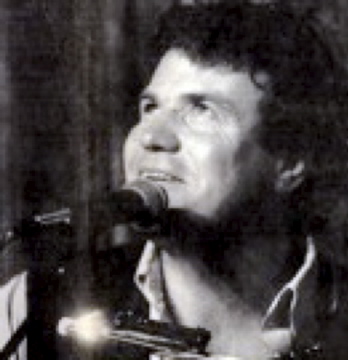
Scott Alaric

Adventures in the Modern Folk Underground

On the Green, in Concord, MA
Every Thursday Night
for over thirty years…


“A Song Singing, Word Slinging, Story Swapping,
Ballad Mongering, Folksinger, Teacher, & Poet…”

Theo Rogue

Songcatcher Rag

Fitz’s Recordings

& Writings

Songs, poems, essays, reflections and ramblings of a folksinger, traveler, teacher, poet and thinker…

Download for free from the iTunes Bookstore

“A Master of Folk…”
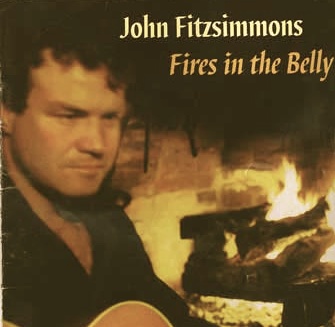
The Boston Globe

Fitz’s now classic recording of original songs and poetry…

Download from the iTunes Music Store

“A Masterful weaver of song whose deep, resonant voice rivals the best of his genre…”
Spirit of Change Magazine

“2003: Best Children’s Music Recording of the Year…”
Boston Parent's Paper

Fitz & The Salty Dawgs
Amazing music, good times and good friends…

Listen here

TheCraftedWord.org

Writing help

when you need it…

“When the eyes rest on the soul…that’s Fitzy…”

Lenny Megliola

WEEI Radio

The Gift Unclaimed

I have an old lobster buoy Hanging dully from A wrought-iron basket hook— A rough cutaway Filled with suet, Clabbered in wire mesh. . I had imagined chickadees Squabbling with angry jays And occasional sparrows, finches— Maybe even cedar waxwings tired of scrounging...

Calvary

It seems like it ain’t been a long time,
But I’m damn pleased your coming by again.
It’s been a while since we sat down and rambled
About this and that and why and who and then
You said that you had to get a move on,
Move on and leave a space behind.
So I spent a while hitting all those old roads:
Old friends and kicking down the wine.

Dallas: 7/7/2016

I woke up this morning almost too fearful to read the news. I stayed up late into the night just watching for the breaking stories and updates. Now, I am simplyconfused about how to act. I feel incredibly small and pointless, unsure of where I stand and how to move...

Joshua Sawyer

I doubt I’d ever have taken this road
had I known how fallen it really was
to disrepair: driving comically,
skirting ruts and high boulders, grimacing
at every bang on the oil pan.
I tell you it’s the old road to Wendell —
that they don’t make them like this anymore.

Supermoon

Last night the August supermoon reminded me of the fickleness of time and how substance becomes shadow and memories begin to etch themselves immutably into the hardness of what is already lost.

Rainmaker

I loved the rain last night. Last week, in a bow to reality, I reclaimed my gardens and made them into yard. Four of my kids got poison ivy in the process and I (and more "they") got an extra ten feet of width to add to the soccer field--for really that is about the...

Goathouse

In reaching for the scythe I’m reminded of the whetstone and the few quick strokes by which it was tested— the hardness of hot August; the burning of ticks off dog backs. It’s winter now in this garage made barn, and the animals seem only curious that I’d be here so...

The Inn

Every Thursday, for some thirty years, I have been spending this same time each week wrapping up the loose ends of the day before heading down to the inn to play to whomever and whatever shows up. Tonight looks like a fun night: Maroghini will be with me for his last...

All You Need is Love

    The day grew warm today, as did my mood. I did a couple of shows at my school’s diversity day. It was good to see girls there and the obvious racial differences. It was comforting to see a sea of color with a smattering of white instead of the other way around. My...

If you don’t stand, you cower…

     Maybe it is time to be less forgiving. I have rarely agreed with our president, but I held on to the shreds of truth that shore up his arguments: we can’t welcome every immigrant who makes it to our border; we cannot bow to the audacity of corrupt governments in...

Doing What Needs To Be Done

The rain falls;The grass grows:Nothing is done.Nothing is left undone~Buddha        Sometimes you just do what you got to do, and that never changes from the first time you take out the trash as a kid until the time in life where you are taking care of little chores...

Dad

Moaning like a lost whale the thin ice bellowed behind us then cracked and rang as if spit from a whip. The sharp steel of my over-sized skates etched unspeakable joy into the slate-grey, reptilian skin of Walden Pond. Our mismatched hands gripped together in the...

Goathouse

Goat house In reaching for the scythe I’m reminded of the whetstone and the few quick strokes by which it was tested-- the hardness of hot August; the burning of ticks off dog backs. It’s winter now in this garage made barn, and the animals seem only curious that I’d...

Canobie lake

Going to Canobie Lake is always the turning point of the year for me. It is like some primal signal that It is time to turn away from the school year and towards the future.  Obviously, it is my hope that you learned some useful skills this year, but, more...

Capospin: Thrilling Quick‑Play Slots and Games for Fast‑Track Wins

1. Quick‑Game Fever at CapospinCapospin has carved a niche for players who crave the rush of a spin or a hand, all within a few minutes. The platform’s interface is streamlined so that a newcomer can navigate from the welcome screen to their first bet without a...

InOut Games Chicken Road : Jeu de Crash Rapide pour des Frissons Instantanés

Chicken Road, le tout nouveau titre de style crash d'InOut Games, a conquis le marché mobile avec ses rounds de petite taille qui offrent des résultats pleins d’adrénaline en quelques minutes seulement. Que vous soyez un joueur crash expérimenté ou un simple...

How do I know

what I know? The sharp angles of this simple cottage perfected in every board sawn, shingle split and beam hewn into place goes together placed, splined, slid together, bound more by intuition than knowing.

Zenmo Yang Ni

I lost the time I hardly knew you,
half-assed calling:
“How you doing?
Laughing at my hanging hay field;
I never knew the time
that tomorrow’d bring,
until it brung to me.

Yuan lai jui shuo: “Zenmoyang ni?”
Xianzai chang shu: “Dou hai keyi”;
Xiexie nimen, dou hen shang ni.
Xiwang wo men dou hen leyi
Dou hen leyi

A New Beginning

 I guess if there is any constant in my life, it is new beginnings.  This blog--and this website--is another new beginning starting here late on a cold night on my back porch. I've been keeping a blog (in fact several blogs) since the first blogs made their way on to...

The Queer Folk

True to my words of earlier this week, I finished this song last night, and at the time, I liked it--but in the clear light of day, too much of it seems forced, especially the rhymes. But that is part of the process. I think I am almost there. Let me get my saw and...

Out of the Forge: April 6, 2017

Some nights I feel like I am singing in a mall. Tonight--in a fun way--it felt a bit like I walked into the Natick mall at Christmas time and pulled out my guitar in front of the Apple store and started to play, but like every night down at the inn it evolved into a...

Thanksgiving

Thanksgiving   I am surprised sometimes by the suddenness of November: beauty abruptly shed to a common nakedness— grasses deadened by hoarfrost, persistent memories of people I’ve lost. It is left to those of us dressed in the hard barky skin of experience to...

Frumzi Casino – Quick‑Hit Slots and Live Games for Fast‑Paced Players

When you’re looking for a bite‑size gaming experience that still packs a punch, Frumzi is the go‑to destination. The site offers more than 6,500 titles from top providers such as Pragmatic Play, Evolution Gaming, and Quickspin, and it’s optimized for both desktop and...

Chicken Road: Quick‑Hit Crash Game voor Snelle Winsten

De nieuwste crash‑stijl sensatie, Chicken Road, laat je grote multipliers najagen in minuten—geen lange marathon nodig. De kern van het spel draait om een dappere kip die probeert over een drukke weg te steken terwijl jij beslist wanneer je uitbetaalt voordat hij...

Reflecting on Literature

I am constantly asking my students (and myself) to reflect on the literature they, and I, read. As I have grown older—and not necessarily wiser—I find myself only reading literature that I am sure will prod me out of my intellectual and emotional torpor, like a lizard...

In Reply To Einstein

*God casts the die, not the dice. ~Alfred Einstein I am cold down the neck, turtling my head to showers of ice that fall dancing and skidding on skins of crusted snow. I hold my breath when I step, inflating hopes of a weightlessness, and so be undetected
to the play...

Eighteen Years

At midnight I hear the cuckoo clock chiming from it’s perch in a cluttered kitchen locked in cadence with the tower bell gonging this old mill town at midnight to a deeper sleep, like a call to prayer reminding me that this new day, starting in the dark of a hallowed...

Marriage & Magnanimity

If we want to have the freedom to marry whom we want to marry, why is it so important that the state (government) recognise that marriage? Is it simply the expediency of dispensing the entitlements of a marriage certificate: tax benefits, employment benefits, or the...

Another Day…

I've been somewhat lax about posting in here of late, but I have been giving myself a bit of a break from writing. In fact, I spent the last month or so just living--and that has been just fine with me. I set a simple goal for myself this summer to get in shape. PJ...

Many Miles To Go

I see it in your eyes
and in the ways you try to smile;
in the ways you whisper—I don’t know—
and put it all off for a while;
then you keep on keeping on
in the only way you know:
you’re scared of where you’re going
and who’ll catch you down below.

Ring of Fire: The Power of Simplicity

In fifth grade my mother finally let me go to the Concord Music store and buy a "45" single.  I bought Johnny Cash’s version of “Ring of Fire” written by his future wife June Carter and Merle Kilgore, a noted country songwriter of his day. There was no doubt in my...

Know Thyself…

Writing a Metacognition Know Thyself… Explore, Assess, Reflect & Rethink If we don’t learn from what we do, we learn little of real value. If we don’t make the time to explore, reflect and rethink our ways of doing things we will never grow, evolve and reach our...

Metamorphoses

It’s something I‘ve hardly ever thought of:
this simple and rattling old diesel
has always gotten me there and then some;
and so at first I think this sputtering
is just some clog, and easily explained:
some bad fuel maybe, from the new Exxon,
or just shortsightedness on maintenance.
I’ve always driven in the red before,
and these have all been straight highway miles —

Raccoon

I’ve stopped the chinks with newspaper and rags wedged tightly against the wind blowing cold three days now. I feed the fire and curse its hissing and steaming mixing green oak with sticks of dried pine calling myself Raccoon grown fat in the suburbs sleeping in...

The Three River’s Anthology eBook

A writer without an audience is like an egg without a yolk ~fitz If you'd like to download my book of collected works, simply click the download button and you have a free book of my ramblings, songs, poems, essays, and stories. Enjoy! (I hope)      ...

Opinie o kasynie online Vavada w roku 2026

Opinie na temat kasyna online Vavada w roku 2026 Opinie o kasynie online Vavada w roku 2026 Decydując się na rozrywkę w wirtualnym świecie gier, warto zwrócić uwagę na Vavada. Ta platforma przyciąga entuzjastów hazardu z wielu powodów. Wysoka jakość gier oraz...

The Mystery Within

EJ wanted a banana tree for Christmas so that early morning brought a plastic bag, a few meager roots and no directions. I bought some potting soil and a square cedar box EJ placed deliberately by a westward window. He gently splayed the roots, pressed the soil, and...

The Philanthropy of Maynard

 I woke up today with chores on my mind. My buddy Josh LoPresti lent me his woodsplitter, and I had dreams of a mindless day splitting wood and heaving it into a pile for my kids to stack along the fence. But the dryer was broken, and it needed to be fixed. Margret's...

Hugo Casino Review: Quick Play Slots & Instant Wins

For the adrenaline‑hungry gambler who wants to hit the jackpot in a matter of minutes, Hugo Casino offers a playground built on speed and excitement. This review dives into the heart of high‑intensity gameplay, showing how you can maximize those brief bursts of...

Concord

The people, the music filledness of rush hour traffic skirting puddles work crews packing in laughswearingmudyellowed slickers lighting candle bombs. My sadness the euphoric detachment. I love this town. It breathes me.

Contact Fitz!