Stagolee
~Traditional
Stagolee was a bad man,
Ev'rybody knows.
Spent one hundred dollars
Just to buy him a suit of dothes.
     He was a bad man
     That mean old Stagolee

Stagolee shot BiUy de Lyons
What do you think about that?
Shot him down in cold blood
Because he stole his Stetson hat;
     He was a bad ma@
     That mean old Stagolee

Billy de Lyons said, Stagolee
Please don't take my life
I've got two little babes
And a darling, loving wife;
     You are a bad man
     You mean old Stagolee.

What do I care about your two little babes,
Your darling loving wife?,
You done stole my Stetson hat
I'm bound to take your life;
     He was a bad man,
     That mean old Stagolee.

The judge said, Stagolee,
What you doing in here?,
You done shot Mr. Billy de Lyons,
You going to die in the electric chair;
     He was a bad man
     That mean old Stagolee.

Twelve o'clock they killed him
Head reached up high
Last thing that poor boy said,
"My six-shooter never lied."
     He was a bad man,
     That mean old Stagolee.
If you have any more information to share about this song or helpful links, please post as a comment.
Thanks for stopping by the site! ~John Fitz

 I am indebted to the many friends who share my love of traditional songs and to the many scholars whose works are too many to include here. I am also incredibly grateful to the collector’s curators and collators of Wikipedia, Mudcat.org, MainlyNorfolk.info, and TheContemplator.com for their wise, thorough and informative contributions to the study of folk music.
I share this scholarly research on my site with humility, thanks, and gratitude. Please cite sources accordingly with your own research. If you have any research or sites you would like to share on this site, please post in the comment box.
Thanks!


| "Stack O' Lee Blues" | |
|---|---|
 | |
| Single by Waring's Pennsylvanians | |
| B-side | "Stavin' Change"[1] |
| Released | 1923 |
| Recorded | Camden, New Jersey, April 18, 1923 |
| Length | 3:21 |
| Label | Victor |
| Songwriter | Ray Lopez (credited on single) |
"Stagger Lee" (Roud 4183), also known as "Stagolee" and other variants, is a popular American folk song about the murder of Billy Lyons by "Stag" Lee Shelton, in St. Louis, Missouri, on Christmas 1895. The song was first published in 1911 and first recorded in 1923, by Fred Waring's Pennsylvanians, titled "Stack O' Lee Blues". A version by Lloyd Price reached number one on the Billboard Hot 100 in 1959.
Background
The historical Stagger Lee was Lee Shelton, an African-American pimp living in St. Louis, Missouri, in the late 19th century. He was nicknamed Stag Lee or Stack Lee, with a variety of explanations being given: he was given the nickname because he "went stag" (attended social events unaccompanied by a person of the opposite sex); he took the nickname from a well-known riverboat captain called Stack Lee; or, according to John and Alan Lomax, he took the name from a riverboat owned by the Lee family of Memphis called the Stack Lee, which was known for its on-board prostitution.[2] Shelton was well known locally as one of the Macks, a group of pimps who attracted attention through their flashy clothing and appearance.[3] In addition to those activities, he was the captain of a black Four Hundred Club, a social club with a dubious reputation.[4]
On Christmas night in 1895, Shelton and his acquaintance William "Billy" Lyons were drinking in the Bill Curtis Saloon. Lyons was also a member of St. Louis' underworld, and may have been a political and business rival to Shelton. Eventually, the two men got into a dispute, during which Lyons took Shelton's Stetson hat.[5] Subsequently, Shelton shot Lyons, recovered his hat, and left.[6] Lyons died of his injuries, and Shelton was charged, tried, and convicted of the murder in 1897. He was paroled in 1909, but returned to prison in 1911 for assault and robbery. He died incarcerated in 1912.[7]
The crime quickly entered into American folklore and became the subject of song, as well as folktales and toasts. The song's title comes from Shelton's nickname—Stag Lee or Stack Lee.[8] The name was quickly corrupted in the folk tradition. Early versions were called "Stack-a-Lee" and "Stacker Lee", while "Stagolee" and "Stagger Lee" also became common. Other recorded variants include "Stackerlee", "Stack O'Lee", "Stackolee", "Stackalee", "Stagerlee", and "Stagalee".[9]
Early versions
A song called "Stack-a-Lee" was first mentioned in 1897, in the Kansas City Leavenworth Herald, as being performed by "Prof. Charlie Lee, the piano thumper".[10] The earliest versions were likely field hollers and other work songs performed by African-American laborers, and were well known along the lower Mississippi River by 1910. That year, musicologist John Lomax received a partial transcription of the song,[11] and in 1911, two versions were published in the Journal of American Folklore by the sociologist and historian Howard W. Odum.[12]
The song was first recorded by Waring's Pennsylvanians in 1923 and became a hit. Another version was recorded later that year by Frank Westphal & His Regal Novelty Orchestra, and Herb Wiedoeft and his band recorded the song in 1924.[13] Also in 1924, the first version with lyrics was recorded, as "Skeeg-a-Lee Blues", by Lovie Austin. Ma Rainey recorded "Stag O'Lee Blues", a different song based on the melody and words of "Frankie and Johnnie", the following year, with Louis Armstrong on cornet, and a version was recorded by Frank Hutchison on January 28, 1927, in New York, and is included in Harry Smith's famous Anthology of American Folk Music (Song 19 of 84).[10]
Before World War II, the song was commonly known as "Stack O'Lee". W.C. Handy wrote that it probably was a nickname for a tall person, comparing him to the tall smokestack of the famous steamboat Robert E. Lee.[14] By the time W.C. Handy wrote that explanation in 1926, "Stack O' Lee" was already familiar in United States popular culture, with recordings of the song made by pop singers of the day, such as Cliff Edwards.
The version by Mississippi John Hurt, recorded in 1928, is regarded by many as definitive.[10] In his version, as in all such pieces, there are many (sometimes anachronistic) variants on the lyrics. Several older versions give Billy's last name as "De Lyons" or "Delisle". Other notable pre-war versions were recorded by Duke Ellington (1927), Cab Calloway (1931), Woody Guthrie (1941),[10] and Sidney Bechet (1945).[15]
Lloyd Price version
| "Stagger Lee" | ||||
|---|---|---|---|---|
| Single by Lloyd Price | ||||
| B-side | "You Need Love" | |||
| Released | November 1958 | |||
| Recorded | New York City, September 11, 1958 | |||
| Genre | ||||
| Length | 2:20 | |||
| Label | ABC-Paramount | |||
| Songwriters | Lloyd Price, Harold Logan (credited on single) | |||
| Producer | Don Costa | |||
| Lloyd Price singles chronology | ||||
| ||||
Lloyd Price recorded an R&B rendition of the song as "Stagger Lee" in 1958, and it rose to the top of both the R&B and US pop charts in early 1959.[18] Although his version uses similar lyrics to previous versions of the song, his rendition features a different melody and has no lyrical refrain, making it shorter than previous recordings of the song. Price's version of the song was ranked number 456 on Rolling Stone's 500 Greatest Songs of All Time list, and also reached number 7 on the UK singles chart. Price also recorded a lyrically toned-down version of the song that changed the shooting to an argument between two friends for his appearance on Dick Clark's American Bandstand.[10]
Chart performance
Lloyd Price version
| Chart (1959) | Peak position |
|---|---|
| UK Singles (The Official Charts Company)[19] | 7 |
| US Billboard Hot 100 | 1 |
| US Hot R&B Sides (Billboard)[20] | 1 |
All-time charts
| Chart (1958-2018) | Position |
|---|---|
| US Billboard Hot 100[21] | 260 |
Other post-war versions
- In 1950, a version of "Stack-a-Lee" by New Orleans pianist Archibald reached number 10 on the Billboard R&B chart.[18]
- Pat Boone
- Fats Domino
- Ike and Tina Turner
- The Righteous Brothers
- The Isley Brothers
- Champion Jack Dupree released a version in 1958 named "Stack-O-Lee" on the album titled Blues From The Gutter.
- James Brown
- Wilson Pickett (whose version made number 22 on the US pop chart)
- Johnny and the Hurricanes (whose instrumental is called "High Voltage")
- Dave Van Ronk on his 1962 album Dave Van Ronk, Folksinger
- Tom Rush on his 1963 album, Blues, Songs And Ballads
- Doc Watson on his 1967 album Ballads From Deep Gap
- Elvis Presley 1970, unreleased but recently discovered recording from the outtakes of Elvis: That's The Way It Is
- Taj Mahal on the 1969 album Giant Step/De Ole Folks at Home.
- Tommy Roe's 1971 version of the song went to number 25 on the Billboard Hot 100 and number 17 on the Canadian Singles Chart.
- Pacific, Gas & Electric included the song under the name "Staggolee" on their 1970 album Are You Ready?;[22]
- The Youngbloods released a version of the song on their 1971 album, Good and Dusty.[23]
- In 1972 Dr. John included a version on his album Dr. John's Gumbo.
- The Grateful Dead frequently played and eventually recorded a version of the tale which focuses on the fictionalized hours after the death of "Billy DeLyon", when Billy's wife Delia tracks down Stagger Lee in a local saloon and "she shot him in the balls" in revenge for Billy's death.[24]
- Christian Rock musician Larry Norman wrote new lyrics using a bluesy version of the song "Nightmare #97" about a religious experience where the narrator is caught up to heaven. It was recorded in 1977 but not published until 1981 on the album Something New Under the Son.
- The Clash used some lyrics for their intro to their cover of the Jamaican rocksteady group the Rulers song "Wrong 'em Boyo" from the 1979 album London Calling.
- A version by the Fabulous Thunderbirds can be found on the Porky's Revenge soundtrack (1985).
- Bob Dylan included a version of "Stack A Lee" on his 1993 album World Gone Wrong.
- An extended version appears on Southside Johnny and the Asbury Jukes 1981 live album Reach Up And Touch The Sky.
- Huey Lewis and the News recorded "Stagger Lee" on their 1994 album of R&B covers, Four Chords And Several Years Ago.
- Neil Sedaka recorded the song in 1983 for his album Come See About Me.
- In 1996, Nick Cave and the Bad Seeds included a song called "Stagger Lee" on their album Murder Ballads. Not a cover version of the classic song, but instead an alternative and darker version of the tale itself, the references are evident: set in 1932, a still alive Stagger Lee now owns a Colt .45 (instead of the 'original' .44) and carries a deck of cards; he also still has his Stetson hat, which is now, of course, "old". Also Stagger Lee still has problems in bars, and ends up shooting not only a bartender, but also another rival also called Billy. This version retakes a street "toast poem" on Stagolee.[25]
- The Black Keys recorded a song entitled "Stack Shot Billy" on their 2004 album Rubber Factory.
- In 2005, Chris Whitley and Jeff Lang recorded their own arrangement of the song, called "Stagger Lee", ultimately released on their 2006 CD Dislocation Blues.
- In the 2007 film Black Snake Moan, Samuel L. Jackson's character sings a boastful version of the song from Stagger Lee's perspective, titled "Stackolee". This version is based on R. L. Burnside's rendition which can be heard on the album Well, Well, Well.
- Modern Life Is War recorded a hardcore punk version for their 2007 album Midnight in America.
- Josh Ritter recorded a version of the tale titled "Folk Bloodbath" on the album So Runs the World Away. In his version, Stagger Lee kills Louis Collins, the subject of a murder ballad by Mississippi John Hurt, and 'Hangin' Billy Lyons is the judge who sentences Stagger to die.
- Neil Diamond released a version in 1979 on the album titled September Morn.
- Justin Townes Earle released a version titled "Same Old Stagolee" on his 2017 album Kids In The Street.
- In 2011 Snakefarm included song called "Staggerlee" in their album My Halo In Half-light.
Popular culture
- The song is sung by an African-American prisoner in Jack Black's autobiography You Can't Win.[26]
- In 1949 an episode of the radio anthology series program Destination Freedom, written by Richard Durham, retold the "Tales of Stackalee".[27]
- The song "Wrong 'Em Boyo" by the Jamaican rocksteady group the Rulers begins with a quotation from "Stagger Lee": "Stagger Lee met Billy and they got down to gambling / Stagger Lee throwed seven, Billy said that he throwed eight." The song was notably covered by the Clash on their 1979 album London Calling with an additional lyric to finish the verse: "So Billy said, 'Hey Stagger! I'm gonna make my big attack / I'm gonna have to leave my knife in your back.'"
- Stagger Lee was the masked persona of wrestler Junkyard Dog, who donned the name and mask in Mid-South Wrestling due to an angle where he was forced to leave his wrestling territory for 90 days. Another wrestler, Koko B. Ware, would used the same formula in Memphis.
- Professional wrestling announcer Lee Marshall used Stagger Lee as a nickname during his time in World Championship Wrestling.
- The version by Pacific Gas & Electric, was included on the soundtrack for Quentin Tarantino's film Death Proof, the second portion of the 2007 double-feature Grindhouse.
- Blues musician Keb' Mo' performs his version in a scene from the 2007 film Honeydripper.
- In Percival Everett's 2001 novel Erasure and its 2023 film adaptation American Fiction, black literature professor Thelonious "Monk" Ellison becomes frustrated with the success of books that exploit and sensationalize Black American poverty, violence, and crime, and writes a satire of these books, first titled My Pafology and then retitled Fuck, under the pseudonym "Stagg R. Leigh", and must then deal with the effects of his book being taken seriously by everyone and becoming wildly successful.
- The cosmic horror novella My Heart Struck Sorrow by John Hornor Jacobs centers on an ethnomusicologist travelling the Southern United States in search of various versions of "Stagger Lee" in the belief that there is an ur-version of the song with supernatural qualities.[28]
See also
References
- ↑ B-side artist listed as "the Virginians"
- ↑ Brown, Cecil (2004). Stagolee Shot Billy. Boston: Harvard University Press. pp. 43–45. ISBN 978-0674028906.
{{cite book}}: CS1 maint: publisher location (link) - ↑ Brown, Cecil (2004). Stagolee Shot Billy. Boston: Harvard University Press. p. 23. ISBN 0674028902.
{{cite book}}: CS1 maint: publisher location (link) - ↑ Brown, Cecil (2004). Stagolee Shot Billy. Boston: Harvard University Press. p. 43. ISBN 978-0674028906.
{{cite book}}: CS1 maint: publisher location (link) Brown summarizes what little is known about the club as follows: "The Four Hundred Club was a 'social club,' but such clubs always had a moral front. (...) The Four Hundred Club may have been a type of black-and-tan club, catering to an interracial clientele, and as such would have been under pressure from reform policies." Brown cites a contemporary source from the newspaper St. Louis Star-Sayings, in which a member of the club states: "Mr. [Stack] Lee was our captain." - ↑ Brown, Cecil (2004). Stagolee Shot Billy. Boston: Harvard University Press. p. 23. ISBN 978-0674028906.
{{cite book}}: CS1 maint: publisher location (link) Based on the statements of witnesses, Cecil Brown retells the incident as follows: "Then Lyons grabbed Shelton's Stetson. When Shelton demanded it back, Lyons said no." - ↑ Brown, Cecil (2004). Stagolee Shot Billy. Boston: Harvard University Press. pp. 21–29. ISBN 0674028902.
{{cite book}}: CS1 maint: publisher location (link) - ↑ Brown, Cecil (2004). Stagolee Shot Billy. Boston: Harvard University Press. pp. 34–36. ISBN 0674028902.
{{cite book}}: CS1 maint: publisher location (link) - ↑ Brown, Cecil (2004). Stagolee Shot Billy. Harvard University Press. p. 102. ISBN 0674028902.
- ↑ Buehler, Richard E. (1967). "Stacker Lee: A partial investigation into the historicity of a Negro murder ballad". Keystone Folklore Quarterly. 12: 187 and note. Retrieved March 20, 2013.
- 1 2 3 4 5 "History". StaggerLee.com. Retrieved 17 February 2013.
- ↑ Marshall, Matt (May 9, 2011). "A Brief History of Stagger Lee and Billy Lyons". American Blues Scene. Archived from the original on 22 February 2014. Retrieved 5 March 2013.
- ↑ Buehler, Richard E. (1967). "Stacker Lee: A partial investigation into the historicity of a Negro murder ballad". Keystone Folklore Quarterly. 12: 187–191. Retrieved 5 March 2013.
- ↑ "Herb Wiedoeft's Cinderella Roof Orchestra". Red Hot Jazz. Archived from the original on 2011-01-05. Retrieved 2010-10-13.
- ↑ Handy, W.C. Handy (1926). Blues, an Anthology.
- ↑ "1945–1946 – Sidney Bechet | Songs, Reviews, Credits | AllMusic". AllMusic.
- ↑ Breihan, Tom (January 29, 2018). "The Number Ones: Lloyd Price's "Stagger Lee"". Stereogum. Retrieved June 3, 2023.
And in 1959, the New Orleans R&B singer and former Army serviceman Lloyd Price took one of those versions to #1....Instead, it's a total blast of a song, a spirited New Orleans rumble...
- ↑ Marsh, Dave (1989). The Heart of Rock & Soul: The 1001 Greatest Singles Ever Made. Plume. p. 161. ISBN 0-452-26305-0.
- 1 2 Whitburn, Joel (1996). Top R&B/Hip-Hop Singles: 1942–1995. Record Research. p. 12.
- ↑ "officialcharts.com". Official Charts. Retrieved November 9, 2021.
- ↑ Whitburn, Joel (2004). Top R&B/Hip-Hop Singles: 1942–2004. Record Research. p. 470.
- ↑ "Billboard Hot 100 60th Anniversary Interactive Chart". Billboard. Retrieved 10 December 2018.
- ↑ Are You Ready? in Discogs Retrieved 21 Oct 2019
- ↑ The Youngbloods, Good and Dusty Retrieved June 12, 2015
- ↑ "The Annotated "Stagger Lee"". Arts.ucsc.edu. Archived from the original on 30 April 2009. Retrieved 22 August 2018.
- ↑ "Largehearted Boy: Book Notes – Derek McCulloch ("Stagger Lee")". Largeheartedboy.com. Retrieved 22 August 2018.
- ↑ Black, Jack (2021). You Can't Win. Vancouver, BC: Must Have Books. ISBN 978-1-77323-797-8. OCLC 1301911524.
- ↑ MacDonald, J. Fred, ed. (1989). Richard Durham's Destination Freedom. New York: Praeger. p. x. ISBN 0275931382. Also see OCLC 1323028307, 44432637 for cassette and audio CD availability of the episode
- ↑ Jacobs, John Hornor (2019). A Lush and Seething Hell. New York: HarperCollins. ISBN 9780062880840.
External links
 The full text of five variations of "Stagger Lee" at Wikisource
- The Song and Myth of Stagger Lee
- Stagolee and John Henry: Two Black Freedom Songs?


Source: Mainly Norfolk
Stagger Lee / Stagolee
[ Roud 4183 ; Laws I15 ; Ballad Index LI15 ; trad.]
John Gibbon sang Stakolee in 1957 on his Topic album John Gibbon’s Disc.
Trevor Lucas sang Stagger Lee accompanied by guitar and mouth-organ in full early Dylan mode from the 1963 Folk Attick recordings in Sydney—plenty of suck and blow braced harmonica playing between the verses, and very typical of that protest folk singer period. This recording was included in 1994 on the Friends of Fairport cassette Together Again – The Attic Tracks Vol. 4.
Jesse Fuller sang Stackolee in a recording made by Peter Kennedy at Cecil Sharp House on March 19, 1965. This track was included in the same year on Fuller’s Topic album Move On Down the Line. Joe Boyd commented in the album’s sleeve notes:
Of all the hero or villain legends in American folk music, Stackolee ‘that bad man’ appears in both white and Negro ballads, often with references to the supernatural powers of his ‘Five Dollar Stetson Hat’. There was a notorious family named Lee in Memphis during the late nineteenth century, and a longshoreman (stevedore) was often known as a stacker. The song was part of Ma Rainey`s repertoire long before she recorded it in 1925. There are several recorded melodies for the song, of which I think Jesse’s is the most interesting.
Martin Simpson sang Stagolee in 2007 on his Topic album True Stories. He commented in his liner notes:
I first learned Stagolee from Mississippi John Hurt and recorded it when I was 17. The origins of the story were long guessed at, but it was widespread amongst blues singers, songsters, old timey musicians, R&B singers and rock and rollers throughout the 20th century. In 2003, Harvard University Press published Cecil Brown’s book, Stagolee shot Billy, a superbly written account of the facts. Lee Shelton shot Billy Lyons on Christmas Night, in 1859. I’ve attempted to put some of the facts back into the song without losing the poetry. Facts aren’t everything, but these are all true stories in one way or another.
Snakefarm sang Staggerlee in 2011 on their Fledg’ling CD My Halo at Half-Light.
Links
See also the Mudcat Café thread Listen to different versions of Stagger Lee and Paul Slade’s essay A Christmas Killing: Stagger Lee.
Source: AmericanBluesScene.com
Stagolee
Today we’re bringing you another entry in American Blues Scene’s exclusive “Brief History of a Song” series.
The feud between Stagger Lee and Billy Lyons is as legendary as the one between the Hatfields and the McCoys; a truly American folk tale, retold countless times, about Stagger shooting Billy Lyons over, varyingly, a Stetson hat, a woman, a gambling debt, politics, or simply because Stagger was that mean of a man. Amazingly enough, the song may be the most re-recorded in history, with well over four hundred separate recordings to it’s name. A brief search of the Stagger Lee name could reveal recordings from Mississippi John Hurt, Furry Lewis, Lloyd Price, Professor Longhair, The Black Keys, Samuel L. Jackson, The Fabulous Thunderbirds, Wilson Picket, Taj Mahal, Fats Domino, Bob Dylan, Beck, Elvis Presley, Ike Turner, and a great many others.
Who was Stagger Lee, who goes by different names depending on the storyteller; Stagger, Stack-O-Lee, Stackalee, etc.? Was there a real Stagger Lee? Did he really run with Jesse James, have a magical Stetson, or take hell away from the devil when he died, as has been suggested?
The origins of this tale begin with a Christmas Eve bar fight in Saint Louis in 1895. The events of the murder were fairly commonplace; two friends, Billy Lyons and “Stagger” Lee Shelton, were drinking at Bill Curtis’s saloon and became enthralled in a conversation about politics. Billy grabbed Shelton’s hat in anger, and when he refused to return it, Shelton shot Billy in the gut, picked up his hat, and left. Lyons died from his wound shortly afterwards. That same night alone, five murders were committed in Saint Louis, but only one shot to world-wide infamy through a tangled web of politics, folklore, and raw persistence. The story was first covered in the St. Louis Globe-Democrat on December 28th, 1895. In 1896, the political scene was extremely tense, and with Saint Louis being one of the largest cities in the country, it was necessary for politicians to get every vote, including the black vote. This was increasingly relevant because the republicans were losing their stronghold, and because Shelton was a democratic organizer, and Lyons a Republican one, according to StaggerLee.com. The murder received significant exposure and political scrutiny, and resulted in a hung jury trial, after Stagger Lee had hired one of the most prominent lawyers in the state. Shelton’s case was retried in 1897, and Stagger Lee was found guilty of murder and sentenced to the notorious Jefferson penitentiary in Jefferson City, Missouri. It only took until 1902 or 1903, depending on the source, for the first printed lyrics referring to the Stagger Lee murder.
In 1909, then-Missouri governor Joseph Wingate Folk gave Shelton a full pardon on Thanksgiving day. By this time, folk versions of the Stagger Lee song were cropping up all across the South. The next year, legendary Library of Congress musicologist John Lomax received a partial transcription of what was called “The Ballad of Stagalee”, from a woman in Texas. She claimed that “this song is sung by the Negroes on the levee while they are loading and unloading the river freighters.” In 1911, Shelton broke into a man’s home, murdered him, and was sent to prison, but by 1912, Shelton received yet another pardon from another governor, apparently due to political pressure. Before he could be released, the infamous Stack-O-Lee died in prison of tuberculosis.
In the 1920s, a number of varieties of “Stagger Lee” began to be recorded. Ma Rainey and her band, (including a young Louis Armstrong on cornet), recorded Stack O’Lee Blues in 1925. Duke Ellington recorded a version in 1927, and in 1928 Mississippi John Hurt recorded what is perhaps the most famous and most definitive version of Stagger Lee’s song in history.
Police officer, how can it be?
You can ‘rest everybody but cruel Stack O’ Lee
That bad man, oh, cruel Stack O’ LeeBilly de Lyon told Stack O’ Lee, “Please don’t take my life,
I got two little babies, and a darlin’ lovin’ wife”
That bad man, oh, cruel Stack O’ Lee“What I care about you little babies, your darlin’ lovin’ wife?
You done stole my Stetson1 hat, I’m bound to take your life”
That bad man, cruel Stack O’ Lee…with the forty-four
When I spied Billy de Lyon, he was lyin’ down on the floor
That bad man, oh cruel Stack O’ Lee“Gentleman’s of the jury, what do you think of that?
Stack O’ Lee killed Billy de Lyon about a five-dollar Stetson hat”
That bad man, oh, cruel Stack O’ LeeAnd all they gathered, hands way up high,
at twelve o’clock they killed him, they’s all glad to see him die
That bad man, oh, cruel Stack O’ Lee
In 1931, folk great Woodie Guthrie sang a rendition of the song, likely adapted from John Hurt’s version, as the lyrics are very similar. During his field recordings, John Lomax often recorded the Stagger Lee song by various groups in the American South, from Texas to the Appalachia, often times in prisons. Some of these recordings can be found at the Library of Congress. Later, in 1941 and ’42, John’s son Alan recorded a number of versions during his own field recording trips for the Library of Congress. The song continued to capture the imaginations of singers and poets everywhere until 1958, when Lloyd Price released a version simply called “Stagger Lee”. The song exploded in popularity and became #1 on the Billboard Pop Charts. From there, dozens and eventually hundreds of recorded renditions of Stack’s story were spawned. In the 1960s, when Mississippi John Hurt was re-discovered, he would often play a folk-style story called “Stagolee” in which Stag and, interestingly enough, Jesse James, rob a card game in a coal mine. In 2007, Samuel L. Jackson played “Stack-O-Lee” in the movie Black Snake Moan, backed by Cedrick Burnside and Kenny Brown. Cedric is the grandson of legendary bluesman R.L. Burnside, who also sang popular versions of Stagger Lee’s song.
Stagger Lee has been sang about nearly countless times. His story has appeared in movies, poems, and even as it’s own comic book. Through every generation and nearly every musical style, Stagger Lee has made an appearance. Punk, Hawaiian, Heavy Metal, Disco, Rock, Blues, Folk, Bluegrass, Country, and Soul have all seen recorded versions, often with great popularity and by names as wildly famous as Elvis and the Isley Brothers. The story of bad Stagger Lee has continued to capture American’s, and then the world’s, imaginations for over 100 years.
To find a largely comprehensive documentation of 420+ “Stagger Lee” recordings, see StaggerLee.com
Performances, Workshops, Resources & Recordings
The American Folk Experience is dedicated to collecting and curating the most enduring songs from our musical heritage. Every performance and workshop is a celebration and exploration of the timeless songs and stories that have shaped and formed the musical history of America. John Fitzsimmons has been singing and performing these gems of the past for the past forty years, and he brings a folksy warmth, humor and massive repertoire of songs to any occasion.
Festivals & Celebrations
Coffeehouses
School Assemblies
Library Presentations
Songwriting Workshops
Artist in Residence
House Concerts
Pub Singing
Irish & Celtic Performances
Poetry Readings
Campfires
Music Lessons
Senior Centers
Voiceovers & Recording
““Beneath the friendly charisma is the heart of a purist gently leading us from the songs of our lives to the timeless traditional songs he knows so well…”
Join Fitz at The Colonial Inn
“The Nobel Laureate of New England Pub Music…”
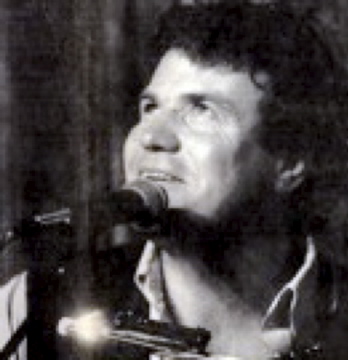
On the Green, in Concord, MA Every Thursday Night for over thirty years…
“A Song Singing, Word Slinging, Story Swapping, Ballad Mongering, Folksinger, Teacher, & Poet…”
Fitz’s Recordings
& Writings
Songs, poems, essays, reflections and ramblings of a folksinger, traveler, teacher, poet and thinker…
Download for free from the iTunes Bookstore
“A Master of Folk…”
Fitz’s now classic recording of original songs and poetry…
Download from the iTunes Music Store
“A Masterful weaver of song whose deep, resonant voice rivals the best of his genre…”
“2003: Best Children’s Music Recording of the Year…”
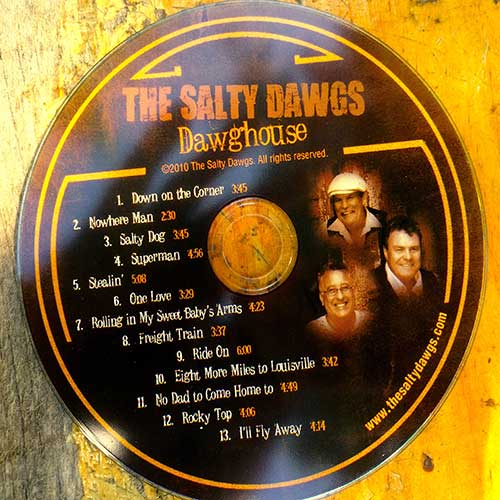
Fitz & The Salty Dawgs Amazing music, good times and good friends…
TheCraftedWord.org

Writing help
when you need it…
“When the eyes rest on the soul…that’s Fitzy…”
0 Comments