Shenandoah
~Traditional
Oh, Shenandoah, I long to hear you,
Way hey, you rolling river.
Shenandoah, I long to hear you
Ha ha, we’re bound away ‘cross the wide Missouri.
Oh, Shenandoah, I love your daughter
Wey hey, you rolling river.
Oh Shenandoah, I love your daughter
ha ha, we’re bound away ‘cross the wide Missouri
Missouri she’s a mighty river…
When she rolls down, her topsails shiver…
Seven years, I courted Sally…
Seven more, I longed to have her…
Farewell, my dear, I’m bound to leave you…
Oh, Shenandoah, I’ll not deceive you…
Child Ballad #
 I am indebted to the many friends who share my love of traditional songs and to the many scholars whose works are too many to include here. I am also incredibly grateful to the collector’s curators and collators of Wikipedia, Mudcat.org, MainlyNorfolk.info, and TheContemplator.com for their wise, thorough and informative contributions to the study of folk music.
I share their research on my site with humility, thanks, and gratitude. Please cite their work accordingly with your own research. If you have any research or sites you would like to share on this site, please post in the comment box. Thanks!


"Oh Shenandoah" (also called "Shenandoah", "Across the Wide Missouri", "Rolling River", "Oh, My Rolling River", "World of Misery") is a traditional folk song, sung in the Americas, of uncertain origin, dating to the early 19th century.
The song "Shenandoah" appears to have originated with American and Canadian voyageurs or fur traders traveling down the Missouri River in canoes and has developed several different sets of lyrics. Some lyrics refer to the Oneida chief Shenandoah and a canoe-going trader who wants to marry his daughter. By the mid 1800s versions of the song had become a sea shanty heard or sung by sailors in various parts of the world. The song is number 324 in the Roud Folk Song Index.
Other variations (due to the influence of its oral dispersion among different regions) include the Caribbean (St. Vincent) version, "World of Misery", referring not to an "Indian princess" but to "the white mullata".[1][2]
History
Until the 19th century, only adventurers who sought their fortunes as trappers and traders of beaver fur ventured into the lands of the indigenous peoples as far west as the Missouri River. Most of these French colonial "voyageurs" in the fur trade era were loners who became friendly with, and sometimes married, Native Americans. Some lyrics of this song heard by and before 1860 tell the story of a trader who fell in love with the daughter of the Oneida Iroquois chief Shenandoah (1710–1816) who lived in the central New York state town of Oneida Castle. He was a co-founder of the Oneida Academy which became Hamilton College in Clinton, New York, and is buried on the campus grounds.
["Shenandoah"] probably came from the American or Canadian voyageurs, who were great singers ... . In the early days of America, rivers and canals were the chief trade and passenger routes, and boatmen were an important class. Shenandoah was a celebrated Indian chief in American history, and several towns in the States are named after him. Besides being sung at sea, this song figured in old public school collections.
The canoe-going fur-trading voyageurs were great singers, and songs were an important part of their culture.[3] In the early 19th century flatboatmen who plied the Missouri River were known for their shanties, including "Oh Shenandoah". Sailors heading down the Mississippi River picked up the song and made it a capstan shanty that they sang while hauling in the anchor.[4] This boatmen's song found its way down the Mississippi River to American clipper ships—and thus around the world.[5]
The song had become popular as a sea shanty with seafaring sailors by the mid 1800s.[6] A version of the song called "Shanadore" was printed in Capt. Robert Chamblet Adams' article "Sailors' Songs" in the April 1876 issue of The New Dominion Monthly.[7] He also included it in his 1879 book On Board the "Rocket".[8] "Shanadore" was later printed as part of William L. Alden's article "Sailor Songs" in the July 1882 issue of Harper's New Monthly Magazine,[9][10][11] and in the 1892 book Songs that Never Die.[12] Alfred Mason Williams' 1895 Studies in Folk-song and Popular Poetry called it a "good specimen of a bowline chant".[13]
Percy Grainger recorded Charles Rosher of London England singing Shenandoah in 1906 and the recording is available online via the British Library Sound Archive.[14] A recording sung by former shantyman Stanley Slade of Bristol, England, in 1943 is also publicly available.[15]
In a 1930 letter to the UK newspaper The Times a former sailor who had worked aboard clipper ships that carried wool between Australia and Great Britain in the 1880s said that he believed the song had originated as an African American spiritual which developed into a work song.[a]
One of the first popular singers to record it was Paul Robeson, who released several versions from the 1930s onwards.[17]
Lyrics
Since "Shenandoah" was a riverman's and then sailor's song and went through numerous changes and versions over the years and centuries, there are no set lyrics. Modern variations may include[citation needed] lyrics such as the following:
|
|
|
|
|
Earlier versions
.jpg)
Lyrics from prior to 1860, given by Whall (1910)[3] were reported as follows:
- Missouri, she's a mighty river.
- Away you rolling river.
- The redskins' camp lies on its borders.
- Ah-ha, I'm bound away, 'Cross the wide Missouri.
- The white man loved the Indian maiden,
- Away you rolling river
- With notions[b] his canoe was laden.
- Ah-ha, I'm bound away, 'Cross the wide Missouri.
- "O, Shenandoah, I love your daughter,
- Away you rolling river.
- I'll take her 'cross yon rolling water."
- Ah-ha, I'm bound away, 'Cross the wide Missouri.
- The chief disdained the trader's dollars:
- Away you rolling river.
- "My daughter never you shall follow."
- Ah-ha, I'm bound away, 'Cross the wide Missouri.
- At last there came a Yankee skipper.
- Away you rolling river.
- He winked his eye, and he tipped his flipper.
- Ah-ha, I'm bound away, 'Cross the wide Missouri.
- He sold the chief that fire-water,
- Away you rolling river.
- And 'cross the river he stole his daughter.
- Ah-ha, I'm bound away, 'Cross the wide Missouri.
- "O, Shenandoah, I long to hear you,
- Away you rolling river.
- Across that wide and rolling river."
- Ah-ha, I'm bound away, 'Cross the wide Missouri.
J.E. Laidlaw of San Francisco reported hearing a version sung by a black Barbadian sailor aboard the Glasgow ship Harland in 1894:[18]
- Oh, Shenandoah! I hear you calling!
- Away, you rolling river!
- Yes, far away I hear you calling,
- Ha, Ha! I'm bound away across the wide Missouri.
- My girl, she's gone far from the river,
- Away, you rolling river!
- An' I ain't goin' to see her never.
- Ha, Ha! I'm bound away, (&c.)[c]
Lyrics to "Oh Shenandoah" as sung by Tennessee Ernie Ford (1959):
- Oh Shenandoah, I hear you calling,
- Hi-o, you rolling river.
- Oh Shenandoah, I long to hear you,
- Hi-o, I'm bound away.
- 'Cross the wide, Mis-sou-ri.
- Mis-sou-ri, She's a mighty river,
- Hi-o, you rolling river.
- When she rolls down, her topsails shiver,
- Hi-o, I'm bound away,
- 'Cross the wide, Mis-sou-ri.
- Farewell my dearest, I'm bound to leave you,
- Hi-o, you rolling river.
- Oh Shenandoah, I'll not deceive you,
- Hi-o, I'm bound away.
- 'Cross the wide Mis-sou-ri.
Modern usage
The song is popular in local organizations such as Shenandoah University, Southern Virginia University, Washington and Lee University, Virginia Tech and the Virginia Military Institute.
"Shenandoah" was proposed as the "interim state song" for Virginia in 2006 with updated lyrics.[19] The proposal was contentious because the standard folksong refers to the Missouri River and in most versions of the song the name "Shenandoah" refers to an Indian chief, not the Shenandoah Valley or Shenandoah River, both of which lie almost entirely in Virginia.[19][20]
"Our Great Virginia" which uses the melody of "Shenandoah" was designated by the Virginia Legislature as the official traditional state song of Virginia in 2015.
In the movies it is featured in the soundtrack of the 1965 movie Shenandoah, starring Jimmy Stewart. It is also heard repeatedly in 1947's Mourning Becomes Electra, and as part of a medley in the 1962 film How the West Was Won. As a sea chanty, it is heard in Java Head (1934). Choral arrangements of the song have been used in the films The Good Shepherd and Nixon.
Members of the Western Writers of America chose it as one of the Top 100 Western songs of all time.[21] In June 2026, CBS News included the song in its list of the 250 essential American songs of the past 250 years.[22]
Various arrangements by Percy Grainger have been recorded by John Shirley-Quirk and other classically trained singers. "A song of the waters: variations on the folksong Shenandoah" is a classical composition by James Cohn. At least one version was arranged by Leslie Woodgate.[23]
The song is featured in the Fallout series, being played on Appalachia Radio in the game Fallout 76.
Selected notable recordings
- Paul Robeson on Shenandoah (Gramophone, 1936)[24]
- Jo Stafford on American Folk Songs (Corinthian, 1950)[25]
- Paul Clayton on Whaling and Sailing Songs from the Days of Moby Dick (Allmusic, 1956)[26]
- Pete Seeger on American Favorite Ballads, Volume 1 (Smithsonian Folkways, 1958)[26]
- Bob Dylan on Down in the Groove (1988)[26]
- Keith Jarrett on The Melody at Night, with You (1998) [27]
- Cowboy Nation on A Journey out of Time (2000)[28][29]
- Jerry Garcia and David Grisman on Not For Kids Only (1993)[26]
- Bill Frisell on Good Dog, Happy Man (1999)
- Bruce Springsteen and the Seeger Sessions Band on We Shall Overcome: The Seeger Sessions (Columbia, 2006)[26]
- Tom Waits with Keith Richards on Son of Rogues Gallery: Pirate Ballads, Sea Songs & Chanteys (Anti-, 2013).[26]
- Trampled By Turtles on Duluth (Banjodad Records, 2008).[30]
- Harry Belafonte Deluxe: Greatest Hits - Harry Belafonte 2012
See also
Footnotes
- ↑ This chantey is obviously of American origin ... . 'Shenandoah' was more a wool and cotton chantey than a capstan chantey. I have many times heard it sung down the hold on the wool screws by the Sydney waterside workers ... and many were full-blood negroes, who undoubtedly brought these chanteys off the cotton ships ... . With regard to the words, these vary according to the taste of the chantey man in the first and third line of each verse, there being no effort called for on these two lines, but the second and fourth lines were always the same, these being the rhythm lines on which the weight was used. When I was in the wool trade in the eighties, in both The Tweed and Cutty Sark this chantey was daily used on the wool screws. — R.L. Andrews (1930)[16]
- ↑ Old "notions" = modern "knick-knacks".
- ↑ Brookington added his informant Laidlaw had later heard it sung "almost word for word as the sailor of Harland sang it" in 1926 at Monterey Presidio by a captain of the 9th U.S. Cavalry, and that this regiment, though officered by whites, was made up largely of black troopers. Brookington speculated, therefore, the song was originally a negro spiritual.[18]
References
- ↑ Version sung by The Chicago based folk duo of Jacquie Manning and Rich Prezioso
- ↑ Archived 2022-01-17 at the Wayback Machine California State University, Fresno, Folklore Department]
- 1 2 3 Whall, W.B., ed. (1913) [1910]. Ships, Sea Songs, and Shanties. collected by W.B. Whall, Master Mariner (First 1910, Third 1913 ed.). Glasgow: James Brown & Son – via Archive.org.
- ↑ "Shenandoah" Archived 2014-10-22 at the Wayback Machine. BalladofAmerica.com. Retrieved August 21, 2016.
- ↑ In a 1931 book on sea and river shanties, David Bone wrote that the song originated as a river chanty or shanty, then became popular with seagoing crews in the early 19th century. (David W. Bone (1931). Capstan Bars. Edinburgh: The Porpoise Press. OCLC 896299.)
- ↑ The Times. September 12, 1930. p. 8, column B.
- ↑ Capt. R. C. Adams (April 1876). "Sailors' Songs". The New Dominion Monthly. Montreal: John Dougall & Son: 262. Retrieved March 27, 2014.
- ↑ Robert Chamblet Adams (1879). On Board the "Rocket". D. Lothrop. p. 317. Retrieved March 27, 2014.
- ↑ "About "Shenandoah"". Song of America Project. Library of Congress. Retrieved 2010-03-06.
- ↑ "Sailor Songs", Harper's New Monthly Magazine, vol. 65, no. 386, p. 283, July 1882
- ↑ "Harpers New Monthly Magazine from 1882". ebooks.library.cornell.edu. Retrieved September 29, 2012.
- ↑ Buck, Dudley. Songs that Never Die. B. F. Johnson, 1892. p. 36.
- ↑ Alfred Mason Williams (1895). Studies in Folk-song and Popular Poetry. London: Elliot Stock. pp. 5–7., as reprinted in Alfred Mason Williams (2005). Studies in Folk-song and Popular Poetry. BiblioBazaar. ISBN 978-0-559-78728-7.
- ↑ "Shenandoah - Percy Grainger ethnographic wax cylinders - World and traditional music | British Library - Sounds". sounds.bl.uk. Archived from the original on 2023-06-23. Retrieved 2023-06-23.
- ↑ "Stanley Slade, Bristol (Kennedy 1950 and BBC 1943) - Peter Kennedy Collection - World and traditional music | British Library - Sounds". sounds.bl.uk. Archived from the original on 2021-01-18. Retrieved 2020-08-24.
- ↑ Andrews, R.L. (19 September 1930). "Shenandoah". The Times (letter). London, UK. p. 6.
- ↑ Cheal, David (9 October 2017). "Shenandoah — a song steeped in history and mystery". Financial Times. Retrieved 2023-01-03.
- 1 2 Brookington, A.A. (12 September 1930). "A letter from A.A. Brookington of Liverpool". The Times (letter). No. 45616. relaying a report by J.E. Laidlaw, of San Francisco. p. 8. col B.
- 1 2 Sluss, Michael (March 2, 2006). "Proposed state song doesn't bring down the House". The Roanoke Times.
{{cite news}}: CS1 maint: deprecated archival service (link) - ↑ "Virginia Searches For A New State Song". NPR.org. Retrieved 2016-10-23.
- ↑ Western Writers of America (2010). "The Top 100 Western Songs". American Cowboy. Archived from the original on 19 October 2010. Retrieved 9 August 2014.
- ↑ ""Essential American Songbook"". www.cbsnews.com. Retrieved June 30, 2026.
- ↑ British Library (1 January 1987). The Catalogue of Printed Music in the British Library to 1980. Saur. ISBN 978-0-86291-359-5.
- ↑ "Paul Robeson - Shenandoah". lost.fm. Retrieved 2023-05-11.
- ↑ Friedwald, Will (2017). The Great Jazz and Pop Vocal Albums. Pantheon. p. 306. ISBN 9780307379078.
- 1 2 3 4 5 6 Margotin, Philippe; Guesdon, Jean-Michel (2020). Bruce Springsteen: All the Songs: The Story Behind Every Track. Octopus. p. 660. ISBN 9781784727253.
- ↑ Elphland, John (December 1999). ""Keith Jarrett: The Melody At Night, With You"". Down Beat. Retrieved 23 August 2024.
- ↑ Caligiuri, Jim (July 28, 2000). "Cowboy Nation: A Journey Out Of Time". Austin Chronicle. Retrieved 2023-01-26.
- ↑ "Cowpunk Survivors". OC Weekly. January 18, 2001. Retrieved 2023-01-26.
- ↑ "Duluth - Trampled by Turtles". AllMusic. Retrieved 2024-07-24.
External links
- 1921 version, from The Shanty Book
- Lyrics from Capstan Bars published by David Bone (1931)
- Lyrics from The Book of Navy Songs (1985) with MIDI
- Lyrics on Friends Across America
| International | |
|---|---|
| National | |
| Other | |

Source: Mainly Norfolk
Shenandoah
[ Roud 324 ; trad.]
Brian Mooney, Glen Tomasetti or Martyn Wyndham-Read sang Shenandoah in 1965 on their Australian album Will Ye Go Lassie Go?, and Martyn Wyndham-Read sang Shenandoah in 1984 on the album The Old Songs, accompanied by a chorus of John Kirkpatrick, Martin Carthy and Maggie Goodall.
Don McLean with a chorus of Gordon Bok, Jon Eberhard, Bob Killian, Pete Seeger and Andy Wallace sang Shenandoah in 1774 on the album Clearwater.
Jolly Jack sang Shenandoah in 1988 on their Fellside album A Long Time Travelling.
Richard Greene and Jack Shit sang Shenandoah in 2006 on the anthology of pirate ballads, sea songs and chanteys, Rogue’s Gallery.
Future Pilot A.K.A. and Karine Polwart sang Shenandoah in 2007 on the former’s album Eyes of Love.
Barbara Brown and Keith Kendrick sang Shanandore in 2012 on the anthology of songs of John Short collected by Cecil Sharp, Short Sharp Shanties Vol. 2. The anthology’s notes commented:
A shanty that is usually sung very freely—despite it’s being invariably cited as a capstan or windlass shanty. Sharp comments that “The tune is always irregular in its rhythm” and notated Short’s version in 3:2 varying into 2:2. However, Short’s beautiful version works perfectly and regularly (as it would need to for capstan work) if notated in 2:4—and sounds no different!
Another anecdote of Short is worth recounting here: Several years after he had initially introduced his parishioner, John Short, to Cecil Sharp, the Rev. Alan Brockington—by now a vicar in Liverpool—wrote to The Times in response to a discussion about the origins of Shenandoah, going on to say that: “I visited Mr. Short again in 1928. My wife was with me, and I asked him to sing Shanadar for her benefit. He said: ‘I don’t know as I like Shanadar.’ I wondered why he did not like the song, and then I remembered that that we had omitted from the published book one line he had sung in 1914, on account of its—well, unsuitability. Mr. Short seeing a lady was present and being too old to change his words at a moment’s notice, escaped from his embarrassment by saying that he did not like the song. Whereas in 1914, it was the only tune that, of his own proper volition, and without any remark from Cecil Sharp, he had praised.” The line, duly noted in Sharp’s notebook and faithfully recorded on the CD is, of course:
Oh Shanadar, I love your daughter
I love the place she makes her water.Hugill commented that: “This is one of the shanties collectors have always thought to be clean, but when crossed, as it often was, with Sally Brown(owing to her having a daughter like Shenandoah) not even the most broadminded collector could call it clean.” Yankee Jack’s version does court Sally, but never descends to filth—unless, of course, Short was hiding behind his frequent ‘bound away’ verses! Most collectors tend to make similar comments to Terry, who did not publish Short’s version, but wrote: “This is one of the most famous of all shanties. I never met a sailor to whom it was unknown, nor have I ever found any two who sang it exactly alike. This version (sung to me by Capt. Robertson) is almost, but not quite, identical with the one I learnt as a boy. Shenandoah (English seamen usually pronounce it ‘Shannandore’) was a celebrated Indian chief after whom an American town is named. A branch of the Potomac river bears the same name. The tune was always sung with great feeling and in very free rhythm.” So you pays your money, and you takes your choice—but we’ve come to really like John Short’s version of the tune—sung here with a regular capstan timing!
Lyrics
Martyn Wyndham-Read sings Shenandoah
Oh Shenandoah, I long to hear you,
Away, you rolling river.
Oh Shenandoah, I long to hear you,
Away, I’m bound to go ‘cross the wide Missouri.
Oh Shenandoah, I took a notion,
Away, you rolling river.
To sail across the stormy ocean,
Away, I’m bound to go ‘cross the wide Missouri.
Oh Shenandoah, I’m bound to leave you,
Away, you rolling river.
Oh Shenandoah, I’ll nor deceive you,
Away, I’m bound to go ‘cross the wide Missouri.
Oh Shenandoah, I love your daughters,
Away, you rolling river.
I love the music of your waters,
Away, I’m bound to go ‘cross the wide Missouri.
‘Tis seven long years since last I saw you,
Away, you rolling river.
But Shenandoah, I’ll never grieve you,
Away, I’m bound to go ‘cross the wide Missouri.
Oh Shenandoah’s my native valley,
Away, you rolling river.
Beside her waters I love to dally,
Away, I’m bound to go ‘cross the wide Missouri.
Oh Shenandoah’s a lovely river,
Away, you rolling river.
And I shall not forget you ever,
Away, I’m bound to go ‘cross the wide Missouri.
Links
See also the Mudcat Café thread Origin: Shenandoah.
Performances, Workshops, Resources & Recordings
The American Folk Experience is dedicated to collecting and curating the most enduring songs from our musical heritage. Every performance and workshop is a celebration and exploration of the timeless songs and stories that have shaped and formed the musical history of America. John Fitzsimmons has been singing and performing these gems of the past for the past forty years, and he brings a folksy warmth, humor and massive repertoire of songs to any occasion.
Festivals & Celebrations Coffeehouses School Assemblies Library Presentations Songwriting Workshops Artist in Residence House Concerts Pub Singing Irish & Celtic Performances Poetry Readings Campfires Music Lessons Senior Centers Voiceovers & Recording
““Beneath the friendly charisma is the heart of a purist gently leading us from the songs of our lives to the timeless traditional songs he knows so well…”
Join Fitz at The Colonial Inn
“The Nobel Laureate of New England Pub Music…”
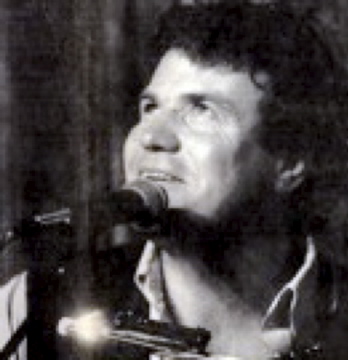
On the Green, in Concord, MA Every Thursday Night for over thirty years…
“A Song Singing, Word Slinging, Story Swapping, Ballad Mongering, Folksinger, Teacher, & Poet…”
Fitz’s Recordings
& Writings
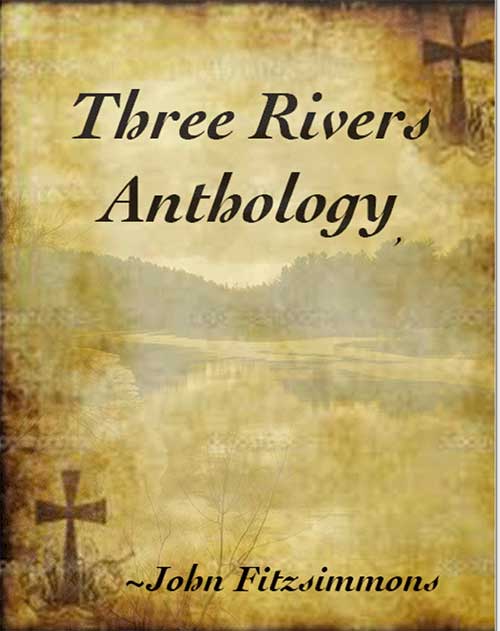
Songs, poems, essays, reflections and ramblings of a folksinger, traveler, teacher, poet and thinker…
Download for free from the iTunes Bookstore
“A Master of Folk…”
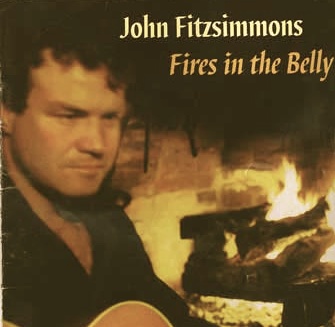
Fitz’s now classic recording of original songs and poetry…
Download from the iTunes Music Store
“A Masterful weaver of song whose deep, resonant voice rivals the best of his genre…”
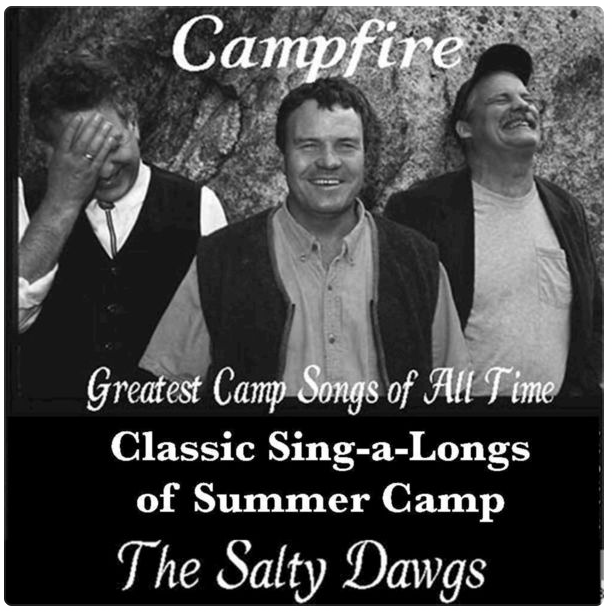
“2003: Best Children’s Music Recording of the Year…”
Fitz & The Salty Dawgs Amazing music, good times and good friends…
TheCraftedWord.org
Writing help
when you need it…
“When the eyes rest on the soul…that’s Fitzy…”
0 Comments