
Red River Valley
From this valley they say you are going
We will miss your bright eyes and sweet smile
For they say you are taking the sunshine
That has brightened our path for a while
Come and sit by my side if you love me
Do not hasten to bid me adieu
But remember the Red River Valley
And the cowboy who loved you so true
Won’t you think of the valley you’re leaving
Oh how lonely, how sad it will be?
Oh think of the fond heart you’re breaking
And the grief you are causing to me
As you go to your home by the ocean
May you never forget those sweet hours
That we spent in the Red River Valley
And the love we exchanged mid the flowers
by James Kerrigen in 1896

 I am indebted to the many friends who share my love of traditional songs and to the many scholars whose works are too many to include here. I am also incredibly grateful to the collector’s curators and collators of Wikipedia, Mudcat.org, MainlyNorfolk.info, and TheContemplator.com for their wise, thorough and informative contributions to the study of folk music.
I share this research on my site with humility, thanks, and gratitude. Please cite their work accordingly with your own research. If you have any research or sites you would like to share on this site, please post in the comment box. Thanks!


"Red River Valley" is a folk song and cowboy music standard of uncertain origins that has gone by different names (such as "Cowboy Love Song", "Bright Sherman Valley", "Bright Laurel Valley", "In the Bright Mohawk Valley", and "Bright Little Valley"), depending on where it has been sung. It is listed as Roud Folk Song Index 756 and by Edith Fowke as FO 13. It is recognizable by its chorus (with several variations):
From this valley they say you are going,
We will miss your bright eyes and sweet smile.
For they say you are taking the sunshine
That has brightened our pathway a while.
So come sit by my side if you love me.
Do not hasten to bid me adieu.
Just remember the Red River Valley
And the cowboy that has loved you so true.
Members of the Western Writers of America chose it as one of the Top 100 Western songs of all time, ranked #10.[1]
Lyrics and chords
 Wikiversity offers more help singing this song[2]

Origins
The song's first appearance in any printed source appears to have been in Milwaukee newspaper The Weekly Wisconsin in 1887. On June 25 a list appeared of song titles whose lyrics readers had requested,[3] including Red River Valley, and a version of the lyrics appeared in the September 17 issue, supplied by a resident of the western Wisconsin town of Mondovi.[4] According to Canadian folklorist Edith Fowke, there is anecdotal evidence that the song was known in at least five Canadian provinces before 1896.[5] This finding led to speculation that the song was composed at the time of the 1870 Wolseley Expedition to Manitoba's northern Red River Valley. It expresses the sorrow of a local woman (possibly a Métis) as her soldier lover prepares to return to the east.[6] Fowke's anecdotal evidence for a date before the 1880s, however, is sparse and dubious, and any connection with the Wolseley Expedition almost completely unsupported by evidence. The Red River Valley extends into the United States, where it forms the border between Minnesota and North Dakota. The question of the song's exact geographic origin therefore remains unresolved, though the great weight of the evidence does establish that it refers to this Red River and not to any southern or western American river by that name.
| "Red River Valley" | |
|---|---|
| Single by Hugh Cross and Riley Puckett | |
| B-side | "When You Wore a Tulip" |
| Written | c. 1880s |
| Released | January 1928 |
| Recorded | November 3, 1927[7] |
| Studio | Atlanta, Georgia |
| Genre | Canadian folk music, Country, Western |
| Length | 2:54 |
| Label | Columbia 15206 |
| Songwriter | Traditional |
The earliest known written manuscript of the lyrics, titled "The Red River Valley",[8] bears the notations "Nemaha 1879" and "Harlan 1885."[9] Nemaha and Harlan are the names of counties in Nebraska, and are also the names of towns in Iowa.
The song appears in sheet music, titled "In the Bright Mohawk Valley", printed in New York in 1896 with James J. Kerrigan as the writer.[10] The tune and lyrics were collected and published in Carl Sandburg's 1927 American Songbag.[11]
An important recording in this song's history was the 1927 Columbia Records master (15206-D) performed by Hugh Cross and Riley Puckett under the actual title of "Red River Valley". This version was the very first commercially available recording of this song under its most familiar title, and it was the inspiration for many of the recordings that followed.[12]
Film appearances
- 1936, Gene Autry sang the song in the Republic film Red River Valley, and with the Cass County Boys, sang the song in the 1946 film Sioux City Sue.
- 1939, The Three Stooges sing the song in the short film Yes, We Have No Bonanza.
- 1940, It was particularly memorable in John Ford's The Grapes of Wrath, whose tale of displaced Oklahomans associated it with the southern Red River.
- 1943, An instrumental version appeared in the film The Ox-Bow Incident.
- 1953, It was sung first by people in a pub with slightly different lyrics and more briefly at other points in a film about British paratroopers during World War II titled The Red Beret.
- 1962, An instrumental version played on a harp by Harpo Marx in Episode 1-4 "The Musicale" of Mr. Smith Goes to Washington, a sitcom starring Fess Parker.[13] This was Harpo Marx's last television appearance.[14]
- 1971, Another film in which it had important but subtle usage in was The Last Picture Show a film about the internal decay of small town Texas in the early 1950s.
- 1973, The song was used instrumentally in Dillinger as a recurring theme for John Dillinger's longing for his boyhood home and his family.
- 1979, Carol Connors sang it in the X-rated movie Sweet Savage.
- 1981, Lorraine De Selle and Zora Ulla Keslerová sing the song in Cannibal Ferox.[15]
- 1987, An electronic rendition of "Red River Rock" was recorded by Silicon Teens and featured in the movie Planes, Trains and Automobiles.[16]
- 1989, The song was sung in an adult contemporary style on the Shining Time Station episode "Mapping It Out". It also appeared on video Jukebox Band Lullaby.
- 1990, It was played in the film score when the gang member played by David Morse meets his demise in the movie Desperate Hours.
- 1993, Dana Delany sang it in the film Tombstone.
- 2006, It was sung by Garrison Keillor and cast in the film A Prairie Home Companion.
- 2014, A part of the song was sung in the film Wild by child actor Evan O'Toole during a scene with Reese Witherspoon.
- 2017, Harry Dean Stanton sang it in part 10 of Twin Peaks.
- 2017, A harmonica version of it played repeatedly in the film Lucky.
TV appearances
1962-63, sung by Ken Curtis on his TV series Ripcord, with Harry Carey Jr. playing guitar. It was one of two guest appearances Carey made on the show (one in 1962, and the other in 1963).
Other cultural references
- The song is played by Randall in Recess in the episode "One Stayed Clean" while he is sitting with TJ, Gus and the diggers in their hole. In the episode, the gang helps Gus (who has never had a picture day because of his constantly changing schools) stay clean so he can have a great school photo.
- "Red River Valley" was the theme song of Our Gal Sunday, a soap opera broadcast on CBS radio from 1937 to 1959.[17]
- "Jarama Valley", a song about the Battle of Jarama of the Spanish Civil War, used the tune to "Red River Valley". It was recorded by Woody Guthrie and The Almanac Singers, featuring Pete Seeger.
- The tune to "Red River Valley", set to new lyrics and titled "Can I Sleep in Your Arms", was used on Willie Nelson's 1975 album Red Headed Stranger. This version was based on the song "Can I Sleep in your Barn Tonight Mister."
- Johnny Cash wrote and performed a humorous song titled "Please Don't Play Red River Valley" for his 1966 album Everybody Loves a Nut
- Bob Dylan wrote and recorded "Red River Shore" — which uses motifs and plays with themes from "Red River Valley" — for Time Out of Mind (1997). Left off the album, two versions of it were included in The Bootleg Series Vol. 8: Tell Tale Signs: Rare and Unreleased 1989–2006 in 2008.
- The Kidsongs Kids parodied this song on their 1995 Let's Put on a Show video as "We'll Put on a Show".
- The Swedish song "I'm a Lapp", recorded in 1959 by Sven-Gösta Jonsson, is based on the melody of "Red River Valley."[18]
- Johnny and the Hurricanes recorded a rock and roll instrumental version in 1959 of the song titled "Red River Rock", which became a hit in the U.S. (#5), the UK (#3), and Canada (#3).[19]
- The tune of "Red River Valley" was used for the verses of the 1963 Connie Francis hit "Drownin' My Sorrows" (#36 in the US and #40 in Canada.[20][21])
- "Drownin' My Sorrows" was covered in German as "Ich tausche mit keinem auf der Welt" in 1964 by Margot Eskens and in Croatian as "Uz Tebe Sam Sretna" in 1968 by Ana Štefok.
- The premier Czech vocalist Helena Vondráčková made her recording debut in September 1964 with "Červená řeka", a rendering of "Red River Valley".
- A fatalistic chorus can be found in some sources related to F-105 pilots in Vietnam:[22][23]
Come and sit by my side at the briefing,
We will sit there and tickle the beads,
Then we'll head for the Red River Valley,
And today I'll be flying Teak lead,
To the valley he said we are flying,
With a Thud of the plane to the earth,
Many jockeys have flown to the valley,
And a number have never returned
- In its soundtrack, the 2010 video game Fallout: New Vegas adapted the lyrics and tune of "Red River Valley" as "New Vegas Valley".
- The first four verses of the chant "Scouser Tommy", sung by supporters of Liverpool F.C., is to the tune of "Red River Valley".
- "Red River Valley" is the official Slow March of the Fort Garry Horse, a reserve Line Cavalry Regiment of the Canadian Army.
- The 19th-century Manitoba song "Red River Valley" is played weekly on TV in the Philippines on a GMA TV comedy show titled Bubble Gang, with varied Tagalog humorous lyrics sung to the accompaniment of ukuleles, recurring from circa 2011 to present day by various performers.
- David McEnery (1914–2002), singer-songwriter, otherwise known as Red River Dave, takes this name from the song.
- The Ant and the Grasshopper story is sung to the tune of "Red River Valley" in a Cocomelon video (2018).[24]
Sources
- Edith Fowke and Keith MacMillan. (1973). The Penguin Book of Canadian Folk Songs. Harmondsworth, Middlesex: Penguin.
- Allen, Jules Verne. "Singing Along" (reprinted from New Mexico Magazine, 1935). Roundup of Western Literature: An Anthology for Young Readers pp. 82–85, edited by Oren Arnold.
- Kerrigan, James J. "In The Bright Mohawk Valley". New York: Howley, Haviland & Co. (1896).
- Fowke, Edith "The Red River Valley Re-examined." Western Folklore 23 (July 1964) 1630–71.
- Fuld, James J. The Book of World-Famous Music: Classical, Popular, and Folk. Dover Publications (2000).
- Waltz, Robert B; David G. Engle. "The Red River Valley". The Traditional Ballad Index: An Annotated Bibliography of the Folk Songs of the English-Speaking World. Hosted by California State University, Fresno, Folklore, 2007.
References
- ↑ Western Writers of America (2010). "The Top 100 Western Songs". American Cowboy. Archived from the original on October 19, 2010.
- ↑ Chords from irish-folk-songs.com
- ↑ The Weekly Wisconsin (Milwaukee, Wisconsin), June 25, 1887, page 2.
- ↑ The Weekly Wisconsin (Milwaukee, Wisconsin), September 17, 1887, page 3.
- ↑ Fowke, Edith (1964). "'The Red River Valley' Re-Examined". Western Folklore. 23 (3): 163–171. doi:10.2307/1498900. JSTOR 1498900.
- ↑ H. Stewart Hendrickson (Research Professor Emeritus, University of Washington), Red River Valley Archived February 16, 2013, at the Wayback Machine (Retrieved March 23, 2014)
- ↑ "Columbia matrix W145091. Red River Valley / Hugh Cross; Riley Puckett - Discography of American Historical Recordings". adp.library.ucsb.edu. Retrieved April 16, 2022.
- ↑ The Red River Valley, Edwin Ford Piper Collection, The University of Iowa Libraries, Iowa City, Iowa.
- ↑ Fuld, James J. (1966). The book of world-famous music, classical, popular and folk. Internet Archive. New York, Crown Publishers.
- ↑ Kerrigan, In The Bright Mohawk Valley.
- ↑ Sandburg, Carl (1927). The American Songbag. New York: Harcourt, Brace & Company. p. 130. Retrieved July 6, 2014.
- ↑ "Hugh Cross Songs, Albums, Reviews, Bio & More". AllMusic. Retrieved December 31, 2021.
- ↑ Hickey, Matthew (May–June 1996). "TV's Silent Panic: Harpo Marx & the Golden Age of Television". Filmfax magazine. pp. 64–69.
- ↑ "ShoutFactoryTV : Watch The Marx Brothers TV Collection Episode: The Marx Brothers: Mr. Smith Goes To Washington". Shoutfactorytv.com. Retrieved December 31, 2021.
- ↑ "Cannibal Ferox (1981)". IMDb.com. Retrieved June 20, 2017.
- ↑ Planes, Trains and Automobiles | Hollywood.com[link removed]. Archive.is. Retrieved on April 11, 2017.
- ↑ Fairfax, Arthur (December 28, 1940). "Mr. Fairfax Replies" (PDF). Movie Radio Guide. 10 (12): 43. Archived from the original (PDF) on January 19, 2015. Retrieved January 19, 2015.
- ↑ Jones-Bamman, Richard (2001). "From 'I'm a Lapp' to 'I'm a Saami': Popular Music and Changing Images of Indigenous Ethnicity in Scandinavia". Journal of Intercultural Studies. 22 (2): 189–210. doi:10.1080/07256860120069602. S2CID 145791883.
- ↑ "CHUM Hit Parade - August 24, 1959".
- ↑ Billboard Vol. 75 #29 (July 20, 1963) p. 4
- ↑ "CHUM Hit Parade - September 2, 1963".
- ↑ There Is a Way – F-105 Jets / United States Air Force 1967 Educational Documentary – WDTVLIVE42. YouTube (June 27, 2012). Retrieved on 2017-04-11.
- ↑ The Tiger Band Unhymnal, Clemson University, South Carolina, 1967.
- ↑ "The Ant and the Grasshopper | CoComelon Nursery Rhymes & Kids Songs - YouTube". YouTube. November 13, 2018.
External links
- National Institute of Environmental Health Sciences Kids' Page (lyrics and audio file)
- The free score on 8notes.com
- free-scores.com
- "Mitnoe'a Ha-Sappan" at Zemereshet – early Hebrew version set to this melody
| International | |
|---|---|
| National | |
| Other | |

Source: Manitoba Historical Society
Manitoba History: The True Story of the Song “Red River Valley”
by James J. Nystrom
Bothell, Washington
The folk songs of traditional music have evolved from the blending of different cultural traditions. Familiar songs sometimes spring from surprising origins. One of the most notable is the popular folk song “Red River Valley.” What appears to be a simple song of lament sung by cowboy singers around campfires is, in reality, the end of a musical mix that has its foundation in the melodies of traditional folk songs sung in the mists of a Gaelic past and whose lyrics were written in a personal expression of the cultural conflict occurring during the nineteenth-century settlement of the American continent by Europeans and the related displacement of the indigenous natives.
“Red River Valley” was first recorded as “Cowboy Love Song” in 1925 by Carl T. Sprague, one of the first cowboy singers from Texas. The biggest hit of the cowboy version was the 1927 version by Hugh Cross and Riley Puckett. In both recordings of the song, the lyrical associations are about the Red River Valley that marks the border between Arkansas and Texas.
A song named “Bright Mohawk Valley” with the same tune was published as sheet music on Tin Pan Alley in 1896 with James J. Kerrigan as the writer, but the song was thought to have been adapted for a New York audience. The earliest known written manuscript of the lyrics to “Red River Valley” were found in Iowa bearing the notation of the year 1879.
Although it is not widely known, there are two significant Red River valleys on the American Continent: The Red River Valley of the South and the Red River Valley of the North. And it is to this Red River Valley of the North that the origins of “Red River Valley” lead. The famed Canadian folklorist, Edith Fowke, gave mostly anecdotal evidence that the song was known in at least five Canadian provinces prior to 1896 and speculated that the song was composed at the time of the Wolseley Expedition of 1870 in Manitoba. She claimed that the song was well known on the Canadian prairies and held the form of a story about a Métis girl lamenting the departure of her Anglo lover, a soldier who came west to suppress the Red River Rebellion. The text for Fowke’s version of the song was published in “Western Folklore” in 1964 and was discovered in the papers of a former Canadian Mounted Police officer, Col. Gilbert Sanders. Fowke has written, “This is probably the best known folk song on the Canadian prairies. Later research indicates that it was known in at least five Canadian Provinces before 1896 and was probably composed during the Red River Rebellion of 1870.” Here are the lyrics discovered by Edith Fowke:
The Red River Valley
From this valley they say you are going,
I shall miss your bright eyes and sweet smile,
For alas you take with the sunshine
That has brightened my pathway awhile.Chorus:
Come and sit by my side if you love me,
Do not hasten to bid me adieu.
But remember the Red River Valley
And the girl who has loved you so true.For this long, long time I have waited
For the words that you never would say,
But now my last hope has vanished
When they tell me you’re going away.When you go to your home by the ocean
May you never forget the sweet hours
That we spent in the Red River Valley
Or the vows we exchanged mid the bowers.Will you think of the valley you’re leaving?
Oh, how lonely and dreary ’twill be!
Will you think of the fond heart you’re breaking
And be true to your promise to me.The dark maiden’s prayer for her lover
To the spirit that rules o’er the world
His pathway with sunshine may cover
Leave his grief to the Red River girl.There could never be such a longing
In the heart of a white maiden’s breast
As dwells in the heart you are breaking
With love for the boy who came west.
The Red River Valley of the North has a long and storied past in the history of the settlement of North America. The river is one of the few north-flowing streams on the American continent and it originates at the confluence of the Bois de Sioux and Otter Tail rivers in the southern border of North Dakota and Minnesota and it flows northward over 900 kilometres as the border between the two states into Manitoba before finally emptying into Lake Winnipeg whose waters eventually flow into Hudson Bay and the Arctic Ocean.
The watershed of the area was part of Rupert’s Land (named after Prince Rupert of the Rhine, a nephew of Charles I and the first Governor of the HBC), the Hudson’s Bay Company land concession in north central North America granted in 1670. It was first settled by French-Canadian fur trappers who came to the area to trap beaver for pelts. These trappers married First Nations women and established the first true “Métis” culture (part native and part French-Canadian) in North America. In the latter part of the eighteenth century, HBC traders established fur posts inland from Hudson Bay to compete with the North West Company that operated out of Montreal. The establishment at the forks of the Red and Assiniboine rivers of a colony of displaced Scottish highlanders by Lord Selkirk, a shareholder in the HBC, was intended to gain control of this crucial river junction from the rival Nor’Westers. However, within a few decades Red River had become a predominantly Métis settlement of both French and English speakers.
Red River Jig. When this woodcut was published in Harper’s New Monthly Magazine in 1860, it was noted that “Mr. Cameron explains that in his day the dancers were more sedate than they appear here.”
Source: Archives of Manitoba, Red River Settlement #13, N16656.
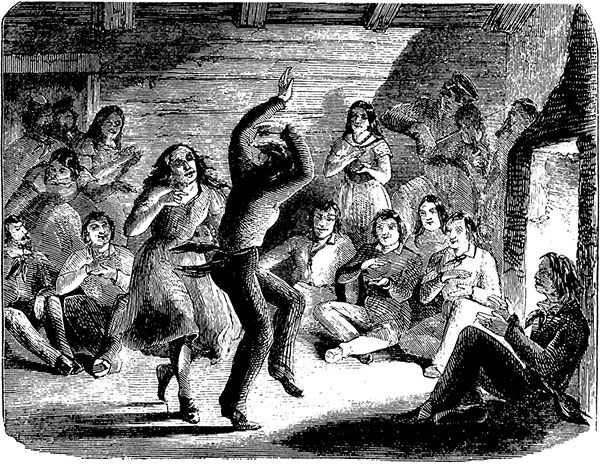
By the 1860s, as Ontarian immigrants began to arrive in the settlement, pressures grew for annexation of the colony by Canada. Land disputes and cultural conflicts between the settlement’s Métis inhabitants and the growing Anglo elite were exacerbated by Canada’s 1869 annexation of Rupert’s Land. Louis Riel’s Provisional Government negotiated the entry of Assiniboia into Confederation, and in 1870 the Manitoba Act created the Province of Manitoba. To underscore its new jurisdiction in the region, the Canadian government sent the Wolseley Expedition to Red River.
It was during this period of cultural clashing that Edith Fowke has postulated that the song “Red River Valley” was first composed. Part of her anecdotal proof as to the origin of the song hinged on the use of the word “adieu” in the lyrics, a word not normally associated with cowboys of the southwestern plains.
There has been speculation, drawn from the descendants of the settlers in the area, that the song was sung by a Métis woman who was the lover of one of the men in the Wolseley expedition at a gathering to commemorate the military victory of the Hudson’s Bay Company over Louis Riel. She was lamenting in song the departure of her soldier/lover from the Red River Valley after the victory.
A winsome young woman, photographed at the Red River Settlement in 1858 by H. L. Hime (identified in some copies as “Jane l’Adamar” but “Susan—a Swampey Cree” in others) is evocative of the lover pining for her departed soldier from the Wolseley Expedition in the song Red River Valley.
Source: Archives of Manitoba, Hime #29, N12577.
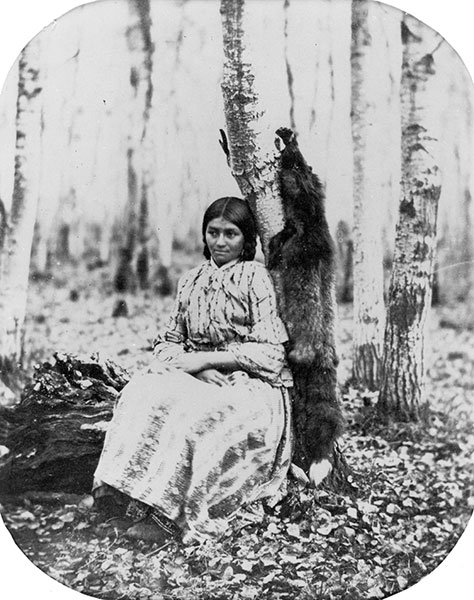
If this speculation were true, then the song would be ironic in both melody and lyrics. The tune of Red River Valley was reminiscent of several Gaelic songs in notes and musical construction. Gaelic songs were composed of notes that could be played on the bagpipe, the hornpipe or the violin, the traditional instruments. The typical form was the ballad which told a story in strophic or repeated musical strains. Two traditional folk songs with similar structure and notes were the “Connemara Cradle Song” (which also has direct similarities with the song, “Down in the Valley”) and “The Drums of Dumbarton”. These songs have ancient origins. “Connemara Cradle Song” was a traditional Irish lullaby about a fisherman’s safe return from the sea. “The Drums of Dumbarton” was included in the “Orpheus Caledonius” collection of traditional Scottish songs published by William Thomson in 1733. In a further irony, a copy of “Orpheus Caledonius” was given to Robert Burns (the acknowledged “Bard of Scotland”) by the sister of Lord Selkirk. Burns included “The Drums of Dumbarton” in his collection of traditional Scottish songs which introduced his most famous lyrical poem, “Love is like a Red, Red Rose”, the words of which Bob Dylan has been quoted as saying were the ones that most influenced him at the start of his musical career. The Gaelic-speaking settlers of Red River Valley had brought along the instruments and songs of their parent country. By singing the song in a stylistic form commonly used by the Scottish settlers rather than the form normally used by the French-Canadian Métis, the singer was both complimentary and critical in her presentation. The lyrics from the Fowke version, if taken in the context of its performance, are even more provocative. The invitation to “Come and sit by my side” was an open acknowledgement of what was then a scandalous affair. “Do not hasten to bid me adieu” asks for recognition of the French culture which the Scots settlers were trying to eradicate or at least ignore. “Be true to your promise to me” tears the veil from the often broken promise of marriage made by soldiers to the Métis women in order to receive sexual favours. There is a direct reference to the racial prejudice that existed in the Scots settler community in the two stanzas that refer the “white maiden” and the “dark maiden”, and to the difference in the “longing” of the different groups of women.
It was no wonder that the song, so mocking in both tune and lyrics, as well as so entertaining in the pleasantness of its melody, would be remembered and played again and again at the many musical gatherings of the two communities which eventually merged over time. The Red River Settlement continued to grow as it became the city of Winnipeg. Some of its people dispersed into other areas of Canada and the United States and they took the “Red River Valley” with them. As is the case with most ballads of the time, they became localized with the changing of the lyrics to fit the new situation. One such localization was the Red River of the South rendition popularized as a cowboy song. It was not the only version. “In The Bright Mohawk Valley”, “Bright Laurel Valley”, “Bright Sherman Valley,” “We Shall Walk Through The Streets Of The City” and “Bright Little Valley” are all localized versions of “Red River Valley.”
One of the final ironies of “Red River Valley” lay in the eventual merging of the two former rival traditions, French and Scottish, when descendants of the Scottish settlers also intermarried with Aboriginal peoples and began producing a Scots-Métis culture. Descendants of the Manitoba (Red River Settlement) Métis people (which included both Scots-Métis and French-Canadian Métis) were affirmed as a distinct nation by the Supreme Court of Canada in 2003. It is estimated that 50% of all Western Canadians have some Métis blood in their ancestry. “Red River Valley” is a song of the Métis struggle to survive and a celebration of their recognition as a distinct culture.
A woodcut published in the Canadian Illustrated News in 1869 “from a sketch by Rev. Mr. W.”, shows how the Wolseley Expedition’s camp at Sault Ste. Marie might have appeared.
Source: Archives of Manitoba, Red River Expedition 1870 #4, N5355.
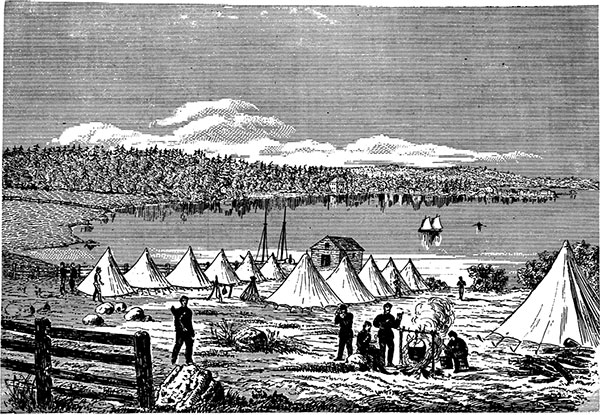
Sources and Acknowledgements
Boulton, Charles A., Reminiscences of the North-West Rebellions, with a Record of the Raising of Her Majesty’s 100th Regiment in Canada, etc., Toronto, ON: Grip Printing and Publishing Co., 1886.
Bryce, George, The Romantic Settlement of Lord Selkirk’s Colonists, Toronto, ON: The Musson Book Company Ltd., 1909. www.gutenberg.org/files/17358/17358-h/17358-h.htm
Fowke, Edith, “The Red River Valley Re-examined,” Western Folklore Volume 23, Number 3, pp. 163-171, July 1964.
Fowke, Edith, The Penguin Book of Canadian Folk Songs, Markham, ON: Penguin Books Canada, 1986, p. 45.
Fuld, James J. The Book of World Famous Music: Classical, Popular and Folk, New York, NY: Crown Publishers, 1966, p. 457.
Johnson, James, Robert Burns and Stephen Clarke. The Scots Musical Museum, in 6 volumes, Edinburgh: privately published, 1787-1803. http://archive.org/details/scotsmusicalmuse05john.
Stanley, George F. G., The Birth of Western Canada, London, New York, Toronto: Longmans, Green and Co., 1936.
Stanley, George F. G., Toil and Trouble: Military Expeditions to Red River, Canadian War Museum Publ. 25, Toronto: Dundurn Press, 1989.
Thomson, William, Orpheus Caledonius: Or, A Collection of Scots Songs, Set to Music, in 2 volumes, London: privately published, vol. 1, 1725; vol. 2, 1733.
The Burns Encyclopedia, www.robertburns.org/encyclopedia/index.shtml
King Laoghaire, The Home of Irish Ballads and Tunes, www.kinglaoghaire.com/site/home/
Page revised: 15 September 2015
Performances, Workshops, Resources & Recordings
The American Folk Experience is dedicated to collecting and curating the most enduring songs from our musical heritage. Every performance and workshop is a celebration and exploration of the timeless songs and stories that have shaped and formed the musical history of America. John Fitzsimmons has been singing and performing these gems of the past for the past forty years, and he brings a folksy warmth, humor and massive repertoire of songs to any occasion.
Festivals & Celebrations Coffeehouses School Assemblies Library Presentations Songwriting Workshops Artist in Residence House Concerts Pub Singing Irish & Celtic Performances Poetry Readings Campfires Music Lessons Senior Centers Voiceovers & Recording
““Beneath the friendly charisma is the heart of a purist gently leading us from the songs of our lives to the timeless traditional songs he knows so well…”
Join Fitz at The Colonial Inn
“The Nobel Laureate of New England Pub Music…”
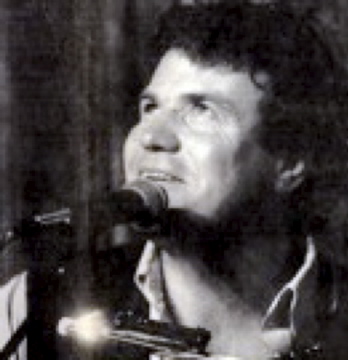
On the Green, in Concord, MA Every Thursday Night for over thirty years…
“A Song Singing, Word Slinging, Story Swapping, Ballad Mongering, Folksinger, Teacher, & Poet…”
Fitz’s Recordings
& Writings
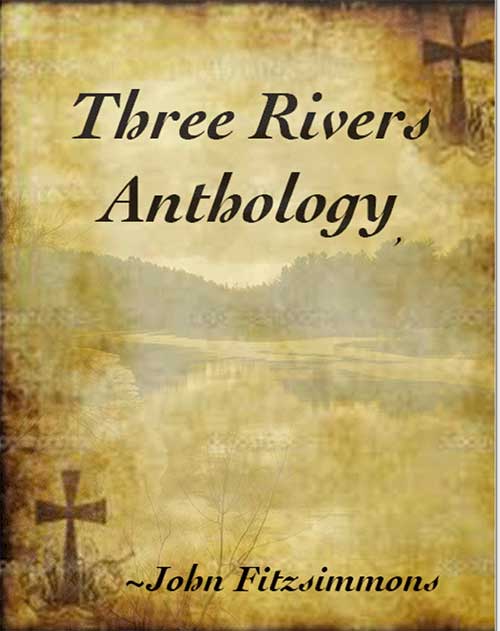
Songs, poems, essays, reflections and ramblings of a folksinger, traveler, teacher, poet and thinker…
Download for free from the iTunes Bookstore
“A Master of Folk…”
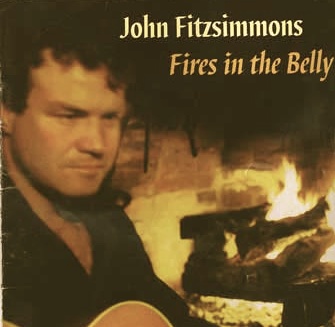
Fitz’s now classic recording of original songs and poetry…
Download from the iTunes Music Store
“A Masterful weaver of song whose deep, resonant voice rivals the best of his genre…”
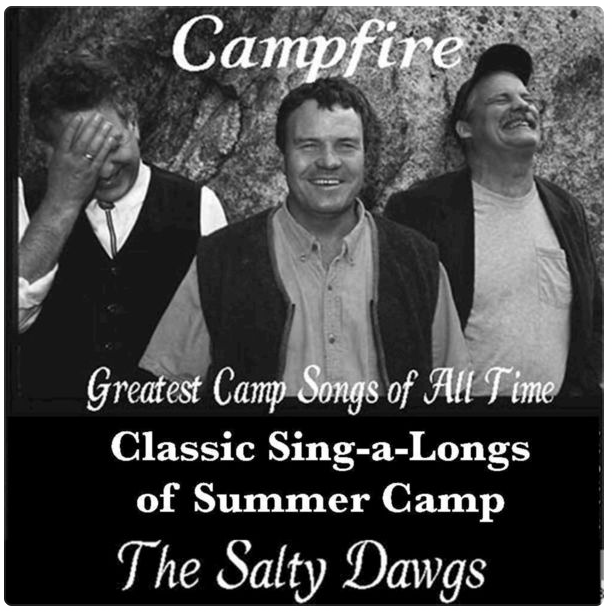
“2003: Best Children’s Music Recording of the Year…”
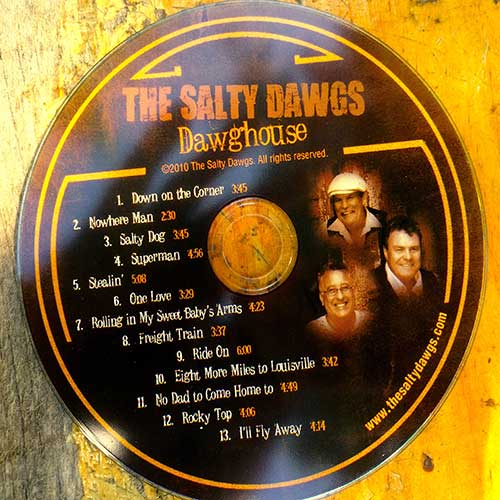
Fitz & The Salty Dawgs Amazing music, good times and good friends…
TheCraftedWord.org

Writing help
when you need it…
“When the eyes rest on the soul…that’s Fitzy…”

0 Comments