Frankie & Johnny
~Traditional
Frankie and Johnnie were lovers,
Oh, Lordie how they could love!
They swore to be true to each other,
Just as true as the stars above,
He was her man, but he done her wrong.
Frankie and Johnnie went walking
John in his brand new suit.
Then, “oh good Lawd,” says Frankie
“Don’t my Johnnie look real cute!”
He was her man, but he done her wrong.
Frankie she was a good woman,
And Johnnie was a good man,
And every dollar that she made
Went right into Johnnie’s hand,
He was her man, but he done her wrong.
Frankie went down tn the corner,
Just for a bucket of beer.
She said to the fat bartender,
“Has my lovinest man been here7″
He was her man, but he done her wrong.
“I don’t want to cause you no trouble,
I don’t want to tell you no lie;
But I saw your man an hour ago
With a gal named Alice Bly,
And if he’s your man, he’s a-doing you wrong.”
Frankie looked over the transom,
And found, to her great surprise,
That there on the bed sat Johnnie,
A-lovin‘ up Alice Bly.
He was her man, but he done her wrong.
Frankie drew back her kimono;
She took out her little forty-four;
Root-a-toot-toot, three times she shot
Right through that hardwood floor,
She shot her man, ’cause he done her wrong.
Roll me over easy,
Roll me over slow,
Roll me on de right side,
‘Cause de bullet hurt me so.
I was her man, but I done her wrong.
The judge said to the jury
“It’s as plain as plain can be
This woman shot her lover
It’s murder in the second degree
He was her man, though he done her wrong.
This story has no moral
This story has no end
This story only goes to show
That there ain’t no good in men
They’ll do you wrong, just as sure as you’re born
1 Comment
Leave a Reply to Thelma R Smith Cancel reply

 I am indebted to the many friends who share my love of traditional songs and to the many scholars whose works are too many to include here. I am also incredibly grateful to the collector’s curators and collators of Wikipedia, Mudcat.org, MainlyNorfolk.info, and TheContemplator.com for their wise, thorough and informative contributions to the study of folk music.
I share their research on my site with humility, thanks, and gratitude. Please cite their work accordingly with your own research. If you have any research or sites you would like to share on this site, please post in the comment box. Thanks!


"Frankie and Johnny" (sometimes spelled "Frankie and Johnnie"; also known as "Frankie and Albert", "Frankie's Man", "Johnny", or just "Frankie") is a murder ballad, a traditional American popular song. It tells the story of a woman, Frankie, who finds her man Johnny making love to another woman and shoots him dead. Frankie is then arrested; in some versions of the song she is also executed.
History
The song was inspired by one or more actual murders. One of these took place in an apartment building located at 212 Targee Street in St. Louis, Missouri, at 2:00 on the morning of October 15, 1899. Frankie Baker (1876–1952),[1] a 22-year-old woman, shot her 17-year-old lover Allen (also known as "Albert") Britt in the abdomen. Britt had just returned from a cakewalk at a local dance hall, where he and another woman, Nelly Bly (also known as "Alice Pryor" and no relation to the pioneering reporter who adopted the pseudonym Nellie Bly or the "Nelly Bly" who was the subject of an 1850 song by Stephen Foster), had won a prize in a slow-dancing contest. Britt died of his wounds four days later at the City Hospital.[2][3][4] On trial, Baker claimed that Britt had attacked her with a knife and that she acted in self-defense; she was acquitted and died in a Portland, Oregon mental institution in 1952.[citation needed]
In 1899, popular St Louis balladeer Bill Dooley composed "Frankie Killed Allen" shortly after the Baker murder case.[5] The first published version of the music to "Frankie and Johnny" appeared in 1904, credited to and copyrighted by Hughie Cannon, the composer of "Won't You Come Home Bill Bailey"; the piece, a variant version of whose melody is sung today, was titled "He Done Me Wrong" and subtitled "Death of Bill Bailey".[6]
The song has also been linked to Frances "Frankie" Stewart Silver, convicted in 1832 of murdering her husband Charles Silver in Burke County, North Carolina. Unlike Frankie Baker, Silver was executed.[3][7]

Another variant of the melody, with words and music credited to Frank and Bert Leighton, appeared in 1908 under the title "Bill You Done Me Wrong"; this song was republished in 1912 as "Frankie and Johnny", this time with the words that appear in modern folk variations:
Frankie and Johnny were sweethearts
They had a quarrel one day
Johnny he vowed that he would leave her
Said he was going away
He's never coming home
Also:
Frankie took aim with her forty-four
Three times with a rooty-toot-toot
The 1912 "Frankie and Johnny" by the Leighton Brothers and Ren Shields also identifies "Nellie Bly" as the new girl to whom Johnny has given his heart. What has come to be the traditional version of the melody was also published in 1912, as the verse to the song "You're My Baby", with music is attributed to Nat. D. Ayer.[8]
The familiar "Frankie and Johnny were lovers" lyrics first appeared (as "Frankie and Albert") in On the Trail of Negro Folksongs by Dorothy Scarborough, published in 1925; a similar version with the "Frankie and Johnny" names appeared in 1927 in Carl Sandburg's The American Songbag.[9]
Several students of folk music have asserted that the song long predates the earliest published versions; according to Leonard Feather in his Biographical Encyclopedia of Jazz[10] it was sung at the Siege of Vicksburg (1863) during the American Civil War[11] and Sandburg said it was widespread before 1888, while John Jacob Niles reported that it emerged before 1830.[3] The fact, however, that the familiar version did not appear in print before 1925 is "strange indeed for such an allegedly old and well-known song", according to music historian James J. Fuld, who suggests that it "is not so ancient as some of the folk-song writers would have one believe."[12]
Recordings
| "Frankie and Johnny" | ||||
|---|---|---|---|---|
| Single by Brook Benton | ||||
| from the album The Boll Weevil Song and 11 Other Great Hits | ||||
| B-side | "It's Just a House Without You" | |||
| Released | August 1961 | |||
| Recorded | July 1961 | |||
| Genre | Pop, R&B | |||
| Length | 2:27 | |||
| Label | Mercury | |||
| Songwriters | Traditional, arranged by Brook Benton | |||
| Producer | Shelby Singleton | |||
| Brook Benton singles chronology | ||||
| ||||
| "Frankie and Johnny" | ||||
|---|---|---|---|---|
| Single by Sam Cooke | ||||
| B-side | "Cool Train" | |||
| Released | July 1963 | |||
| Recorded | 1963 | |||
| Genre | R&B | |||
| Length | 2:38 | |||
| Label | RCA Victor | |||
| Songwriters | Traditional, arranged by Brook Benton | |||
| Producer | Hugo & Luigi | |||
| Sam Cooke singles chronology | ||||
| ||||
At least 256 recordings of "Frankie and Johnny" have been made since the early 20th century. The very first recording was made in London in 1912 by American singer Gene Greene.[13] Later singers include:
- Brook Benton (number 13CAN[14])
- Mike Bloomfield
- Big Bill Broonzy
- Mississippi Joe Callicott
- Johnny Cash
- Sam Cooke
- Frank Crumit
- Sammy Davis Jr.
- Lonnie Donegan
- Kenny Gardner singing with Guy Lombardo's Band
- Bob Dylan
- Roscoe Holcomb
- Lena Horne
- Mississippi John Hurt
- Burl Ives
- Jack Johnson
- Lead Belly
- Jerry Lee Lewis
- Lindsay Lohan
- Taj Mahal
- Charlie Feathers
- Van Morrison
- New Lost City Ramblers
- Charlie Patton
- Les Paul
- Hank Snow
- Charlie Poole
- Jimmie Rodgers
- Anika Noni Rose
- Pete Seeger
- Dinah Shore
- Chris Smither
- Rod Stewart
- Dave Van Ronk
- Gene Vincent
- Fats Waller
- Doc Watson
- Mae West
- Stevie Wonder
- Josh White
- Turk Murphy
A 1966 recording by Elvis Presley became a gold record as the title song of a Presley movie. It reached number 14 in Canada.[15]
The earliest country recording of a Frankie song is Ernest Thompson's 1924 Columbia recording of "Frankie Baker", which is listed in Tony Russell's Country Music Records A Discography, 1921-1942, Oxford University Press, 2004, ISBN 978-0195366211. Thompson was a blind street singer from Winston-Salem, North Carolina.
As a jazz standard it has also been recorded by numerous bands and instrumentalists including Louis Armstrong, Sidney Bechet, Count Basie, Bunny Berigan, Dave Brubeck, Duke Ellington, Ray Brown (musician), and Benny Goodman. Champion Jack Dupree set his version in New Orleans, retitling it "Rampart and Dumaine".
Ace Cannon recorded an instrumental version for his 1994 album Entertainer.
Films
The story of Frankie and Johnny has been the inspiration for several films, including Her Man (1930, starring Helen Twelvetrees), Frankie and Johnny (1936, starring Helen Morgan), and Frankie and Johnny (1966, starring Elvis Presley). Terrence McNally's 1987 play, Frankie and Johnny in the Clair de Lune, was adapted for a 1991 film titled Frankie and Johnny starring Al Pacino and Michelle Pfeiffer.
In 1930, director and actor John Huston wrote and produced a puppet play titled Frankie and Johnnie based on the Frankie Baker case. One of Huston's main sources was his interview with Baker and Britt's neighbor Richard Clay.[16][17]
Comedian Harry Langdon performed the song in his 1930 short The Fighting Parson, in a variant on his vaudeville routine originally performed in blackface. Mae West inserted her ballad into her successful Broadway play Diamond Lil. West sang the ballad again in her 1933 Paramount film She Done Him Wrong, which takes its title from the refrain, substituting genders. She also sang it many years later (1978) on the CBS television special Back Lot U.S.A. The song was used in the 1932 film Red-Headed Woman, in a scene where actress Jean Harlow's character is drinking and lamenting having been jilted by her married lover. It is also sung by a river boat crew in Bed of Roses, a film released the following year. Yvonne De Carlo sings the song while masquerading as an opera singer in the 1949 film The Gal Who Took the West. Moira Kelly sings it in the 1996 film Entertaining Angels: The Dorothy Day Story.
The 1933 pre-Code film Arizona to Broadway features drag performer Gene Malin singing this song as he portrays Ray Best, a female impersonator and Mae West type.[18] Malin's performance is considered one of the earliest performances, if not the earliest, of a female impersonator on film.[18][19]
A dazzling musical number from the 1956 MGM film Meet Me in Las Vegas featured Cyd Charisse and dancer John Brascia acting out the roles of Frankie and Johnny while Sammy Davis Jr. sang the song. Mia Farrow, in the role of Jacqueline De Bellefort, sang/hummed a drunken rendition of the song in the 1978 version of Agatha Christie's Death on the Nile, just before she attempts to shoot her former lover, Simon Doyle, played by Simon MacCorkindale.
Noah Baumbach's 1997 film Highball features a scene where this song is sung as a karaoke tune.
The climax of Robert Altman's 2006 film A Prairie Home Companion is Lindsay Lohan's rendition of the song with quasi-improvisatory lyrics by Garrison Keillor.
The tune is often used for comic effect in animated cartoon shorts, such as the 1932 Disney cartoon The Klondike Kid (starring Mickey Mouse) and various ones produced by Warner Bros. or MGM in the 1940s and 1950s, as a theme or leitmotif for a meretricious or zaftig woman. The song was the basis of a 1951 UPA cartoon Rooty Toot Toot, directed by John Hubley. It was nominated for an Academy Award for Best Short Subject. A comedic live action usage comes in the blaxploitation film Petey Wheatstraw where a woman auditions by singing the song off-key, prompting a crude reply from Petey.
The song's intro is featured in the 1929 film Weary River. It is sung by the main character Jerry Larrabee played by Richard Barthelmess. The character is a gangster reformed by music. Weary River costars Betty Compson, who played Alice Gray, the faithful sweetheart of Larrabee, who did not like him singing Frankie and Johnny. A remarkable feature of this film is part silent film and part talkie. The film which was directed by Frank Lloyd, who was nominated for an Academy Award for Best Directing.
Other media
"Frankie and Johnnie" is parodied in act two, scene five of E. E. Cummings' 1927 play Him.[20]
In Never Kick a Woman, a Popeye the Sailor cartoon short released by Fleischer Studios on August 30, 1936, the song plays in the background when a sexy female boxer, based on film star Mae West, appears and attempts to steal Popeye away from Olive Oyl.
In Robert A. Heinlein's 1954 science fiction novel The Star Beast, Mr Kiku sings lyrics from Frankie and Johnny in three instances, the final being in the penultimate paragraph, "This story has no moral, this story has no end. This story only goes to show that there ain't no good in men."
Chicago's Redmoon Theater Company presented an adaptation of the Frankie and Johnny story at Steppenwolf Theater in 1997.[21] The soundtrack was composed by Michael Zerang and performed by Fred Armisen, Fred Lonberg-Holm, and Jeremy Ruthrauff.[22]
See also
Notes
- ^ Brown, Cecil (2011). "Frankie and Albert/Johnny". In Smith, Jessie Carney (ed.). Encyclopedia of African American popular culture (1st ed.). Santa Barbara, CA: ABC_CLIO, LLC. pp. 542–546. ISBN 978-0-313-35796-1.
- ^ Saint Louis Police Veteran's Association. "Kiel Opera House and Four Courts and the story of Frankie and Johnny". Saint Louis Police Veteran's Historical Illustrated Photos. St. Louis, MO: Saint Louis Police Veteran's Association. Archived from the original on 2016-11-06. Retrieved 2012-01-14.
- ^ a b c "Frankie and Albert [Laws I3]". Csufresno.edu. Archived from the original on 2016-03-03. Retrieved 2016-07-26.
- ^ "Bluegrass Messengers". Archived from the original on 2005-08-25. Retrieved 2006-06-06.
- ^ "It's Frankie And Albert Instead Of Johnny" Lakeland Ledger, May 29, 1975.
- ^ "Hughie Cannon's version". Parlorsongs.com. Retrieved 2012-04-28.
- ^ "The Untold Story of Frankie Silver". Archived from the original on 2007-01-03. Retrieved 2007-04-25.
- ^ Fuld, p. 234.
- ^ Fuld, p. 235.
- ^ Leonard Feather and Ira Gitler, editors (2007). The Biographical Encyclopedia of Jazz. New York: Oxford University Press. ISBN 978-0-19-532000-8, ISBN 0-19-532000-X.
- ^ "MELODY LANE SONGS - (PAGE 1) - 1840 - 1960". Nfo.net. Retrieved 2012-04-28.
- ^ Fuld, pp. 233-235.
- ^ "6/23/20: "Frankie and Johnny" by Gene Greene (1912)". June 23, 2020. Retrieved June 6, 2025.
- ^ "CHUM Hit Parade - October 23, 1961". Chumtribute.com.
- ^ "RPM Top 100 Singles - May 9, 1966" (PDF). Collectionscanada.gc.ca.
- ^ "Frankie Baker". Retrieved 2012-04-28.
- ^ "item on Frankie Baker". 1975-05-29. Retrieved 2012-04-28.
- ^ a b McPherson, Ken (12 April 2007). "Jean Malin-Arizona to Broadway-1933 - video Dailymotion". Dailymotion. Retrieved 2021-01-15.
- ^ "Jean Malin". Queermusicheritage.com. Retrieved 2021-01-15.
- ^ Freidman, Norman (1958). E. E. Cummings: The Magic Maker. The MacMillan Company. p. 225. LCCN 58-12439.
- ^ Jones, Chris (June 3, 1997). "Redmoon Troupe Pushes Fable Into Dark Territory". Chicago Tribune. Retrieved 3 May 2011.
- ^ Couture, François. "Redmoon Theater's The Ballad of Frankie and Johnny (Original Score)". AllMusic. Retrieved 3 May 2011.
References
- James J. Fuld, The Book of World-Famous Music: Classical, Popular and Folk, 3rd Edition (New York: Dover, 1985).
- Morgan, Stacy I. 2017. Frankie and Johnny: Race, Gender, and the Work of African American Folklore in 1930s America. Austin: University of Texas Press. 261 pages. ISBN 9781477312087
External links
 The full text of two variations of "Frankie and Johnny" at Wikisource
- "Frankie and Albert" Archived 2016-03-03 at the Wayback Machine at Traditional Ballad Index.
- History and lyrics of 10 versions of the song Archived 2016-12-02 at the Wayback Machine


-
Originally titled “Frankie and Albert,” this traditional murder ballad was inspired by the real-life crime of passion committed by Frankie Baker in 1899. Frankie discovered her lover, Albert Britt, had been with another woman and took revenge by shooting him at a boardinghouse in St. Louis, Missouri. She would be acquitted under plea of self-defense.
The origins of the song as we know it today are a bit murky. That same year, local singer Bill Dooley composed a song sensationalizing the case, and it became a popular mainstay in local saloons before its official publication as “Frankie and Johnny” in 1904. The song was not credited to Dooley, however, but to ragtime composer/lyricist Hughie Cannon.
Frank and Bert Leighton’s 1908 version, which was published as “Frankie and Johnny” in 1912, brought us the familiar opening:
Frankie and Johnny were sweethearts
They had a quarrel one dayCountless covers over the years have provided many variations of the song. Sometimes the duo are “lovers” instead of “sweethearts.” Johnny’s mistress can be Alice Pry or Nelly Bly. Sometimes, Frankie is cheered by onlookers as she shoots Johnny and is exonerated; other times, she’s executed.
-
Many artists have recorded this, including Louis Armstrong, Elvis Presley and Johnny Cash. Sam Cooke sang a cleaner version than most, which is the most popular contemporary cover. Here are the charting versions in America:
1959, #57 – Johnny Cash
1961, #20 – Brook Benton
1963, #14 – Sam Cooke
1964, #75 – The Greenwood County Singers
1966, #25 – Elvis Presley -
Elvis Presley starred in a 1966 movie called Frankie And Johnny where he performed the song. In 1991, another movie of the same name was released starring Al Pacino and Michelle Pfeiffer, who in one scene banter over the song when they realize they are named Frankie and Johnny. The exchange:
Pfeiffer: Didn’t they kill each other?
Pacino: No. She killed him. You got the edge there. -
In 1942, the real Frankie Baker filed a defamation suit against Republic Pictures for the 1936 film Frankie and Johnnie, starring Helen Morgan and Chester Morris. Frankie lost the lawsuit and was never able to escape her reputation as a murderer, though she had been acquitted. She said during the (defamation) court proceedings: “I was pointed out as the worst woman in the world and introduced as the Frankie of song, instead of Miss Baker.”
-
Brook Benton’s R&B version was included in the 2011 compilation Mad Men: A Musical Companion.
-
Anika Noni Rose performed this in the 2011 miniseries Bag of Bones, based on the Stephen King novel. Rose played Sara Tidwell in the movie.
Performances, Workshops, Resources & Recordings
The American Folk Experience is dedicated to collecting and curating the most enduring songs from our musical heritage. Every performance and workshop is a celebration and exploration of the timeless songs and stories that have shaped and formed the musical history of America. John Fitzsimmons has been singing and performing these gems of the past for the past forty years, and he brings a folksy warmth, humor and massive repertoire of songs to any occasion.
Festivals & Celebrations Coffeehouses School Assemblies Library Presentations Songwriting Workshops Artist in Residence House Concerts Pub Singing Irish & Celtic Performances Poetry Readings Campfires Music Lessons Senior Centers Voiceovers & Recording
““Beneath the friendly charisma is the heart of a purist gently leading us from the songs of our lives to the timeless traditional songs he knows so well…”
Join Fitz at The Colonial Inn
“The Nobel Laureate of New England Pub Music…”
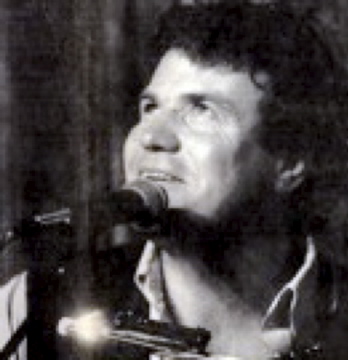
On the Green, in Concord, MA Every Thursday Night for over thirty years…
“A Song Singing, Word Slinging, Story Swapping, Ballad Mongering, Folksinger, Teacher, & Poet…”
Fitz’s Recordings
& Writings
Songs, poems, essays, reflections and ramblings of a folksinger, traveler, teacher, poet and thinker…
Download for free from the iTunes Bookstore
“A Master of Folk…”
Fitz’s now classic recording of original songs and poetry…
Download from the iTunes Music Store
“A Masterful weaver of song whose deep, resonant voice rivals the best of his genre…”
“2003: Best Children’s Music Recording of the Year…”
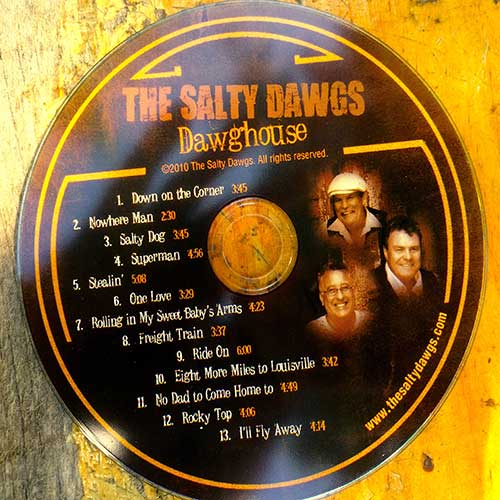
Fitz & The Salty Dawgs Amazing music, good times and good friends…
TheCraftedWord.org
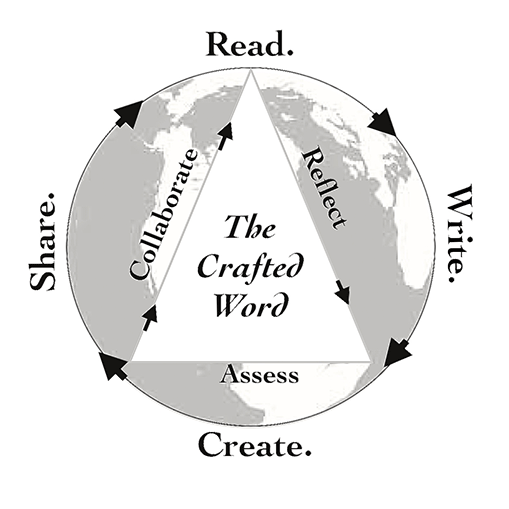
Writing help
when you need it…
“When the eyes rest on the soul…that’s Fitzy…”
There is the part of Frankie sits in the jailhouse
There is also the part about Johnnies funer al
I believe the orig is in Sam Cook’s rendition