Cape Cod Girls
~Traditional
Cape Cod girls ain’t got no combs;
Heave away, haul away!
They comb their hair with cod fish bones.
We’re bound for south Australia!
Heave her up me bully, bully boys.
Heave her up and don’t ye make no noise,
Cape Cod cats ain’t got no tails,
Lost them all in southeast gales.
Cape Cod kids ain’t got no sleds,
They slide down down dunes on codfish heads.
Cape Cod ladies don’t have no frills,
Skinny and light as codfish gills.
Cape Cod folks don’t have no ills,
Cape Cod doctors feed ’em Codfish pills.
2 Comments
Submit a Comment


I am indebted to the many friends who share my love of traditional songs and to the many scholars whose works are too many to include here. I am also incredibly grateful to the collector’s curators and collators of Wikipedia, Mudcat.org, MainlyNorfolk.info, and TheContemplator.com for their wise, thorough and informative contributions to the study of folk music.
I share this scholarly research on my site with humility, thanks, and gratitude. Please cite sources accordingly with your own research. If you have any research or sites you would like to share on this site, please post in the comment box.
Thanks!


"South Australia" (Roud 325) is a sea shanty and folk song, also known under such titles as "Rolling King" and "Bound for South Australia". As an original worksong it was sung in a variety of trades, including being used by the wool and later the wheat traders who worked the clipper ships between Australian ports and London. In adapted form, it is now a very popular song among folk music performers that is recorded by many artists and is present in many of today's song books.
History as a shanty
Information on the age, spread, and practical use of the shanty is relatively sparse. However, the evidence at hand does not suggest there is anything particularly or locally "Australian" about the song, contrary to how it has become popularly envisioned since the late 20th century.
It was first noted by sea music author L.A. Smith, who collected it "from a coloured seaman at the [Sailors'] 'Home'" in London and published it in her 1888 collection, The Music of the Waters.[1]
The shanty is not mentioned again until the 1900s (decade). Patterson (1900) mentions a heaving chanty titled "Bound to Western Australia,"[2] and the veteran African-American sailor James H. Williams mentioned the song in a 1909 article.[3][4]
In the 1930s or 1940s, at Sailors' Snug Harbor, New York, shanty collector William Main Doerflinger recorded veteran sailor William Laurie of Greenock, Scotland, who began a career in sailing ships in the late 1870s. The one verse sung by Laurie was published, with tune, in Doerflinger's 1951 book.[5]
This shanty is not attested in writing again until Lydia Parrish's study of the music tradition of Georgia Sea Islanders, published in 1942.[6]
In 1946, J.T. Hatfield shared his recollections of a much earlier, 1886 voyage as a passenger traveling from Pensacola to Nice. During this voyage, Hatfield had noted the shanties sung by the crew, who were all black men from Jamaica. This version, which includes both tune and text, includes the unusual phrase, "Hooray! You're a lanky!", which may have been a mishearing by Hatfield.
Another remembered version comes in F.P. Harlow's Chanteying Aboard American Ships (1962), in which the author recalls shanties sung aboard the ship Akbar on a trip from Massachusetts to Melbourne, Australia in 1876. A crew mate "Dave" is said to have taught this to the crew while pumping at the windlass.[7] As no references to the song put it any earlier than the mid-1870s, it may well be that the song was new at the time.
Work function and lyrical variations
Smith said it was a capstan chanty, as evidenced by the refrain which indicates, "Heave away! Heave away!" Parrish found that stevedores hauling heavy timber used the song with the chorus, "Haul away, I’m a rollin' king."
Lyrics
Like most shanties of this type, "South Australia" was sung to a flexible combination of customary verses, floating verses from within the general chanty repertoire, and verses improvised in the moment or particular to individual singers. The song was of indefinite length, and created by supplying solo verses to a two-part refrain followed by a grand chorus. The following is a sample after Stan Hugill:
(solo) Oh South Australia is me home[8]
(chorus) Heave away! Heave away!
(solo) South Australia is me home
(chorus) An' we're bound for South Australia.
- Heave away, heave away
- Oh heave away, you rolling king,
- We're bound for South Australia
Solo verse couplets documented to have been sung to "South Australia" include the following from sailors of the 19th century.
I see my wife standing on the quay
The tears do start as she waves to me.I'll tell you the truth and I'll tell you no lie;
If I don't love that girl I hope I may die.And now I'm bound for a foreign strand,
With a bottle of whisky in my hand.I'll drink a glass to the foreign shore
And one to the girl that I adore.[1]
As a popular song
In the 1940s, "South Australia" became popular as a camp song.[9] And by the second decade of the 20th century, it had been adopted by several college glee clubs.[10]
A slightly different version of the song was published by Doerflinger in 1951.[5] English folk revival singer A.L. Lloyd recorded the song, without citing a source, on the 1957 album Blow Boys Blow. He used Doerflinger's melody and the phrase "hear me sing," which are unique to that collection, which Lloyd used for other shanties he performed.
The Clancy Brothers recorded the song in 1962, in a version similar to A.L. Lloyd's. Patrick Clancy, one of the Clancy Brothers, had edited Lloyd's Blow Boys Blow album, which was released by Tradition Records, a label that Clancy managed.[11] The Clancy Brothers rendered Lloyd's phrase "lollop around Cape Horn" as the unintelligible "wallop around Cape Horn." The Clancy Brothers' version is the most common one sung by folk music and shanty performers. The song has been recorded many times in both traditional and modern arrangements.
A traditional Morris dance of the same name is performed to the tune, from the style of Adderbury.[12][13]
Traditional recordings
- A.L. Lloyd and Ewan MacColl on their 1957 album Blow Boys Blow
- A.L. Lloyd on his 1958 Australian album Across the Western Plains and on his 1960 UK album Outback Ballads
- The Clancy Brothers & Tommy Makem on their 1962 album The Boys Won't Leave The Girls Alone.[14]
- The Seekers on their 1964 UK album, The Seekers (also known as Roving with the Seekers)
- Trevor Lucas on his 1966 Australian album Overlander
- The Bushwhackers and Bullockies Bush Band on their 1974 album The Shearer's Dream, Picture Records
- The Corries on their 1977 album Live from Scotland Volume 4
- Liam Clancy, Robbie O'Connell, and Donal Clancy on the 1998 collection of shanties and sea songs, Wild and Wasteful Ocean
- The Poxy Boggards on their 2004 album Liver Let Die
- Nathan Carter on his 2013 Irish album Where I Wanna Be
- The Dubliners recorded the song on several live albums
Modern versions
- The Clumsy Lovers on their album Live! perform a rock version of the song as the first part of a medley with "Let the Sunshine In".
- The Pogues on their 1988 album If I Should Fall from Grace with God
- Greenhorns as "Směr Jižní Austrálie" on their 1982 album Oheň Z Dříví Eukalyptu
- The Wiggles as "Bound for South Australia" on their 1992 album Here Comes A Song[15][16]
- Churchfitters on their album New Tales for Old
- Chanticleer on their album Wondrous Love - A Folk Song Collection
- Gaelic Storm on their 1999 album Herding Cats
- Seamus Kennedy on his 2008 album Sailing Ships and Sailing Men
- Fisherman's Friends in their 2010 album Port Isaac's Fisherman's Friends
- Stan Hugill on the compilation album Classic Maritime Music from Smithsonian Folkways[17]
- Johnny Collins on his Shanties & Songs of the Sea[18]
- Julian Ferraretto on his 2010 album Near
- Dust Rhinos as a medley with "Drunken Sailor" on their 2000 album Got Guinness.
- "South Australia" was recorded by the American quintet Bounding Main and released on their 2008 album Going Overboard.[19]
- The Storm Weather Shanty Choir released a version of the song on the 2005 album Off To Sea Once More.
- The Whistlin’ Donkeys released a version of the song in their 2018 live album.
References
- 1 2 Smith, Laura Alexandrine. The Music of the Waters. London: Kegan, Paul, Trench & Co.
- ↑ Patterson, J.E. "Sailors' Work Songs." _Good Words_ 41(28) (June 1900): 391–397.
- ↑ Williams, James H. "The Sailors' 'Chanties'." The Independent (8 July 1909):76-83.
- ↑ Hatfield, James Taft. "Some Nineteenth Century Shanties." Journal of American Folklore 59(232): 108–113.
- 1 2 Doerflinger, William Main. Shantymen and Shantyboys: Songs of the Sailor and Lumberman. Macmillan: New York.
- ↑ Parrish, Lydia. Slave Songs of the Georgia Sea Islands. New York: Creative Age Press.
- ↑ Harlow, Frederick Pease. Chanteying Aboard American Ships. Barre, Mass.: Barre Publishing Co., 1962
- ↑ Hugill, collected by Stan (1994). Shanties from the seven seas : shipboard work-songs and songs used as work-songs from the great days of sail (New U.S. ed.). Mystic, Conn.: Mystic Seaport Museum. ISBN 0-913372-70-6.
- ↑ Unknown. "The A.C.A. Meet of 1892." Forest and Stream 39(10) (8 September 1892). Pg. 212.
- ↑ Associated Harvard Clubs. _Book of Songs_. Chicago: Lakeside Press, 1916.
- ↑ Guida, Nick. "Blow Boys Blow - Songs of Sea 1957 - Tradition TLP 1026 LP - Sleeve Notes". Clancy Brothers & Tommy Makem website. Retrieved 4 June 2014.
- ↑ "The Maroon Bells Morris Dancers' Repertoire -- Morris Dancing in Colorado". www.maroonbellsmorris.org. Archived from the original on 17 March 2012. Retrieved 5 April 2019.
- ↑ Sparroworks (12 May 2016), Fenstanton Morris - May 2016 - South Australia (Adderbury), archived from the original on 21 December 2021, retrieved 5 April 2019
- ↑ Guida, Nick. "The Boys Won't Leave The Girls Alone - 1962 - Columbia CL 1909 LP (mono) - Sleeve Notes". Clancy Brothers & Tommy Makem website. Retrieved 13 February 2014.
- ↑ "Wiggles, The". Tvmem.com. Retrieved 28 February 2014.
- ↑ "Here comes a song / The Wiggles. [sound recording]". Trove. National Library of Australia. Retrieved 28 February 2014.
- ↑ "South Australia". Smithsonian Folkways. Smithsonian Institution. Retrieved 10 December 2015.
- ↑ "Johnny Collins With Dave Webber, Pete Watkinson". Discogs. Retrieved 22 July 2020.
- ↑ South Australia (28 September 2019). "Bounding Main". Bounding Main. Retrieved 29 February 2024.
External links
- South Australia, performed by The Fisherman's Friends (the Port Isaac town choir) with Show of Hands
- South Australia, performed by Johnny Collins

Source: Mainly Norfolk
South Australia
[ Roud 325 ; Ballad Index Doe071 ; trad.]
Contrary to the jolly nature of shanties like this, shipboard life in the early days was miserable indeed.
Laura Smith collected a version of this classic shanty from sailors in Tyneside and printed it in her The Music of the Waters in 1888. A.L. Lloyd recorded it in 1958 for his Wattle album Across the Western Plains (verses 1-5 and 7-8). This track was reissued in 1960 on his Topic LP Outback Ballads and included in 2008 on his Fellside anthology Ten Thousand Miles Away He also sang it with Ewan MacColl joining in on chorus on their 1957 album Blow Boys Blow (verses 1-3 and 5-7). And Trevor Lucas recorded South Australia for his second Australian solo album of 1966, Overlander.
A.L. Lloyd commented in the Across the Western Plains sleeve notes:
In the days of sail, South Australia was a familiar going-away song, sung as the men trudged round the capstan to heave up the heavy anchor. Some say the song originated on wool-clippers, others say it was first heard on the emigrant ships. There is no special evidence to support either belief; it was sung just as readily aboard Western Ocean ships as in those of the Australian run. Laura Smith, a remarkable Victorian Lady, obtained a 14-stanza version of South Australia from a coloured seaman in the Sailors’ Home at Newcastle-on-Tyne, in the early 1880’s. The song’s first appearance in print was in Miss Smith’s Music of the Waters. Later, it was often used as a forebitter, sung off-watch, merely for fun, with any instrumentalist joining in. It is recorded in this latter-day form. The present version was learnt from an old sailing-ship sailor, Ted Howard of Barry, in South Wales. Ted told how he and a number of shellbacks were gathered round the bed of a former shipmate. The dying man remarked: “Blimey, I think I’m slipping my cable. Strike up South Australia, lads, and let me go happy.”
Louis Killen—who was chanteyman, deckhand and ship’s carpenter on the Hudson River sloop Clearwater during her trip from her builder’s yard in Maine to her home port of New York—sang South Australia in 1970 on his South Street Seaport Museum album 50 South to 50 South. He noted in the liner notes:
A capstan or pump chantey. In the Clearwater it was used as a hand-over-hand halyard chantey, with the crew hauling on the mains’l halyard during the chanteyman’s solo parts as well as on the chorus parts.
The Ripley Wayfarers sang South Australia in 1972 on their Traditional Sound Recordings album Five Wells.
Stan Hugill sang South Australia in 1980 on the Folkways album Sea Music of Many Lands: The Pacific Heritage. This video shows him at the International Shanty Festival in Workum in 1990:
Johnny Collins with Dave Webber and Pete Watkinson sang South Australia in 1996 on their album Shanties & Songs of the Sea.
Jon Boden sang South Australia as the November 6, 2010 entry of his project A Folk Song a Day.
Port Isaac’s Fisherman’s Friends sang South Australia at the Cambridge Folk Festival 2011.
Lyrics
| A.L. Lloyd sings South Australia | Trevor Lucas sings South Australia |
|---|---|
| In South Australia I was born, Well, heave away, haul away, In South Australia round Cape Horn We’re bound for South Australia. |
In South Australia I was born, Heave away, haul away, In South Australia round Cape Horn For we’re bound for South Australia. |
|
|
| As I walked out one morning fair, ‘t was there I met Miss Nancy Blair. |
|
| There ain’t but one thing grieves my mind, To leave Miss Nancy Blair’s behind. |
There only one thing grieves me mind, That’s leaving Nancy Blair’s behind. |
| O when I sail across the sea, My girl says she’d be true to me. |
|
| I rung her all night, I rung her all day, I rung her before we sailed away. |
I rung her all night and I rung her all day, Well, I rung her and tell we sailed away. |
| I shook her up, I shook her down, I shook her round and round and round. |
|
| Oh, when we wallop around Cape Horn, You’ll wish to God you’d never been born. |
|
| I wish I was on Australia strand, With a glass of whiskey in my hand. |
I wish I was on Australian shores, With a bottle of whiskey in me paw. |
Acknowledgements
Lyrics copied from Mark Gregory’s Australian Folk Songs and adapted to the actual singing of A.L. Lloyd and Trevor Lucas. Thanks to Immie for an assential correction.
See also the Mudcat Café discussions What the hell’s a ‘Rolling King’? and South Australia.
Here’s a fun version by an old friend, Dan Zanes…
Here is a rocking version by The Pogues…
Performances, Workshops, Resources & Recordings
The American Folk Experience is dedicated to collecting and curating the most enduring songs from our musical heritage. Every performance and workshop is a celebration and exploration of the timeless songs and stories that have shaped and formed the musical history of America. John Fitzsimmons has been singing and performing these gems of the past for the past forty years, and he brings a folksy warmth, humor and massive repertoire of songs to any occasion.
Festivals & Celebrations
Coffeehouses
School Assemblies
Library Presentations
Songwriting Workshops
Artist in Residence
House Concerts
Pub Singing
Irish & Celtic Performances
Poetry Readings
Campfires
Music Lessons
Senior Centers
Voiceovers & Recording
““Beneath the friendly charisma is the heart of a purist gently leading us from the songs of our lives to the timeless traditional songs he knows so well…”
Join Fitz
at The Colonial Inn
“The Nobel Laureate of New England Pub Music…”
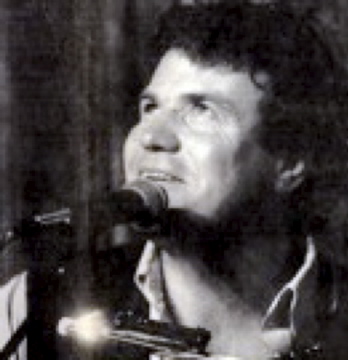
On the Green, in Concord, MA Every Thursday Night for over thirty years…
“A Song Singing, Word Slinging, Story Swapping, Ballad Mongering, Folksinger, Teacher, & Poet…”
Fitz’s Recordings
& Writings

Songs, poems, essays, reflections and ramblings of a folksinger, traveler, teacher, poet and thinker…
Download for free from the iTunes Bookstore
“A Master of Folk…”
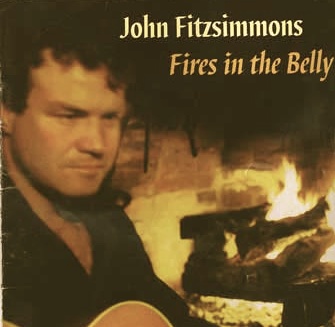
Fitz’s now classic recording of original songs and poetry…
Download from the iTunes Music Store
“A Masterful weaver of song whose deep, resonant voice rivals the best of his genre…”
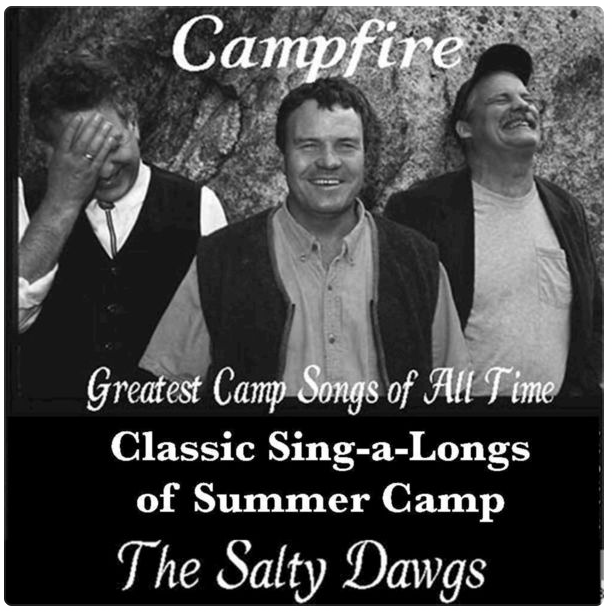
“2003: Best Children’s Music Recording of the Year…”
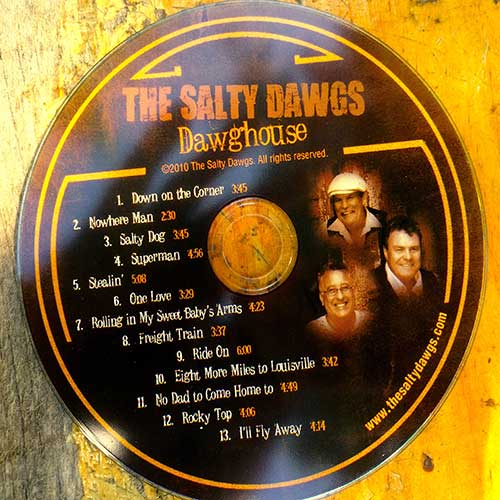
Fitz & The Salty Dawgs Amazing music, good times and good friends…
TheCraftedWord.org

Writing help
when you need it…
2 Comments
-
Terry Sanders on June 16, 2024 at 8:55 PM
While watching Season 3 Episode 19 of Gunsmoke Doc sang the lyrics “Cape Cod girls don’t have no combs. They comb their hair with codfish bones”. I googled to see if it was a real song and found this site. I was wondering when it was written.
-
james hoffman on June 18, 2026 at 4:13 PM
folk singer patrick sky did the tune on his self titled album in the early 69s


Submit a Comment
More Links…
- You’ll never go wrong checking out Mudcat.org
Performances, Workshops,
Resources & Recordings
The American Folk Experience is dedicated to collecting and curating the most enduring songs from our musical heritage. Every performance and workshop is a celebration and exploration of the timeless songs and stories that have shaped and formed the musical history of America. John Fitzsimmons has been singing and performing these gems of the past for the past forty years, and he brings a folksy warmth, humor and massive repertoire of songs to any occasion.
Festivals & Celebrations
Coffeehouses
School Assemblies
Library Presentations
Songwriting Workshops
Artist in Residence
House Concerts
Pub Singing
Irish & Celtic Performances
Poetry Readings
Campfires
Music Lessons
Senior Centers
Voiceovers & Recording
““Beneath the friendly charisma is the heart of a purist gently leading us from the songs of our lives to the timeless traditional songs he knows so well…”
Join Fitz
at The Colonial Inn
“The Nobel Laureate of New England Pub Music…”
On the Green, in Concord, MA
Every Thursday Night
for over thirty years…
“A Song Singing, Word Slinging, Story Swapping,
Ballad Mongering, Folksinger, Teacher, & Poet…”
Contact Fitz!
Fitz’s Recordings
& Writings
Songs, poems, essays, reflections and ramblings of a folksinger, traveler, teacher, poet and thinker…
Download for free from the iTunes Bookstore
“A Master of Folk…”
Fitz’s now classic recording of original songs and poetry…
Download from the iTunes Music Store
“A Masterful weaver of song whose deep, resonant voice rivals the best of his genre…”
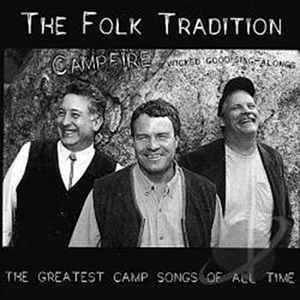
Campfire: The Greatest Camp Songs of all Time
“2003: Best Children’s Music Recording of the Year…”
Fitz & The Salty Dawgs
Amazing music, good times and good friends…
TheCraftedWord.org
Writing help
when you need it…
“When the eyes rest on the soul…that’s Fitzy…”
While watching Season 3 Episode 19 of Gunsmoke Doc sang the lyrics “Cape Cod girls don’t have no combs. They comb their hair with codfish bones”. I googled to see if it was a real song and found this site. I was wondering when it was written.
folk singer patrick sky did the tune on his self titled album in the early 69s