by Fitz | Mar 18, 2016 | Essays, Journal
I wonder why Trump is not flipping me out? I wonder if there is some bigoted, ignorant and right-wing element that lurks inside this folk-singing, poem writing, neo-socialist shell of mine.
Maybe it is not that hard for me to make the empathetic reach to feel at least some of the heartbeat of angst, alienation, and pissed-offedness of a broader than we think sub-segment of society that is—or at least feels it is— being intellectually belittled by the righteous arrogance and condemnations of people who know better, who are not white trash racists and who occupy a moral high ground that they preach from with smug self-aggrandizement.
Yes! Trump is a horrible choice for president. He is, to my mind at least, a pompous, opportunistic ass who is rife with contradictions and simplistic approaches to befuddling issues, BUT there is no denying he is also a populist voice who provides an outlet—and now a platform—for those who don’t feel represented by the political establishments (left and right) or the omnipresent media and who don’t feel heard in this present moiled and muddied times.
We will not win over the votes of “Trump Nation” by a constant drumbeat of belittling diatribes that only serve to fortify the “wall” they are building around themselves. All of us are prey to misguided ideologies, and I am convinced that Trump’s ideology is especially misguided, even dangerous, but in the end, we are an amazing country of many voices, many points of view and a thoughtfulness that is often astounding. We are, however, sorry listeners whose first instinct is to tribalize into competing factions.
There is no reason to panic. Trump is not going to derail our nation, even if he wins the nomination or even if he wins the presidency. Life, democracy and our nation will move ahead, and perhaps even be better and stronger for it. This a time for dialogue with each other—and dialogue needs ears that hear, and hearts that feel and try to understand, not simply mouths that roar.
This is an opportunity for the greatness of democracy to act in an enlightened, passionate and compassionate way and to look at our own personal flaws and biases as deeply as we look at those of our perceived enemies , who are, in reality our brothers and sisters—a family joined at the hips in this noble experiment that is America.
And we should never turn our backs to family…
by Fitz | Dec 25, 2015 | Essays, Journal
I am not sure what Christmas really is anymore. I am almost afraid to think of what Christians are going through in the lands of the original Christian faith. By dint of place and time, I grew up in the Catholic faith, and try as I might, I can’t ever escape the roots of my Christian faith—though I am never absolutely convinced it is faith. It is, however, my means to a more spiritual life. I cannot kneel down in a church and not feel humbled by my “humanness.” It is the only place where I am completely contrite and real and searching.
I would love for more certainty. I would love for my faith to rule out all others, if only to be sure of my way through the Skyllian straits of life where every decision is based on uncertainty. I live within the weakness and greyer shades of heart and intellect mixed with an enduring hope that God works beyond the limits of my understanding—for what I know is always overshadowed by what I do not know. It is my restless soul– a battle that does not rage, but simmers beneath my surface, and what simmers is an overflowing broth of searching and acceptance.
A true God could expect nothing less.
My kids—all seven of them—gathered on couches and chairs around the TV last night and watched “Elf” together. I stood (yes, stood) watching them sprawled amongst each other laughing and simply being the family they are and was astonished that they are the fruit of mine and Denise’s creation. I did not need a re-reading of Genesis or a prayerful recollection of the Gospel of Mathew to know that we are more than bits of atoms and amino acids. I did not need anything more than the tears that streamed out of the depth of a magnificent and overwhelming grace and gratitude to accept the paradigm of a continued rebirthing of life and purpose.
The paltry presents under our tree are simply seeds—reminders of an enduring commitment to what we started as a family some twenty or more years ago, a nano second and molecule of time, that makes everything—everything!—as real and palpable as faith can be. It is our faith, in all of its myopic and blessed beauty! It is not a refutation of other faiths or a stubborn clinging to tradition; it is just who we are and what we aspire to be embedded in the culture of our lives—an instrument of God playing out a unique and enduring song that we sing with whomever is close at hand, regardless of the chorus we sing with. It is our collective soul that sings and rings of possibility—and within that myriad of possibilities are those chances we can’t afford to let slip by.
But they do slip by.
The animosity of righteousness blurs the boundary of our universal human decency, and so the quest to be right overrules the common sense of enlightened acceptance of differences. Here it is a fairly benign bigotry and self-centric claims of higher understanding above a more common ignorance—though it seldom really is. In the Holy land it is a bitter dogfight won or lost in brutality, subjugation and indifference to the human cost. We drop bombs and calculate in the cruel calculus of war what is acceptable loss. The warring factions in the Middle East brings a closer look at an equal depravity that seemingly knows no bounds.
Watching “Elf,” a Hollywood movie by any measure, I was struck by the ending. Nothing survives without a common song sung in common spirit and a belief in the unbelievable. The “reality” of Santa Claus in our home is never a point of discussion. There is no finite point of belief or disbelief. There is no age for our children that demarcates the real from the unreal. Santa is not a bringer of toys. He is the clarion song of reason in a world that is losing its reason. In the panoply of faith, Santa is an adjunct of Christian faith enacted in an enduring way, and while manipulated, distorted and blasphemed by commercialism, he still retains a power that we cling to because we have to believe and any diminishing of that faith diminishes the promise of a humane humanity.
Perhaps Santa is showing us that the giving of gifts supersedes the receiving of gifts, and all any of us can do is to give what we are able to give, and the larger that circle of giving, the larger the effect on the world. There is no true resolution in the dropping of bombs, the massacres of people of a particular faith or self-styled recitations of myopic arrogance. Herds of people are culled from the planet by the innocuous circumstances of fate.
Christmas is an action more than a belief. It is not just some enduring tradition perpetuated by ignorance. It is a stoppage in time, a resetting of the clock to a more infinite time, one that only God seems to understand, and if we don’t stop, the current reality will not stop and the tailspins of history will spiral in devolution and degradation in a return to a baseness that deflates and kills the promise of free will, which, in the end, is all we really have.
If you do not believe in Christmas, at least believe in the promise.
It is a reasonable start…
by Fitz | Dec 17, 2015 | Essays, Journal
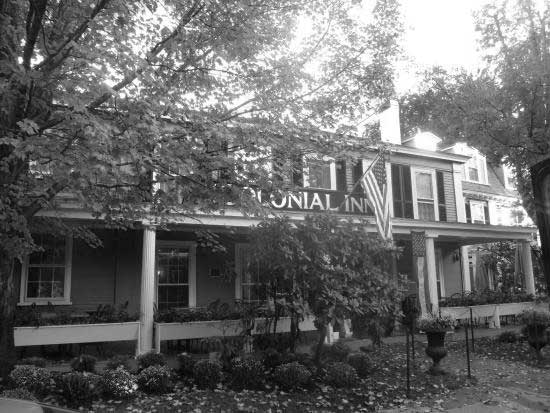
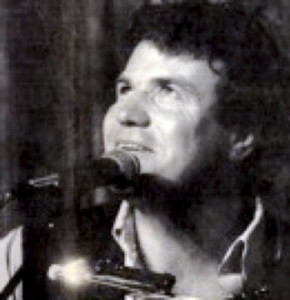 I realized that in all my years of writing and journal keeping, I seldom, if ever, write about “The Inn,” which is and has been, the biggest and most enduring constant in my life for the past thirty plus years. Every Thursday night I load up my car, truck, bus or whatever I happen to be driving at the time with my guitar, amps and broken-down paraphernalia of a small-potato folksinger, and I head to The Colonial Inn in Concord MA and take up my stool in the corner of the Village Forge Pub, and I start to sing–sometimes non-stop for several hours and sometimes with long and friendly breaks thrown in to meet up with old friends or let someone else on stage–almost always some musician with better chops than mine. I can honestly say that have never had a bad night. I’ve had tough nights with indifferent crowds, no crowds or loud crowds, but something always happens to “redeem the night,” and I never drive home feeling eternity has in any sense been wounded by the night.
It is that redemption that gives me the energy, no matter what my energy really is. Music does not soothe the soul–it energizes life and gives a deeper substance that is as real as any seed planted in a welcome soil.
That soil is you, whoever “you” are.
You might be an old high school buddy who laughs and wonders when the hell I ever started playing guitar. You might be some snowbound or life-bound traveler spending a night at the inn. You might be a business- man or woman pouring over spreadsheets in the corner. You might be a friend or group of friends celebrating life or mourning a death or just reconnecting. You might be a lonely drunk or a bitter drunk or just a drunk searching for a better elixir to get you through the life you have or have created. You might be a family out for a burger and chicken fingers and a round of sodas. You might be my wife Denise who sees and senses and knows everything that is me. You might be one of my kids getting on stage to give the old man a break, or one of my students finally getting the courage to sing to a crowd. You might be the bartender: Joe, Subhas, Leslie, Garret, Nick or Patti and my only crowd.
In every case “you” make “me” possible. And, for the most part, I have stopped arguing with myself, and maybe that is why people keep coming by.
Some years ago a reporter from The Boston Globe asked me what I like to sing, and in a moment of profundity, I responded, “Anything that I know that someone wants to hear.” I have butchered many a song on stage, not because I do not know the song, but because I want to know the song; I want to give it a try, and I learned long ago that if I only sing what I know well, I would have a very short set-list. I’ve learned in the magical process of learning, butchering and relearning that my sets are a constantly evolving paradigm–a flow that emerges in a new way in each moment. Each night is a new night and a new way of seeing the world in front of me. I am blessed by the solipsism of a small bar in my hometown of Concord. It is, for those few hours, my universe, and I am pulled by the gravity of tradition to just keep singing.
Everything simply falls in place.
When I started back in the winter of 1983, I had dreams that this was only a beginning–a way to lay a foundation beneath a singer/songwriter destined for some broader fame. Now I am happy to settle for a larger fame, one that my youth could never dream. Tonight my stage will be as large as it ever was or needs to be. Seth and Hatrack might show–two of my oldest and best friends–and we will settle in with me in a crowded corner. Tom Sheppard might come by with his big bass. Keith might lug in his drum kit. You might even be there.
We will meet new people. We’ll sing and laugh and play and experiment and never imagine defaming the night with a list of songs. The true and palpable magic just happens.
It is a damn fine universe, and all I really need.
by Fitz | Dec 13, 2015 | Essays, Journal
I woke up today with chores on my mind. My buddy Josh LoPresti lent me his woodsplitter, and I had dreams of a mindless day splitting wood and heaving it into a pile for my kids to stack along the fence. But the dryer was broken, and it needed to be fixed. Margret’s brakes were completely shot and needed to be replaced–something EJ is good at tackling with his inimitable genius. Still, I kept my woodsplitting dream alive. I went out and realized I should move the dry wood to the porch and so loaded two truckloads and heaved them in a pile on the back deck and finally got cracking with the splitter.
About five logs into my joy EJ walked out back and said the bolts on the rotor were nigh about impossible to loosen, so I drove to Tom Cumming’s house for some advice and a bigger wrench–one that would give us some better leverage on the bolt. Tom does not know the word “no” or the phrase “it can’t be done.”
Still, it wouldn’t budge. But then Rex stopped by and convinced me not to try and put a cord on the dryer Billy Cooper donated to me yesterday–as good as that dryer was. “We can fix the one you have–but first, let’s get those bolts off.”
“Not to worry, Rex,” I told him. “I can always call Sal Angelone and Andy Bloch just sent me a novel-length description of what to do, and if I looked perplexed enough, my neighbor Tom will mosey over and probably do it for me…and if worse comes to worse, I’ll call Sal–the master of all things mechanical.”
Rex’s solution, arrived at after a slew of colorful language that had EJ and I smiling, was to simply turn the steering wheel so that the wrench handle would be outside the wheel well, and damn him, the extra purchase gave us the leverage we needed.
Then Rex tackled the dryer–a dryer that cost way too much and was only a year and a half old–six months past its warranty from Home Depot. More colorful language mixed in with “It is the f…ing motor, something is stuck in there!” Sure enough, after taking the whole dryer apart (held together by a myriad slew of screws, there was a pencil stuck in the fan.” We put it all back together, tested it and it worked like a charm.
But…when I went to reattach the cord, I dropped a screw that sets the wire to a terminal–a very small screw that simply “disappeared” on us. We combed the ground everywhere for close to an hour…nothing, nowhere. We could not find the screw for the life of us, and so the pile of laundry would keep piling as no store in town or out of town had that stupid little terminal screw.
Rex went home. Denise was bummed as laundry was her project of the day, and with her indefatigable energy and resolve was all set for a longer trip to Home Depot for a final last ditch attempt at screw-buying. Right as she was leaving I offered a $5.00 reward to any of my children who could find the screw.
Money is a wonderful motivator. There was a scramble of kids headed to the basement.
Margaret found it within two minutes, more or less hiding in plain sight. The dryer was fixed. EJ replaced the brakes. The other kids stacked all the wood on the porch, and now I am out back on the oh so neat back deck smoking a cigar, sipping tea while sitting between neatly stacked wood–enough I promised them to get us through to March, when we can tackle the other pile if needed.
The unsplit wood is still unsplit. I have no doubt that Josh will grant me a few more days. The splitter is covered for the night. The kids are sprawled on couches. There are hot dogs still to be grilled.
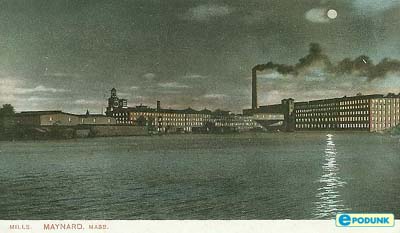
I woke up feeling blessed that I had the time and place and wherewithal to do the daily chores of life, but more so feeling blessed to live in this tiny town of Maynard where people seem to find the time to help each other in small and magnanimous ways–where philanthropy is an action of everyday life, not a pillar or plaque set in some museum or school hallway.
This is where I live.
I am glad to be here.
by Fitz | Nov 19, 2015 | Essays, Journal, Teaching
Not many more nights like this, warm enough to sit outside on the back porch. The kids and Denise long asleep. Usually, during the school year, this is my “time” to catch up on schoolwork–grading, posting the assignments for the week and playing the general catchup game that is the reality for most teachers. I think…
I consider myself a good teacher. I certainly love what I do and what I teach. My school is extremely supportive of “most” everything I do, and it has the resources to help me do what I want to do in class. If I ever feel any angst, it is in the fact that I teach at a wealthy private school that strives to be in touch, but we are not in so many ways. We are working on increasing our diversity; we recognise the various traditions of a myriad of cultures; we teach good moral values; we demand decency and respect in all circumstances, and our pedagogy and curriculum is enlightening, empowering and prepares kids well for…
And that is where my questioning of myself begins. As much as I want to think that I prepare my students for “life,” I fear that in most cases their very access to a privileged lifestyle is all they really need to succeed. I look at my own kids–all doing very well at what they do. I have four in public high school, one in a public college and another who graduated from a public college, and one, Tommy, a 7th grader at my school, but it has always nagged on me that I could not give them what is common practice with my own students who take private music lessons, who hire tutors at any turn or bump in the road, who travel the world and give presentations on safaris they have been on, or service projects to remote villages, or who simply and unaffectedly talk about second homes on the Vineyard, or Nantucket, or St. John–or ski houses in Vermont, Maine and New Hampshire. They are good kids and not bratty, self important of in any way unkind.
We honor diversity in a staggering way, yet our hands are never dirtied by true diversity. There are no girls. No children with severe handicaps or special needs. We struggle to find the right fit for black and Latino students to bus out of Boston to our wealthy suburban town.
They are simply wealthy and their options in life are blessed and informed by a quiet acceptance of this blessing. Most of us wish we were more wealthy than we are, so perhaps we are in no way better–just unlucky that the fate of our lineage began some mill town or any hard-scrabble homestead around the world.
So I teach, and I sing, and I give lessons and tutor, build things, dig gardens and write and somehow I help create a pretty good life for my family. The irony is that I am always leaving them to give to other kids what I wish they could have.
And I help create a better life for my students. I hope. But it is just strange to me that my life is so far removed from the lives of those I teach. Maybe that is why I demand my students find the enduring universal themes in literature, if only to help them see that they are not special–that no one is special, and we are all inextricably linked by a common DNA of humanity. I entice them with stories of my academic failures, my reckless odyssey through life. I share my poetry and my songs as if it is the only gift I can “really” give them.
Perhaps they will only remember me for teaching them comma rules or how to whittle a bird out of a scrap of pine.
by Fitz | Nov 14, 2015 | Essays, Journal
It is a sad day for humanity. Another sad day on top of many others happening every day–many in places we hear about only obliquley and sometimes not at all. Paris is that much closer to home for most of us here and in Europe, but freedom and tolerance has to survive. Moral values have to be practiced and lived and embraced even more fully–quietly and humbly, not only in outrage.
Our greatest revenge is to constantly move forward, to grieve openly. A flurry of bombs wrought on ISIS will feel justified, but it is, as Thoreau wrote, “A thousand striking at the branches of evil to one striking at the root.” I admit that I don’t know exactly what the root is, but I know that the evil of collective thought springs from a selfish and righteous ignorance.
We are–or should be–the collective billions of humanity who give a damn about each other and who live in common with each other, but it seems like we react more than we act. We do not sense the power of our commanality. My day has been spent raking leaves, cutting wood and fixing a hot water heater. I will sing tonight at the inn the same as I have for thousands of nights before.
I have to feel that how I live is sustainable and real and imbued with purpose.
What more can I or we do? I ask that sincerely…