Make Something out of Something

It’s hard to make chicken salad out of chicken manure

Picture

     Dirty hands are a good sign, so hopefully, you got some mental mud on your hands and created some content to work with today.  To a starving man, any food is good food–unless it is pure manure. It is the same with poetry: if you have thoughts, ideas, directions, images and actions–really anything that implies “content”–you are a good part of the way towards making a poem out of a hash of words .

It may well be that you poem evolves away from your original intent, but that is a natural part of the creative process, but first you have to make sense of either the mess you created–or you have to make poetry out of dull and flavorless sentences. Either way it is the work of a poet–so, as much as possible, live as a poet.  

I live in the world of real images and actions because I know that a series of images and actions creates an actual physical response in a reader as the brain renders those images using the motor or more primal functions of the brain.  It is my job  as a poet to force my readers to then have “think” about what those images and actions now mean, and so a “higher” function of the brain is brought into play, as in this short poem I wrote about a husband dealing with the loss of his wife in the 9/11  tragedy:

9/11/04

It is so quiet still
three years on,
wondering why
he didn’t hold her
 longer,
knowing
 one more kiss,
one more sip of coffee;
one more search
for the missing bookbag,
would have kept her
from rushing
to the train.

In this poem it is my title that sets the scene, which is followed by a few images and actions–and then a simple, but I think effective twist, that expresses regret at what happened, but that also hints that if only he had showed more love  his wife would have missed the train that carried her to her death.

My main point here is that images and actions can be the foundation of any good poem, and if you are stuck and in a “poetic rut,” you can climb out by immersing yourself in recreating a scene using images and actions–nouns and verbs–to describe a situation.

And then all you gots to do is add a twist that makes it little more out the something that came before it.


Doing What Needs To Be Done

The rain falls;
The grass grows:
Nothing is done.
Nothing is left undone
~Buddha


Picture

      Sometimes you just do what you got to do, and that never changes from the first time you take out the trash as a kid until the time in life where you are taking care of little chores in your retirement home somewhere–hopefully somewhere warm:) Attending to the small and large chores of life is part and parcel of being human. Sometimes those chores are self-serving; sometimes they serve some community/family you are a part of, and sometimes they are just “things” that you do because no one else seems interested in taking care of that chore; but, in all cases a chore, by its very meaning, implies doing something you might rather no do…but you do it anyways. We all have chores to take care of. How you approach those chores says a lot about your depth of character, and as much as any other quality you have determines your future success in life.
 
You might be thinking, ‘O, man, I’m in trouble because I hate chores and expend more time and effort avoiding them than it would take in simply doing them,’ but luckily that’s a natural response of adolescence; however, it is a horribly bad habit to continue as a youth–and downright irresponsible as an adult–if only because as an adult “you should know better.” By the time you are an adult you will have seen and experienced the downside of neglecting chores, which is probably why most of us parents can be pretty obnoxious when it comes to making our kids do what they should and need to do. When I was a kid Saturday morning was always our time for chores–and it was time for chores for any friend of mine that happened to come by our house, and for some reason, I remember a lot of friends showing up to help with our chores. Maybe because they liked hearing my father call me lame-brained or aknuckle-head whenever I did something less than perfect, or maybe (and I like to think this is true) it was because there was a certain nobility  around how the Fitz’s did their chores. Chores were never a point of discussion; chores were more a ritual that kept our little slice of heaven on the corner of Longfellow and Paul Revere Roads a place where everything important to the neighborhood seemed to happen with an uncanny consistency and longevity.

So, perhaps this morning you are putting off your chores, and in a way I am doing the same. When I should be compiling your grades and writing comments to your parents summarizing your efforts this past winter, I am penning my own words–perhaps to make sense of this chore I need to do because, to be honest, I don’t really want to spend the six hours or so it takes to get through my four classes, but it is what needs to be done. In the same way, there are probably a few chores you can attend to today or tomorrow. When Buddha said, “Nothing is done; nothing is left undone,” he wasn’t advising us to do nothing; he was just pointing out that when the rain falls, the grass grows.  

Like the rain, today magically appears. 

At the end of the day, what will you have done?


A Perfect Mirror

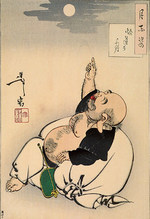
Do not mistake the finger pointing at the moon for the moon itself
~Buddha

Picture

Last night you were so lucky. You didn’t have to worry about your grumpy, tired teacher going through hours of journals ands doling out poor grades for what I am sure qualifies for good efforts by all of you. For every brief gust of frustration, there was an equal and mitigating breeze that kept my sails in trim and my mood as calm and beautiful as the moon in the night sky.  Sometimes I hoped for more. Sometimes I smiled at my good fortune to have such awesome students, and I always had hope that the next post, the next journal, the next page in someone’s portfolio would show a perfect mirror in a perfect sky.  And because you embraced the moment and at least tried to be “reflective,” your grades were pretty perfect, too.
 

(more…)

The Most Unoriginal Teacher

Picture

Yes, that’s me. I am a fraudster, thief, and plagiarizer of the worst magnitude. I copy the very styles of classic poets; I steal from Noble Laureate novelists, and I copy words from every and any source I can. And even worse, I steal from myself. If you even dare to look at my journal entries from last week, there is such an uncanny similarity between all of them that I fear my secret is out: I am not an original anything. I am a shameless, old shop teacher using borrowed tools and stolen wood to make a bunch of fairly sturdy sea-chests and boxes–and they are only sturdy because I stole the plans from Captains Bligh, Hook and other Pirates of the Caribbean, and they hold treasure enough that I can still pass as a writer, at least amongst the uniformed and dim-witted.
 

(more…)

Presenting…

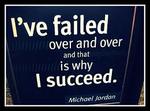
“Anything worth succeeding in, is worth failing in.”
~by Edison?

Picture

      A contractor friend showed up at my house a few weeks ago just after I finished making the hearth and installing my new wood/coal stove. He complimented me on how “awesome” it looked. I then lamented that though it looked great, the reality was that it was built  on a series of mistakes that I had to keep fixing and working around. With a working man’s wisdom he replied, “If you don’t do anything, you’ll never make any mistakes.” It took me a while to realize that he was complimenting me because I was a doer of things. At least I tried and mucked through to complete something worth doing instead of not doing anything at all.

That’s a little bit like presenting your WW Fenn. Some of you gifted with great recall will present a flawless version of your poem or passage. Some of you who have recited your piece many times over with nary a stumble in your room, in the car on the way to school, or even just before you get on stage–but will blank out, stumble, and stammer through those same words you thought you knew and knew by heart twenty times already–only to have those same words fail you in the heat of the moment.

…but though the words may fail you, you have not failed. The only way you could possibly fail is not to try to succeed, and from what I have seen so far almost all of you are trying to succeed, and in the end that is all that really matters, for in the end I always hear Thoreau’s words ringing in my head: “Do not measure a man by what he is, but by what he aspires to be.”

Always be able to say, “At least I tried…”

You Are All a Bunch of Punks

Poetry without form is like tennis without a net.
~Robert Frost

Picture

      Free verse poetry is not, as many assume, poetry without rules. It is a measured and thoughtful crafting of an idea into lines, spaces, and breaks intentionally and willfully crafted to heighten and condense the power of the words into something that can only be called poetry–and with all due respect to Robert Frost, you can play tennis without a net if you are disciplined enough to create a net that only you and your reader can see and feel. Free verse poetry does free the poet from the “trappings” of convention, but it also should bind a true poet to an oath to seek the absolute truth of an individual poet’s vision of what is and what is not poetry.

(more…)