I am not done with God, nor God with me. I remain obsessed with the notion of the unmoved mover who set the pattern of creation into its initial motion. I stubbornly try to trace my existence back to some infinite beginning—so much so that I loathe the deficiencies and inconsistencies of my intellect, which in the end I always cast aside, for I can’t help but fall into a wondrous rapture before the miracle of life and the turnings and meanderings of my heart and soul and mind and being.
We are trapped in time and limited by its confines, and so my search is hobbled by the simple handicap of being alive, but while I struggle with faith, I am in awe of any true search for explanations amidst the inexplicable. I know that my God is embraced, denied, manufactured and packaged in the fickle streams of my thoughts, which is why and how I distrust the leanings of my head—for as the tree leans, the tree falls. All I can do is dig among the inexorable to discern what is ineffably and eternally real, amidst what is imagined by sensed vision and construed logic from undeniable fact.
As I write this, a monstrous nor’easter is screaming over Cape Cod with snow and wind tearing at the fabric of trees, beaches, waters and the very air itself with a persistent and insistent voice calling attention to itself–and to me—to live within the storm and within the cloud of unknowing. I know there is nothing to know, nothing to parse with words, and nothing to gain from argument and sophistry. God can only be the truth without truth, the reality without substance, the nameless name before the gaping maw of the universe.
I trust that God moves within our noblest actions and equally within the baseness of our greatest transgressions. Out of this stew of the holy mixing with the unholy, grace can be distilled to feed and guide and sustain us through the daunting, heroic odyssey that is our lives. We need to remove ourselves from ourselves, to consciously and deliberately extricate our tangled limbs from the muddy morass that binds us to ignorance, defeat, and despair–to help us move forward into the blinding miracle of life even as we are strapped and clasped to its binding chains.
We are born to live. Death does not set us free. Life sets us free; so that we can die free—with some semblance of palpable holiness clinging to our bones in spite of whatever vagaries besets our lives. Faith, in the end, is the proverbial beggar’s banquet—the promise of a feast that never seems to make it to the table.
Still,I wait, brood, celebrate and live this wild arc of existence within an endless prayer. Gravity tells me I am not in heaven.
Sometimes I start writing without knowing where I stand—unsure of even where I stand. I have to trust some innate wisdom or audacity will cull through the bullshit we are all heir to in what Hamlet laments is “this earthly coil” we are forced to face when we wake each morning. For better, worse and everything in between, America is divided economically, culturally, politically, spiritually and regionally—especially the regional gaps between rural and non-rural places, the right and left and, most jarring, the constant denunciations, pronouncements and exhortations surrounding guns…
I have to start off saying (with angst and trepidation) that I do like guns in some old-fashioned romantic way, though I have never actually owned one. For several years I had use of an old Hawkins 45 black-powder gun a friend “stored” at my cabin, a one room log cabin nestled in the woods where I lived for the better part of some ten years. I used it mostly to blast apart—or at least try to blast apart—paper targets with lead balls I made myself in a crude forge. I hit that target just once. It was on one icy morning when I slipped on a slick of ice, threw the Hawkins in the air and ducked my head as the hair trigger went off. It was the only time I hit the target—and the last time I shot that Hawkins. Another time I rowed a jonboat for a friend while he was duck hunting on the Concord River. He let me take a shot. In my blithe ignorance I didn’t shoulder the shotgun correctly and the recoil sent the butt into my face, smashing into my jaw and teeth, leaving a bloody mess mixing with oily water in the bilge—and my satisfied and bemused friend, Christian Bilodeau, laughing his ass off.
These are the only times I remember shooting a gun of any sort, yet I have always appreciated and even envied folks with shotguns, muskets or classic rifles. I used to carve duck decoys and sold more than a few to bird hunters. I envied, too, their stories of hunting in remote marshes, wild patches of grassland and overgrown thickets. While I lived in my cabin, friends would stop by on a regular basis to hunt deer in the massive track of woodland I lived in. If they got a kill, which they often did, I’d sit and watch and gam as they hung the deer from a lodgepole behind the cabin and gutted them, skinned them and carved out the meat, a bit of which always went to me. For several years I tried my hand at bow-hunting, but I never got a shot off. Hunting, I guess, was never so deep in my bones as it was for so many of my friends.
I’m getting a bit old to take up hunting now, and frankly, I don’t have the desire, but I get that hunting is powerful stuff for a lot of people, and it is deeply embedded in their lifestyles, psyche and social culture—and I don’t think I will ever have a problem with that; nor do I have a problem with shooting for fun or competition. My high school had a rifle team, and for years the camp I worked at had a range for campers to learn to shoot rifles. For many kids it was the best part of camp. A close second was archery, followed by fishing. It makes me think that there has to be some DNA strands in us—especially men—that compel us to hunt, and the tools that help us hunt are as coveted as any other tool that helps us be men—some semblance of the great provider we want to be—or should be. Sadly or not, I think that strand is getting bred out of us. It is not as manly as it once was, and it is being supplanted by a different intelligence. Our hunting ground is now the marketplace; our worth is measured in how much income we generate, and we are most attractive by how well we might support a family, be a father, love our wives and children, and do things and fix things that help the family survive and thrive in the predictable flow of our urban and suburban lives.
Guns and hunting just don’t fit as naturally and needfully in this new paradigm. Rural America is different, and, when there, us soft-skinned machines of commerce are often clueless, gutless ghosts walking absurdly down main streets that are strange, alien and unforgiving to us. There is no comfort zone, no place to celebrate ourselves. We need our supposed good schools, competitive soccer leagues and country clubs to feel at home. We need cars that run, planes that fly us to vacations, and homes and apartments near coffee-shops, malls and health clubs.
We don’t need rural America.
And they don’t want us.
Theirs is a land and culture that is not our own. It is an earthy culture that treasures and clings to its traditions more than we do in the cities and suburbs. They work harder for less pay. Their schools get by on shoestrings and pride. Their factories, mines and farms have been shuttered, bankrupted or off-shored. There is little palpable to show that we care about them at all. We have taken so much from them already, trivialized their lives and condemned their thinking.
And now we want their guns.
What we see as common sense, safety and enlightenment, they see as encroachment, assimilation and blind bigotry. We treat them like antiquated idiots; we ridicule their politics, and we demean them from every stage we can find. Our liberal mindset is showered on them from the fiery pulpits of our almost religious fervor and superiority. We don’t engage in dialogue as much as we shame and name and vilify. They sense the trap, and they will not take the bait; they will not charge into the valley of death and the ensured destruction of their lives and way of life. If they go to church, they are labeled as backward zealots. If they vote republican, we call them rightwing fanatics.
But we never try to really know them.
“If only they could be what we want them to be, we could move forward together…”
But it is we, the pompous, sanctimonious we, who must change, if it is really change we are seeking. By keeping the divide between us, we will never meet on common ground—and our country is, if you are truly American, our unflinching common ground.
And yes, they too must change. They can’t simply hunker down and weather the storm in an insular jacket of stoic pride and a tenuous code of honor. They can’t broad stroke us liberal dandies as swatches of smugness. The horror of the recent carnages is a shared horror, and it is equally sorrowful, reprehensible and incomprehensible across every physical, spiritual and economic boundary in America. In some weird distortion of reality, guns that hunt humans are sold legally and prolifically in the most common and cavalier ways in stores where we buy car batteries, clothes and lawn chairs. These mercenaries of mass murder are sold and marketed in ways that have little to do with the tradition of hunting, bundled in slogans of freedom and constitutional rights—rights I always assumed I was willing to die for to protect.
Gun violence is, I know, rooted in soil that is far from the grounds of hunting or any rural/non-rural bridge, but it is tentacled to the easy access of guns—all guns: why we have them, how we use them and how broadly we accept them as inalienable rights. It is born, bred, compounded and sustained by the pathologies of mental illness, poverty, criminal intent, gangs and a stubborn obstinance to any kind of meaningful regulation, all stuff that crosses every boundary—real or imagined—in America; and the solutions are as vexing as the problem itself. My feeble intellect is no match for that struggle. I can only express thoughts; I can’t expound upon or analyze the sociology or statistics in any cogent way, but I do know that our only way out is through this stormy sea of conflict, something which will never happen in a country of polarizations; it will never happen unless we realize and embrace our common ground as Americans; it will never happen by shouting at each other.
But something can happen; something needs to happen, and that needs to happen in the heart—the singular hearts of noble citizens—not in fixed ideologies of the head, and not in the easy embrace of party lines, this is the essential plea of this rambling, long-winded reflection.
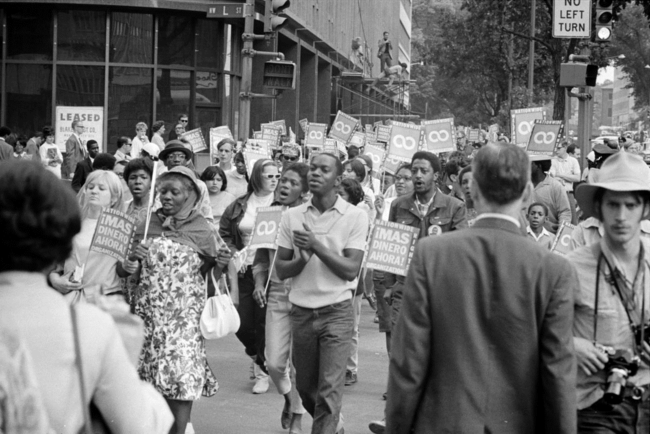
I am not writing this to start an argument, tolead an agenda or to piously pontificate my myopic point of view. I simply want America and Americans to search for commonality, to move toward each other if we can’t live with and for each other and to listen as intently as we speak. Instead of marching on opposite streets, I dream of a march for America that includes all Americans simply and utterly walking together: no banners, no speeches, no leaders—no agenda except walking together in spite of, and because of, our differences. And at the end of the day, we simply go home into the vast mosaics of families and communities we equally love and cherish.
And maybe, just maybe, a sliver of new light, maybe even insight, will dawn on a new and better day.
If we don’t learn from what we do, we learn little of real value. If we don’t make the time to explore, reflect and rethink our ways of doing things we will never grow, evolve and reach our greatest potential or tap into the possibilities in our lives. Writing metacognition’s is our way to explore our experiences as students and teachers, and then to honestly assess our strengths and weaknesses, to willfully and wisely reflect on what we did—and did not—do, and to rethink how to move forward in a positive and more enlightened way towards a better and more applicable and capable future.
There are many sides to every experience, so when I ask you to “explore” an experience and write a metacognition, I am not looking for a simple summary of what you did. I expect you to write like you are walking the rocky and jumbled coastline of what you just went through. Recount and relive your experience as a stream of deliberate, dreamlike consciousness. This recounting and reliving can be as scrambled and unkempt as your emotions and memories; there is no “Fitz Rubric” to follow; there are no specific“details” to the assignment—there is only you and your own heart that you can follow with your own iconoclastic bent, will and resolve. You do not have to worry about being understood by your reader. You are only trying to understand and know yourself.
When you assess, there is no way around the need for a bit of cold and reptilian critique. Looking with clear eyes upon yourself is a hell of a hard task, but it is part and parcel of a thinking person’s package. Sure enough, the assignment might be so flawed as to be undoable, but that is, I hope, fairly rare. More likely the great flaw (or the great promise) starts with you, your attitude, and your way of tackling the work. And it ends with you. Pull out a scale and a measuring tape and tally what you produced; weigh it against the scale of time you stole from your life to complete the work, and ask yourself: do you feel like saying, “Check it out,” or do you feel like sighing, “Chuck it out.” To assess is to figure that out.
Once “that” is figured out, your head should kick into full reflection mode. A reflection scours the deeper trenches for whatever insights can be culled from the briny mud of experience. Pull these thoughts and splay them on the deck as they come, for they are all gifts from the sea of the mind, and their true value can be discerned later and kept or cast as wanted or needed. There is no such thing as unwanted catch in a reflection.
If you are unwilling to rethink your actions you are, to use an old adage, condemned to repeat that action. By rethinking approaches you can retool the machine of your being, and in that sense you are continually reborn as a better you. You make sense of yourself and are now clad in a stronger armor with a shield, pike and sword better suited to turn the tide and win the day in any future battle.
Sometimes a metacognition ends up as a disjointed ramble of thoughts and feels (and maybe is) a jumbled expurgation of contradicting thoughts. But that is fine. It is what it is…. Other times, it may flow together so cleanly and fluidly that it comes out as a pure and unified essay that reeks of the nuanced wisdom and strong wine of distilled thought, which is just as fine, yet infinitely more rewarding, more refreshing, and more fit to be shared—if that is the bent of your indefatigable genius.
I am constantly asking my students (and myself) to reflect on the literature they, and I, read. As I have grown older—and not necessarily wiser—I find myself only reading literature that I am sure will prod me out of my intellectual and emotional torpor, like a lizard basking in the newfound warmth of spring. Right now it happens to be The Brothers Karamazov, a book I first read as an eighteen-year-old literary newbie. It might have been the first time I didn’t turn away from a book because of the daunting length of the text and the panoramic sweep of life it covers. It is now a completely new experience, though it still resonates with the young and restless soul that even now permeates the fibers and sinews of my aging and ageless self. That book made me think.—and forced me to think beyond and into my myopic experience of life thus far.
In short, I could not read without responding. The reflections of my mind needed an outlet, so I found myself arguing and assenting in long rambles in notebook journals or with anyone who would listen to me, argue with me and/or explore with me. In that way the novel became—and still is— a part of me. The more I wrote about what I read the more I knew the book. By knowing what I knew (and did not know). I realized that only by exploring through reflection could I answer through an essay.
Most of us have to write essays about subjects we know precious little about; hence, our essays have the taint of soured milk—still milk, but hardly worth drinking…
Our teachers mark us down for inserting the “I” voice into our writing as if “we” don’t really exist—as if there must always be proof beyond ourselves that “knows” more than we know—as if that is something we don’t already intrinsically know. To me, a good essay reeks of what we know, what we have explored and what we are seeking to know, and it is a damn pity when a teacher robs us any part of that triad.
You are only wrong when your facts are wrong, distorted by prejudice or bigotry, or so steeped in self-indulgent arrogance that your words fail to resonate with any kind of lasting ring—like a drum without a skin or a harp without a string.
You are equally wrong when you simply spin words into a song without music, or you pen words without meaning and foundation in your own heart—without the essence of the real and palpable you to speak with a clarity that helps others to see and feel and experience “your” experience.
A reflection is simply your recreation of your inner experience of experience. In reflecting we see our warts and blemishes clearly until those imperfections are diminished by the truth and sincerity of our search for meaning and substance to give voice to that search—and that search should extend beyond yourself. No doubt, if you wondered something, someone else wondered the same thing—and maybe even wrote about it.
Keep exploring until your inkwell is dry and your head is emptied.
And only then should you write your essay…
There is not a rubric for reflective thinking and writing. All I can ask is that you be aware of what you are thinking and feeling and to ask yourself why you are thinking and feeling that way. After almost any good meal, none of us really struggles to find words to express our satisfaction with the meal; likewise, if what we eat is pretty horrible, we can also readily find the words to express our dissatisfaction.
But it is never as easy with intellectual satisfaction or dissatisfaction because we are seldom as clear as to why we like or don’t like a piece of literature. Maybe it is because it is our intelligence on the line. Food is pretty straightforward. If you hate peppers, anything made with peppers is distasteful—and few people will judge you harshly; however, if you don’t like poetry…well, you are either ignorant, bigoted or stupid—or at least other more well-read people will smugly feel that way about you, even as they feign politeness.
Like birds of a feather, we gather together, ‘Cuz they’re feeling exactly like you…
~John Prine
I am not afraid of being a white minority.
I had lunch today with a Jamaican drummer, a Ugandan farmer, and a Senagalese potter. I don’t say this out of pride, for we gathered together simply because we are the old guys working in a young persons’ place. Our conversation was far from noble (unless unpretentiousness is noble) but simply eating together was an experience of nobility–a subtle reminder of what is possible. I have lived long enough and broadly enough to recognize the essential principles of goodness–‘and that has been my continuing consolation. Sappy as it sounds: we are all practically the same. But, this fear of being a minority is the core of what is powering the republican campaign. It is a profound irony for a platform that cherishes individual freedom, but it is still a stunning reality. Our 350 years or so of democratic experience has revealed both the sublimity and baseness of majority rule, so much so that I am equally fearful if either party gains the upper hand, but it does not appear that any true and noble warrior will arrive on the battlefield to save us.
So we are left to ourselves and whatever core of nobility that is within us.
As a white American, I am not immune to the angst of possibility. White America has distorted and abused the inalienable rights of minority Peoples time and time again, and if life teaches us anything, it is that the day of reckoning will always come. I remember reading one day the words of some European philosopher who wrote, “that which is not sustainable cannot continue.” These words have lingered in my consciousness for many years. Ever the optimist, I used this sentence to deny and belittle the fatalists among us: the seas will not rise; the next apocalyptic war till not happen; famines will not engulf us, and change will not destroy us because I believed in the power of collective wisdom to act before the tipping point of inevitability.
I don’t believe that anymore.
As a teacher at a pricey independent school struggling to be inclusive, I have been forced to sit through dreary and pedantic seminars about our white privilege. At the time, I despised being lectured to and admonished by pathetic apologists for my race. In my mind (or at least my previous mind) the sins of our fathers and mothers is not passed on to the sons and daughters, most of whom are belly-full of optimism and are freshly bound by enlightenment to a new paradigm of equality and justice. My whiteness is not a blemish any more than a deformed branch is a tree. It is, however, a dark and menacing shade to any non-white who lives “beneath” it. To not see this, recognize this, and not be appalled by this is to be a sub-human dirt-bag.
It is the tribalism of race that makes us racist. To ignore this is fantasy and hyperbole. Moving beyond that tribalism is a monumental task, but also a necessary journey—an odyssey—that we must make to create a pure democracy in line with the original nobility of our Constitution. For the most part, the word “racist” is obsolete. No one really knows what it means, and we throw the word around with reckless and dangerous volleys of stinging venom. Racist has become more of a root word, a prefix we attach with casual abandon for the purposes of expediency to whatever suits our point of view and whatever belittles those who oppose us. Here and now, the loose and reckless “racist” word is being thrown about with righteous smugness by the left and attached to any person who expresses an inkling of solidarity with the republican platform. Incessant derision only widens the gaping maw between people and parties, and friends and communities until the very notion of free speech becomes a pathetic and gratuitous mockery of itself. Your life–and the way in which you live your life–needs to be your first, last, greatest and most memorable statement.
There is no race that can or should be proud of their history if that history is to be looked at in its totality. We are evolving creatures at odds with our instincts. We stubbornly preserve our own in the cycle of creation and we will try to overpower anything that stops that cycle. This instinct to survive and perpetuate our own is deeply embedded through the millennia of generations and is not easily undone. It seems to be our incessant folly to deny this, so we are now entwined and paralyzed in a sluggy mud of our own making. T.S. Eliot once wrote in “The Love Song of J. Alfred Prufrock:”: “Should I, after tea and cakes and ices,/ have the strength to force the moment to its crisis?”
If you’re not blind, you will see we are at the tipping point of our crisis. We cannot have our tea and cakes and blithely go about eradicating the narrowness of our tribalist thinking. What is real is not hard to see. We are now an enmeshed world of races that needs to act–for the sake of ourselves–as a single tribe of humans–a tribe that can still remember and sing the many songs of our many races that does not mistake and reword prejudice for pride. It is not an artificial globalism; it is a reality we have to embrace and breathe into the actions of our lives. Our melodies may start out discordant, but maybe, somehow, we will at least find a common rhythm to which we can march together. It will never happen if we sing in the narrow halls and conventions of our own minds or huddled within gossiping flocks of sameness, consoled by a common and dull conformity. It will only happen if everybody is in the bigger hall together, searching and floundering for a common key in which to start singing.
And if you don’t, fate has the upper hand, and you will get what you get, and, sadly, you will be left out of the right side of the inevitable.
The doing and non-doing are the equal balance. Without the luxury of contemplation there would not be a prioritizing of need versus want.
Wisdom balances physical reality…
Wisdom does not shuffle tasks out of view but finds a way to balance the competing demands of daily action.
Wisdom creates possibility…
Wisdom creates time and opportunity, more than depletes and enervates it. Wisdom intuitively creates and gives energy to what needs to be done, what can be done, and how to get done what needs doing.
Wisdom moves with fluidity…
Tread deliberately. Move with grace and dignity. To do what needs to be done in a desperate way or at a frenetic pace is not wisdom. A wise person moves through life without displacing the world around himself or herself.
Wisdom accepts our humanity…
Wisdom does not pass judgment on oneself. Don’t be angry at your situation or yourself. This will only be like pulling the load of everything through everything that needs to be done; hence, little will actually get done.
Wisdom is rooted in prayer…
Wisdom breathes in the cloud of unknowing and seeks clarity out of the mist of what is unknown. Prayer reveals the strength that is already a part of you, built into you and is reborn through you.
Wisdom does the work of contemplation…
Wisdom gives oneself to the task at hand. It lives within itsef. Cut one board all the way through. Let one task be important and finish that task. Wisdom accepts help, but does not demand, search for, or expect it.
Wisdom keeps its distance…
If you constantly shift the soil around the seed, the seed will never sprout, nor can you will anything to mature before its time. Stand back at a greater distance and see the problem in its completeness.
Wisdom is infinitely patient…
Wisdom cannot will a tree to grow. It can only create space and time for that tree to grow and realize its true potential.
Wisdom sees illusion as illusion…
Wisdom discerns what is palpable and real from what is not real and distills facts from opinions. This is true for both the physical and the mental realities of our lives.
Wisdom does not try to escape from itself…
Wisdom embraces the struggle of the search. Wisdom does not fear the suffering, loneliness and struggle that is an inextricable part of itself.
Wisdom practices love and devotion…
Words are only real when made palpable. It is not enough to simply feel love. It must be practiced, cultivated and strengthened in actions both big and small. Learn to know who you love and why. Create some kind of real gift every day.
*I tend to make my actions too subtle to even be noticed. I will do things that double as satisfying to me; hence, they are not pure and unencumbered. A clean kitchen is good for me, too. A pile of wood split of the winter keeps me warm as well. Flowers or a card on a special day are not particularly special. I need to remove myself from the gift and make every gift of love a gleaning of selflessness. It is the common day that merits the uncommon gift.
Wisdom laughs at itself…
Wisdom embraces the folly of itself. The very act of “searching” for wisdom creates a paradox. Recognizing these paradoxes is an opportunity to laugh at and rethink the journey. Rooted in reality and the flaws in our “human-ness,” our mistakes should be embraced with a sense of humor and redirected with newly enlightened joy at our ongoing discoveries.
Wisdom sustains itself…
Wisdom regenerates itself because it lives on so little and returns so much. It does not rely on good things happening, luck or opportunity. It simply is and cannot wilt under any sun.
Wisdom maintains dignity…
Wisdom never loses faith in the importance and dignity of the self. Gandhi argued that true dignity can only be given away by us, not taken from us.
Wisdom knows what it does not know…
Lack of knowledge is never an impediment to wisdom. Wisdom knows what is parochial from what is universal and accepts the limitations of individual understanding and perspective.
Wisdom is contentedness with itself…
Wisdom lives out the dictates of itself with grace, magnanimity and a humble reserve. It is not a happiness that is shared for an external reward. It is a contentedness with ourselves that does not seek or expect the extrinsic harvest of adulation or the gratification of a higher social status. It is like grass in a field bursting forth in the rain and hunkering down in the droughts of life. Wisdom survives because it is ready for and open to the vagaries and vicissitudes of life.