
by Fitz | Aug 31, 2014 | Poetry
They are building a world
and the plastic is fading:
Margaret and Eddie’s
buckets are split,
pouring out the warm Atlantic
as they race
along the tidal flat,
filling pools connected
by frantically dug canals.
Tommy squats naked
and screams in guttural joy
at the solitary horseshoe crab
donated by a stranger
with a large belly
and a huge smile.
Charlie thrashes through the shallows
chasing crabs
and impossible minnows.
Emma is happy
to let only the wind
fill her net.
Pipo steps warily
and warns us sternly
in his broken English
to anticipate the massive toad
lurking in the undertow.
Kaleigh stands far away
toes lapped
by the edge of gravity.
She is almost a teenager.
I see her
framed in a setting sun,
stretching out her arms,
holding back
the inevitable tide.

by Fitz | Aug 28, 2014 | Essays, Journal
I loved the rain last night. Last week, in a bow to reality, I reclaimed my gardens and made them into yard. Four of my kids got poison ivy in the process and I (and more “they”) got an extra ten feet of width to add to the soccer field–for really that is about the only purpose they use the backyard: hours long games of World Cup, one on one, two on two, one on three and every other permutation possible given however many kids happen to be around.
After fifteen summers of tilling, planting weeding, and fertilizing in my gardens, I realized that I did precious little harvesting, for I am rarely home in the summer, while the rest of the family is never home–at least for the two months we spend working and going to the camp up at Windsor Mountain in New Hampshire. At the end of the summer I am left with a massive bed of weeds, brambles, and the tenacious will of my neighbor’s black cherries to invade my yard, and that is what ten hours with my tiller, hoe and rake have cured. I take a bit of pride in how well I can rake smooth a bed of loam, a practice honed in years of landscaping, farming, and gardening. I get into a zen-like zone as I search for the perfect level–but only as perfect as need be. I am not working with screened loam, so I don’t stress about every little root or stone that sticks through the soil: I simply want to grow grass, and I know it will grow well in the space I made. The soil is rich and the sun is strong.
The only problem this week has been water. As luck would have it, the big heat wave of the summer came and had me stretching a 150 foot house around the yard to keep the seeds moist–for that is all the seed really needs: a gentle bath for about ten days, not a deep soaking, but a constant tending–much like a child, but this week at least several times each day. Once the roots are in, then I let nature rule the earth and by hook or crook a decent lawn grows, and though you would probably need a PhD in botany to identify the diversity of grass and weeds in my yard, the end result is a pretty tough field in which I enjoy watching my kids grow more so than the grass.
Yesterday, Charlie was looking particularly bored, so I told him to invite a friend of his over from Concord, the rich sibling of our town of Maynard. We arranged for pickups and such and later on Charlie observed how beautiful his friend’s yard was–and it is beautiful, like a glamour magazine cover–but then he also noted in his malleable innocence that he had never “played” with his friend in that yard. As we drove away past the maze of estate, through a flotilla of landscaping services, I appreciated the rugged utility of our yard, even more so, the rugged utility of our life here.
As the school year starts, our bank account is precariously low, two engine lights are on, the porch roof is leaking, the backdoor sill needs to be replaced, and the chimney needs to be relined before I can install the wood stove, and six of my seven seem to need a new pair of something that we always seem to find second-hand, but still, I am as “happy” as a man can be, and they, too, seem as happy as kids can be–and I know now from watching Kaleigh graduate from college, find a job, and settle in to her own life without asking for a bit of help that she is as rugged as our backyard and that this life worked for her and because of her. What she didn’t get, she got. She tends to her life the same way as I needed to do with the lawn by simply focusing on what is essential, to do what needs to be done and then to embrace whatever grows from it. It is a mix of stoic wisdom, permeating love and boundless persistence from which we all can learn.
So today I do not need to play rainmaker. The skies did that for me, but still I will head out back to peer into that dark soil and see if my seeds are starting to sprout and pray and trust that this small metaphor is real and true.
by Fitz | Aug 26, 2014 | Dawghouse, Songs
Rain’s falling outside of Boston—
Thank God I’m not working tonight.
I’ve got six of my own,
And a stepdaughter at home,
And a momma keeping things right.
I wonder if they’re at the table
With their puzzles, their papers and pens?
When I get off the highway
And pull in that driveway,
Will they run to the window again?
Daddy’s home, daddy’s home, I can hear you,
Though I’m still eighteen miles away.
This old station wagon’s
Got a muffler that’s dragging,
But everything’s going my way.
Momma put your head on my shoulder;
Let me hold you tight to my heart—
You’ve had a long day at home;
You’ve been working all alone—
Everyone’s doing their part.
She says, “Kaleigh is up in her bedroom.”
But she can’t really figure out why.
I find her upstairs
In an armload of bears,
And she looks at me softly and cries,
Was I sad with no dad to come to?
Did it hurt he was so far away?
Did I sit by the phone
And wait for him to come home
Like Margaret and EJ today?
Little girl, you can cry on my shoulders,
Though I can’t really say how it feels,
But if one thing is real
It’s this love that I feel,
And it’s one thing nobody can steal.
You had Nana; you had Papa; you had Mama—
And your momma was with you all day.
With her Ram pickup truck
And a boatload of luck,
You found me and you asked me to stay.
Now you’ve got your brothers and sisters.
You’ve got a step-dad trying to write songs;
You’ve got a momma who knows
How to make that love grow
Like them summer days coming along.
So, how about tonight we go dancing
Through every store in the mall.
If the kids don’t make scenes,
We’ll have food-court cuisine,
And wind up having a ball—
And if the kids don’t make scenes,
We’ll have food-court cuisine,
And wind up having a ball.
How about tonight we go dancing….
by Fitz | Aug 25, 2014 | Journal
There is always a hard shift for me at the end of the summer, and today is that day for me. I miss the freedom of last week: I’d wake in the morning, come out to the deck to write poetry or work on my novel–but now today, I feel like I should be preparing for school, which looms around the corner next week. Wise thinking tells me to disregard my school thoughts and focus instead on the pile of wood that needs to be split, the back of the house that needs to be painted, and the yard work still unfinished.
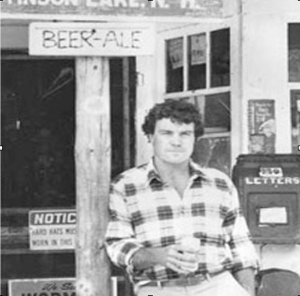
After lying dormant for a few years, I started working again on Hallow’s Lake, a short story/novella/novel that shows more and more promise to me. The idea for the story (as opposed to having a plot) is to capture the truth about a certain place in a certain place in time. There is no antagonist aside from the cruel and unrelenting vagaries of fate. The characters deal with the common struggle to forge an identity and shape their lives as best they can. The common thread in all of there lives is the voice of a narrator–a voice who simply retells the sketches and scenes from the community that lives on Hallow’s Lake–a place loosely based on Stinson Lake in New Hampshire–which was so pivotal in my life as I grew up, and even after I “grew up.” The narrator is a young man who simply helps people out and, in a sense, is simply there to record the words, actions, and interactions of the characters.
If there is any strength in the writing, I think is in the sketches of ordinary people with ordinary demons consciously and unconsciously helping each other survive in a somewhat isolated community. Nobody’s life is anywhere near perfect and in the unfolding of the scenes, I am trying to imply that each character’s life is incredibly complex, deeply emotional, and surprisingly intellectual–with the implication being that there is no such thing as a minor character in life.
My big issue is–and has been–how to wrap up a story that does not have a linear plot or a easy to recognize conflict around which to focus my readers. My most recent thought is to simply call it poem, not a story–which would solve a lot of my uneasiness surrounding how to “release” this piece. In many ways, it is similar to Dylan Thomas’s approach to writing “A Child’s Christmas in Wales,” though he at least had an abiding and enduring theme around which to hang the images, actions, and memories of a child’s Christmas–his Christmas, perhaps.
So, yes, I will put off school for at least another day…

by Fitz | Aug 24, 2014 | Journal, Poetry
At midnight I hear the cuckoo clock chiming
from it’s perch in a cluttered kitchen
locked in cadence with the tower bell
gonging this old mill town at midnight
to a deeper sleep,
like a call to prayer
reminding me that this new day,
starting in the dark of a hallowed night,
is more than just an ordinary day:
blessed by memories
stirring in palpable realness—
your soft breathing beside me
mixing with crickets and peepers
calling out into the darkness,
searching for a dream
fit to be called a true marriage—
our gift constantly opening,
revealing a mystery and a majesty
larger than the box itself—
stunning in the simplicity
of renewed, remembered,
and resplendent love.