I am sitting here in class while my students write their “daily ramble.” If I have learned anything from teaching it is that kids need the time in class to practice what is preached. As teachers we can’t assign homework and remotely know what is happening at the home where this work is supposed to be completed–which is exactly what I have been guilty of many years. “Just write.” “It will come to you.” “Go find a quiet space and just think, then write.” If there is a platitude, I will say it. I praise the children who do what I ask, and I tell the ones who don’t to just do it, as if it was as simple as taking another breath.
I am inclined to experiment and to just ask them to read for thirty minutes each night and let the “work of the writer” be practiced in class.
I am surprised sometimes
by the suddenness of November:
beauty abruptly shed
to a common nakedness—
grasses deadened
by hoarfrost,
persistent memories
of people I’ve lost.
It is left to those of us
dressed in the hard
barky skin of experience
to insist on a decorum
that rises to the greatness
of a true Thanksgiving.
This is not a game,
against a badly scheduled team,
an uneven match on an uneven pitch.
This is Life. This is Life. This is Life.
Not politely mumbled phrases,
murmured with a practiced and meticulous earnestness.
Thanksgiving was born a breech-birth,
a screaming appreciation for being alive—
for not being one of the many
who didn’t make it—
who couldn’t moil through
another hardscrabble year
on tubers and scarce fowl.
Thanksgiving is for being you.
There are no thanks without you.
You are the power of hopeful promise;
you are the balky soil turning upon itself;
you are bursting forth in your experience.
You are not the person next to you—
not an image or an expectation.
You are the infinite and eternal you—
blessed, and loved, and consoled
by the utter commonness
and community of our souls.
We cry and we’re held.
We love and we hold.
We are the harvest of God,
constantly renewed,
constantly awakened,
to a new thanksgiving.
“Classic’ – a book which people praise and don’t read.”
~Mark Twain
A note to my 8th grade class:
All of you are supposedly reading a classic book, but what Twain says is true: few of us go thirsty to the well and willingly read the greatest works of literature because…well, just because.
The dutiful among you are simply answering the call of an assignment. Some among you are skimming as much as possible to glean just enough to talk or write intelligently about the book, while the laziest among you are putting off reading as long as possible before I ask you to write something meaningful about what you are reading. And then: thank God for Sparks Notes. You might even get away with it.
But only for a while.
Life has a way of catching up with us in some karma-like way. Nobody I know willingly admits that he or she is a shallow shell of a person masquerading as a carrier of knowledge and wisdom. We need to believe that how we live is not only sustainable, but also healthy and vibrant. But how healthy can we be if our thoughts are only as wild and free as turkeys in a pen? How healthy can we be if the food of our mind is a mush of glutinous starch and sugar? Sooner or later the fat settles in, the muscle fades, and a simple walk down the street feels like an epic journey.
My hope is that whatever you are reading is both exhausting and energizing. I hope you sit down to read and forcefully pry the blinders away from your mind and open yourself to the possibility of a true and profound literary experience. I hope that you are sensing the eternal value of a transient experience. I hope that you are giving a damn and trying to figure out how and why the words you are reading are considered to be classic literature.
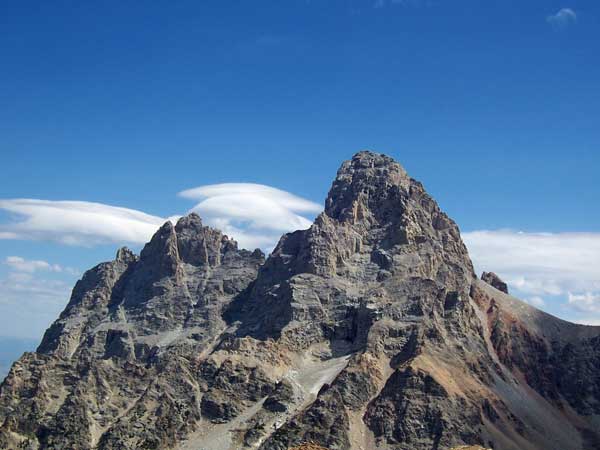
The book you are reading is considered a classic not because a coterie of fuddy-duddy English teachers have decided something is deemed to be “required” reading. What you are reading is a classic because the words, plot, and value of the book has been proved time and time again in and through the ravages of time and place. Your book is a mountaineer who has scaled some previously unscalable mountain peak.
You, too, are a mountaineer being led by your efforts to a higher peak than perhaps you have climbed before.
Good books do that. Great books do it over and over and over and over.
At this point you may be tempted to rest in a valley and be satisfied with a more narrow view. My youngest son, Tommy, is working on his 6th grade Explorer Project. His subject is George Mallory, the one who when asked why he climbed the highest mountains, simply said, “Because it’s there.” Mallory died on Mount Everest. He and his partner, Sandy Irvine were last seen in 1924 just 800 feet from the summit. Mallory’s body was found some seventy-five years later. No one knows whether they reached the summit or not.
Keep Mallory’s spirit alive. Read your classic. Keep climbing.
Maybe there is a God. I just came home and sat down in the kitchen to grade some papers and input some grades, but the internet is buggy and slow, and I thought, “maybe this is the message” that I am trading my soul for work. I even remember myself pontificating in class today with some eloquence about the need to find a time, place and approach to writing that is conducive to thoughtfulness and creation.
Plopping myself down in the nearest chair to grade is not a good practice of my preaching.
So I came out here to the back porch. After this afternoon’s heavy rains the sky is now lit up with a distant sun that somehow out of impermeable gray painted a pink monochrome against the trees in my backyard. Emma is filming the scene because it is “so cool.” The warm, muggy air is nothing like a mid-October evening should be, and there is an uneasy and unsettled expectedness in my head.
But I don’t know what I am expecting. Maybe some insights into something? Maybe a poem will crawl out of a burrow and land on this page? Maybe just this—a few words stolen from a busy night small enough to remind me to slow down—and big enough to remind me that I can’t be different from my students, for no writer is beyond practicing the mundane. It is the only way, to paraphrase Thoreau, to stir the torpid snake of our thoughts into a renewed life.
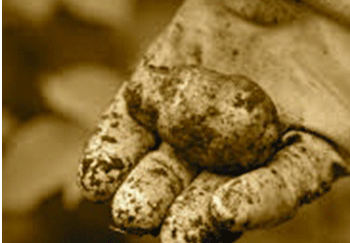
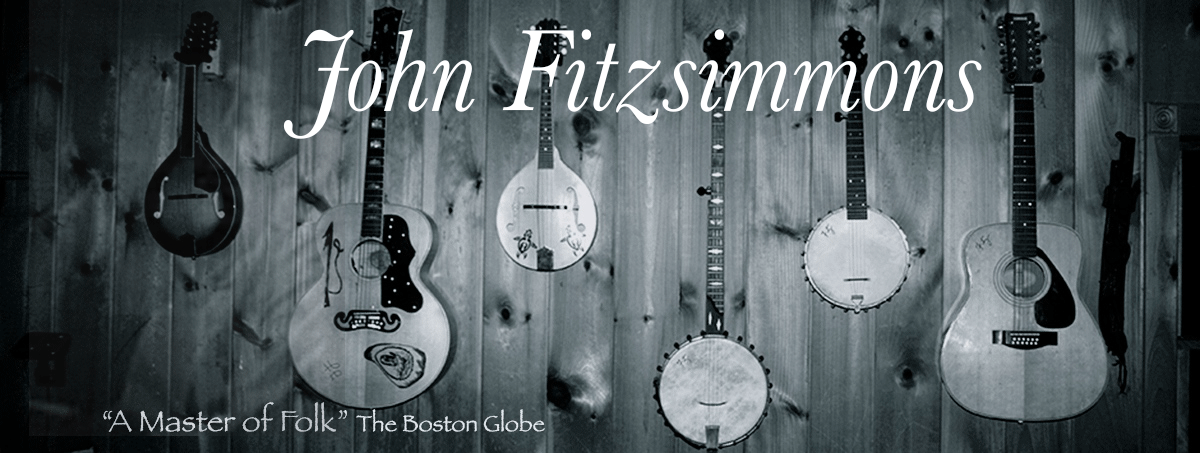
These last few minutes of “free” time need to be spent shaking off the detritus of the day and welcoming the night ahead, which for me means a few hours of singing folk songs in a local pub and the chance to celebrate both humility and grandeur in the same breath, for I am a very small potato in a very large and very good stew—but at least I am in the stew.
I remember my first year teaching at Fenn—and it was really my first stint as a true worker with responsibilities outside of what I already had in my wheelhouse—and on this day, some twenty something years ago, I could hardly move. Every Columbus Day weekend for as long as I could remember we (gangs of friends and I) would head up to Stinson Lake in New Hampshire where my family had a cottage, and I had my usual agenda of mountain climbing, fishing, or even a last sail on our Sunfish around the amazingly pristine waters on my bucket list for those three days.
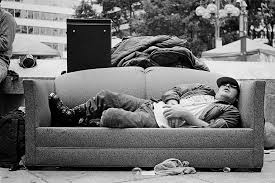
But this weekend came to be known as the “weekend of the couch.”
All I seemed to be able to do was sleep. Denise, who was not yet my fiancé, and our pack of friends, seemed to have a ball, but all I could do was wave goodbye or say, “I’ll catch up with you later…” But I never did. I put my head back down and slept, literally, for three days. The mental wear and tear of being a teacher had caught me off guard, for somehow the seemingly mundane lists of things to do never seemed to cease—and I was the shop teacher! I think I would have melted or imploded if I was trying to do what I almost naturally do now. A terse letter then from a parent would have me agonizing over a politely worded response. A student upset with a grade, or a mean friend or teacher, would have me scouring a book of psychology for a solution.
This new job was not as straightforward as singing four hours of songs in a pub, cutting down eight cord of wood, sailing through a storm, setting stones or banging nails in winter cold, finding myself alone and broke in some distant corner of the world—all of which had been a big part of my life until that first fall of teaching—and so I laid myself down to rest as I had never done before, all because being a shop teacher was the toughest job I had ever tried to tackle. That endless stream of enthused boys aged nine to fifteen had done what no other job had ever done: exhausted me simply because they energized some part of me that must have lay dormant for the entirety of my adult life—and at that time I was thirty-five years old for God’s sake!
But now I am fifty-six and have been teaching ever since, more writing and reading than shop—and it is still as hard and exhausting as ever, but in a different way. Even last night—a Friday night—I stayed up until one in the morning reading and commenting on my student’s blog posts and journal entries. I read reams of essays about Walden and Tom Sawyer. I listened to their podcasts and watched their video’s and tried to pen a few words of real praise for every effort they made over the course of the last week, and it reflects a massive amount of effort on their part, but for me, tired as I was, it was not a big effort that drained me; moreover, it was more a celebration of the joy of being a teacher, and I woke up this morning “psyched” to continue what is now a rhythmic cycle more in cadence with the seasons than a Sisyphean effort to push an irregular boulder back up a slaggy, barren mountainside.
It is this way because I work in a place that gives me structure and freedom in equal doses. My bosses never hang behind my shoulder and nitpick my constantly evolving curriculum; my parents don’t scrutinize and dissect my motives, and my co-workers laugh with me, bitch with me, and work just as hard at our collective mission as teachers, as if there is no other way. It is by no means a “dream job,” but my school is a place that allows me to dream as deeply as we hope our students dream. Granted, The Fenn School is a rarified community backed up by an enormous cache of accumulated wealth and uncommon worldly success, but when stripped of these trappings every class is simply a group of kids being asked to do what each of us teachers feel he (it is a boy’s school) need to do, and whatever pressure I feel as a teacher is counterbalanced by an academic freedom that deflates that pressure, and so I wonder if this is an approach that just works for us or if it is a reality that needs to be—or at least could be—emphasized in every school, regardless of wealth, opportunity or standing.
If each classroom becomes a family, then every teacher will respond in ways that transcend the trivial; if every school becomes a community that pulls together through the thick and thin of the vicissitudes of the year and places trust in teachers and students, then maybe (I’d say probably) the first six weeks of school won’t put anyone on the couch.
It’s time now and always to climb that mountain with free and joyous motion.