by Fitz | May 15, 2016 | Journal, Poetry
The day sometimes slip away from me,
a huge pine half-bucked in the backyard,
the kids old tree fort cut into slabs,
a ton of coal waiting to be moved
in a train of buckets
to the bin.
Sipping cold water on the back deck,
sharpening the dulled teeth
of a worn chainsaw,
I hear Emma rustling for soccer cleats
and singing some country song,
probably hoping I will remember
that her part of the day
is also mine…

by Fitz | May 13, 2016 | Essays, Journal
Wisdom starts in non-action…
The doing and non-doing are the equal balance. Without the luxury of contemplation there would not be a prioritizing of need versus want.
Wisdom balances physical reality…
Wisdom does not shuffle tasks out of view but finds a way to balance the competing demands of daily action.
Wisdom creates possibility…
Wisdom creates time and opportunity, more than depletes and enervates it. Wisdom intuitively creates and gives energy to what needs to be done, what can be done, and how to get done what needs doing.
Wisdom moves with fluidity…
Tread deliberately. Move with grace and dignity. To do what needs to be done in a desperate way or at a frenetic pace is not wisdom. A wise person moves through life without displacing the world around himself or herself.
Wisdom accepts our humanity…
Wisdom does not pass judgment on oneself. Don’t be angry at your situation or yourself. This will only be like pulling the load of everything through everything that needs to be done; hence, little will actually get done.
Wisdom is rooted in prayer…
Wisdom breathes in the cloud of unknowing and seeks clarity out of the mist of what is unknown. Prayer reveals the strength that is already a part of you, built into you and is reborn through you.
Wisdom does the work of contemplation…
Wisdom gives oneself to the task at hand. It lives within itsef. Cut one board all the way through. Let one task be important and finish that task. Wisdom accepts help, but does not demand, search for, or expect it.
Wisdom keeps its distance…
If you constantly shift the soil around the seed, the seed will never sprout, nor can you will anything to mature before its time. Stand back at a greater distance and see the problem in its completeness.
Wisdom is infinitely patient…
Wisdom cannot will a tree to grow. It can only create space and time for that tree to grow and realize its true potential.
Wisdom sees illusion as illusion…
Wisdom discerns what is palpable and real from what is not real and distills facts from opinions. This is true for both the physical and the mental realities of our lives.
Wisdom does not try to escape from itself…
Wisdom embraces the struggle of the search. Wisdom does not fear the suffering, loneliness and struggle that is an inextricable part of itself.
Wisdom practices love and devotion…
Words are only real when made palpable. It is not enough to simply feel love. It must be practiced, cultivated and strengthened in actions both big and small. Learn to know who you love and why. Create some kind of real gift every day.
*I tend to make my actions too subtle to even be noticed. I will do things that double as satisfying to me; hence, they are not pure and unencumbered. A clean kitchen is good for me, too. A pile of wood split of the winter keeps me warm as well. Flowers or a card on a special day are not particularly special. I need to remove myself from the gift and make every gift of love a gleaning of selflessness. It is the common day that merits the uncommon gift.
Wisdom laughs at itself…
Wisdom embraces the folly of itself. The very act of “searching” for wisdom creates a paradox. Recognizing these paradoxes is an opportunity to laugh at and rethink the journey. Rooted in reality and the flaws in our “human-ness,” our mistakes should be embraced with a sense of humor and redirected with newly enlightened joy at our ongoing discoveries.
Wisdom sustains itself…
Wisdom regenerates itself because it lives on so little and returns so much. It does not rely on good things happening, luck or opportunity. It simply is and cannot wilt under any sun.
Wisdom maintains dignity…
Wisdom never loses faith in the importance and dignity of the self. Gandhi argued that true dignity can only be given away by us, not taken from us.
Wisdom knows what it does not know…
Lack of knowledge is never an impediment to wisdom. Wisdom knows what is parochial from what is universal and accepts the limitations of individual understanding and perspective.
Wisdom is contentedness with itself…
Wisdom lives out the dictates of itself with grace, magnanimity and a humble reserve. It is not a happiness that is shared for an external reward. It is a contentedness with ourselves that does not seek or expect the extrinsic harvest of adulation or the gratification of a higher social status. It is like grass in a field bursting forth in the rain and hunkering down in the droughts of life. Wisdom survives because it is ready for and open to the vagaries and vicissitudes of life.
by Fitz | May 8, 2016 | Essays, Journal
Very jealous today of all the folks I see spending time with their respective moms–and sad for those who can’t and for those whose wives were taken from their families too early in life…
This is my remmebrance of my “mum” who died several years ago.
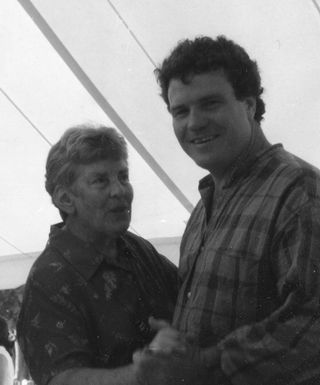
 I ran into an old friend one day after visiting my mom, who was entering what we all knew were her last days or weeks. Struggling for words to express his sympathy for both myself and my mom’s condition, he said, “Mary is not the mother you knew.” I guess in a way, none of us are ever that person whom we knew. Every day is a new contract with a life that simply—and often painfully and poignantly—comes with new terms and conditions that we have no choice but to accept and embrace with dignity, grace, and wisdom. No matter what life threw at mom, she accepted the terms put before her; and the world—and especially our world—was always a better, more loving, and infinitely richer place because of her; and though at the end she was not the person we remembered, she was always the mother we had, and she somehow managed to make everyone around her feel “mothered” right up until the very end.
She hated whenever I called her “Ma,” but, still, she was always “Ma Fitz” to anyone whose own mother was displaced by time, fate or distance. Even the toughest kids in town knew that as soon as any one of them placed a foot on Fitz territory, the rules of Ma Fitz were all that mattered. But, along with those rules came a woman who accepted anyone, anytime into a house already crammed with kids. We learned early and often that it is not the size of the house that matters, but rather, the size of the door—and like loading a dishwasher—there’s always room for one more.
On a Sunday night, some months ago, I walked into my mother’s room at Concord Park, and without thinking, I went straight to the refrigerator. It’s the same mechanical motion I’ve made every day that I’ve walked into her kitchen since I was a little kid—no matter where she lived. I didn’t even know what it was I was looking for, but I knew that mom had to have something in there for me.
Maybe I am hungry to know that Ma will still feed me. The refrigerator from my childhood—bursting with unending trips to Stop and Shop, Triple A, and Star Market is now a small countertop square in the corner of an uncluttered kitchenette. I open it and stare at the small bottle of ginger-ale, the pint of milk, the dainty plate of cookies and the half a sandwich, and drift back into the memories that persist and gnaw and flow out of that small space.
I still expect to see gobs of grapes, oranges, and apples; chocolate pudding, leftover tuna casseroles and Shepard’s pie, Appian way pizza, kool-aid, custard, baloney; and eggs: pickled, deviled, scrambled, and boiled; and potatoes: fried, mashed, hashed and rehashed in the unending evolution of necessity. But sometimes, when times were harder (times that were never actually mentioned but were full of green stamps and coupons) mom made potato buds: dry flakes with carnation instant milk and two tablespoons of butter, mixed into a pudding-like potato that was a perfect place to hide the peas, beets, boiled onions, liver, cod and other scourges of an Irish Catholic childhood; food that kept us at the table long after dinner, stubbornly poking and dabbing the edges with tears and a fork until someone—and rarely mum—relented in their stubbornness. And when we were really young and the milkman came everyday, we pulled out the whole milk with cream tops in glass bottles with paper caps; EJ, our almost epic father, would paw the top shut and shake the heavy cream back into the milk itself, exhorting us to imitate his practiced perfection—which none of us could do—and someone always spilled the milk on the cracked formica table and vinyl chairs, and he always screamed, “Every night! Somebody has to spill the milk every single night!”
And then after the mopping rags, dinner resumed in the chaotic recollections of the day; fights about whose night it was to do the dishes and who didn’t mow around the trees, who got seconds last night, and who got a C in penmanship, and who shouldn’t get two hydrox cookies for dessert because they weren’t smart enough to hide their peas in the potato buds!
And we sat in the same seats: I had little sister Annie on my right, always holding on to her waitress pad from Friendliest that she used to take our drink orders and would nod her head and say “thank you very much” and move on to the next of us; and little brother Tommy on my left who we could always get to laugh (and eventually spill his milk) even when he had no clue why he was laughing; and my big sisters staring across from me: Eileen, with her studious perfection and black and white perception of right and wrong, who for some reason Mum put in charge of making sure my bed was made and my room was clean—and who fined me a quarter when it wasn’t, but still I took her to Russo’s on my birthday when I could only bring my best friend; Mary Ellen with her CCHS sweatshirts and unending commentary on everything good, bad, cute or not under the sun—a gift she keeps to this day, and who came to every game I ever played and made the scrapbooks I would never make; and Patty, so old I hardly knew her, until she died so young that I can’t forget her….
And in the overstuffed kitchen, dad’s back was crunched almost against the basement door, and mom was pressed against the dining room wall—the room with the walnut table and eight matching chairs that we never seemed to use—like a museum stuffed with bone china and silverware that we polished every Christmas, bought, I’m sure with the green stamps and coupons. We could live without the dining room; but we lived and grew in the kitchen. We gathered in that kitchen everyday like chattering birds drawn to a stubbled and time-worn field—and out of that space we were reborn each day.
Every morning mom poured the Wheaties, boiled the oatmeal and cut the grapefruit while we listened to Joe Green in the BZ copter mumbling unintelligible warnings about tie-ups at the Alewife circle and sang along to “Watch me wallabies feed, mates, watch me wallabies feed.” Dad would grab his briefcase and we’d all try to be the first one to scream “Bye dad!” in a cacophony of competition, and, as if on cue, mom would sneak behind me and hold my head while I jerked convulsively, and she’d rub a warm wet cloth across my face and straighten my clip on tie and try to force down my cowlick and pick at my ears until I was fit to be presented to Sister Jean Beatrice—and, by some sort of convoluted math, to God himself. And then she’d sit in her chair, quietly, and write her own mother a letter.
Marion Fahey, 84 John St. Dalton MA. Every single day she’d write her mother a letter.
One of us could get the letter paper; and one of us could get the envelope; one of us would get to lick the stamp; one of us could put it on the letter; one of us could carry it to the mailbox, and the last one could lift up the metal flag. I never knew it was a ritual of perfection—a continual journey into the heart of the mystic love of family. You never know, but still, you remember.
Over the past few years, Alzheimer’s has slowly chipped away at the edges of her memory, but never to the point where she lost any of her true self. One day she’d remind me that it’s my childhood friend Danny Gannon’s birthday, and on the next day she’d ask me who my pretty children are…and like polite grandkids they would dutifully tell her their names once again, except for Tommy: “You know me Grandma, I’m Tommy!” and who’d crawl on her lap and ask for a kiss—“Not that kind of kiss—a chocolate kiss.” And she’d smile and say, “Of course, I know you. You’re Tommy.”
I’d go to see her and we’d look at ads for cars in the Boston Globe. She wanted a Toyota. “Your father loved his Toyota.” I smile to her, “That’s because Toyotas were cheap, and dad loved cheap.” It didn’t matter that she would never drive again. It didn’t matter that we would have the same conversation the next day. It didn’t matter that soon she might slip into a cloud of unknowing. It only mattered that she was there and in the magic and mysterious majesty of memory, and she will always be here.
We all remember mom, Mary, Mrs Fitz, and Ma Fitz in our own ways, and I know all of you remember her for what she did “for” you. Maybe she knit you a sweater, or sewed a first communion dress for you, or showed you how to quilt or bake or fry or can, or freeze. Maybe she made you dinner, washed your clothes, gave you a room for a few days, weeks, or months or a place to come on Christmas, Easter, Thanksgiving, or any common night when you were hungry for love and acceptance. Maybe she played bridge with you, or took you to White’s Pond, Stinson Lake, Tenney, Waterville or Cannon, or took you to dinner at Russo’s, Friendlies or Jimmies, or drove one or two or three hundred miles to be with you on a special day—or on any given day—when life was too special to go uncelebrated or too crushing to be alone. Maybe she taught you how to be a mother, a friend, a wife, or simply a good person. Maybe she let you marry one of her children and then loved you more than her own kids. Maybe she taught you how to never yell, but just give you that look. (Only Patty seemed to have mastered that look…The rest of us find it easier to yell.) It is easier to remember Mrs. Fitz than to be like Mrs. Fitz.
Sometimes God takes one to touch and teach many. Today is that day. God has blessed us by putting mum into our lives, and though our memories grow from different soils in different gardens, we live today through a shared memory.
Nurture those memories. Hold them. Cherish them.
Thanks. Mum always loved a party.
by Fitz | Apr 20, 2016 | Journal
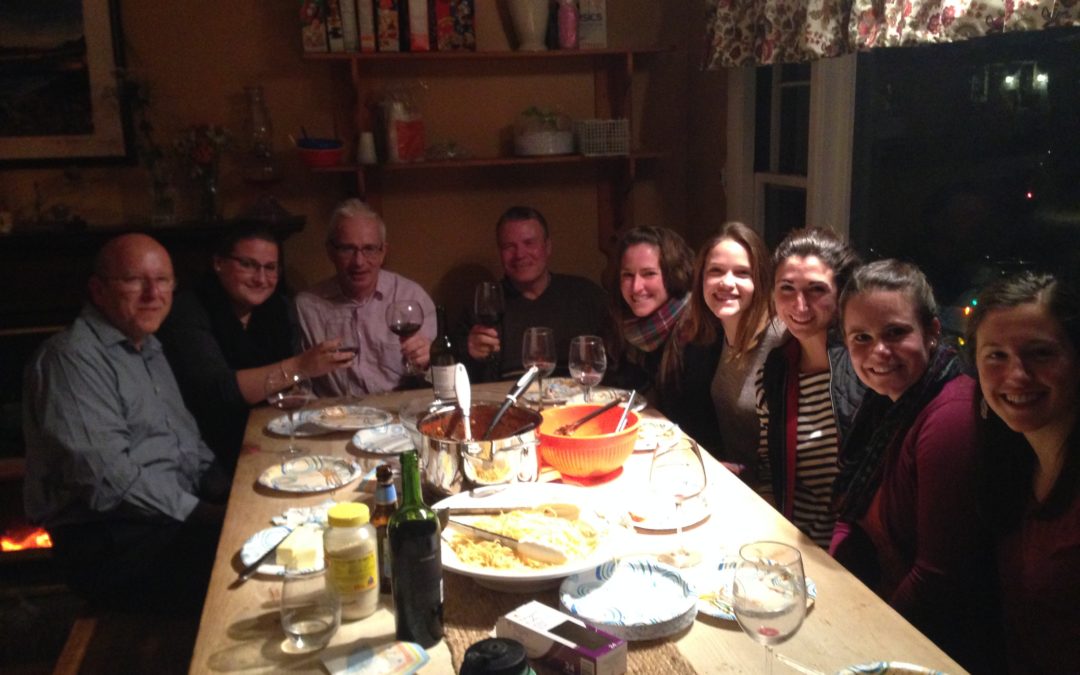
It is a good night for meatballs. The same meal we have cooked every Wednesday night for thirteen years and counting. Tonight is a beautiful and warm night of vacation week, so more than likely we will have a big crowd joining us—but we never know who. The door has always been open and many hundreds have made their ways through and out of our house with some meatballs and spaghetti sandwiched between. Most people we know from town, work, camp, casual acquaintances, friends and friends of friends from every corner of the globe, and even some true strangers who simply wanted to see if this magical night is for real.
It is…
The first comer, Harrison, has already arrived and is playing soccer with Charlie in our field of a backyard. Denise is inside listening to Brad Paisley, singing along to “Whiskey Lullaby” and setting out appetizers and arranging the flowers she bought yesterday. Most everyone who comes brings something: wine, bread, salad, milk, scratch tickets—and sometimes simply a new story to tell.
I make the meatballs—my Tuesday night ritual, and finally, after God knows how many experiments, a formula that seems to work. Meat, parsley, basil, scallions, garlic, onions, breadcrumbs and touches of different spices that stew overnight in a mix of crushed tomatoes, spices, wine and sprinklings of sugar, vinegar, red wine and a stew bone or two. If for some reason there is a huge crowd, we have “emergency meatballs” waiting with jars of Ragu to meet the call and feed the kids.
We have never really set a clock, but it always seems we feed the kids around 6:30 and then the adults around 8:00. Usually, we can fit around our massive farm table; sometimes more will sit at the bar built out of three-hundred-year-old farmhouse beams. On a night like tonight, we might all eat out on the back deck. There is almost always a campfire, and Emma made sure we have the fixings for smores and sticks she whittled sharp.
There is no agenda, no pretense and no expectations. Every night simply happens and evolves.
As will this night.
by Fitz | Apr 18, 2016 | Journal, Songs
True to my words of earlier this week, I finished this song last night, and at the time, I liked it–but in the clear light of day, too much of it seems forced, especially the rhymes. But that is part of the process. I think I am almost there. Let me get my saw and chisel and see where it goes. There is a tune in my head, but the flow is certainly not how it should be
Ginny came out on the weekly to the island:
and hid underneath her shawl her unborn child.
A babe who never made it through the winter—
those storms that came blasting harsh and wild.
She said his eyes shone blue as any ocean
that somehow gave her comfort for a while.
Ginny lived alone out by the headland,
and came down once a week to get her mail.
She’d read that letter sitting out on Craig’s pier,
her blonde hair blowing out like ragged sails.
Then she’d fill a box with flour, salt, and coffee
and disappear beachward in the gale.
She came here on a ferry out of Belfast
for stranger reasons we may never know:
two cairns of stone remain to tell her story—
it must have been some fifty years ago…
To the East there is a farm that’s grown to bramble,
somewhere off the path to Ephraim’s well;
looking hard you might even see the outline
of old beds lined with stone and shells.
They say the old Indian left a headstone,
but where it’s gone nobody’s left to tell.
No one really remembers much of Joey.
He showed up in 1917.
Some say it was the gas that left him silent;
others say it’s what he must have seen;
still, he scrabbled berries, beets and parsnips
with his one arm that wasn’t blown off clean.
Joey came here missing something;
and died with so little left to show—
a slice of stone he battled to its ending—
It must have been some hundred years ago…
Jacob set his lines out every morning
before the heavy fog burned clean,
pulling off the knots of tangled seaweed—
his torn hands clutching ancient dreams.
with hopes that laid deep in the Atlantic—
though nothing is ever as it seems.
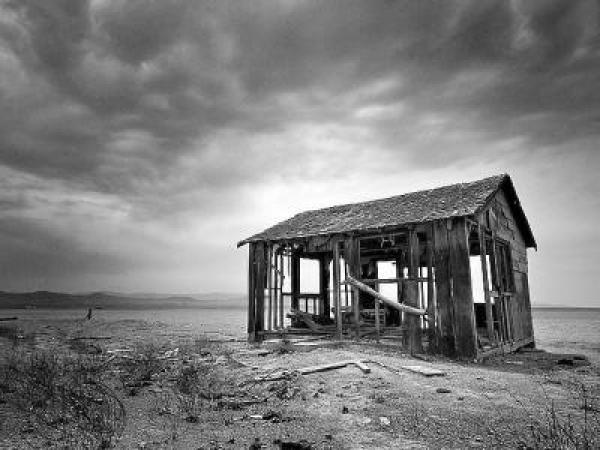
He built his shack with mud and scavenged driftwood.
His doorway a whale’s jaw bleached and dried—
and a window covered up with a seal-skin
that kept his thoughts somewhere deep inside.
He salted cod in barrels from the shipwreck
that hit the ledge in 1825.
Jacob came out here long before us
for silent reasons we may never know
when cold and dark waters filled his dory—
it must have been two hundred years ago…
Epilogue :
You can sometimes feel them in the breakers
Tightening the line in Anson’s trawl;
and other times you can hear them in the moonlight
echoed from some lonesome buoy’s call;
and they will answer if you let them—
but words sometimes don’t mean that much at all.
Maybe you’ll find them when the day breaks
in shadowed shapes and wisps of morning fog,
or hid away in lonely private places
buried somewhere deep in Caymans Bog.
Maybe once there was a story
scrawled in some forgotten Captain’s log.
All we have are words told by Nancy
in whispered words that linger hushed and slow.
No one here knows how she remembers
the queer folk from so many years ago…
No one here knows how she remembers
the queer folk from so many years ago…