The Unquiet Grave
Child Ballad #78
Cold blows the wind to my true love,
And gently falls the rain.
I’ve never had but one true love,
And in green-wood he lies slain.
I’ll do as much for my true love,
As any young girl may,
I’ll sit and mourn all on his grave,
For twelve months and a day.
And when twelve months and a day was passed,
The ghost did rise and speak,
“why sittest thou all on my grave
And will no let me sleep?”
“Go fetch me water from the desert,
And blood from out the stone,
Go fetch me milk from a fair maid’s breast
That young man never has known.”
“My breast is cold as the clay,
My breath is earthly strong,
And if you kiss my cold clay lips,
Your days they won’t be long.”
“How oft on yonder grave, sweetheart,
Where we were want to walk,
The fairest flower that e’er I saw
Has withered to a stalk.”
“when will we meet again, sweetheart,
When will we meet again?”
“when the autumn leaves that fall from the trees
Are green and spring up again.”
If you have any more information to share about this song or helpful links, please post as a comment.
Thanks for stopping by the site!
~John Fitz
1 Comment
Submit a Comment

 I am indebted to the many friends who share my love of traditional songs and to the many scholars whose works are too many to include here. I am also incredibly grateful to the collector’s curators and collators of Wikipedia, Mudcat.org, MainlyNorfolk.info, and TheContemplator.com for their wise, thorough and informative contributions to the study of folk music.
I share their research on my site with humility, thanks, and gratitude. Please cite their work accordingly with your own research. If you have any research or sites you would like to share on this site, please post in the comment box. Thanks!


"The Unquiet Grave" is an Irish / English folk song in which a young man's grief over the death of his true love is so deep that it disturbs her eternal sleep. It was collected in 1868 by Francis James Child as Child Ballad number 78.[1] One of the more common tunes used for the ballad is the same as that used for the English ballad "Dives and Lazarus" and the Irish pub favorite "Star of the County Down".
Synopsis
A man mourns his true love for "a twelve month and a day". At the end of that time, the dead woman complains that his weeping is keeping her from peaceful rest. He begs a kiss. She tells him it would kill him. When he persists, wanting to join her in death, she explains that once they are both dead their hearts will simply decay, so he should enjoy life while he has it.
Variants
The version noted by Cecil Sharp[2] ends with "When will we meet again? / When the autumn leaves that fall from the trees / Are green and spring up again."
Many verses in this ballad have parallels in other ballads: Bonny Bee Hom, Sweet William's Ghost and some variants of The Twa Brothers.[3]
Return of the dead
The motif that excessive grief can disturb the dead is found also in German and Scandinavian ballads, as well as Greek and Roman traditions.[4]
In 1941 the "Journal of the English Folk Dance and Song Society" Vol 4 no 2 included a long essay by Ruth Harvey. She compares motifs from "The Unquiet Grave" with other European ballads, including "Es ging ein Knab spazieren (Der tote Freier)" from Germany, and "Faestemanden I Graven" from Denmark.[5] She writes: "It is only inevitable that a song which certainly goes back to pre-Christian traditions should have suffered modification during the centuries."[6]
The Danish ballad "Faestemanden I Graven" was made into a short film, "Aage og Else" (1983).[7] Though not recorded till the nineteenth century, “The Unquiet Grave,” as a folk work, may date to the same period as those two seventeenth-century ballads. On the Fresno State University website, Robert B Waltz compares "The Unquiet Grave" with an older carol, "There blows a cold wind today," in the Bodleian Library MS 7683 (dated ca. 1500), but adds: "I must say that I find this a stretch; the similarities are slight indeed."[8]
Recordings
- The composer Ralph Vaughan Williams wrote several arrangements for "How Cold the Wind doth Blow (or The Unquiet Grave)". The best known, from 1912, is for piano, violin and voice. It was recorded in 1976 by Sir Philip Ledger, Hugh Bean and Robert Tear. Catalogue It also appears on the 1989 recording Songs of Britten and Vaughan Williams by Canadian baritone Kevin McMillan.
- Kate Rusby, Rebsie Fairholm, Carol Noonan, Joan Baez, the Dubliners, Solas, Barbara Dickson, Shirley Collins, Circulus, David Pajo, Fire + Ice and Sarah Calderwood have recorded versions of this song.
- A single-movement viola concerto by Australian composer Andrew Ford used the melody of the ballad as its foundation. Written in 1997, the concerto is pieced together from melodic fragments of the ballad and it is only in the final few minutes that the full theme emerges.
- Being a well-documented song and publicised by English Folk Dance and Song Society,[9] The Broadside Ballads Project,[10] and Mainly Norfolk,[11] the song was recorded by Jon Boden and Oli Steadman for inclusion in their respective lists of daily folk songs "A Folk Song a Day"[12] and "365 Days Of Folk".[13]
- The Pennsylvania-based alternative rock band Ween recorded a version of the song (retitled "Cold Blows the Wind") on their 1997 album, The Mollusk. The liner notes jokingly describe the song as a traditional Chinese spiritual.
- The gothic/darkwave band Faith and the Muse recorded a version on their debut Elyria in 1994.
- It was recorded and released as a duet between Ian Read and Ysanne Spevack in 2000, distributed by Tesco in Germany, and pressed up on blue vinyl with a letterpress gatefold cover under the band name Fire + Ice.[14]
- Papa M recorded a version for his 2001 album "Whatever, Mortal"
- The folk-rock group Steeleye Span recorded a version on their 2009 album Cogs, Wheels and Lovers.
- Electro noir artist Alien Skin, formerly with Real Life (of '80s "Send Me An Angel" fame), recorded a version on his 2010 album The Unquiet Grave.
- Orcadian singer Kris Drever recorded a version of this song to music of his own on Lau's album Lightweights and Gentlemen in 2009.
- The eleven-piece folk band Bellowhead recorded a cover of Ween's version ("Cold Blows the Wind") for their 2010 album Hedonism.
- An electronic arrangement by Vladislav Korolev was sung by Lori Joachim Fredrics and premiered on April 13, 2013.
- The German electronica/darkwave band Helium Vola included a rendition on their 2013 album, Wohin?.
- British folk singer/songwriter Elliott Morris included an arrangement of "Unquiet Grave" on his 2013 EP, Shadows and Whispers.
- British medieval folk-rock band Gryphon recorded their interpretation of the ballad using the Dives and Lazarus melody on their 1973 debut album, Gryphon.
- English progressive rock musician Steven Wilson recorded an arrangement of the song. It was the B-Side to "Cover version IV", one of a series of six singles, each consisting of a cover of a song written by another artist as the A-side, with the B-sides consisting of original songs (with the exception of "The Unquiet Grave"). The six cover versions and corresponding B-sides were released together on a compilation album, Cover Version, in 2014.
- Part of the song was performed by Helen McCrory in the Penny Dreadful episode "Fresh Hell", and again by Sarah Greene in "And They Were Enemies".
- The Ghosts of Johnson City recorded a version of the song for their 2015 album Am I Born To Die?
- Daoirí Farrell recorded a version of the song on his 2016 album "True Born Irishman"
- Joan Baez sings it on three albums:
- Joan Baez/5 (1964)
- the compilation album The Joan Baez Lovesong Album (1976)
- the live album Live at Newport (1996)
- House and Land interpret the song as their final track on their self-titled 2017 album.
- The English folk duo The Askew Sisters recorded the ballad on their 2014 album In the Air or the Earth.
- The Spanish dark pagan folk band Trobar de Morte recorded a version of the song on their eighth studio album The Book of Shadows in 2020.
- Irish singers Pauline Scanlon and Damien Dempsey performed a six and a half minute duet on Scanlon's 2022 album, The Unquiet.
- American Pine Barrens folk band Jackson Pines recorded their interpretation for their album Pine Barrens Vol. 1 in 2023. The ballad was connected to a lost town called Colliers Mills in their hometown of Jackson, NJ by song-catcher Herbert Halpert in 1936. Allen Clevenger of Wrightstown sang it to him and said his mother-in-law Mrs. Grover nee Cotter sang it in Colliers Mills as a girl.
- Canadian Celtic/Polka Punk Band The Dreadnoughts released a version of the song on March 14, 2023.
References
- ↑ Francis James Child, Scottish and English Popular Ballads, "The Unquiet Grave"
- ↑ Cecil J. Sharp (Ed) (1975) One Hundred English Folksongs (For Medium Voice), Dover, ISBN 0-486-23192-5
- ↑ Francis James Child, The English and Scottish Popular Ballads, v 2, p 234, Dover Publications, New York 1965
- ↑ Francis James Child, The English and Scottish Popular Ballads, v 2, p 234-6, Dover Publications, New York 1965
- ↑ Zachcial, Michael (13 February 1856). "Herr". Deutsche Volkslieder. Müller-Lüdenscheidt-Verlag. Retrieved 31 October 2022.
- ↑ Matteson, Richard. "Mr". Bluegrassmessengers. Blugreass Messengers. Retrieved 31 October 2022.
- ↑ Thomsen, Knud Leif. "Aage og Else". IMDB. ImdbPro. Retrieved 31 October 2022.
- ↑ Waltz, Robert. "Unquiet Grave, The [Child 78]". Traditional Ballad Index. Fresno State University. Retrieved 31 October 2022.
- ↑ "Captain Ward, a Pirate Song". 3 September 2014. Retrieved 9 January 2024.
- ↑ "Captain Ward". Retrieved 9 January 2024.
- ↑ "Captain Ward and the Rainbow". Retrieved 9 January 2024.
- ↑ "Captain Ward". 6 January 2015. Retrieved 9 January 2024.
- ↑ "Captain Ward And The Royal Rainbow". Retrieved 9 January 2024.
- ↑ "Death in June / Fire + Ice - We Said Destroy". Discogs. 2000.
External links
- Variants and images of old broadsides can be found at Joe Offer's copy of the folkinfo archive.

Source: Mainly Norfolk
The Unquiet Grave / Cold Blows the Wind
[ Roud 51 ; Child 78 ; Ballad Index C078 ; Bodleian Roud 51 ; Wiltshire Roud 51 ; trad.]A.L. Lloyd sang The Unquiet Grave in 1956 on his and Ewan MacColl’s Riverside album of Child ballads, The English and Scottish Popular Ballads Volume I. Editor Kenneth G. Goldstein wrote in the album’s booklet:
Aside from its exquisite poety and music, this ballad is notable for its exhibition of the universal popular belief that excessive grief on the part of mourners disturbes the peace of the dead.
It is possible that this is only a fragment of a once popular longer ballad. In the form we have it today, no text has been reported earlier than the 19thcentury. The ballad is little known in Scotland and is quite rare in America. It is still current in England, however.
The text and tune sung by A.L. Lloyd were collected by Cecil Sharp from William Spearing of Ile Bruers, Somerset, excepting the last two stanzas, which were from Mrs. William Ree of Hambridge, Somerset.
See Child (78), Volume II, p. 78ff; Coffin, p.82; Dean-Smith, p.113.
Shirley Collins recorded this ballad in 1959 for her second LP, False True Lovers, a second time for her Collector EP English Songs Vol. 1, and a third time in 1967 for her album The Power of the True Love Knot. She commented in the first album’s notes:
From Cecil Sharp’s English Folk Songs. This is one of the classic pieces of English folk song literature. From one point of view it is a feminine fantasy or a wish, perhaps for the death of a lover, perhaps for a way of arranging a night visit by the lover, perhaps for a way of showing how strong her love is, perhaps of a feeling of guilt. Certainly, it is a ghost story designed to delight the imagination of young women. Finally, it shows the survival of ancient and widely distributed primitive beliefs about the treatment of the dead.
The rowdy Irish wake is the only one example of the common folk custom of a gathering in which ceremonial banqueting and games were indulged in to show honour to the dead person. The shade was given a great send-off to the other world. Sometimes guns were fired to send him skittering away in fear. Sometimes a special door was cut in the side of the wall so that the coffin could be taken out by that route; and then this hole was walled up so that the ghost could not find his way back into the house again.
In Scotland and Ireland it was believed that excessive grief prevented the dead from resting; that the tears shed by the mourners pierced holes in the corpse. In Persia they held that the tears shed by humanity for their dead flowed into a river in which the souls floated and drowned. Similar beliefs were held by the Greeks and Romans, and from mediaeval times throughout Germany and Scandinavia.
Sharp says that in England a belief was current that if a girl was betrothed to a man, she was pledged to him if he died, and was bound to follow him to the spirit world unless she solved certain riddles, or performed certain tasks, such as fetching water from a desert, blood from a stone, milk from the breast of a virgin…
and in the The Power of the True Love Knot album notes:
This song is a tender and magical expression of an ancient community belief: a very proper belief that when the mourning of a lover’s death started to drain life from the living, love was being misused. Tears flowed into the Styx, and the river swelled and became impassable, so the dead come back and warn the quick. On this track and elsewhere I play an instrument made for me by John Bailey, which is a dulcimer with a five-string banjo neck.
The Ian Campbell Folk Group with Dave Swarbrick sang The Unquiet Grave in 1963 on their album This Is the Ian Campbell Folk Group. This track was included in 2005 on their anthology The Times They Are A-Changin’.
Alex Campbell sang The Unquiet Grave in 1966 on his album Yours Aye, Alex; this track was included in 1966 on his compilation CD Been on the Road So Long.
Hedy West sang an American version The Unquiet Grave in 1967 on her Topic album Ballads. Her (or A.L. Lloyd’s) sleeve notes commented:
There’s widespread and ancient belief that excessive grieving over the dead disturbs their rest. The Greeks and Romans thought so, and the idea is as common in the Far East as in Western Europe. In Ireland as in Rumania it was thought that inordinate tears would burn a hole in the corpse, and in several ballads the dead complain that they cannot sleep because the tears of the living have wet their winding sheet. This ballad, of a restless ghost who confronts and reproaches the mourner, is probably a fragment broken off some longer, more complicated narrative. Though it’s been relatively common in England till recent times, it seems very rare in America, and has turned up only in a scattered handful of versions from Newfoundland, Virginia and North Carolina (which is where the present version comes from, collected by the indefatigable Frank C. Brown).
Jon Raven sang The Unquiet Grave in 1968 on the Broadside album The Halliard : Jon Raven.
Dave & Toni Arthur sang this ballad as Cold Blows the Winter’s Wind in 1969 on their Topic album The Lark in the Morning. The sleeve notes commented:
The ballad, usually called The Unquiet Grave, concerns a person who feels bound to sit and mourn by his (sometimes, her) lover’s grave for a period of time. In nearly all versions, the corpse complains of being disturbed, illustrating the ancient belief that excessive grief interferes with the peace of the dead. In archaic folklore, a constant concern, when faced with a death, is to try to ensure that the corpse makes a pleasant and reassured transit from the land of the living to the world of the dead. Otherwise the dead may return, uneasy and vengeful, to plague the living. Hence for instance the jollification at Irish wakes, intended to cheer and embolden the dead. Singers have ended our ballad in various ways, sometimes heartbroken and disconsolate, sometimes more or less lightheartedly as: “But since I have lost my own true love, I must get another in time.” Our tune is from Fred Hamer’s collection Garners Gay. The words are from Alfred Williams’s Folk-Songs of the Upper Thames.
Frankie Armstrong sang The Unquiet Grave in 1971 on her Topic album Lovely on the Water. A.L. Lloyd commented in the sleeve notes:
A woman laments long over the grave of her sweetheart, till he speaks from the grave and reproaches her for disturbing his rest. Usually in the ballads the setting and the characters are named, but here we know neither the who nor the where, and the supernatural climate is further charged with mystery on that account. The tale is old, like the belief that too much grief disturbs the dead, though to this day, in Eastern Europe, some peasants believe that mourner’s tears make an unhealing burn if they chance to light on a corpse. In some versions the dead person threatens to tear the living one to pieces (the favourite revenge of ghosts!) unless absolute fidelity can be sworn to. But Frankie’s version is milder, more consolatory, as fits her gentle character. By and large, the tune she uses is one recorded by Vaughan Williams at Dilwyn, Herefordshire.
John Kirkpatrick and Sue Harris sang this ballad as Cold Blows the Wind in 1976 on their Topic LP Among the Many Attractions at the Show Will Be a Really High Class Band and John Kirkpatrick did it again in 2007 on his Fledg’ling CD Make No Bones. He commented in the latter album’s sleeve notes:
When I moved to Shropshire in 1973 and started looking at the local folk music, the singing of May Bradley was a glorious revelation. I never saw her in the flesh, but Fred Hamer’s recordings of her in Ludlow during the 1960s proved to be a real treasure chest of wonderful songs wonderfully sung. She was the daughter of Ester Smith, a gypsy singer that Vaughan Williams had collected from in Herefordshire at the beginning of the century, and had some of her mother’s songs as well as plenty of others. This is her tune for what is sometimes known as The Unquiet Grave—Child Ballad no. 78. I’ve sung this before in a past life, but in revisiting the song I have added a few lines from other versions to fill out the sense of the words.
Two books of the songs Fred Hamer collected were published by EFDS Publications Ltd., and you can see this in the first one from 1967, Garners Gay. Or a much better option is to hear [May Bradley] singing it herself on the EFDSS LP Garners Gay issued in 1971, EFDSS LP 1006.
May Bradley’s version can also be found on her Musical Traditions anthology Sweet Swansea (2010).
Jo Freya sang The Unquiet Grave in 1992 on her CD Traditional Songs of England.
Sandra Kerr sang The Unquiet Grave in 1970 on the Argo Voices anthology series, Second Book, Record One (Argo DA96). Her daughter Nancy sang it in 1993 on the CD Eliza Carthy & Nancy Kerr. She referred in her sleeve notes to Evelin Wells’ The Ballad Tree, and to her mother singing this version onVoices.
Louis Killen learnt The Unquiet Grave from Brian Ballinger and sang in on his 1993 CD A Bonny Bunch.
Steeleye Span sang One True Love in 1998 on their CD Horkstow Grange, and they recorded The Unquiet Grave in 2009 for their CD Cogs Wheels and Lovers. Tim Harries commented in the former album’s notes:
The sources for [One True Love] are The Unquiet Grave, (spooky old English song), Lovely Joan, and a small fragment of Lowlands of Holland. The inspiration came largely from Borrowed Time by Paul Monette, a book you may be familiar with.
Kate Rusby couldn’t let the dead sleep on her 1999 CD Sleepless.
Like John Kirkpatrick, Jon Boden learned Cold Blows the Wind from the singing of May Bradley. He sang it with Bellowhead in 2010 on their CD Hedonism, and he sang it unaccompanied as the December 29, 2010 entry of his project A Folk Song a Day.
Rachel Newton sang The Unquiet Grave on The Furrow Collective’s 2015 EP Blow Out the Moon. She commented in the album’s notes:
I took the words for the well known ballad The Unquiet Grave from Child no. 78a; and the melody I use is based on a version I learned from the singing of Shirley Collins.
Siobhan Miller sang The Unquiet Grave on her 2017 album Strata.
Lyrics
| A.L. Lloyd sings The Unquiet Grave | |
|---|---|
| “Cold blows the wind to my true love, And gentle drops the rain, I never had but one true love And in Greenwood she is lain. |
|
| “I’ll do as much for my true love As any young man may, I’ll sit and weep all on her grave For a twelve month and a day.” |
|
| When the twelve month and one day was o’er, Her ghost begun for to speak, “Why sit you here all on my grave And will not let me sleep?” |
|
| “There’s one thing more I want, sweetheart, And one thing more I crave, And that’s a kiss from your lily-white lips And then I’ll go from your grave.” |
|
| “My lips are cold as clay, sweetheart, My breath smells heavy and strong, And if you kiss my lily-white lips, Your time would not be long.” |
|
| Shirley Collins sings The Unquiet Grave | Nancy Kerr sings The Unquiet Grave |
| “Cold blows the wind tonight, true love, Cold are the drops of rain, I only had but one true love And in Greenwood he lies slain. |
“The wind doth blow today, my love, And a few small drops of rain; I never had but one true love And in Greenwood he is lain. |
| “I’ll do as much for my true love As any young girl may, I’ll sit and mourn all by his grave For a twelve-month and a day.” |
“I’ll do as much for my true love As any young girl may, I’ll sit and mourn all on his grave For twelve months and a day.” |
| Now the twelve-month and a day being gone, The ghost began to greet: “Your salten tears they trickle down They wet my winding sheet.” |
The twelve months and a day being done, The dead began to speak: “Oh, who sits weeping on my grave And will not let me sleep?” |
| “It’s I, my love, sits by your grave And will not let you sleep. For I crave one kiss from your clay-cold lips And that is all I seek.” |
“’Tis I, your love sits on your grave And will not let you sleep. For I crave one kiss of your clay-cold lips And that is all I seek.” |
| “But lily, lily are my lips, My breath comes earthy strong. If you have one kiss from my clay-cold lips, Your time will not be long.” |
“Your breath is as the roses sweet, Mine as the sulphur strong. And if you get one kiss from my lips, Your time will not be long.“ |
| “’Twas down in yonder garden green, Love, where we used to walk. And the fairest flower that e’er was seen Has withered to the stalk.” |
“’Tis down in yonder garden green, Love, where we used to walk. The finest flower that e’er was seen Is withered to a stalk.” |
| “The stalk is withered dry, true love, So must our hearts decay. Then rest yourself content, my dear, Till God calls you away, Till God calls you away.” |
“The stalk is withered and dry, sweetheart, And the flower will never return. And since I lost my own true love What can I do but mourn?”“Mourn not for me, my own true love, Mourn not for me I pray. For I must leave you and all the world And go into my grave.” |
| Bellowhead sings Cold Blows the Wind | Steeleye Span sing One True Love |
| “Cold blows the wind over my true love, Cold blows the drops of rain, I never had but one true love And in Greenwood he lies slain.“I’ll do as much for my true love As any young girl may, I’ll sit and weep down by his grave For twelve months and a day.”But when twelve months they were up and gone This young man he arose: “What makes you sit by my grave and weep? I can’t take my repose!”“One kiss, one kiss from you lily-white lips, One kiss is all I crave. One kiss, one kiss from you lily-white lips, Then return back to your grave.”“These lips they are as cold as clay, My breath is heavy and strong. if you were to kiss these lily-white lips Your life would not be long.“Oh, don’t you remember the garden grove, Where once we used to walk? Go pick the finest flower of them all, It will wither to a stalk.“Go fetch me a flower from the dungeon deep, Bring water from a stone. Bring white milk from a virgin’s breast That baby never bore none.”“Go dig me a grave both wide and deep, Dig it as quick as you may. That I may lay down and take a long sleep For twelve months and a day.” |
Cold blows the wind o’er my true love, Cold blows the drops of rain, I never had but one true love And never will again.I’ll do as much for my true love As any lover may, I’ll sit and weep down by his grave A twelve-month in one day.One kiss, one kiss from your sweet lips, One kiss is all I grave. One kiss, one kiss from your sweet lips, And sink down in your grave.And your lips, they are not sweet my love Your kiss is cold as clay, My time be long, my time be short, Tomorrow or today.And down beyond the garden wall, Where we both used to walk, Are finest flowers that ever grew All withered to a stalk.(repeat first verse) |
Acknowledgements
Transcribed from the singing of Nancy Kerr by Kira White.
Source: Traditional Songfacts
-
“The Unquiet Grave” is both a poem and a song. Intensely sad, and written in the first person singular, the mourner laments the love of his life sitting weeping at her graveside for a year and a day, at which point her ghost rises up and asks who will not allow her to sleep. He identifies himself and asks for “one kiss of your clay-cold lips”. She disavows him of that notion, and tells him to put his grief behind him and enjoy the rest of his life “Till God calls you away”.
-
Like most traditional songs there are many variations, of the title as well as the lyrics in this case. Extensive research on its origin and development can be found in Volume II of The Traditional Tunes Of The Child Ballads With Their Texts, according to the Extant Records of Great Britain and America, by Bertrand Harris Bronson, which was published by Princeton University Press in 1962.
According to this book, none of the extant texts of the ballad is older than the early 19th Century but it probably dates from about the end of the 15th. A version was recorded by [ie sung to] musicologist Cecil Sharp on January 23, 1907 by Mrs Ware of Eley Over Stowey. The same day, Sharp recorded “Cold Blows The Wind” by James Chedgey of Bincombe Over Stowey.
Sabine Baring-Gould (who is best known for writing the lyrics to “Onward Christian Soldiers”) collected a version, from J. Woodrich, a blacksmith of Wollacot Moor, Thrushleton, in 1889.
Probably the earliest recorded version is “Cold Blows The Wind” which was sung by Elizabeth Doidge, a nurse of Brentnor, and collected by Mrs Gibbons, the daughter of W.L.Trelawney, Bart, c1830. This version had the tune usually associated with “Childe The Hunter”.There is also “How Cold The Winds Do Blow”, sung by Mrs Rugman of Dunsfold, Surrey, 1896; “Cold Blows The Wind To-night, Sweetheart”, sung by Mrs Bowker, of Sunderland Point, Lancashire, in September 1909, and further afield, “The Auld Song From Cow Head” sung by the Reverend Mr Gibbs Bull of Newfoundland in 1929. -
Another musicologist who researched “The Unquiet Grave” in some depth was the aforementioned Cecil Sharp. Volume I of the 1994 Oxford University Press edition of his …Collection Of English Folk Songs, Edited by Maud Karpeles records no less than seventeen different versions, the oldest of which was sung to him by Mrs Ree at Hambridge, Somerset, on April 4, 1904.
-
“The Unquiet Grave” has been recorded by many artists, including Joan Baez and Karen Mall (suitably amended for gender) and by Luke Kelly. >>
Performances, Workshops,
Resources & Recordings
The American Folk Experience is dedicated to collecting and curating the most enduring songs from our musical heritage. Every performance and workshop is a celebration and exploration of the timeless songs and stories that have shaped and formed the musical history of America. John Fitzsimmons has been singing and performing these gems of the past for the past forty years, and he brings a folksy warmth, humor and massive repertoire of songs to any occasion.
Festivals & Celebrations
Coffeehouses
School Assemblies
Library Presentations
Songwriting Workshops
Artist in Residence
House Concerts
Pub Singing
Irish & Celtic Performances
Poetry Readings
Campfires
Music Lessons
Senior Centers
Voiceovers & Recording
““Beneath the friendly charisma is the heart of a purist gently leading us from the songs of our lives to the timeless traditional songs he knows so well…”
Join Fitz
at The Colonial Inn
“The Nobel Laureate of New England Pub Music…”
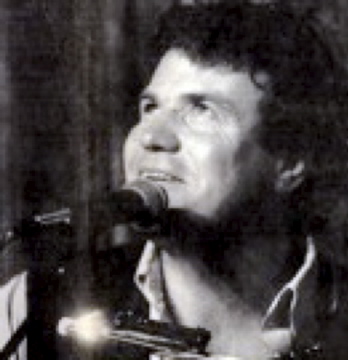
On the Green, in Concord, MA
Every Thursday Night
for over thirty years…
“A Song Singing, Word Slinging, Story Swapping,
Ballad Mongering, Folksinger, Teacher, & Poet…”
Fitz’s Recordings
& Writings
Songs, poems, essays, reflections and ramblings of a folksinger, traveler, teacher, poet and thinker…
Download for free from the iTunes Bookstore
“A Master of Folk…”
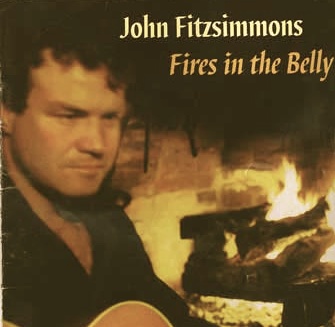
Fitz’s now classic recording of original songs and poetry…
Download from the iTunes Music Store
“A Masterful weaver of song whose deep, resonant voice rivals the best of his genre…”
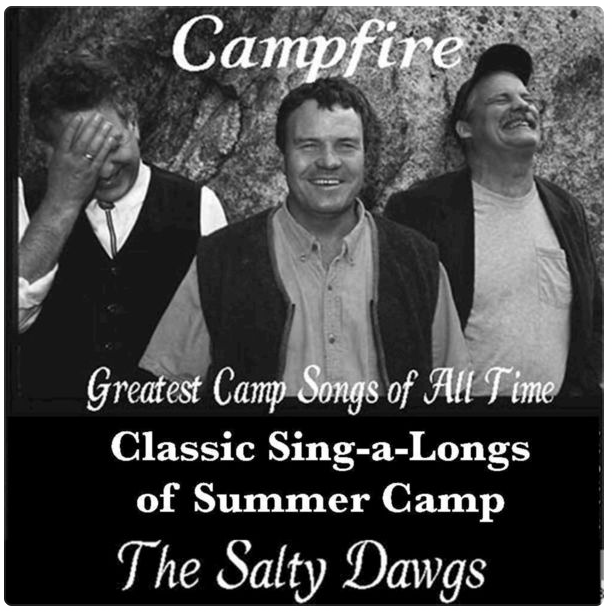
“2003: Best Children’s Music Recording of the Year…”
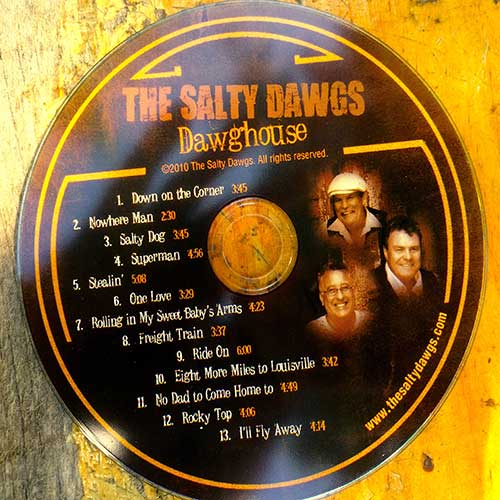
Fitz & The Salty Dawgs
Amazing music, good times and good friends…
TheCraftedWord.org

Writing help
when you need it…
“When the eyes rest on the soul…that’s Fitzy…”

this means a lot to me, if another living person is to read this, please experience the feeling, know that somewhere in this world i live and you will never know anything of me, and i will know nothing of you, but what you will now know of me, is that this ballad means something to me