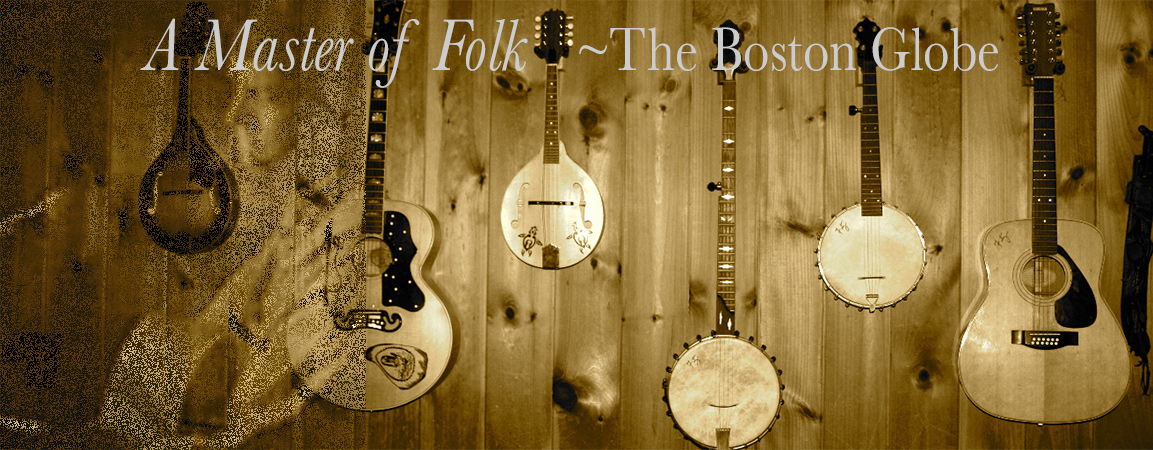
John Barleycorn
~Traditional Ballad
There were three men,
Came from the west,
Their fortunes for to tell,
And the life of John Barleycorn as well.
They laid him in three furrows deep,
Laid clods upon his head,
Then these three men made a solemn vow
John Barleycorn was dead.
They let him die for a very long time
Till the rain from heaven did fall,
Then little Sir John sprang up his head
And he did amaze them all.
They let him stand till the midsummer day,
Till he looked both pale and wan.
The little Sir John he grew a long beard
And so became a man.
They have hired men with the scythes so sharp,
To cut him off at the knee,
They rolled him and they tied him around the waist,
They served him barbarously.
They have hired men with the crab-tree sticks,
To cut him skin from bone,
And the miller has served him worse than that,
For he’s ground him between two stones.
They’ve wheeled him here, they’ve wheeled him there,
They’ve wheeled him to a barn,
And thy have served him worse than that,
They’ve bunged him in a vat.
They have worked their will on John Barleycorn
But he lived to tell the tale,
For they pour him out of an old brown jug
And they call him home brewed ale.
If you have any more information to share about this song or helpful links, please post as a comment. Thanks for stopping by the site! ~John Fitz

 I am indebted to the many friends who share my love of traditional songs and to the many scholars whose works are too many to include here. I am also incredibly grateful to the collector’s curators and collators of Wikipedia, Mudcat.org, MainlyNorfolk.info, and TheContemplator.com for their wise, thorough and informative contributions to the study of folk music. I share their research on my site with humility, thanks, and gratitude. Please cite their work accordingly with your own research. If you have any research or sites you would like to share on this site, please post in the comment box. Thanks!


"John Barleycorn" is an English and Scottish folk song.[1] The song's protagonist is John Barleycorn, a personification of barley and of the beer made from it. In the song, he suffers indignities, attacks, and death that correspond to the various stages of barley cultivation, such as reaping and malting.
The song may have its origins in ancient English or Scottish folklore, with written evidence of the song dating it at least as far back as the Elizabethan era.[2] It is listed as number 164 in the Roud Folk Song Index. The oldest versions are Scottish and include the Scots poem "Quhy Sowld Nocht Allane Honorit Be". In 1782, the Scottish poet Robert Burns published his own version of the song, which influenced subsequent versions.
The song survived into the twentieth century in the oral folk tradition, primarily in England, and many popular folk revival artists have recorded versions of the song. In most traditional versions, including the sixteenth century Scottish version entitled Alan-a-Maut, the plant's ill-treatment by humans and its re-emergence as beer to take its revenge are key themes.[3]
History
Possible ancient origins
The Penguin Book of English Folk Songs (London, 1959), edited by the folk singer A. L. Lloyd and the composer Ralph Vaughan Williams, ponders whether the ballad is "an unusually coherent folklore survival" or "the creation of an antiquarian revivalist, which has passed into popular currency and become 'folklorised'". It has been theorised that the figure could have some relation to the semi-mythical wicker man ritual, which involves burning a man in effigy.[2]
A link between the mythical figure Beowa (a figure from Anglo-Saxon paganism, appearing in early Anglo-Saxon royal genealogies; his name means "barley") and John Barleycorn is suggested by the author Kathleen Herbert. In her 1994 book Looking for the Lost Gods of England, she suggests that Beowa and Barleycorn are one and the same, noting that the folksong details the suffering, death, and resurrection of Barleycorn, yet celebrates the "reviving effects of drinking his blood".[4]
Written versions
.jpg)
The first song to personify Barley was called Allan-a-Maut ('Alan of the malt'), a Scottish song written prior to 1568.[3]
Allan is also the subject of "Quhy Sowld Nocht Allane Honorit Be", a fifteenth or sixteenth century Scots poem included in the Bannatyne Manuscript of 1568 and 17th century English broadsides.
"A Pleasant New Ballad" (1624)
The first mention of "John Barleycorn" as the character was in a 1624 London broadside entitled introduced as "A Pleasant New Ballad to sing Evening and morn, / Of the Bloody murder of Sir John Barley-corn".[3] The following two verses are from this 1624 version:
Yestreen, I heard a pleasant greeting
A pleasant toy and full of joy, two noblemen were meeting
And as they walked for to sport, upon a summer's day,
Then with another nobleman, they went to make affray
Whose names was Sir John Barleycorn, he dwelt down in a dale,
Who had a kinsman lived nearby, they called him Thomas Good Ale,
Another named Richard Beer, was ready at that time,
Another worthy knight was there, called Sir William White Wine.[3]
The final two verses of this 1624 version show Barleycorn's vengeance through intoxicating his killers:
When Sir John Goodale he came with mickle might
Then he took their tongues away, their legs or else their sight
And thus Sir John in each respect, so paid them all their hire
That some lay sleeping by the way, some tumbling in the mire
Some lay groaning by the walls, some in the streets downright,
The best of them did scarcely know, what they had done oernight
All you good wives that brew good ale, God turn from you all teen
But if you put too much liquor in, the Devil put out your een.
Robert Burns (1782)
Robert Burns published his own version in 1782, which adds a more mysterious undertone and became the model for most subsequent versions of the ballad. Burns's version begins:
There was three kings unto the east,
Three kings both great and high,
And they hae sworn a solemn oath
John Barleycorn should die.
They took a plough and plough'd him down,
Put clods upon his head,
And they hae sworn a solemn oath
John Barleycorn was dead.
Unlike other versions, Robert Burns makes John Barleycorn into a saviour:
And they hae taen his very heart's blood,
And drank it round and round;
And still the more and more they drank,
Their joy did more abound.
John Barleycorn was a hero bold,
Of noble enterprise;
For if you do but taste his blood,
'Twill make your courage rise.
'Twill make a man forget his woe;
'Twill heighten all his joy;
'Twill make the widow's heart to sing,
Tho' the tear were in her eye.
Then let us toast John Barleycorn,
Each man a glass in hand;
And may his great posterity
Ne'er fail in old Scotland!
Field recordings
Many field recordings of the song were made of traditional singers performing the song, mostly in England. In 1908, Percy Grainger used phonograph technology to record a Lincolnshire man named William Short singing the song; the recording can be heard on the British Library Sound Archive website.[5] James Madison Carpenter recorded a fragment sung by a Harry Wiltshire of Wheald, Oxfordshire in the 1930s, which is available on the Vaughan Williams Memorial Library website[6] as well as another version probably performed by a Charles Phelps of Avening, Gloucestershire.[7] The Shropshire singer Fred Jordan was recorded singing a traditional version in the 1960s.[8]
A version recorded in Doolin, Co. Clare, Ireland from a Michael Flanagan in the 1970s is available courtesy of the County Clare Library.[9]
The Scottish singer Duncan Williamson also had a traditional version which was recorded.[10]
Helen Hartness Flanders recorded a version sung by a man named Thomas Armstrong of Mooers Forks, New York, USA in 1935.[11]
Musical adaptations
Ralph Vaughan Williams used a version of the song in his English Folk Song Suite (1923).[12] Many versions of the song have been recorded, including popular versions by the rock groups Traffic (appearing on their 1970 album John Barleycorn Must Die) and Jethro Tull (appearing first on their 1992 album A Little Light Music and then on various other albums). The song is a central part of Simon Emmerson's The Imagined Village project. Martin and Eliza Carthy perform the song alongside Paul Weller on the Imagined Village album. Billy Bragg sang in Weller's place on live performances. Rock guitarist Joe Walsh performed the song live in 2007 as a tribute to Jim Capaldi. English folk musician Sam Lee recorded a version on his album "Old Wow," accompanied by a video filmed at Stonehenge.[13] English black metal band Winterfylleth recorded a version included in the folk compilation One & All, Together, For Home.[14]
In popular culture
"John Barleycorn" has been used as a symbol or a slang term for alcohol,[15] and its association with alcohol has been used in various areas of life. Several pubs in the South of England are called "John Barleycorn", in places including Duxford,[16] Harlow,[17] Goring,[18] and Southampton.[19] Jack London's 1913 autobiographical novel John Barleycorn takes its name from the song and discusses his enjoyment of drinking and struggles with alcoholism.[20] The use of the term to symbolise alcohol misuse was so widespread that it was used as a headline on court reports about drunkenness in late Victorian times.[21]
In the climax of the Inside No. 9 episode "Mr King" (2022), the song is performed by a class of schoolchildren as they prepare to ritualistically sacrifice their teacher for their harvest festival.[22]
 The John Barleycorn, Duxford, Cambridgeshire
 Use of "John Barleycorn" to symbolise alcohol in an anti-prohibition illustration
 Headline: "John Barleycorn at Work"[21]


See also
References
- ↑ Winkler, Elizabeth Hale (1990). The Function of Song in Contemporary British Drama. University of Delaware Press. pp. 75–76. ISBN 978-0-87413-358-5.
- 1 2 Wigington, Patti (9 July 2019). "The Legend of John Barleycorn". Learn Religions. Retrieved 25 May 2022.
- 1 2 3 4 "John Barleycorn revisited". Musical Traditions. Retrieved 25 May 2022.
- ↑ Herbert, Kathleen (2007). Looking for the Lost Gods of England. Anglo-Saxon Books. p. 16. ISBN 978-1-898281-04-7.
- ↑ "Percy Grainger ethnographic wax cylinders | John Barleycorn". British Library Sounds. Retrieved 25 May 2022.
- ↑ "Sir John Barleycorn (VWML Song Index SN19068)". Vaughan Williams Memorial Library. Retrieved 25 May 2022.
- ↑ "John Barleycorn (VWML Song Index SN18608)". aVaughan Williams Memorial Library. Retrieved 25 May 2022.
- ↑ "John Barleycorn (Roud Folksong Index S240733)". Vaughan Williams Memorial Library. Retrieved 25 May 2022.
- ↑ "The Barley Grain (Roud 164)". County Clare Library. Retrieved 25 May 2022.
- ↑ "John Barleycorn (Roud Folksong Index (S240727)". Vaughan Williams Memorial Library. Retrieved 25 May 2022.
- ↑ "John Barleycorn (Roud Folksong Index S240727)". The Vaughan Williams Memorial Library. Retrieved 25 May 2022.
- ↑ Kennedy, Michael (1 December 1992). "Vaughan Williams, Ralph (opera)". Oxford Music Online. Oxford University Press. doi:10.1093/gmo/9781561592630.article.o007350. ISBN 978-1-56159-263-0. Retrieved 25 May 2022.
{{cite journal}}: CS1 maint: periodical has ISBN (link) - ↑ "Watch: Sam Lee – John Barleycorn". Folk Radio. 24 September 2021. Retrieved 25 May 2022.
- ↑ "One And All, Together, For Home - Compilation | Season of Mist". www.season-of-mist.com. Retrieved 31 July 2026.
- ↑ "Thesaurus results for JOHN BARLEYCORN". Merriam-Webster. Retrieved 25 May 2022.
- ↑ "The John Barleycorn". John Barleycorn Pub (Duxford). Retrieved 8 July 2025.
- ↑ "Threshers Bush, Harlow, Essex: Delicious British Dining". The John Barleycorn. Retrieved 8 July 2025.
- ↑ "The John Barleycorn". The John Barleycorn (Goring). Retrieved 8 July 2025.
- ↑ "Sir John Barleycorn". Sir John Barleycorn (Southampton). Retrieved 8 July 2025.
- ↑ London, Jack (2 June 2018). John Barleycorn (1913): is an autobiographical novel. CreateSpace Independent Publishing Platform. ISBN 978-1-7206-6047-7.
- 1 2 "Llyfrgell Genedlaethol Cymru". Papurau Newydd Cymru. 17 November 1893.
- ↑ Craig, David (27 April 2022). "Inside No. 9 episode 2 ending explained: Who is Mr King?". Radio Times. Retrieved 25 May 2022.
Sources
- The Function of Song in Contemporary British Drama by Elizabeth Hale Winkler On line book
- British Folk Music – John Barleycorn
- "John Barleycorn: The evolution of a folk-song family", Peter Wood, Folk Music Journal, Vol. 8 no. 4, 438-455.
External links
- "John Barleycorn revisited", essay by Peter Wood, British folk music scholar, 2004
 Works related to John Barleycorn at Wikisource
- A pleasant new Ballad to sing both Euen and Morne, / Of the bloody murther of Sir John Barley-corne, 1624?, English Broadside Ballad Archive.


Source: Mainly Norfolk
John Barleycorn
[ Roud 164 ; G/D 3:559 ; Ballad Index ShH84 ; Full English CJS2/9/2124 ; trad.]This old ballad of the death and resurrection of the Corn God was recorded in many versions by lots of musicians:
A.L. Lloyd sang John Barleycorn in 1956, accompanied by Alf Edwards on English concertina, on English Drinking Songs. This recording was also included in 1994 on his Fellside anthology CD Classic A.L. Lloyd. Lloyd commented in the latter’s sleeve notes:
The song is related to the ancient idea of the Corn King. Perhaps too neatly so, hence the suspicion that it may not be a genuine piece of primitive folklore. It is old (it was already in print c.1635) and has been passed on by generations of country singers. The tune is a variant of Dives and Lazarus.
A group of Boggans from Haxey, Lincolnshire, sang John Barleycorn in the 1950s in a recording made by Peter Kennedy and Seamus Ennis. It was included on the anthology Songs of Ceremony (The Folk Songs of Britain Volume 9; Caedmon 1961; Topic 1970).
Mike Waterson sang John Barleycorn on the Watersons’ 1965 LP Frost and Fire. His first three verses are quite similar to Lloyd’s, the first half of the fourth differs more and his fifth verse is completely different from Lloyd’s fifth and sixth verse. Mike Waterson’s recording was also published on the Topic Sampler No. 6, A Collection of Ballads & Broadsides and in 2004 on the Watersons’ 4CD anthology Mighty River of Song. A.L. Lloyd commented in Mike’s original recording’s sleeve notes:
Sometimes called The Passion of the Corn. It’s such an unusually coherent figuration of the old myth of the Corn-king cut down and rising again, that the sceptical incline to think it may be an invention or refurbishing carried out by some educated antiquarian. If so, he did his work long ago and successfully, for the ballad was already in print in the early years of the seventeenth century, and it has been widespread among folk singers in many parts of the English and Scottish countryside. Cecil Sharp obtained this version from Shepherd Haden of Bampton, Oxfordshire [on August 31, 1909].
Fred Jordan sang John Barleycorn in a recording made by Bill Leader and Mike Yates in a private room in The Bay Malton Hotel, Oldfield Brow, Altringham, Cheshire, in 1966. It was included in the same year on his Topic album Songs of a Shropshire Farm Worker and in 1998 on the Topic anthology They Ordered Their Pints of Beer and Bottles of Sherry (The Voice of the People Series Volume 13). Another recording made by Mike Yates in 1965 was included in 2003 on his Veteran anthology A Shropshire Lad.
Martin Carthy sang John Barleycorn in 1966 on Songs from ABC Television’s “Hallelujah” and, accompanied by Dave Swarbrick, on their 1967 LPByker Hill. This version is quite similar to Mike Waterson’s, see the lyrics below. It was reissued on the compilation album This Is… Martin Carthy. Another version is on his 1974 album Sweet Wivelsfield. A live recording from Memphis Folk Club, Leeds dating from 1973 can be found on The Carthy Chronicles. He also sang it live in studio in July 2006 for the DVD Guitar Maestros. Martin Carthy commented in his original album’s sleeve notes:
A.L. Lloyd in The Penguin Book of English Folk Songs points out that if John Barleycorn is a folklore survival of the ancient myth of the death and resurrection of the Corn God, it is remarkable if only for its coherence, but, he says, it could be the work of some more recent writer which was somehow absorbed into the tradition. It is certainly powerful enough to be the former but also quaint enough (not to use the word in its pejorative sense) to be the latter. It might be interesting to speculate further of the three men coming from the West (sunset—the place of death?) bringing with them the promise of live (for no matter what they do they succeed only in giving John Barleycorn new life) and the Three Wise Men coming from the East (sunrise—the place of life?) to see Jesus, bringing as gifts the promise of death. It is found all over the British Isles; this version was taken down in Bampton, Oxfordshire, by Cecil Sharp.
and in the Carthy Chronicles:
Forget the academic stuff about death and rebirth, fertility symbols and corn gods! The reason that this is one of the best known and most popular of all ballads—and one which has crossed a great many musical thresholds—is that it’s actually about that other activity which most commonly accompanies the singing of traditional songs—drinking!
Dave and Tony Arthur sang The Barley Grain for Me in 1967 on their Transatlantic album Morning Stands on Tiptoe.
The Young Tradition sang John Barleycorn in 1968 on their last LP, Galleries. This track was included in 1994 on the Ronco anthology The British Folk Collection as the first Young Tradition track reissued on CD. They also sang it on November 17, 1968 at their concert at Oberlin College, Ohio, that was published in 2013 on their Fledg’ling CD Oberlin 1968. Heather Wood commented in the original album’s sleeve notes:
From the Cecil Sharp collection. One of the many songs which we picked up by a process of osmosis.
Traffic recorded John Barleycorn as title track of their 1970 album John Barleycorn Must Die with verses nearly identical to Mike Waterson’s. In fact, Steve Winwood learnt the song from the Watersons. This track was also included in 1975 on the famous anthology Electric Muse: The Story of Folk into Rock.
Derek and Dorothy Elliott sang John Barleycorn in 1972 on their eponymous Leader album, Derek & Dorothy Elliott.
Steeleye Span’s version on their 1972 album Below the Salt is again similar in the beginning to the previous versions but differs in the last verse. They recorded John Barleycorn a second time in 2002 for their CD Present. A live recording from The Forum, London on September 2, 1995 was released on their double CD The Journey. Their singer Maddy Prior recorded John Barleycorn in 2003 for her solo album Lionhearts; this track can also be found on her anthology Collections: A Very Best of 1995 to 2005. Their first recording’s sleeve notes commented:
Adam, Cain and Abel staggered manfully across the field carrying a plough, a harrow and a grain of wheat … John Barleycorn—mysterious intimations from above told them to dig three deep furrows and bury him—this done they returned home and started to draw up plans for the first ale house.
Bob Hart sang John Barleycorn at home in Snape, Suffolk in July 1972 in a recording made by Tony Engle. It was published in 1973 on his Topic album Songs from Suffolk. Another recording made by Rod and Danny Stradling in July 1969 was included in 2007 on his Musical Traditions anthology A Broadside.
Ernest Austin sang John Barleycorn in a recording made by Tony Engle at Bentley, Essex, in November 1973 that was published in 1974 on the Topic albumFlash Company.
Bob Blake sang John Barleycorn in a recording made by Mike Yates at Broadbridge Heath, Sussex in 1974 that was included in 1987 on the Veteran Tapes cassette of traditional singing in Sussex, Ripest Apples (VT107), and in 2001 on the Veteran CD anthology of “traditional folk music from rural England”,Down in the Fields.
Tom Smith of Thorpe Morieux (b. 1918) learned John Barleycorn from his father Bert Smith and sang it in a John Howson recording on the Veteran Tapes cassette Songs Sung in Suffolk Vol 2 (VT102, published in 1987-89), on the 2000 Veteran CD Songs Sung in Suffolk, and on the CD accompanying The Folk Handbook (2007).
Austin Flanagan sang The Barley Grain at home in Luogh, Doolin, Co. Clare, in August 1974. This recording made by Jim Carroll and Pat Mackenzie was included in 1998 on the Topic anthology Troubles They Are But Few (The Voice of the People Series Volume 14).
Barry Skinner sang John Barleycorn in 1974 on the Argo album The World of the Countryside.
Roy Bailey learned John Barleycorn from The Constant Lovers, edited by Frank Purslow, and sang it in 1976 on his album New Bell Wake.
The Songwainers sang John Barleycorn in June 1976 at the festival Eurofolk ’76 in Ingelheim, Germany.
The John Renbourn Group sang John Barleycorn in 1977 on their Transatlantic album A Maid in Bedlam.
Louis Killen sang John Barleycorn in Winter 1977 at the Eldron Fennig Museum of American Ephemera; this recording was published in the following year on his album Old Songs, Old Friends.
There are several Fairport Convention live recordings of John Barleycorn, e.g. on Forever Young (Cropredy 1982), The Boot (Cropredy 1983), and The Cropredy Box (Cropredy 1997).
Andy Turner first learned John Barleycorn from Steeleye Span’s album. He and Ian Giles sang the classic Shepherd Haden version collected by Cecil Sharp, though, in 1983 on Magpie Lane’s first album, The Oxford Ramble, and he sang it as the June 10, 2016 entry of his project A Folk Song a Week. This video shows And and Ian at the very first Magpie Lane gig at Holywell Music Room in May 1993:
Andy Turner also sang a version of John Barleycorn that was collected in the 1970s by Gwilym Davies on Magpie Lane’s 2000 CD A Taste of Ale. Andy Turner and Chris Wood recorded another version on a demo tape in ca. 1985 which he used as the October 22, 2012 entry of his project A Folk Song a Week. This version was collected from Bert Edwards of Little Stretton, Shropshire, by Peter Kennedy and printed in the latter’s Folksongs of Britain and Ireland, and is similar to Fred Jordan’s version.
Pete Morton sang John Barleycorn in 1990 at the Folk Festival Sidmouth.
Barry Dransfield sang John Barleycorn in 1994 on his Rhiannon CD Be Your Own Man. This track was also included in 2007 on the anthology Old Wine New Skins.
Coope, Boyes & Simpson sang John Barleycorn on their 1998 CD Hindsight.
Chris Foster sang Jack Barleycorn in 2003 on his Tradition Bearers CD Traces.
Jim Causley sang John Barleycorn in 2005 on his WildGoose CD Fruits of the Earth.
Chris Wood sang John Barleycorn in 2005 on his CD The Lark Descending.
Duncan Williamson sang John Barleycorn at the Fife Traditional Singing Festival, Collessie, Fife in May 2006. This recording was included a year later on Festival anthology Some Rants o’ Fun (Old Songs & Bothy Ballads Volume 3). His version was also included in the EFDSS book of songs of English and Scottish Travellers and Gypsies, Traveller’s Joy.
Tim van Eyken sang Barleycorn “after Fred Jordan” in 2006 on his Topic CD Stiffs Lovers Holymen Thieves. This track was also included in 2009 on Topic’s 70th Anniversary anthology, Three Score and Ten.
Paul Weller and Martin and Eliza Carthy sang John Barleycorn in 2007 on The Imagined Village’s eponymous first CD, The Imagined Village.
The Lark Rise Band recorded John Barleycorn in 2008 for their album Lark Rise Revisited.
Jon Boden sang John Barleycorn as the April 13, 2011 entry of his project A Folk Song a Day. He noted in his blog:
Another ‘big song’ that I’ve only just got around to learning. There are so many good versions around, to choose from, but this is basically Carthy’s version I think.
Mark T sang John Barleycorn in 2011 on his CD Folk Songs & Ballads.
The Dovetail Trio sang John Barleycorn in 2014 on their eponymous EP, The Dovetail Trio. This video shows them at the Wheelhouse on January 4, 2014:
Lyrics
| A.L. Lloyd sings John Barleycorn | Mike Waterson sings John Barleycorn |
|---|---|
| There was three men come out of the west Their fortunes for to try, And these three men made a solemn vow: John Barleycorn should die. They ploughed, they sowed, they harrowed him in, Throwed clods upon his head. And these three men made a solemn vow: John Barleycorn was dead. |
There were three men come out of the west Their fortunes for to try, And these three men made a solemn vow: John Barleycorn should die. They’ve ploughed, they’ve sown, they’ve harrowed him in, Throwed clods on his head. And these three men made a solemn vow: John Barleycorn was dead. |
| They let him lie for a very long time Till the rain from heaven did fall, And little Sir John sprung up his head And that amazed them all. They let him stand till midsummer And he growed both pale and wan. Then little Sir John, he growed a long beard And so become a man. |
They’ve let him lie for a very long time Till the rain from hea’en did fall, And little Sir John sprung up his head And soon amazed them all. They’ve let him stand till midsummer day Till he looked both pale and wan. And little Sir John’s grown a long, long beard And so become a man. |
| They hired men with the scythes so sharp To cut him off at the knee. And poor little Johnny Barleycorn They served most barbarously. They hired men with the sharp pitchforks To pierce him to the heart. And the loader, he served him worse than that For he bound him to the cart. |
They’ve hired men with the scythes so sharp To cut him off at the knee. They’ve rolled him and tied him by the waist, Serving him most barbarously. They’ve hired men with the sharp pitchforks Who pricked him to the heart. And the loader, he served him worse than that For he’s bound him to the cart. |
| They wheeled him all around the field A prisoner to endure, And in the barn poor Barleycorn They laid him upon the floor. They hired men with the crab tree sticks To cut him skin from bone, And the miller, he served him worse than that For he ground him between two stones. |
They’ve wheeled him round and around the field Till they came into the barn And there they’ve made a solemn mow Of poor John Barleycorn. They’ve hired men with the crab tree sticks To cut him skin from bone, And the miller, he has served him worse than that For he’s ground him between two stones. |
| I’ll make a boy into a man, A man into an ass. I’ll change your gold to silver, lass, And your silver into brass. I’ll make the huntsman hunt the fox With never a hound or horn. I’ll bring the tinker into gaol Says old John Barleycorn. |
Here’s little Sir John in the nut-brown bowl And here’s brandy in the glass And little Sir John in the nut-brown bowl Proved the strongest man at last. For the huntsman, he can’t hunt the fox Nor so loudly to blow his horn, And the tinker, he can’t mend kettles nor pots Without a little barley corn. |
| Oh barley wine is the choicest drink That was ever drunk on land. It will make a man do miracles By the turning of his hand. You can tip your brandy in a glass, Your whiskey in a can, But barley corn and his nut-brown ale Will prove the stronger man. |
|
| Martin Carthy sings John Barleycorn | Steeleye Span sing John Barleycorn |
| Oh there were three men came out of the west Their fortunes for to try, And these three men made a solemn vow: John Barleycorn should die. They ploughed, they sowed, they harrowed him in, Throwed clods upon his head. Then these three men made a solemn vow: John Barleycorn was dead. |
[spoken] There were three men Came from the west Their fortunes for to tell, And the life of John Barleycorn as well.They have laid him in three furrows deep, Laid clods upon his head, Then these three man made a solemn vow 𝄆 John Barleycorn was dead. 𝄇 |
| They let him lie for a very long time Till the rain from heaven did fall. Then little Sir John he raised up his head And he soon amazed them all. They let him lie till the long midsummer Till he looked both pale and wan. Then little Sir John growed a long, long beard And so became a man. |
They let him lie for a very long time Till the rain from heaven did fall, Then little Sir John he sprang up his head And 𝄆 he did amaze them all. 𝄇And they let him stand till the midsummer day, Till he looked both pale and wan. The little Sir John he grew a long beard And 𝄆 he so became a man. 𝄇 |
- Chorus (from here on after every verse):
- Fa la la la it’s a lovely day
Sing fa la la leia
Fa la la la it’s a lovely day
Singing fa la la leia
They hired men with the scythes so sharp
To cut him off down by the knee.
They rolled him and tied him around by the waist,
Served him most barbarously.
They hired men with the sharp pitchforks
Who pierced him to the heart.
But the loader, he served him far worse than that
For he bound him to the cart.So they have hired men with the scythes so sharp,
To cut him off at the knee,
And they rolled him, they tied him around the waist,
𝄆 They’ve served him barbarously. 𝄇They rode him around and around the field
Till they came into a barn,
And there they made a solemn mow
Of poor John Barleycorn.
They hired men with the crab-tree sticks
Who cut him skin from bone
But the miller, he served him far worse than that
For he ground him between two stones.And they have hired men with the crab tree sticks,
To cut him skin from bone,
And the miller, he has served him worse than that,
𝄆 He ground him between two stones. 𝄇Here’s little Sir John in the nut-brown bowl
And brandy in a glass.
And little Sir John in the nut-brown bowl
Proved the stronger man at last.
For the hunter, he can’t hunt the fox
Nor so loudly blow his horn,
And the tinker, he can’t mend his kettles or his pots
Without a little bit of John Barleycorn.And they have wheeled him here and they’ve wheeled him there,
They’ve wheeled him to a barn,
And they have served him worse than that,
𝄆 They’ve bunged him in a vat. 𝄇Well, they have worked their will on John Barleycorn
But he lived to tell the tale,
For they pour him out of an old brown jug
And 𝄆 they call him home brewed ale. 𝄇
Acknowledgements and Links
Lyrics transcribed by Garry Gillard and Reinhard Zierke
See also Pete Wood’s article John Barleycorn revisited: Evolution and Folk Song at Musical Traditions.
Performances, Workshops, Resources & Recordings
The American Folk Experience is dedicated to collecting and curating the most enduring songs from our musical heritage. Every performance and workshop is a celebration and exploration of the timeless songs and stories that have shaped and formed the musical history of America. John Fitzsimmons has been singing and performing these gems of the past for the past forty years, and he brings a folksy warmth, humor and massive repertoire of songs to any occasion.
Festivals & Celebrations Coffeehouses School Assemblies Library Presentations Songwriting Workshops Artist in Residence House Concerts Pub Singing Irish & Celtic Performances Poetry Readings Campfires Music Lessons Senior Centers Voiceovers & Recording
““Beneath the friendly charisma is the heart of a purist gently leading us from the songs of our lives to the timeless traditional songs he knows so well…”
Join Fitz at The Colonial Inn
“The Nobel Laureate of New England Pub Music…”
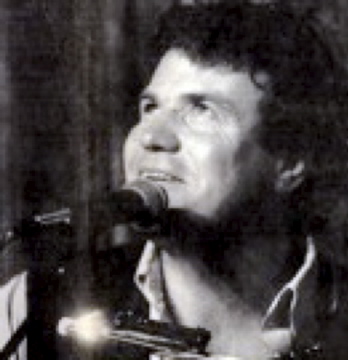
On the Green, in Concord, MA Every Thursday Night for over thirty years…
“A Song Singing, Word Slinging, Story Swapping, Ballad Mongering, Folksinger, Teacher, & Poet…”
Fitz’s Recordings
& Writings
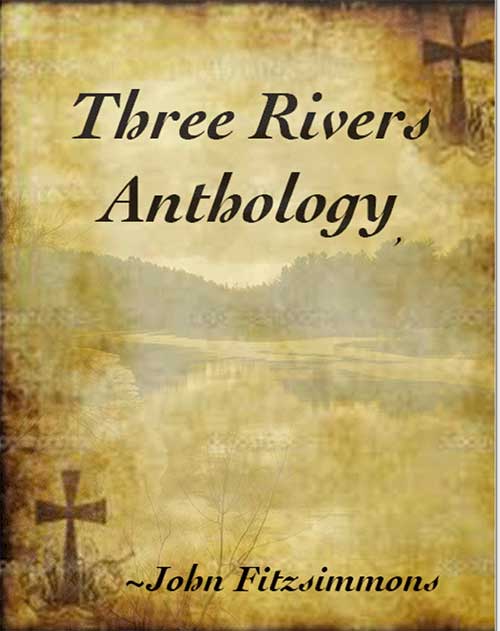
Songs, poems, essays, reflections and ramblings of a folksinger, traveler, teacher, poet and thinker…
Download for free from the iTunes Bookstore
“A Master of Folk…”
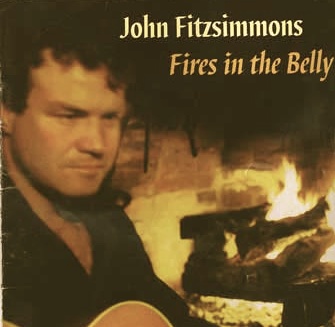
Fitz’s now classic recording of original songs and poetry…
Download from the iTunes Music Store
“A Masterful weaver of song whose deep, resonant voice rivals the best of his genre…”
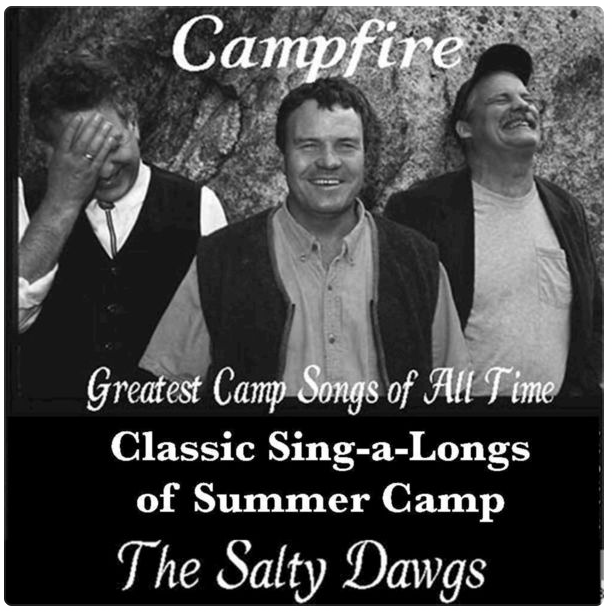
“2003: Best Children’s Music Recording of the Year…”
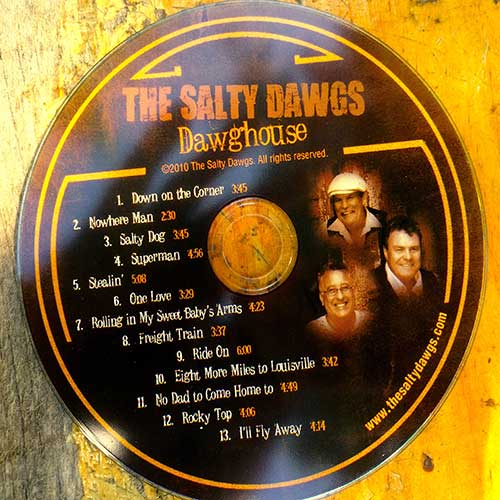
Fitz & The Salty Dawgs Amazing music, good times and good friends…
TheCraftedWord.org

Writing help
when you need it…
“When the eyes rest on the soul…that’s Fitzy…”

0 Comments