Braes of Yarrow
(Child Ballad #14)
‘I dreamed a dreary dream this night,
That fills my heart wi sorrow;
I dreamed I was pouing the heather green
Upon the braes of Yarrow.
‘O true-love mine, stay still and dine,
As ye ha done before, O;’
‘O I’ll be home by hours nine,
From the braes of Yarrow.’
I dreamed a dreary dream this night,
That fills my heart wi sorrow;
I dreamed my love came headless hame,
Fromthe braes of Yarrow!
‘O true-love mine, stay still and dine,
As ye ha done before, O;’
‘O I’ll be home by hours nine,
From the braes of Yarrow.’
‘O are ye going to hawke‘ she says,
‘As ye ha done before, O?
Or are ye going to wield your brand,
Upon the braes of Yarrow?’
‘O I am not going to hawke,’ he says,
‘As I have done before, O,
But for to meet your brother Jhon,
Upon the braes of Yarrow,
As he went down yon dowy den,
Sorrow went him before, O;
Nine well-built men lay waiting him,
Upon the braes of Yarrow.
‘I have your sister to my wife,
‘Ye’ think me an unmeet marrow;
But yet one foot will I never flee
Now frae the braes of Yarrow.’
‘Than’ four he killd and five did wound,
That was an unmeet marrow!
‘And he had weel nigh wan the day
Upon the braes of Yarrow.’
‘Bot’ a cowardly ‘loon‘ came him behind, (10)
Our Lady lend him sorrow!
And wi a rappier pierced his heart,
And laid him low on Yarrow.
‘Now Douglas’ to his sister’s gane,
Wi meikle dule and sorrow:
‘Gae to your luve, sister,’ he says,
‘He’s sleeping sound on Yarrow.’
As she went down yon dowy den,
Sorrow went her before, O;
She saw her true-love lying slain
Upon the braes of Yarrow.
‘She swoond thrice upon his breist
That was her dearest marrow;
Said, Ever alace and wae the day
Thou wentst frae me to Yarrow!’
She kist his mouth, she kaimed his hair,
As she had done before, O ;
She ‘wiped’ the blood that trickled doun
Upon the braes of Yarrow.
Her hair it was three quarters lang,
It hang baith side and yellow;
She tied it round ‘Her’ white hause-bane,
‘And tint her life on Yarrow.’
 I am indebted to the many friends who share my love of traditional songs and to the many scholars whose works are too many to include here. I am also incredibly grateful to the collector’s curators and collators of Wikipedia, Mudcat.org, MainlyNorfolk.info, and TheContemplator.com for their wise, thorough and informative contributions to the study of folk music.
I share their research on my site with humility, thanks, and gratitude. Please cite their work accordingly with your own research. If you have any research or sites you would like to share on this site, please post in the comment box. Thanks!


"The Dowie Dens o Yarrow", also known as "The Braes of Yarrow" or simply "Yarrow", is a Scottish border ballad (Roud 13, Child 214). It has many variants (Child collected at least 19) and it has been printed as a broadside, as well as published in song collections. It is considered to be a folk standard, and many different singers have performed and recorded it.
Synopsis
The song describes an unequal conflict between a group of men and one man, concerning a lady. This takes place in the vicinity of Yarrow. The one man succeeds in overcoming nearly all his opponents but is finally defeated by (usually) the last one of them.
In some versions, the lady (who is not usually named) rejects a number (often nine) wealthy suitors, in preference for a servant or ploughman. The nine make a pact to kill the other man and they ambush him in the "Dens of Yarrow".
- There lived a lady in the West,
- I neer could find her marrow;
- She was courted by nine gentlemen
- And a ploughboy-lad in Yarrow.
- These nine sat drinking at the wine,
- Sat drinking wine in Yarrow;
- They made a vow among themselves
- To fight for her in Yarrow.[1]
In some versions it is unclear who the nine (or other number of men) are; in others, they are brothers or are men sent by the lady's father.[2] In the ensuing fight, eight of the attackers are generally killed or wounded, but the ninth (often identified as the lady's brother, John or Douglas) fatally wounds the victim of the plot, usually by running him through with a sword and often by a cowardly blow, delivered from behind.
- Four he hurt, an five he slew,
- Till down it fell himsell O;
- There stood a fause lord him behin,
- Who thrust his body thorrow.[3]
The lady may see the events in a dream, either before or after they take place and usually has some sort of dialogue with her father about the merits of the man who has been ambushed and killed.
- "O hold your tongue, my daughter dear,
- An tak it not in sorrow;
- I’ll wed you wi as good a lord
- As you’ve lost this day in Yarrow."
- "O haud your tongue, my father dear,
- An wed your sons wi sorrow;
- For a fairer flower neer sprang in May nor June
- Nor I’ve lost this day in Yarrow."[4]
Some versions of the song end with the lady grieving: in others she dies of grief.[5]
Commentary
Dowie is Scots and Northumbrian English for sad, dismal, dull or dispirited,[6][7] den Scots and Northumbrian for a narrow wooded valley.[8][7]
The ballad has some similarities with the folk song "Bruton Town" (or "The Bramble Briar"). This song contains a similar murderous plot, usually by a group of brothers, and directed against a servant who has fallen in love with their sister. It also includes the motif, present in some versions of "The Dowie Dens o Yarrow", of the woman dreaming of her murdered lover before discovering the truth of the plot. However, the rhythmical structure of the two songs is quite different and there is no obvious borrowing of phraseology between them.[9]
Historical background
The song is closely associated with the geographical area of the valley of the Yarrow Water that extends through the Scottish borders towards Selkirk. Almost all versions refer to this location, perhaps because the rhyming scheme for multiple verses, in most versions, relies on words which more or less rhyme with "Yarrow": "marrow", "morrow", "sorrow", "thorough", "narrow", "arrow" and "yellow" for example.
The song is believed to be based on an actual incident. The hero of the ballad was a knight of great bravery, popularly believed to be John Scott, sixth son of the Laird of Harden. According to history, he met a treacherous and untimely death in Ettrick Forest at the hands of his kin, the Scotts of Gilmanscleugh in the seventeenth century.[10] However, recent scholars are sceptical about this story as the origin of the song.[11]
Cultural relationships
Standard references
- Roud 13
- Child 214
- A version is published in Gordon Hall Gerould's Old English and Medieval Literature[12]
Broadsides
There are several broadside versions:
- National Library of Scotland, reference RB.m.143(120)[13]
Textual variants
There are numerous versions of the ballad. Child recorded at least 19, the earliest of which was taken from Walter Scott's Minstrelsy of the Scottish Border (1803).[14] However, the song is much older: William Hamilton of Bangour wrote a poem called "The Braes of Yarrow" which has some basis in the ballad. It appears in a collection of his poems first published in Edinburgh in 1724.[citation needed] It is said to be "written in imitation of an old Scottish ballad on a similar subject".[15][16] There are also American versions which go under the corrupted title of "Derry Dens of Arrow."[17] The ballad has also been linked[by whom?] to the American folk song "The Wayfaring Stranger," but there is little solid evidence for any relationship between them.
Non-English variants
Child points out the similarity with "Herr Helmer", a Scandinavian ballad (TSB D 78; SMB 82; DgF 415; NMB 84). In this, Helmer marries a woman whose family are in a state of feud with him because of the unavenged killing of her uncle. Helmer meets his seven brothers-in-law and a fight ensues. He kills six, but spares the seventh who treacherously kills him.[18]
Recordings
| Album/Single | Performer | Year | Variant | Notes | |
|---|---|---|---|---|---|
| The English and Scottish Popular Ballads, Volume III | Ewan MacColl & A. L. Lloyd | 1956 | MacColl's version is taken from the singing of his father | ||
| Carolyn Hester | Carolyn Hester | 1961 | |||
| Strings and Things | The Corries | 1970 | |||
| Stargazer | Shelagh McDonald | 1971 | |||
| Moonshine | Bert Jansch | 1973 | |||
| As I Went Over Blackwater | Mick Hanly | 1980 | The Dewey Dens of Yarrow | ||
| Open the Door | Pentangle | 1985 | |||
| The Voice of the People: O'er His Grave the Grass Grew Green | John Macdonald | 1988 | |||
| The Voice of the People: It Fell Upon a Bonny Summer's Day | Willie Scott | 1988 | |||
| By Yon Castle Wa' | Heather Heywood | 1993 | |||
| And So It Goes | Steve Tilston | 1995 | |||
| Outlaws and Dreamers | Dick Gaughan | 2001 | Variant of Child 214S | ||
| The Mountain Announces | Scatter | 2006 | |||
| Fairest Floo'er | Karine Polwart | 2007 | |||
| The Voice of the People: Good People Take Warning | Mary Anne Stewart | 2012 | |||
| Fall Away Blues | Red Tail Ring | 2016 | "Yarrow" | ||
| The Back Roads | The Back Roads | 2016 | "Yarrow" |
Musical variants
The following is the tune as sung by Ewan MacColl:

Scottish composer Hamish MacCunn composed an orchestral ballad of the same title.
References
- ↑ Child version 214Q
- ↑ Child version 214J
- ↑ Child version 214I
- ↑ Child version 214B
- ↑ Child version 214D
- ↑ Robinson, Mairi (1985). The Concise Scots Dictionary. Aberdeen: Aberdeen University Press. p. 158. ISBN 0-08-028492-2.
- 1 2 Richard Oliver Heslop Northumberland Words. London: for the English Dialect Society (Publications; vol. 28) by Kegan Paul, Trench, Trübner & Co., 1892
- ↑ Robinson, Mairi (1985). The Concise Scots Dictionary. Aberdeen: Aberdeen University Press. p. 141. ISBN 0-08-028492-2.
- ↑ "The Bramble Briar" published in R. Vaughan Williams & A. L. Lloyd: The Penguin Book of English Folk Songs, Penguin Books, 1959
- ↑ Scott, Sir Walter. "Minstrelsy of the Scottish Border". humanitiesweb.org. Vol. II. Retrieved 12 July 2007.
- ↑ A. L. Lloyd: Folk Song in England, Paladin, 1975. p. 129
- ↑ Gordon Hall Gerould: Old English and Medieval Literature, Ayer Publishing, 1970. ISBN 0-8369-5312-6. p. 360
- ↑ National Library of Scotland
- ↑ Francis James Child: The English and Scottish Popular Ballads; Vol. IV, p. 160
- ↑ Thomas Percy: Reliques of Ancient English Poetry: Consisting of Ballads, Songs, and Other Pieces of Our Earlier Poets, Edinburgh: James Nichol, 1858; p. 294
- ↑ William Hamilton: The Poems and Songs of William Hamilton of Bangour, Edinburgh, 1850
- ↑ "Derry Dens of Arrow". Bluegrass Messengers.
- ↑ Child p. 164

Source: Mainly Norfolk
The Dowie Dens of Yarrow
[ Roud 13 ; Child 214 ; G/D 2:215 ; Ballad Index C214 ; trad.]
The Border Ballad The Dowie Dens o’ Yarrow was in the repertoire of many traditional and revival singers:
Jimmy McBeath sang The Dowie Dens o’ Yarrow on November 14, 1953 in a recording by Alan Lomax that was released in 2002 on his Rounder Records anthology Tramps and Hawkers.
Ewan MacColl sang The Dowie Dens o’ Yarrow in 1956 on his and A.L. Lloyd’s Riverside anthology The English and Scottish Popular Ballads (The Child Ballads) Volume III. This and 28 other ballads from this series were reissued in 2009 on MacColl’s Topic CD Ballads: Murder·Intrigue·Love·Discord. Kenneth S. Goldstein commented in the album’s booklet:
Child printed nineteen texts of this beautiful Scottish tragic ballad, the oldest dating from the 18th century. Sir Walter Scott, who first published it in his Minstrelsy of the Scottish Border (1803), believed that the ballad referred to a duel fought at the beginning of the 17th century between John Scott of Tushielaw and Walter Scott of Thirlestane in which the latter was slain. Child pointed out inaccuracies in this theory but tended to give credence to the possibility that the ballad did refer to an actual occurrence in Scott family history that was not too far removed from that of the ballad tale.
In a recent article, Norman Cazden discussed various social and historical implications of this ballad (and its relationship to Child 215, Rare Willie Drowned in Yarrow), as well as deriding Scott’s theories as to its origin.
The ballad still exists in tradition in Scotland. It has been reported rarely in America, a fine text having been collected in New York State.
Davie Stewart sang The Dowie Dens of Yarrow in a recording by Hamish Henderson in 1954/55 or 1962 that was released in 1978 on his eponymous Topic LPDavie Stewart. Another recording by Alan Lomax in London in 1957 was included in 2002 on Stewart’s Rounder Records CD Go On, Sing Another Song. One of these two versions was also included on the anthology The Child Ballads 2 (The Folk Songs of Britain Volume 5; Caedmon 1961; Topic 1968).
Belle Stewart sang The Dowie Dens o’ Yarrow on the 1965 Topic record The Stewarts of Blair. This track was included in 1966 on the Topic Sampler No 5, A Prospect of Scotland.
Gordeanna McCulloch sang The Dowie Dens o’ Yarrow in 1965 on the Topic album New Voices from Scotland. This track was included in 1997 on the Fellside CD reissue of her Topic album Sheath and Knife. and in 2009 on Topic 70th anniversary anthology Three Score and Ten.
Isla Cameron sang Yarrow in 1966 on her eponymous Transatlantic album Isla Cameron.
Willie Scott sang The Dowie Dens o’ Yarrow on November 3, 1967 in a recording by Bill Leader that was released on his 1968 Topic record The Shepherd’s Song. This track was included in 1998 on the Topic anthology It Fell on a Day, a Bonny Summer Day (The Voice of the People Series Volume 17).
Shelagh McDonald sang Dowie Dens of Yarrow in 1971 on her second and last album, Stargazer.
John MacDonald sang The Dewie Dens o’ Yarrow in November 1974 in a recording by Tony Engle and Tony Russell that was released on his 1975 Topic recordThe Singing Molecatcher of Morayshire. This track was included in 1998 on the Topic anthology O’er His Grave the Grass Grew Green (The Voice of the People Series Volume 3).
Bob Davenport and The Rakes sang The Dowie Dens o’ Yarrow in 1977 on their Topic LP 1977. He learned this song from the singing of Davie Stewart.
Paul and Linda Adams sang The Dowie Dens of Yarrow in 1978 on their Fellside album Among the Old Familiar Mountains.
Jane Turriff of Mintlaw, Aberdeenshire, sang Dowie Dens o’ Yarrow in a 1979 recording made by Peter Cooke on her 1996 Springthyme album Singing Is Ma Life. This track was also included in 2000 on the EFDSS anthology Root & Branch 2: Everybody Swings. The original album’s notes commented:
The Yarrow valley runs from the Border hills south of Edinburgh to join the river Tweed near Selkirk. Although this is a genuine Border Ballad, James Duncan calls it “unquestionably the most widely known of our old ballads in the North East.” Greig-Duncan has eleven texts, none with Jane’s distinctive opening verse. There is much similarity, however, when it comes to the combat verses. It is not clear in Jane’s version who the murderer is, but she has her own ideas: Jane: He wis goin for them aa, bit een o them came at him fae the back. It must have been his brither-in-law.
On one occasion, Jane sang this song to a different melody, unusual for a traditional singer and she sometimes begins with two extra verses which do help clarify the motive. These lines also appear as verses two and three in Agnes Lyle of Kilbarchan’s version, noted by William Motherwell in 1825 (Child C). Tennies Bank probably refers the Tinnis Burn near Newcastleton in the Scottish borders.
Alison McMorland and Peta Webb sang The Dowie Dens o’ Yarrow in 1980 on their Topic LP Alison McMorland & Peta Webb.
Gary and Vera Aspey sang The Dowie Dens of Yarrow, “a Scottish traditional song which happens to be a great favourite of ours”, in 1979 on their Topic albumSeeing Double.
Iain MacGillivray sang The Dowie Dens o’ Yarrow in 1986 on his Fellside album Rolling Home.
Heather Heywood sang The Dowie Dens of Yarrow in 1993 on her Greentrax CD By Yon Castle Wa’.
Steve Tilston sang The Dowie Dens of Yarrow on his 1995 album And So It Goes….
Elspeth Cowie sang Dowie Dens of Yarrow in 1998 on Chantan’s Culburnie CD Primary Colours.
Janet Russell sang Dowie Dens of Yarrow in 1998 on the Fellside CD Fyre and Sworde: Songs of the Border Reivers. The album’s sleeve notes commented:
Arguably one of the finest of the Border Ballads. In simple terms the theme is Romeo and Juliet. This fits conveniently with the reiving theme of two families is dispute. It also deals with the theme of the girl courting beneath her station in life. Whatever, the young man is clearly regarded as unsuitable by the girl’s family. As with many of the songs with no clear historical connection attempts have been made to give the song a real-life background. A version of the song collected from one William Walsh, a Peebleshire cottar and poet has as its opening line, “At Dryhope lived a lady fair”. This has led to the theory that the lady was the daughter of Scott of Dryhope, a notorious Reiver. Whether or not it has an historical basis becomes less significant against the overwhelming tragedy of the song. Janet’s text, given to her by Sandra Kerr, has a place name “Thurrow” which we have not been able to locate. The text was collected in the Borders and so it has probably been altered by the oral process from Yarrow. The text has several ritual, magical and folklore allusions: the dream, the long yellow hair being wrapped three times around the body, etc. Janet’s stunning delivery of the song serves to illustrate why these songs are often called the “Big Ballads”.
Willie Beattie of Caulside, Dumfriesshire, sang The Dowie Dens o’ Yarrow to Mike Yates in 2000. This recording was included in 2001 on the Musical Traditions anthology of song and music from the Mike Yates Collection, Up in the North and Down in the South, and in 2003 on his Kyloe anthology of ballads, songs and tune from the Scottish Borders, Borderers. Yates commented in the former album’s booklet:
One of the best-known of the ‘Border ballads’, although very few sets have been collected outside of Scotland itself. While the ballad is set in a known location, the Yarrow Valley—a few miles to the west of Selkirk, it is not known if it is based on an actual historic event. Sir Walter Scott believed that it referred to a duel fought between John Scott of Tushielaw and his brother-in-law Walter Scott of Thirlestane, where the latter was slain; but others have doubted this, citing the ballad’s similarity to the Scandinavian Herr Helmer. In this ballad Helmer has married a lady whose family are at feud with him for the unatoned slaughter of her uncle; he meets her seven brothers, who will hear of no satisfaction; there is a fight; Helmer kills six, but spares the seventh, who treacherously kills him.
The ballad has been sung for a long time in Liddesdale and Eskdale, and Frank Kidson noted a set from a Mrs Calvert of Gilnockie—he same Gilnockie that is close to Willie Beattie’s home and which is mentioned in the ballad of Johnny Armstrong. Mrs Calvert was the granddaughter of Tibbie Shiel, who had previously given songs to Sir Walter Scott and James Hogg, the ‘Etterick Shepherd’. Willie learnt his version of the ballad from his one-time neighbour, the well-known shepherd and singer Willie Scott, who can be heard singing it on [It Fell on a Day, a Bonny Summer Day (The Voice of the People Series Volume 17)]. Davie Stewart’s version is on [The Child Ballads 2 (The Folk Songs of Britain Volume 5; Caedmon 1961; Topic 1968)], and an Irish set, sung by Brigid Murphy, of Forkhill, Co Armagh, is included on the European Ethnic cassette Early Ballads in Ireland (no issue number), edited by Hugh Shields and Tom Munnelly.
Dick Gaughan sang The Dowie Dens o’ Yarrow on his 2001 Greentrax CD Outlaws and Dreamers; this recording was also included in 2006 on his anthology The Definitive Collection.
Wiliam Williamson of Ladybank, Fife (the son of Duncan Williamson) sang The Dowie Dens of Yarrow to Mike Yates on September 3, 2001. This recording was included in the following year on Yates’ Kyloe anthology of songs, stories and ballads from Scottish Travellers, Travellers’ Tales Volume 1.
Sara Grey sang Derry Dens of Arrow in 2005 on her Fellside CD A Long Way from Home.
Tom Spiers sang The Dowie Dens o Yarrow on Shepheard, Spiers & Watson’s Springthyme 2005 CD They Smiled As We Cam In. He commented in the album’s booklet:
This was one of the first ballads I learnt back in the 1960s and the text is pretty close to the version in Norman Buchan’s 101 Scottish Songs which was the most accessible source of traditional song in those days. The haunting tune is from the singing of Jessie MacDonald and was collected by Peter Hall on one of his field recording expeditions.
Karine Polwart sang Dowie Dens of Yarrow in 2007 on her CD Fairest Floo’er (and the album title is a phrase from this song). This track was also included in 2013 on her Borealis anthology Threshold. A live recording from Cambridge Folk Festival 2008 was included on her festival EP A Wee Bit Extra.
Drew Wright sang The Dowie Dens o’ Yarrow in 2011 on the B-Side of the Drag City single with Alastair Roberts and Karine Polwart, Captain Wedderburn’s Courtship.
Andy Turner heard Dowie Dens of Yarrow for the first time in 1977 on Bob Davenports album mentioned above. He sang it as the January 28, 2017 entry of his project A Folk Song a Week.
Lyrics
| Willie Scott sings The Dowie Dens o’ Yarrow | Janet Russell sings The Dowie Dens of Yarrow |
|---|---|
| There lived a lady in the north, You could scarely find her marrow, She was courted by nine noblemen And her ploughman boy o’ Yarrow. |
In Thurrow town there lived a maid, Ye scarce could find her marrow, And she’s forsook nine noblemen For a ploughboy lad frae Yarrow. |
| Her faither he got word o’ that And he’s bred a’ her sorrow; He sent him forth to fight wi’ nine On the dowie dens o’ Yarrow. |
|
| She’s washed his face and she’s kaimed his hair As she’s aft done before-O, And she’s made him look a knight sae fine To fecht for her on Yarrow. |
|
| “Stay here, stay here, my bonnie lad And bide wi’ me the morrow, For my cruel brothers will ye betray On the dowie dens o’ Yarrow.” |
|
| As he came ower yon high, high hills And doon yon path sae narrow, There he spied nine noblemen For to fight with him on Yarrow. |
As he gaed up by Tennies Hill And doon the braes o’ Yarrow, ‘T was there in a den were nine armed men Come to fecht wi’ him on Yarrow. |
| “Did ye come here tae drink the wine? Did ye come here tae borrow? Or did ye come tae wield yer brand On the dowie dens o’ Yarrow?” |
|
| “I am not come tae drink the wine Nor yet to beg or borrow. But I am come tae wield my brand On the dowie dens o’ Yarrow!” |
|
| “If I see you all, you are nine men, That’s an unfair marrow. But I will fecht while last my breath On the dowie dens o’ Yarrow.” |
|
| There was three he slew and three withdrew, And three lay deadly wounded, Till her brother John stepped in behind+ And pierced his body through.” |
And three he slew and three they flew And three he’s wounded sairly, Till her brither John stood up behind And ran his body thorough. |
| “Go home, go home, you false young man, And tell your sister sorrow, That her true-love John lies dead and gone In the dowie dens o’ Yarrow.” |
|
| As he gaed ower yon high, high hills And doon yon path sae narrow, There he spied his sister dear She was coming fast for Yarrow.” |
|
| “ Oh, brother dear, I’ve dreamt a dream And I hope it will not prove sorrow. I dreamt that your were spilling blood In the dowie dens o’ Yarrow.” |
“O mither, I hae dream’d a dream, A dream o’ dule and sorrow. I dream’d that I pu’d heather bells On the dowie dens o’ Yarrow.” |
| “Oh, sister dear, I’ll read your dream And I’m sure it will prove sorrow. Your true-love John lies dead and gone And a bloody corpse on Yarrow.” |
“O dochter I hae read your dream, I doubt it will prove sorrow. For your ain true love is pale and wan On the dowie dens o’ Yarrow.” |
| As she gaed up yon high high hill And doon the houms o’ Yarrow, ‘T was there she saw her ain true love Lying pale and wan on Yarrow. |
|
| She’s washed him in a clear well-strand, She’s dried him wi’ the hollan. And aye she sighed, alas she cried, “For my love I had him chosen.” |
|
| Now this fair maid’s hair was three-quarters long And the colour of it was yellow. She tied it roond his middle small, As she’s carried him hame tae Yarrow. |
Her hair it being three quarters lang, The colour it being yellow. She’s tied it roond his middle sae small And she’s bore him doon tae Yarrow. |
| “Oh, daughter dear, dry up your tear And dwell no more in sorrow, For I’ll wed you to far higher degree Than your ploughman boy o’ Yarrow.” |
“O hold your tongue, my daughter dear And talk no more of sorrow, I’ll wed you soon on a better match Than the ploughboy lad frae Yarrow.” |
| “Oh, father dear, you have seven sons, You can wed them all tomorrow. But a fairer floo’er there never bloomed Than my ploughman boy o’ Yarrow.” |
“O faither, ye hae siven sons, Ye may wed them a’ tomorrow. Ye may wed your sons, but ye’ll ne’er wed The bonny lass of Thurrow.” |
Jane Turriff sings The Dowie Dens o Yarrow
“You took my sister to be your wife
And you thought not her marrow;
You rook her frae her father’s side,
When she was a rose on Yarrow.”
“I took your sister to be my wife
And I made her my marrow;
I took her frae her father’s side
And she’s still the rose o Yarrow.”
He’s gaen tae his lady gan,
As he had done before o,
Sayin, “Madam I maun keep a tryst
On the dowie dens o Yarrow.”
“O bide at hame ma lord,” she said,
“O bide at hame my marrow,
For my three brothers, they will slay thee,
In the dowie dens o Yarrow.”
“Hold yer tongue, ma lady dear
What’s aa this strife and sorrow? [grief and
For I’ll come back to thee again,
In the dowie dens o Yarrow.”
She kissed his cheeks, she kissed his hair,
As she had done before o
And gied him a brand doon by his side
An he’s awa tae Yarrow.
So he’s gan up yon Tennies Bank
A wite he gaed wi sorrow [i.e. I know he gaed
An there he met nine armed men [spied nine
In the dowie dens o Yarrow.
“O come ye here tae howk or hound, [i.e. hawk
Or drink the wine sae clear o,
Or come ye here tae pairt yer land
On the dowie dens o Yarrow?”
“I come not here tae howk or hound,
Or drink the wine sae clear o,
Nor come I here tae pairt ma land,
But I’ll fight wi you in Yarrow.”
So four he’s hurt an five he’s slain
In the bloody dens o Yarrow,
Till a cowardly man cam him behind
An he’s pierced his body through o.
“Oh gae hame, gae hame, ma brither John,
Whit’s aa this grief and sorrow? [dule and
Gae hame an tell ma lady dear
That I sleep sound in Yarrow.”
So he’s gane up yon high, high hill
As he had done before o
An there he met his sister dear,
She wis comin fast tae Yarrow.
“Oh I dreamt a dreary dream yestreen,
God keep us aa fae sorrow!
I dreamt I pulled the birk sae green,
(or: I dreamt that I wis pu’in heather bells)
On the dowie dens o Yarrow.”
“O sister I will read yer dream
And oh it has come sorrow:
Your true love he lies dead an gone,
He was killed, was killed in Yarrow.”
Acknowledgements
Janet Russell’s verses were transcribed by Roberto in the the Mudcat Café thread Lyr Add: Dowie Dens of Yarrow (from Janet Russell).
Performances, Workshops, Resources & Recordings
The American Folk Experience is dedicated to collecting and curating the most enduring songs from our musical heritage. Every performance and workshop is a celebration and exploration of the timeless songs and stories that have shaped and formed the musical history of America. John Fitzsimmons has been singing and performing these gems of the past for the past forty years, and he brings a folksy warmth, humor and massive repertoire of songs to any occasion.
Festivals & Celebrations Coffeehouses School Assemblies Library Presentations Songwriting Workshops Artist in Residence House Concerts Pub Singing Irish & Celtic Performances Poetry Readings Campfires Music Lessons Senior Centers Voiceovers & Recording
““Beneath the friendly charisma is the heart of a purist gently leading us from the songs of our lives to the timeless traditional songs he knows so well…”
Join Fitz at The Colonial Inn
“The Nobel Laureate of New England Pub Music…”
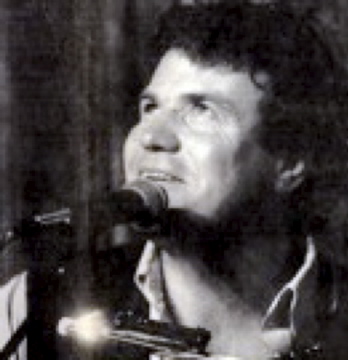
On the Green, in Concord, MA Every Thursday Night for over thirty years…
“A Song Singing, Word Slinging, Story Swapping, Ballad Mongering, Folksinger, Teacher, & Poet…”
Fitz’s Recordings
& Writings
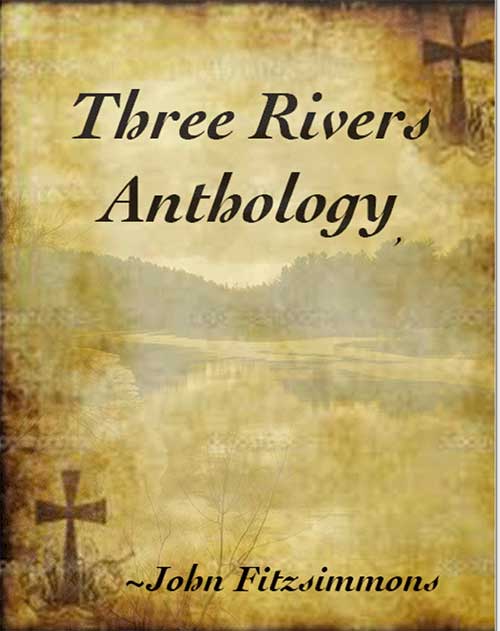
Songs, poems, essays, reflections and ramblings of a folksinger, traveler, teacher, poet and thinker…
Download for free from the iTunes Bookstore
“A Master of Folk…”
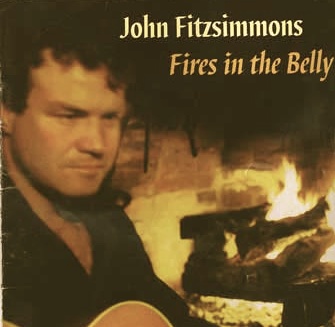
Fitz’s now classic recording of original songs and poetry…
Download from the iTunes Music Store
“A Masterful weaver of song whose deep, resonant voice rivals the best of his genre…”
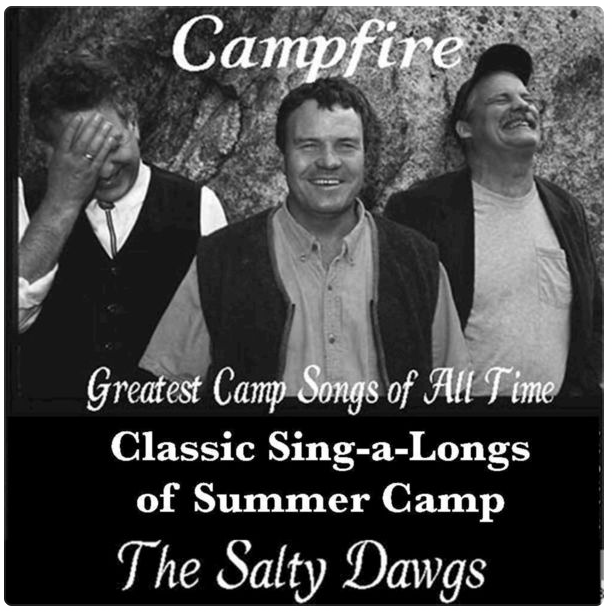
“2003: Best Children’s Music Recording of the Year…”
Fitz & The Salty Dawgs Amazing music, good times and good friends…
TheCraftedWord.org
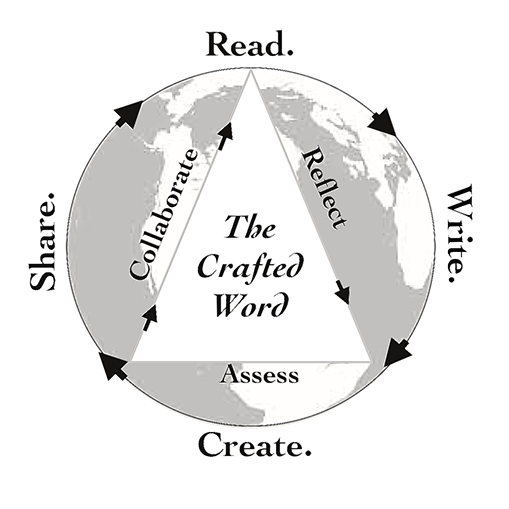
Writing help
when you need it…
“When the eyes rest on the soul…that’s Fitzy…”
0 Comments