by | Oct 29, 2026 | Essays, Journal
There are thousand hacking at the branches of evil to one striking at the root.
~Henry David Thoreau
 I just spent a long day deconstructing our backyard. EJ sold his alpacas, and so our fenced in pasture and barn can now return to its suburban origins as a shed and a yard. The good fence posts and wire we saved to give to another kid’s dreams or another man or woman’s backyard farm. Some friends stopped by and said I could probably get “good money” for those posts and wire, but I gather I’d get a better bargain giving them away and practice a poor man’s philanthropy. Maybe someone will etch my name in a cedar fencepost like they might a school lobby or a hospital wing, and someday those posts will get thrown in some early spring fire and a warm soul might think, “Who the hell is John Fitz?” and maybe someone will remember the backyard farmer in Maynard who gave away a few fence posts and a couple hundred feet of livestock fencing.
I guess you go to give what you got and not make a big deal of it. The other day I drove up to New Hampshire to move our old bus out of the camp. I didn’t quite trust it to make the 100 mile trip back home, so I planned to store it at a campground up the road and deal with it in the spring. I wasn’t eager though to pay the three hundred dollar storage fee. As I pulled out of the tote road and on to the main road, a local logger, Pat Hines, stopped and asked me what was up. After I told him, he barely hesitated and said, “Hell, don’t pay three hundred. Park it at my place and spend the three hundred a better way.” So I eased the 1978 Wanderlodge into his side yard about thirty seconds down the road. He smiled and said, “Looks good to me. See you in the spring.”
(more…)
by | Oct 29, 2026 | Essays, Journal, Teaching
Stories are a communal currency of humanity.
― Tahir Shah, In Arabian Nights

The most powerful and enduring connection we share as a human race is our desire and need to share stories. We engage in the art of storytelling more than most of us ever realize; whether we are describing our kids’ soccer games, critiquing the latest HBO series, telling a ribald joke, or remembering a long lost friend, event, memory, book, or experience. We listen to stories in songs, in long-winded meetings, in late night BBC broadcasts or self aggrandizing talk radio, on long car rides, and in intimate conversations with friends and lovers. We tell stories for reasons that are so deeply embedded in our psyche and DNA that storytelling is a natural and intuitive response to almost any situation. Sometimes, when stuck with a rather boorish person, we wonder why the sam hill that person insists on telling insipid stories; but, most of the time we listen, reflect, and respond—usually with stories of our own. It is out of this verbal give and take—our personal and cultural oral tradition—that we reflect and grow and expand the range of our limitations. It is our way to “shuffle off our mortal coil” while still alive. Through stories we live outside and beyond the confines of our short sojourn on earth, but while we are here and struggling through the vicissitudes of everyday life, it is stories that feed our roots and spread our canopy upwards into an infinite sky.
Stories that are worth telling once are worth retelling again and again. Out of this stream of unconscious revision a story is perfected until that story becomes part and parcel of our personal, interconnected, and communal eternity. The best stories survive the ravages of time because we know and sense with an almost mystic unknowingness that a particular story is too good or important to forget. These stories become the canons of our universal literature. We go back to those stories like spawning salmon to the streams of their birth. We need to know our source, and the best and most enduring stories lead us there, even against the tides, currents, and shoals that seem to bar the way. We need to tell and hear and read the stories that bring us to these places. We need to limit the trivial and search for and embrace the profound stories that have weathered the ravages of time. We need to ask ourselves why we read what we read, listen to what we choose to listen to, and tell what we feel needs to be told. We can’t go on accepting the debased and vapid simply because it is there and easy at hand in its glorified, extolled, and commercialized abundance. We need to seek the higher fruit and walk among the dappled grass and pluck until time and time is done, the the silver apples of the moon [and] the golden apples of the sun.*
Today is as good a day as any to look back and in and begin moving forward. Shut something off, and turn something else on. There is something else on your shelf, something in your mind, and something within your range that is waiting for you.
*from “Song of the Wandering Aengus” —W.B. Yeats
by | Oct 29, 2026 | Essays, Journal, Teaching
Anything worth succeeding in is worth failing in
~Ben Franklin
“Quit your whining and complaining” is probably a clause that can easily be translated into every language in every culture on earth, for, from what I know and have seen in the world, bitching about anything resembling a chore is probably embedded in our DNA as humans. And so it is at Fenn. Every year as WW Fenn presentations loom near I find myself wondering abut the whining and complaining about something as simple (yes it is!) and noble (yes it is!) and worthwhile (yes it is!) as our speaking contest. My only beef it that it is a contest. It doesn’t need to be a contest, nor should you think of it as a contest; rather, it is an opportunity to practice one of the most amazing things of being human–which is presenting and interpreting greatness in the miraculous song of the human voice.
(more…)
by | Oct 29, 2026 | Essays, Journal, Teaching
You can’t kill time without wounding eternity.
~Henry David Thoreau
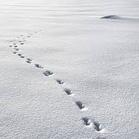
Let it snow, let it snow, let it snow…but don’t let it totally define your day. Most of us see a snow day as an unexpected vacation day, though really what it is could be called “a day of opportunity.” We are given a blank slate and a whole slew of opportunities to fill that slate. Will you, to steal a phrase, “Carpe Diem [seize the day,” or will you wound the time given to you by doing, well, nothing that lasts. Time is a finite gift, and how you use or abuse that time is a measure of your own wisdom.
As much as any of you, I feel the need to rest; I feel the pressure of school, life, and family in much the same ways you do. What I might feel more acutely is the finiteness of time. I know that todays and tomorrows come and go like leaves in a storm, and if tomorrow I see a field of white in my backyard, then I damn well better see my tracks in the snow–the smoking gun proof that I did something with my day: I need to be able to say, “Yeah, I made that snowman; I read that book, penned that poem, and sang that song.” I need to know that I cooked those meatballs, cleaned that room, and stacked that wood. I want my neighbor to come home surprised that his driveway has been shoveled; I want my wife to discover that I can actually fold clothes, and I want my kids to “see” that there is more to the day than an iPad, Xbox, and “Duck Dynasty.”
Do I want you to do some English work? Yes, I do. Open your journal and pen a few thoughts. Go to your classmate’s blogs and journals and leave some comments—make someone else’s day as well as your own. Actually figure out the comma rules. Read what you need to read. End the day with more in the do column than in the didn’t column. It is a recipe for life that works.
Leave some tracks in the snow.
Practice wisdom.
And smile.
by | Oct 29, 2026 | Essays, Journal, Teaching
The rain falls;
The grass grows:
Nothing is done.
Nothing is left undone
~Buddha
Sometimes you just do what you got to do, and that never changes from the first time you take out the trash as a kid until the time in life where you are taking care of little chores in your retirement home somewhere–hopefully somewhere warm:) Attending to the small and large chores of life is part and parcel of being human. Sometimes those chores are self-serving; sometimes they serve some community/family you are a part of, and sometimes they are just “things” that you do because no one else seems interested in taking care of that chore; but, in all cases a chore, by its very meaning, implies doing something you might rather no do…but you do it anyways. We all have chores to take care of. How you approach those chores says a lot about your depth of character, and as much as any other quality you have determines your future success in life.
You might be thinking, ‘O, man, I’m in trouble because I hate chores and expend more time and effort avoiding them than it would take in simply doing them,’ but luckily that’s a natural response of adolescence; however, it is a horribly bad habit to continue as a youth–and downright irresponsible as an adult–if only because as an adult “you should know better.” By the time you are an adult you will have seen and experienced the downside of neglecting chores, which is probably why most of us parents can be pretty obnoxious when it comes to making our kids do what they should and need to do. When I was a kid Saturday morning was always our time for chores–and it was time for chores for any friend of mine that happened to come by our house, and for some reason, I remember a lot of friends showing up to help with our chores. Maybe because they liked hearing my father call me
lame-brained or a
knuckle-head whenever I did something less than perfect, or maybe (and I like to think this is true) it was because there was a certain nobility around how the Fitz’s did their chores. Chores were never a point of discussion; chores were more a ritual that kept our little slice of heaven on the corner of Longfellow and Paul Revere Roads a place where everything important to the neighborhood seemed to happen with an uncanny consistency and longevity.
So, perhaps this morning you are putting off your chores, and in a way I am doing the same. When I should be compiling your grades and writing comments to your parents summarizing your efforts this past winter, I am penning my own words–perhaps to make sense of this chore I need to do because, to be honest, I don’t really want to spend the six hours or so it takes to get through my four classes, but it is what needs to be done. In the same way, there are probably a few chores you can attend to today or tomorrow. When Buddha said, “Nothing is done; nothing is left undone,” he wasn’t advising us to do nothing; he was just pointing out that when the rain falls, the grass grows.
Like the rain, today magically appears.
At the end of the day, what will you have done?
 I just spent a long day deconstructing our backyard. EJ sold his alpacas, and so our fenced in pasture and barn can now return to its suburban origins as a shed and a yard. The good fence posts and wire we saved to give to another kid’s dreams or another man or woman’s backyard farm. Some friends stopped by and said I could probably get “good money” for those posts and wire, but I gather I’d get a better bargain giving them away and practice a poor man’s philanthropy. Maybe someone will etch my name in a cedar fencepost like they might a school lobby or a hospital wing, and someday those posts will get thrown in some early spring fire and a warm soul might think, “Who the hell is John Fitz?” and maybe someone will remember the backyard farmer in Maynard who gave away a few fence posts and a couple hundred feet of livestock fencing.