by | Oct 29, 2026 | Essays, Journal, Teaching
III
My teachers could have ridden with Jesse James
For all the time they stole from me…
~Richard Brautigan, Trout Fishing in America
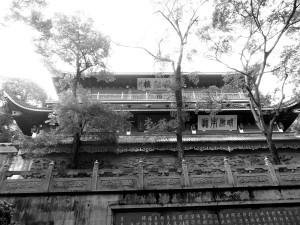 Today it was a temple built into the mountainside west of West Lake. Mr. Toe drove us out there. In most ways I just follow Rob and Dave on their side adventures. They seemed to have read the guidebooks, figured out a reason to go. And then we go. Sometimes Arvin or Sherry tell us where we should go, and if we agree (which we always do) we are led, tutored, fed and returned home with rarely a finger touching a wallet. With meals of endless courses, strange foods, many toasts. Nothing ever to regret.
Tomorrow Dave and Rob are heading to Shanghai. I had/have no real interest in going. I fear it would put my head in a death spiral of confusion. Hangzhou itself has already left me dizzy and unsure of my step. It is fun, however, to listen to them plot and plan like it is some navy seal mission that must be completed in an eight hour time frame—and it does. They are groping for China in every real and palpable way they can. The day after tomorrow is our next to last day teaching at the Wahaha School. And then we head home. Our bellies filled by different feasts from roadside stalls.
It seems so long that we have been here. Maybe because we have been working every day and have been busy every day (except for the day of the great typhoon—which did not end up being so great) but at least a day off. I miss Denise and the kids and wonder how/why so many people I know can just leave homes with an alacrity and insouciance of stoic acceptance of fate. I know it is always obligation and not desire, but I wonder if they feel that same knot—that same unsettled feeling. Or maybe we are just not used to being apart, like swans bound by common strands of DNA. We have had the same wallet for close to twenty years. Our doors have no locks. Our keys are always in the cars. Our town is more than small. It is like a single carat sliced from the larger gem of humanity. We cannot walk a hundred yards without stopping to speak to someone we know. Our lives enmeshed like strands in a warp of dense twine–Pithy. Strong. Immutable.
Every night here I sit on a sixth floor balcony of a thirty story luxury apartment building maybe smoke a bad Chinese cigar, read, write, and think—all the while in awe of the cityscape spread in front of me. My time here is pretty much uninterrupted time. It has given me time with few concerns or obligations, and so I have been experimenting with my writing by heading down what may seem—at first blush—a pretty strange path. In my first China entry, I tried to elevate the level of a of a journal entry simply by using a more elevated, slightly maddened poetic voice:—calculated images, a healthy dose of double dashes, an inner voice that was/is as weak and reflective as I was and am: jet-lagged, isolated, searching for meaning and reality beyond the obvious.
In my second piece, I let it all hell break loose. In a calculated way I tried to recreate my head with all of its diasporas, phobias, and non-sequiturs intact. An astute or simply intuitive reader might take me to task for borrowing from James Joyce/Walt Whitman in Ullysses and Leaves of Grass. Another might think it pure self-indulgent blather; while another might just think it strange, pointless and illogical. The irony for me is that it is as deliberately crafted a piece that I have written in a long while. I am strangely protective of the words as if those words are dull and imperfect children—loved because they are the progeny of my spirit.
Whether heaven or hell, I write out of habit and a conscious choice to recklessly probe the edges of what is true and unfettered writing of self. I am acutely aware of the limitations of my intellectual depth and breadth, so I am constantly searching for what is real in the moment, for no one can rob me or question the validity of who or what I am. I can never capture this present experience of returning to China in a traditional narrative (like this). My head is to atwhirl in a broth of synaptic sensing. This entry is not mine—it is yours: a dumb-downed story that is genuine, but incredibly lacking in totality—a counterbalance to the excesses of completely letting go. It is a making of sense, not a recreation of actual experience because the “actual” is a disparate flotsam of immediacy. In any given moment I am here and there leaping forward and back through the incongruous totality of everything I am and was and long to be. Every word typed to this page immediately places these words into a distant inviolable past, though physically counted only in milliseconds.
This then is my apology, not my anthem. Please accept these travelogues as such. I am not trying to be vague or cloy or trying to wrap myself in mystery. It just is, as Thoreau once wrote, indivisible from its essence. I am not obsessed, but I am convinced that the only test of words lies not in the sowing, but in the reaping. If somehow you—my rare reader—will linger a bit longer in my fields because you sense a greater bounty coming, then I have succeeded.
My temptation is to talk about the people here—the ones who have embraced us with utter and complete magnanimity—as somehow representing the people of China. That would be so easy and convenient for me, but, really, all of us are just slices off the roast of life. The awkward politeness and sculpted awarenesses of our first days here has evolved through Darwinian mutations into something that is not cultural, but rather true friendships honed by the wheel of hospitality, but sourced out of the well of humanity.
Tomorrow night, Arvin—a forty-something science teacher who has made it a life mission for us to appreciate the antiquity of China (and not to measure it by polluted, overgrown, chaos of everyday life China)—has invited us to his house tomorrow night to have dinner with his parents. He wants us to see a China that is not toasting us in city restaurants, bars or classrooms, but rather in a home in a small village—a single stretch of family eager to welcome us through the over-sized door of hospitality.
My fear is that he will spend more than he has and that he will micro-criticise every action he makes and every natural imperfection that is the reality of anything called “home.” He is a man who is impossible not to love, who is insecure in any given moment that his goodness is misplaced or misunderstood; though, to me, it is never misguided. He is a man whose young eight year old boy is everything—as in every thing—to him, which snares both the magnificence and myopia of China.
The one child policy. [Although now they will allow two children, but few it seems are making that leap.]Everyone here gets, accepts, lives, and accepts the logic of the one child policy, but the manifestations implies an approach to cultural norms that has never in the history of earth been put into continual practice and decreed by law upon untold millions of people. All of my students here are “only children,” and in varying degrees they act like only children, but more so their parents are acutely aware that their child is their only child. There one shot at legacy; hence, there is little room for error. As Shakespeare wrote: “That’s the rub.” We—parents of the world—are constantly measuring our success as parents through the success of our children. I do it all the time! but here it is being taken into an uncharted sea whose shoals are dredged by the unyielding claws of a proud and ancient culture lorded over by the insensate paws of massive government.
My rambling asides over (at least for now) I am over-joyed to be invited to Arvin’s home. So much of my time in in China in 1981-1982 was spent in people’s homes—mostly just squares of mud, brick, clay, and tin set in sprawled alleyways; common latrines, and a single pots and pans set on small coal stoves to prepare the feast. I miss that simplicity. When I returned home, I spent close to ten years in an equally small log cabin with an outhouse and a kitchen with only one pot and one pan, though I could have scavenged an entire kitchen from the swap shop at the town dump. Arvin’s home may well be the face of the new China: the China that is reinventing the yardstick; the China that is emerging and sometimes bursting out of a generation resting under leaves like the cicadas now chattering in maddened choruses in every grove of trees.
I am speechless and stunned by the skyline of the city. I really can’t comprehend the reality. I drive the streets and crane my head in disbelief and can only wait for time to give context and some infantile understanding that justify the claustrophobia of words cluttered and pressed together. These are the new temples swathed in carbon haze that will be gone long before time has recycled them into something new, not the truly ancient temples carved out of the hillsides along West Lake—not the homes of godly emperors served by scores of eunuchs, peasant farmers, concubines and foot soldiers. I do not feel as if I am embedded in a new dynasty. I only sense the impermanence of something inherently unsustainable. The skyscrapers seem more like Towers of Babel that pale in comparison to the mud homes of my memory.
I am exhausting myself. My head right now is only one of many on the Hydra of my self. In a few short hours I need to be in front of my students who only need to know that I care about verb tenses and sentence structure. Any success I have as a teacher is how well I have learned to wear the proper head at the proper time, so my students will never sense or fear the fulness of the monster in front of them. My teacher head is only a toothless rag of fur and broken appendages that they can stuff in their backpacks and carry through life—if only to shape dreams that help them sleep at night. Dreams stretched in every horizon.
If teacher is not also a dream, he or she is no better than a book carried, shuffled across hard desks, a vague remebrance— as listless as beach sand.
by | Oct 29, 2026 | Essays, Journal, Teaching
Not many more nights like this, warm enough to sit outside on the back porch. The kids and Denise long asleep. Usually, during the school year, this is my “time” to catch up on schoolwork–grading, posting the assignments for the week and playing the general catchup game that is the reality for most teachers. I think…
I consider myself a good teacher. I certainly love what I do and what I teach. My school is extremely supportive of “most” everything I do, and it has the resources to help me do what I want to do in class. If I ever feel any angst, it is in the fact that I teach at a wealthy private school that strives to be in touch, but we are not in so many ways. We are working on increasing our diversity; we recognise the various traditions of a myriad of cultures; we teach good moral values; we demand decency and respect in all circumstances, and our pedagogy and curriculum is enlightening, empowering and prepares kids well for…
And that is where my questioning of myself begins. As much as I want to think that I prepare my students for “life,” I fear that in most cases their very access to a privileged lifestyle is all they really need to succeed. I look at my own kids–all doing very well at what they do. I have four in public high school, one in a public college and another who graduated from a public college, and one, Tommy, a 7th grader at my school, but it has always nagged on me that I could not give them what is common practice with my own students who take private music lessons, who hire tutors at any turn or bump in the road, who travel the world and give presentations on safaris they have been on, or service projects to remote villages, or who simply and unaffectedly talk about second homes on the Vineyard, or Nantucket, or St. John–or ski houses in Vermont, Maine and New Hampshire. They are good kids and not bratty, self important of in any way unkind.
We honor diversity in a staggering way, yet our hands are never dirtied by true diversity. There are no girls. No children with severe handicaps or special needs. We struggle to find the right fit for black and Latino students to bus out of Boston to our wealthy suburban town.
They are simply wealthy and their options in life are blessed and informed by a quiet acceptance of this blessing. Most of us wish we were more wealthy than we are, so perhaps we are in no way better–just unlucky that the fate of our lineage began some mill town or any hard-scrabble homestead around the world.
So I teach, and I sing, and I give lessons and tutor, build things, dig gardens and write and somehow I help create a pretty good life for my family. The irony is that I am always leaving them to give to other kids what I wish they could have.
And I help create a better life for my students. I hope. But it is just strange to me that my life is so far removed from the lives of those I teach. Maybe that is why I demand my students find the enduring universal themes in literature, if only to help them see that they are not special–that no one is special, and we are all inextricably linked by a common DNA of humanity. I entice them with stories of my academic failures, my reckless odyssey through life. I share my poetry and my songs as if it is the only gift I can “really” give them.
Perhaps they will only remember me for teaching them comma rules or how to whittle a bird out of a scrap of pine.
by | Oct 29, 2026 | Essays, Journal, Teaching
II
The grass grows. The rain falls
Nothing is done. Nothing is left undone
~Buddha
A day can be perfect. I have to believe this.
Today was. Is. Is was a day in china.
The sun breaking through today after yesterday’s typhoon. Lazy walk to the coffee shop. Practice chinese with young cook dreams of more tells his long story. Reassure him—yes—as good as anything in america. Wished really wished Denise was there. Our every Saturday Sunday trips to serendipity cafe in maynard reborn borne in hangzhou city.
Sweet, strong coffee. Cool clean breeze off sidewalks scrubbed clean by yesterdays torrential rain. Kids running from store to store. Buy muffin there. Fruit here. Dough sticks from roadside vats bubbling oil. Dumplings steaming in scalded trays. Creamy warm milk in plastic bags fattened with sugar. Running skipping hopback to grandmothers. “The waiguo ren [foreigner] spoke to me!” I feel incredibly alive. Placed. Content…old men sweep leaves torn from trees and bushes with brooms made of broken branches and bundles of lashed twigs. We nod to each other like it is a universal tongue. Yes. I get it. I understand without words stammered out of meagre vocabularies. Life transposed on life. Strangely I miss my motherfatherunclesaunts long gone and imagine them beckoning from the park benches steaming in wet morning heat…wisps of smoke rising to balconies draped with flowers laundry tv sets bikes slipping into alleyways filled with poverty love confirmation…always always always a confirmation celebration of age. Dignity. Grace. Acceptance.
I hear Mister Toe’s taxi incessant horn in morning traffic like bellowing from barges on the pulsating sighing unrepentant river. “Come, come. Sorry, Sorry I overslept…” We. Rob. Dave. Me. Cramming our oversized bodies into impossibly small car. More beeping weaving avoiding. A mass (a liturgy almost) of traffic people bikes scooters busses trucks. A city so huge expanding towering with belief in tomorrow acceptance of today democracy of common life. We are all here. We are all here. It has to work. It has to. It does. It really does. It stretches the clothes of my perceptions preconceptions prejudice anticipations. I wear the disbelief like a shawl in the rain. In the tangle of work obligation progress crossing dodging manoeuvring there is no anger—no words to take back regret amplify justify. No righteousness, fingers, pissed off anythings. Simple reassurances that no one is alone. Listen I we you are here. We are not travellers. We are embedded like silk in a fluid tapestry. We are was is.
It has to be a word: isness. We are dropped into the isness of what simply irretrievably is… We are dropped into a warm busy teeming broth of humanity. We shake like dogs on muddy banks and run to our buildings. Work. Work. Work. It is all work. It is all family. It is all friends. It is all there is—a jigsaw of sameness oneness isness. It is a common world of commonness. Fair and unfair in the same accepted fated breath. My head still can’t wrap around it. I am an American. Damnit. An American. I let go of worrying that it matters. The private goal is the collective goal. I am not sad detached wandering wondering. I am going to work. I am going to do what I need came want should must do.
The kids are waiting for us. Us. Me. Rob. Dave. Old americans. Proud americans. Proud americans come to teach preach perfect tentwelvethirteenfourteen year olds and young startled dreamy suddenly beset by reality sweet loving accepting yearning teachers. A few days ago experts now we are common and is. Three waiguo ren clambering laughing going to have to work. Three teachers going on a Sunday field trip to pick grapes on a farm—a muddy farm outside the city clung between city and mountains. Purgatory. God on one side. Maybe both sides. Maybe purgatory is perfection. Maybe. But today is action not reflecting dust of yesterday. Old peasant women lead us to grapes in groping heat smiling pointing painting coaxing cajoling. Their faces wear long march Mao hunger I have been there and there and there. There too.We nod our vocabularies in gestures and broken guttural primal vestal sounds. The kids meanwhile are kids. kids. kids. Nothing is unreal, unexpected, overdone impressive. More isness. Love. Compassion. Ballets of energy stories leaping stretching reaching towards bundles of fruit—putao, yaomei, pinguo—grapes, strawberries, apples: Sameness. Isness. Happiness. Yes. True happiness. America. China.
Sadness, thinking, wanting, remembering (screaming almost in a vacuum) for my own children to just be here. Not there. Engulfed awed renewed in new hampshire summer camp. Cool clear waters. Stars plucked out sky summer camp. Away. Happy without me. For me. Because of me. Alongside a clay shored quiet stream I share pictures of my kids with these kids—my students—precious precocious indefatigable youth. I need them to know that I am as real their mothersfathersunclesaunts. Each image turned and studied like a textbook. This is what we all learn. This is what we all learn: love. Today’s lesson is love and picking and dancing and remembering and wanting and being indefatigable youth. Infinite tomorrows and yesterdays cloven and jammed into the impossibly small taxi of today. Beeping horns of love in every direction. These are my children. My children in america. They were born when you were born. Cried when you cried. Woke in terror-filed nights like you. Laughed in school-yards like you. Jammed into expectations like you. We them they are together altogether the crazy world of stitched cultures woven by old men and old ways with broken dreams and unbridled ignorance—children together altogether born again in games of minecraft, tag, hide and seek, pushing unwanted food away, grabbing devouring celebrating…They are born and will be borne. Within. Without. Beside. Before. They are. Need to be: every thought every action every dream. My family is our textbook of love. Denise is the mother. I am the father. Here is our universe. Our textbook. Endless flow of sometimes words sometimes action always love always is. Isness of opportunity chance fate desire hammered in the mystic forge of love determination persistence stubborn clinging to flotsam idyllic isles key wests of dreams words nods limits distant horizons figuring out giving a damn…
In the city again playing team tag in an empty mall detritus of progress. The children lead me hide me cajole me protect me old and vulnerable behind columns arching over western sloth: armani, hilfiger, levi, scotch, shoes, handbags. Lean away as if this floor is a diseased ward: typhussed smallpoxed malarial—a story cried in bold decay and impeccable ruin. We win the the game. We win the running man game: Me. The old teacher. Old Laoshi. The youngest kids. Smallest kids by far. We won. We won, I said, because we did not attack. We protected. We won candy. That was all the mattered. Grabbing devouring celebrating turned over to parents eager for harvard princeton mit. Turned over to endless days nights life of work homework absolute perfection. What is your favourite game Shelley. (I asked her on Friday) I said—you must have a favourite game. I do not play games she said she meant it lived it was it and today she played as if there was no tomorrow. Just the isness joy release of a penitent shorn of sin. I pray. I really do. Pray that today had enough rebar to sustain the weight of her play. Play Shelley. Play. Parents maybe only happy she says goodbye to us in english. We. Dave. Rob. Me. We are from Boston. Good schools in Boston. But today. Today was a better school. A mystic forge. Orb resting on pinnacle. East. West.
I wished I shouted—You should see the small towns. Go to the small towns. It is all I know. All I can teach live pray do. It is my is. Go to the mountains that cling to your horizons west of the city of hangzhou. Small villages pocked by endurable endless persistence perfection of patience forbearance love. Do not go to shanghai to the east. It is too close to boston harvard princeton mit. Pick grapes strawberries apples. Fresh fruit. Pithy flesh hung on bones. What Mao could not let be. What we you can’t taste. Rich soil. Soil fed depleted fed depleted fed depleted. Irony. Displacement. The high huge glassy towers of hangzhou sucking in the countryside. Families cleaved apart at the juncture of sinews. Depleted. Fed by wisps of dreams promises borne on trains scooters carts sodden shoes. Here is heavy coal diesel haze parade of weaving dodging fate of progress regression progress regression. Dreams. Unforgivable dreams. Trapped. Living. Celebrating. Coins trapped in mud, sledge hammered into mastheads of concrete steel glassy towers beaked cranes endlessly lifting dream on dream on dream with spindly cables. The captain speaks. The ship sails: straits of Skylla. Ahab. Odysseus. Hydra. Whale.
The only way out is through. We. Rob. Dave. Me. Resist exhaustion easy to return home to sleep morph ourselves into another taxi-cab to the markets on hufang jie—the street near west lake: mad market of many everything every pedlar ever peddled. I try to film the scene and spin slowly. Then delete everything. It tells nothing really of what the scene is doing to me in me through me. More of that isness which really is what I feel: senses synapses bursting lighting arcing thought to thought sense to sense. I find myself drawn to old china: the old artists patiently waiting for anyone no one to pay 300 kuai for a ten minute portrait flash in the enormity of life. I just say wo meiyo nemmo duo dian. I do not have that much money…and try to get words palpable breath memories from them to me. Some kind of connection that is nod-like real conversation betweens souls and not cultures. They smile and get it. No painting is real just the finger pointing at the moon.
But not the moon itself. Not the moon itself.
The wizened ancient woman sitting waiting on a bench with me waiting on the bench warm smile big laugh looking at me and sway smiling in the closing hours of the day while menwomanchildren pass by stare. Munch: crabs four to a stick spitting out pulpy entrails brittle shells. Whole fish speared on skewers eyes pleading smothered gasping in air bellies ripped quickly skewered over fire. Sucking duck heads taste good really boiling in languid bath of oily broth. Squid speared too and tied with flaccid tentacles clove hitch bowlines fast to boom of death continuance birth and rebirth. Depleted. Fed. Depleted. Fed. Joy. Everywhere joy. Families. Lovers. Friends. Eat. Drink. Twist their ways through pulsating crowd hawkers beggars who always find me. African engineers diplomats. Some few americans who too cool maybe want need to avoid me or maybe just embarrassed to be american mistaken for tourist. I am your thorn. I want to call your bluff expose the absurdity of your truth. I am the proud american who says hey first who always never turns my head down sideways askance. Practiced feints. Enervating avoidance. Are you alive as me I want to say.
And then this old woman lady maybe once madame on shady bench makes me more alive sucking vestigial memories wisdom lessons pain loss everything that humanity wears probably like (or is) Penelope and me maybe I have returned to hearth destroyed by vagaries of fate. But no gods to praise thank remember resist blame. My temporal isness. Her isness. My fraud of words no match for hers—Go. Go. You go slowly. Through life? Next stall bench store hawker home? I do not take any more pictures. I look for Rob. Obscenely tall american god. Dave’s loud laugh cleaves the market like a village on the edge of mountains. The waypoints of this journey descent ascent. Drawn to siren songs. Us. Them. We and eddie and bill…We are in orbit around each other sucked in by gravity of familiar mutual assured levity and forbearance. Necessity. Will. Mere inclination.
Together we laugh and laugh and laugh. Trundle. Limp. Like old beggars under sacks knocked kneed backs bellies twisted by raw fish frogs roe jellyfish snake chewing sucking bones fat sinews of fated fowl flesh noodles grain liquor. I am like a child twirling in an arc bound to them following them completing them each other. We wend like untethered box cars towards hazy mountains draped in wispy belching of young factories insistent on more and more for them and we and me always wanting never really resting on that pinnacle orb. West Lake first sun in days floating outside of gravity. Sidewalks stretching cars busses people skirting going to ignoring beckoning the sun reminder of impermanence setting into west lake antiquity.
Out of tune street singer croaking swooning moon river beside crazy intersection maddened crazed by plastic steel sticky tar of importance. I have to need to want to do grab his guitar. Please. One song only. Crazy foreigner. Proud american. Lean on me I sing and mean it more than ever in pub club grass engulfed gazebo in small american town. I am an amalgam of vanity pretence sorrowful primal need to be will be heard. This is me. This is me. This is me. One song only and leave flattered full of plastic importance towards dissolving sun woven into perfect random intersection of elm sycamore willows leading beckoning drawing us to the lake. West Lake. Like faith. Unerring assurance of the improbable happening before us. Rob the improbable god. Daves unerring laugh and me scrunched on impossibly small bench lapped by ancient waters temples herons cleave the sky. Carp swirl to the surface. Cicadas scream from lowing branches. We. Rob. Dave. Me. We are a small sea. Mouth of river. Still cove. Dribbling stream awed and attached to dynasties. Histories. Stories. Mystic forging of lost regained recreated stories. Meticulously recorded guarded preserved in amber. Tradition. Remembrance. Disassembling the moment. Isness of this day. This perfect day.
Xenia. Peace. Disbelief of fate luck circumstance. We are the same stream melded out of all waters retreating returning cleansed. We buy soda from a machine. Check our phones. Remember to remember something. Fed. Depleted. Locked and freed by common things needs even dreams. We. Rob. Dave. Me. We hail a cab and return home.
I am a speck in this night. A single lamp in a concrete tower trapped high above the qiantang river. I do not have the power of the distant barge—dark shadow in moiling water carrier of mystery reality actual substance. I’ll go to sleep and dream: simple dreams unfettered dreams. Cranes. Skeletal steel wires pulleys resting on unfilled towers tentacled to muddy earth earth sucking shores sheathed in mirrors dated in hope need want. Escalators ascending descending everywhere. Hades. Heaven. Home. Solid places. Joy of with for in spite of because of kids. Indefatigable. And maybe please please please always release me from vanity terror of myself just give me me and you and your love—Isness. Perfect perfected solidity of remembrance.
This.
by | Oct 29, 2026 | Essays, Journal, Teaching
It’s not just a couch; it’s a sofa, too
~Fitz
I remember my first year teaching at Fenn—and it was really my first stint as a true worker with responsibilities outside of what I already had in my wheelhouse—and on this day, some twenty something years ago, I could hardly move. Every Columbus Day weekend for as long as I could remember we (gangs of friends and I) would head up to Stinson Lake in New Hampshire where my family had a cottage, and I had my usual agenda of mountain climbing, fishing, or even a last sail on our Sunfish around the amazingly pristine waters on my bucket list for those three days.
But this weekend came to be known as the “weekend of the couch.”
All I seemed to be able to do was sleep. Denise, who was not yet my fiancé, and our pack of friends, seemed to have a ball, but all I could do was wave goodbye or say, “I’ll catch up with you later…” But I never did. I put my head back down and slept, literally, for three days. The mental wear and tear of being a teacher had caught me off guard, for somehow the seemingly mundane lists of things to do never seemed to cease—and I was the shop teacher! I think I would have melted or imploded if I was trying to do what I almost naturally do now. A terse letter then from a parent would have me agonizing over a politely worded response. A student upset with a grade, or a mean friend or teacher, would have me scouring a book of psychology for a solution.
This new job was not as straightforward as singing four hours of songs in a pub, cutting down eight cord of wood, sailing through a storm, setting stones or banging nails in winter cold, finding myself alone and broke in some distant corner of the world—all of which had been a big part of my life until that first fall of teaching—and so I laid myself down to rest as I had never done before, all because being a shop teacher was the toughest job I had ever tried to tackle. That endless stream of enthused boys aged nine to fifteen had done what no other job had ever done: exhausted me simply because they energized some part of me that must have lay dormant for the entirety of my adult life—and at that time I was thirty-five years old for God’s sake!
But now I am fifty-six and have been teaching ever since, more writing and reading than shop—and it is still as hard and exhausting as ever, but in a different way. Even last night—a Friday night—I stayed up until one in the morning reading and commenting on my student’s blog posts and journal entries. I read reams of essays about Walden and Tom Sawyer. I listened to their podcasts and watched their video’s and tried to pen a few words of real praise for every effort they made over the course of the last week, and it reflects a massive amount of effort on their part, but for me, tired as I was, it was not a big effort that drained me; moreover, it was more a celebration of the joy of being a teacher, and I woke up this morning “psyched” to continue what is now a rhythmic cycle more in cadence with the seasons than a Sisyphean effort to push an irregular boulder back up a slaggy, barren mountainside.
It is this way because I work in a place that gives me structure and freedom in equal doses. My bosses never hang behind my shoulder and nitpick my constantly evolving curriculum; my parents don’t scrutinize and dissect my motives, and my co-workers laugh with me, bitch with me, and work just as hard at our collective mission as teachers, as if there is no other way. It is by no means a “dream job,” but my school is a place that allows me to dream as deeply as we hope our students dream. Granted, The Fenn School is a rarified community backed up by an enormous cache of accumulated wealth and uncommon worldly success, but when stripped of these trappings every class is simply a group of kids being asked to do what each of us teachers feel he (it is a boy’s school) need to do, and whatever pressure I feel as a teacher is counterbalanced by an academic freedom that deflates that pressure, and so I wonder if this is an approach that just works for us or if it is a reality that needs to be—or at least could be—emphasized in every school, regardless of wealth, opportunity or standing.
If each classroom becomes a family, then every teacher will respond in ways that transcend the trivial; if every school becomes a community that pulls together through the thick and thin of the vicissitudes of the year and places trust in teachers and students, then maybe (I’d say probably) the first six weeks of school won’t put anyone on the couch.
It’s time now and always to climb that mountain with free and joyous motion.
by | Oct 29, 2026 | Journal, Teaching
Maybe there is a God. I just came home and sat down in the kitchen to grade some papers and input some grades, but the internet is buggy and slow, and I thought, “maybe this is the message” that I am trading my soul for work. I even remember myself pontificating in class today with some eloquence about the need to find a time, place and approach to writing that is conducive to thoughtfulness and creation.
Plopping myself down in the nearest chair to grade is not a good practice of my preaching.
So I came out here to the back porch. After this afternoon’s heavy rains the sky is now lit up with a distant sun that somehow out of impermeable gray painted a pink monochrome against the trees in my backyard. Emma is filming the scene because it is “so cool.” The warm, muggy air is nothing like a mid-October evening should be, and there is an uneasy and unsettled expectedness in my head.
But I don’t know what I am expecting. Maybe some insights into something? Maybe a poem will crawl out of a burrow and land on this page? Maybe just this—a few words stolen from a busy night small enough to remind me to slow down—and big enough to remind me that I can’t be different from my students, for no writer is beyond practicing the mundane. It is the only way, to paraphrase Thoreau, to stir the torpid snake of our thoughts into a renewed life.
These last few minutes of “free” time need to be spent shaking off the detritus of the day and welcoming the night ahead, which for me means a few hours of singing folk songs in a local pub and the chance to celebrate both humility and grandeur in the same breath, for I am a very small potato in a very large and very good stew—but at least I am in the stew.
by | Oct 29, 2026 | Essays, Journal, Teaching
One Teacher’s Solution To Everything
Years of teaching woodshop at my school has reinforced in me the utility of developing a workflow that works best for the project at hand using the tools and equipment already in the shop. The same can be said of my other life as a writer and teacher of writing in a school that is now a one-to-one iPad school. If the iPad is your tool, it can and should be your “shop” and the place where you develop a workflow that works for you and not against you. Many teachers and students have found this flow using the suite of tools and apps available in Google Drive. For a variety of reasons, Google has not caught on with me, in spite of the extensive library of documents I have in my Google folders. Instead, I rely on a handful of apps that serve my purposes well as both a teacher, a writer, and as a creator and curator of personal and academic portfolios.
The bottom line is to discern what you need and what suits your writing needs in the way that is best for you using the platform that is most comfortable for you or required by your school. The following programs and apps are what “I” use as the basic tools in a modern writer and reader’s shop. Granted, for many years, I wrote in longhand script in now tattered journals, and I have to admit that a good portion of my best writing was created and edited in endless drafts and revisions with only pen and paper and a Royal Typewriter much older than myself as my primary tools.
Below is an overview of what I use and what I have found useful to use for technology in “my” classroom. I’d be interested in hearing how other teachers approach these same needs and what tools and platforms work best for them.
Notetaking: First and probably foremost, I am a keeper of a journal and several blogs, and I have found Evernote to be an excellent product to create, organize and store the disparate projects I am working on at any given time. I have also used notability.com and penultimate.com, which are both wonderful note-taking apps, but since I rarely have use for handwriting and sketching, I find myself using evernote.com almost exclusively for my note-taking and rough drafts of writing pieces, especially since it is so easy to move between my laptop, tablet, and phone to work when and where I need to produce written work. I have multiple notebooks that answer almost every note-taking need I have. I think I may take a deeper look at Notability as it now can be used on my laptop as well, and it is already popular and familiar to many of my students and colleagues.
At the end of the day, every person’s needs and tastes are different, but the utility of a good note-taking system is a no-brainer for any writer, professional or otherwise.
Word Processing and Document Creation: When I need to create a publishable document—one that I can ultimately export as a pdf, epub, or even as a Microsoft word doc—I use Pages for the simple reason that it works so well to create documents that look and feel exactly like I want them to look and feel, and it works seamlessly with my iphoto library. It also works well with my iPad and iPhone, and the documents are easily stored and accessible across my devices in my iCloud account. Google Drive is also excellent, as is Microsoft Office, but since I am mainly a mac-based person. I also like being able to export my documents as epubs that can be opened and saved as ibooks, or used to create textbooks in ibooks author.
When I am working on short stories or novel type writing, I use scrivener.com, which, though it has a steep learning curve, really lets me do “anything” I need to do to create, organize, and prepare creative writing pieces I intend (or sometimes merely hope) to publish. If you ever become serious as a creative writer, screenwriter, or playwright, Scrivener is a word-processing tool you should consider using.
Blogging and Portfolio Work: I started blogging more than ten years ago as a way to share my work with a broader audience and as a way for my students to share their writing pieces with each other. Over the course of these ten years I have used movabletype.com, blogger.com, typepad.com, weebly.com, and most recently wordpress.org. All of these are excellent blogging platforms, but I have settled on WordPress as my favorite platform for my personal blog and portfolio and Weebly for my work with middle and high school age students.
Weebly has proved to be an excellent way for my students to create beautiful and dynamic blogs and portfolios quickly and easily, and since I use a “campus” version, I also have ultimate control over creating and managing my students online portfolio websites. The downside of Weebly is that, as an all in one solution, it is not as export friendly as WordPress, Typepad, or Movable Type, which is a pain when my students graduate and want to take their portfolios with them. Other easy to use platforms such as wix.com or squarespace.com offer the same functionality and powerful drag and drop tools as Weebly. While these three platforms are great and free to use, they do cost over a hundred dollars a year if you want to add multi-media, audio and video. Google sites enables a free solution for creating blogs and websites which are decent, while not visually stunning, but it also tends to lock you into their business formula—which is something that does not appeal to me as a long term solution for myself or for my students. I fear, though, that it may be a losing battle in these days of tight school budgets and the desire for integrated platforms that “do it all.”
If you want to have control over every aspect of your website, it is tough to beat WordPress, which is totally free, though you do need to find a host server for your site, and it has incredible functionality and versatility as a platform—and it can grow with you in limitless ways. The downside is that you must be willing to learn the guts of the system to get it to do what you want it to do, but for some of us, myself included, I enjoy the challenge; hence, I intend to stick with wordpress.org for the long haul with my personal site, johnfitz.com.
Collaboration: Google is winning this battle, hands down. With Google it is simple to create collaborative documents to create and share documents with whomever you please (as long as your collaborators are invested in the Google ecosystem). This past year, however, I have been using a program called quip.com, and I am more and more impressed by both the philosophy and direction of the company. It is purely and simply a program for collaboration on documents, that is quick and snappy and works amazingly well on any operating system and on any desktops, laptops, phones and tablets you choose to use. I love it because of its simplicity and collaborative possibilities. Lost in the small maze of things is the fact that you can also share and collaborate using Pages with iCloud or Microsoft Word with OneDrive.
No matter what direction or tool you choose, it is impossible to deny that the ability to collaborate has changed the way my students write their writing pieces. I appreciate the fact that I can now be a more integral part of my students progress as they work, instead of “after” they have worked. The revising process is now more fluid and transparent and proactive; moreover, peer-editing has become a lively, productive and engaging process that teaches more and cultivates strong writing and editing skills.
Multi-Media: This is probably the weakest link in the chain of my workflow, but more and more I recognize that multi-media is where I need to focus my energies if I want my work and my students’ works, to be seen, read, listened to, and/or appreciated by a wider audience on the web. My classroom is now outfitted (thanks to a grant from The Fenn School) with two recording studios. We use apogeedigital.com interfaces to record pristine sound on our desktops, laptops, iPads, and iPhones. My students use these studios to create podcasts, video essays, talk shows, radio programs and Socratic forums that they post to their Weebly portfolios and blogs. We also have a more high end studio equipped with large M-audio Sputnik condenser mics connected through a Mac desktop that I allow students who want to take their work to a higher level to use for their projects.
Since we are now an iPad school, my students mainly use their iPads as their all in one sound studio, film maker, and camera and editing board. To create audio, I use Garageband on the iPad. It is simple, intuitive, and with a bit of tweaking and good mics, you can get an amazingly rich and natural sound for podcasts, video essays, and music. It also syncs well via iCloud with my iPad and iPhone. For movies, we use iMovie and for photography we use the built-in camera on the iPads. Some kids grumble that the apps are “not as good” as a more dedicated video recorder or camera, to which I reply, “Embrace the beast!” because the iPad is the tool that we all have, and as I often say in the woodshop: “When all you have is a hammer, everything starts to look like a nail.” Over time, the grumbling stops because they find that it really is possible to create pretty amazing final products with just the iPad as their tool for creation.
Quizzes and Tests: Several years ago, as an experiment, I posted my final exam on my website two weeks before the exam date. I told my students that it was the final exam, and they could practice and review to their heart’s content. The exam was a mix of multiple choice and fill-in-the-blank quizzes, writing prompts and a literary analysis essay. My students’ first reactions was based on the horror of what needed to be accomplished; however, the end reaction was one of gratitude and relief. The appreciated the opportunity to practice and prepare as much as needed for what they knew was coming. Most of them mastered the 100 top roots and vocabulary words; they aced the fifty literary terms; they identified the major characters from Huck Finn, The Odyssey, and All Quiet on the Western Front; they remembered passages from various poems and short stories we read during the course of the year, and they came to the exam with their writing prompts and essays fully fleshed-out to edit and revise during the exam time. In short, most of them were rewarded for their preparations (while a few of them, who did not prepare, failed miserably). Those who put in the effort were rewarded for their efforts. There were no surprises; none of them complained that they were overwhelmed or confused trying to figure out what was going to be on the test; no one complained that I didn’t cover this or that. In sum, it was a validating and engaging experience to succeed in line with the time they put into their preparations.
Since that time, I learned to use quiz making and assessment software to create self-grading tests that my students can use to not only study, but to master in a palpable and visual way the content I feel is important for them to know and master. For a dyslexic student I even added an audio option so that he could “hear” each question as well as try to read it. To my surprise, almost all of the students used the audio option as well. Class prep times became lively contests with constant shouts of “yes” and “Noooo, I can’t believe I got that wrong again!” They relished pointing out the mistakes I made in creating the tests and learned to put in the right answer that was actually the wrong answer.
This said, it is a time-consuming pain to create these tests, but these same tests are also gratifying to assign because I see kids thrive who would otherwise fail; I see kids proud as peacocks because they learned what they needed to learn, and I see kids learning who might otherwise not learn. Many teachers saw this as a cop-out and not a “real test” because the students simply memorized the test—but the students did not simply memorize the test, they memorized the content that was important to “memorize.”
Good solutions for creating these kinds of interactive assessments include adobe captivate.com, haiku.com, socrative.com and camtasia.com, as well as ibooks author and bookry.com.
Assessment: In the end, I do have to assess what my students have created. As a teacher I need to give a fair, critical and balanced response to my students that is both helpful and thorough. The days of scribbling criticisms in red ink between double-spaced lines is over—or at least it should be. I long ago realized that if I gave a student an A grade, he or she would eagerly read the praise I lavished on their papers. If I gave a B grade, they would still read most of what I wrote, but if the grades fell to a C or below, they would give the paper a cursory look then try to hide the paper in the recesses of an overstuffed backpack. Few of us would ever willingly walk into a room to listen to repetitive criticisms of our faults and misdeeds.
For formal writing assignments, I ask that the final product be turned in as a pdf. Every decent word-processing platform allows for exporting as a pdf, which I then assess and markup using iannotate.com. This app allows me to mark up a paper in traditional ways (circling errors, noting and highlighting sections) but it also allows me to add voice comments, stamp with a variety of stamps, create links to direct them to resources that can help them work through specific problems, and ultimately to share back with my students and often their parents. There are several other excellent pdf markup apps and programs out there, but iannotate’s suite of markup tools is, in my mind, without peer.
Grading: I am a big believer in the open gradebook, and so I have kept an open gradebook, shared with parents, for the last four years. Contrary to what many teachers fear, I have never had a student or parent complaint about the system I use. Invariably, students and parents appreciate being able to see where they are at as students or where their child is at at any given time over the course of the year, and they appreciate my good-faith effort to keep up with my grading—and they also understand and are empathetic whenever I do make a mistake or fall behind in the crunch times of the school year.
There are numerous, excellent learning management systems out there. I started with Edmodo, moved to Schoology, and now The Fenn School is using a private system developed by finalsite.com. Other schools use moodle.com, blackbaud.com, haiku.com and many others. Google Classroom has just been introduced and promises to be a pretty impressive and comprehensive system for managing all aspects of classroom workflows. All these systems have benefits and drawbacks, but all of them do what they intend to do in good and productive ways, and, used well, simplify the lives of our students and parents and ease the fears of what needs to be done and when it needs to be completed.
The centerpiece of my learning management system is my class blog and portfolio, thecraftedword.org. Any assignment, update, or required resource is literally two clicks away on any web-based device and does not require logins and passwords to access; however, I still believe profoundly in the importance of a central hub for a student to access “all” of the classwork in “all” of his or her classes. Our LMS also allows a student to see a calendar with individual classes, athletic and other school events which helps students, teachers, and parents manage and prepare for the expectations in any given time period.
Conclusion: Of course, any digital classroom is only as good as the teachers who use it, and we teachers are a notoriously stubborn bunch. In sincere and pedagogically sound ways, many teachers already like the way they have always done things. It works for them and the shift towards technology-based learning is awkward and unnatural. The iPad is seen as an insidious device fraught with peril and temptation. To them, I can only say “try” to make it work. As they stand by the copy machine printing out page after page of a certain unit to insert into two-inch binders; I hope they might see that is more simple and effective to click “insert file” on their iPad and copy hundreds of pages with a simple click to their class site. As they grade piles of papers and calculate grades with a calculator and often in their heads, I hope that they will “see” that a digital gradebook is a saving grace and not a looming disaster. As they write “Today’s Assignment” in the top corner of the classroom whiteboard, I hope they will see that not all kids are writing it down word for word in their assignment binders.
Just like my students, I am a work in progress. What I have tried to touch on here is one person’s experiment in what is possible and practical in a digital classroom. In many ways, I am as conservative and traditional as they come. I believe in reading classic texts and engaging in meaningful conversations across the table; I believe that learning to write well is based on mastering the sound and time-tested craft of writing practiced by centuries of writers; I believe that life is a personal odyssey that needs to develop our inter-personal skills, but I also believe that technology is here for the long-haul of our lives, and I believe that any time spent engaging and refining our approaches to the use of technology in the classroom is time well-spent.
I have an abiding faith that our collective wisdom can and will rule the day and the future, and I hope that any refutations and opposing views this inspires are productive and meaningful and help to guide me as I stutter my way through life.
Thanks for reading.
John Fitzsimmons
9/7/2014
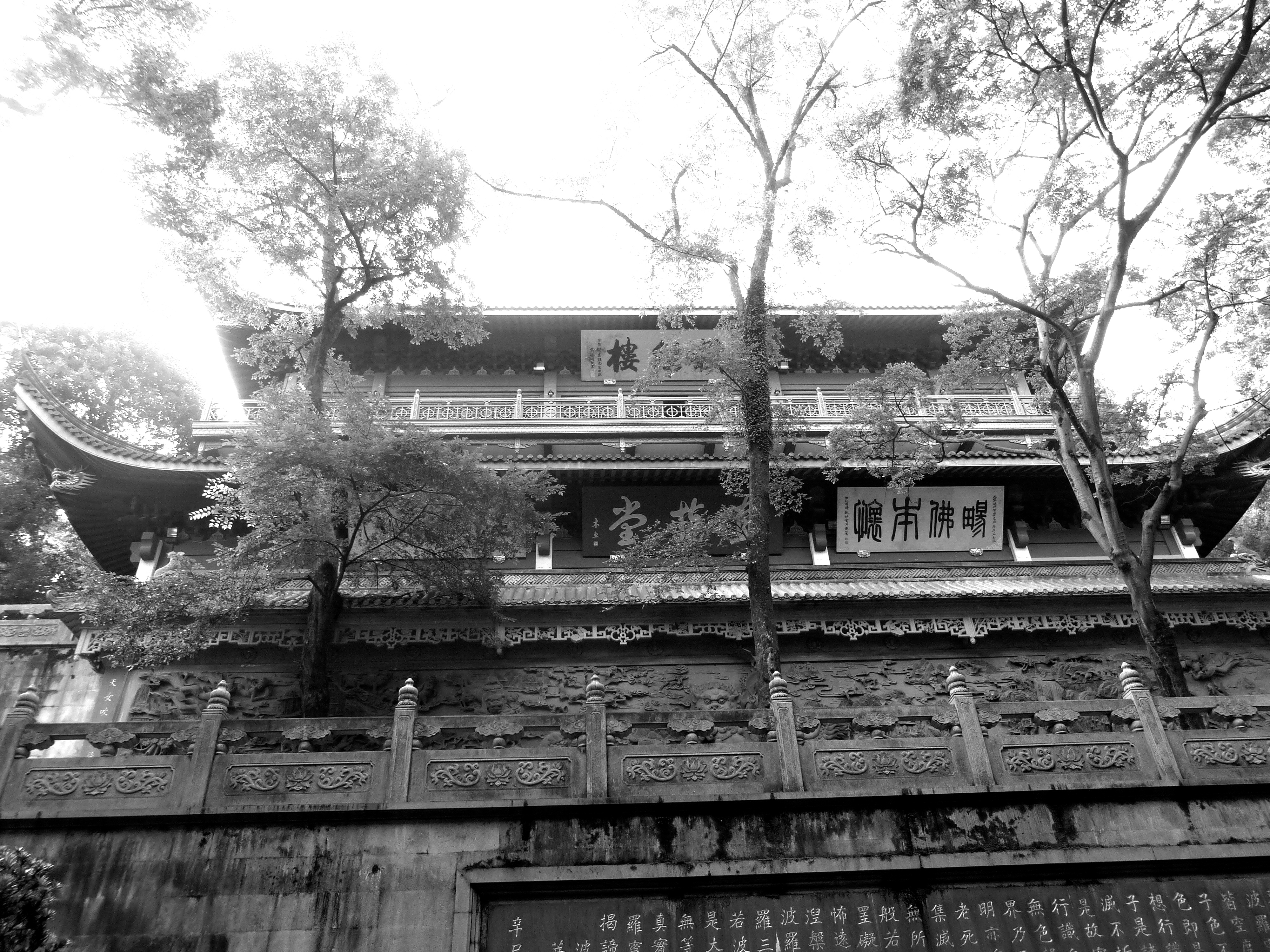 Today it was a temple built into the mountainside west of West Lake. Mr. Toe drove us out there. In most ways I just follow Rob and Dave on their side adventures. They seemed to have read the guidebooks, figured out a reason to go. And then we go. Sometimes Arvin or Sherry tell us where we should go, and if we agree (which we always do) we are led, tutored, fed and returned home with rarely a finger touching a wallet. With meals of endless courses, strange foods, many toasts. Nothing ever to regret.